
Deliverance gets weird fast when nobody talks about safety. And honestly? Discernment is the difference between “Jesus set me free” and “I feel spun up and scared again.” So I’m going to keep this practical. Scripture first. Your nervous system matters too. And yes, your church relationships and accountability matter a lot.
What safety actually means in deliverance
Most people think safety means “no one gets hurt physically.” Sure. But spiritual safety is also about staying anchored in Christ, not in drama. It’s about avoiding spiritual one-upmanship. It’s about not turning every headache into a demon.
Here’s the thing. Deliverance is real. So is suggestion. So is trauma. So is plain old sin patterns that need discipleship, not a shouting match. I used to treat everything like a deliverance issue when I was younger in ministry. Turns out that made people shaky, not stable.
Start with biblical guardrails
I keep a few guardrails in front of me every time. Jesus is Lord. The gospel is central. The fruit matters more than the fireworks. And the Word tests the experience, not the other way around.
And I always come back to the idea that God isn’t the author of confusion. Confusion can happen in a session, sure. But if confusion becomes the normal atmosphere, something’s off.
Consent and clarity are not optional
Real talk. I’m not a fan of surprise deliverance. Like someone “deciding” you need prayer and cornering you. It’s not loving. It’s not wise. It can also mimic spiritual control.
Explain what you’re doing. Ask permission. Tell the person they can pause or stop. You’d be shocked how many problems disappear when you slow down and honor conscience.

Discernment without paranoia
Discernment isn’t suspicion. It’s clarity. It’s the ability to recognize what’s from the Holy Spirit, what’s from the flesh, what’s from enemy influence, and what’s from a wounded heart reacting.
Sometimes I’ll ask a simple question: “What happens in you when you say the name of Jesus out loud?” Not as a test to embarrass you. More like a flashlight. The response can tell you a lot. Peace, resistance, grief, fear, numbness. Different stories.
Test the spirits in real life ways
People quote “test the spirits” and then skip the testing part. Testing looks like time. Scripture. Counsel. Pattern recognition. And humility.
When I work with clients on this, first thing I check is fruit over time. Does the person become more loving? More truthful? More steady? Or do they get more reactive, more isolated, more fixated on demons?
Three common counterfeits I see
One counterfeit is spiritual performance. Big manifestations. Big stories. No repentance. No accountability. Another is blame shifting. Everything is a demon so nothing is their responsibility. And the third is obsession. The person starts scanning their thoughts all day like a security guard who never sleeps. That’s not freedom.
Look, spiritual warfare is real. But fixation is still fixation.
Red flags that should slow you down
I’m going to be blunt. Some deliverance environments are unsafe. Not because they talk about demons. Because they treat people like projects. Or they chase experiences. Or they build a personality cult.
Pay attention to how leadership handles correction. How they handle money. How they handle boundaries. That stuff isn’t “secondary.” It’s the atmosphere people are breathing.
Ministry red flags I won’t ignore
- Isolation pressure. “Don’t tell your pastor.” “Your family won’t understand.” Nope.
- Forced confession. Pressuring people to share trauma details publicly. That can re-injure.
- Authority games. “Submit to me or you won’t get free.” That’s manipulation dressed in Bible language.
- Manifestation chasing. Treating screaming or shaking like the proof God showed up.
If you want a deeper set of warning signs, I wrote a focused piece you can keep open while you evaluate a ministry: what to watch for in deliverance ministries.
Personal red flags inside you
Sometimes the unsafe thing isn’t the room. It’s what’s happening inside you. If you notice you’re getting compulsive, sleep-deprived, or you’re afraid to be alone because you think something will “get you,” pause. That’s not courage. That’s torment trying to take the microphone.
And yes, the body keeps score. Lack of sleep makes everything louder. Anxiety makes spiritual thoughts feel urgent and absolute.
Trauma, mental health, and deliverance
This section matters because a lot of sincere believers get hurt here. They go for prayer when what they really need is careful pastoral care plus trauma-informed support. Not either-or. Both-and.
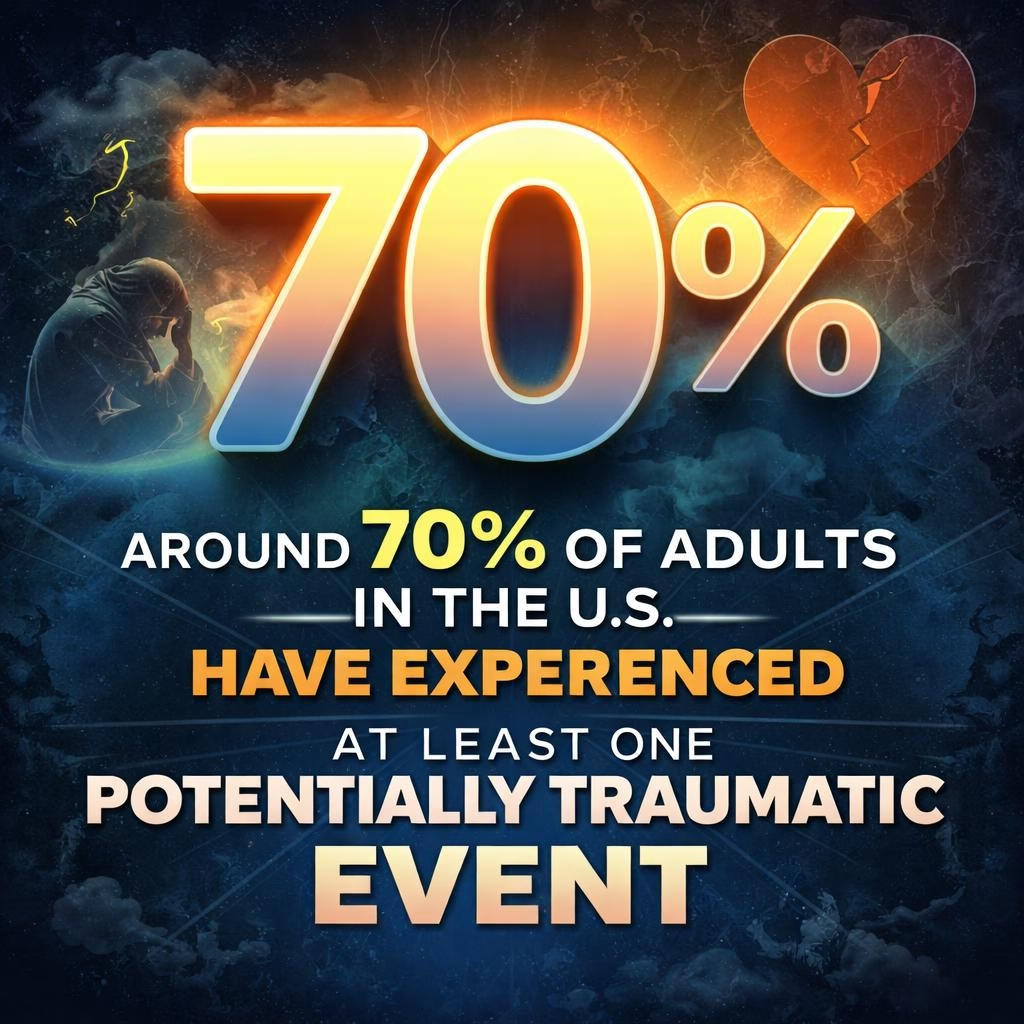
Here’s one benchmark that helps frame the conversation. Around 70% of adults in the U.S. have experienced at least one potentially traumatic event. That means trauma responses are common in church. In deliverance settings too. So we don’t get to pretend it’s rare.
How I separate spiritual oppression from trauma responses
I don’t do it with a single question. I look for patterns. Triggers. Family history. Timing. Symptom shape. Spiritual fruit. And whether the person can pray and receive comfort without spiraling.
Trauma often has a “body hook.” Heart racing. Dissociation. Shutdown. Flashback imagery. A deliverance approach that ignores the body can accidentally intensify those symptoms.
Oppression tends to have a “spiritual hook.” Condemnation that feels foreign. Blasphemous intrusive content that doesn’t match the person’s desires. A hard resistance to worship and Scripture that shows up with a particular edge. Even then, I stay cautious. Intrusive thoughts can also be anxiety. Nuance matters.
When pastoral counsel is the right move
I recommend bringing your pastor or a mature shepherd into the process when your situation is complex, confusing, or escalating. Especially when family dynamics are involved, or you’ve got a history of abuse, or you’re making major life decisions while emotionally flooded.
If you want help deciding that moment, this is worth reading: when to seek pastoral counsel for deliverance.
How to stay grounded during sessions
Some people think being grounded means “feel nothing.” Not true. Grounded means you can stay present. You can choose. You can pray. You can stop if needed. You’re not being swept away.
Back when I started, I assumed intensity was a sign of effectiveness. I was wrong. Intensity can be a sign someone’s nervous system is over capacity. That’s not spiritual victory. It’s overload.
Simple practices that reduce chaos
- Start with worship or Scripture reading. Not hype. Just presence.
- Keep the room calm. Fewer voices. One leader speaking at a time.
- Ask short questions. Avoid interrogations.
- Use the name of Jesus simply. No theatrics required.
And breathe. I mean that literally. People forget to breathe when they’re scared. Then they feel dizzy. Then they think it’s “spiritual.” Sometimes it’s just oxygen.
A quick word on fear and obsession
If deliverance content is making you compulsively research demons at 1 a.m., I want you to hear me. That road doesn’t produce freedom. It produces fixation.
Most adults need at least 7 hours of sleep per night for healthy functioning, according to the American Academy of Sleep Medicine and the Sleep Research Society. When sleep drops, discernment usually drops with it. Your body gets jumpy. Your mind gets loud. And spiritual anxiety gets sticky.
I’ve got a whole article for the “I’m starting to spiral” moment: how to avoid fear and obsession in deliverance.
What spiritual freedom actually looks like
People expect freedom to feel like fireworks. Sometimes it does. A lot of times it feels boring. Quiet. Clean. Like you can finally think again.
Freedom looks like being able to repent without collapsing into shame. It looks like saying no to temptation and not feeling like you’re dying. It looks like returning to prayer after a bad day instead of hiding for a week.
Want clarity on the fruit? This will help: signs of true Christian spiritual freedom.
Deliverance is often a doorway, not the whole house
I love a clean breakthrough moment. But I’ve seen too many people get prayer, feel lighter, and then rebuild the same patterns because nobody taught them how to live free.
That’s why discipleship, inner healing prayer, Scripture meditation, forgiveness work, and community rhythms matter. Not as a checklist. As a life.
Aftercare that keeps freedom stable
After a deliverance session, the danger zone is usually the next 72 hours. Not because God is weak. Because humans are tender. Old habits try to reassert themselves. And the enemy loves an exhausted believer.
So I focus on simple aftercare. Sleep. Food. Scripture. Confession. Communion if your tradition practices it. And relational connection that’s safe.
For a practical plan, read: how to stay grounded in Christ after deliverance.
Discernment check-ins that aren’t spooky
I’ll ask people to track a few things for a week. Mood stability. Temptation intensity. Dreams. Trigger moments. Prayer life. Not to obsess. Just to notice.
And if something flares up, we don’t automatically label it demonic. We ask. Did you forgive anyone this week? Did you sleep? Are you isolating? Did you stop reading the Word? Did you get into sexual sin again? That stuff opens doors. Sometimes it’s that plain.
How GospelLight Creations fits into this
At GospelLight Creations, my heart is simple. I want you free. But I want you steady too. That’s why my Biblical teachings and prayer resources keep pointing you back to Scripture, repentance, and the presence of Jesus, not a technique.
If you’re looking for a clearer roadmap from “I think something’s on me” to “I’m walking in peace again,” go through the complete Biblical guide to Christian deliverance and spiritual freedom. It ties the pieces together in a grounded way. Not sensational. Not fearful.
Related questions people ask me all the time
- How can Christians discern spirits during deliverance?
- What are red flags in Christian deliverance ministries?
- When should Christians seek pastoral counsel for deliverance?
- How do I avoid fear and obsession in deliverance?
- What are signs of true spiritual freedom?
- How do I stay grounded in Christ after deliverance?
Leave a Reply