
Look, spiritual bondage is real. And it’s exhausting. You can love Jesus, read your Bible, and still feel like something keeps yanking you back into fear, shame, compulsions, or numbness. I’ve sat with believers who whispered, “Why does it feel like I can’t breathe spiritually?” I get it.
I’m going to talk to you like I would across a kitchen table. Scripture first. Prayer second. Practical steps third. And yes, deliverance fits in there. Not as a circus. As a ministry of Jesus.
What Christian deliverance actually is and what it is not
Deliverance is the application of Christ’s authority to expel demonic influence and break oppressive bondage. It’s not “blaming demons for everything.” And it’s not a replacement for discipleship. It’s part of it.
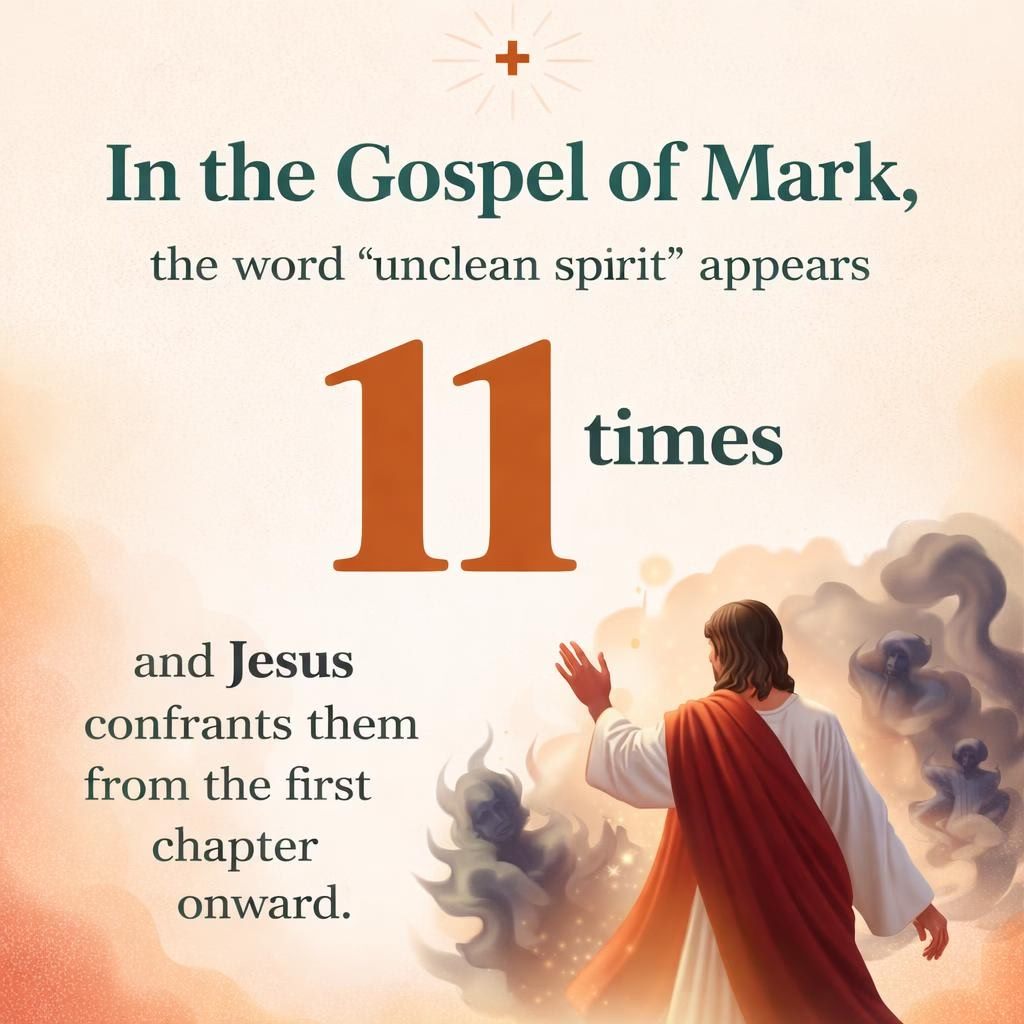
Jesus did deliverance as a normal part of ministry. The Gospels don’t treat it like a rare side quest. In Mark’s Gospel, it shows up early and often. In the Gospel of Mark, the word “unclean spirit” appears 11 times, and Jesus confronts them from the first chapter onward. That repetition tells you something. This wasn’t a fringe issue.
Now, I used to be jumpy about this topic. Years ago, I thought deliverance was either fake or always extreme. Turns out I’d only seen bad examples. Loud. Showy. People getting hyped but not getting holy. That bugs me. Real deliverance aims for freedom that stays.
Influence vs possession
Most committed Christians I work with aren’t “possessed” in the movie sense. They’re oppressed, harassed, baited, worn down. Paul talks about giving the devil a foothold (Ephesians 4:27). Footholds don’t start as fortresses. They start as permission slips.
And here’s a stabilizing thought. The New Testament shows demonic conflict, but also strong spiritual protection for believers who walk in Christ. The phrase “in Christ” shows up more than 80 times in Paul’s letters, emphasizing identity and spiritual location as the baseline for freedom.
Deliverance is not a shortcut around repentance
I’ll be straight with you. Sometimes people want a prayer that lets them keep the same secret habits. That doesn’t work. Not long-term. Jesus frees you, but He also calls you to follow Him.
Repentance isn’t self-hatred. It’s agreement with God. It’s you saying, “Lord, I’m done partnering with this.” That’s when spiritual pressure often breaks.

How to recognize spiritual bondage without getting weird about everything
Most believers swing between two errors. One side is “demons are behind every headache.” The other is “demons don’t exist, so ignore all spiritual conflict.” Both sides leave you stuck.
Here’s what I watch for when I’m helping someone pursue freedom. Patterns. Escalation. Compulsion. Isolation. And that heavy hopeless feeling that doesn’t match the situation.
Common signs I see in serious Christians
- Persistent condemnation that doesn’t lift even after confession (Romans 8:1 is true, yet you can’t feel it).
- Compulsive cycles you hate, but keep repeating (porn, rage, self-harm thoughts, substance dependence, obsessive checking).
- Prayer resistance where you try to pray and your mind goes foggy or panicky instantly.
- Night oppression like recurring nightmares, dread, sleep paralysis fear, or a sense of being watched.
And yes, some of this overlaps with mental health and trauma. That’s not a threat to deliverance. It just means you may need layered care. Spiritual roots. Emotional roots. Nervous system stuff. The Lord can address all of it.
One more reality check. Shame thrives in secrecy. That’s why confession and trusted community matter. In a large meta-analysis on social support and health outcomes, people with stronger social relationships had about a 50% higher likelihood of survival over time compared to those with weaker relationships. Different context, same principle. Isolation makes people fragile.
What the Bible says about spiritual warfare that people misread
Spiritual warfare isn’t you trying to be tougher than the devil. It’s you standing in what Jesus already did. Big difference.
Colossians says Jesus disarmed rulers and authorities and put them to open shame (Colossians 2:15). That’s not poetic filler. That’s victory language.
Ephesians 6 is not about yelling
Ephesians 6 says “stand” a lot. Not “perform.” Not “panic.” Stand. Truth. Righteousness. Gospel peace. Faith. Salvation. Word of God. Prayer. That’s the shape of it.
Most people skip the slow stuff. They want the moment. But the armor is daily life. And when daily life is sloppy, deliverance sessions become a revolving door.
Authority is real, but it’s not arrogance
I’ve watched believers try to use authority like a magic wand. They shout, then collapse the next day. Authority works best with humility and obedience. Think centurion faith, not spiritual bravado.
Also, the name of Jesus is not a slogan. In Acts 19, the sons of Sceva found that out the hard way. They used the Name without relationship, and it went badly. Acts 19 records seven sons of a Jewish high priest attempting deliverance without true authority, and the oppressed man overpowered them.
Root doors that often need to be shut
Here’s what I mean by “doors.” Not spooky portals. Real agreements, wounds, and practices that give ongoing access for oppression.
When I work with clients on this, the first thing I check is not the demon’s name. I check the doorway. Because even if oppression breaks in prayer, an open door often pulls it back.
Unforgiveness and ongoing bitterness
This one is painful. I know. Forgiveness doesn’t pretend it didn’t hurt. It just refuses to keep drinking the poison. Jesus ties forgiveness to spiritual freedom in a way people like to soften.
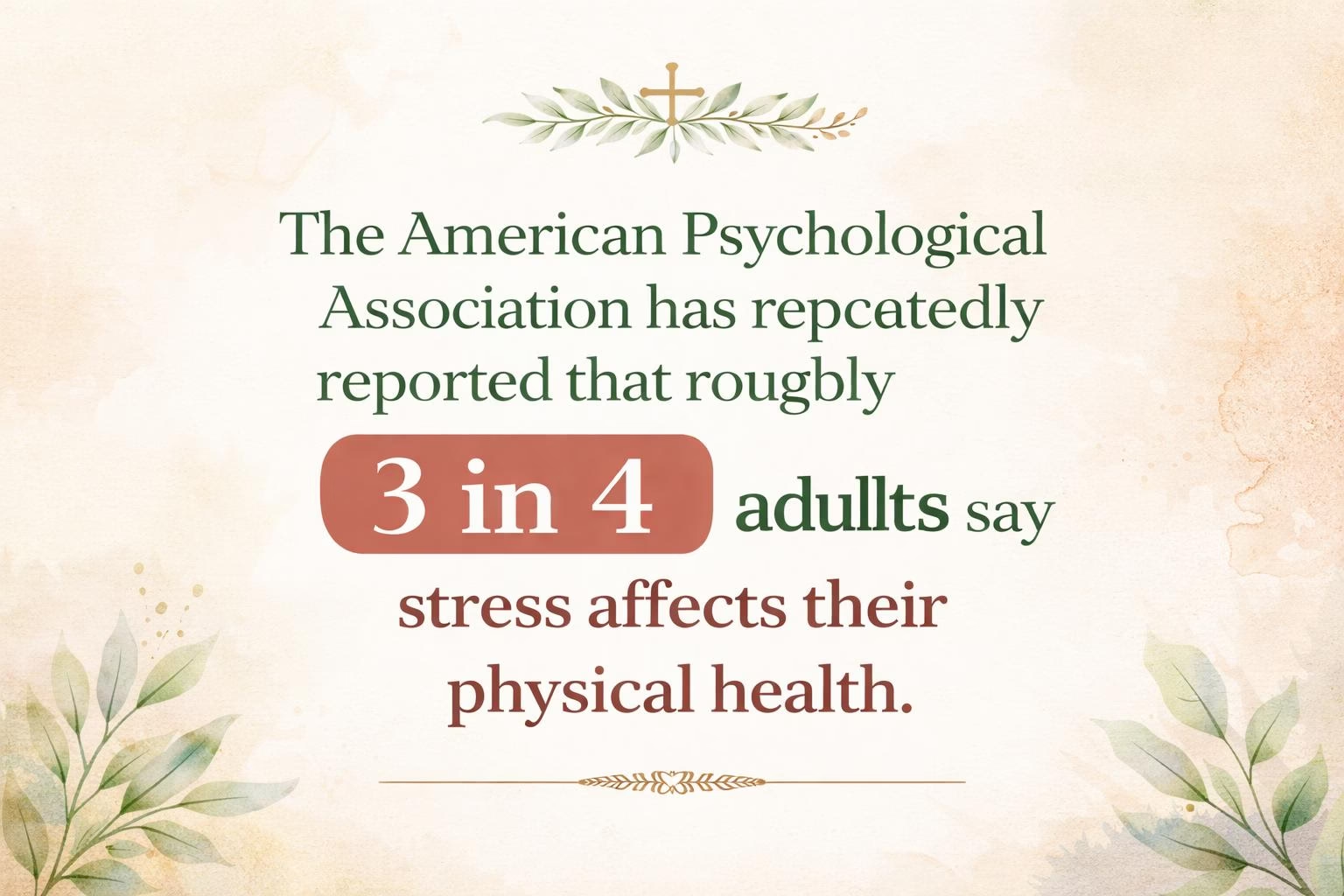
And stress piles on top. Chronic resentment keeps your body in high alert. The American Psychological Association has repeatedly reported that roughly 3 in 4 adults say stress affects their physical health. When your body’s on edge, temptation hits harder. And intrusive thoughts get louder.
Occult involvement and counterfeit spiritual practices
Tarot. Mediumship. Spirit guides. Witchcraft. “Manifesting” rituals. Even some “Christianized” versions. I’m not trying to be dramatic. Scripture is blunt here (Deuteronomy 18:10-12).
I’ve seen believers who dabbled in this years ago, then later couldn’t shake night terror. When they renounced it clearly and removed objects tied to it, things shifted fast. Not always instantly. But noticeably.
Sexual sin and secret patterns
Sexual sin isn’t only a moral problem. It’s a bonding problem. It trains your brain and spirit toward counterfeit comfort.
And it’s widespread, even in church. In a Barna study on pornography, 54% of practicing Christians reported viewing pornography. That number doesn’t exist to shame you. It exists to prove you’re not alone. And to show how normalized bondage can become.
Trauma vows and inner agreements
These sound like, “I’ll never trust again.” Or “I’m always unsafe.” Or “It’s my fault.” Those sentences can lodge deep. And oppressive spirits love to squat on them like legal paperwork.
Real talk: you might not remember when you made the vow. But you’ll feel it when you try to step into freedom. Something inside clenches. That’s usually where Jesus wants to heal, not just cast out.
A grounded deliverance prayer process you can actually do
I’m going to give you a process I’ve used in pastoral settings. It’s not flashy. It’s steady. And yes, you can start alone, but I prefer you involve a mature believer when things feel intense.
Step 1. Invite the Holy Spirit and confess Jesus as Lord
Keep it simple. “Jesus, You are Lord. I belong to You. Fill me with Your Spirit.”
This matters because freedom isn’t emptiness. It’s replacement. You’re not becoming neutral. You’re becoming more yielded.
Step 2. Ask God to show the doorways
“Lord, show me where I agreed with lies, sin, or fear.” Then pause. Don’t force it.
Journaling helps here. People remember more when they write. Research on expressive writing commonly finds measurable improvements in health and stress markers after as little as 15 to 20 minutes of writing for several days. You’re not writing to be poetic. You’re writing to be honest.
Step 3. Repent and renounce, out loud
Out loud matters. Your body participates. Your mouth participates. “I repent for ______. I renounce ______. I break agreement with ______ in Jesus’ name.”
Sometimes I’ll have a person list specific items. “I renounce tarot readings from 2019.” “I renounce pornography as comfort.” Specificity helps. Not because God’s picky. Because your heart stops hiding.
Step 4. Forgive, even if it’s messy
Forgiveness can be a process. But you can start it now. “Jesus, I choose to forgive ______ for ______. I release them to You.”
You might cry. You might feel nothing. Both are normal.
Step 5. Command oppression to leave in Jesus’ name
You don’t beg. You don’t negotiate. You command. “In the name of Jesus Christ, I command every unclean spirit attached to ______ to leave me now.”
And then you wait. Quietly. Sometimes people yawn, cough, tremble, feel heat, feel lighter. Sometimes nothing noticeable happens but the next week is different. Don’t chase sensations.
Step 6. Fill the house
Ask the Holy Spirit to fill every place that was under oppression. Worship. Read Scripture aloud. Take communion if you can. Connect to community fast.
Jesus warned about a spirit leaving and returning to an “empty” place (Matthew 12:43-45). That’s not a reason to fear. It’s a reason to fill your life with Jesus on purpose.
Deep emotional healing that strengthens deliverance
Some people get deliverance and then wonder why their emotional triggers still flare. That’s not failure. It’s layers.
I’ve watched the Lord set someone free spiritually in an hour. Then spend months rewiring their reactions. Both are grace.
Renewing the mind is slow, but it works
Romans 12:2 isn’t a motivational quote. It’s a method. Replace lies with truth until your reflexes change.
And repetition matters. Your brain learns through practice. Sleep research consistently shows adults need about 7 to 9 hours of sleep per night for optimal cognitive performance and emotional regulation. When sleep is wrecked, your mind renewal feels ten times harder. Guard sleep like it’s spiritual warfare. Because it kind of is.
Healing prayer for memories
This is one of my favorite things to do with believers. You bring Jesus into a painful memory. You ask Him what He wants to show you. You listen. You test it against Scripture. And you let Him reframe the lie you absorbed.
I had a client who kept hearing, “You’re unsafe.” Every time she tried to pray, panic hit. In a healing prayer time, she remembered a childhood moment. She asked Jesus where He was. She pictured Him there. Not as a concept. As present. Her panic didn’t vanish overnight, but it loosened. Like a knot finally giving way.
Your body needs care too
Some Christians feel guilty saying that. Don’t. Elijah had a spiritual crisis and God gave him sleep and food before a sermon (1 Kings 19). Sometimes the most spiritual thing you can do is eat something with protein and go to bed.
How to keep freedom after a breakthrough
Freedom can be won in a moment. Keeping it is usually a rhythm.
I’m not trying to sound strict. I’m trying to keep you free.
Build a simple daily rule of life
Not complicated. Ten minutes in the Word. Ten minutes in prayer. Worship in the car. A short examen at night. Small things hold big doors shut.
People underestimate consistency. A widely cited behavioral finding suggests that automatic habits often take around 66 days on average to form, with wide variation. So don’t judge day 7 like it’s day 70.
Clean up entertainment and inputs
Some media is basically an altar to fear, lust, or cynicism. And you’re wondering why your dreams are dark. Come on. You already know.
I’m not saying become Amish. I’m saying be honest. What you feed grows.
Stay in accountable community
You need at least one safe person who can ask you real questions. Not nosy questions. Real ones. “How’s your thought life?” “Any relapse?” “Are you isolating?”
James 5:16 connects confession with healing. That connection is not theoretical. I’ve watched it play out too many times to ignore it.
When you need help and what GospelLight Creations offers
Some battles aren’t meant to be fought alone. Especially when there’s heavy oppression, recurring night terror, or a long history of trauma and compulsive cycles.
At GospelLight Creations, I focus on biblically grounded deliverance teaching, prayer tools, and books that walk you through freedom without hype. Practical. Scripture-saturated. And built for people who actually want to mature, not just get a one-time experience.
If you want a structured next step, I recommend starting here: get the deliverance and freedom resources from our book store. You’ll find teachings you can study, prayers you can pray, and guidance that stays anchored in the Word.
FAQs for Christian Deliverance and Spiritual Freedom Complete Biblical Guide
Can a Christian have a demon
I usually avoid that phrasing because it confuses people. A believer belongs to Jesus. But a believer can be oppressed, harassed, and influenced through footholds. I’ve seen that up close. The real question is simpler. “Is there an area where darkness is still pushing on you?” If yes, deal with it.
Why do I feel worse after I pray for freedom
Sometimes resistance spikes when you start closing doors. Think of it like stirring up sediment in a glass. It looks cloudier before it clears. Also, your body may be coming out of numbness. That can feel like “worse” even though it’s progress.
Do I need someone to cast a demon out of me
Not always. I’ve watched people get free in private repentance and worship. But some situations go faster with a mature helper who stays calm, listens well, and doesn’t get weird. Especially when you’re dealing with intense manifestations or deep trauma ties.
What should I do if deliverance didn’t work
I’d check three things. Doorways you haven’t fully renounced. Forgiveness that’s still stuck. And ongoing patterns that keep feeding the problem. Sometimes the issue isn’t “power.” It’s permission. Also, sometimes it takes repeated ministry sessions. That’s not uncommon.
How do I know if it’s trauma or a demonic attack
Sometimes it’s both. Trauma can create beliefs and triggers, and demonic oppression can exploit them. I look for spiritual pressure that escalates during prayer, worship, or steps of obedience. And I look for emotional flashbacks tied to memories. Either way, Jesus heals. Don’t overthink the label.
Is it biblical to renounce generational curses
I’m careful with the language because people get superstitious fast. But yes, Scripture shows patterns passing through families, and it shows believers breaking with sin patterns through repentance and obedience. In practice, I’ll have people renounce family sin agreements (abuse, occult, addiction) and then replace them with blessings and truth in Christ.