
Prayer and warfare language can get weird fast. Or vague. Or both. So I’m going to keep this grounded. You want freedom from spiritual bondage. You want to pray with a clear mind. You want to stand your ground without turning every bad day into a demon hunt. I get it.
I do this kind of work through GospelLight Creations, and I’ve watched the same pattern repeat. People feel stuck. They pray hard. They still feel pinned. Not because God’s absent. Usually because they’re missing a few biblical basics. And they’re exhausted.
What spiritual warfare looks like when it is actually biblical
Here’s what I mean. Spiritual warfare isn’t spooky vibes and conspiracy charts. It’s mostly boring obedience with a stiff backbone. Truth. Repentance. Forgiveness. Resisting temptation. Saying no when your flesh screams yes.
Paul calls it a fight. But he doesn’t call it chaos. He calls it standing. Again and again. Stand. That’s warfare.
Jesus is the center of deliverance, not technique
Look, I love practical tools. I write them. I teach them. But techniques don’t free people. Jesus does. His authority. His cross. His name. And your ongoing surrender.
When I work with someone who’s been trapped for years, I usually start with the same question: “Do you know you’re allowed to say no?” Simple. Not easy. But simple.
And yes, there’s a reason the New Testament keeps hammering “watch and pray.” Jesus said it that way. Not “watch and panic.”
Common confusion that keeps Christians stuck
One big snag is treating warfare like a one-time event. Like you pray once, get zapped with freedom, and never wrestle again. Sometimes deliverance is immediate. I’ve seen that. Sometimes it’s layered. Healing and sanctification running alongside deliverance. That’s normal.
Another snag. People quote verses like they’re magic words. Scripture isn’t a spell book. It’s truth. You’re agreeing with God out loud. That changes you. It also pushes back darkness. Both.
How I approach deliverance prayer without hype
Honestly? I used to overcomplicate this. Back when I started, I thought the “right” wording mattered more than the heart posture. Turns out, the enemy loves that. He’d rather you obsess over wording than repent, forgive, and submit to God.
So I keep a basic flow. Not rigid. Just steady.
Step one is always surrender and repentance
I begin with worship or simple gratitude. Then surrender. Then repentance. Specific repentance. Not vague. The goal isn’t shame. The goal is agreement with God.
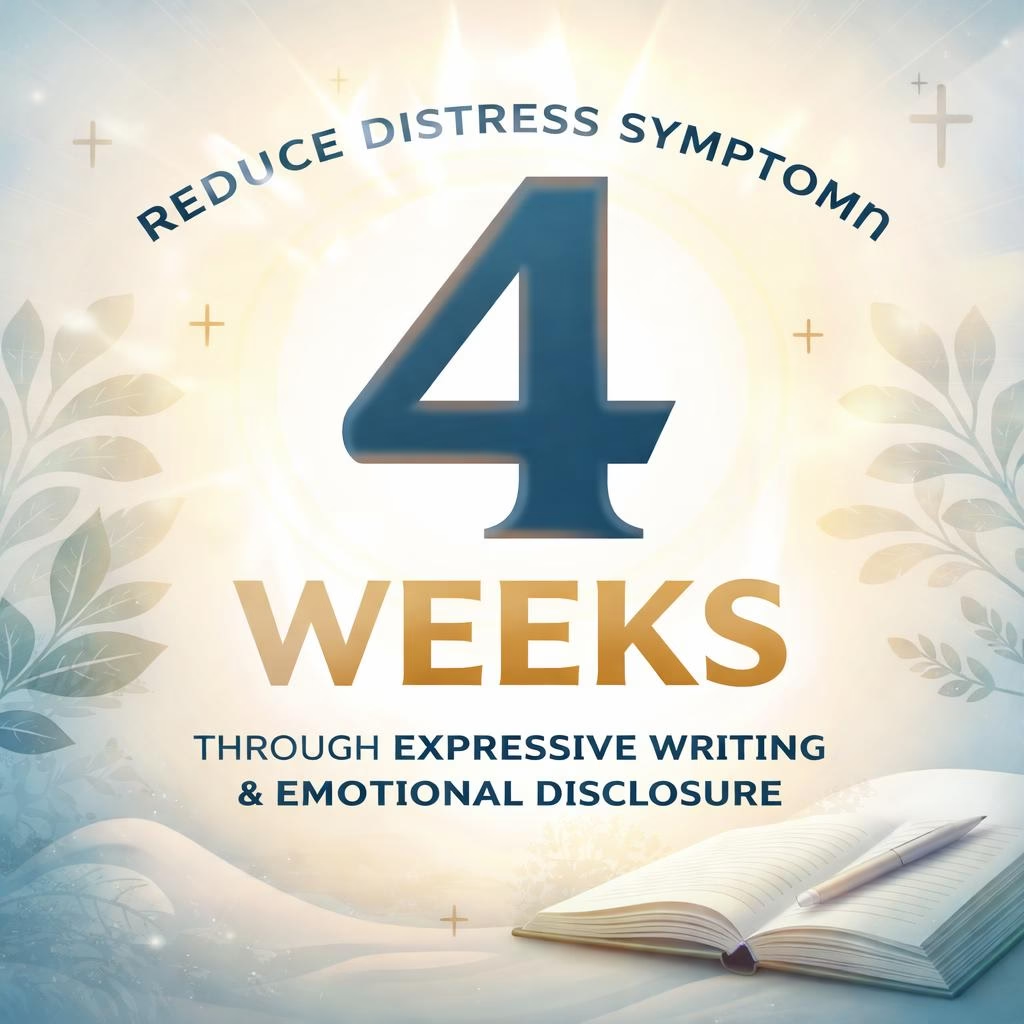
And when confession is involved, clarity matters. Research published in the Journal of Consulting and Clinical Psychology has found expressive writing and structured emotional disclosure can reduce distress symptoms over weeks (often around 4 weeks in common study designs). I’m not saying repentance is therapy. I’m saying naming what’s real changes the internal pressure. That’s part of why confession is powerful.
Then I deal with open doors like forgiveness and renunciation
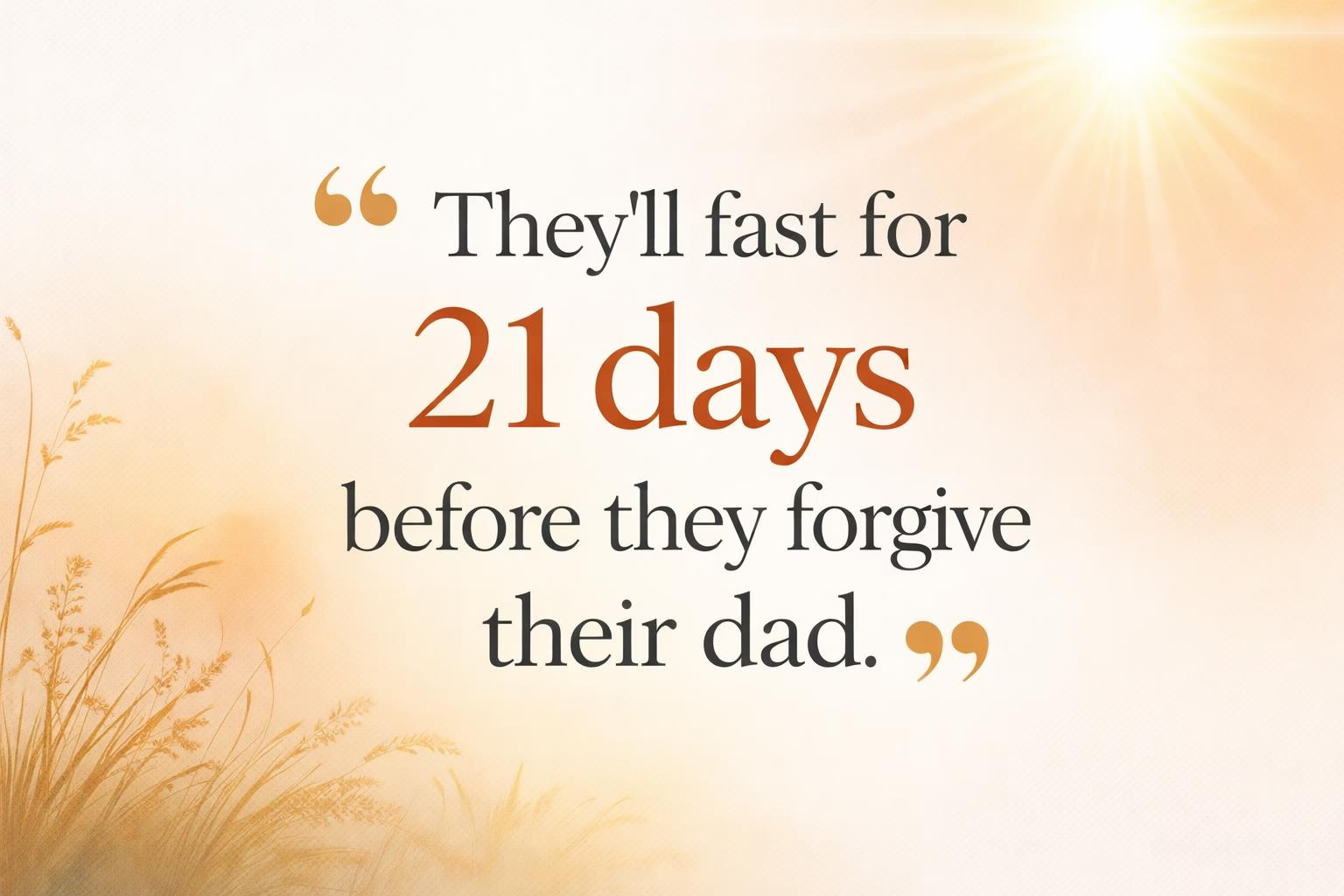
Forgiveness is the one people avoid. They’ll fast for 21 days before they forgive their dad. Real talk. I’ve seen it.
Jesus ties forgiveness to freedom in a way that’s hard to dodge. When someone says, “I can’t forgive,” I don’t scold them. I slow down. We pray through the pain. We separate forgiveness from pretending. You can forgive and still set boundaries. That’s not hypocrisy. That’s wisdom.
Renunciation comes next. You’re breaking agreement with sin, occult involvement, destructive vows, and identity lies. Stuff like “I’ll always be alone” or “I’m disgusting” can act like a hook in the soul. You don’t need drama. You need truth.
Then I command oppression to leave in Jesus’ name
This part is direct. Not screaming. Not negotiating. You’re not asking demons about their childhood. You’re enforcing what Jesus already did.
I’ll say something like: “In the name of Jesus Christ, I command every unclean spirit attached to fear and torment to leave now.” Then I pause. Sometimes people cough. Sometimes they cry. Sometimes nothing obvious happens. I don’t chase a manifestation. I watch fruit over time.
And I always invite the Holy Spirit to fill what’s been cleared. Don’t skip that. Empty rooms get revisited.
Using Scripture in warfare prayer without turning it into a slogan
Scripture is your sword, yes. But it’s also your map. When you’re in bondage, you often don’t trust your own perception. That’s where the Word steadies you.
Pick verses that confront the lie you keep agreeing with
If your struggle is shame, I’m not going to start with a verse about “crushing enemies.” I’m going after identity. Adoption. No condemnation. Cleansing.
If your struggle is anxiety and constant dread, I’m aiming at God’s peace and presence. Also his command to not fear. Not as a slap. As a reorientation.
One more angle. Memorization is underrated. A 2015 Pew Research Center study found 55% of U.S. Christians say they read Scripture at least monthly. That’s fine. But warfare moments aren’t monthly. They’re Tuesday at 2 a.m. The words you’ve stored are the words you can swing when you’re tired.
Speak the Word like agreement, not performance
I’ll be straight with you. Performative prayer is a trap. Trying to sound powerful can hide fear. God isn’t impressed. Demons aren’t intimidated by your vocabulary. But they do respond to authority under submission.
So I’ll say the verse slowly. Then I’ll respond to it. “Lord, I agree with this. I belong to you. I reject the lie.” That’s it.
Armor of God and resisting the devil in daily life
This is where most people win or lose. Not in a single prayer session. In ordinary days. Habits. Boundaries. What you let your mind chew on.
Armor is a lifestyle, not a costume
The armor of God isn’t “put it on” like a quick ritual. It’s describing realities you live in. Truth. Righteousness. Peace. Faith. Salvation. The Word. Prayer.
When someone tells me they “put on the armor” but they’re still lying, still hiding porn, still feeding bitterness, I don’t argue theology. I just point to the gap. Armor is worn in the light.
Resisting the devil includes cutting off supply lines
You can’t resist while you’re cuddling the temptation. That’s not resistance. That’s negotiation.
In my experience, the most common “supply lines” are unfiltered media, isolation, and untreated exhaustion. And yes, your body matters here. When you’re sleep-deprived, your defenses are lower across the board. That’s not mystical. It’s human.
So you resist. You also replace. Different inputs. Different rhythms. Different friendships. Sometimes a different church environment if you’re constantly minimized or shamed.
Fasting and prayer in deliverance without getting extreme
Fasting can be powerful. I’m not a fan of using it as self-punishment though. God isn’t buying your suffering like it’s currency. Fasting is about hunger directed toward God. Clearing space. Quieting noise. Humbling yourself.
And yes, some cases feel “stubborn.” Jesus hinted at that. But I’ve seen people chase fasting while refusing basic obedience. That bugs me. Don’t skip the simple stuff.
When fasting helps most
Fasting tends to help when your appetite is running your life. Food. Media. Attention. Control. It exposes what’s driving you. Then you can bring it to God.
I usually suggest starting small. One meal. One day. Keep your prayers simple. Read Scripture. Repent quickly when the irritability shows up (because it will).
Getting reliable help and tools that do not manipulate you
Some deliverance spaces get controlling. Everyone’s under a “word.” Everyone’s under suspicion. I’m not doing that. Freedom in Christ produces clarity. Sobriety. Love.
At GospelLight Creations, my focus is practical biblical teaching, guided prayer help, and books that walk you through freedom steps you can actually repeat on your own. Not dependency. Not weirdness. Just honest discipleship aimed at healing.
And if you want the bigger framework that ties all this together, I put it in one place here: Christian deliverance and spiritual freedom complete biblical guide.
Where to go next inside this topic
You might be wondering which angle to tackle first. Depends what’s been hitting you hardest lately. Fear? Temptation? Oppression that spikes during prayer? Feeling blocked when you try to worship?
- How to pray for Christian deliverance and spiritual freedom
- What spiritual warfare is for Christians in deliverance
- When Christians should fast for spiritual freedom
- How to use Scripture in Christian deliverance prayer
- What putting on the armor of God means
- How to resist the devil as a Christian
One last thing. Don’t wait until you “feel strong” to start. Start while you’re shaky. That’s often when faith is most real.
Leave a Reply