
Freedom doesn’t stick in isolation. Not usually. You can have a powerful prayer moment on a Tuesday night and still spiral by Friday because nobody’s walking with you when the noise comes back. Community and discipleship aren’t “extras” in deliverance. They’re the rails that keep the train on the tracks.
And yeah, I know. Some church spaces have been messy. Some people got burned. I’ve seen it up close. Still, the Bible keeps pulling us back to the same idea. God sets people free. Then He teaches them to live free. With other people in the room.
Why deliverance needs community
Look, deliverance is often a moment. Discipleship is a process. Your nervous system, your habits, your thought grooves, your relationships. They don’t all magically reshape in one prayer session. That’s not unbelief. That’s reality.
When I work with someone who’s coming out of heavy oppression, one of the first things I check is who actually knows the truth about their life. Not the polished version. The real one. If the answer is “no one,” that’s a problem. Not because God can’t help. Because the enemy loves secrecy.
The New Testament is blunt about mutual care. Confession. Prayer for one another. Bearing burdens. It’s not a vibe. It’s a plan.
Confession and prayer are not solo sports
James 5:16 doesn’t say “confess to your journal.” Confess to one another. Pray for one another. Healing tends to accelerate when it’s not hidden.
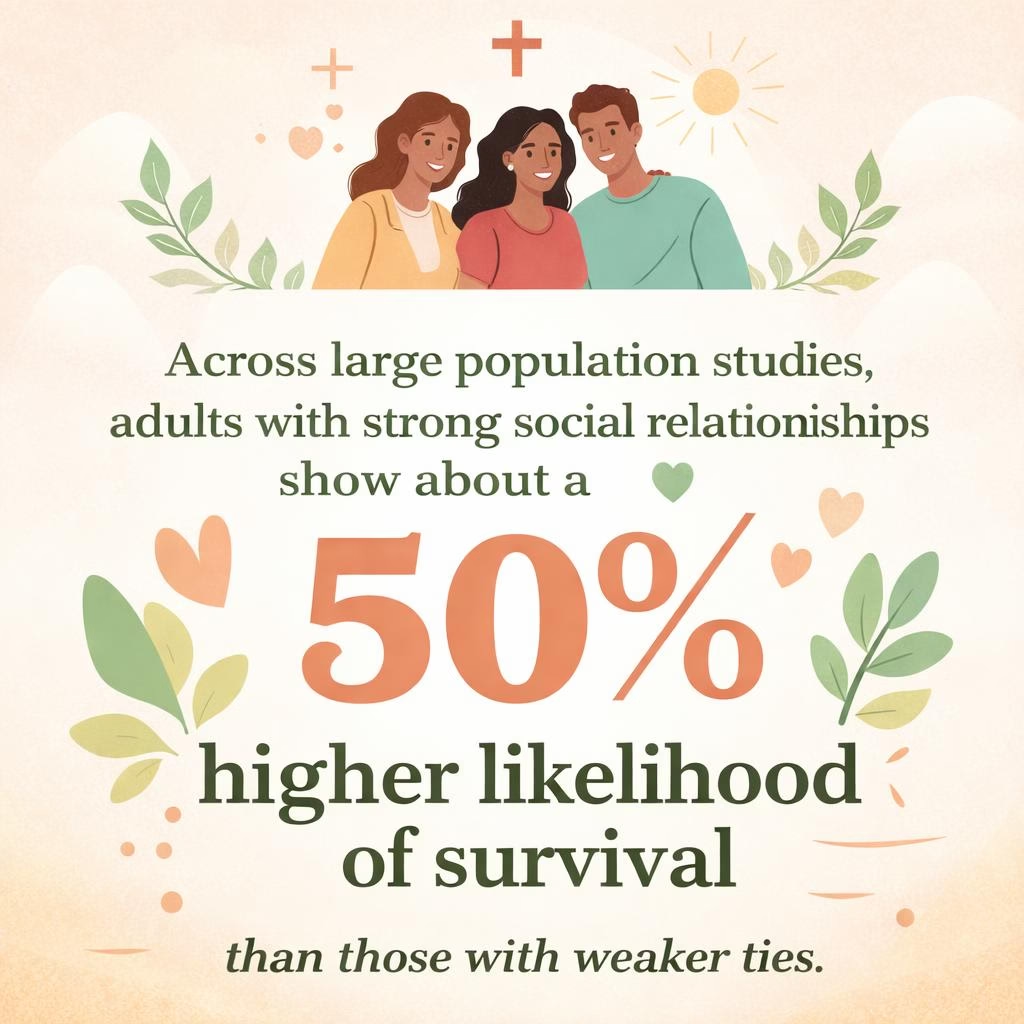
And there’s an odd little detail most people skip. Social support isn’t just comforting, it’s protective. Across large population studies, adults with strong social relationships show about a 50% higher likelihood of survival than those with weaker ties. That’s not a Bible verse, but it rhymes with one. Isolation eats people alive. Spiritually too.
Deliverance without follow-up can get weird
I used to think, early on, that the biggest danger was “not enough power” in a prayer session. Turns out, the bigger danger is no structure afterward. People feel clean. Then they go right back into the same unrepented patterns. Same media intake. Same toxic friendships. Same secret sin. And then they message me like, “Why does it feel worse?”
Jesus warned about an empty house getting reoccupied (Matthew 12:43–45). He wasn’t giving demonology trivia. He was describing what happens when a person gets relief but doesn’t fill their life with obedience, truth, and new rhythms.

What healthy discipleship looks like after deliverance
Healthy discipleship isn’t controlling. It’s not intense for the sake of intensity. It’s simple things done consistently. Scripture. repentance. forgiveness work. renewed mind. practical boundaries. And yes, learning how to take responsibility for your own soul again.
If you want a bigger biblical framework for deliverance and long-term freedom, I point people to the complete biblical guide to Christian deliverance and spiritual freedom. I wrote it for the moments when you’re trying to connect the dots and you don’t want hype. You want clarity.
Start with identity and authority
Most believers I talk to can quote “I’m a child of God.” But they don’t live like it when shame hits. So we drill it. Not as a slogan. As a practiced response.
Here’s what I mean. When condemnation shows up, do you agree with it? Or do you answer it with Scripture and repentance where needed? I’m not asking to be dramatic. I’m asking because agreement is sticky.
Replace doors with guardrails
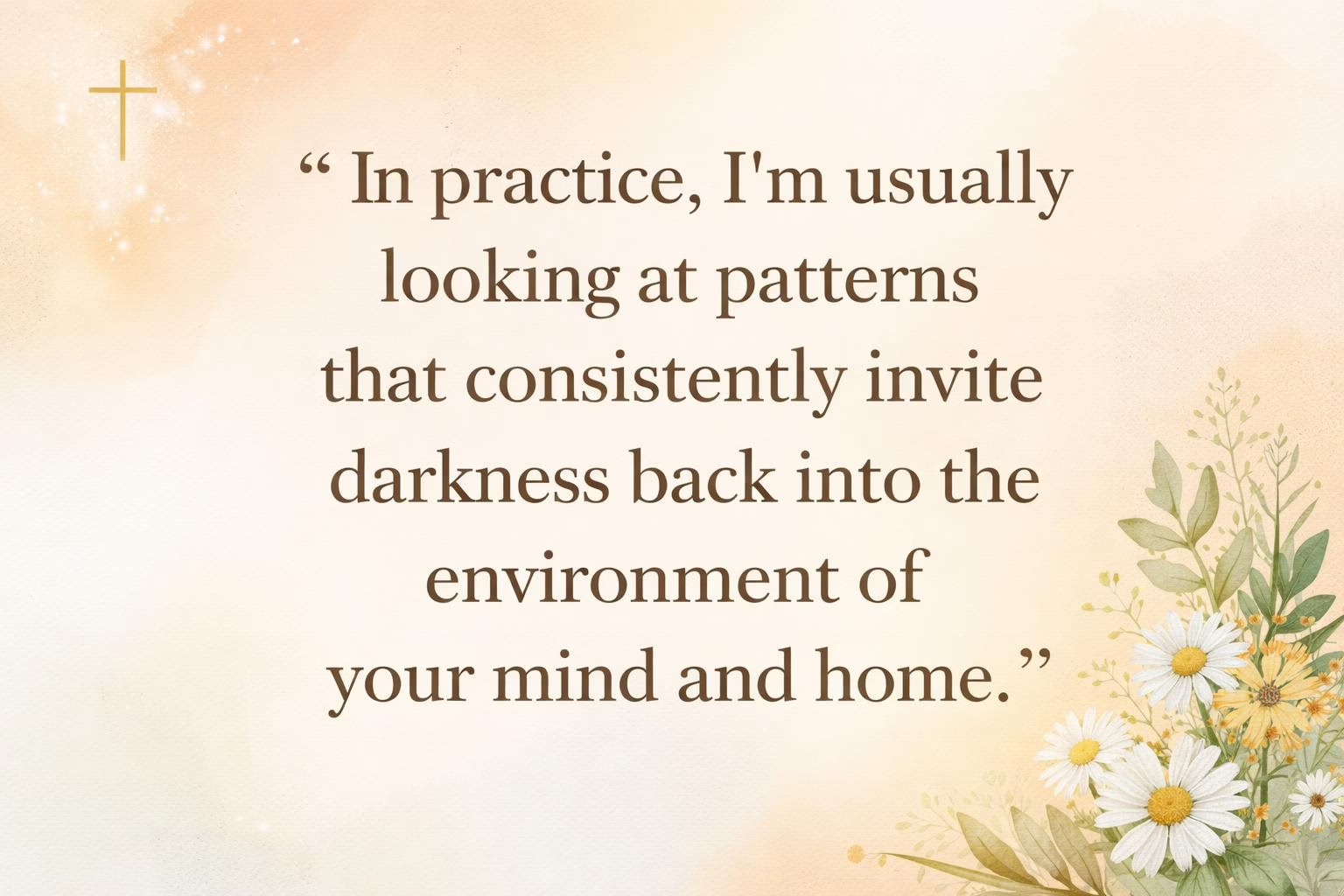
People ask me, “What’s a door?” And I get it. The language can be vague. In practice, I’m usually looking at patterns that consistently invite darkness back into the environment of your mind and home. Unforgiveness. sexual sin. occult content. chronic bitterness. addiction rituals. Stuff like that.
But here’s the twist. You can’t just close a door by saying “I close it” and then keep the same routine. Guardrails are physical and relational. A dumb phone for a season. No private DMs. A bedtime. Filters. A friend with the password. Confession before you feel like it. Boring obedience. That kind of thing.
How to find a safe freedom community
Honestly? “Deliverance community” can mean two totally different things. One is biblical, sober, gentle, accountable. The other is chaotic, obsessed, and slightly addicted to spiritual drama. I’m not a fan of the second one.
So what do you look for?
Look for fruit, not hype
Do people grow in holiness over time? Do marriages heal? Do folks become more patient and self-controlled, not just more intense? That’s fruit.
And watch leadership culture. Can leaders be questioned? Are they teachable? Do they refer people out when issues are clearly trauma-related, medical, or beyond their training? Or do they pretend every problem is a demon? I’ve seen that go bad. Fast.
Safety means boundaries and consent
Here’s a basic standard I keep: nobody touches someone without clear permission, nobody corners someone alone, and nobody pressures a person into public confession for “breakthrough.” That’s not spiritual. That’s coercive.
Also, confidentiality matters. Not “we’ll pray about it on the prayer chain” confidentiality. Real confidentiality. When I lead prayer, I say it out loud: what’s shared here stays here unless someone is in immediate danger.
And yes, these aren’t just preferences. Trust is fragile. The American Psychological Association reports that about 75% of adults say they experienced at least one symptom of stress in the past month. If someone’s already stressed and vulnerable, sloppy ministry practices can knock them over.
Accountability that doesn’t crush you
Accountability gets a bad reputation because people confuse it with surveillance. Real accountability feels like support, not suspicion.
When I help someone set it up, I keep it tight. Two or three trusted people. Clear check-in times. Specific topics. Not an open-ended “tell me everything.” That burns out both sides.
Pick the right people
Not everyone is safe. That’s just true. Choose people who can hold a secret, tell the truth, and still love you. People who won’t make your story about them. People who won’t use your confession as leverage later.
And pick people who actually like Scripture. That sounds obvious. It’s not. Some folks want spiritual experiences but don’t want the Word. That’s a shaky foundation for freedom.
Use simple questions
I like questions that are annoyingly practical:
- Where did you feel tempted this week?
- Did you lie to yourself anywhere?
- Are you carrying unforgiveness?
- Did you do the “small obediences” you already know to do?
Then we pray. Not performative. Just normal. Sometimes short. Sometimes tearful. Depends.
Helping a friend wisely
Maybe you’re reading this because you’re the stable one. The friend who gets the late-night texts. The one who feels responsible. I’ve been there. It can get heavy.
Here’s the thing. You can help without becoming the savior. Jesus already has that job.
Don’t feed fear
If your friend starts attributing every bad mood to “an attack,” slow it down. Ask about sleep. Ask about conflict. Ask about what they’ve been consuming. Ask about repentance. You’re not denying spiritual warfare. You’re refusing paranoia.
Do pray. But keep it anchored
Pray Scripture. Invite Jesus’ lordship. Lead them into forgiveness. Encourage confession. If you start naming demons for twenty minutes, you can actually train them to obsess. I’ve watched that happen. It doesn’t produce peace.
At GospelLight Creations, the way I teach this is pretty grounded. Bible first. Prayer that’s direct. Then actual steps. I’ve put a lot of that into my books and teaching resources because people need something they can return to on a Wednesday afternoon when the feelings are loud.
Spiritual disciplines that keep freedom steady
People ask me for the “secret.” I don’t have one. I have rhythms. And they work over time.
Scripture intake that becomes response
Reading is good. Responding is better. When a lie hits, answer it out loud with truth. When temptation hits, flee. Don’t negotiate. When shame hits, confess quickly and receive cleansing (1 John 1:9). Speed matters.
Worship that shifts the room
Some days you won’t feel like worship. Do it anyway. Not as a performance. As alignment. I’ve had sessions where the atmosphere in a home changed after ten minutes of simple worship and prayer. No theatrics. Just presence.
Fasting with wisdom
Fasting can break patterns. It can also expose what’s been numbed. But don’t turn it into punishment. I’m not trying to impress God with hunger. I’m trying to quiet my flesh so I can hear and obey.
And sometimes fasting isn’t food. It’s cutting off an app. It’s stepping away from a relationship that keeps pulling you back into compromise. That kind of fast gets real, real quick.
A realistic path forward
So where do you start this week? Pick one relational step and one spiritual step. Text the person you trust. Set a check-in time. Then choose a daily practice you’ll actually do, not the fantasy version of you.
And if you’re still trying to figure out what a safe deliverance process even looks like, or what to expect when you ask for prayer, I’ve got articles and resources at GospelLight Creations that walk you through it without the weirdness. Because you don’t need more confusion. You need a path. And people who’ll stay with you on it.
Leave a Reply