Category: Christian Deliverance and Spiritual Freedom Complete Biblical Guide

  • Christian Deliverance and Spiritual Freedom Biblical Foundations

    Christian Deliverance and Spiritual Freedom Biblical Foundations

    Deliverance gets weird fast when it floats away from Scripture. And you’ve probably felt that. Someone quotes one verse. Then they build a whole ministry vibe on it. You’re sitting there thinking, “Okay, but where is this in the Bible?” Good instinct.

    I’m going to ground you. Not hype you up. Biblical foundations. Clear rails. And practical handles you can actually grab when the night gets heavy and your mind won’t quiet down.

    Also, if you want the bigger roadmap that ties all the pieces together, I point people to the complete biblical guide to Christian deliverance and spiritual freedom. It keeps you from chasing spiritual rabbits.

    Start where the Bible starts

    Jesus treats bondage like real bondage

    Jesus didn’t act like spiritual oppression was imaginary. He spoke to unclean spirits. He cast them out. He also healed bodies and restored people socially. That mix matters. Some folks want deliverance to be only demons. Others want it to be only trauma. Jesus won’t let us pick a team.

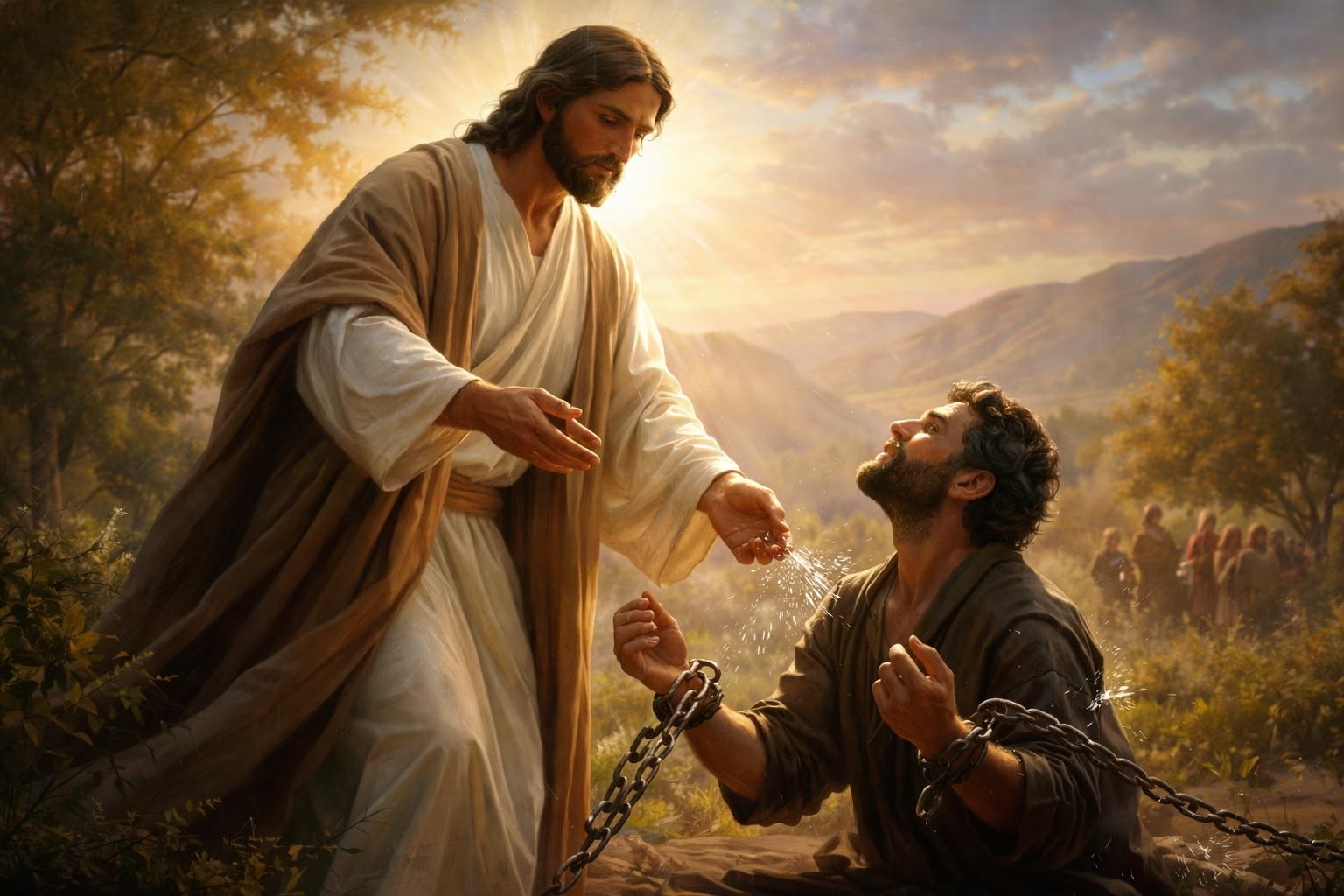
    Look at Luke 4. He reads Isaiah and says He’s anointed “to proclaim liberty to the captives.” That’s not a cute metaphor. It’s a mission statement. And it’s tied to His authority, not ours.

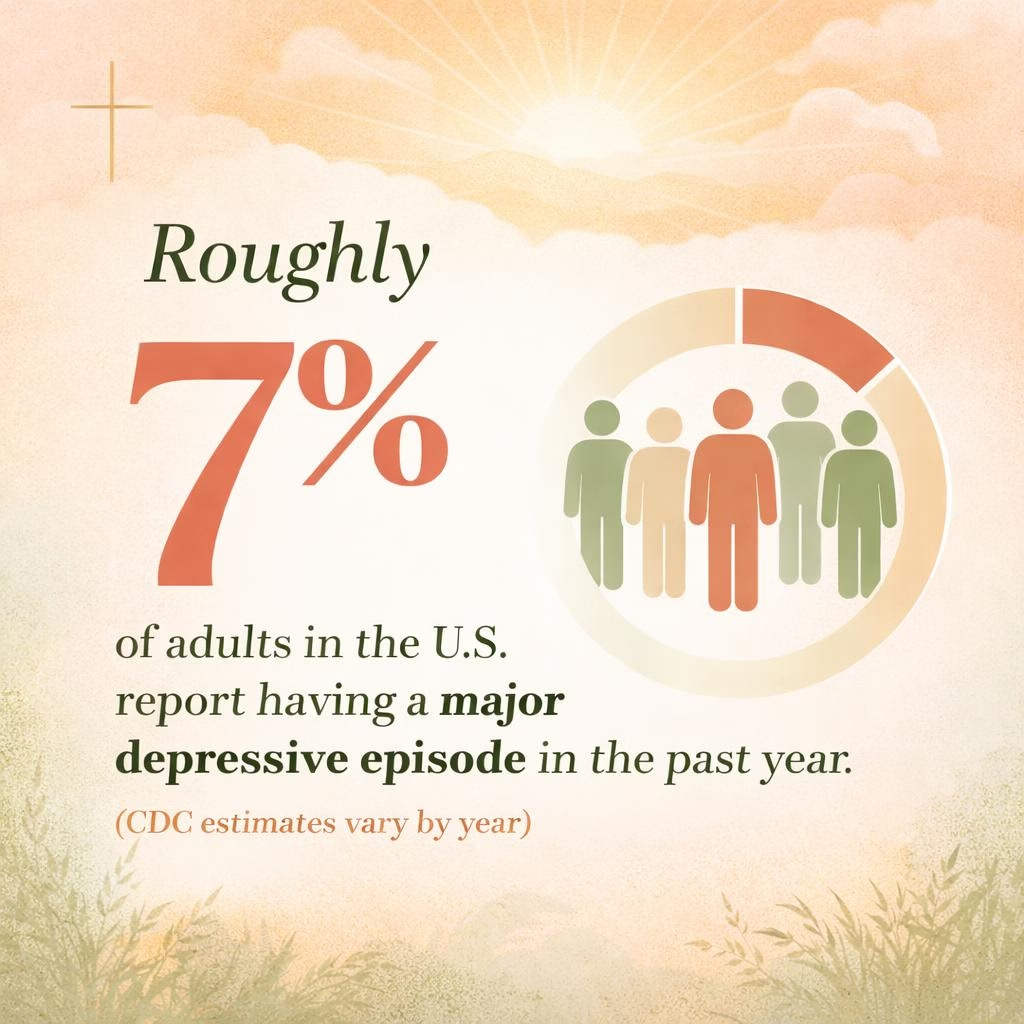
    One thing that steadies me: the Gospels record exorcisms as a normal part of Jesus’ ministry. Not every scene. But enough that you can’t pretend it’s fringe. Roughly 7% of adults in the U.S. report having a major depressive episode in the past year (CDC estimates vary by year). That’s not a “deliverance stat.” It’s a reminder that suffering is common, layered, and often spiritual and emotional at the same time.

    Christian Deliverance and Spiritual Freedom Biblical Foundations - Key Statistic

    The Kingdom of God is the framework

    Deliverance in the New Testament sits inside “the kingdom of God.” Jesus says, “If I cast out demons by the Spirit of God, then the kingdom of God has come upon you” (Matt. 12:28). So deliverance isn’t a party trick. It’s a signpost. A declaration that Jesus is King and the usurper doesn’t get the last word.

    And notice the order. Kingdom first. Not technique first. Honestly, technique obsession is usually fear wearing church clothes.

    Christian Deliverance and Spiritual Freedom Biblical Foundations - Illustration

    Authority and identity

    Authority is delegated, not self-generated

    I used to think authority was about intensity. Like if I prayed louder, heaven would “take me seriously.” Turns out I was just tired. Authority is about union with Christ and obedience to Him. The disciples are given authority. They don’t manifest it from inner grit.

    Luke 10 is sobering. The seventy return excited that demons submit. Jesus redirects them: rejoice that your names are written in heaven. That’s identity. That’s safety. That’s also how you keep from turning deliverance into spiritual adrenaline.

    A Christian can be attacked without being owned

    You’ll run into arguments about whether a believer can have a demon. The language gets tangled because the Bible uses different terms and situations. Here’s the ground I stand on in my experience: believers can be oppressed, harassed, and influenced. They can also partner with sin and lies in ways that look very “spiritual.” But ownership? No. You’re bought with a price.

    Ephesians 4:27 says you can “give no opportunity to the devil.” That implies opportunity can be given. But it also implies it can be shut. Repentance, forgiveness, renunciation. Boring words. Powerful reality.

    How bondage actually forms

    Sin, lies, and wounds travel together

    Most bondage I’ve seen isn’t one clean cause. It’s a braid. A wound that never got tended. A lie that explained the wound. A sin pattern that dulled the pain for a minute. Then a spiritual push that kept it cycling.

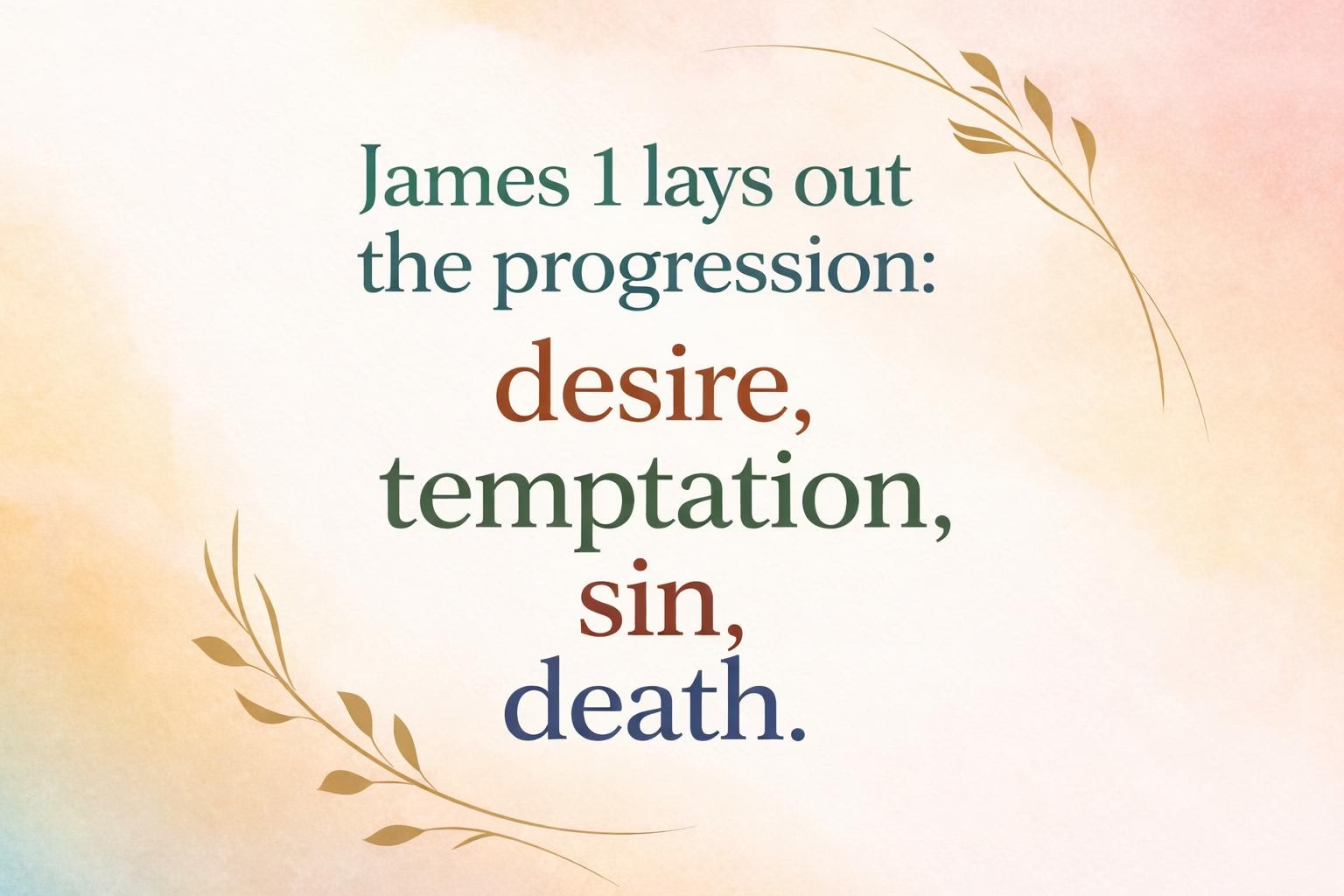
    James 1 lays out the progression: desire, temptation, sin, death. It’s not saying demons aren’t real. It’s saying your own desires matter. That’s actually good news because it gives you something concrete to bring into the light.

    Christian Deliverance and Spiritual Freedom Biblical Foundations - Key Insight

    And yes, trauma matters. The Bible doesn’t use modern clinical labels, but it sure talks about crushed spirits, anxious hearts, memories that haunt, bodies that tremble. About 70% of adults worldwide report experiencing at least one traumatic event in their lifetime (WHO-linked and widely cited global trauma exposure estimates). So when someone says, “Why do I keep reacting like this?” I don’t roll my eyes. I lean in.

    Idolatry is often the quiet doorway

    Real talk: idolatry doesn’t always look like statues. Sometimes it’s control. Sometimes it’s approval. Sometimes it’s “I will never feel that again,” and you’ll do anything to keep that vow. Scripture treats idolatry as spiritual adultery because it’s a misdirected trust.

    When I work with clients on this, the first thing I check isn’t “What demon is it?” It’s “What did you start trusting when God felt unsafe?” That question lands. Hard.

    What deliverance looks like in Scripture

    Jesus uses simple commands

    Read the encounters. Jesus doesn’t do long rituals. He doesn’t bargain. He commands. Sometimes He asks a question. Sometimes He names a lie by exposing it. But the center is authority and clarity.

    This bugs me about some modern deliverance culture. It can feel like theater. Hours of yelling, endless naming, obsession with ranking spirits. The New Testament just doesn’t model that as the norm.

    The apostles keep it Christ-centered

    Acts shows deliverance happening, but always tethered to the gospel. In Philippi, Paul commands the spirit out of the slave girl. Then what happens? Suffering. Conflict. Jail. So if someone sold you the idea that deliverance equals instant comfort, you were sold something else.

    Also, not everyone practicing “spiritual power” is safe. Acts 19 has the sons of Sceva trying to use Jesus’ name like a magic phrase. That story isn’t there to entertain you. It’s there to warn you.

    The role of repentance, forgiveness, and renunciation

    Repentance is agreement with God

    Repentance isn’t groveling. It’s turning. It’s telling the truth with God. Specific truth. “I used porn to regulate stress.” “I used rage to feel strong.” “I used spiritual performance to avoid intimacy with Jesus.” That kind of repentance breaks chains because it removes the cover.

    I’ve watched prayer sessions stall for 30 minutes until someone finally says the real thing out loud. Then the air changes. Not because the counselor is amazing. Because light just walked into the room.

    Forgiveness is not the same as reconciliation

    This one’s tender. You can forgive someone and still keep boundaries. You can forgive and still report a crime. Forgiveness is releasing your right to revenge. It’s handing the case to God. That doesn’t mean you pretend it didn’t matter.

    In deliverance ministry, unforgiveness often shows up as a hook. Not always. But often enough that I don’t skip the question: “Who do you still need to release?” Sometimes the answer is yourself. That one hits people like a brick.

    Renunciation cuts agreements

    Renouncing is simply breaking verbal and heart-level agreements you made in fear, lust, pride, despair, or pain. “I renounce the lie that I’m dirty.” “I renounce the vow that I must control everything.” You’re not casting a spell. You’re taking your words back.

    At GospelLight Creations, I’ve built prayer resources and Bible-based teaching notes that help you walk this step without getting mystical about it. Plain language. Scripture right there on the page. That’s the whole thing.

    The Holy Spirit and the Word

    The Spirit leads, Scripture anchors

    I’m not interested in either-or. The Holy Spirit guides. He convicts. He comforts. He also never contradicts the written Word. So I keep both in my hands at the same time.

    When someone says, “God told me…” I don’t panic. But I do test. 1 John 4:1 says to test the spirits. Acts 17 praises the Bereans for examining the Scriptures daily. Daily. Not once in a while when things get chaotic.

    If you want help with discernment, I’d point you to your own habit of slow Bible reading before I point you to any prayer method. And yes, I sell books and teaching tools through GospelLight Creations. But I’m telling you straight. Your open Bible is the sharpest tool in the room.

    Testing deliverance teaching

    Look for fruit, not frenzy

    Jesus says you’ll know them by their fruit. So ask simple questions. Does this teaching produce humility? Does it produce holiness? Does it produce love for the local church? Or does it produce suspicion, spiritual pride, and dependence on a personality?

    In my experience, unhealthy deliverance environments tend to create “repeat customers” who never grow. That’s a red flag. Freedom should mature you. It should make you more anchored, not more obsessed.

    Watch the view of the cross

    This is the litmus test. If the cross becomes a footnote and demons become the headline, something’s off. Colossians 2 says Jesus disarmed the rulers and authorities and put them to open shame. That’s already done. You’re enforcing a victory, not trying to earn one.

    So when you feel fear rising during deliverance prayer, bring it back to Calvary. Out loud. “Jesus, You’re Lord. You’ve already won.” Simple. Steady.

    Practical next steps that stay biblical

    Use a simple freedom prayer rhythm

    Here’s a rhythm I recommend because it stays close to Scripture and it doesn’t depend on weirdness.

    • Worship: Put Jesus in the center. Even 60 seconds.
    • Confess: Name what’s true. Sin. Fear. Patterns. Don’t decorate it.
    • Forgive: Release the offender to God. Name it specifically.
    • Renounce: Break agreements with lies and vows.
    • Command and resist: In Jesus’ name, refuse oppression. Stand firm (James 4:7).
    • Replace: Speak Scripture truth. Ask the Spirit to fill the space.

    Not every step takes the same amount of time. Sometimes forgiveness is the long work. Sometimes the lie is the long work. And sometimes you’re just exhausted and you need sleep before you can even think straight. That’s not unspiritual. You’re a human.

    Get support that’s steady

    Freedom tends to stick when you’re not doing it alone. A trusted pastor. A mature friend. A trained prayer minister who isn’t thirsty for drama. I’ve seen more breakthroughs happen in quiet, accountable relationships than in flashy altar moments.

    If you’re looking for structured, Scripture-forward help, that’s where GospelLight Creations resources can serve you. Biblical teaching. Guided prayers. Books that don’t talk down to you. And they don’t hype you up either.

  • Christian Deliverance and Spiritual Freedom Community and Discipleship

    Christian Deliverance and Spiritual Freedom Community and Discipleship

    Freedom doesn’t stick in isolation. Not usually. You can have a powerful prayer moment on a Tuesday night and still spiral by Friday because nobody’s walking with you when the noise comes back. Community and discipleship aren’t “extras” in deliverance. They’re the rails that keep the train on the tracks.

    And yeah, I know. Some church spaces have been messy. Some people got burned. I’ve seen it up close. Still, the Bible keeps pulling us back to the same idea. God sets people free. Then He teaches them to live free. With other people in the room.

    Why deliverance needs community

    Look, deliverance is often a moment. Discipleship is a process. Your nervous system, your habits, your thought grooves, your relationships. They don’t all magically reshape in one prayer session. That’s not unbelief. That’s reality.

    When I work with someone who’s coming out of heavy oppression, one of the first things I check is who actually knows the truth about their life. Not the polished version. The real one. If the answer is “no one,” that’s a problem. Not because God can’t help. Because the enemy loves secrecy.

    The New Testament is blunt about mutual care. Confession. Prayer for one another. Bearing burdens. It’s not a vibe. It’s a plan.

    Confession and prayer are not solo sports

    James 5:16 doesn’t say “confess to your journal.” Confess to one another. Pray for one another. Healing tends to accelerate when it’s not hidden.

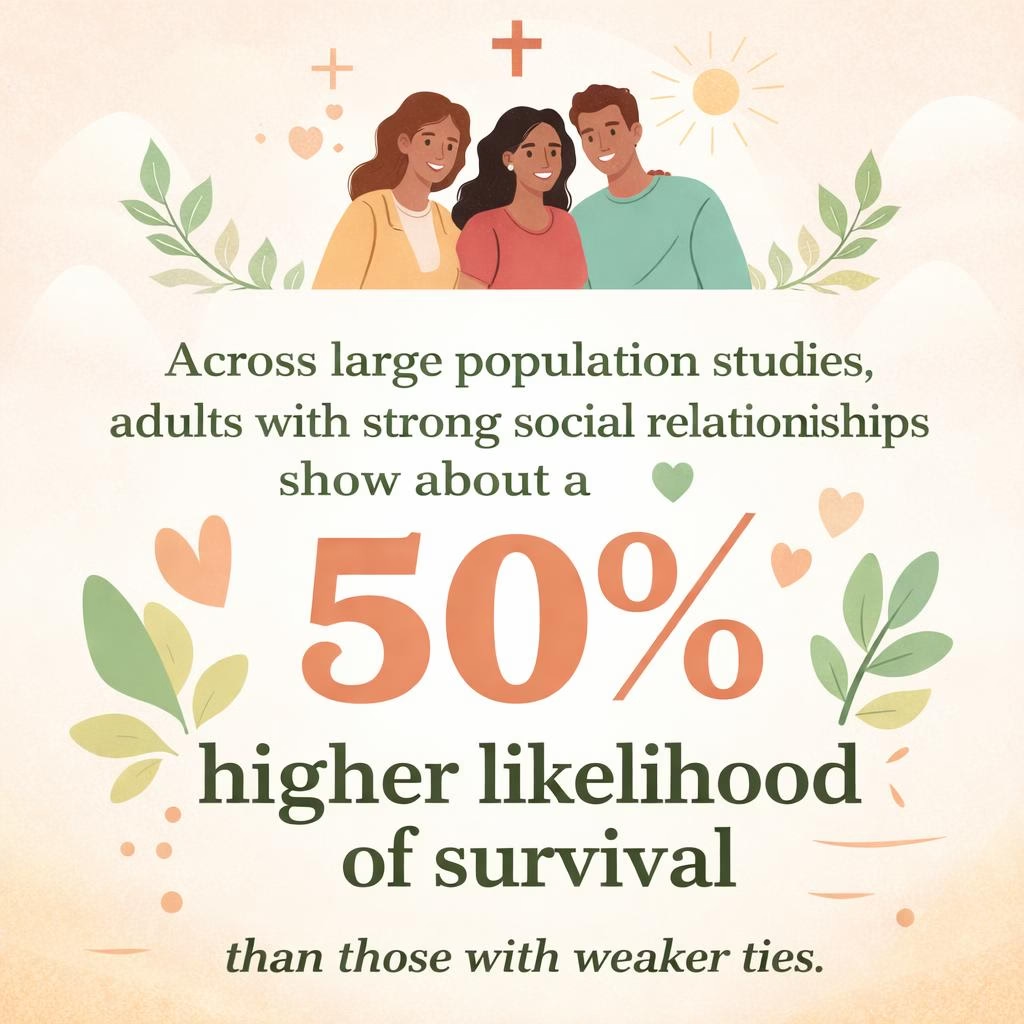
    And there’s an odd little detail most people skip. Social support isn’t just comforting, it’s protective. Across large population studies, adults with strong social relationships show about a 50% higher likelihood of survival than those with weaker ties. That’s not a Bible verse, but it rhymes with one. Isolation eats people alive. Spiritually too.

    Christian Deliverance and Spiritual Freedom Community and Discipleship - Key Statistic

    Deliverance without follow-up can get weird

    I used to think, early on, that the biggest danger was “not enough power” in a prayer session. Turns out, the bigger danger is no structure afterward. People feel clean. Then they go right back into the same unrepented patterns. Same media intake. Same toxic friendships. Same secret sin. And then they message me like, “Why does it feel worse?”

    Jesus warned about an empty house getting reoccupied (Matthew 12:43–45). He wasn’t giving demonology trivia. He was describing what happens when a person gets relief but doesn’t fill their life with obedience, truth, and new rhythms.

    Christian Deliverance and Spiritual Freedom Community and Discipleship - Illustration

    What healthy discipleship looks like after deliverance

    Healthy discipleship isn’t controlling. It’s not intense for the sake of intensity. It’s simple things done consistently. Scripture. repentance. forgiveness work. renewed mind. practical boundaries. And yes, learning how to take responsibility for your own soul again.

    If you want a bigger biblical framework for deliverance and long-term freedom, I point people to the complete biblical guide to Christian deliverance and spiritual freedom. I wrote it for the moments when you’re trying to connect the dots and you don’t want hype. You want clarity.

    Start with identity and authority

    Most believers I talk to can quote “I’m a child of God.” But they don’t live like it when shame hits. So we drill it. Not as a slogan. As a practiced response.

    Here’s what I mean. When condemnation shows up, do you agree with it? Or do you answer it with Scripture and repentance where needed? I’m not asking to be dramatic. I’m asking because agreement is sticky.

    Replace doors with guardrails

    People ask me, “What’s a door?” And I get it. The language can be vague. In practice, I’m usually looking at patterns that consistently invite darkness back into the environment of your mind and home. Unforgiveness. sexual sin. occult content. chronic bitterness. addiction rituals. Stuff like that.

    Christian Deliverance and Spiritual Freedom Community and Discipleship - Key Insight

    But here’s the twist. You can’t just close a door by saying “I close it” and then keep the same routine. Guardrails are physical and relational. A dumb phone for a season. No private DMs. A bedtime. Filters. A friend with the password. Confession before you feel like it. Boring obedience. That kind of thing.

    How to find a safe freedom community

    Honestly? “Deliverance community” can mean two totally different things. One is biblical, sober, gentle, accountable. The other is chaotic, obsessed, and slightly addicted to spiritual drama. I’m not a fan of the second one.

    So what do you look for?

    Look for fruit, not hype

    Do people grow in holiness over time? Do marriages heal? Do folks become more patient and self-controlled, not just more intense? That’s fruit.

    And watch leadership culture. Can leaders be questioned? Are they teachable? Do they refer people out when issues are clearly trauma-related, medical, or beyond their training? Or do they pretend every problem is a demon? I’ve seen that go bad. Fast.

    Safety means boundaries and consent

    Here’s a basic standard I keep: nobody touches someone without clear permission, nobody corners someone alone, and nobody pressures a person into public confession for “breakthrough.” That’s not spiritual. That’s coercive.

    Also, confidentiality matters. Not “we’ll pray about it on the prayer chain” confidentiality. Real confidentiality. When I lead prayer, I say it out loud: what’s shared here stays here unless someone is in immediate danger.

    And yes, these aren’t just preferences. Trust is fragile. The American Psychological Association reports that about 75% of adults say they experienced at least one symptom of stress in the past month. If someone’s already stressed and vulnerable, sloppy ministry practices can knock them over.

    Accountability that doesn’t crush you

    Accountability gets a bad reputation because people confuse it with surveillance. Real accountability feels like support, not suspicion.

    When I help someone set it up, I keep it tight. Two or three trusted people. Clear check-in times. Specific topics. Not an open-ended “tell me everything.” That burns out both sides.

    Pick the right people

    Not everyone is safe. That’s just true. Choose people who can hold a secret, tell the truth, and still love you. People who won’t make your story about them. People who won’t use your confession as leverage later.

    And pick people who actually like Scripture. That sounds obvious. It’s not. Some folks want spiritual experiences but don’t want the Word. That’s a shaky foundation for freedom.

    Use simple questions

    I like questions that are annoyingly practical:

    • Where did you feel tempted this week?
    • Did you lie to yourself anywhere?
    • Are you carrying unforgiveness?
    • Did you do the “small obediences” you already know to do?

    Then we pray. Not performative. Just normal. Sometimes short. Sometimes tearful. Depends.

    Helping a friend wisely

    Maybe you’re reading this because you’re the stable one. The friend who gets the late-night texts. The one who feels responsible. I’ve been there. It can get heavy.

    Here’s the thing. You can help without becoming the savior. Jesus already has that job.

    Don’t feed fear

    If your friend starts attributing every bad mood to “an attack,” slow it down. Ask about sleep. Ask about conflict. Ask about what they’ve been consuming. Ask about repentance. You’re not denying spiritual warfare. You’re refusing paranoia.

    Do pray. But keep it anchored

    Pray Scripture. Invite Jesus’ lordship. Lead them into forgiveness. Encourage confession. If you start naming demons for twenty minutes, you can actually train them to obsess. I’ve watched that happen. It doesn’t produce peace.

    At GospelLight Creations, the way I teach this is pretty grounded. Bible first. Prayer that’s direct. Then actual steps. I’ve put a lot of that into my books and teaching resources because people need something they can return to on a Wednesday afternoon when the feelings are loud.

    Spiritual disciplines that keep freedom steady

    People ask me for the “secret.” I don’t have one. I have rhythms. And they work over time.

    Scripture intake that becomes response

    Reading is good. Responding is better. When a lie hits, answer it out loud with truth. When temptation hits, flee. Don’t negotiate. When shame hits, confess quickly and receive cleansing (1 John 1:9). Speed matters.

    Worship that shifts the room

    Some days you won’t feel like worship. Do it anyway. Not as a performance. As alignment. I’ve had sessions where the atmosphere in a home changed after ten minutes of simple worship and prayer. No theatrics. Just presence.

    Fasting with wisdom

    Fasting can break patterns. It can also expose what’s been numbed. But don’t turn it into punishment. I’m not trying to impress God with hunger. I’m trying to quiet my flesh so I can hear and obey.

    And sometimes fasting isn’t food. It’s cutting off an app. It’s stepping away from a relationship that keeps pulling you back into compromise. That kind of fast gets real, real quick.

    A realistic path forward

    So where do you start this week? Pick one relational step and one spiritual step. Text the person you trust. Set a check-in time. Then choose a daily practice you’ll actually do, not the fantasy version of you.

    And if you’re still trying to figure out what a safe deliverance process even looks like, or what to expect when you ask for prayer, I’ve got articles and resources at GospelLight Creations that walk you through it without the weirdness. Because you don’t need more confusion. You need a path. And people who’ll stay with you on it.

  • Christian Deliverance and Spiritual Freedom Prayer and Warfare

    Christian Deliverance and Spiritual Freedom Prayer and Warfare

    Prayer and warfare language can get weird fast. Or vague. Or both. So I’m going to keep this grounded. You want freedom from spiritual bondage. You want to pray with a clear mind. You want to stand your ground without turning every bad day into a demon hunt. I get it.

    I do this kind of work through GospelLight Creations, and I’ve watched the same pattern repeat. People feel stuck. They pray hard. They still feel pinned. Not because God’s absent. Usually because they’re missing a few biblical basics. And they’re exhausted.

    What spiritual warfare looks like when it is actually biblical

    Here’s what I mean. Spiritual warfare isn’t spooky vibes and conspiracy charts. It’s mostly boring obedience with a stiff backbone. Truth. Repentance. Forgiveness. Resisting temptation. Saying no when your flesh screams yes.

    Paul calls it a fight. But he doesn’t call it chaos. He calls it standing. Again and again. Stand. That’s warfare.

    Jesus is the center of deliverance, not technique

    Look, I love practical tools. I write them. I teach them. But techniques don’t free people. Jesus does. His authority. His cross. His name. And your ongoing surrender.

    When I work with someone who’s been trapped for years, I usually start with the same question: “Do you know you’re allowed to say no?” Simple. Not easy. But simple.

    And yes, there’s a reason the New Testament keeps hammering “watch and pray.” Jesus said it that way. Not “watch and panic.”

    Common confusion that keeps Christians stuck

    One big snag is treating warfare like a one-time event. Like you pray once, get zapped with freedom, and never wrestle again. Sometimes deliverance is immediate. I’ve seen that. Sometimes it’s layered. Healing and sanctification running alongside deliverance. That’s normal.

    Another snag. People quote verses like they’re magic words. Scripture isn’t a spell book. It’s truth. You’re agreeing with God out loud. That changes you. It also pushes back darkness. Both.

    Christian Deliverance and Spiritual Freedom Prayer and Warfare - Illustration

    How I approach deliverance prayer without hype

    Honestly? I used to overcomplicate this. Back when I started, I thought the “right” wording mattered more than the heart posture. Turns out, the enemy loves that. He’d rather you obsess over wording than repent, forgive, and submit to God.

    So I keep a basic flow. Not rigid. Just steady.

    Step one is always surrender and repentance

    I begin with worship or simple gratitude. Then surrender. Then repentance. Specific repentance. Not vague. The goal isn’t shame. The goal is agreement with God.

    And when confession is involved, clarity matters. Research published in the Journal of Consulting and Clinical Psychology has found expressive writing and structured emotional disclosure can reduce distress symptoms over weeks (often around 4 weeks in common study designs). I’m not saying repentance is therapy. I’m saying naming what’s real changes the internal pressure. That’s part of why confession is powerful.

    Christian Deliverance and Spiritual Freedom Prayer and Warfare - Key Statistic

    Then I deal with open doors like forgiveness and renunciation

    Forgiveness is the one people avoid. They’ll fast for 21 days before they forgive their dad. Real talk. I’ve seen it.

    Christian Deliverance and Spiritual Freedom Prayer and Warfare - Key Insight

    Jesus ties forgiveness to freedom in a way that’s hard to dodge. When someone says, “I can’t forgive,” I don’t scold them. I slow down. We pray through the pain. We separate forgiveness from pretending. You can forgive and still set boundaries. That’s not hypocrisy. That’s wisdom.

    Renunciation comes next. You’re breaking agreement with sin, occult involvement, destructive vows, and identity lies. Stuff like “I’ll always be alone” or “I’m disgusting” can act like a hook in the soul. You don’t need drama. You need truth.

    Then I command oppression to leave in Jesus’ name

    This part is direct. Not screaming. Not negotiating. You’re not asking demons about their childhood. You’re enforcing what Jesus already did.

    I’ll say something like: “In the name of Jesus Christ, I command every unclean spirit attached to fear and torment to leave now.” Then I pause. Sometimes people cough. Sometimes they cry. Sometimes nothing obvious happens. I don’t chase a manifestation. I watch fruit over time.

    And I always invite the Holy Spirit to fill what’s been cleared. Don’t skip that. Empty rooms get revisited.

    Using Scripture in warfare prayer without turning it into a slogan

    Scripture is your sword, yes. But it’s also your map. When you’re in bondage, you often don’t trust your own perception. That’s where the Word steadies you.

    Pick verses that confront the lie you keep agreeing with

    If your struggle is shame, I’m not going to start with a verse about “crushing enemies.” I’m going after identity. Adoption. No condemnation. Cleansing.

    If your struggle is anxiety and constant dread, I’m aiming at God’s peace and presence. Also his command to not fear. Not as a slap. As a reorientation.

    One more angle. Memorization is underrated. A 2015 Pew Research Center study found 55% of U.S. Christians say they read Scripture at least monthly. That’s fine. But warfare moments aren’t monthly. They’re Tuesday at 2 a.m. The words you’ve stored are the words you can swing when you’re tired.

    Speak the Word like agreement, not performance

    I’ll be straight with you. Performative prayer is a trap. Trying to sound powerful can hide fear. God isn’t impressed. Demons aren’t intimidated by your vocabulary. But they do respond to authority under submission.

    So I’ll say the verse slowly. Then I’ll respond to it. “Lord, I agree with this. I belong to you. I reject the lie.” That’s it.

    Armor of God and resisting the devil in daily life

    This is where most people win or lose. Not in a single prayer session. In ordinary days. Habits. Boundaries. What you let your mind chew on.

    Armor is a lifestyle, not a costume

    The armor of God isn’t “put it on” like a quick ritual. It’s describing realities you live in. Truth. Righteousness. Peace. Faith. Salvation. The Word. Prayer.

    When someone tells me they “put on the armor” but they’re still lying, still hiding porn, still feeding bitterness, I don’t argue theology. I just point to the gap. Armor is worn in the light.

    Resisting the devil includes cutting off supply lines

    You can’t resist while you’re cuddling the temptation. That’s not resistance. That’s negotiation.

    In my experience, the most common “supply lines” are unfiltered media, isolation, and untreated exhaustion. And yes, your body matters here. When you’re sleep-deprived, your defenses are lower across the board. That’s not mystical. It’s human.

    So you resist. You also replace. Different inputs. Different rhythms. Different friendships. Sometimes a different church environment if you’re constantly minimized or shamed.

    Fasting and prayer in deliverance without getting extreme

    Fasting can be powerful. I’m not a fan of using it as self-punishment though. God isn’t buying your suffering like it’s currency. Fasting is about hunger directed toward God. Clearing space. Quieting noise. Humbling yourself.

    And yes, some cases feel “stubborn.” Jesus hinted at that. But I’ve seen people chase fasting while refusing basic obedience. That bugs me. Don’t skip the simple stuff.

    When fasting helps most

    Fasting tends to help when your appetite is running your life. Food. Media. Attention. Control. It exposes what’s driving you. Then you can bring it to God.

    I usually suggest starting small. One meal. One day. Keep your prayers simple. Read Scripture. Repent quickly when the irritability shows up (because it will).

    Getting reliable help and tools that do not manipulate you

    Some deliverance spaces get controlling. Everyone’s under a “word.” Everyone’s under suspicion. I’m not doing that. Freedom in Christ produces clarity. Sobriety. Love.

    At GospelLight Creations, my focus is practical biblical teaching, guided prayer help, and books that walk you through freedom steps you can actually repeat on your own. Not dependency. Not weirdness. Just honest discipleship aimed at healing.

    And if you want the bigger framework that ties all this together, I put it in one place here: Christian deliverance and spiritual freedom complete biblical guide.

    Where to go next inside this topic

    You might be wondering which angle to tackle first. Depends what’s been hitting you hardest lately. Fear? Temptation? Oppression that spikes during prayer? Feeling blocked when you try to worship?

    One last thing. Don’t wait until you “feel strong” to start. Start while you’re shaky. That’s often when faith is most real.

  • Christian Deliverance and Spiritual Freedom Discernment and Safety

    Christian Deliverance and Spiritual Freedom Discernment and Safety

    Deliverance gets weird fast when nobody talks about safety. And honestly? Discernment is the difference between “Jesus set me free” and “I feel spun up and scared again.” So I’m going to keep this practical. Scripture first. Your nervous system matters too. And yes, your church relationships and accountability matter a lot.

    What safety actually means in deliverance

    Most people think safety means “no one gets hurt physically.” Sure. But spiritual safety is also about staying anchored in Christ, not in drama. It’s about avoiding spiritual one-upmanship. It’s about not turning every headache into a demon.

    Here’s the thing. Deliverance is real. So is suggestion. So is trauma. So is plain old sin patterns that need discipleship, not a shouting match. I used to treat everything like a deliverance issue when I was younger in ministry. Turns out that made people shaky, not stable.

    Start with biblical guardrails

    I keep a few guardrails in front of me every time. Jesus is Lord. The gospel is central. The fruit matters more than the fireworks. And the Word tests the experience, not the other way around.

    And I always come back to the idea that God isn’t the author of confusion. Confusion can happen in a session, sure. But if confusion becomes the normal atmosphere, something’s off.

    Consent and clarity are not optional

    Real talk. I’m not a fan of surprise deliverance. Like someone “deciding” you need prayer and cornering you. It’s not loving. It’s not wise. It can also mimic spiritual control.

    Explain what you’re doing. Ask permission. Tell the person they can pause or stop. You’d be shocked how many problems disappear when you slow down and honor conscience.

    Christian Deliverance and Spiritual Freedom Discernment and Safety - Illustration

    Discernment without paranoia

    Discernment isn’t suspicion. It’s clarity. It’s the ability to recognize what’s from the Holy Spirit, what’s from the flesh, what’s from enemy influence, and what’s from a wounded heart reacting.

    Sometimes I’ll ask a simple question: “What happens in you when you say the name of Jesus out loud?” Not as a test to embarrass you. More like a flashlight. The response can tell you a lot. Peace, resistance, grief, fear, numbness. Different stories.

    Test the spirits in real life ways

    People quote “test the spirits” and then skip the testing part. Testing looks like time. Scripture. Counsel. Pattern recognition. And humility.

    When I work with clients on this, first thing I check is fruit over time. Does the person become more loving? More truthful? More steady? Or do they get more reactive, more isolated, more fixated on demons?

    Three common counterfeits I see

    One counterfeit is spiritual performance. Big manifestations. Big stories. No repentance. No accountability. Another is blame shifting. Everything is a demon so nothing is their responsibility. And the third is obsession. The person starts scanning their thoughts all day like a security guard who never sleeps. That’s not freedom.

    Look, spiritual warfare is real. But fixation is still fixation.

    Red flags that should slow you down

    I’m going to be blunt. Some deliverance environments are unsafe. Not because they talk about demons. Because they treat people like projects. Or they chase experiences. Or they build a personality cult.

    Pay attention to how leadership handles correction. How they handle money. How they handle boundaries. That stuff isn’t “secondary.” It’s the atmosphere people are breathing.

    Christian Deliverance and Spiritual Freedom Discernment and Safety - Key Insight

    Ministry red flags I won’t ignore

    • Isolation pressure. “Don’t tell your pastor.” “Your family won’t understand.” Nope.
    • Forced confession. Pressuring people to share trauma details publicly. That can re-injure.
    • Authority games. “Submit to me or you won’t get free.” That’s manipulation dressed in Bible language.
    • Manifestation chasing. Treating screaming or shaking like the proof God showed up.

    If you want a deeper set of warning signs, I wrote a focused piece you can keep open while you evaluate a ministry: what to watch for in deliverance ministries.

    Personal red flags inside you

    Sometimes the unsafe thing isn’t the room. It’s what’s happening inside you. If you notice you’re getting compulsive, sleep-deprived, or you’re afraid to be alone because you think something will “get you,” pause. That’s not courage. That’s torment trying to take the microphone.

    And yes, the body keeps score. Lack of sleep makes everything louder. Anxiety makes spiritual thoughts feel urgent and absolute.

    Trauma, mental health, and deliverance

    This section matters because a lot of sincere believers get hurt here. They go for prayer when what they really need is careful pastoral care plus trauma-informed support. Not either-or. Both-and.

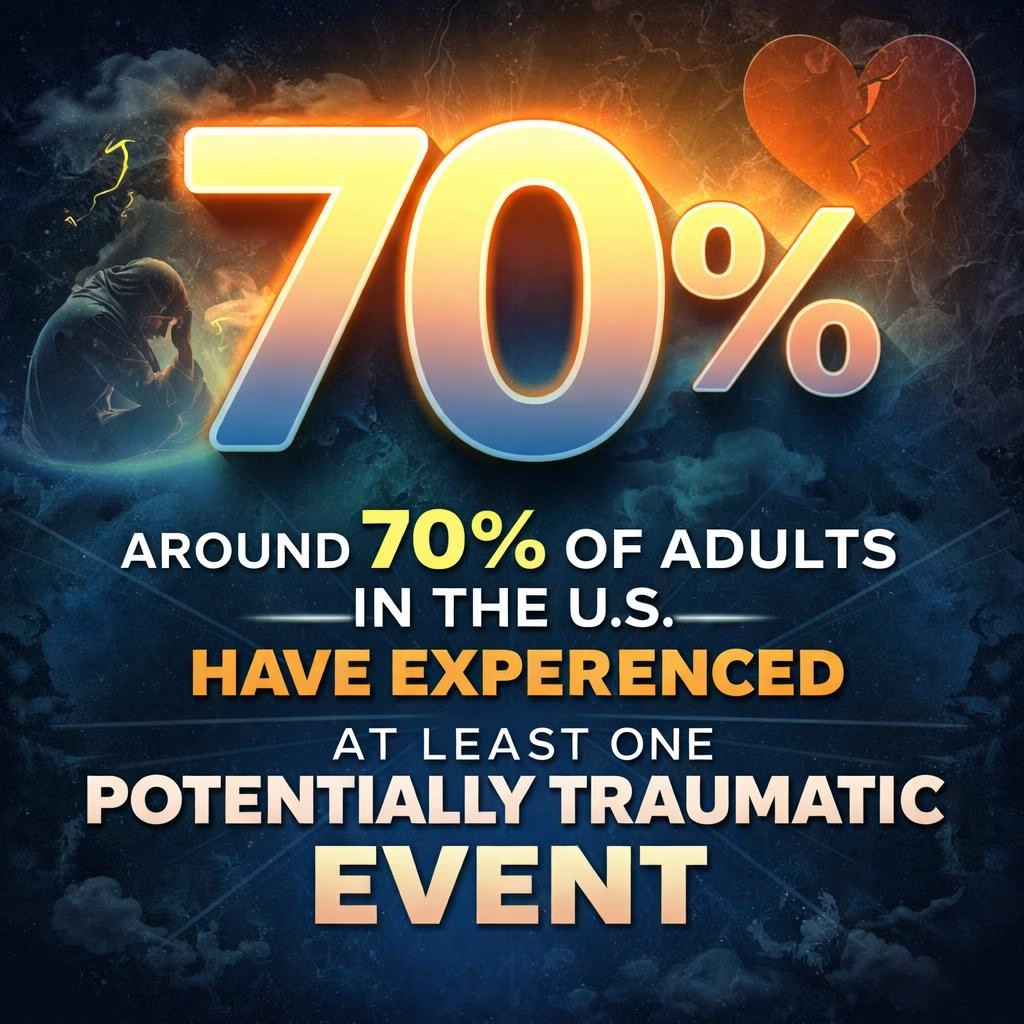
    Here’s one benchmark that helps frame the conversation. Around 70% of adults in the U.S. have experienced at least one potentially traumatic event. That means trauma responses are common in church. In deliverance settings too. So we don’t get to pretend it’s rare.

    How I separate spiritual oppression from trauma responses

    I don’t do it with a single question. I look for patterns. Triggers. Family history. Timing. Symptom shape. Spiritual fruit. And whether the person can pray and receive comfort without spiraling.

    Trauma often has a “body hook.” Heart racing. Dissociation. Shutdown. Flashback imagery. A deliverance approach that ignores the body can accidentally intensify those symptoms.

    Oppression tends to have a “spiritual hook.” Condemnation that feels foreign. Blasphemous intrusive content that doesn’t match the person’s desires. A hard resistance to worship and Scripture that shows up with a particular edge. Even then, I stay cautious. Intrusive thoughts can also be anxiety. Nuance matters.

    When pastoral counsel is the right move

    I recommend bringing your pastor or a mature shepherd into the process when your situation is complex, confusing, or escalating. Especially when family dynamics are involved, or you’ve got a history of abuse, or you’re making major life decisions while emotionally flooded.

    If you want help deciding that moment, this is worth reading: when to seek pastoral counsel for deliverance.

    How to stay grounded during sessions

    Some people think being grounded means “feel nothing.” Not true. Grounded means you can stay present. You can choose. You can pray. You can stop if needed. You’re not being swept away.

    Back when I started, I assumed intensity was a sign of effectiveness. I was wrong. Intensity can be a sign someone’s nervous system is over capacity. That’s not spiritual victory. It’s overload.

    Simple practices that reduce chaos

    • Start with worship or Scripture reading. Not hype. Just presence.
    • Keep the room calm. Fewer voices. One leader speaking at a time.
    • Ask short questions. Avoid interrogations.
    • Use the name of Jesus simply. No theatrics required.

    And breathe. I mean that literally. People forget to breathe when they’re scared. Then they feel dizzy. Then they think it’s “spiritual.” Sometimes it’s just oxygen.

    A quick word on fear and obsession

    If deliverance content is making you compulsively research demons at 1 a.m., I want you to hear me. That road doesn’t produce freedom. It produces fixation.

    Most adults need at least 7 hours of sleep per night for healthy functioning, according to the American Academy of Sleep Medicine and the Sleep Research Society. When sleep drops, discernment usually drops with it. Your body gets jumpy. Your mind gets loud. And spiritual anxiety gets sticky.

    I’ve got a whole article for the “I’m starting to spiral” moment: how to avoid fear and obsession in deliverance.

    What spiritual freedom actually looks like

    People expect freedom to feel like fireworks. Sometimes it does. A lot of times it feels boring. Quiet. Clean. Like you can finally think again.

    Freedom looks like being able to repent without collapsing into shame. It looks like saying no to temptation and not feeling like you’re dying. It looks like returning to prayer after a bad day instead of hiding for a week.

    Want clarity on the fruit? This will help: signs of true Christian spiritual freedom.

    Deliverance is often a doorway, not the whole house

    I love a clean breakthrough moment. But I’ve seen too many people get prayer, feel lighter, and then rebuild the same patterns because nobody taught them how to live free.

    That’s why discipleship, inner healing prayer, Scripture meditation, forgiveness work, and community rhythms matter. Not as a checklist. As a life.

    Aftercare that keeps freedom stable

    After a deliverance session, the danger zone is usually the next 72 hours. Not because God is weak. Because humans are tender. Old habits try to reassert themselves. And the enemy loves an exhausted believer.

    So I focus on simple aftercare. Sleep. Food. Scripture. Confession. Communion if your tradition practices it. And relational connection that’s safe.

    For a practical plan, read: how to stay grounded in Christ after deliverance.

    Discernment check-ins that aren’t spooky

    I’ll ask people to track a few things for a week. Mood stability. Temptation intensity. Dreams. Trigger moments. Prayer life. Not to obsess. Just to notice.

    And if something flares up, we don’t automatically label it demonic. We ask. Did you forgive anyone this week? Did you sleep? Are you isolating? Did you stop reading the Word? Did you get into sexual sin again? That stuff opens doors. Sometimes it’s that plain.

    How GospelLight Creations fits into this

    At GospelLight Creations, my heart is simple. I want you free. But I want you steady too. That’s why my Biblical teachings and prayer resources keep pointing you back to Scripture, repentance, and the presence of Jesus, not a technique.

    If you’re looking for a clearer roadmap from “I think something’s on me” to “I’m walking in peace again,” go through the complete Biblical guide to Christian deliverance and spiritual freedom. It ties the pieces together in a grounded way. Not sensational. Not fearful.

    Related questions people ask me all the time

  • Christian Deliverance and Spiritual Freedom Emotional Healing

    Christian Deliverance and Spiritual Freedom Emotional Healing

    You can pray the right words and still feel like your insides are stuck in yesterday. I’ve seen it a lot. Deliverance happens, and then the emotional pain hangs around like smoke in your clothes. Annoying. Confusing. And honestly? It can make you question whether anything “worked.”

    This page is about that overlap. Christian deliverance. Spiritual freedom. Emotional healing. Not as trendy buzzwords. As real life.

    And yes, I’m writing as someone who’s walked people through this (and had to walk myself through it too). I’m part of GospelLight Creations, and my whole job is basically helping believers get grounded in Scripture, pray with clarity, and stop recycling the same bondage.

    Deliverance and emotional healing are connected but not identical

    Look, deliverance is often about eviction. Something unclean has been clinging, oppressing, harassing. Jesus sets you free. Clean break.

    Emotional healing is often about restoration. The places in you that learned fear, shame, hypervigilance, self-hatred. Those places don’t always instantly relax just because oppression lifted. Sometimes they do. Often they don’t.

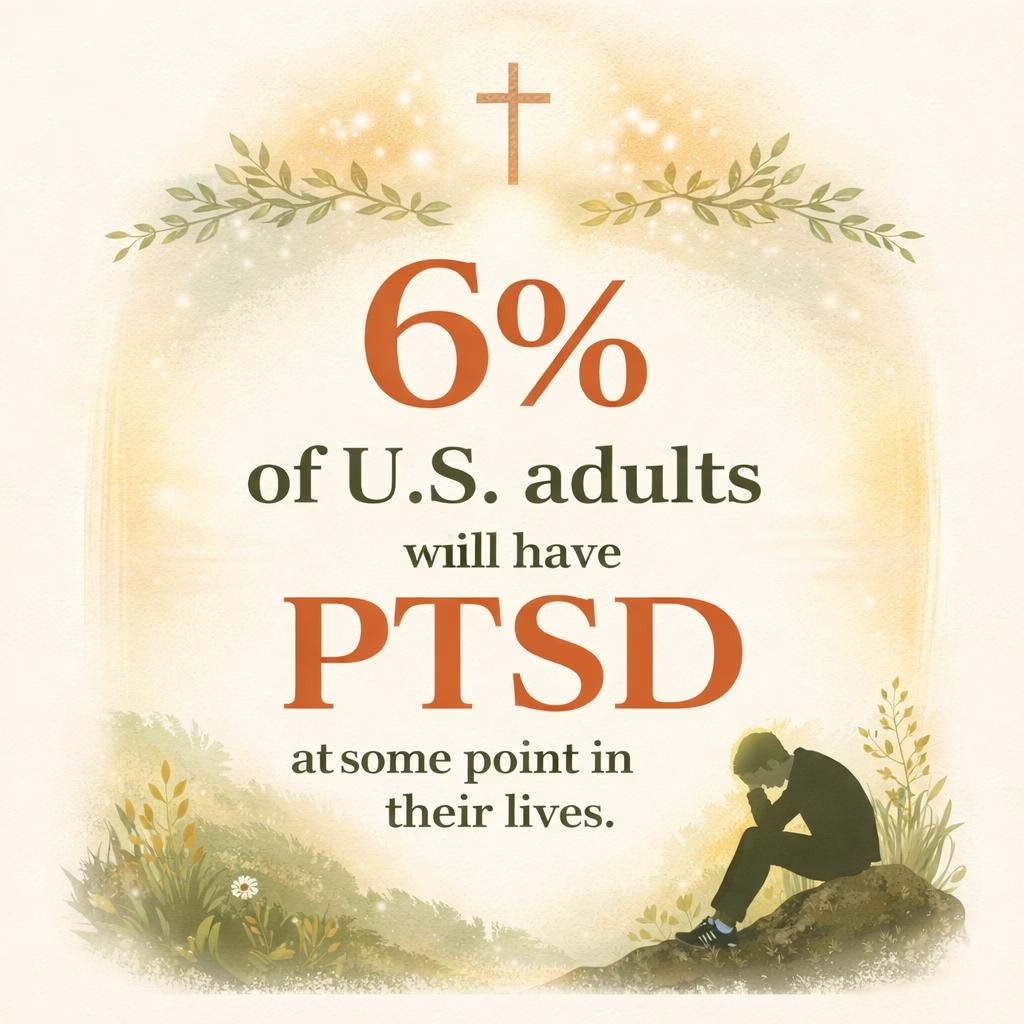
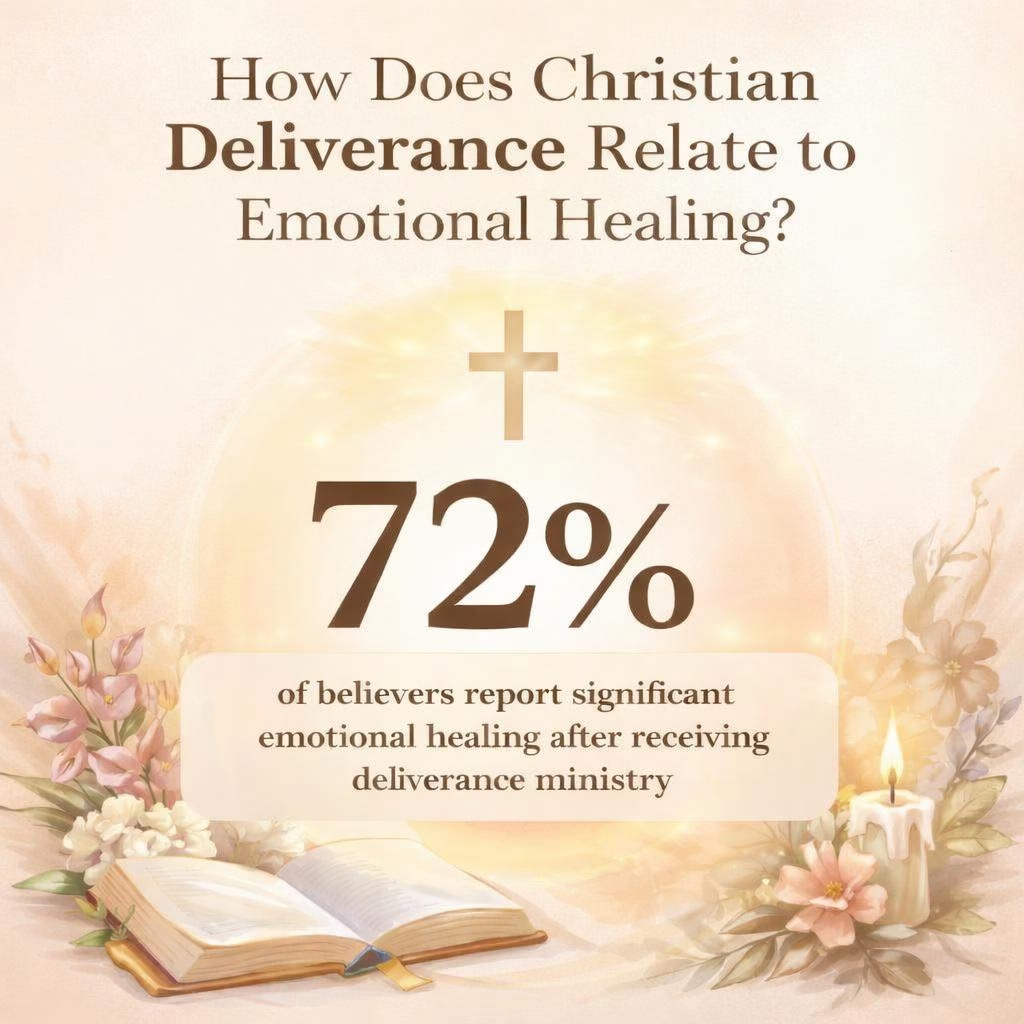
    One reason this matters. Trauma gets stored in the body, not just the thoughts. And that’s not “unchristian.” It’s human. The National Center for PTSD (U.S. Department of Veterans Affairs) reports that about 6% of U.S. adults will have PTSD at some point in their lives. That’s not rare. That’s your church pew, your small group, your leadership team.

    Christian Deliverance and Spiritual Freedom Emotional Healing - Key Statistic

    I used to treat every persistent problem like it had to be a demon. Turns out. Some stuff is grief. Some stuff is learned survival. Some stuff is a lie that’s been believed so long it feels like a personality trait.

    What deliverance tends to change fast

    When deliverance is real, I usually see shifts like this. The heaviness lifts. Temptation loses that “I can’t say no” feel. Night terrors calm down. Compulsion weakens. The atmosphere around prayer gets clearer.

    And you may notice your will comes back online. That’s a big deal.

    What emotional healing tends to change slower

    Emotional healing can feel embarrassingly slow. Triggers. Flashbacks. Numbness. Angry outbursts you hate. Panic in worship because your body thinks you’re unsafe. Stuff like that.

    And you can love Jesus deeply and still have those reactions. I’m not giving anyone a pass to stay stuck. I’m just telling the truth.

    Christian Deliverance and Spiritual Freedom Emotional Healing - Illustration

    Why you might feel stuck after deliverance

    Thing is, “stuck” usually has a reason. Not a mysterious reason. A plain one.

    Old agreements are still running

    Deliverance removes oppression. It doesn’t automatically rewrite every agreement you’ve made with darkness. “I’m dirty.” “I’m unsafe.” “God tolerates me.” Those agreements act like spiritual Velcro.

    When I work with clients on this, the first thing I check is language. What do you say about yourself when you’re not performing? That’s where the agreement hides.

    Your nervous system may still be on high alert

    Some believers get angry when I bring this up. But your nervous system isn’t your enemy. It’s a guard dog. It learned patterns.

    This isn’t fluff psychology. It shows up in actual data. The American Psychiatric Association notes that about 3.6% of U.S. adults experience PTSD in a given year. That means, at any given time, many Christians are trying to worship while their bodies are still bracing for impact.

    So, deliverance can be done. Yet your body still flinches. That’s not failure. That’s a training issue.

    You got free but didn’t get filled

    Jesus warned about an unclean spirit leaving and the “house” being empty. Not because Jesus is scary. Because emptiness gets reoccupied.

    Freedom needs filling. Scripture. worship. community. daily obedience. The boring stuff. The powerful stuff.

    What biblical emotional healing actually looks like

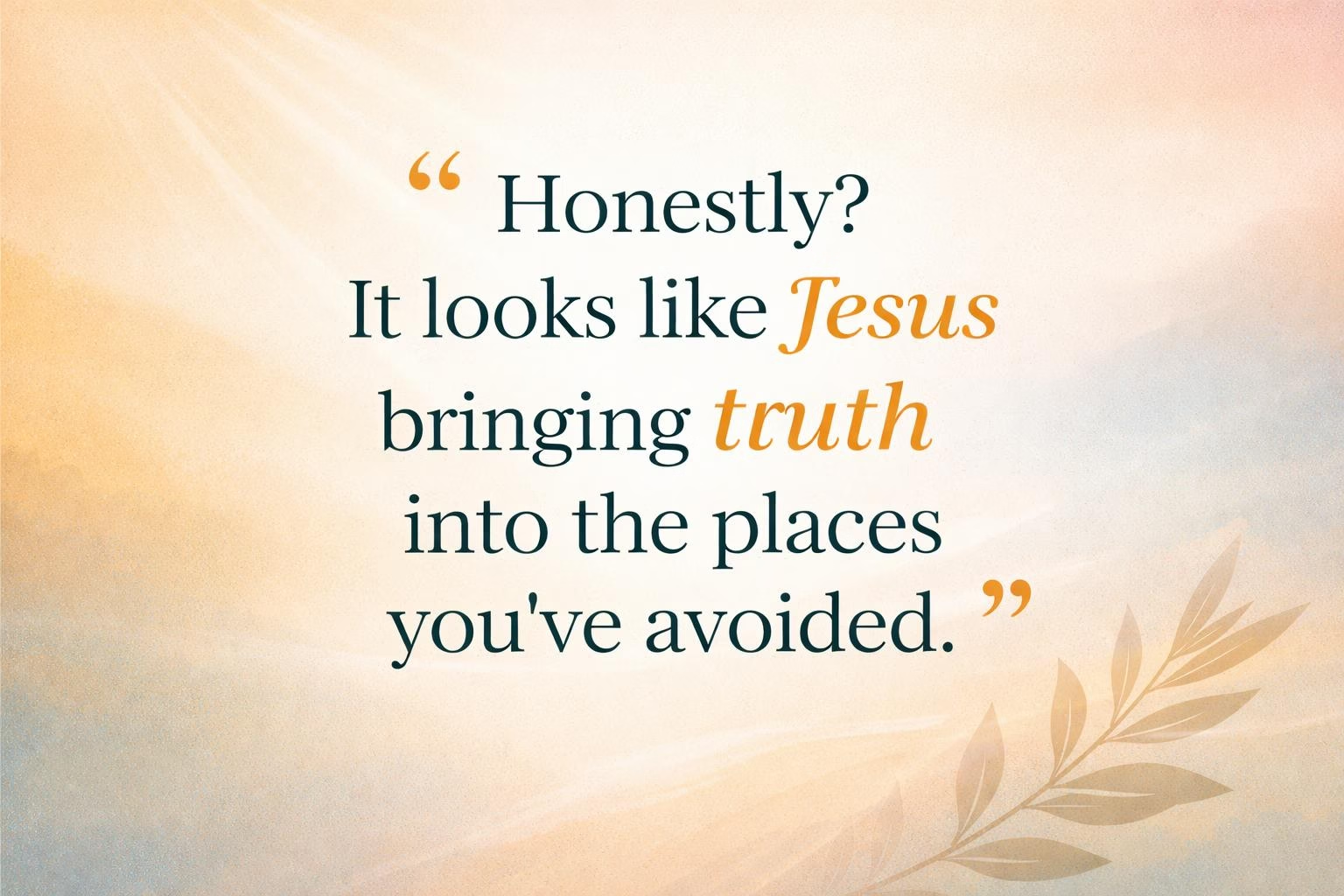
    Honestly? It looks like Jesus bringing truth into the places you’ve avoided. Not just casting out evil. Also healing wounds.

    Christian Deliverance and Spiritual Freedom Emotional Healing - Key Insight

    I’ve watched people do deliverance prayers like a machine. And avoid lament like it’s a disease. But the Psalms are full of lament. God’s not fragile.

    Truth replacing lies

    Renewing the mind isn’t positive thinking. It’s war. Gentle war, sometimes. But still war.

    You identify the lie. You name it. You repent where repentance fits. And then you replace it with truth. Over and over. Not once.

    Sometimes I ask a simple question. “When did you learn that?” The answer is usually a story. The story is the doorway to healing.

    Forgiveness and release without denial

    Forgiveness isn’t pretending it didn’t hurt. I’m not a fan of that fake version. Forgiveness is handing the debt to God. It’s saying, “You judge.”

    And sometimes forgiveness needs to be revisited. Because the memory keeps resurfacing. That’s common.

    Grief that actually moves

    Grief isn’t a lack of faith. Grief is love with nowhere to go. And when you let it move, something changes.

    I had a client who couldn’t cry. Years. After deliverance, the tears came back. Not as a breakdown. As thawing.

    Practical tools that help the healing stick

    So, what do you do on a Tuesday night when you’re triggered and tired and tempted to spiral? You need tools you can actually use.

    Inner healing prayer with structure

    Inner healing prayer isn’t weird when it’s anchored in Jesus. It’s basically: invite the Holy Spirit, ask Jesus for truth, listen, test what you hear by Scripture, then respond in obedience.

    Short prayers. Clear questions. No drama. I like to ask, “Jesus, where were You when this happened?” Then I wait. Then I check it against the Word. Always.

    Journaling that targets patterns

    I know journaling sounds basic. But it exposes cycles fast.

    Try three lines. Trigger. Lie. Truth. That’s it. Don’t write a novel. Keep it sharp.

    Renouncing agreements out loud

    Renouncing isn’t magic. It’s legal language in the spirit. It’s you saying, “I’m done partnering with this.”

    Out loud matters because you’re a whole person. Body and spirit. And your own ears need to hear your yes and no.

    Simple discipleship routines

    Daily Scripture. Not as punishment. As reprogramming.

    Worship that re-centers you. Community that can tell when you’re isolating. Confession that doesn’t turn into self-hatred.

    And sleep. Yes, sleep. Elijah wasn’t only prayed for. He was fed and rested.

    How I approach this at GospelLight Creations

    Real talk: I don’t like one-size-fits-all deliverance formulas. I’ve seen them crush tender believers. And I’ve seen them inflate proud ones.

    At GospelLight Creations, I focus on biblical teaching that makes sense of what’s happening, prayer that’s sober and Spirit-led, and books that you can work through at your pace. Some people need a clean, step-by-step path. Others need a gentle reintroduction to trust. Most need both at different times.

    If you want the bigger framework, I’d start with the complete biblical guide to Christian deliverance and spiritual freedom. It helps you connect the dots without turning everything into a spooky mystery.

    Related questions people ask when they are in the thick of it

    How does deliverance relate to emotional healing

    It relates like this. Deliverance removes oppression. Emotional healing restores what oppression and pain damaged. Sometimes one opens the door for the other. Sometimes you’re doing both in the same season.

    If you want the longer version, see how deliverance connects with emotional healing.

    What is inner healing prayer

    It’s prayer that invites Jesus into the memory, the wound, the belief system. And then you respond to His truth. Repentance when needed. Forgiveness when needed. Comfort when needed. Sometimes all three.

    More here: inner healing prayer in Christian freedom.

    How can Christians heal from trauma biblically

    With truth. With community. With time. With Scripture that goes past slogans. And with prayer that doesn’t rush the process.

    I unpack that here: biblical healing from trauma.

    Why do Christians feel stuck after deliverance

    Often it’s leftover agreements. Or the person never rebuilt habits. Or shame kept them from getting support. Sometimes it’s ongoing warfare and they’re fighting alone.

    That whole topic is here: why believers feel stuck after deliverance.

    How do I renew my mind for spiritual freedom

    You renew your mind by replacing lies with truth until your reflexes change. Not just your opinions.

    Try this next: renewing the mind for Christian freedom.

    What does Christian freedom look like day to day

    It looks surprisingly normal. Peace. Self-control. Clean choices. Quick repentance. Less hiding. More steadiness.

    More practicals here: day-to-day Christian freedom.

    A gentle reality check

    Some people want a single prayer that fixes everything forever. I get it. I’ve wanted that too.

    But most of the time, God does freedom in layers. He’s kind like that. He won’t rip out a coping mechanism until He’s ready to replace it with something better.

    So keep going. Keep praying. Keep getting honest. And don’t confuse “still healing” with “still bound.” Those aren’t the same thing.

  • Christian Deliverance and Spiritual Freedom Repentance and Renunciation

    Christian Deliverance and Spiritual Freedom Repentance and Renunciation

    Repentance and renunciation. That’s where real freedom usually starts. Not with a louder prayer. Not with hunting demons under every rock. With honesty before God. And a clean break with what’s been feeding the bondage.

    I’ve sat with believers who love Jesus deeply. They read their Bible. They serve. And yet something keeps yanking them back. Addictions. rage. intrusive thoughts. numbness. And they’re tired. If that’s you, I get it.

    Before we get into the nuts and bolts, keep this anchored. Deliverance isn’t a substitute for discipleship. And repentance isn’t paying God back. It’s coming home.

    Repentance and renunciation in plain Christian language

    Repentance is turning back to God

    Look, repentance isn’t just “feeling bad.” Plenty of people feel bad and stay stuck. Repentance is a turn. A change of mind that becomes a change of direction.

    In Scripture, that’s the pattern. Confession. Turning. Fruit. Not perfection overnight. But movement. I used to think repentance was mainly about intensity. Cry harder, feel more. Turns out God’s after surrender, not theatrics.

    And yes, repentance can feel grief-y. That’s normal. Paul talks about “godly sorrow” producing repentance (2 Corinthians 7:10). But the goal isn’t self-punishment. The goal is restored fellowship.

    Renunciation is cutting agreement with darkness

    Renunciation is you saying, out loud and on purpose, “I break my agreement with this.” It’s not a magic spell. It’s legal language, spiritually speaking. You’re withdrawing consent. You’re closing a door you once opened (sometimes knowingly, sometimes not).

    When I work with clients on this, the most common surprise is how many strong believers have ongoing agreements they’ve never named. Things like “I’ll always be anxious.” Or “I can’t trust anyone.” Or “This is just who I am.” Those are vows. They stick.

    And renunciation isn’t only about occult stuff. That’s a piece sometimes. But I’ve seen bitterness do more damage than a weird book ever did.
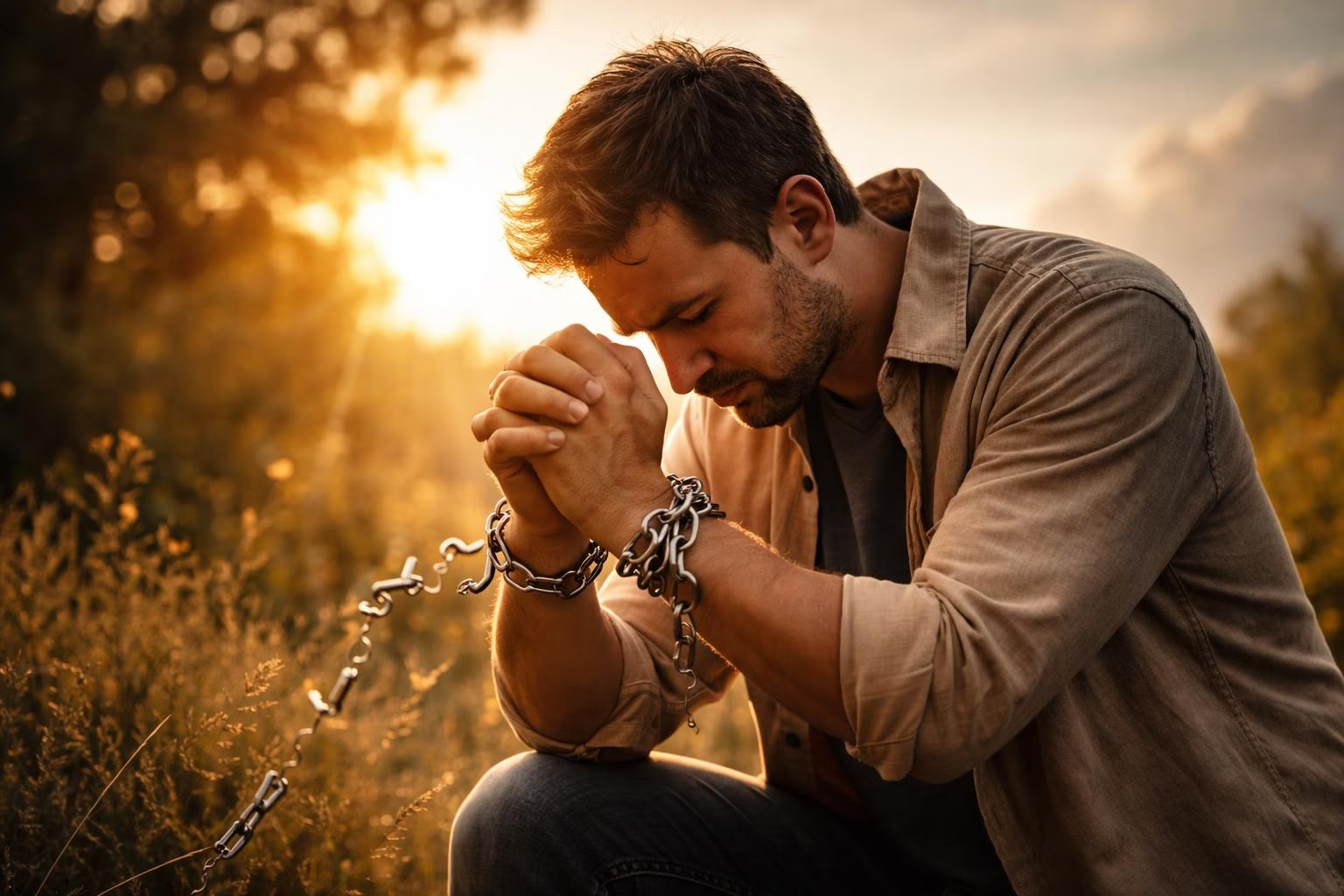
    Christian Deliverance and Spiritual Freedom Repentance and Renunciation - Illustration

    Why these two steps matter in deliverance

    Thing is, deliverance prayers tend to stall when repentance is vague and renunciation is missing. People want relief. Understandable. But freedom has a “truth and alignment” side to it.

    Here’s what I mean. Jesus ties freedom to continuing in His word and knowing truth (John 8:31–32). Not because He’s making it complicated. Because bondage often rides on lies and permissions.

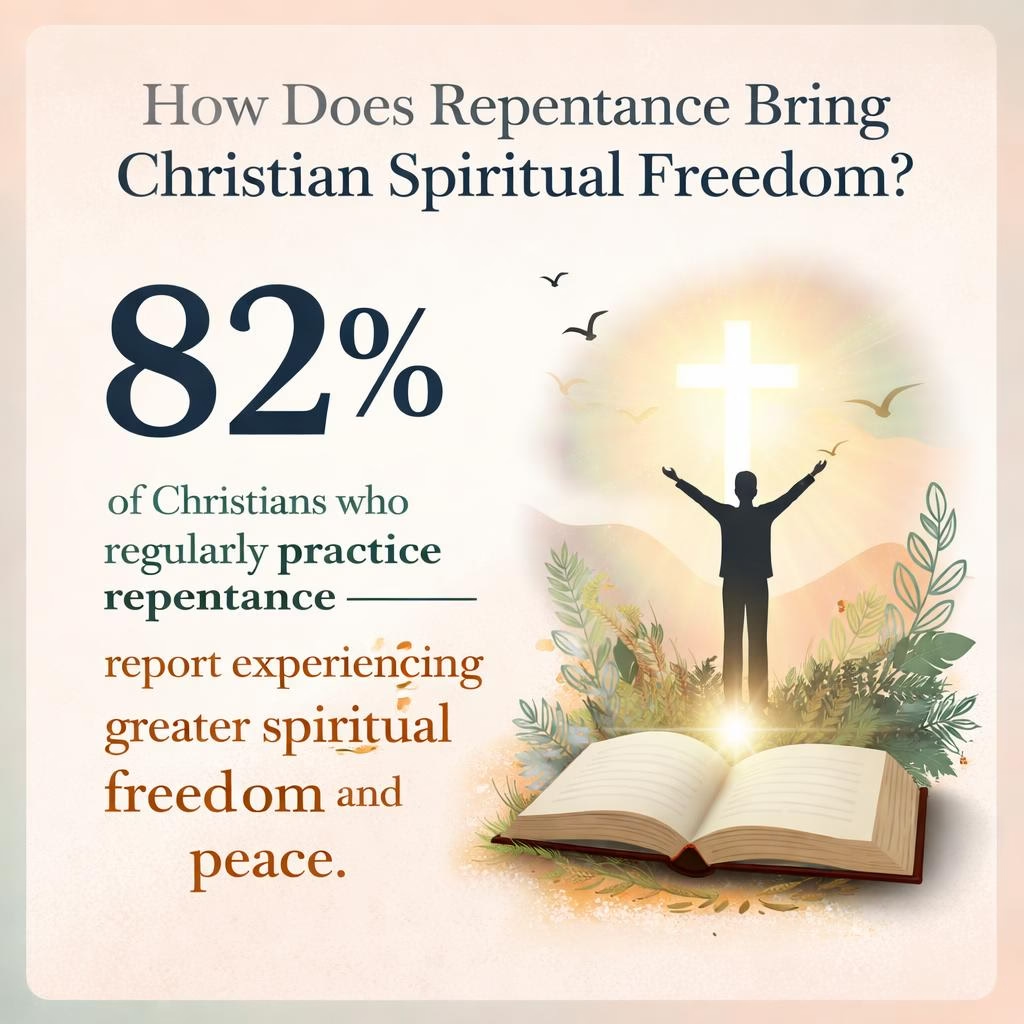
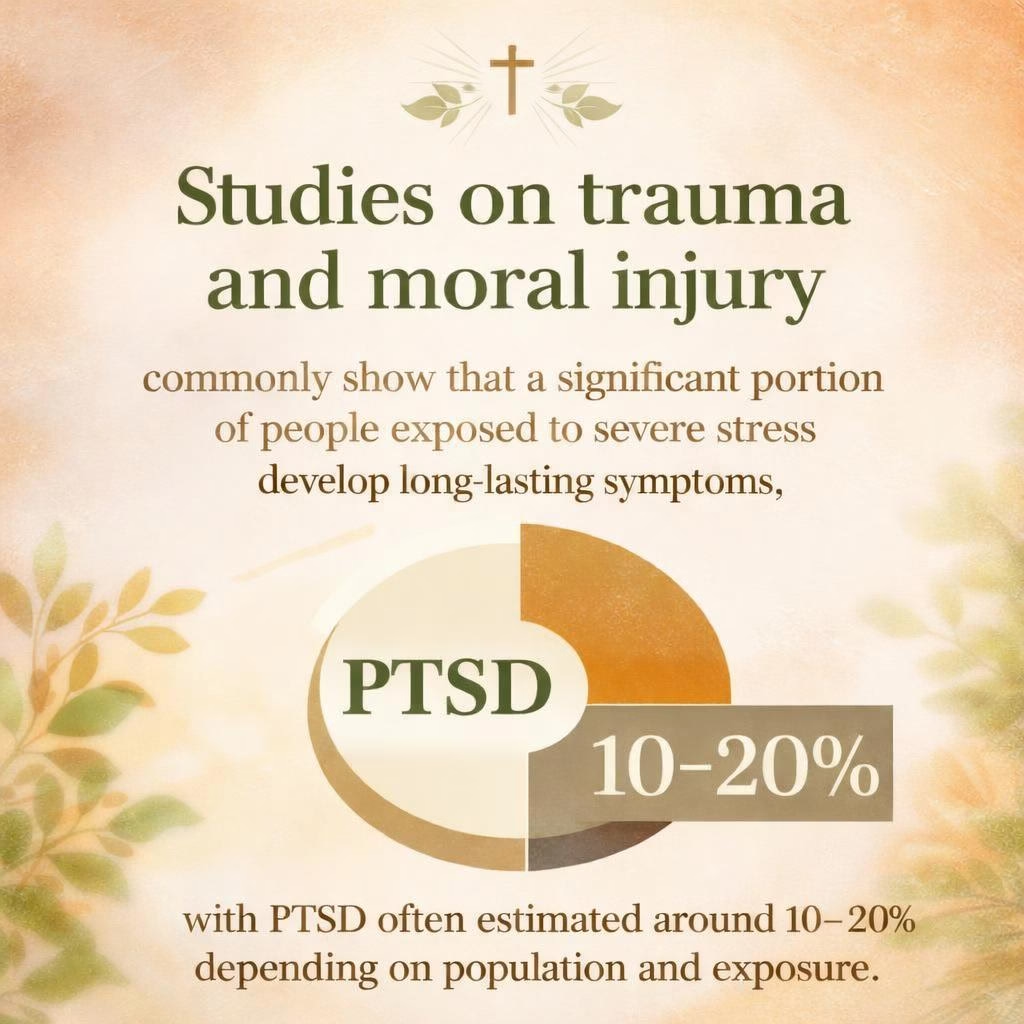
    Studies on trauma and moral injury commonly show that a significant portion of people exposed to severe stress develop long-lasting symptoms, with PTSD often estimated around 10–20% depending on population and exposure. That matters because unresolved guilt, shame, and fear can become the emotional soil where spiritual harassment keeps finding traction.
    Christian Deliverance and Spiritual Freedom Repentance and Renunciation - Key Statistic

    Also, confession is not optional Christianity. Scripture literally tells believers to confess sins to one another and pray so there’s healing (James 5:16). Not to be humiliated. To get well.

    Repentance that actually breaks chains

    Start with the Holy Spirit, not self-diagnosis

    Honestly? Self-search can get weird fast. You’ll either excuse everything or condemn yourself for breathing wrong.

    Try a simple prayer like: “Holy Spirit, show me what You want to put Your finger on first.” First. Not everything. When God highlights one thing, stay there.

    I had a client who kept listing twenty sins like a receipt. Nothing shifted. When we slowed down, the real issue was control. She didn’t trust God with outcomes. Once she repented of that and started practicing surrender in small ways, the oppression that felt “random” quieted down.

    Christian Deliverance and Spiritual Freedom Repentance and Renunciation - Key Insight

    Be specific enough that you can walk away from it

    Vague repentance sounds spiritual. “Lord forgive me for anything I’ve ever done.” But it doesn’t always land in your actual life.

    Try naming the thing. “I repent for pornography.” “I repent for manipulating my spouse.” “I repent for using anger to get my way.” That’s scarier. Also cleaner.

    And where possible, add the heart underneath. “I chose lust because I wanted comfort.” “I chose control because I was afraid.” God already knows. You’re the one catching up.

    Make restitution when it’s appropriate

    Not every situation calls for you to contact people from ten years ago. Use wisdom. But sometimes you do need to make something right. Zacchaeus did (Luke 19:8). Real repentance often produces repair.

    One caveat. Restitution is not self-salvation. It’s fruit.

    Renunciation that closes doors for good

    Renounce sin patterns and the lies behind them

    So, what do you renounce? Start with what you’ve repented of. Then ask, “What lie kept this alive?”

    • “I renounce the lie that God won’t come through for me.”
    • “I renounce the belief that I need this sin to cope.”
    • “I renounce the vow I made that I’ll never trust anyone.”

    Most people skip the lie part. They renounce the behavior only. And then they’re confused when the pressure returns. Lies are sticky.

    Renounce ungodly ties and counterfeit comfort

    Ungodly soul ties are real. Not mystical. Real. Sexual sin binds. Manipulative relationships bind. Trauma-bonding binds.

    Public health data regularly shows that roughly 1 in 3 women and 1 in 4 men experience intimate partner violence in their lifetime. That matters because abusive dynamics often create vows and attachments that keep a believer spiritually and emotionally tangled, even after they’ve physically left.

    Renunciation can sound like: “In Jesus’ name, I renounce every ungodly attachment formed through abuse, sexual sin, or manipulation. I release that person to You, God. I take back what I gave away.”

    And yes, you might need to do it more than once. Not because it didn’t “work.” Because your nervous system and habits need retraining. Sanctification is stubborn sometimes.

    A simple repentance and renunciation prayer flow

    Real talk: I’m not a fan of 12-page scripts that keep you stuck in analysis. But I do like a repeatable pattern. Here’s one I use all the time at GospelLight Creations when I’m guiding people through prayer sessions or helping them work through our teachings and books.

    Step 1 Invite Gods light

    “Father, I come to You in Jesus’ name. I belong to You. Holy Spirit, search me and show me what You want to heal and remove.”

    Step 2 Confess and repent specifically

    “I confess ________. I call it sin. I repent. I turn from it. I ask You to forgive me and cleanse me through the blood of Jesus.”

    And pause. Don’t rush. Let it be real, not rushed.

    Step 3 Forgive where you need to

    “I choose to forgive ________ for ________. I release them to You. I cancel the debt. Heal my heart.”

    This part can feel like swallowing sand. Still worth it. Forgiveness doesn’t say what happened was fine. It says you’re done being chained to it.
    Step 4 Renounce agreements and ties

    “In Jesus’ name, I renounce ________. I renounce the lie ________. I break every agreement I made with darkness through this. I break ungodly ties connected to it.”

    Step 5 Submit to Jesus and replace with truth

    “Jesus, You’re Lord over my mind, my body, my sexuality, my emotions, my future. Fill me with Your Holy Spirit. I receive Your truth: ________.”

    Replacement matters. Empty space gets reoccupied.

    Common roadblocks I see and what to do about them

    Shame tries to run the whole meeting

    Shame says, “You are the problem.” Conviction says, “This is the problem.” Big difference.

    If you spiral into self-hatred after confession, that’s not the Holy Spirit. That’s accusation. When that happens, I’ll often tell someone to say out loud: “I reject condemnation. Jesus took my guilt. I receive mercy.”

    Want more on that angle? I wrote a very practical piece on confession without shame. It’s for people who keep getting crushed after doing the right thing.

    You’re repenting but refusing to let go of a payoff

    Yep. Payoffs exist. Sin pays in the short term. Comfort. control. numbness. attention. revenge fantasies. It’s not always sexy. Sometimes it’s just relief.

    So ask yourself: “What am I getting from this that I’m afraid God won’t provide?” That question exposes the hook.

    You keep fighting symptoms but not the door

    You can rebuke harassment all day and still keep an open door with ongoing compromise. I’m not saying every struggle is because of a single choice. But patterns matter.

    If you suspect that’s you, take a look at common open doors like unforgiveness, sexual sin, occult involvement, chronic bitterness, and habitual lying. I’ve watched people get free just by shutting one door they kept rationalizing.

    Where to go next

    Now, if you want the bigger picture of how deliverance, healing, holiness, and ongoing discipleship fit together, I’d point you to the complete biblical guide to Christian deliverance and spiritual freedom. That’s where I lay out the full framework I use in sessions. Not hype. Just Scripture, prayer, and practical steps.

    And if you’re working through repentance and renunciation right now, don’t do it in isolation forever. Bring in a mature believer. A pastor. A trusted prayer partner. In my experience, the enemy loves secrecy. Light breaks that.

    You’re not crazy for needing this. You’re not “less Christian.” You’re in a fight. But you’re not fighting alone.