
True Christian spiritual freedom has a feel to it. Not hype. Not denial. More like your soul can finally breathe. And you start noticing it in plain, almost boring places. The way you react. The way you repent. The way you sleep.
I’m going to give you signs I’ve watched show up again and again when believers actually start walking in freedom. Not just talking about it. Real talk: some of these signs are quiet. Some are loud. But they’re measurable in daily life.
Freedom shows up when temptation loses its volume
You still get tempted, but it doesn’t boss you around
Look, being free doesn’t mean you stop getting tempted. Jesus was tempted. So if you’re waiting for “no temptations ever” as your proof, you’ll stay discouraged.
What changes is the volume. The pull. That desperate feeling like you’re being dragged.
In my experience with deliverance and inner healing work, bondage feels like urgency. Like you’ve got to obey the urge right now or you’ll explode. Freedom feels like space. You can pause. You can pray. You can walk away. And you don’t feel like a liar for doing it.
Sometimes I ask people one blunt question: “Can you say no and still feel like yourself?” When that answer starts turning into yes. That’s a sign.
Your triggers become information, not commands
Triggers don’t magically vanish. But you stop being owned by them.
Instead of “I got triggered, so I sinned,” it becomes “I got triggered, so I noticed what’s still tender.” That shift is huge. That’s maturity. That’s the Holy Spirit giving you awareness without condemnation.
And if you’re cautious about deliverance stuff because you’ve seen weirdness online, I get it. I’m picky too. That’s why I point people to careful, Scripture-anchored discernment like what I share on our discernment and safety resources for deliverance. Some folks don’t need more intensity. They need more clarity.

Your inner world gets quieter without going numb
The accusing voice loses authority
Bondage often sounds like accusation. Constant commentary. “You’re fake.” “God’s done with you.” “You’ll never change.” And it has a spiritual edge to it. Not just insecurity. It feels like a courtroom that never adjourns.
Freedom doesn’t mean you never feel conviction. Conviction is clean. It points to the cross and the next obedient step. Accusation is dirty. It points to despair and hiding.
After years of doing this, one of the clearest markers I see is when a person can repent without spiraling. Quick repentance. No theatrics. No self-hatred tour. Just, “Lord, I agree with You. Clean me. Help me walk it out.” Then they get up.
You can be alone with God without performing
Honestly? This one surprises people.
When you’re not free, quiet time can feel like pressure time. You read to prove you’re serious. You pray to convince God you mean it. You worship to outrun shame.
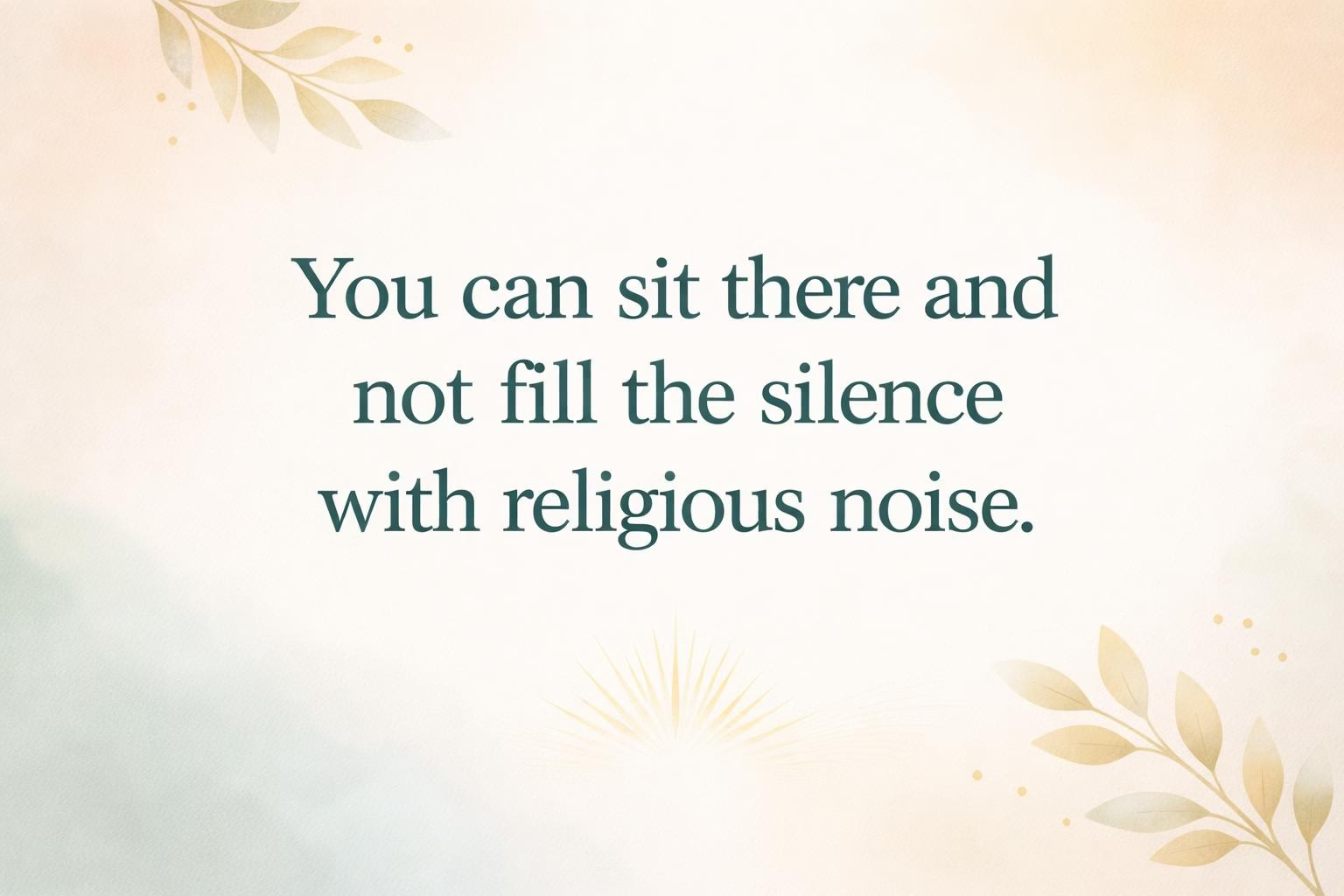
As freedom grows, your time with God gets simpler. Sometimes shorter. But real. You can sit there and not fill the silence with religious noise. You can say, “I’m sad.” Or “I’m angry.” Or “I’m confused.” And you don’t assume that honesty will get you rejected.
I had a client who told me, “I used to pray like I was negotiating.” That line stuck with me. A few months later she said, “Now I pray like I’m at home.” That’s spiritual freedom in regular clothes.
Obedience becomes less dramatic and more consistent
You stop needing a crisis to change
Bondage loves intensity. Big promises. Emotional nights. Then a crash.
Freedom looks steadier. You do the next right thing, even when you don’t feel fireworks. You choose honesty. You set boundaries. You shut down the secret compromise. You forgive in small bites.
And you don’t keep rewriting your story every week. You’re not constantly reinventing your identity. You’re just following Jesus. Monday. Tuesday. The random Wednesday that used to take you out.
One practice I’m not a fan of is chasing manifestations as proof that “something happened.” I’ve seen people get loud and still stay bound. I’ve also seen people get one quiet prayer, then go home and actually obey. Guess which one looks like freedom a month later.
You can handle correction without collapsing
Here’s a test. Not a fun one.
When someone you trust says, “Hey, I think you’re off here,” do you implode? Do you rage? Do you vanish?
Spiritual freedom gives you resilience. You can hear feedback and stay grounded. You might not agree with everything. Fine. But you don’t have to protect a fragile false self anymore.
And you’re less defensive because you’re less afraid. God’s not trying to expose you to shame you. He’s trying to heal you. That’s the difference.
- You confess faster, with less drama
- You apologize without adding excuses
- You make clean breaks with compromise
- You keep simple routines that protect your peace
- You receive love without suspecting a trap
Your relationships start telling the truth
You don’t need control to feel safe
Bondage and control go together. When you’re internally afraid, you try to manage everything externally. People. Outcomes. Conversations. Even God, if we’re honest.
Freedom loosens your grip. Not because you stopped caring. Because you trust the Father more.
This shows up in marriages. Friendships. Church life. You don’t have to win every disagreement. You can listen. You can say, “I need time to pray about that.” And you mean it. You’re not stalling. You’re regulating your soul.
You get fruit of the Spirit in inconvenient moments
Love, joy, peace, patience, kindness, goodness, faithfulness, gentleness, self-control. Galatians 5. You already know the list.
But the question isn’t whether you can quote it. The question is whether it shows up when you’re tired, hungry, embarrassed, or misunderstood.
In my experience, deliverance that’s actually bearing fruit looks like this: the same situation that used to trigger a blow-up now triggers a breath. A prayer under your breath. A gentler tone. Or you walk away before you sin with your mouth. That’s not “personality.” That’s sanctification getting traction.
And yes, sometimes you’ll need targeted prayer, renunciation, and breaking agreement with lies. Not everything is solved by journaling. Not everything is solved by yelling at demons either. That’s why I keep pointing people back to balanced foundations. The complete biblical guide to Christian deliverance and spiritual freedom lays out what I look for, step by step, when someone wants real freedom without the weird side effects.
Your spiritual life becomes Christ-centered, not warfare-centered
You stop obsessing about the enemy
Some believers get stuck staring at darkness. They can name ten demon types but can’t rest in the Father’s love. That bugs me. Not because warfare is fake. It’s real. But obsession is a trap.
True freedom reorders your attention. Jesus gets bigger. The enemy gets smaller. You still resist. You still close doors. But you’re not scanning every mood swing for a spirit. Sometimes you’re just tired. Sometimes you’re grieving. Sometimes you need to forgive your dad. Simple stuff can be holy work.
I used to think every setback meant I “lost deliverance.” Turns out I was confusing sanctification with defeat. Big difference. Growth has bumps. Freedom keeps moving anyway.
You can enjoy God again
This might be the sweetest sign.
You laugh again. Not as a mask. Real joy. You worship and you’re not trying to earn safety. You read Scripture and it feeds you, not accuses you. You can receive communion without feeling like you’re poisoning yourself.
And you start wanting holiness for the right reason. Not to avoid punishment. But because you love Him. Because sin feels like static now. It interrupts closeness. So you don’t romanticize it as much.
At GospelLight Creations, I build teachings and prayers with that goal in mind. Not “get a spiritual adrenaline rush.” More like. “Let’s get your life back.” A clean conscience. A steady mind. A soft heart with strong boundaries.
FAQs for What are signs of true Christian spiritual freedom
How do I know if I’m truly free or just in a good season?
A good season feels nice. But it doesn’t always change your patterns.
Freedom tends to show up under pressure. You still face stress, temptation, conflict, loneliness. The difference is you respond with more choice and less compulsion. And your recovery time after failure shrinks. You come back to God quicker. You don’t hide for three weeks.
Can I be a real Christian and still need deliverance?
Yes. I’ve seen it plenty.
Being saved means you belong to Jesus. It doesn’t mean every area of your life has been discipled, healed, or cleaned up yet. Doors can be opened through trauma, habitual sin, occult involvement, generational patterns, and plain old deception. Deliverance, when done biblically, is part of applying Christ’s finished work to real places where you’ve been oppressed or entangled.
The tell is fruit. If prayer and renunciation lead you into deeper obedience, peace, humility, and love, you’re moving in the right direction.
Leave a Reply