
Repentance and renunciation. That’s where real freedom usually starts. Not with a louder prayer. Not with hunting demons under every rock. With honesty before God. And a clean break with what’s been feeding the bondage.
I’ve sat with believers who love Jesus deeply. They read their Bible. They serve. And yet something keeps yanking them back. Addictions. rage. intrusive thoughts. numbness. And they’re tired. If that’s you, I get it.
Before we get into the nuts and bolts, keep this anchored. Deliverance isn’t a substitute for discipleship. And repentance isn’t paying God back. It’s coming home.
Repentance and renunciation in plain Christian language
Repentance is turning back to God
Look, repentance isn’t just “feeling bad.” Plenty of people feel bad and stay stuck. Repentance is a turn. A change of mind that becomes a change of direction.
In Scripture, that’s the pattern. Confession. Turning. Fruit. Not perfection overnight. But movement. I used to think repentance was mainly about intensity. Cry harder, feel more. Turns out God’s after surrender, not theatrics.
And yes, repentance can feel grief-y. That’s normal. Paul talks about “godly sorrow” producing repentance (2 Corinthians 7:10). But the goal isn’t self-punishment. The goal is restored fellowship.
Renunciation is cutting agreement with darkness
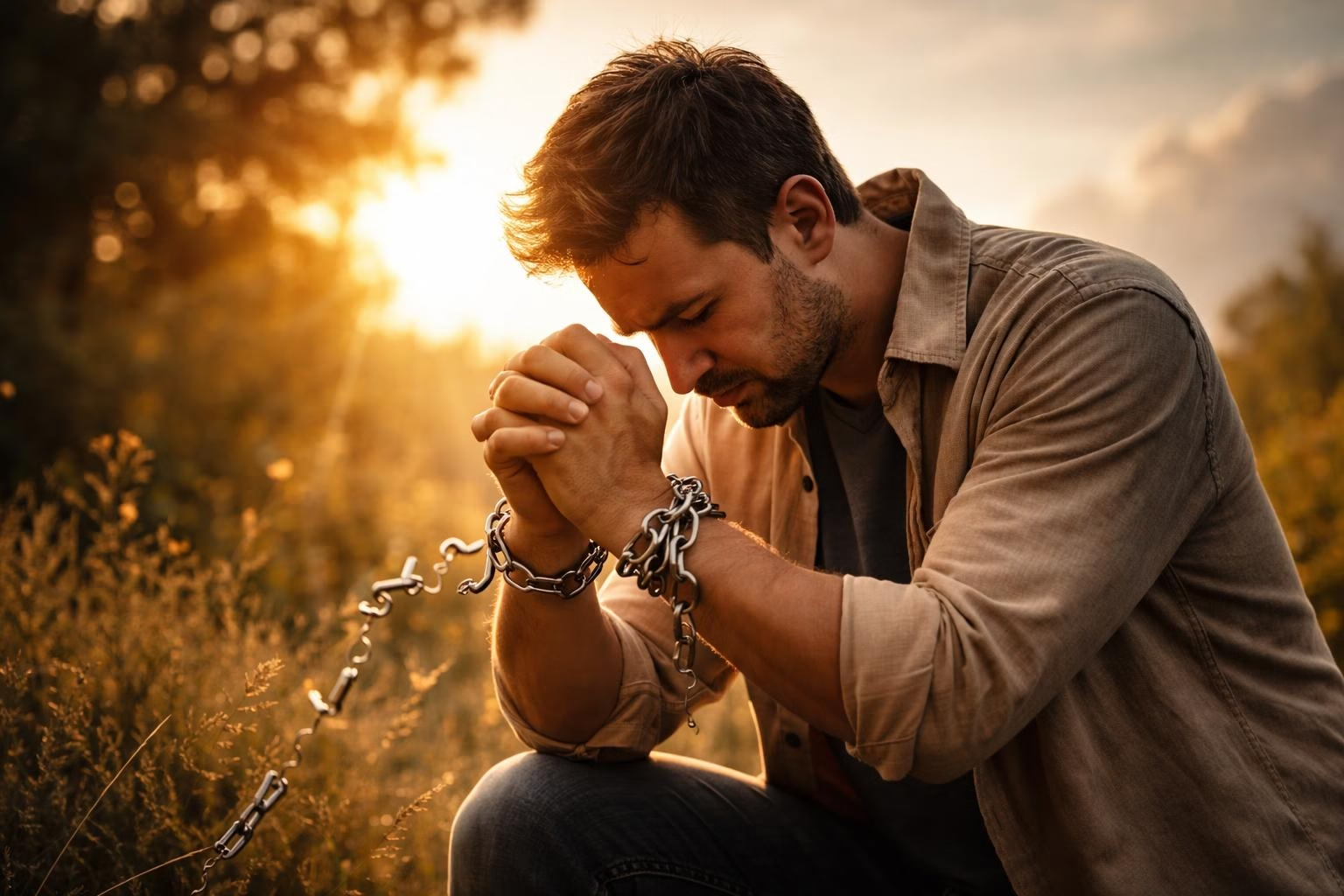
Renunciation is you saying, out loud and on purpose, “I break my agreement with this.” It’s not a magic spell. It’s legal language, spiritually speaking. You’re withdrawing consent. You’re closing a door you once opened (sometimes knowingly, sometimes not).
When I work with clients on this, the most common surprise is how many strong believers have ongoing agreements they’ve never named. Things like “I’ll always be anxious.” Or “I can’t trust anyone.” Or “This is just who I am.” Those are vows. They stick.
And renunciation isn’t only about occult stuff. That’s a piece sometimes. But I’ve seen bitterness do more damage than a weird book ever did.
Why these two steps matter in deliverance
Thing is, deliverance prayers tend to stall when repentance is vague and renunciation is missing. People want relief. Understandable. But freedom has a “truth and alignment” side to it.
Here’s what I mean. Jesus ties freedom to continuing in His word and knowing truth (John 8:31–32). Not because He’s making it complicated. Because bondage often rides on lies and permissions.
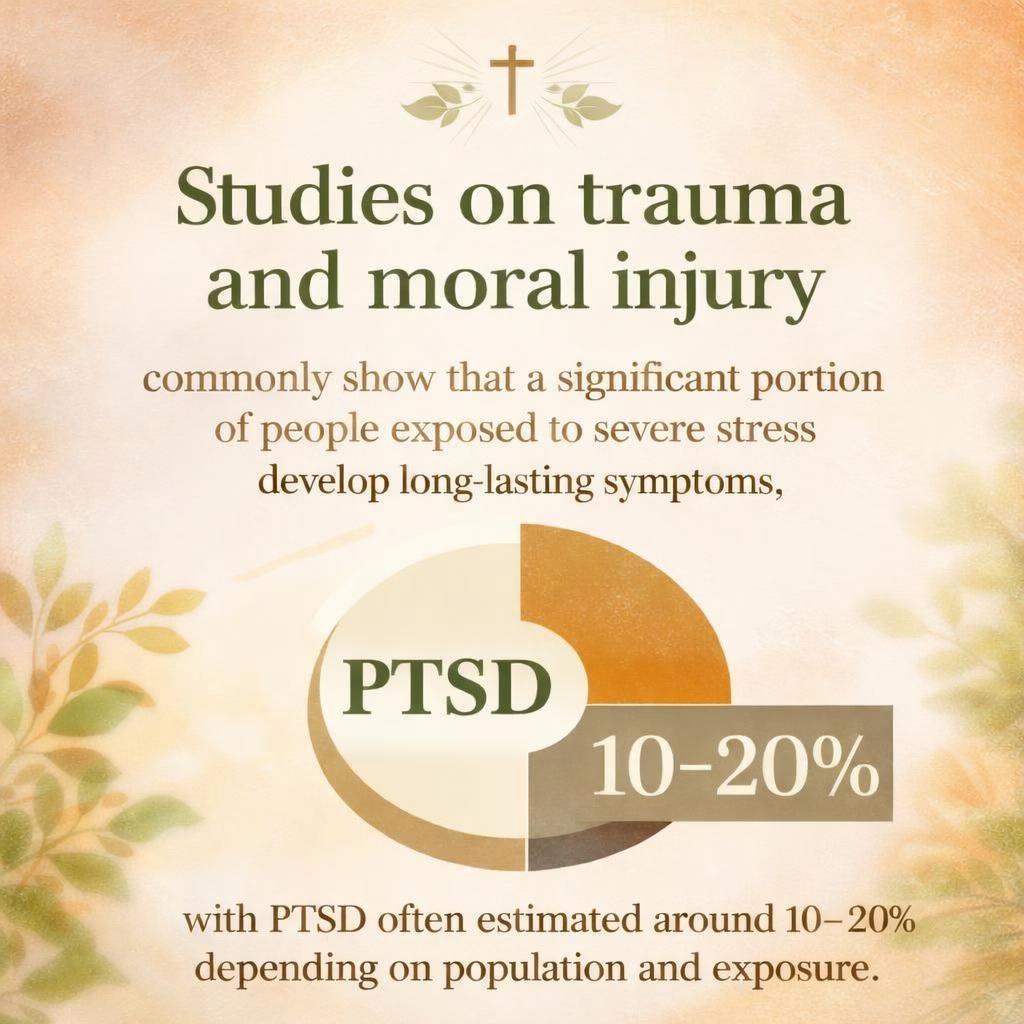
Studies on trauma and moral injury commonly show that a significant portion of people exposed to severe stress develop long-lasting symptoms, with PTSD often estimated around 10–20% depending on population and exposure. That matters because unresolved guilt, shame, and fear can become the emotional soil where spiritual harassment keeps finding traction.
Also, confession is not optional Christianity. Scripture literally tells believers to confess sins to one another and pray so there’s healing (James 5:16). Not to be humiliated. To get well.
Repentance that actually breaks chains
Start with the Holy Spirit, not self-diagnosis
Honestly? Self-search can get weird fast. You’ll either excuse everything or condemn yourself for breathing wrong.
Try a simple prayer like: “Holy Spirit, show me what You want to put Your finger on first.” First. Not everything. When God highlights one thing, stay there.
I had a client who kept listing twenty sins like a receipt. Nothing shifted. When we slowed down, the real issue was control. She didn’t trust God with outcomes. Once she repented of that and started practicing surrender in small ways, the oppression that felt “random” quieted down.

Be specific enough that you can walk away from it
Vague repentance sounds spiritual. “Lord forgive me for anything I’ve ever done.” But it doesn’t always land in your actual life.
Try naming the thing. “I repent for pornography.” “I repent for manipulating my spouse.” “I repent for using anger to get my way.” That’s scarier. Also cleaner.
And where possible, add the heart underneath. “I chose lust because I wanted comfort.” “I chose control because I was afraid.” God already knows. You’re the one catching up.
Make restitution when it’s appropriate
Not every situation calls for you to contact people from ten years ago. Use wisdom. But sometimes you do need to make something right. Zacchaeus did (Luke 19:8). Real repentance often produces repair.
One caveat. Restitution is not self-salvation. It’s fruit.
Renunciation that closes doors for good
Renounce sin patterns and the lies behind them
So, what do you renounce? Start with what you’ve repented of. Then ask, “What lie kept this alive?”
- “I renounce the lie that God won’t come through for me.”
- “I renounce the belief that I need this sin to cope.”
- “I renounce the vow I made that I’ll never trust anyone.”
Most people skip the lie part. They renounce the behavior only. And then they’re confused when the pressure returns. Lies are sticky.
Renounce ungodly ties and counterfeit comfort
Ungodly soul ties are real. Not mystical. Real. Sexual sin binds. Manipulative relationships bind. Trauma-bonding binds.
Public health data regularly shows that roughly 1 in 3 women and 1 in 4 men experience intimate partner violence in their lifetime. That matters because abusive dynamics often create vows and attachments that keep a believer spiritually and emotionally tangled, even after they’ve physically left.
Renunciation can sound like: “In Jesus’ name, I renounce every ungodly attachment formed through abuse, sexual sin, or manipulation. I release that person to You, God. I take back what I gave away.”
And yes, you might need to do it more than once. Not because it didn’t “work.” Because your nervous system and habits need retraining. Sanctification is stubborn sometimes.
A simple repentance and renunciation prayer flow
Real talk: I’m not a fan of 12-page scripts that keep you stuck in analysis. But I do like a repeatable pattern. Here’s one I use all the time at GospelLight Creations when I’m guiding people through prayer sessions or helping them work through our teachings and books.
Step 1 Invite Gods light
“Father, I come to You in Jesus’ name. I belong to You. Holy Spirit, search me and show me what You want to heal and remove.”
Step 2 Confess and repent specifically
“I confess ________. I call it sin. I repent. I turn from it. I ask You to forgive me and cleanse me through the blood of Jesus.”
And pause. Don’t rush. Let it be real, not rushed.
Step 3 Forgive where you need to
“I choose to forgive ________ for ________. I release them to You. I cancel the debt. Heal my heart.”
This part can feel like swallowing sand. Still worth it. Forgiveness doesn’t say what happened was fine. It says you’re done being chained to it.
Step 4 Renounce agreements and ties
“In Jesus’ name, I renounce ________. I renounce the lie ________. I break every agreement I made with darkness through this. I break ungodly ties connected to it.”
Step 5 Submit to Jesus and replace with truth
“Jesus, You’re Lord over my mind, my body, my sexuality, my emotions, my future. Fill me with Your Holy Spirit. I receive Your truth: ________.”
Replacement matters. Empty space gets reoccupied.
Common roadblocks I see and what to do about them
Shame tries to run the whole meeting
Shame says, “You are the problem.” Conviction says, “This is the problem.” Big difference.
If you spiral into self-hatred after confession, that’s not the Holy Spirit. That’s accusation. When that happens, I’ll often tell someone to say out loud: “I reject condemnation. Jesus took my guilt. I receive mercy.”
Want more on that angle? I wrote a very practical piece on confession without shame. It’s for people who keep getting crushed after doing the right thing.
You’re repenting but refusing to let go of a payoff
Yep. Payoffs exist. Sin pays in the short term. Comfort. control. numbness. attention. revenge fantasies. It’s not always sexy. Sometimes it’s just relief.
So ask yourself: “What am I getting from this that I’m afraid God won’t provide?” That question exposes the hook.
You keep fighting symptoms but not the door
You can rebuke harassment all day and still keep an open door with ongoing compromise. I’m not saying every struggle is because of a single choice. But patterns matter.
If you suspect that’s you, take a look at common open doors like unforgiveness, sexual sin, occult involvement, chronic bitterness, and habitual lying. I’ve watched people get free just by shutting one door they kept rationalizing.
Where to go next
Now, if you want the bigger picture of how deliverance, healing, holiness, and ongoing discipleship fit together, I’d point you to the complete biblical guide to Christian deliverance and spiritual freedom. That’s where I lay out the full framework I use in sessions. Not hype. Just Scripture, prayer, and practical steps.
And if you’re working through repentance and renunciation right now, don’t do it in isolation forever. Bring in a mature believer. A pastor. A trusted prayer partner. In my experience, the enemy loves secrecy. Light breaks that.
You’re not crazy for needing this. You’re not “less Christian.” You’re in a fight. But you’re not fighting alone.
Leave a Reply