
You can pray the right words and still feel like your insides are stuck in yesterday. I’ve seen it a lot. Deliverance happens, and then the emotional pain hangs around like smoke in your clothes. Annoying. Confusing. And honestly? It can make you question whether anything “worked.”
This page is about that overlap. Christian deliverance. Spiritual freedom. Emotional healing. Not as trendy buzzwords. As real life.
And yes, I’m writing as someone who’s walked people through this (and had to walk myself through it too). I’m part of GospelLight Creations, and my whole job is basically helping believers get grounded in Scripture, pray with clarity, and stop recycling the same bondage.
Deliverance and emotional healing are connected but not identical
Look, deliverance is often about eviction. Something unclean has been clinging, oppressing, harassing. Jesus sets you free. Clean break.
Emotional healing is often about restoration. The places in you that learned fear, shame, hypervigilance, self-hatred. Those places don’t always instantly relax just because oppression lifted. Sometimes they do. Often they don’t.
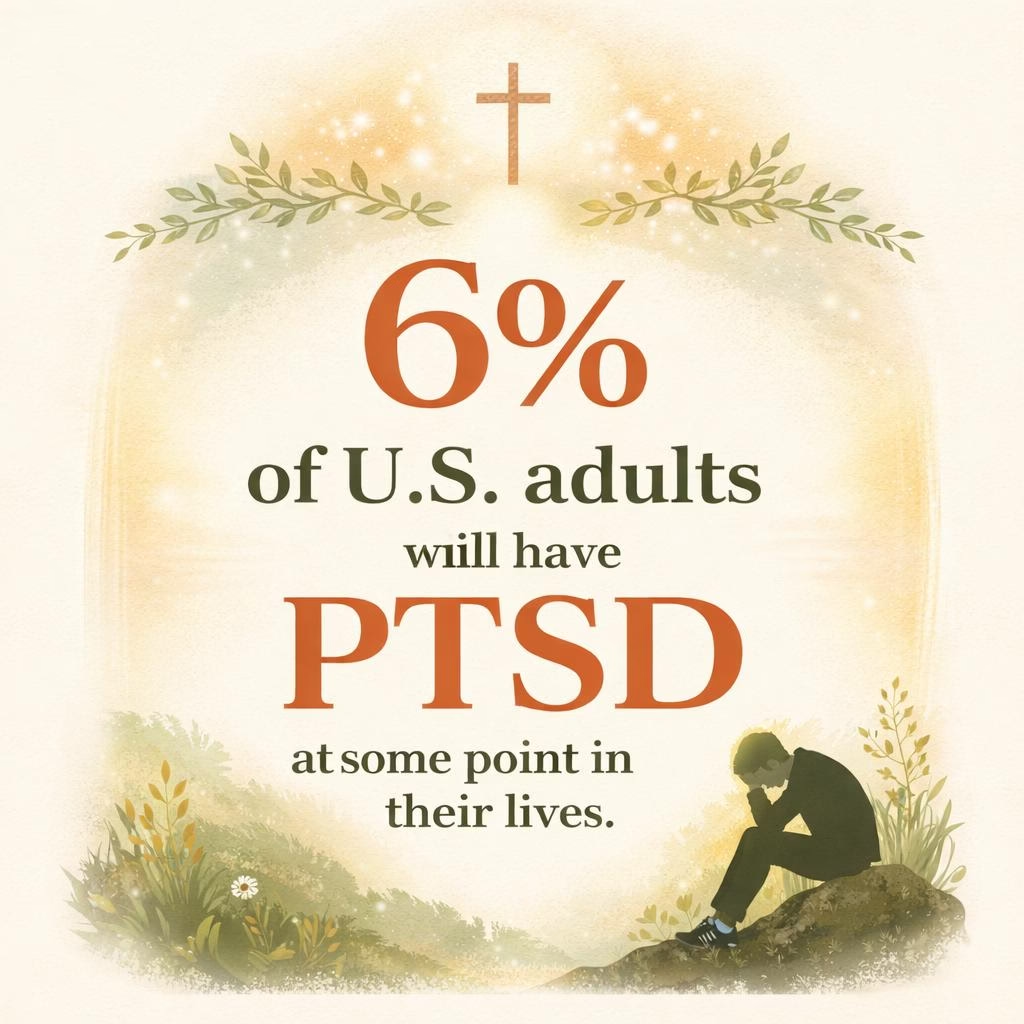
One reason this matters. Trauma gets stored in the body, not just the thoughts. And that’s not “unchristian.” It’s human. The National Center for PTSD (U.S. Department of Veterans Affairs) reports that about 6% of U.S. adults will have PTSD at some point in their lives. That’s not rare. That’s your church pew, your small group, your leadership team.
I used to treat every persistent problem like it had to be a demon. Turns out. Some stuff is grief. Some stuff is learned survival. Some stuff is a lie that’s been believed so long it feels like a personality trait.
What deliverance tends to change fast
When deliverance is real, I usually see shifts like this. The heaviness lifts. Temptation loses that “I can’t say no” feel. Night terrors calm down. Compulsion weakens. The atmosphere around prayer gets clearer.
And you may notice your will comes back online. That’s a big deal.
What emotional healing tends to change slower
Emotional healing can feel embarrassingly slow. Triggers. Flashbacks. Numbness. Angry outbursts you hate. Panic in worship because your body thinks you’re unsafe. Stuff like that.
And you can love Jesus deeply and still have those reactions. I’m not giving anyone a pass to stay stuck. I’m just telling the truth.

Why you might feel stuck after deliverance
Thing is, “stuck” usually has a reason. Not a mysterious reason. A plain one.
Old agreements are still running
Deliverance removes oppression. It doesn’t automatically rewrite every agreement you’ve made with darkness. “I’m dirty.” “I’m unsafe.” “God tolerates me.” Those agreements act like spiritual Velcro.
When I work with clients on this, the first thing I check is language. What do you say about yourself when you’re not performing? That’s where the agreement hides.
Your nervous system may still be on high alert
Some believers get angry when I bring this up. But your nervous system isn’t your enemy. It’s a guard dog. It learned patterns.
This isn’t fluff psychology. It shows up in actual data. The American Psychiatric Association notes that about 3.6% of U.S. adults experience PTSD in a given year. That means, at any given time, many Christians are trying to worship while their bodies are still bracing for impact.
So, deliverance can be done. Yet your body still flinches. That’s not failure. That’s a training issue.
You got free but didn’t get filled
Jesus warned about an unclean spirit leaving and the “house” being empty. Not because Jesus is scary. Because emptiness gets reoccupied.
Freedom needs filling. Scripture. worship. community. daily obedience. The boring stuff. The powerful stuff.
What biblical emotional healing actually looks like
Honestly? It looks like Jesus bringing truth into the places you’ve avoided. Not just casting out evil. Also healing wounds.
I’ve watched people do deliverance prayers like a machine. And avoid lament like it’s a disease. But the Psalms are full of lament. God’s not fragile.
Truth replacing lies
Renewing the mind isn’t positive thinking. It’s war. Gentle war, sometimes. But still war.
You identify the lie. You name it. You repent where repentance fits. And then you replace it with truth. Over and over. Not once.
Sometimes I ask a simple question. “When did you learn that?” The answer is usually a story. The story is the doorway to healing.
Forgiveness and release without denial
Forgiveness isn’t pretending it didn’t hurt. I’m not a fan of that fake version. Forgiveness is handing the debt to God. It’s saying, “You judge.”
And sometimes forgiveness needs to be revisited. Because the memory keeps resurfacing. That’s common.
Grief that actually moves
Grief isn’t a lack of faith. Grief is love with nowhere to go. And when you let it move, something changes.
I had a client who couldn’t cry. Years. After deliverance, the tears came back. Not as a breakdown. As thawing.
Practical tools that help the healing stick
So, what do you do on a Tuesday night when you’re triggered and tired and tempted to spiral? You need tools you can actually use.
Inner healing prayer with structure
Inner healing prayer isn’t weird when it’s anchored in Jesus. It’s basically: invite the Holy Spirit, ask Jesus for truth, listen, test what you hear by Scripture, then respond in obedience.
Short prayers. Clear questions. No drama. I like to ask, “Jesus, where were You when this happened?” Then I wait. Then I check it against the Word. Always.
Journaling that targets patterns
I know journaling sounds basic. But it exposes cycles fast.
Try three lines. Trigger. Lie. Truth. That’s it. Don’t write a novel. Keep it sharp.
Renouncing agreements out loud
Renouncing isn’t magic. It’s legal language in the spirit. It’s you saying, “I’m done partnering with this.”
Out loud matters because you’re a whole person. Body and spirit. And your own ears need to hear your yes and no.
Simple discipleship routines
Daily Scripture. Not as punishment. As reprogramming.
Worship that re-centers you. Community that can tell when you’re isolating. Confession that doesn’t turn into self-hatred.
And sleep. Yes, sleep. Elijah wasn’t only prayed for. He was fed and rested.
How I approach this at GospelLight Creations
Real talk: I don’t like one-size-fits-all deliverance formulas. I’ve seen them crush tender believers. And I’ve seen them inflate proud ones.
At GospelLight Creations, I focus on biblical teaching that makes sense of what’s happening, prayer that’s sober and Spirit-led, and books that you can work through at your pace. Some people need a clean, step-by-step path. Others need a gentle reintroduction to trust. Most need both at different times.
If you want the bigger framework, I’d start with the complete biblical guide to Christian deliverance and spiritual freedom. It helps you connect the dots without turning everything into a spooky mystery.
Related questions people ask when they are in the thick of it
How does deliverance relate to emotional healing
It relates like this. Deliverance removes oppression. Emotional healing restores what oppression and pain damaged. Sometimes one opens the door for the other. Sometimes you’re doing both in the same season.
If you want the longer version, see how deliverance connects with emotional healing.
What is inner healing prayer
It’s prayer that invites Jesus into the memory, the wound, the belief system. And then you respond to His truth. Repentance when needed. Forgiveness when needed. Comfort when needed. Sometimes all three.
More here: inner healing prayer in Christian freedom.
How can Christians heal from trauma biblically
With truth. With community. With time. With Scripture that goes past slogans. And with prayer that doesn’t rush the process.
I unpack that here: biblical healing from trauma.
Why do Christians feel stuck after deliverance
Often it’s leftover agreements. Or the person never rebuilt habits. Or shame kept them from getting support. Sometimes it’s ongoing warfare and they’re fighting alone.
That whole topic is here: why believers feel stuck after deliverance.
How do I renew my mind for spiritual freedom
You renew your mind by replacing lies with truth until your reflexes change. Not just your opinions.
Try this next: renewing the mind for Christian freedom.
What does Christian freedom look like day to day
It looks surprisingly normal. Peace. Self-control. Clean choices. Quick repentance. Less hiding. More steadiness.
More practicals here: day-to-day Christian freedom.
A gentle reality check
Some people want a single prayer that fixes everything forever. I get it. I’ve wanted that too.
But most of the time, God does freedom in layers. He’s kind like that. He won’t rip out a coping mechanism until He’s ready to replace it with something better.
So keep going. Keep praying. Keep getting honest. And don’t confuse “still healing” with “still bound.” Those aren’t the same thing.
Leave a Reply