
Most “open doors” don’t feel dramatic. That’s what makes them sneaky. You love Jesus. You read your Bible. And yet something keeps yanking you back into the same patterns. Same heaviness. Same shame loop. I’ve been there. And I’ve watched a lot of believers hit freedom once they stopped guessing and started closing doors on purpose.
Before I go further. Quick guardrail. I’m not saying every struggle equals a demon. Sometimes you’re tired. Sometimes it’s trauma. Sometimes it’s habits, brain wiring, and plain old discipleship. But sometimes there’s spiritual oppression sitting on top of it all like a wet blanket. And the “access point” usually isn’t mysterious.
Unrepented sin that you keep making peace with
Look, this is the most common one. Not because Christians are “worse.” Because Christians are honest enough to notice the fight.
When I work with someone on deliverance, one of the first things I listen for is this: Have you been naming sin as sin. Or have you been rebranding it. “It’s just my personality.” “It’s how I cope.” “It’s not that bad.”
Secret patterns that drain your spiritual authority
Most of the time it’s not one huge scandal. It’s the quiet stuff. Porn that keeps coming back. “Soft” flirtations you never call what they are. Drinking that isn’t technically out of control (but you know you’re leaning on it). Rage. Gossip. Compulsive shopping. Lying to keep your image intact.
And yes, people ask me about “open doors” like occult stuff. Sometimes. But honestly? Ongoing, protected sin tends to be the bigger doorway in committed church people. Because it creates agreement. It creates concealment. That’s oxygen for oppression.
What repentance actually looks like in the real world
Repentance isn’t a vibe. It’s a turn. A surrender. A decision that costs you something.
Sometimes I’ll ask: “What are you willing to delete, block, confess, throw away, cancel, step down from?” That question can get real quiet. Real fast.
If you want a focused path for repentance and renunciation, I’ve got material at GospelLight Creations that walks you through it without the hype. And if you want more teaching around that specific theme, the repentance and renunciation resources page is the right place to start.
Unforgiveness that you keep calling wisdom
Thing is, unforgiveness feels justified. That’s why it sticks. You’re not crazy for feeling hurt. Some of you have been through stuff that makes my stomach drop when I hear it. And still. Jesus doesn’t give us a way to cherish bitterness while asking Him for freedom.
Bitterness is a form of ongoing agreement
I used to think unforgiveness was mostly an emotional problem. Turns out it can be spiritual fuel. You replay the scene. You rehearse your case. You build a courtroom in your head and you win every time.
And you know what I see in prayer? People can quote verses and still refuse release. They’ll say, “I forgive.” But their body tenses up when the person’s name comes up. That’s not condemnation. That’s information.
Forgiveness is not the same as reconciliation
Real talk: forgiveness doesn’t mean you trust them. It doesn’t mean you go back into danger. It doesn’t mean you pretend it didn’t happen.
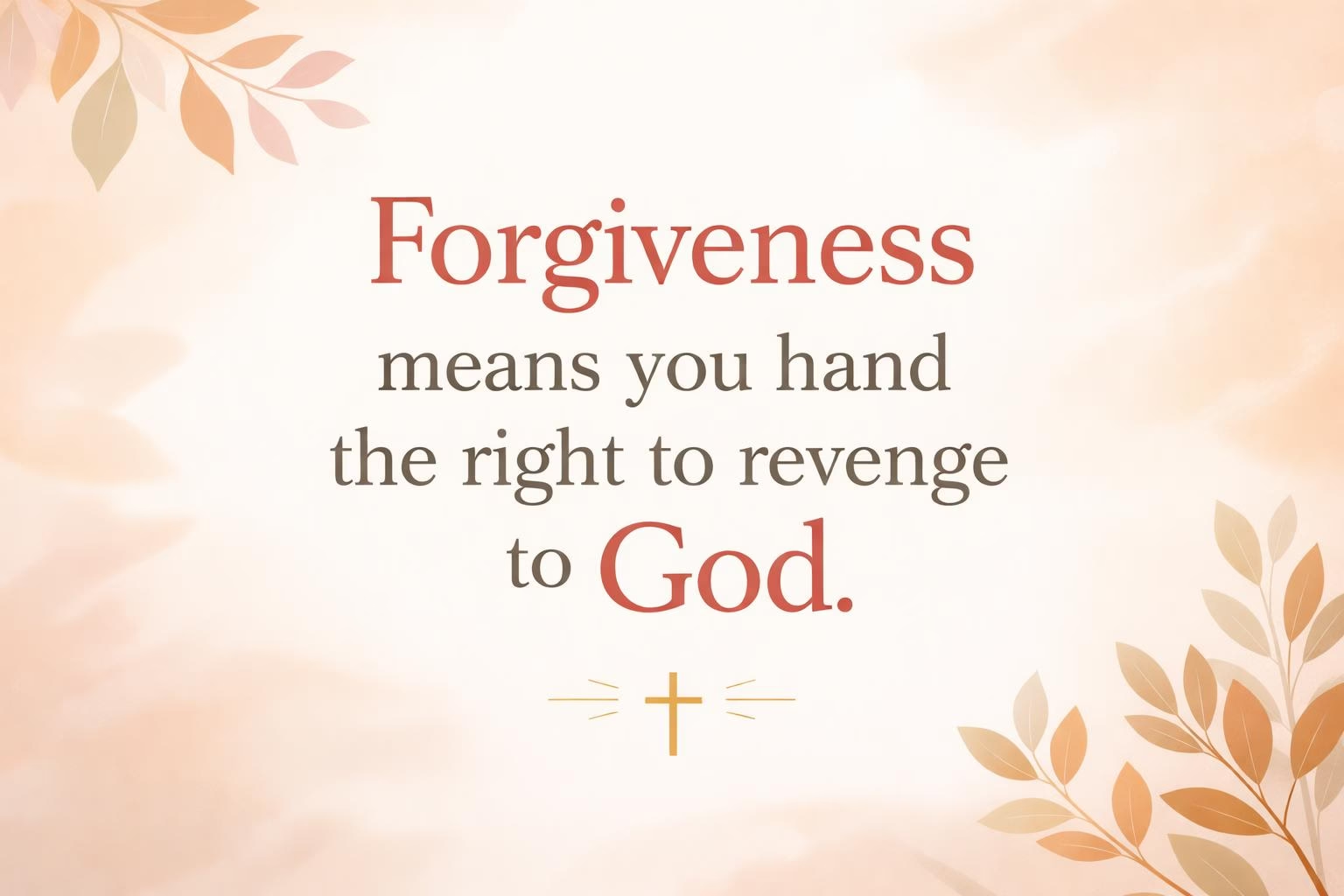
Forgiveness means you hand the right to revenge to God. You stop drinking the poison and expecting them to die from it. And sometimes you do it in layers. I’ve prayed “Jesus, I choose to forgive” through gritted teeth more than once. That counts.
If you’re stuck here, I recommend writing a simple forgiveness prayer out loud. Not fancy. Specific names. Specific offenses. And then ask the Holy Spirit what boundary needs to be in place so you don’t confuse freedom with foolishness.
Trauma, tormenting memories, and the lies you absorbed
Now, this is the one people don’t expect. They assume deliverance is only about bad choices. No. Sometimes oppression latches onto wounds. Especially the kind you never had language for.
I had a client a while back who kept saying, “I know God loves me.” But every night, panic. Every morning, dread. In prayer it became obvious. A childhood moment. A terrifying one. The enemy had threaded a lie into that memory: “You’re not safe. God won’t protect you.”
That lie was the hook.
Oppression often rides on a lie, not a headline sin
So I’ll ask questions like: When did you first start feeling this. What does your fear say God is like. What does your shame say you are.
Because deliverance without inner healing can be frustrating. You get relief. Then the lie stays. And the enemy comes back to the same old mental doorway. Not because God failed. Because the belief system didn’t change.
What helps more than you think
Simple steps. Not glamorous.
- Name the lie plainly (no spiritual poetry).
- Renounce agreement with it out loud.
- Ask Jesus what’s true instead.
- Invite the Holy Spirit into the memory.
- Replace the thought pattern daily for a while.
And yes, sometimes you need deliverance prayer right in the middle of this. The two belong together more often than people admit. That’s part of why I wrote and teach the way I do at GospelLight Creations. I’m not interested in “either or.” I’m interested in you getting free for real.
Occult involvement and counterfeit spiritual practices
But yes. We need to talk about the obvious door too. Because plenty of sincere Christians have spiritual junk in their history and they’ve never cleaned it up.
And some are still dabbling. They’ll say, “It’s just for fun.” Or, “I’m just curious.” But curiosity is not neutral when the thing you’re touching is designed to invite guidance from spirits that aren’t the Holy Spirit.
Common entry points people minimize
Horoscopes. Tarot. Mediums. Spirit guides. New Age “healing” that bypasses Jesus. Crystals as power objects. Energy work that calls on an impersonal force. Manifestation practices that basically train you to play god. Even certain kids games, depending on what you’re actually doing with them.
I’m not trying to be dramatic. I’m being straight with you. Some of these practices involve explicit invitation. Some involve passive participation. Either way, you’re opening yourself up.
Cleaning house can be emotional
Here’s the weird part. People get attached to objects. Books. Jewelry. Tools. “But it was a gift.” “But it cost money.” I get it. And still, you’re not called to keep souvenirs of spiritual compromise.
In my experience, throwing away occult items is one of the fastest moments of tangible breakthrough for some believers. Not always. But often enough that I pay attention.
Repent. Renounce. Remove. Then pray for cleansing in your home. Out loud. It doesn’t have to be long. It has to be honest.
Ungodly soul ties and relationships that keep feeding darkness
This one is messy. Because it’s relational. And you might still love the person. Or you might still be tied to them through kids, work, church, history. But some relationships function like an IV drip of spiritual pressure.
Sexual sin creates bonds that need to be broken
Sex isn’t casual spiritually, even when culture calls it casual. Scripture calls it a joining. So when someone has had multiple sexual partners, or an affair, or porn that’s paired with fantasy “relationships,” it can create deep attachments. And spiritual harassment tends to follow the attachment lines.
I used to roll my eyes at the term “soul tie” back when I started. Then I watched people get free after they confessed, forgave, renounced, and cut those cords in prayer. Hard to argue with fruit.
Control, intimidation, and manipulation are spiritual issues too
Some of you are under constant control from a parent, a spouse, a leader, or a “friend.” You can feel it in your chest. You can’t think clearly around them. You shrink. You comply. You go home and you’re angry at yourself.
That’s not just personality conflict. That can be oppression through domination.
Now, deliverance prayer helps. But boundaries are part of closing the door. Sometimes the boundary is “no more private conversations.” Sometimes it’s “I’m stepping out of that environment.” Sometimes it’s blocking a number. You already know what yours is. You just don’t want to admit it.
If you want a bigger biblical framework for how these doors work and how to walk in ongoing freedom, I put that together here: biblical guide to Christian deliverance and spiritual freedom. I come back to it myself when I need clarity. No shame. Just steps.
FAQs for What are common Christian open doors to oppression
Can a Christian have a demon if they have the Holy Spirit
I’m careful with wording here. A believer belongs to Jesus. Full stop. But Christians can still be oppressed, tormented, and harassed. I’ve seen it too many times to pretend otherwise. The Holy Spirit isn’t “sharing ownership.” Oppression is more like illegal occupation. Access points matter. Authority matters. And closing doors matters.
How do I know whether I need deliverance or discipleship
Usually you need both. But here’s a quick way I think about it. Discipleship addresses the flesh, habits, and growth over time. Deliverance addresses spiritual pressure that feels external, repetitive, and resistant to normal repentance and renewal of the mind. If you’re praying, obeying, getting accountable, and the same choking heaviness keeps returning, I start looking for doors like unforgiveness, occult contact, sexual bonding, trauma lies, and hidden sin.
And sometimes the clue is speed. When you close the door and pray with authority, things shift fast. Not always instantly. But fast enough that you know you weren’t just “in a mood.”
Leave a Reply