Tag: resilience

  • Beyond the Limitations: How God’s Call Can Transcend Physical and Emotional Disabilities, as Seen in the Life of Mephibosheth

    Beyond the Limitations: How God’s Call Can Transcend Physical and Emotional Disabilities, as Seen in the Life of Mephibosheth

    Just because you face physical or emotional challenges does not mean that your purpose or calling is limited. The story of Mephibosheth in the Bible demonstrates how God’s call can rise above such barriers, providing hope and restoration even in the most unlikely circumstances. Through his life, you can learn how divine favor and destiny are not constrained by your limitations but are empowered by faith and God’s grace to transform your journey and impact your future.
    Key Takeaways:

    • God’s call on a person’s life goes beyond physical and emotional limitations, as demonstrated by Mephibosheth’s journey despite his lifelong disability.
    • Divine purpose can manifest even through unexpected circumstances and human mistakes, highlighting God’s greater plan beyond earthly challenges.
    • Faithfulness and integrity, like King David’s commitment to his promise, play a significant role in unlocking God’s blessings in the lives of those He calls.
    • The power of divine remembrance can restore and elevate individuals, opening doors of favor and opportunity when least expected.
    • Favor from God often flows through people, emphasizing the importance of relationships and social connections in fulfilling God’s purpose.
    • Challenges and opposition may still arise in the lives of those called by God, but these difficulties are opportunities to deepen reliance on Him as the ultimate source of help.
    • Mephibosheth’s story serves as a metaphor for redemption, illustrating that everyone is welcome to approach God’s throne boldly, regardless of past limitations or hardships.

    The Life of Mephibosheth

    To understand how God’s call can rise above physical and emotional limitations, you need to look closely at Mephibosheth’s life. Despite being crippled from a young age and facing societal disadvantages, he was elevated by King David’s favor and grace. His story shows that neither your disabilities nor your past define your future when God’s purpose calls you to a higher destiny. Through Mephibosheth, you see that divine plans can transform setbacks into platforms for blessing and honor.

    Background and Early Life

    With origins rooted in the royal family as Jonathan’s son and King Saul’s grandson, Mephibosheth’s early life was marked by both privilege and tragedy. At just five years old, an accident caused by his fleeing nurse left him lame, dramatically shaping his physical reality. However, his lineage and the promise made between Jonathan and David set the foundation for God’s greater purpose in his life, encouraging you to trust that your beginnings do not limit what God can achieve through you.

    Physical Limitations and Their Impact

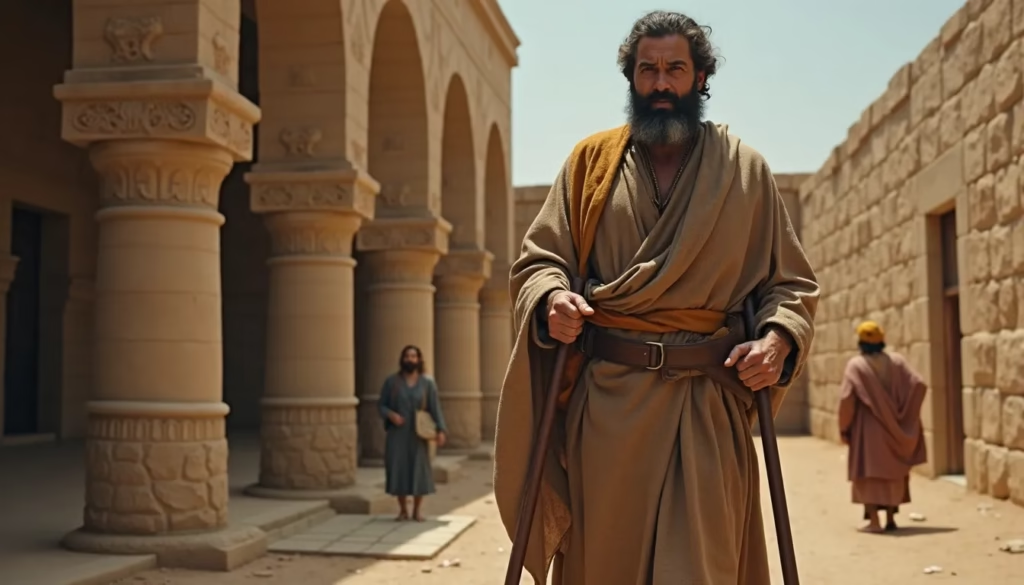
    Impact on Mephibosheth’s life was significant due to his lameness, which could have easily limited your opportunities and identity in society. His condition, caused by a fall while being carried in panic, led to lifelong physical challenges. Yet, this did not prevent him from receiving honor and favor from King David, highlighting that your disabilities do not have to restrain your destiny or God’s call upon your life.

    Indeed, the consequences of Mephibosheth’s injury shaped how others perceived him and likely affected his confidence and social standing. Still, God’s plan showed that personal limitations can be overshadowed by divine favor. His story teaches you to confront your physical or emotional wounds not as barriers but as part of your growth, knowing that God can use your weaknesses to manifest His power and blessing.
    The Promise of God

    While Mephibosheth’s physical limitation could have defined his future, God’s promise through His covenant overshadowed any earthly constraints. You may face challenges or feel unworthy, but just as God had a plan for Mephibosheth before he was born, your life is not limited by your disabilities or circumstances. God’s promises create new possibilities, inviting you to step into a destiny filled with hope and restoration beyond your limitations.

    Jonathan’s Covenant with David

    Any lasting assurance in your life can be traced back to foundational commitments like Jonathan’s covenant with David, a powerful bond of loyalty and love. This covenant ensured that despite turmoil and danger, a promise was made for the benefit of Mephibosheth’s future. Your own life may be impacted by promises made on your behalf, enabling you to receive blessings and favor that transcend current difficulties.

    Divine Favor Granted

    Before Mephibosheth could reclaim his inheritance and dignity, divine favor paved the way by gaining King David’s intervention. This favor was not random but the result of God’s hand working through human relationships to elevate someone once crippled and marginalized. As you navigate your own challenges, know that favor can come through unexpected channels, opening doors and creating opportunities you never imagined.

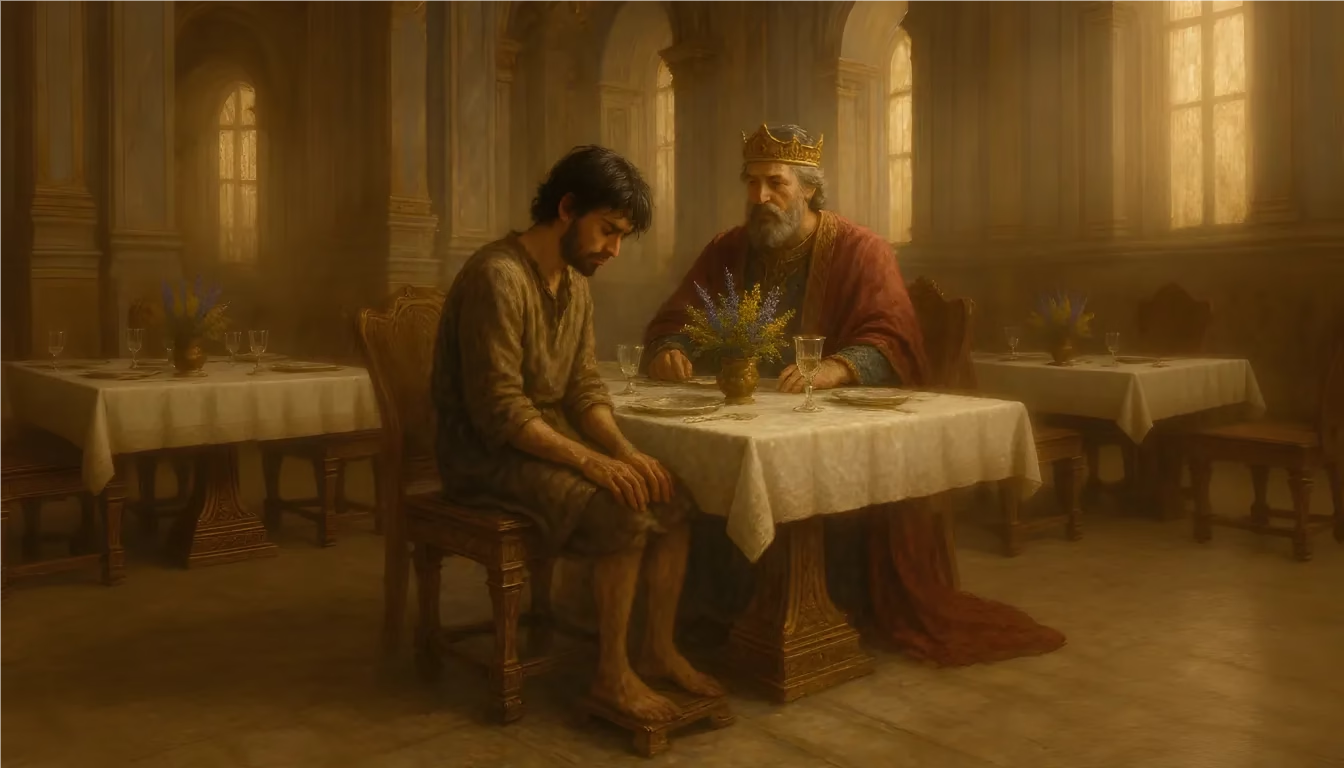
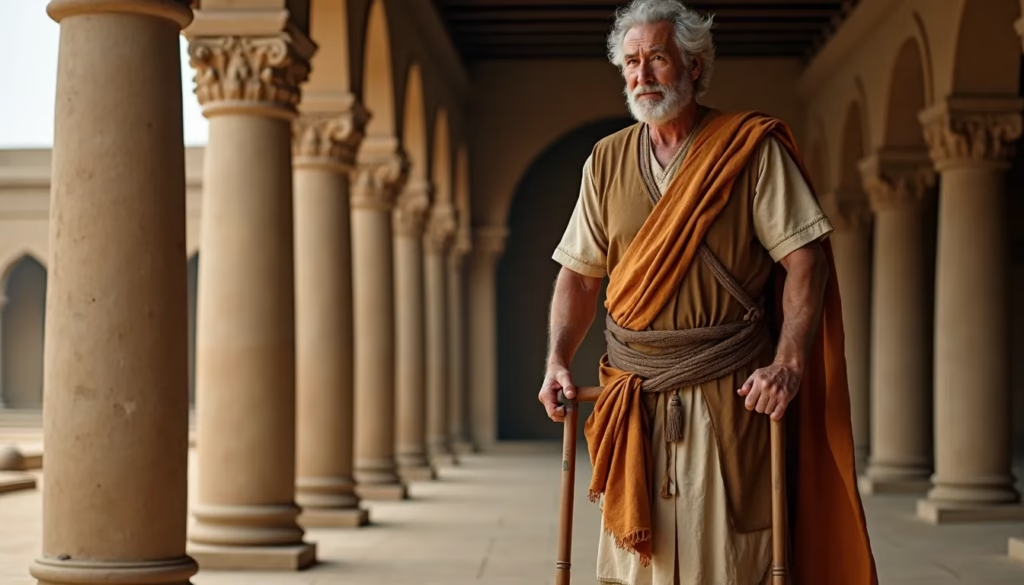
    Indeed, divine favor in Mephibosheth’s life moved beyond mere kindness—it transformed his entire situation. Despite his physical disability and a precarious political background, favor bestowed by David allowed him to inherit lands, servants, and a place at the king’s table daily. This demonstrates how God’s favor, flowing through others, can cause your limitations to fade as you are positioned for breakthrough and restoration in your personal journey.
    A Call to Restoration

    For you, Mephibosheth’s story reveals how God’s call goes beyond your limitations—physical or emotional—and beckons you toward restoration. Despite his disability and challenging past, God’s plan brought Mephibosheth from obscurity to honor, showing that divine restoration is possible for anyone willing to respond to His call. Your restoration might not come in expected ways, but trusting in God’s purpose means embracing new opportunities that rebuild your life and identity.

    David’s Invitation to Mephibosheth

    Across the distance of years and circumstances, King David’s invitation to Mephibosheth was a personal call that transcended social stigma and physical limitation. This invitation meant you, like Mephibosheth, are invited into the presence and favor of God’s kingdom, regardless of your past or condition. It encourages you to answer God’s call boldly, knowing that His purpose is to uplift and restore rather than exclude.

    Restoration of Rights and Identity

    Across Mephibosheth’s life, the restoration of his rights and identity marked a profound transformation. His father’s lands and household were returned to him, symbolizing God’s ability to reinstate what was lost in your life. This restoration demonstrates that your true identity and privileges can be reclaimed through God’s intervention, allowing you to move forward with dignity and renewed purpose despite previous setbacks.

    Mephibosheth’s restoration was more than regaining property—it was the reclaiming of his standing and honor within the kingdom. This shows you that God’s restoration addresses both tangible needs and intangible aspects like self-worth and belonging. Even with challenges, you have access to divine empowerment that restores your heritage, connects you to God’s people, and redefines your value in His eyes. Your restored identity paves the way for a future filled with hope and service.

    Overcoming Fear and Shame

    Many people struggle with fear and shame when facing their limitations, but God’s call can empower you to rise above them. Just like Mephibosheth, who likely felt fear and unworthiness due to his disability and past, you too can embrace your identity beyond your challenges. Your past mistakes or physical barriers do not disqualify you from God’s purpose or favor. By trusting His plan, you can step boldly into the new opportunities He offers, finding dignity and acceptance despite what once held you back.

    Mephibosheth’s Initial Reaction

    Against all odds and his personal fears, Mephibosheth responded with uncertainty when summoned by King David. Holding deep-rooted concerns about his physical limitation and the complicated history between David and Saul, he might have wondered if he would face rejection or punishment. Such hesitations reveal that you are not alone in feeling apprehensive when called to step into unfamiliar or intimidating roles, especially when past experiences or perceived weaknesses challenge your confidence.

    Transition from Fear to Acceptance

    Any fear or shame you face can transform into acceptance as you experience God’s faithfulness and favor, much like Mephibosheth did when David restored his family’s inheritance and invited him to dine at the king’s table. This transition is possible when you choose to focus on the promises laid out for you, moving from self-doubt toward embracing your value and purpose despite limitations.

    At the heart of Mephibosheth’s journey was a powerful shift—from fear and uncertainty to a confident acceptance of grace. This transformation occurred because King David honored his covenant and treated Mephibosheth with kindness, removing the stigma of his disability and family history. In your life, such a transition requires trusting that God’s intentions toward you are honorable, allowing you to walk boldly into what He has prepared. As you lean into this truth, your fear and shame diminish, replaced by the freedom to fulfill your calling.

    The Influence of Relationships

    Keep in mind that your relationships can profoundly shape your destiny, as seen in Mephibosheth’s story. His connection with King David opened doors despite physical limitations, showing how God uses people to fulfill divine purposes. Exploring Lessons from Mephibosheth: Overcoming Limitations can deepen your understanding of how meaningful relationships foster breakthrough even when life seems constrained by challenges.

    The Role of King David

    Between you and God’s plans, the support of others can be transformative. King David’s commitment to Mephibosheth showcased how honoring promises and extending grace empower those who feel limited. David’s actions illustrate how your own influence can change lives and elevate others beyond adversity.

    Legacy of Jonathan

    By the promise made between Jonathan and David, you see how enduring legacies impact lives. Jonathan’s love and faithfulness ensured Mephibosheth’s protection and future blessings, reminding you that the integrity of previous generations can open doors for your own progress.

    David’s faithfulness to his word to Jonathan reflects the importance of keeping commitments that transcend time and circumstances. This legacy supported Mephibosheth’s elevation despite physical and social obstacles, helping you realize that honoring established promises can unlock blessings and transform your journey beyond limitations.

    Lessons from Mephibosheth’s Journey

    Now, you can learn from Mephibosheth’s story that physical and emotional limitations do not disqualify you from God’s purpose. Despite his injury and the challenges he faced, Mephibosheth’s life was transformed through faithfulness, divine favor, and a promise kept. Your own challenges can become pathways to unexpected blessings when you trust God’s plan and remain open to His calling beyond your perceived limits.

    Embracing God’s Call Despite Limitations

    Journey with Mephibosheth shows that embracing God’s call requires courage beyond your weaknesses. Though he was crippled and vulnerable, he accepted the invitation to dine with King David, stepping into a role that exceeded his physical condition. You, too, must step forward despite fears or obstacles, trusting that God’s purpose for you transcends any limitation you face.

    The Power of Remembrance and Favor

    Remembrance and favor played a powerful role in Mephibosheth’s elevation. When God prompted David to act on his promise, Mephibosheth’s life shifted dramatically—he regained his inheritance and found a place at the king’s table. You can experience similar shifts when divine favor aligns with the actions of those who hold influence in your life.

    In fact, the story highlights how blessings often flow through divine intervention paired with human response. God’s favor reached Mephibosheth through David’s faithfulness and kindness, illustrating that your breakthrough depends not only on God’s will but also on the cooperation of others moved to act. Therefore, it is necessary to pray for favor both in the sight of God and among people who can open doors on your behalf.

    Conclusion

    The story of Mephibosheth teaches you that God’s call transcends physical and emotional limitations, empowering you beyond any challenges you face. Despite his disability and societal status, Mephibosheth was elevated through divine favor, illustrating how your worth is not defined by your circumstances. You can trust that God’s purpose for your life will prevail, breaking barriers and opening doors that seem impossible. Discover more about Mephibosheth – how God heals our low self-esteem and learn how your identity can be restored through His grace.

    FAQ

    Q: Who was Mephibosheth, and why is his story significant in understanding God’s call?

    A: Mephibosheth was the son of Jonathan and grandson of King Saul who became physically disabled at a young age. Despite his limitations, he was shown favor by King David due to a promise made to his father. His story highlights how God’s purpose works beyond physical and emotional challenges, demonstrating that divine calling and blessings can transcend human limitations.

    Q: How does Mephibosheth’s physical disability relate to God’s ability to use people despite their limitations?

    A: Mephibosheth’s lameness, caused by an accident in his childhood, symbolizes the obstacles individuals may face. However, God’s call and blessings on his life were not hindered by this. Instead, his story illustrates that personal limitations do not restrict God’s plan, as divine favor and purpose can elevate and empower those whom society may overlook.

    Q: In what ways did King David’s relationship with Mephibosheth demonstrate God’s grace over human weaknesses?

    A: King David showed grace by inviting Mephibosheth to dine at his table daily and restoring his family’s inheritance. This act of kindness and loyalty reflects God’s mercy that often operates through human agents, transforming lives regardless of past hardships or physical shortcomings.

    Q: Can Mephibosheth’s story be seen as a metaphor for redemption for people facing disabilities or setbacks?

    A: Yes, Mephibosheth’s story serves as a powerful metaphor for redemption. It teaches that despite challenges or social stigma, one can find acceptance, dignity, and purpose through God’s intervention. It encourages believers to approach God’s presence confidently, knowing He values and honors them beyond their limitations.

    Q: How does the story encourage individuals with disabilities in their spiritual walk?

    A: The story encourages individuals to trust that God’s call and favor are not limited by physical or emotional conditions. It reassures them that God’s kingdom welcomes all who come with faith and humility, and that His strength is made perfect in weakness, offering hope and purpose despite challenges.

    Q: What lesson does the story of Mephibosheth teach about faithfulness and keeping promises in the context of God’s plans?

    A: The story demonstrates the importance of faithfulness through David’s commitment to a promise made to Jonathan, Mephibosheth’s father. It underscores that God works through people who honor their word, suggesting that integrity and loyalty are vital in fulfilling divine purposes, even when circumstances seem unfavorable.

    Q: How can believers apply the principles from Mephibosheth’s story to overcome emotional or physical setbacks?

    A: Believers can draw strength from Mephibosheth’s example by embracing God’s grace and calling despite setbacks. They are encouraged to rely on God’s power, seek supportive relationships, and maintain hope that divine favor can open doors and restore what seems lost, reinforcing that limitations do not define their worth or destiny.

  • The Cost of Following: A Global Theology of Persecution, Resilience, and Underground Church Growth from the Early Martyrs to the 21st Century

    The Cost of Following: A Global Theology of Persecution, Resilience, and Underground Church Growth from the Early Martyrs to the 21st Century

    Most followers of Christ throughout history have faced intense suffering and opposition for their faith. As you explore this deep and compelling story, you’ll encounter how the early martyrs’ sacrifice planted seeds for resilient underground churches that continue to flourish today. From the harsh realities of global persecution in places like North Korea and China to the inspiring strategies believers use to preserve their faith, your understanding of discipleship will be challenged and expanded by this powerful testimony of courage, hope, and growth amid adversity.

    Key Takeaways:

    • Scripture portrays persecution as an expected reality for Christians, linking suffering with faithful witness and ultimate victory through Christ’s resurrection and eschatological hope.
    • Historical examples, from early martyrs to Reformation figures, demonstrate that persecution often strengthens faith communities and serves as a catalyst for church growth and deepened discipleship.
    • Modern Christian persecution is widespread in specific global hotspots, where believers face legal restrictions, violence, and underground existence, yet faith communities continue to grow and adapt.
    • The Chinese underground church exemplifies resilience by employing decentralized leadership, secret meetings, and innovative discipleship methods to sustain and expand under severe oppression.
    • The theology of suffering challenges prosperity teachings by affirming that participation in Christ’s suffering is a path to sanctification and faithful witness rather than material blessing.
    • Resilience in persecuted communities is nurtured through deep discipleship, strong communal bonds, and an enduring hope grounded in God’s justice and future restoration.
    • The global church, especially in the West, is called to support persecuted believers through informed prayer, advocacy, resource provision, and learning from the sacrificial faith demonstrated by the suffering church.

    Scriptural and Historical Contexts of Persecution

    The Foundations of Suffering in the Gospels and Acts

    Jesus warns you directly that persecution is an unavoidable part of discipleship (Matthew 5:10–12; John 15:18–20), framing suffering not as defeat but as a mark of faithfulness. The Book of Acts vividly documents how early believers faced hostile opposition, imprisonment, and scattering, yet experienced remarkable growth—transforming adversity into expansion by the power of the Spirit. This paradox of suffering fueling the gospel’s spread establishes a biblical foundation for understanding persecution as both real and redemptive.

    Early Church Martyrdom: Seeds of Resilience

    The earliest martyrs, starting with Stephen’s stoning (Acts 7) and extending to figures like Polycarp in the second century, exemplify suffering’s role as the church’s lifeblood. Their deaths did not silence the faith but scattered the believers who planted new communities, deepening solidarity and spiritual maturity. This period forged a theology identifying martyrdom as witness, with Tertullian famously declaring, “The blood of the martyrs is the seed of the church.”

    Beyond mere symbolism, early church martyrdom catalyzed the faith’s growth under extreme threat. Despite intense Roman persecution that involved public executions, imprisonment, and social ostracism, believers cultivated underground networks sustained by mutual aid and committed discipleship. Martyrs often left written testimonies and letters, such as Ignatius of Antioch’s epistles, which reinforced doctrinal clarity and encouraged steadfastness. These acts of witness nurtured resilience not by avoiding suffering but by embracing it as fellowship with Christ’s own passion, inspiring generations to persevere amid both external and internal pressures.

    Persecution Trends in the Modern World

    Identifying Global Hotspots: A Contemporary Landscape

    North Korea, Afghanistan, Somalia, Nigeria, China, and Iran form the most perilous environments for followers of Christ today. You encounter persecution manifesting not only in overt violence and martyrdom but through pervasive legal restrictions, constant surveillance, and social ostracism. These regions reflect diverse political and religious hostilities, yet you see a consistent pattern: the church often retreats underground, grows in secret, and forges resilient networks despite brutal opposition.

    The Persecutor’s Playbook: Tactics and Legislation

    Governments and hostile forces employ layered strategies to suppress Christian witness. Laws targeting religious gatherings, drastic surveillance measures, and widespread use of informants create a climate of fear. You find that imprisonment, torture, and forced closures of churches are often supported by carefully crafted legislation aimed at quashing any visible expression of faith.

    Legal instruments frequently masquerade as maintaining social stability but are weaponized against believers. In China, for instance, restrictive religious regulations require churches to register with the state, forcing many congregations to meet secretly or risk shutdowns and arrests[10]. Surveillance technologies intensify control, tracking communication and movements of believers. Informant networks sow distrust within communities, isolating members and breaking down solidarity. These tactics reveal a strategic, multi-level approach designed not only to silence but to dismantle underground faith networks, compelling you as an observer to recognize the complexity and high stakes of perseverance in these contexts.

    Resilience in Adversity: Case Studies of Underground Churches

    • China: The underground church has surged to an estimated 90 million believers despite rigorous state crackdowns, relying on decentralized leadership, secret house meetings, and covert seminaries.
    • North Korea: With fewer than 400 known Christian leaders operating secretly, worshippers face imprisonment or execution; still, the faith endures through smuggled Bibles and hidden prayer networks.
    • Nigeria: In regions plagued by violent extremist groups, underground churches gather discreetly, using small cell groups of fewer than 15 to maintain community and safety.
    • Iran: Despite intense surveillance, underground house churches have reportedly grown by 60% over the last decade, emphasizing deep discipleship amidst pressure and trauma.
    • Afghanistan: Following regime changes, secret Christian groups have multiplied, connecting via encrypted digital platforms and informal, relational evangelism.

    The Chinese Church: A Model of Covert Growth

    The Chinese underground church exemplifies resilience through its adaptive tactics—rotating meeting locations, avoiding centralized authority, and fostering strong interpersonal discipleship. Despite relentless government surveillance, believers openly risk arrest, torture, and death to maintain spiritual formation and advance evangelism. This network’s exponential growth, doubling roughly every decade since the 1980s, showcases the power of faithful witness under intense persecution and the dynamic interplay between courage and discretion in hostile environments.

    Empirical Evidence: How Resilience Shapes Faith Communities

    Data from persecuted regions consistently highlight the impact of strong relational bonds, biblical literacy, and shared hope in sustaining underground churches. Studies indicate that communities displaying higher levels of mutual care and eschatological hope demonstrate notably greater stability and growth, even under extreme duress.

    In places like Iran and Nigeria, surveys reveal that churches emphasizing intensive discipleship and trauma-informed counseling maintain membership cohesion far better than those without these practices. Resilience is also linked to decentralized leadership models that prevent the collapse of entire networks when authorities target key individuals. This evidence illustrates how theological convictions and practical strategies merge to preserve and multiply faithful communities despite ongoing oppression.

    The Cost of Discipleship: Theological Reflections

    Redefining Blessing and Suffering: A Biblical Framework

    Christian discipleship calls you to embrace a reordering of values where blessing is not equated solely with comfort or material prosperity. Scripture consistently challenges you to see suffering as part of God’s refining process—a participation in Christ’s own journey (Romans 8:17). The beatitudes affirm those persecuted for righteousness as truly blessed (Matthew 5:10–12), inviting you to understand blessing through the lens of faithfulness amid hardship rather than worldly success.

    The Theology of the Cross: Hope Amidst Trials

    The cross stands at the center of Christian hope, illustrating how suffering is never the end but a conduit to resurrection life. You witness in the early church’s martyrs and today’s persecuted believers a theology that refuses to escape suffering, instead finding victory through it. This counters prosperity narratives, anchoring hope in Christ’s triumph—an assured promise that your trials serve a purpose within God’s redemptive plan.

    The Theology of the Cross reveals that suffering is transformed into testimony through Christ’s resurrection power. This perspective shapes underground churches, particularly in China where believers endure arrest, torture, and death with unwavering conviction, transforming fear into bold witness. The apostle Paul’s sufferings (2 Corinthians 12:10) and John’s vision in Revelation 12:11 affirm that overcoming comes through “the blood of the Lamb and the word of their testimony.” You see that suffering refines faith and produces spiritual fruit, uniting you with the historical continuum of saints who embraced discipleship at great cost. This theology equips you to endure persecution not as meaningless pain but as meaningful participation in Christ’s mission, sustained by eschatological hope and empowered by the Spirit.

    Key Elements of Resilience in Persecuted Communities

    Depth of Discipleship: Learning and Living Under Pressure

    The intensity of persecution sharpens the commitment of believers, who cultivate a profound biblical literacy often unmatched elsewhere. You witness clandestine Bible studies where scripture becomes both shield and sword, deeply grounding faith amid suffering. Discipleship incorporates mentoring that addresses trauma and equips believers to endure hardship with hope and clarity. This rigorous, pressure-tested faith builds resilience by shaping you into a disciple who reflects Christ’s own endurance and perseverance, transforming adversity into an avenue for spiritual growth and effective witness.

    Building Solidarity: The Importance of Community

    Community takes on a life-saving dimension underground, where believers form tightly knit networks for mutual support. Shared resources, collective prayers, and relational accountability create spiritual families that counter isolation and fear. You feel the strength of solidarity as house churches rotate locations to avoid detection, maintaining connection despite pervasive surveillance. This intimate fellowship sustains courage and nurtures resilience, often turning believers into lifelines for each other in hostile environments.

    Beyond mere survival, these communities embody a robust framework of trust and shared identity, which becomes a sanctuary where faith flourishes. In Nigeria, for example, underground congregations support displaced believers fleeing violence through secret meeting points and resource-sharing that safeguard both physical and spiritual well-being. Similarly, in Iran, encrypted communication networks augment face-to-face fellowship, ensuring ongoing discipleship and prayer despite constant threat. This interconnectedness also enables cooperative ministry efforts, such as discreet evangelism and leadership training, multiplying the church’s witness under pressure. As you engage with such communities, the tangible expression of love and loyalty offers a compelling witness of Christ’s presence amid suffering.

    Practical Strategies for Underground Church Growth

    Cultivating Covert Gatherings: Methods for Success

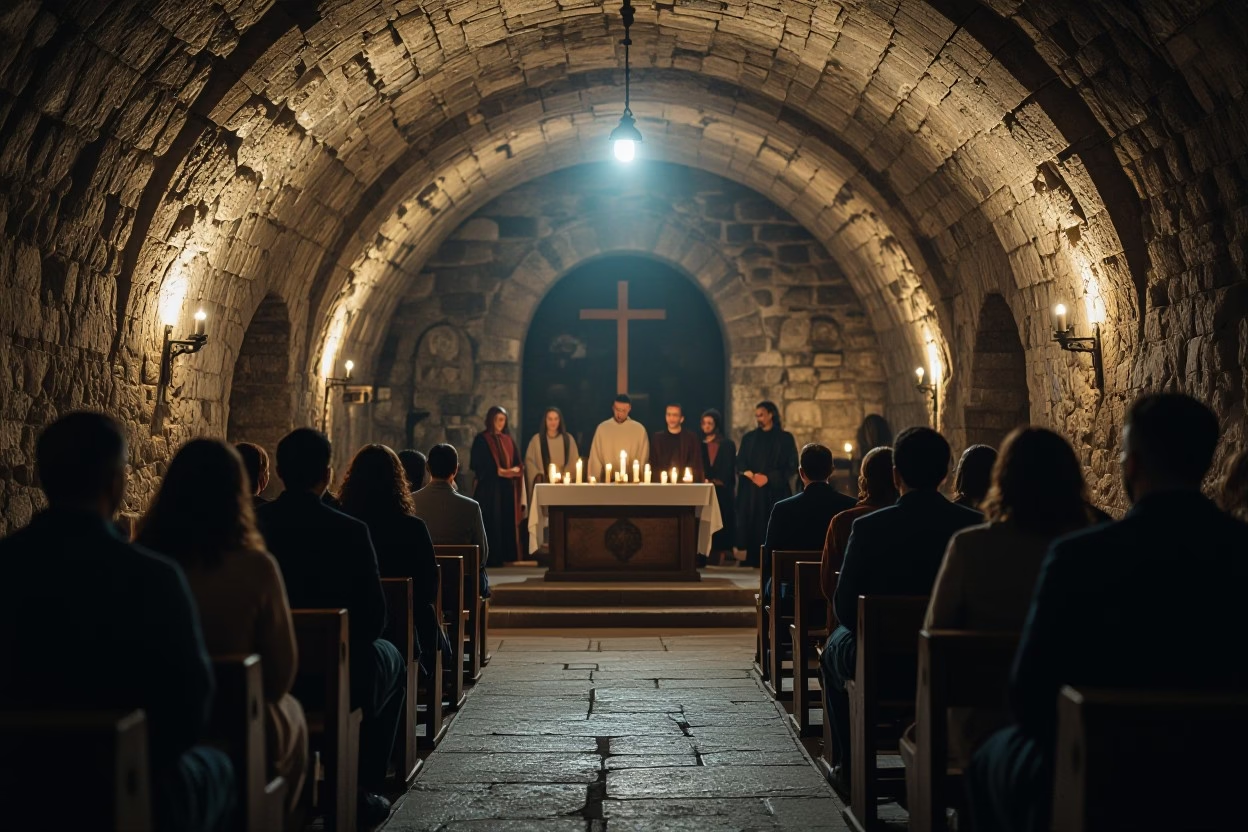
    You can establish covert gatherings by utilizing small, trusted groups that frequently change meeting locations to evade detection. In China, house churches often rotate homes weekly, limiting exposure to surveillance. These meetings focus on intimate worship, Bible study, and mutual encouragement, creating a safe space that balances fellowship with secrecy. Sound protocols, such as non-disclosure agreements among members and discreet communication channels, further protect believers. Maintaining flexibility in numbers and venues strengthens your group’s resilience against persecution and infiltration, enabling faith communities to thrive even under intense scrutiny.

    Leadership in Hiding: Decentralized Models for Resilience

    Decentralized leadership avoids a single point of failure by distributing authority among multiple, often mobile leaders who share responsibility. In underground Chinese churches, leadership networks function like cells, each autonomous yet interconnected, allowing the church to persist even if several leaders are arrested. This structure reduces risk while empowering local leaders to respond contextually to challenges. Training occurs through discreet mentoring and hidden seminaries, enabling leadership reproduction without reliance on formal hierarchies. You’ll find that this fluid model fosters adaptability, resilience, and continuity amid persecution.

    Expanding on decentralized leadership, consider how the church in China leverages a “cell-like” structure where leadership roles are deliberately shared across several layers. Instead of a centralized pastorate vulnerable to state crackdowns, smaller groups are led by elders or mature believers trained through informal apprenticeships and secret Bible schools. Digital tools encrypted for security aid in coordination without exposing networks. Such dispersal of leadership authority ensures that when one community faces disruption, others continue functioning independently, preserving the integrity and mission of the underground movement. This intentional redundancy equips you to sustain long-term growth and resilience despite constant pressure.

    Western Church Response: Advocacy and Partnership

    Mobilizing Prayer and Awareness for the Persecuted

    You can join a global movement of intercession that powerfully sustains the persecuted church. Prayer networks linked to regions like North Korea, Iran, and Nigeria fuel hope amid harsh oppression. Awareness campaigns—from social media testimonies to dedicated worship services—inform communities who might otherwise remain unaware of the daily realities facing millions living under surveillance, imprisonment, or martyrdom. Maintaining this vigilant prayerful engagement helps keep the suffering church spiritually connected to the broader body of Christ, embodying solidarity with those who risk everything to follow Jesus.

    Strategic Support: Training and Resources for Underground Leaders

    You can facilitate the equipping of underground church leaders through provision of discreet training materials, Bible resources, and leadership mentoring designed for high-risk environments. Networks supplying encrypted digital literature, trauma-informed care tools, and portable teaching curricula have proven effective in sustaining house churches under constant threat. Such efforts help nurture resilient discipleship and decentralized leadership models so imperative to the survival and multiplication of faith communities where public ministry is impossible.

    Beyond supplying resources, developing trusted partnerships with indigenous leaders ensures training remains culturally appropriate and sensitive to security concerns. Programs often emphasize Biblical literacy, trauma resilience, and adaptive evangelism, enabling leaders to shepherd small groups with confidence despite persecution pressures. Many Western organizations now use secure communication channels and hidden seminaries to mitigate detection risks. Through your support, underground believers receive not only knowledge but encouragement to persevere, equipping them to multiply disciples even when isolated from larger Christian networks.

    Eschatological Perspectives: Hope Beyond Suffering

    The Vision of Revelation: Assurance for the Persecuted

    Revelation offers you a powerful assurance through vivid imagery and promises. The persecuted are depicted as standing before God’s throne, clothed in white, crowned with victory because they endured “by the blood of the Lamb and by the word of their testimony” (Rev 12:11). This vision reassures you that suffering is not in vain but is seen and honored in the heavenly realm, reinforcing that ultimate justice and resurrection await those who remain faithful amid hardship.

    The Unstoppable Advance of the Gospel: A Future-Oriented Faith

    The gospel’s advance cannot be halted by prison walls, surveillance, or violence. Historical and contemporary realities—from the rapid expansion of China’s underground church to resilient believers in Nigeria and the Middle East—show that persecution often correlates with growth. This future-oriented faith trusts that even in “darkest places,” the Spirit moves powerfully, expanding Christ’s kingdom against all odds.

    Persecution and crackdown may scatter congregations, but the growth areas today consistently reveal multiplication rather than contraction. For example, despite severe restrictions, China’s house churches have reportedly reached over 90 million believers, embracing decentralized leadership and covert networks that accelerate evangelism and discipleship. Similarly, in Nigeria, where violence threatens communities, the church continues to plant new fellowships and train leaders covertly. This unstoppable movement reaffirms your call to persevere, knowing the gospel trajectory is toward triumph, not defeat. Your suffering contributes to a story that scripture frames as the inevitable expansion of God’s kingdom, sustained by the courage and testimony of faithful believers worldwide.

    Conclusion

    From above, you see that following Christ often means embracing suffering, as demonstrated from the early martyrs through today’s underground churches. Your faith journey may encounter opposition, yet this resistance shapes resilience and fosters deeper discipleship. By understanding the biblical, historical, and contemporary realities of persecution, you are equipped to stand with the global church in solidarity, hope, and steadfast witness. The story of the suffering church challenges you to embrace a faithful, hope-filled path that reflects Christ’s victory amid trials, inspiring enduring growth and renewal worldwide.

    FAQ

    Q: What biblical passages provide the foundation for understanding Christian persecution?

    A: Key biblical foundations include Jesus’ warnings about persecution in the Gospels (Matthew 5:10–12; John 15:18–20), the account of the early church’s suffering and growth in the Book of Acts, and the eschatological encouragement found in Revelation (especially Revelation 12:11), which highlights overcoming through the testimony and sacrifice of believers.

    Q: How did early church martyrs influence Christian theology and practice?

    A: The early martyrs, such as Stephen and Polycarp, deeply impacted Christian theology by embodying the idea that suffering and death for faith serve as a powerful witness. Their sacrifice was described as “the seed of the church,” inspiring believers to persevere, often pushing faith communities underground while strengthening their commitment and solidarity.

    Q: What are some contemporary global hotspots where Christian persecution is most intense?

    A: Present-day persecution is especially severe in countries like North Korea, Afghanistan, Somalia, Nigeria, China, and Iran. Christians in these regions face a spectrum of oppression, ranging from strict legal restrictions and invasive surveillance to physical violence, imprisonment, and martyrdom.

    Q: How has the underground church in China adapted to decades of state persecution?

    A: The Chinese underground church has developed innovative survival strategies including secret house gatherings, decentralized leadership to prevent single points of failure, covert distribution of literature, and intensive discipleship. Believers accept great personal risks such as arrest and torture, yet the community continues to grow and train new leaders despite harsh crackdowns.

    Q: What theological critique does the suffering church offer against the prosperity gospel?

    A: The theology of the suffering church challenges prosperity teaching by emphasizing that faith in Christ does not guarantee worldly comfort or success. Instead, suffering is framed as participation in Christ’s own path, fostering sanctification and serving as a powerful witness. True hope is found through the victory of Christ over suffering, not in escaping adversity.

    Q: What factors contribute to the resilience of persecuted Christian communities?

    A: Resilience in persecuted communities arises from deep discipleship practices—including strong biblical literacy and prayer—solidarity through close community bonds and shared resources, and an eschatological hope that sustains believers as they look forward to God’s ultimate justice and renewal.

    Q: What role can the Western Church play in supporting persecuted Christians worldwide?

    A: The Western Church can support persecuted believers by maintaining informed and consistent prayer, raising awareness about global persecution, providing material and strategic assistance, and learning from the experiences of the suffering church. Engaging in solidarity and advocacy efforts helps foster a more faithful and resilient global body of Christ.