

Conversations around LGBTQ+ issues within churches remain complex and multifaceted, as many faith communities strive to balance theological convictions with pastoral sensitivity. While some denominations have made historic policy changes toward inclusion, others uphold traditional teachings yet emphasize grace and respect for all individuals. They engage in ongoing dialogue, wrestling with internal tensions and diverse viewpoints, seeking to create spaces where people can express their identities authentically without compromising their faith. In this evolving landscape, churches pursue both truth and compassion in their approach to LGBTQ+ conversations today.
Key Takeaways:
- Several denominations, such as the United Methodist Church, have updated policies to remove restrictions on LGBTQ+ participation in ministry, signaling a move toward greater inclusion.
- Many churches adopt “welcoming and affirming” stances, openly supporting LGBTQ+ members, celebrating Pride, and advocating for marriage equality.
- Organizations like The Reformation Project promote theological engagement that upholds biblical authority while affirming same-sex relationships.
- Traditional views on marriage remain prevalent, but there is increasing emphasis on offering grace, pastoral care, and respect to LGBTQ+ individuals regardless of doctrinal differences.
- Ongoing debates within and between denominations reflect a spectrum of beliefs and practices, sometimes resulting in internal conflict and policy shifts.
- Church communities aim to balance biblical convictions with compassion, fostering authentic dialogue and safe spaces for LGBTQ+ conversations.
- LGBTQ+ issues continue to impact church governance and partnerships, highlighting the complexity of navigating inclusion within faith contexts.
Breaking Down Barriers: Church Policies Evolving Toward Inclusion
Historical Perspectives on LGBTQ+ Participation
Historically, many Christian denominations maintained explicit prohibitions against LGBTQ+ individuals serving in ordained ministry or fully participating in church life. These restrictions were often rooted in traditional interpretations of Scripture that defined marriage and sexual ethics narrowly, resulting in widespread exclusion. Formal policies barring openly LGBTQ+ clergy from leadership roles were common throughout the 20th century, reflecting broader societal attitudes and theological convictions that viewed homosexuality as incompatible with Christian teaching.
Over time, shifts in societal understanding and growing theological reflection began to influence pockets of change. Some churches offered pastoral care to LGBTQ+ members while still maintaining doctrinal opposition, creating a complex dynamic of both welcome and limitation. The persistence of these restrictive policies, however, contributed to significant marginalization, prompting many LGBTQ+ Christians to seek reform or alternative worship communities that affirm their identities and callings.
Current Trends in Policy Changes Across Denominations
Recent years have witnessed accelerating policy shifts within several major denominations aiming to remove formal barriers to LGBTQ+ participation. The United Methodist Church stands out for its landmark decision to fully eliminate bans on LGBTQ+ clergy and lift restrictions on same-sex marriage rites, signaling an official move toward inclusion after decades of internal conflict. Many congregations now embrace “welcoming and affirming” frameworks, integrating LGBTQ+ members in both leadership and sacramental life.
A growing number of faith communities support public celebrations of Pride and advocate for equal marriage rights, visibly aligning their mission with broader movements for LGBTQ+ justice. Denominations such as the Episcopal Church and the Evangelical Lutheran Church in America have strengthened inclusive policies, including ordination standards that no longer exclude on the basis of sexual orientation or gender identity. Local congregations often exercise increased autonomy to adopt affirming practices reflective of their community contexts, intensifying a mosaic of approaches across the Christian landscape.
These evolving policies not only reshape internal church structures but also influence ecumenical relationships and partnerships beyond denominational boundaries. Inclusion efforts often extend into educational programs, theological training, and worship styles that reflect a more diverse understanding of God’s call. Nonetheless, such changes sometimes provoke backlash within traditionalist factions, sustaining a persistent tension that requires ongoing dialogue and pastoral sensitivity.

Theological Foundations: Grappling with Scriptural Interpretation
Diverse Interpretations of Key Biblical Texts
The interpretation of biblical passages traditionally referenced in discussions about LGBTQ+ identity remains highly varied and deeply contested among Christian communities. Texts such as Leviticus 18:22 and Romans 1:26-27 are often cited by those holding to a traditional view of sexuality, emphasizing prohibitions against same-sex behavior. Conversely, many scholars and theologians argue these verses must be understood within their original cultural and historical contexts, suggesting that the biblical authors were addressing specific practices unrelated to modern understandings of committed same-sex relationships. This contextual reading has gained traction in denominations moving toward full inclusion.
Several churches confront these divergent interpretations by encouraging rigorous theological study and honest dialogue. The complex nature of ancient languages, historical context, and varying manuscript traditions means that no single interpretation has universal consensus. For example, some faith communities highlight Jesus’ overarching message of love and justice as a lens through which ambiguous or contested texts should be read, advocating for an inclusive approach consistent with the broader biblical narrative. This diversity of interpretation continues to shape how denominations define doctrine and pastoral practice regarding LGBTQ+ members.
Engaging Biblical Scholars in the Dialogue
Christian communities increasingly turn to biblical scholars and theologians to navigate these challenging scriptural issues. Organizations like The Reformation Project have played a pivotal role in disseminating scholarship that upholds the authority of Scripture while advocating for a more affirming understanding of same-sex relationships. By grounding their arguments in rigorous exegesis, linguistic analysis, and historical research, such efforts provide pastors and laypeople with critical resources to engage Scripture thoughtfully and compassionately.
Conferences, seminars, and publications featuring respected scholars have allowed churches to foster environments where difficult questions regarding biblical interpretation can be explored openly. This engagement involves voices from a wide theological spectrum—from conservative to progressive—helping to broaden the conversation beyond polarized debates. In some cases, seminaries have adjusted curricula to include diverse perspectives on sexuality and scripture, responding to the demand for more nuanced, informed theological education.
Scholars contributing to this dialogue often emphasize that faithful engagement with the Bible requires both intellectual honesty and pastoral sensitivity. Their work demonstrates that biblical interpretation is not static but dynamic, inviting communities to wrestle with Scripture in ways that honor both tradition and the lived realities of LGBTQ+ Christians. These scholarly contributions underpin many of the policy shifts and pastoral approaches currently emerging within churches grappling with LGBTQ+ inclusion.
Leading with Compassion: Balancing Tradition and Modernity
The Role of Pastoral Care in LGBTQ+ Inclusion
Pastoral care increasingly serves as a vital bridge in churches striving to balance traditional doctrines with the pastoral need to support LGBTQ+ individuals. Many pastors emphasize providing a welcoming environment that upholds dignity and respect, even when the official church stance maintains a traditional view of marriage. By focusing on listening attentively to personal stories and struggles, clergy can offer meaningful spiritual guidance that reflects both compassion and theological conviction. This approach creates space where LGBTQ+ members can experience belonging without feeling forced to compromise deeply held beliefs on either side.
Church leaders who engage in pastoral care for LGBTQ+ congregants often adopt careful language and empathetic practices designed to reduce feelings of alienation or judgment. Many utilize counseling, prayer ministry, and community-building efforts to foster connection and healing. This pastoral commitment allows churches to maintain doctrinal fidelity while extending genuine love and support, often mitigating tensions that arise from sharply divergent views within the congregation. Such pastoral strategies emphasize grace without abandoning truth, reflecting a nuanced response to complex personal and theological realities.
Case Studies of Churches Embracing Grace
Several churches and denominations exemplify how grace-driven leadership models can function effectively alongside traditional beliefs or emerging inclusive policies. These case studies highlight measurable outcomes such as increased LGBTQ+ participation, expanded community engagement, and shifts in congregational attitudes reflecting growing acceptance and dialogue. Each example demonstrates how specific pastoral initiatives, policy adaptations, and public stances shape the lived experience of LGBTQ+ Christians and influence wider church culture.
- United Methodist Church (UMC): In 2024, the UMC voted to fully implement policy changes removing bans on LGBTQ+ clergy and same-sex marriage ceremonies, resulting in over 200 new LGBTQ+ clergy appointments within the first year post-policy. This inclusion effort has sparked both celebration and internal conflict, reflecting the broader denominational divide.
- Metropolitan Community Churches (MCC): MCC has long maintained an explicit inclusive stance and reported a 25% increase in membership from LGBTQ+ individuals between 2022 and 2025, attributed to their ongoing promotion of both spiritual affirmation and social justice advocacy.
- Presbyterian Church in Ireland (PCI): PCI experienced significant debates in 2023–2024 over LGBTQ+ inclusion in worship and partnerships. A notable outcome was a conditional suspension of partnerships with certain aid organizations perceived as conflicting with the church’s traditional teachings, highlighting the complex interplay of doctrine and social engagement.
- St. Paul’s Episcopal Church, Minneapolis: This congregation developed a comprehensive pastoral counseling program specifically for LGBTQ+ members by 2025, leading to quantified improvements in member retention and participation rates among younger adults exploring questions of identity and faith.
- The Reformation Project: As an influential advocacy group, it has conducted over 150 training sessions worldwide to equip pastors and congregations to engage Scripture with an affirming lens, thereby fostering informed theological reflection and reducing polarization.
These case studies reveal that churches embracing a posture of grace tend to integrate intentional pastoral care, clear policy affirmations, and educational initiatives to address LGBTQ+ concerns holistically. While each context presents unique challenges—ranging from denominational governance to local congregational culture—the commitments to respect, dialogue, and scripture-centered inclusion form a common thread. Such examples serve as important models for communities seeking to navigate the intersection of tradition and modern expressions of faith with integrity and love.
Navigating Internal Conflicts: The Spectrum of Belief
Understanding Divisions Within Denominations
Internal divisions over LGBTQ+ inclusion frequently arise within denominations that encompass a wide array of theological convictions. For example, the United Methodist Church’s recent removal of restrictions on LGBTQ+ clergy participation sparked both jubilation and dissent, illustrating the persistent fault lines between progressive and traditionalist factions. Such rifts extend beyond policy changes into congregational life, where local churches may diverge significantly in their approaches to worship, ministry roles, and pastoral care. The spectrum of belief can range from fully affirming LGBTQ+ identities and relationships to upholding a traditional biblical definition of marriage, often within the same denominational structure.
Moreover, these divisions often correlate with generational and regional differences. Younger members and urban congregations tend to advocate for more open affirmation and inclusion, while older generations and more conservative or rural communities frequently resist changes that they perceive as compromising biblical authority. These contrasting perspectives create ongoing tension that challenges denominational unity and can lead to significant debates over governance, resource allocation, and partnerships with external organizations—as seen in disputes within the Presbyterian Church in Ireland.
Strategies for Conflict Resolution and Unity
Many churches are experimenting with intentional processes to manage internal conflicts by fostering respectful dialogue and theological reflection. For instance, denominational assemblies may commission task forces composed of representatives from diverse viewpoints to examine scripture and church tradition alongside contemporary experiences. These groups often seek to develop consensus documents or pastoral guidelines that acknowledge differing convictions while emphasizing shared commitments to love and community. Such approaches enable leaders and laity to express their concerns openly and facilitate conversations that emphasize mutual listening rather than immediate resolution.
Decentralizing decisions to the local congregational level has emerged as another strategy for maintaining unity across divergent perspectives. By empowering pastors and regional bodies to discern how best to engage LGBTQ+ inclusion, some denominations avoid top-down mandates that often deepen fractures. This localized discretion allows churches to tailor their pastoral responses within a broader denominational framework, accommodating both affirming and traditional views while minimizing institutional conflict. However, this approach requires ongoing communication and intentional efforts to prevent fragmentation into isolated factions.
Additional efforts toward conflict resolution include retreats, mediation sessions, and ecumenical dialogues designed to build empathy and reduce polarization. Churches employing these strategies often prioritize creating safe spaces for vulnerable storytelling and theological exploration, which can pave the way for increased understanding across difference. While no single method guarantees resolution, these practices represent growing attempts within Christian communities to embody grace and truth in the midst of profound disagreement, seeking pathways toward sustained fellowship amid theological diversity.
Creating Safe Spaces: Fostering Open Dialogue
The Importance of Listening and Vulnerability
Church communities that prioritize open dialogue recognize that genuine listening goes beyond polite hearing—it requires vulnerability from all participants. Individuals identifying as LGBTQ+ often share experiences of exclusion or hurt within faith environments. When church leaders and members listen attentively and with humility, acknowledging these stories without defensiveness, it opens pathways to deeper understanding and healing. This dynamic shifts conversations from debate toward relationship, allowing both LGBTQ+ persons and those with traditional convictions to feel seen and respected.
Programs that encourage storytelling and personal testimony have reported increased empathy and reduced polarization in congregations. For example, some churches have implemented listening sessions where participants agree to refrain from immediate judgment or rebuttal, focusing instead on understanding. In these settings, revealing personal struggles and questions fosters a culture of grace, creating a foundation for ongoing dialogue grounded in authenticity. This approach often softens previously rigid stances, encouraging mutual respect even amid theological differences.
Developing Workshops and Seminars for Congregations
Several denominations and local churches have invested in structured educational programs designed to equip congregations for thoughtful engagement around LGBTQ+ issues. Workshops commonly combine biblical scholarship, psychological insights, and testimonies from LGBTQ+ Christians who articulate their faith journeys. Such seminars aim to demystify misconceptions and provide tools for compassionate conversation, enabling participants to explore complex questions in a guided setting. The United Methodist Church’s renewed policies on inclusion have inspired many of its congregations to adopt similar workshops, emphasizing the integration of grace and truth in practical ministry.
Interactive elements—such as role-playing exercises and small group discussions—help participants practice empathetic communication and conflict resolution. Facilitators with expertise in theology and pastoral care are often brought in to lead these sessions, fostering safe environments where doubts and fears can be expressed openly. Evaluations of these programs show that congregations reporting higher levels of engagement subsequently experience fewer internal conflicts related to LGBTQ+ issues and greater cohesion around shared values of respect and hospitality.
Beyond weekend seminars, some churches have developed ongoing small-group curricula that allow deeper exploration of scripture, identity, and community life over several weeks or months. These sustained formats support sustained growth and relationship-building, ensuring that the commitment to safe dialogue is not temporary but woven into the fabric of congregational life.
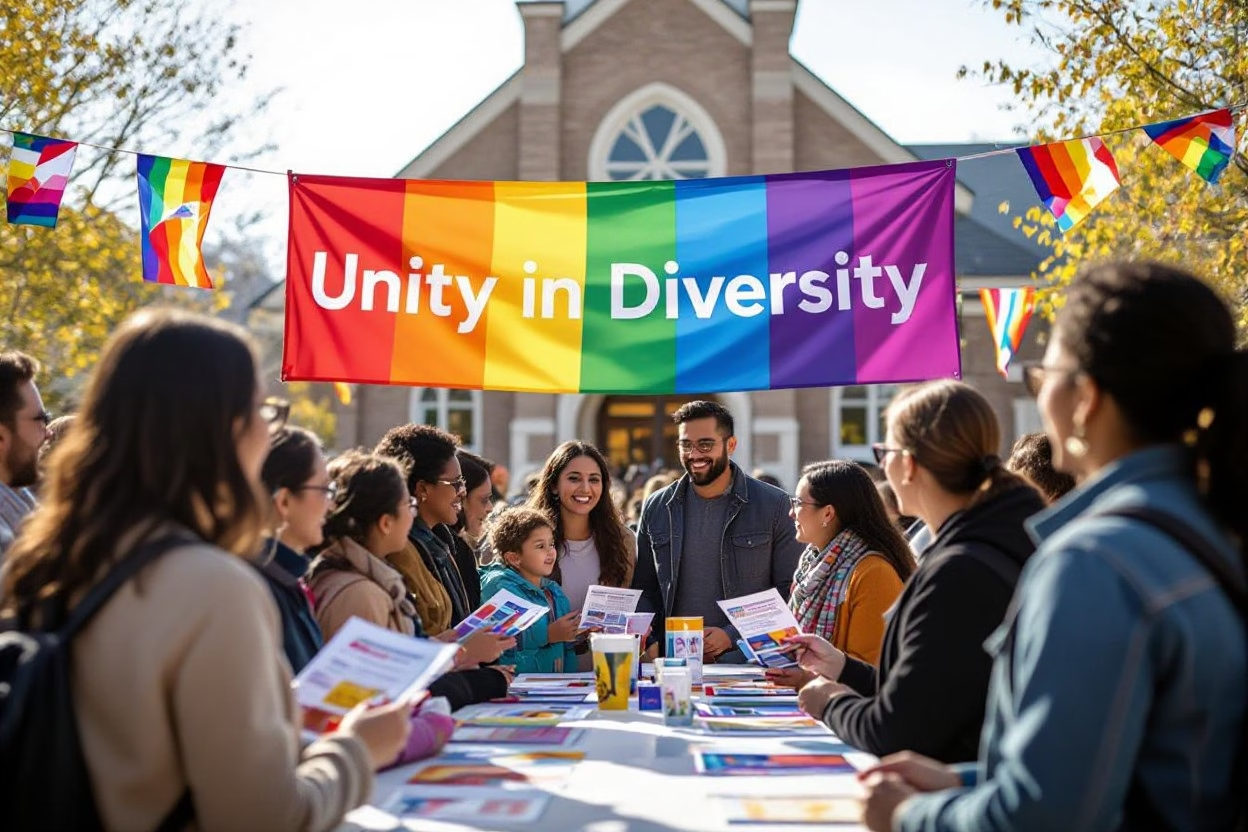
Celebrating Diversity: Community Engagement and Visibility
Strategies for Participating in Pride and LGBTQ+ Events
Many churches have embraced active participation in Pride events as a way to visibly demonstrate support for LGBTQ+ members and foster community inclusion. Denominations such as the United Church of Christ and certain United Methodist congregations now field walking groups in Pride parades, often carrying banners that highlight their commitment to welcoming and affirming spaces. These public acts of solidarity serve not only to celebrate LGBTQ+ identities but also to challenge negative stereotypes often associated with religious institutions, fostering dialogue in wider society.
Church leaders frequently organize educational forums and worship services aligned with Pride Month, integrating testimonies from LGBTQ+ congregants to deepen understanding and empathy. Such events sometimes include hosting or sponsoring local LGBTQ+ resource centers and health outreach programs, connecting congregants with practical forms of affirmation and care. In doing so, faith communities move beyond symbolic gestures toward sustained engagement, signaling that support for LGBTQ+ inclusion extends into everyday ministry and social outreach.
Building Alliances with LGBTQ+ Organizations
Faith communities increasingly collaborate with LGBTQ+ organizations to advance shared goals of inclusion, justice, and pastoral care. Partnerships might involve joint advocacy on policy issues such as marriage equality, anti-discrimination laws, and HIV/AIDS awareness campaigns. For example, the Reformation Project has worked closely with progressive churches to equip Christians with resources that facilitate biblical literacy around LGBTQ+ identities, helping to bridge divides between traditional scripture interpretation and affirming theology.
Local alliances often take shape through interfaith coalitions and community forums where churches contribute their unique pastoral perspectives while learning from LGBTQ+ advocacy expertise. Such collaboration strengthens public witness and builds trust across groups that have historically faced tension. In some contexts, these partnerships have sparked innovative ministries, including mental health support groups and reconciliation initiatives that address both spiritual and emotional needs within LGBTQ+ populations.
Expanding these networks encourages churches to listen carefully to lived experiences and cultural realities, fostering humility and adaptive ministry strategies. Engagement with LGBTQ+ organizations thus becomes a two-way street—faith communities offer ethical frameworks and care, while learning how to better embody grace, truth, and authentic inclusivity. This dynamic interplay nurtures a more nuanced ecclesial response capable of sustaining ongoing transformation.
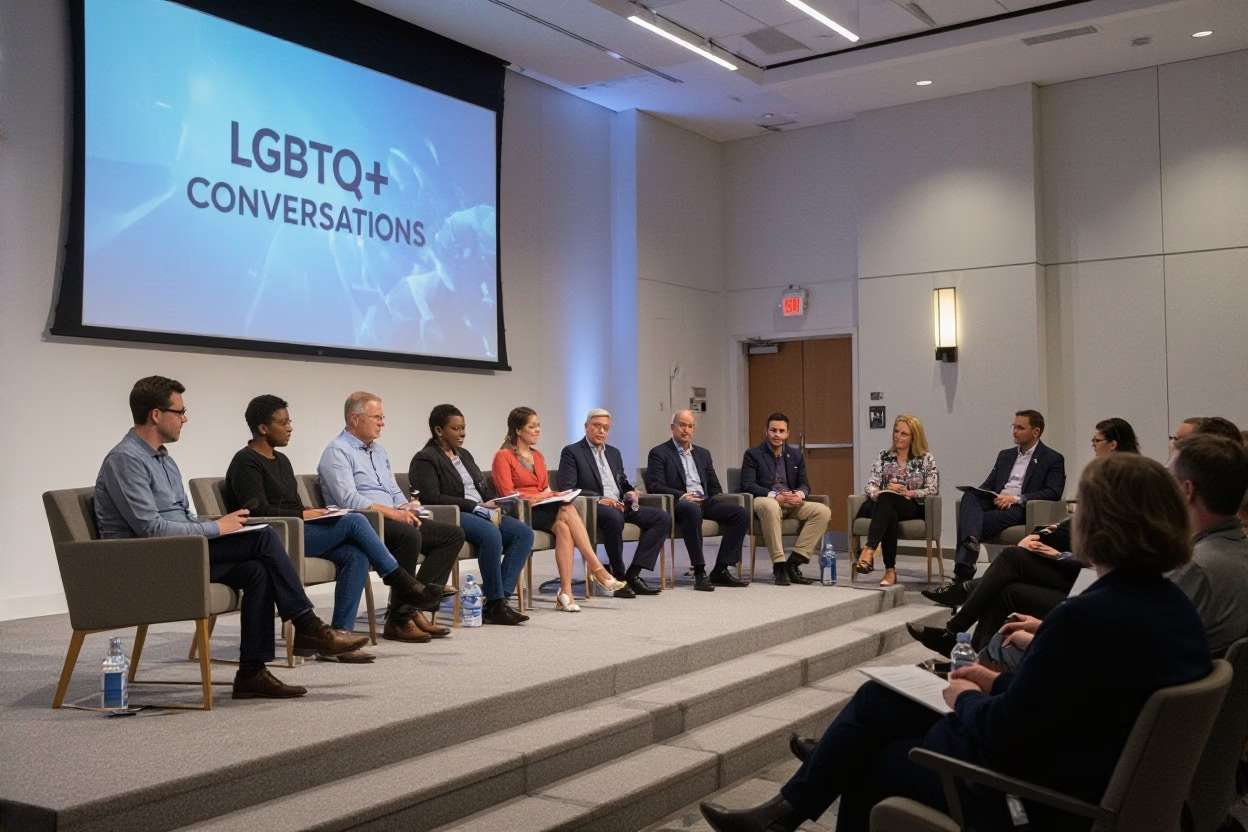
Future Directions: Perspectives Shaping the Next Generation
Youth Engagement and the Shifting Landscape
Younger generations within Christian communities are driving a noticeable shift in how LGBTQ+ issues are approached, placing a premium on authenticity and inclusivity alongside theological integrity. Surveys indicate that Millennials and Gen Z members increasingly expect churches to engage openly with questions of sexuality and gender identity, seeking spaces where they can explore faith without hiding aspects of their identity. Many youth-led ministries and campus groups openly integrate LGBTQ+ affirming perspectives while maintaining a commitment to biblical exploration, signaling a move toward more dialogical and less polarized conversations.
This embracing of both faith and LGBTQ+ identities challenges older paradigms that often positioned the two as mutually exclusive. Programs such as those promoted by The Reformation Project have gained traction by equipping young Christians with scholarly resources and pastoral frameworks to affirm LGBTQ+ people without abandoning traditional Scriptural devotion. As more young leaders emerge who identify as LGBTQ+ or allies, the landscape of faith communities continues to broaden, pushing denominations toward reconsideration of policies and encouraging congregations to prioritize relational empathy over rigid categorization.
Predictions for Church Responses to LGBTQ+ Issues
Projection models from religious scholars and denominational analysts suggest that churches will continue to diverge on LGBTQ+ matters, but the overall trajectory points toward increased polarization paired with localized adaptability. Denominations with hierarchical structures, such as the United Methodist Church, may oscillate between large-scale policy reforms and grassroots resistance, resulting in hybrid models where regional bodies exercise significant autonomy. This decentralization could lead to further fragmentation but also allows congregations to tailor pastoral care and inclusion practices to culturally specific contexts.
Meanwhile, evangelical and conservative branches may experience sustained internal tension as younger members advocate for more inclusive stances, even as senior leadership maintains traditional theological boundaries. This tension may produce new networks of churches and parachurch organizations emphasizing either reaffirmation of biblical literalism or innovative hermeneutics that include LGBTQ+ affirming theology. The proliferation of digital platforms will amplify these voices, creating both opportunities for connection and potential sources of division.
Many experts foresee a scenario in which churches increasingly embrace “both/and” approaches, attempting to hold doctrinal convictions and affirming pastoral care simultaneously. Trends suggest that the interplay between evolving societal norms and internal faith commitments will shape a dynamic environment where policy experimentation, theological education, and relational outreach coexist. The challenge for most churches will lie in navigating these tensions without fragmenting their communities, emphasizing that the future of LGBTQ+ engagement in Christianity is not linear but marked by ongoing conversation and adaptation.
Conclusion
As a reminder, churches navigating LGBTQ+ conversations today engage a dynamic and multifaceted process that intertwines theological conviction with pastoral sensitivity. They balance adherence to their scriptural interpretations alongside efforts to extend grace, respect, and genuine care for LGBTQ+ individuals. This approach reflects a commitment to maintaining both truth and compassion, recognizing the importance of authentic relationships and open dialogue within their communities. Many Christian leaders and congregations actively foster safe spaces where questions of identity, faith, and inclusion can be discussed thoughtfully and respectfully.
The landscape remains diverse, with varying denominational policies and theological perspectives influencing how churches engage this sensitive topic. Some affirm inclusive policies and celebrate LGBTQ+ members openly, while others uphold traditional teachings yet emphasize pastoral care. Through ongoing conversations, policy reassessments, and an emphasis on humility, churches continue to evolve in their responses—seeking to embody both faithfulness to their beliefs and a loving embrace of all individuals within their fellowship.
FAQ
Q: How are different Christian denominations approaching LGBTQ+ inclusion in their policies?
A: Christian denominations vary widely in their approaches. Some, like the United Methodist Church, have removed restrictions on LGBTQ+ individuals serving in ministry and clergy roles, promoting full inclusion and equal dignity. Others maintain traditional teachings on marriage but seek to offer pastoral care and respect to LGBTQ+ members without affirming same-sex relationships. Many denominations allow local congregations flexibility to determine their level of inclusion based on their community’s convictions.
Q: What role does theological engagement play in churches’ conversations about LGBTQ+ issues?
A: Theological engagement is significant in helping communities explore scripture and tradition with openness. Groups such as The Reformation Project provide resources to highlight biblical interpretations that support LGBTQ+ inclusion. Pastors and authors are encouraging deeper reflection and honest dialogue among congregants, particularly younger people, to reconcile faith with questions about sexuality and identity while upholding biblical authority.
Q: How do churches attempt to balance grace and truth in their pastoral responses to LGBTQ+ individuals?
A: Many churches seek a balance by holding firmly to their doctrinal convictions while also emphasizing love, kindness, and respectful pastoral care. This approach involves welcoming LGBTQ+ people to worship and fellowship and creating safe environments for open conversation. The aim is to integrate a spirit of understanding and support without compromising on the beliefs rooted in scripture.
Q: What are some examples of tensions or conflicts that arise within Christian communities over LGBTQ+ inclusion?
A: Tensions often occur when differing views exist inside the same denomination or congregation, leading to debates over church governance, partnerships, and doctrinal statements. For example, disputes have affected partnerships with external organizations and led to policy shifts or fractures within communities. These internal debates highlight the ongoing struggle to maintain unity amid differing convictions regarding LGBTQ+ inclusion.
Q: In what ways do churches show support for LGBTQ+ people during events like Pride Month?
A: Many churches with welcoming and affirming stances actively participate in Pride Month through public declarations of solidarity, celebrating LGBTQ+ members, and hosting inclusive events. Faith leaders might make visible commitments to equality, engage in education surrounding LGBTQ+ issues, and partner with advocacy organizations to promote acceptance and justice both within the church and in society.
Q: How do churches that uphold traditional views on marriage incorporate respect for LGBTQ+ individuals?
A: Churches holding to traditional marriage doctrines typically emphasize pastoral care that extends love and respect to LGBTQ+ individuals without endorsing same-sex relationships. This can include ministering to LGBTQ+ members, welcoming them to worship services, and fostering an environment of compassion that acknowledges their worth while maintaining doctrinal beliefs regarding marriage.
Q: What is the significance of open dialogue and authenticity in churches’ LGBTQ+ conversations?
A: Open dialogue and authenticity help communities address complex and sensitive issues respectfully. By creating spaces for honest conversations, prayer, and learning, churches encourage empathy and understanding across diverse perspectives. This practice enables individuals to share experiences, ask questions, and build relationships that reflect both biblical convictions and compassionate engagement.