Tag: Growth

  • The Cost of Following: A Global Theology of Persecution, Resilience, and Underground Church Growth from the Early Martyrs to the 21st Century

    The Cost of Following: A Global Theology of Persecution, Resilience, and Underground Church Growth from the Early Martyrs to the 21st Century

    Most followers of Christ throughout history have faced intense suffering and opposition for their faith. As you explore this deep and compelling story, you’ll encounter how the early martyrs’ sacrifice planted seeds for resilient underground churches that continue to flourish today. From the harsh realities of global persecution in places like North Korea and China to the inspiring strategies believers use to preserve their faith, your understanding of discipleship will be challenged and expanded by this powerful testimony of courage, hope, and growth amid adversity.

    Key Takeaways:

    • Scripture portrays persecution as an expected reality for Christians, linking suffering with faithful witness and ultimate victory through Christ’s resurrection and eschatological hope.
    • Historical examples, from early martyrs to Reformation figures, demonstrate that persecution often strengthens faith communities and serves as a catalyst for church growth and deepened discipleship.
    • Modern Christian persecution is widespread in specific global hotspots, where believers face legal restrictions, violence, and underground existence, yet faith communities continue to grow and adapt.
    • The Chinese underground church exemplifies resilience by employing decentralized leadership, secret meetings, and innovative discipleship methods to sustain and expand under severe oppression.
    • The theology of suffering challenges prosperity teachings by affirming that participation in Christ’s suffering is a path to sanctification and faithful witness rather than material blessing.
    • Resilience in persecuted communities is nurtured through deep discipleship, strong communal bonds, and an enduring hope grounded in God’s justice and future restoration.
    • The global church, especially in the West, is called to support persecuted believers through informed prayer, advocacy, resource provision, and learning from the sacrificial faith demonstrated by the suffering church.

    Scriptural and Historical Contexts of Persecution

    The Foundations of Suffering in the Gospels and Acts

    Jesus warns you directly that persecution is an unavoidable part of discipleship (Matthew 5:10–12; John 15:18–20), framing suffering not as defeat but as a mark of faithfulness. The Book of Acts vividly documents how early believers faced hostile opposition, imprisonment, and scattering, yet experienced remarkable growth—transforming adversity into expansion by the power of the Spirit. This paradox of suffering fueling the gospel’s spread establishes a biblical foundation for understanding persecution as both real and redemptive.

    Early Church Martyrdom: Seeds of Resilience

    The earliest martyrs, starting with Stephen’s stoning (Acts 7) and extending to figures like Polycarp in the second century, exemplify suffering’s role as the church’s lifeblood. Their deaths did not silence the faith but scattered the believers who planted new communities, deepening solidarity and spiritual maturity. This period forged a theology identifying martyrdom as witness, with Tertullian famously declaring, “The blood of the martyrs is the seed of the church.”

    Beyond mere symbolism, early church martyrdom catalyzed the faith’s growth under extreme threat. Despite intense Roman persecution that involved public executions, imprisonment, and social ostracism, believers cultivated underground networks sustained by mutual aid and committed discipleship. Martyrs often left written testimonies and letters, such as Ignatius of Antioch’s epistles, which reinforced doctrinal clarity and encouraged steadfastness. These acts of witness nurtured resilience not by avoiding suffering but by embracing it as fellowship with Christ’s own passion, inspiring generations to persevere amid both external and internal pressures.

    Persecution Trends in the Modern World

    Identifying Global Hotspots: A Contemporary Landscape

    North Korea, Afghanistan, Somalia, Nigeria, China, and Iran form the most perilous environments for followers of Christ today. You encounter persecution manifesting not only in overt violence and martyrdom but through pervasive legal restrictions, constant surveillance, and social ostracism. These regions reflect diverse political and religious hostilities, yet you see a consistent pattern: the church often retreats underground, grows in secret, and forges resilient networks despite brutal opposition.

    The Persecutor’s Playbook: Tactics and Legislation

    Governments and hostile forces employ layered strategies to suppress Christian witness. Laws targeting religious gatherings, drastic surveillance measures, and widespread use of informants create a climate of fear. You find that imprisonment, torture, and forced closures of churches are often supported by carefully crafted legislation aimed at quashing any visible expression of faith.

    Legal instruments frequently masquerade as maintaining social stability but are weaponized against believers. In China, for instance, restrictive religious regulations require churches to register with the state, forcing many congregations to meet secretly or risk shutdowns and arrests[10]. Surveillance technologies intensify control, tracking communication and movements of believers. Informant networks sow distrust within communities, isolating members and breaking down solidarity. These tactics reveal a strategic, multi-level approach designed not only to silence but to dismantle underground faith networks, compelling you as an observer to recognize the complexity and high stakes of perseverance in these contexts.

    Resilience in Adversity: Case Studies of Underground Churches

    • China: The underground church has surged to an estimated 90 million believers despite rigorous state crackdowns, relying on decentralized leadership, secret house meetings, and covert seminaries.
    • North Korea: With fewer than 400 known Christian leaders operating secretly, worshippers face imprisonment or execution; still, the faith endures through smuggled Bibles and hidden prayer networks.
    • Nigeria: In regions plagued by violent extremist groups, underground churches gather discreetly, using small cell groups of fewer than 15 to maintain community and safety.
    • Iran: Despite intense surveillance, underground house churches have reportedly grown by 60% over the last decade, emphasizing deep discipleship amidst pressure and trauma.
    • Afghanistan: Following regime changes, secret Christian groups have multiplied, connecting via encrypted digital platforms and informal, relational evangelism.

    The Chinese Church: A Model of Covert Growth

    The Chinese underground church exemplifies resilience through its adaptive tactics—rotating meeting locations, avoiding centralized authority, and fostering strong interpersonal discipleship. Despite relentless government surveillance, believers openly risk arrest, torture, and death to maintain spiritual formation and advance evangelism. This network’s exponential growth, doubling roughly every decade since the 1980s, showcases the power of faithful witness under intense persecution and the dynamic interplay between courage and discretion in hostile environments.

    Empirical Evidence: How Resilience Shapes Faith Communities

    Data from persecuted regions consistently highlight the impact of strong relational bonds, biblical literacy, and shared hope in sustaining underground churches. Studies indicate that communities displaying higher levels of mutual care and eschatological hope demonstrate notably greater stability and growth, even under extreme duress.

    In places like Iran and Nigeria, surveys reveal that churches emphasizing intensive discipleship and trauma-informed counseling maintain membership cohesion far better than those without these practices. Resilience is also linked to decentralized leadership models that prevent the collapse of entire networks when authorities target key individuals. This evidence illustrates how theological convictions and practical strategies merge to preserve and multiply faithful communities despite ongoing oppression.

    The Cost of Discipleship: Theological Reflections

    Redefining Blessing and Suffering: A Biblical Framework

    Christian discipleship calls you to embrace a reordering of values where blessing is not equated solely with comfort or material prosperity. Scripture consistently challenges you to see suffering as part of God’s refining process—a participation in Christ’s own journey (Romans 8:17). The beatitudes affirm those persecuted for righteousness as truly blessed (Matthew 5:10–12), inviting you to understand blessing through the lens of faithfulness amid hardship rather than worldly success.

    The Theology of the Cross: Hope Amidst Trials

    The cross stands at the center of Christian hope, illustrating how suffering is never the end but a conduit to resurrection life. You witness in the early church’s martyrs and today’s persecuted believers a theology that refuses to escape suffering, instead finding victory through it. This counters prosperity narratives, anchoring hope in Christ’s triumph—an assured promise that your trials serve a purpose within God’s redemptive plan.

    The Theology of the Cross reveals that suffering is transformed into testimony through Christ’s resurrection power. This perspective shapes underground churches, particularly in China where believers endure arrest, torture, and death with unwavering conviction, transforming fear into bold witness. The apostle Paul’s sufferings (2 Corinthians 12:10) and John’s vision in Revelation 12:11 affirm that overcoming comes through “the blood of the Lamb and the word of their testimony.” You see that suffering refines faith and produces spiritual fruit, uniting you with the historical continuum of saints who embraced discipleship at great cost. This theology equips you to endure persecution not as meaningless pain but as meaningful participation in Christ’s mission, sustained by eschatological hope and empowered by the Spirit.

    Key Elements of Resilience in Persecuted Communities

    Depth of Discipleship: Learning and Living Under Pressure

    The intensity of persecution sharpens the commitment of believers, who cultivate a profound biblical literacy often unmatched elsewhere. You witness clandestine Bible studies where scripture becomes both shield and sword, deeply grounding faith amid suffering. Discipleship incorporates mentoring that addresses trauma and equips believers to endure hardship with hope and clarity. This rigorous, pressure-tested faith builds resilience by shaping you into a disciple who reflects Christ’s own endurance and perseverance, transforming adversity into an avenue for spiritual growth and effective witness.

    Building Solidarity: The Importance of Community

    Community takes on a life-saving dimension underground, where believers form tightly knit networks for mutual support. Shared resources, collective prayers, and relational accountability create spiritual families that counter isolation and fear. You feel the strength of solidarity as house churches rotate locations to avoid detection, maintaining connection despite pervasive surveillance. This intimate fellowship sustains courage and nurtures resilience, often turning believers into lifelines for each other in hostile environments.

    Beyond mere survival, these communities embody a robust framework of trust and shared identity, which becomes a sanctuary where faith flourishes. In Nigeria, for example, underground congregations support displaced believers fleeing violence through secret meeting points and resource-sharing that safeguard both physical and spiritual well-being. Similarly, in Iran, encrypted communication networks augment face-to-face fellowship, ensuring ongoing discipleship and prayer despite constant threat. This interconnectedness also enables cooperative ministry efforts, such as discreet evangelism and leadership training, multiplying the church’s witness under pressure. As you engage with such communities, the tangible expression of love and loyalty offers a compelling witness of Christ’s presence amid suffering.
    Practical Strategies for Underground Church Growth

    Cultivating Covert Gatherings: Methods for Success

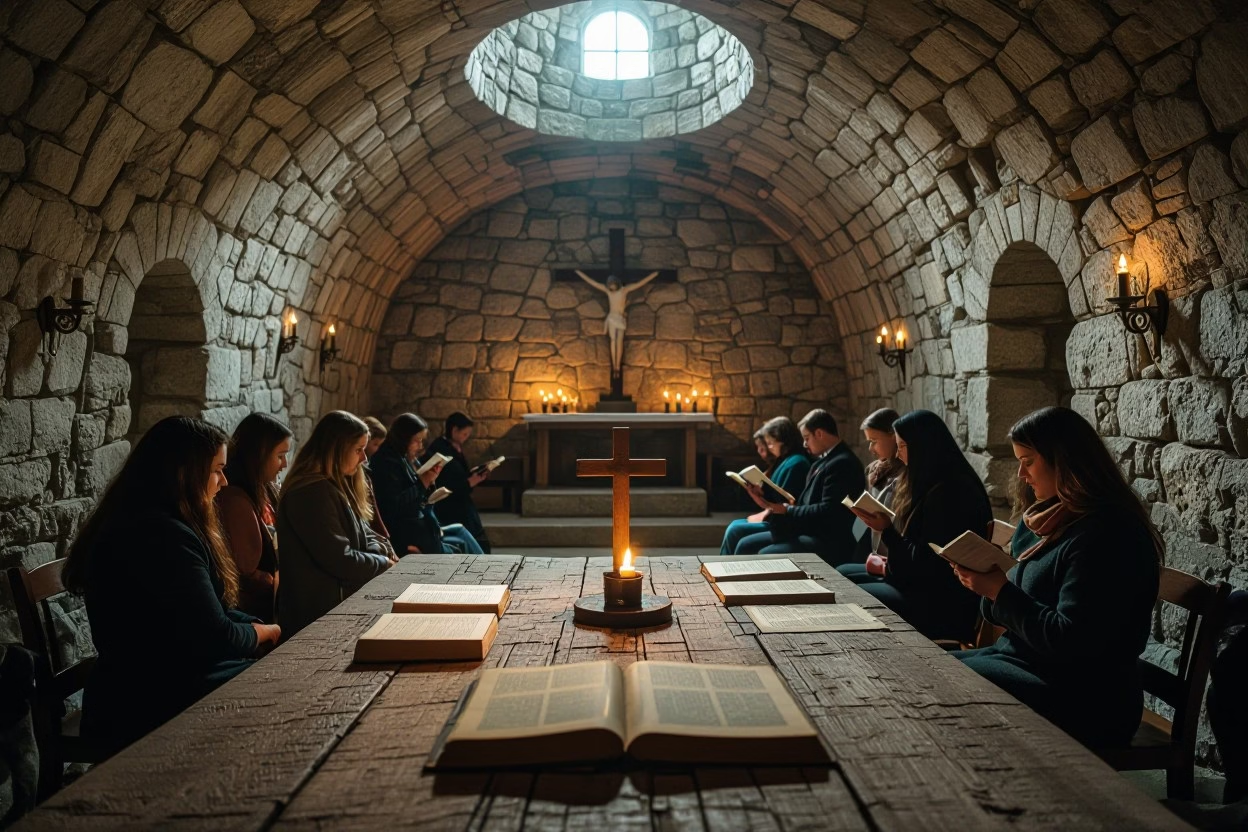
    You can establish covert gatherings by utilizing small, trusted groups that frequently change meeting locations to evade detection. In China, house churches often rotate homes weekly, limiting exposure to surveillance. These meetings focus on intimate worship, Bible study, and mutual encouragement, creating a safe space that balances fellowship with secrecy. Sound protocols, such as non-disclosure agreements among members and discreet communication channels, further protect believers. Maintaining flexibility in numbers and venues strengthens your group’s resilience against persecution and infiltration, enabling faith communities to thrive even under intense scrutiny.

    Leadership in Hiding: Decentralized Models for Resilience

    Decentralized leadership avoids a single point of failure by distributing authority among multiple, often mobile leaders who share responsibility. In underground Chinese churches, leadership networks function like cells, each autonomous yet interconnected, allowing the church to persist even if several leaders are arrested. This structure reduces risk while empowering local leaders to respond contextually to challenges. Training occurs through discreet mentoring and hidden seminaries, enabling leadership reproduction without reliance on formal hierarchies. You’ll find that this fluid model fosters adaptability, resilience, and continuity amid persecution.

    Expanding on decentralized leadership, consider how the church in China leverages a “cell-like” structure where leadership roles are deliberately shared across several layers. Instead of a centralized pastorate vulnerable to state crackdowns, smaller groups are led by elders or mature believers trained through informal apprenticeships and secret Bible schools. Digital tools encrypted for security aid in coordination without exposing networks. Such dispersal of leadership authority ensures that when one community faces disruption, others continue functioning independently, preserving the integrity and mission of the underground movement. This intentional redundancy equips you to sustain long-term growth and resilience despite constant pressure.

    Western Church Response: Advocacy and Partnership

    Mobilizing Prayer and Awareness for the Persecuted

    You can join a global movement of intercession that powerfully sustains the persecuted church. Prayer networks linked to regions like North Korea, Iran, and Nigeria fuel hope amid harsh oppression. Awareness campaigns—from social media testimonies to dedicated worship services—inform communities who might otherwise remain unaware of the daily realities facing millions living under surveillance, imprisonment, or martyrdom. Maintaining this vigilant prayerful engagement helps keep the suffering church spiritually connected to the broader body of Christ, embodying solidarity with those who risk everything to follow Jesus.

    Strategic Support: Training and Resources for Underground Leaders

    You can facilitate the equipping of underground church leaders through provision of discreet training materials, Bible resources, and leadership mentoring designed for high-risk environments. Networks supplying encrypted digital literature, trauma-informed care tools, and portable teaching curricula have proven effective in sustaining house churches under constant threat. Such efforts help nurture resilient discipleship and decentralized leadership models so imperative to the survival and multiplication of faith communities where public ministry is impossible.

    Beyond supplying resources, developing trusted partnerships with indigenous leaders ensures training remains culturally appropriate and sensitive to security concerns. Programs often emphasize Biblical literacy, trauma resilience, and adaptive evangelism, enabling leaders to shepherd small groups with confidence despite persecution pressures. Many Western organizations now use secure communication channels and hidden seminaries to mitigate detection risks. Through your support, underground believers receive not only knowledge but encouragement to persevere, equipping them to multiply disciples even when isolated from larger Christian networks.
    Eschatological Perspectives: Hope Beyond Suffering

    The Vision of Revelation: Assurance for the Persecuted

    Revelation offers you a powerful assurance through vivid imagery and promises. The persecuted are depicted as standing before God’s throne, clothed in white, crowned with victory because they endured “by the blood of the Lamb and by the word of their testimony” (Rev 12:11). This vision reassures you that suffering is not in vain but is seen and honored in the heavenly realm, reinforcing that ultimate justice and resurrection await those who remain faithful amid hardship.

    The Unstoppable Advance of the Gospel: A Future-Oriented Faith

    The gospel’s advance cannot be halted by prison walls, surveillance, or violence. Historical and contemporary realities—from the rapid expansion of China’s underground church to resilient believers in Nigeria and the Middle East—show that persecution often correlates with growth. This future-oriented faith trusts that even in “darkest places,” the Spirit moves powerfully, expanding Christ’s kingdom against all odds.

    Persecution and crackdown may scatter congregations, but the growth areas today consistently reveal multiplication rather than contraction. For example, despite severe restrictions, China’s house churches have reportedly reached over 90 million believers, embracing decentralized leadership and covert networks that accelerate evangelism and discipleship. Similarly, in Nigeria, where violence threatens communities, the church continues to plant new fellowships and train leaders covertly. This unstoppable movement reaffirms your call to persevere, knowing the gospel trajectory is toward triumph, not defeat. Your suffering contributes to a story that scripture frames as the inevitable expansion of God’s kingdom, sustained by the courage and testimony of faithful believers worldwide.

    Conclusion

    From above, you see that following Christ often means embracing suffering, as demonstrated from the early martyrs through today’s underground churches. Your faith journey may encounter opposition, yet this resistance shapes resilience and fosters deeper discipleship. By understanding the biblical, historical, and contemporary realities of persecution, you are equipped to stand with the global church in solidarity, hope, and steadfast witness. The story of the suffering church challenges you to embrace a faithful, hope-filled path that reflects Christ’s victory amid trials, inspiring enduring growth and renewal worldwide.

    FAQ

    Q: What biblical passages provide the foundation for understanding Christian persecution?

    A: Key biblical foundations include Jesus’ warnings about persecution in the Gospels (Matthew 5:10–12; John 15:18–20), the account of the early church’s suffering and growth in the Book of Acts, and the eschatological encouragement found in Revelation (especially Revelation 12:11), which highlights overcoming through the testimony and sacrifice of believers.

    Q: How did early church martyrs influence Christian theology and practice?

    A: The early martyrs, such as Stephen and Polycarp, deeply impacted Christian theology by embodying the idea that suffering and death for faith serve as a powerful witness. Their sacrifice was described as “the seed of the church,” inspiring believers to persevere, often pushing faith communities underground while strengthening their commitment and solidarity.

    Q: What are some contemporary global hotspots where Christian persecution is most intense?

    A: Present-day persecution is especially severe in countries like North Korea, Afghanistan, Somalia, Nigeria, China, and Iran. Christians in these regions face a spectrum of oppression, ranging from strict legal restrictions and invasive surveillance to physical violence, imprisonment, and martyrdom.

    Q: How has the underground church in China adapted to decades of state persecution?

    A: The Chinese underground church has developed innovative survival strategies including secret house gatherings, decentralized leadership to prevent single points of failure, covert distribution of literature, and intensive discipleship. Believers accept great personal risks such as arrest and torture, yet the community continues to grow and train new leaders despite harsh crackdowns.

    Q: What theological critique does the suffering church offer against the prosperity gospel?

    A: The theology of the suffering church challenges prosperity teaching by emphasizing that faith in Christ does not guarantee worldly comfort or success. Instead, suffering is framed as participation in Christ’s own path, fostering sanctification and serving as a powerful witness. True hope is found through the victory of Christ over suffering, not in escaping adversity.

    Q: What factors contribute to the resilience of persecuted Christian communities?

    A: Resilience in persecuted communities arises from deep discipleship practices—including strong biblical literacy and prayer—solidarity through close community bonds and shared resources, and an eschatological hope that sustains believers as they look forward to God’s ultimate justice and renewal.

    Q: What role can the Western Church play in supporting persecuted Christians worldwide?

    A: The Western Church can support persecuted believers by maintaining informed and consistent prayer, raising awareness about global persecution, providing material and strategic assistance, and learning from the experiences of the suffering church. Engaging in solidarity and advocacy efforts helps foster a more faithful and resilient global body of Christ.

  • Why is Christianity Growing Fastest in Africa & Asia Today?

    Why is Christianity Growing Fastest in Africa & Asia Today?

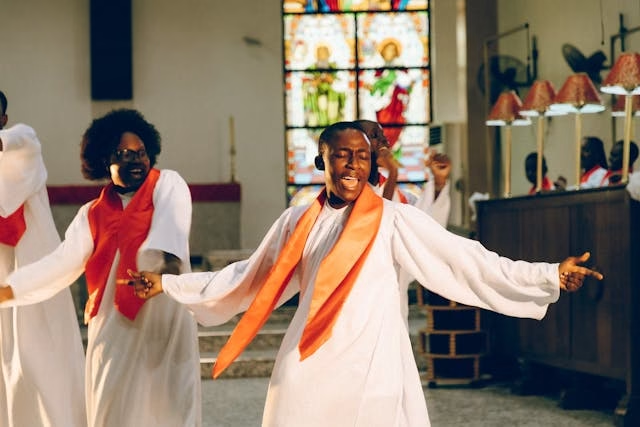
    You may wonder why Christianity is expanding rapidly across Africa and Asia, becoming the new center of global faith. This growth is driven by high birth rates, vibrant local leadership, and dynamic evangelism that adapts to diverse cultures. Despite facing persecution and social challenges, communities find hope, empowerment, and social support through the church. As urbanization and education rise, Christianity continues to resonate deeply with your generation, transforming societies and reshaping the religious landscape worldwide.

    Key Takeaways:

    • High birth rates in Africa, combined with a young and rapidly expanding population, significantly contribute to the natural increase of Christians on the continent, while Asia experiences growth through a mix of birth rates and conversions.
    • Dynamic grassroots evangelism and the rise of indigenous churches make Christianity more accessible and culturally relevant in both Africa and Asia, fueling expansion.
    • Charismatic and Pentecostal movements play a powerful role, especially in Africa, attracting new believers through vibrant worship and focus on personal transformation.
    • Strong family and community networks in African societies support communal faith growth, while churches often deliver important social services like education and healthcare, strengthening their societal influence.
    • Christianity’s message of hope, compassion, and empowerment resonates deeply with populations facing economic, political, and social challenges in these regions.
    • Urbanization and increasing education levels help Christianity gain traction among young professionals and the middle class, particularly in Asia’s rapidly developing cities.
    • Despite persecution and legal restrictions, especially in parts of Asia, Christianity demonstrates resilience through underground churches and grassroots movements, contributing to its steady growth.

    The Fertile Ground: Demographics Driving Growth

    Youthful Populations and High Birth Rates

    The youthful demographic profile of Africa stands out as a powerhouse for Christian growth. With one of the highest fertility rates globally, many African nations boast median ages well below 20, fueling a natural increase in the number of Christians almost by default. By 2050, projections estimate Africa will host over a billion Christians, marking a substantial fraction of the global Christian community. This demographic momentum means that the spreading faith isn’t merely a result of conversion efforts but is significantly amplified through family growth, where children are born into Christian households and communities continue expanding organically.

    Asia, while having more varied birth rates, still contributes meaningfully to Christian population growth through regions with higher fertility combined with burgeoning youth populations. In countries like India and Indonesia, younger generations are increasingly engaging with Christianity, often influenced by local churches that resonate culturally. Although birth rates in Asia don’t match Africa’s intensity, the large population base means even modest growth translates into millions of new believers, pushing the Christian population past 380 million in some estimates. This blend of youthful populations and steady fertility rates sets a demographic bedrock for Christianity’s ongoing rise in both continents.

    Migration Patterns and Urbanization Trends

    Internal and cross-border migration plays a subtle but important role in the reshaping of Christianity’s demographic landscape. As rural populations move into cities in search of better opportunities, they bring their religious practices and affiliations with them, creating dynamic urban congregations. Cities across Africa and Asia witness an influx of young migrants who find in Christianity a familiar and supportive community amid rapid social change. Urban centers in countries such as Nigeria, Kenya, India, and the Philippines have seen churches grow rapidly, fueled by this migration-driven congregation expansion.

    Urbanization itself drives Christianity’s traction by exposing individuals to diverse belief systems while providing fertile soil for churches that address modern social and economic challenges. The rise of middle-class, educated youth in urban areas aligns closely with Christianity’s message of hope and empowerment, allowing it to take root in settings characterized by fast-paced lifestyle changes and growing social complexity. This transformation is especially visible in Asian metropolises like Seoul, Jakarta, and Mumbai, where churches actively engage with youth culture and contemporary issues.

    Mass migration toward urban hubs creates concentrated communities where churches can serve as pivotal social networks offering education, healthcare, and spiritual support. Beyond mere population shifts, this urban concentration enables churches to innovate worship styles, social outreach, and evangelism methods, closely aligning faith practice with the realities of urban life. As a result, Christianity’s embeddedness in city life strengthens its appeal among younger, upwardly mobile populations who shape the religious landscape of tomorrow.

    The Power of Local Movements: Evangelism Reimagined

    Grassroots Movements and Indigenous Leadership

    Indigenous leadership has become a cornerstone of Christianity’s expansion throughout Africa and Asia. You’ll find that local pastors and community leaders, deeply rooted in their cultural context, are uniquely positioned to communicate the Gospel in ways that resonate authentically with their communities. This approach has fostered a strong sense of ownership among believers and given rise to vibrant indigenous churches that reflect local languages, traditions, and social realities. In Africa, for example, churches led by African clergy have experienced rapid growth by integrating worship styles, music, and communal practices that connect powerfully with congregants’ daily lives.

    In Asia, the rise of indigenous churches is similarly transforming Christian witness. Countries like India, Indonesia, and China boast grassroots evangelists who navigate complex social and political landscapes to nurture their flocks. This local leadership proves indispensable, especially under pressure from legal restrictions or societal hostility. Your support for these indigenous initiatives enables Christianity not only to survive but to thrive by fostering authentic spiritual communities that emphasize personal transformation and communal solidarity.

    Charismatic and Pentecostal Influence

    The dynamic energy of Charismatic and Pentecostal movements plays a major role in attracting millions across Africa and Asia. Their worship services, characterized by exuberant praise, healing ministries, and moments of spiritual empowerment, offer you an immersive, transformative faith experience. In many African countries, Pentecostal churches are among the fastest growing, drawing individuals hungry for hope and tangible encounters with God. This movement’s emphasis on personal renewal, miracles, and deliverance addresses real-life needs in contexts marked by poverty, illness, and social instability, making faith immediate and relevant.

    Asia’s burgeoning Pentecostal landscape reveals a similar pattern, particularly in urban centers where young professionals seek both community and spiritual vitality. Despite facing persecution or government restrictions, Pentecostal networks continue to expand through underground churches and vibrant house gatherings in nations like China and Indonesia. Their success hinges on offering believers a sense of empowerment and agency amid challenging environments, fueling growth that defies adversity.

    Charismatic and Pentecostal movements emphasize a lived experience of the Holy Spirit that goes beyond traditional liturgies, focusing intensely on the present-day power of God to heal, transform, and empower. This approach resonates deeply with people confronting poverty, illness, and social upheaval, creating a faith that is not just theological, but practical and deeply experiential. Their growth reflects adaptability—meeting people where they are with messages of hope, healing, and divine intervention that carry tangible impact in daily life across both continents.

    Community as Catalyst: The Role of Social Support

    Churches as Community Hubs

    You’ll find that churches in both Africa and Asia serve as much more than places of worship—they act as vital community centers where social life revolves around shared faith. In many African societies, the church is deeply embedded within family and communal networks, enabling religious gatherings to double as social events. This communal nature encourages collective participation and fosters a strong sense of belonging, which in turn accelerates the spread of Christianity through word-of-mouth and communal activities. These hubs also provide a safe space for people to find emotional and spiritual support, especially in regions where socio-economic challenges are widespread.

    In Asia, the growth of indigenous churches has similarly transformed them into hubs of community life. Urban churches, particularly, have become centers where young professionals and students gather not only for worship but also to network and discuss social issues. These churches often host cultural events, language classes, and youth programs that adapt Christianity to local customs and modern urban demands, making the faith more relevant and approachable. The dynamic, community-centered approach makes churches natural catalysts for faith expansion as they meet both spiritual and social needs simultaneously.

    Educational and Health Services Provided by Churches

    Churches in Africa and Asia have long provided imperative educational and health services, significantly strengthening their influence within communities. Thousands of church-run schools across sub-Saharan Africa serve millions of children annually, often filling gaps left by underfunded public education systems. For example, Catholic and Pentecostal networks operate schools that emphasize not only literacy but also moral and character education, creating enduring bonds between families and the church. In Asia, churches have expanded similar educational outreach, particularly in countries like India and Indonesia, where church schools provide affordable, quality education to underserved populations.

    Beyond education, health services offered by churches contribute tangibly to their growing social role. Clinics and hospitals affiliated with Christian organizations deliver imperative healthcare in remote and impoverished areas, sometimes being the only reliable medical resource available. Programs focused on HIV/AIDS awareness and treatment, maternal health, and child nutrition have not only improved community well-being but have also enhanced the church’s reputation as a caring and indispensable institution. Your awareness of this comprehensive social support highlights why Christianity often grows hand-in-hand with the societal development these churches promote.

    One standout example is the impact of faith-based healthcare in rural African regions, where church-operated clinics provide vaccinations and maternal care, reaching populations often neglected by government agencies. Similarly, in parts of Asia facing legal restrictions or persecution, underground house churches often pair spiritual ministry with discreet social services, quietly strengthening community resilience. These tangible benefits create positive associations with Christianity, fostering higher retention rates and encouraging conversions despite broader social or political obstacles.

    Cultural Resonance: Spiritual and Social Appeal

    Christianity’s Message of Hope and Empowerment

    Across Africa and Asia, Christianity taps into a profound yearning for hope, compassion, and personal transformation amid widespread social and economic challenges. You see communities grappling with poverty, political instability, and rapid modernization, where traditional structures often feel overwhelmed or fractured. Christianity’s teachings offer not only spiritual solace but also an empowering vision that uplifts individuals and families, promising dignity and a future beyond current hardships. This message resonates especially through charismatic and Pentecostal movements, which emphasize healing, renewal, and a tangible experience of the divine, drawing millions into vibrant worship and renewed faith.

    In urban centers and rural areas alike, you’ll find Christianity providing a framework for meaningful change, encouraging adherents to embrace resilience and agency. The faith’s emphasis on love and community makes it more than a private belief system—it becomes a source of practical support and moral encouragement. For many, this sense of belonging and hope transforms lives amidst uncertainty, contributing to dynamic church growth seen across countries like Nigeria, South Korea, and Indonesia.

    Appeal Among Marginalized Populations

    Christianity’s growth in marginalized populations across Africa and Asia stems from more than doctrine; it addresses tangible needs for inclusion and justice. The faith’s teachings foreground equality and care for the downtrodden, reaching people historically excluded from social and economic power. Dalits in India, rural villagers in sub-Saharan Africa, and ethnic minorities in Indonesia often find in Christianity a community that acknowledges their worth and advocates for their rights, offering both spiritual dignity and social uplift.

    This social embrace manifests through church-led initiatives in education, healthcare, and social welfare, which help bridge gaps left by state institutions. You encounter a faith movement that actively counters marginalization by creating spaces where empowerment is practiced daily. In contexts where caste, ethnicity, or economic class have dictated one’s status, Christianity’s inclusive message bolsters identity and hope, fueling its rapid expansion among these groups.

    Further strengthening this appeal is Christianity’s adaptability to local cultures, languages, and struggles, making its message relatable rather than foreign. By incorporating indigenous leadership and contextual worship styles, churches foster a sense of ownership and pride among marginalized believers. Additionally, despite persecution in some regions, these communities often demonstrate remarkable resilience, deepening their commitment and drawing others into a faith that insists on human dignity and collective upliftment.

    Resilience in Adversity: Growing Amidst Persecution

    The Underground Church Phenomenon

    In countries like China, India, and Indonesia, you witness Christianity flourishing despite stringent government restrictions and societal opposition. Many believers gather in underground house churches, which operate covertly to avoid detection by authorities. These small, intimate congregations enable Christians to worship, study scripture, and support one another without drawing unwanted attention, demonstrating a remarkable ability to sustain faith under pressure. For instance, in China alone, estimates suggest tens of millions attend these unofficial gatherings, a number that has only grown over the past decades despite intensified crackdowns.

    Such clandestine communities often foster deep bonds of trust and solidarity, which strengthen the spiritual resilience of their members. The underground church model prioritizes adaptability—meetings may change location frequently, rely on encrypted communication, and emphasize discipleship in daily life. This resilience is not limited to survival but fuels expansion, as converts are drawn by the tangible commitment and sense of purpose exhibited by believers who risk persecution for their faith.

    Cultural Adaptations and Community Strength

    Christianity’s growth in Asia and Africa also rests heavily on its ability to embed itself within local customs and social networks. Rather than imposing foreign traditions, many indigenous churches incorporate native languages, music styles, and cultural expressions into worship, creating a faith experience that feels both authentic and relevant. You can see this across Pentecostal and charismatic movements, where worship blends vibrant local rhythms with spiritual fervor, attracting especially young people and families.

    Community structures play a powerful role as well. In African societies, for instance, the church often functions as an extended family, where mutual support and collective worship encourage new adherents to join and stay. The communal nature of faith means conversion often happens in social clusters rather than isolated individuals. Churches also serve as centers providing education, healthcare, and practical assistance, making them indispensable pillars within their communities. This integration within everyday life creates a social safety net that encourages steady growth even in difficult circumstances.

    Beyond worship practices, local church leaders are frequently drawn from the community itself, which deepens trust and relevance. When your pastor shares your language, customs, and daily challenges, the message of Christianity resonates more profoundly. This grassroots leadership has proven crucial in sustaining faith under persecution and rapid social change, ensuring that the gospel not only survives but thrives by reflecting the lived realities of its congregants.

    Urbanization Unleashed: Christianity in Modern Cities

    Rise of the Middle Class and Young Professionals

    Younger generations in African and Asian cities are increasingly finding Christianity aligning with their aspirations and lifestyles. As urban centers expand, the burgeoning middle class—comprised largely of young professionals—seeks communities that provide both spiritual guidance and practical support in navigating fast-paced city life. In places like Lagos, Nairobi, Seoul, and Manila, you’ll notice vibrant urban churches offering relevant programs tailored to professionals, ranging from career mentoring to business networking and community service.

    The appeal of Christianity among this demographic also lies in its ability to foster identity and purpose amid rapid social change. You witness middle-class believers embracing faith groups that emphasize personal development alongside communal worship, blending modernity with tradition. This balance attracts those striving for upward mobility, as churches often serve as hubs for social capital, offering connections and a sense of belonging. Estimates suggest that urban Christian populations in Asia alone could reach over 300 million by 2030, underscoring the faith’s resonance with city dwellers.[4][9]

    Addressing Contemporary Issues Through Faith

    Christian institutions in urban Africa and Asia have adapted their messages to engage directly with modern challenges such as unemployment, inequality, and mental health. Faith leaders speak openly about these issues, presenting Christianity as a source of empowerment and practical hope. Urban churches often run workshops on financial literacy, leadership skills, and even entrepreneurship, helping you to see faith as a tool for overcoming economic hardships rather than a distant spiritual ideal.

    In rapidly developing cities, where social fragmentation can leave many isolated, churches provide spaces for connection, healing, and advocacy. For example, Pentecostal and charismatic movements popular in these regions emphasize personal transformation, offering emotional and psychological support alongside spiritual renewal.[3][7] This holistic approach addresses both your everyday struggles and deeper existential questions, making Christianity highly relevant in the urban context.

    Such churches also engage actively with contemporary debates on ethics, justice, and social responsibility. Their growing use of media and technology amplifies messages that challenge corruption, promote gender equality, and encourage youth participation in civic life. This responsiveness to pressing societal concerns strengthens your trust in Christianity as a dynamic force addressing not only spiritual needs but also contributing meaningfully to the shape of modern cities.

    Global Dynamics: The Shift in Christianity’s Center of Gravity

    The Transition from the Global North to South

    The landscape of global Christianity has undergone a profound transformation over the last century. What was once predominantly centered in Europe and North America now finds its vibrant epicenter in Africa, Asia, and Latin America. Sub-Saharan Africa, in particular, has witnessed explosive growth fueled by high birth rates and dynamic indigenous leadership, pushing it toward becoming the largest concentration of Christians worldwide. By 2060, projections indicate that 40% of the world’s Christians will reside in sub-Saharan Africa alone, eclipsing traditional strongholds in the West.

    Asia mirrors this shift with a growing Christian population exceeding 380 million, spread across countries like China, India, Indonesia, and South Korea. You can see how grassroots evangelism combined with the resilience of underground house churches amidst persistent persecution has allowed Christianity to deepen roots across the continent. This transition highlights a move away from Christianity as a faith associated with Western cultures toward a truly global and multicultural religion, shaped increasingly by African and Asian believers themselves.

    Projections for Future Growth and Influence

    Looking ahead, Christianity’s growth trajectory in Africa and Asia is set to outpace other regions dramatically. Africa’s youthful demographic offers a powerful engine for natural growth, with families expanding and new generations embracing the faith within culturally resonant contexts. The rise of Pentecostal and Charismatic movements is amplifying this surge, as these energetic and community-focused expressions of Christianity appeal strongly to the continent’s diverse populations. By 2050, you can expect Africa to be home to over one billion Christians, a number that redefines global religious demographics and influence.

    In Asia, the interplay of urbanization, education, and social upheaval creates fertile ground for Christianity’s continued expansion, even in places where it faces legal challenges and persecution. The resilience of believers and their capacity to adapt church models to local traditions ensures Christianity’s presence will deepen. As middle classes grow and more young professionals find resonance in the faith’s message, Christianity’s influence within Asian societies is likely to expand into cultural and social arenas far beyond worship, shaping the region’s future.

    These projections show that Christianity’s future influence will be defined by its demographic vitality, cultural adaptability, and persistent social relevance in the global South. You’ll see the global Christian community become increasingly diverse and decentralized, with Africa and Asia not only driving numerical growth but also setting new theological, liturgical, and missional trends worldwide. This reshaping challenges you to reconsider Christianity’s global identity, as well as the leadership and voices that will shape its next century.

    Conclusion

    Upon reflecting on why Christianity is growing fastest in Africa and Asia today, you can see that multiple interwoven factors are at play. Your understanding of the demographic momentum, where high birth rates and youthful populations fuel natural growth, helps illuminate one of the foundational drivers. Additionally, the influence of dynamic evangelism, indigenous leadership, and charismatic movements highlights how the faith is not simply spreading through numbers but through culturally adapted and locally led expressions that resonate deeply with communities. This adaptability, combined with strong family and social networks, allows Christianity to flourish in ways that are meaningful and enduring for many people in these regions.

    As you consider the social and spiritual appeal Christianity offers, especially amid rapid urbanization, educational advances, and societal challenges, you realize how the faith meets the needs for hope, purpose, and community. Your awareness of the resilience Christianity shows despite persecution in some areas further underscores the dedication of believers and the faith’s capacity to thrive under pressure. Together, these elements explain why the center of global Christianity has decisively shifted to Africa and Asia, reflecting a transformation that shapes the present and future of the religion worldwide.

    FAQ

    Q1: Why is Christianity experiencing rapid growth in Africa compared to other continents?

    A1: Christianity’s rapid growth in Africa is largely driven by high birth rates and a youthful population, which naturally increases the number of Christians through family expansion. Additionally, strong community and family structures, dynamic grassroots evangelism, and the widespread influence of charismatic and Pentecostal movements further accelerate this growth. Churches also play a significant role by providing education, healthcare, and social support, strengthening their impact in society.

    Q2: How does the growth of Christianity in Asia differ from that in Africa?

    A2: While demographic momentum through high birth rates is a primary driver in Africa, growth in Asia relies more on dynamic evangelism, urbanization, education, and resilience amid persecution. Growth is notable in countries like China, India, South Korea, and Indonesia, where underground churches and grassroots movements thrive despite legal and social restrictions. Urban middle classes and young professionals are increasingly drawn to Christianity as well.

    Q3: What role do indigenous churches and local leadership play in the spread of Christianity in these regions?

    A3: Indigenous churches and local leadership are vital to Christianity’s expansion in both Africa and Asia. By adapting Christian teachings to local languages, traditions, and cultures, these leaders make the faith more relatable and accessible. They spearhead grassroots evangelism efforts, ensuring that Christianity resonates with the cultural context of diverse communities, which enhances its appeal and sustainability.

    Q4: Why are charismatic and Pentecostal movements particularly influential in Africa and parts of Asia?

    A4: Charismatic and Pentecostal movements attract many new believers through their energetic worship styles, emphasis on personal transformation, healing ministries, and experiential faith practices. These movements often address the spiritual and social needs of communities, offering hope and empowerment in contexts marked by economic challenges or social instability, making them especially appealing in Africa and certain Asian countries.

    Q5: How do social services provided by churches contribute to the growth of Christianity in Africa and Asia?

    A5: Churches often provide imperative services such as education, healthcare, and social support, which improve the quality of life in their communities. This provision of social goods increases the churches’ standing and trust among local populations, creating an environment where faith can spread more effectively. Social support networks linked to churches also reinforce communal bonds and collective religious participation.

    Q6: In what ways does Christianity address social and economic challenges faced by populations in Africa and Asia?

    A6: Christianity offers messages of hope, compassion, dignity, and empowerment that resonate deeply with populations experiencing poverty, inequality, or political instability. By promoting care for the marginalized and emphasizing community support, Christianity provides both spiritual guidance and practical assistance, encouraging people to find stability, purpose, and solidarity in turbulent times.

    Q7: How does persecution affect the growth of Christianity, especially in Asian countries?

    A7: Despite persecution and legal restrictions in several Asian countries, Christianity continues to grow due to the resilience and adaptability of believers. Underground house churches and grassroots movements operate discreetly, fostering strong, committed communities. Persecution often strengthens faith among members, leading to increased determination to sustain and expand Christian presence.

  • Top 10 Regions Where Christianity is Growing Rapidly

    Top 10 Regions Where Christianity is Growing Rapidly

    It’s important for you to understand where Christianity is expanding most swiftly around the world. The fastest growth occurs mainly in the Global South, especially in Africa and Asia, driven by high birth rates, dynamic evangelism, and resilient faith communities facing social and political challenges. As you explore these regions, you will see how vibrant local movements and charismatic influences shape this remarkable expansion, offering insight into the shifting landscape of global Christianity today.

    Key Takeaways:

    • Nigeria leads the list with rapid Christian growth driven by high birth rates, charismatic movements, and resilience amid conflict.
    • China is experiencing notable expansion through house churches, urban outreach, and underground networks despite restrictions.
    • India’s growth is fueled by evangelism among marginalized groups and provides an alternative to dominant nationalist narratives.
    • Several African countries, including Ethiopia, Democratic Republic of Congo, Kenya, and Tanzania, show strong growth linked to population increases and Pentecostal/evangelical movements.
    • Indonesia and the Philippines are significant Asian hubs where charismatic influence and youth engagement contribute to Christianity’s rapid rise.
    • Brazil represents Latin America’s fastest growth area, marked by Pentecostal and charismatic surges alongside urban evangelism efforts.
    • Overall, the fastest growth is concentrated in the Global South—primarily Africa and Asia—with local leadership, demographic momentum, and vibrant faith communities playing key roles.

    The Current Landscape of Global Christianity

    Christianity’s rapid expansion in regions like Africa and Asia highlights a profound demographic and cultural transformation within global faith communities. You’ll notice that countries such as Nigeria and China stand out not only for their sheer numbers but also for the energy and resilience fueling this growth—ranging from charismatic movements in Nigeria to underground house churches in China navigating complex legal environments. The shift toward the Global South reflects a diversifying Christianity that deeply connects with local cultures, languages, and social realities, often thriving despite political unrest or societal pressure.

    The emerging Christian majority in Africa now surpasses traditional strongholds in Europe and North America, signaling a dynamic rebalancing of global Christianity. As you track these changes, it becomes clear that growth isn’t uniform but shaped by unique regional factors—whether urban evangelism in Brazil’s sprawling cities or youth-driven church planting in Tanzania. This evolving landscape challenges assumptions about the future of Christianity and presents new opportunities for engagement and partnership worldwide.

    Statistical Trends and Projections

    Recent data underscore the substantial growth rates in the Global South, where population increases amplify Christian demographics alongside active evangelism. For example, Nigeria’s Christian population continues to expand rapidly, supported by a young, growing population and rising Pentecostal and charismatic adherents. China’s Christian community, though often operating underground, is projected to grow into one of the largest globally within the next decade, driven by urban outreach initiatives and tightly knit house churches.

    In terms of projections, sub-Saharan Africa is expected to see its Christian population nearly double within the next 30 years, outpacing traditional Christian regions by several margins. Asia, too, shows strong upward trends, with countries like India and Indonesia experiencing sizable increases, particularly among marginalized and youth populations. The steady rise in Latin America, especially Brazil, reflects a powerful Pentecostal and charismatic surge that reshapes religious landscapes. The continued momentum across these regions signals a profound demographic shift, where the Global South will not only represent the majority of Christians but also influence global Christian culture and theology.

    Key Factors Influencing Growth

    You’ll find certain common elements driving Christianity’s rapid expansion across these diverse regions. High birth rates remain a significant factor in countries like Nigeria and Tanzania, where youthful populations contribute to organic growth within churches. Dynamic evangelism and vibrant local leadership also energize communities, whether through house churches in China, Pentecostal networks in the Democratic Republic of Congo, or youth engagement efforts in the Philippines and Kenya. These movements often flourish despite political or societal pressures, demonstrating the resilience and adaptability of these faith communities.

    Charismatic and Pentecostal expressions of faith provide compelling spiritual experiences and community belonging, making them particularly appealing in places undergoing social transformation or conflict. In addition, Christianity often presents itself as an alternative path for marginalized groups, offering hope and social support. Nigeria’s climate of resilience amid ongoing conflict and India’s evangelism among excluded populations exemplify how Christianity meets complex socio-political realities. The combined momentum of demographic growth, contextualized evangelism, and community resilience creates a powerful engine for expansion.

    Exploring these factors further reveals:

    • Demographic momentum: High birth rates in African and some Asian countries fuel rapid population increases in Christian communities.
    • Vibrant local leadership: Indigenous pastors and evangelists, deeply connected to cultural contexts, drive effective growth strategies.
    • Charismatic and Pentecostal movements: Their dynamic worship styles and community engagement appeal especially to youth and urban populations.
    • Resilience under pressure: Many growing Christian groups operate in restrictive environments, using underground networks and creative outreach methods.
    • Social alternatives: Christianity provides marginalized groups with a sense of identity and hope amid nationalist or socio-economic challenges.

    The interplay of these factors creates a multifaceted growth pattern that will continue reshaping Christianity’s global face for years to come.

    Africa: The Epicenter of Expansion

    Africa stands at the forefront of global Christian growth, now hosting more Christians than either Europe or North America. The continent’s dynamic demographic makeup—characterized by high birth rates and youthful populations—fuels this surge, while vibrant local churches and indigenous leadership strengthen faith communities from urban centers to rural villages. Sub-Saharan Africa, in particular, exemplifies this trend, with Pentecostal and charismatic movements flourishing alongside historic denominations, creating a mosaic of spiritual vitality that often thrives amid social and political upheaval.

    The resilience displayed by African Christians, especially in regions facing conflict or persecution, highlights not only perseverance but remarkable creativity in evangelism and discipleship. You’ll find churches pioneering innovative approaches like community development projects and digital outreach, harnessing local culture to inspire new generations. Growth is not merely numerical but deeply transformative, reshaping societies and redefining Christian witness across the continent.

    Nigeria: Navigating Growth Amidst Conflict

    Nigeria ranks first in the world for Christian growth, buoyed by high birth rates and a vibrant charismatic renewal that energizes congregations nationwide. Despite ongoing security challenges—including insurgencies and inter-communal violence—the resilience of Nigerian Christians stands out. These turbulent circumstances have in many ways intensified faith commitment, with numerous churches actively planting new congregations and expanding ministries across diverse regions.

    The youth play a pivotal role in Nigeria’s expansion story. Engaged through dynamic worship, social media, and grassroots evangelism, younger believers are breathing new life into traditional structures. Additionally, the rise of indigenous Pentecostal networks has provided a fresh, contextualized expression of Christianity that many find deeply resonant. This fusion of demographic momentum and adaptive leadership continues to fuel one of the most significant spiritual movements on the African continent.

    Ethiopia: Revival Rooted in History

    Ethiopia carries a profound Christian legacy as one of the world’s oldest Christian nations, with faith traditions dating back to the fourth century. Recent years have witnessed a significant evangelical revival that builds upon this deep historical foundation. You see growing numbers in evangelical churches alongside the ancient Ethiopian Orthodox Church, as the Christian landscape diversifies while maintaining strong cultural continuity.

    This revival is notable for its integration of traditional worship with contemporary evangelical fervor, appealing to younger generations without severing ties to heritage. Efforts in church planting and theological training have expanded rapidly, raising leaders who connect scripture with Ethiopia’s unique historical context. These developments combine to sustain an environment where both revival and preservation of ancient faith co-exist in dynamic tension.

    Moreover, Ethiopia’s Christian renewal has inspired community transformation initiatives focusing on education, healthcare, and social justice, linking spiritual growth with tangible societal impact. As you explore this vibrant scene, the interplay between Ethiopia’s storied past and its energetic present becomes clear—reflecting a Christianity that is both rooted and rapidly expanding.

    Asia’s Dynamic Faith Landscape

    The rapid growth of Christianity across Asia highlights a transformative shift within the continent’s religious makeup, as vibrant local movements blend with enduring historical roots. Nations like China, India, Indonesia, and the Philippines are at the forefront, where Christianity expands not only through demographic changes but also through deeply committed evangelism often carried out under challenging social or political conditions. Your understanding of this growth reveals how grassroots initiatives and urban outreach programs synergize, helping communities adopt and adapt Christian faith expressions in culturally relevant ways. The result is a dynamic landscape where Christianity is increasingly a significant force shaping societal values, youth engagement, and social services.

    In Asia, persistent faith communities, often fueled by charismatic and Pentecostal movements, sustain momentum even amidst restrictions or religious nationalism. This balance between growth and resilience makes Asia a hotbed for global Christian expansion, with millions finding new identities and purpose through the faith. Not only do the numbers rise steadily, but the diversity within these Christian expressions—ranging from underground house churches to mainstream denominations—offers a glimpse into a continent whose spiritual future is rapidly evolving and multifaceted.

    China: The Rise of House Churches

    China’s Christian growth owes much to its thriving network of house churches, which operate largely underground to avoid government regulation. You’ll find that these small, informal gatherings emphasize relational discipleship, biblical teaching, and community support, often in urban environments where official religious expression faces significant obstacles. Estimates suggest tens of millions of believers participate in such networks, surpassing the size of the registered church bodies, making house churches the largest expression of Christianity in China. This dynamic has created a spiritually vibrant yet cautious community where faith flourishes discreetly, making it a key engine for expansion despite political pressures.

    Urban outreach efforts increasingly focus on young professionals and students, connecting through community services and social media platforms discreetly. The resilience of these believers in the face of surveillance and crackdowns speaks to a deeper hunger for spiritual meaning, which you can observe in the rapid multiplication of house church groups. Their growth challenges conventional religious landscapes and has attracted global attention as China quietly becomes a major locus of Christian vitality.

    India: Evangelism in a Diverse Society

    Christian growth in India unfolds within a complex social and religious mosaic, where evangelism often reaches marginalized communities searching for new hope and identity. You engage with stories of grassroots ministries working among Dalit populations and tribal groups, offering education, healthcare, and spiritual renewal. The appeal of Christianity frequently comes as an alternative to dominant religious nationalism, fostering communities centered on inclusion and social justice. With over 28 million Christians in India and significant annual increases, this growth underscores the faith’s expanding footprint amidst a nation known for its religious diversity and tensions.

    India’s Christian expansion also benefits from a rich history of indigenous churches and mission-inspired networks that emphasize contextual theology and social empowerment. Local pastors and leaders apply culturally relevant evangelistic methods, enhancing accessibility and acceptance in various linguistic and ethnic settings. The interplay of historic roots with vibrant new movements enables Christianity to become a dynamic contributor to India’s social fabric, especially as younger generations embrace faith through educational and social programs.

    Ongoing evangelistic efforts in India highlight how faith communities directly respond to social inequalities and political pressures. Ministries focused on women’s empowerment, literacy, and healthcare serve as effective conduits for spreading Christian teachings, especially where governmental restrictions on religious conversion exist. Your insight into these developments reveals how Christianity there grows as a force for both spiritual transformation and tangible societal change, often navigating sensitive cultural contexts with care and commitment.

    Latin America’s Charismatic Surge

    Christianity’s rapid growth in Latin America stands out for its strong Pentecostal and charismatic movements transforming the religious landscape. Brazil, in particular, has seen an explosive rise in charismatic churches that emphasize contemporary worship styles, personal encounters with the Holy Spirit, and dynamic evangelism. These movements often thrive in urban centers, attracting younger generations through lively services and social outreach programs that address both spiritual and material needs. You’ll find that the appeal lies not only in faith renewal but in community-building that counters social inequality and offers hope amid economic challenges.

    This surge extends beyond Brazil’s borders, influencing neighboring countries where similar church models emerge in response to societal shifts. Latin America’s overall Christian population remains deeply connected to its Catholic heritage, but the charismatic wave is reshaping worship and church affiliation patterns. The region’s growth fuels a growing global presence of Latin American Christian voices and leaders, adding vibrant diversity to worldwide Christianity while navigating the complexities of cultural identity.

    Brazil: The Charismatic Phenomenon

    Brazil leads Latin America’s surge through a dramatic expansion of Pentecostal and charismatic churches, which now claim nearly a third of the country’s 215 million people. Churches like the Universal Church of the Kingdom of God and the Assemblies of God reach millions with vigorous evangelism and media outreach. These congregations focus on healing, spiritual warfare, and prosperity teachings that resonate amid widespread poverty and social unrest.

    Younger Brazilians, especially in sprawling metropolitan areas like São Paulo and Rio de Janeiro, gravitate toward these vibrant expressions of Christianity. The charismatic phenomenon also benefits from strong community networks and social services, addressing issues like violence and unemployment. This grassroots vitality signals a continuing shift that has not only religious implications but also political and cultural influence across Brazil’s diverse society.

    The Philippines: A Stronghold of Faith

    The Philippines remains a powerful center of Christian growth shaped by both Catholic and Protestant vitality. With over 80% of the population identifying as Christian, youth engagement drives vibrant church activities and evangelism efforts. Protestant and Pentecostal groups, in particular, have become more visible, employing media and indigenous leadership to expand their reach even in remote areas.

    Urban migration and access to digital platforms accelerate this expansion, drawing younger believers who seek more experiential worship and community connection. Local churches often serve as lifelines amid socio-economic challenges, combining spiritual teachings with practical support such as education and livelihood programs. This dual focus reinforces Christianity’s impact on daily life and personal transformation.

    Faith in the Philippines also intersects with national identity and social activism, where churches play prominent roles in both grassroots movements and larger societal conversations. As you explore this region, you’ll notice how the country’s deep-rooted spirituality fuels a resilient and adaptive Christian presence that continues to evolve alongside changing cultural dynamics.

    Emerging Players: The New Frontiers of Faith

    You’re witnessing Christianity’s vibrant expansion into new territories where dynamic local movements fuel rapid growth despite complex environments. These emerging players often showcase a blend of resilience and innovation, redefining how faith communities thrive amid both opportunity and adversity. The churches here grow not only by birth rates but through strategic planting, youth engagement, and Pentecostal zeal, transforming societies deeply rooted in traditional beliefs or facing socio-political challenges.

    The momentum in these regions leans heavily on grassroots leadership and culturally resonant expressions of worship. You’ll find communities actively embracing charismatic theology, leveraging modern media, and fostering networks that transcend urban-rural divides. This new frontier isn’t just about numbers—it’s about vitality and adaptability, which reveal how Christianity continually reshapes itself to meet the spiritual hunger of diverse populations.

    Democratic Republic of Congo: A Shift Towards Pentecostalism

    The Democratic Republic of Congo is a prime example of rapid Christian growth driven by explosive population increases and a marked shift toward Pentecostalism. This country’s youthful demographic, with one of the highest birth rates globally, creates a fertile ground for evangelical movements. You’ll notice Pentecostal churches emphasizing experiential faith, healing, and spiritual warfare, which resonate deeply in communities navigating ongoing social and political instabilities.

    This Pentecostal surge adds to the nation’s already rich Christian heritage, injecting fresh energy and expanding local expressions beyond the historically dominant Catholic and mainline Protestant traditions. In urban centers like Kinshasa, burgeoning congregations are often led by youthful pastors who harness media and community outreach, making the faith feel accessible and transformative even amid economic hardship.

    Kenya and Tanzania: Youth Influence and Church Planting

    In Kenya and Tanzania, Christianity’s growth is propelled by a remarkable wave of youth-led initiatives and prolific church planting efforts. Both countries exhibit high birth rates alongside vibrant evangelical and Pentecostal movements that actively engage young people as agents of change. You’ll find that new churches often function as centers of social interaction, education, and empowerment, appealing strongly to the younger generation’s desire for community and purpose.

    The strategic emphasis on church planting, often coupled with youth-focused discipleship programs, has led to rapid conversions and the proliferation of churches even in remote or underserved regions. These efforts also foster cross-generational leadership models, where young believers receive mentorship and platforms to innovate worship and service.

    In particular, Kenya’s dynamic urban centers and Tanzania’s rural areas provide contrasting yet complementary backdrops for this growth. Urban youth use digital platforms and social media to expand their influence, while rural church plants emphasize relational evangelism and contextualized ministry. This dual approach has strengthened Christianity’s foothold, making these nations pivotal hubs in Africa’s expanding Christian landscape.

    To wrap up

    On the whole, the rapid growth of Christianity in these top 10 regions underscores a significant shift in the global religious landscape, particularly highlighting the vibrant expansion in Africa and Asia. As you explore these trends, you’ll notice that factors such as high birth rates, dynamic evangelism, and the resilience of local faith communities play a major role in this development. The growth you observe is not merely numerical but also deeply rooted in cultural and social movements, with charismatic and Pentecostal expressions gaining momentum amid diverse challenges.

    By understanding the varied contexts—from Nigeria’s resilience amid conflict to China’s underground house churches and India’s outreach among marginalized groups—you gain insight into how Christianity adapts and thrives in different environments. This knowledge can enhance your perspective on global Christianity’s future trajectory and the ways faith continues to flourish through vibrant leadership and community engagement in regions often overlooked in broader discussions about religious growth.

    FAQ

    Q1: Which country leads the growth of Christianity globally?

    A1: Nigeria currently ranks first in the growth of Christianity worldwide. This rapid expansion is driven by high birth rates, charismatic Christian movements, and the resilience of faith communities despite ongoing conflicts.

    Q2: What are the main factors contributing to Christianity’s expansion in China?

    A2: In China, Christianity is growing primarily through house churches, urban outreach programs, and underground networks. These methods help the faith spread even under government restrictions and societal challenges.

    Q3: How does evangelism contribute to Christian growth in India?

    A3: In India, Christianity is expanding largely because of evangelistic efforts targeting marginalized and low-caste groups. The faith often presents an alternative to prevailing nationalist ideologies, which appeals to these communities.

    Q4: Are there particular Christian movements that influence this rapid growth?

    A4: Yes, charismatic and Pentecostal movements play a significant role in driving the rapid growth of Christianity in many regions, including Nigeria, Brazil, the Democratic Republic of Congo, and Kenya. These movements focus on dynamic worship styles and community engagement.

    Q5: How is youth engagement impacting the growth of Christianity in the Philippines?

    A5: The Philippines experiences strong Christian growth largely due to active involvement of youth in both Catholic and Protestant communities. Youth-focused outreach and church activities contribute to sustained membership growth and vibrant faith expression.

    Q6: Besides the top 10 countries, which other regions show significant Christian growth?

    A6: Other regions showing rapid Christian growth include Uganda, South Africa, Bangladesh, Mexico, Vietnam, and Argentina. These areas also benefit from factors such as demographic momentum and growing evangelical activities.

    Q7: How does sub-Saharan Africa compare to other continents in terms of Christian population growth?

    A7: Sub-Saharan Africa leads global Christian growth and is now home to more Christians than Europe or North America combined. High birth rates, expanding evangelical churches, and resilient communities continue to fuel this growth across the region.