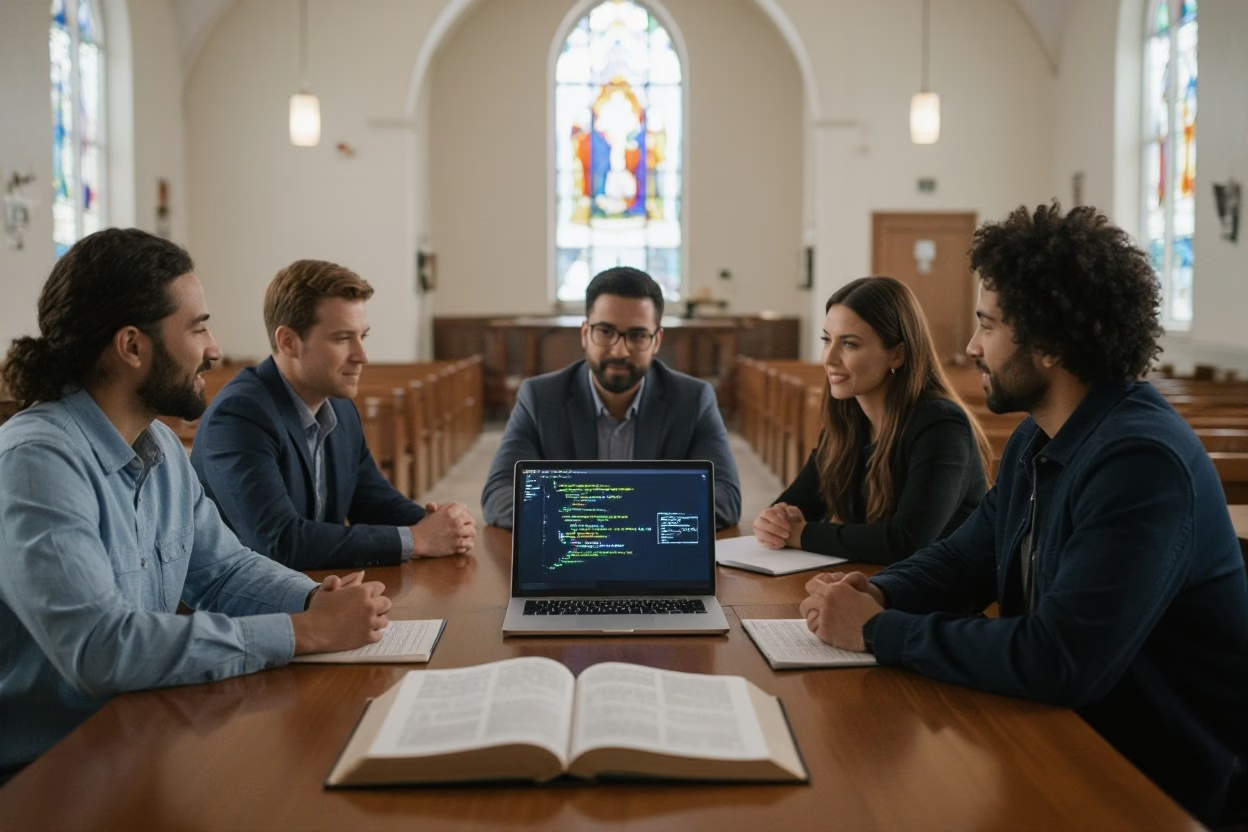
Tag: AI

  • Christian Ethics in the Age of AI: A Faith-Based Framework

    Christian Ethics in the Age of AI: A Faith-Based Framework

    Ethics guide how you navigate the complex world of artificial intelligence, especially through the lens of Christian values. As AI rapidly advances, the challenge lies in ensuring technology upholds human dignity and does not replace or diminish your moral responsibility. This framework invites you to engage AI with wisdom, justice, and stewardship, promoting innovation that serves the common good while highlighting the danger of misplaced trust in technology over God’s ultimate hope. Your role is vital in shaping a future where AI aligns with faith and flourishing for all people.

    Key Takeaways:

    • Human dignity is foundational, rooted in the belief that every person is created in God’s image, and AI must uphold this intrinsic worth without commodifying or objectifying individuals.
    • Only humans possess moral agency and accountability; AI should be viewed as a tool under human oversight rather than as an independent moral decision-maker.
    • Justice, fairness, and the common good are imperative ethical commitments guiding AI development to prevent bias, protect vulnerable populations, and promote equitable outcomes.
    • Christians are called to exercise truth, wisdom, and discernment, actively countering misinformation and ideological bias embedded within AI systems.
    • Innovation and stewardship go hand in hand, with technological creativity seen as a God-given gift that must be used to serve neighborly love and human flourishing.
    • The limits of technology highlight the need to place ultimate hope in God rather than in AI, avoiding any elevation of technology to an object of worship or supreme trust.
    • Practical engagement involves advocating for biblically grounded ethical standards, educating believers, participating in public discourse, and modeling responsible AI use in various spheres of life.

    Theological Foundations of AI Ethics

    The Imago Dei: Dignity in Creation

    The biblical affirmation that every human is created in the image of God (Imago Dei) roots human dignity in divine origin and eternal worth. This foundational truth means that no technology, regardless of complexity or utility, can replicate or replace the inherent value embedded in every person. When AI systems process data related to human beings, their design must reflect that each individual is more than mere data points or programmable variables. For example, AI algorithms used in healthcare or criminal justice settings must avoid reducing individuals to statistical outcomes, instead upholding dignity by respecting their unique identity and intrinsic worth.

    Having this theological cornerstone informs ethical boundaries for development and deployment. It steers you to challenge AI applications that might commodify or objectify people, such as mass surveillance tools or exploitative social media profiling. Upholding the Imago Dei compels you to advocate for AI that protects privacy, secures informed consent, and prioritizes human flourishing at every stage. In practical terms, this means integrating human-centered design principles and consulting diverse voices to ensure technology honors the sacredness of human life.

    The Call to Moral Agency: Human Responsibility

    Only you, as a human being created in God’s image, possess moral agency—the ability and responsibility to make ethical decisions and bear accountability before God. Artificial intelligence, regardless of its sophistication, remains a tool without conscience or ethical discernment. Consequently, you cannot delegate moral decision-making to AI systems or absolve yourself of responsibility for their impacts. Responsible stewardship requires that humans retain oversight and actively guide how AI is developed and applied, ensuring alignment with biblical standards of justice, compassion, and truth.

    The ongoing theological challenge involves maintaining ethical vigilance over AI’s potential to amplify biases or facilitate injustice. For instance, facial recognition technologies have demonstrated racial biases that produce harmful outcomes. Your role includes scrutinizing such technologies, guiding corrective action, and shaping policies that prevent systemic oppression. Engaging responsibly with AI means embracing a framework where humans, not algorithms, hold ultimate responsibility for both creation and consequences.

    Further reinforcing this responsibility, Scripture provides numerous examples emphasizing accountability in leadership and stewardship. As you develop or deploy AI, you embody the biblical mandate to govern wisely, act justly, and love mercy (Micah 6:8). This means continually reflecting on the ethical dimensions of your decisions and ensuring that AI serves as an extension of God’s justice and compassion rather than a replacement or abdication of moral discernment.

    Justice and Advocacy in the Digital Age

    Biblical Perspectives on Justice and Fairness

    Scripture repeatedly underscores God’s call for justice, especially toward the vulnerable and marginalized, reflecting His heart for equity and righteousness. Passages such as Isaiah 1:17 implore you to “seek justice, correct oppression,” emphasizing active engagement rather than passive observation. This divine mandate directs you to advocate for systems—in this case, AI technologies—that do not perpetuate injustice but instead protect and uplift those who are often overlooked or exploited.

    The biblical concept of fairness is rooted in recognizing the inherent dignity of every person created in God’s image. It challenges AI developers and users alike to evaluate how algorithms affect different communities, ensuring that no group suffers discrimination or harm due to biased data or design. You are called to promote a digital environment where AI serves the common good, embodying compassion as demonstrated in Proverbs 31:8-9, which exhorts speaking up for those who cannot speak for themselves and defending the rights of the poor and needy.

    Addressing AI Bias and Misinformation

    Bias in AI systems represents one of the most significant threats to justice in the digital age. Numerous studies reveal that facial recognition technologies exhibit higher error rates with people of color, and recruitment algorithms sometimes discriminate against women or minorities due to biased training data. Such inequities risk reinforcing existing social disparities rather than dismantling them. You must critically assess the sources of data and the assumptions embedded within AI models, demanding transparency and inclusivity from creators.

    Misinformation amplified by AI-driven platforms manipulates public opinion and erodes trust. The phenomenon of “deepfake” videos and algorithmically tailored newsfeeds can distort reality, making it difficult for individuals to discern truth from falsehood. Your role as a Christian practitioner involves fostering discernment in your community, equipping others to challenge deceptive narratives with biblical wisdom and rational inquiry, thereby resisting the manipulation that undermines societal cohesion and informed decision-making.

    Strategies to combat bias and misinformation involve multidisciplinary collaboration: engaging theologians, ethicists, technologists, and policymakers to develop robust ethical standards for AI design and deployment. You should advocate for regulatory frameworks that hold corporations accountable while promoting educational initiatives in churches and schools to build critical digital literacy skills. By pushing for fairness and truthfulness in AI, your advocacy becomes a tangible expression of biblical justice in the 21st century.

    Discernment in the Face of Advanced Technology

    The Role of Truth in AI Development

    AI systems inherently encode the values, assumptions, and biases of their designers and the data they consume. While algorithms appear neutral, their outputs often reflect embedded prejudices—whether intentional or inadvertent—that can shape public perception and decision-making. Your challenge is to acknowledge this reality and approach AI-generated information with measured skepticism, testing it against objective truths rooted in biblical wisdom. The danger of misinformation and manipulation through AI is magnified by its scale and speed; for example, AI-driven deepfake videos or false news propagation can distort reality on a mass level, influencing social and political dynamics in ways that threaten justice and compassion.

    Your engagement in AI ethics should prioritize uncovering the underlying biases that systems perpetuate and advocating for transparency in AI development. Wisdom demands you analyze how truth claims are made by AI tools, ensuring they do not erode the dignity of individuals or communities. As you confront moral choices related to AI, biblical discernment helps you distinguish between limited technological outputs and the enduring truth revealed in Scripture. Such vigilance guards against elevating algorithmic authority above God’s Word and human conscience.

    Equipping the Church for Critical Engagement

    Equipping believers to navigate AI’s complexities means fostering a culture where critical thinking and biblical discernment coexist. You can support training initiatives that deepen understanding of AI’s ethical challenges, including workshops on digital literacy, theological reflections on technology, and forums for discussing AI’s societal impact. Church leaders and educators play a pivotal role in modeling how to question AI claims, interpret data responsibly, and apply Scripture’s guidance amid evolving digital landscapes. For example, integrating case studies about biased facial recognition or AI surveillance into sermons and small groups brings practical relevance to theological principles.

    Providing resources that clarify AI’s limitations and ethical concerns will empower your congregation to respond thoughtfully rather than reactively. Partnerships between Christian ethicists, technologists, and policymakers can translate theological insights into actionable strategies, helping the church address real-world issues like privacy violations and algorithmic discrimination. Such collaborative engagement strengthens the church’s voice in public debates, ensuring that the common good and human dignity remain central to AI discourse.

    Key Actions for DiscernmentPractical Examples
    1. Analyze AI outputs critically, identifying potential bias and misinformation
    2. Advocate for transparency in AI design and data sources
    3. Encourage scripturally informed decision-making in technology use
    4. Host educational sessions on the ethical implications of AI
    5. Engage with tech professionals to bring Christian ethics into AI development
    1. Review AI-generated content for fairness before sharing
    2. Promote policies requiring disclosure of AI training datasets
    3. Develop church study groups focused on technology and faith
    4. Include AI ethics in youth and adult education curricula
    5. Participate in interfaith and secular AI ethics forums

    Reinforcing critical engagement empowers you and your faith community to steward AI responsibly, balancing innovation with faithful commitment to truth and human dignity. This proactive approach helps the church not only respond but contribute constructively to shaping the future of technology in society.

    Stewardship of Innovation: A Christian Mandate

    Balancing Creativity with Ethical Responsibility

    Your creativity mirrors the divine image, revealing God’s gift of innovation that should never operate in isolation from ethical considerations. As AI technologies evolve at breakneck speeds—surpassing 80% of routine tasks in some industries—your role involves vigilant stewardship to ensure these innovations serve human dignity rather than diminish it. For instance, when developing AI in healthcare, you must prioritize patient confidentiality and informed consent, preventing the risk of data exploitation or depersonalization. Unchecked creativity without moral accountability may lead to biases embedded in algorithms, unfairly impacting marginalized groups and violating biblical principles of justice.

    Stewardship demands active engagement, where you embrace both the freedom to innovate and the responsibility to uphold God’s standards. You hold the moral agency to intervene when AI systems threaten to commodify people or undermine truth. Christian ethics insist that such responsibility is not delegated to machines but remains firmly in your hands, guiding development in ways that protect privacy, ensure fairness, and enhance human flourishing. This balance curbs the temptation to prioritize technological advancement at any cost, anchoring innovation in compassion, wisdom, and obedience to God’s moral will.

    Fostering Technological Advancements for Human Flourishing

    Innovation finds its highest purpose when it addresses real human needs, alleviating suffering and enhancing life’s quality with love as its foundation. AI applications in areas like agriculture, education, and healthcare demonstrate this potential: AI-driven precision farming increases food security for vulnerable populations, while personalized learning platforms expand access to education in underserved regions. Your involvement in such endeavors reflects the stewardship command—harnessing technology not for power or profit alone, but to manifest God’s kingdom values. The challenge lies in rejecting AI uses that exploit or objectify, ensuring that every advancement furthers human dignity and promotes the common good.

    Technological progress aligned with Christian ethics cultivates environments where AI becomes a tool for restoring wholeness rather than mechanizing humanity. Collaborations between faith communities and AI developers have resulted in platforms that assist refugees and disabled persons, illustrating how innovation, guided by biblical principles, fosters inclusive flourishing. You are encouraged to advocate for investments and policies that widen these positive impacts, helping shape an AI landscape reflective of justice, compassion, and stewardship for creation.

    Expanding on this, consider AI innovations such as the use of natural language processing in translating Scripture and theological resources into indigenous languages, empowering churches worldwide and honoring cultural diversity. Projects like these emphasize that the faithful use of AI can amplify the gospel’s reach and contribute to holistic human well-being. Your engagement in these frontiers not only supports practical solutions to global challenges but also exemplifies how technological creativity can glorify God by serving neighbor—an ultimate measure of flourishing grounded in Christian faith.

    Ethical Dilemmas in AI Implementation

    Navigating the Complexities of AI Decision-Making

    AI systems increasingly make decisions that affect real people’s lives, from credit approvals and job screenings to healthcare diagnostics and criminal sentencing algorithms. These decisions often involve intricate trade-offs where data bias, incomplete information, or flawed assumptions can produce outcomes that unintentionally discriminate against vulnerable groups. As you engage with AI, you must acknowledge that while the technology offers efficiency, it cannot substitute for the moral discernment and accountability that only humans possess. The tendency to delegate ethical judgment to opaque algorithms risks undermining your responsibility to protect human dignity and promote justice.

    Moreover, AI’s reliance on training data shaped by existing societal inequalities demands you apply critical oversight to ensure fairness. Transparent auditing and active mitigation of bias should be integral to development and deployment processes, aligning AI use with biblical values of equity and compassion. By retaining ultimate authority in decision-making, you uphold the principle that AI serves as a tool to aid, not replace, your moral responsibility in complex circumstances.

    The Moral Implications of Automation

    Automation powered by AI introduces powerful shifts in the workforce, raising profound ethical questions about the value and purpose of human labor. Job displacement affects millions worldwide, especially in sectors such as manufacturing, transportation, and customer service. You must weigh the benefits of increased productivity and innovation against the potential harm caused to those who lose meaningful employment. The biblical mandate to love your neighbor calls for thoughtful stewardship to ensure that technological progress does not extinguish the dignity afforded by meaningful work or deepen socioeconomic divides.

    AI-driven automation offers opportunities to alleviate human suffering by taking on dangerous or repetitive tasks, but it also risks reducing people to mere economic units. This tension compels you to promote policies and practices that combine innovation with compassion—such as retraining programs, social safety nets, and ethical corporate responsibility. The challenge lies in balancing efficiency with justice, ensuring that automation serves the common good and respects the inherent worth of every person.

    Continuing reflection on the moral implications of automation invites you to consider how technological systems might inadvertently commodify workers or marginalize communities. Engaging with Christian ethics means advocating for human-centered approaches that prioritize flourishing over profit, pushing back against depersonalizing trends and calling for equitable solutions that reflect the imago Dei in all aspects of labor and technology use.

    The Role of Community: Collective Ethical Living

    Building a Faith-Based AI Advocacy Network

    You can strengthen your impact by joining or forming networks dedicated to advancing Christian ethical principles in AI development and policy. These networks serve as platforms where believers from diverse backgrounds—technology, theology, law, and social justice—collaborate to promote standards that honor Imago Dei and human dignity. One such example is the Evangelical AI Ethics Coalition, which mobilizes pastors, developers, and ethicists to draft policy recommendations that preserve human flourishing while resisting exploitative AI uses. By pooling expertise and resources, these networks amplify your voice in legislative arenas and public discourse.

    Participation in a faith-based advocacy network also enables sustained education and morale building within Christian communities. Regular workshops, webinars, and discussion forums foster deeper understanding of AI’s moral challenges and equip you to discern and respond thoughtfully. Through collective action, you contribute to shaping practices that embed justice, fairness, and moral responsibility into AI systems, moving beyond individual responsibility toward community stewardship of technology as a sacred trust.

    Engaging in Interdisciplinary Conversations on AI Ethics

    Dialogue across disciplines—combining insights from theology, computer science, philosophy, and social sciences—enriches your ability to navigate AI’s ethical landscape with wisdom and discernment. Collaborations between Christian ethicists and AI researchers have begun uncovering how unexamined biases in algorithms disproportionately affect marginalized groups, challenging you to advocate for designs that advance equity consistent with the biblical call to care for the vulnerable. For example, partnerships like those facilitated by the Center for Faith and Technology have provided churches and tech firms joint opportunities to develop AI guidelines that balance innovation with stewardship.

    Engaging with secular experts in law and policy sharpens your advocacy efforts by highlighting regulatory frameworks that protect human rights and prevent AI misuse. Through conferences and joint publications, you gain tools to critique AI’s assumed neutrality and promote transparency—ensuring that algorithms align with truth and biblical justice. This interdisciplinary approach equips you not only to engage public debates more effectively but also to cultivate a theological imagination that envisions AI as a servant of God’s purposes rather than a source of human autonomy or control.

    Expanding conversations to include ethicists, technologists, policymakers, and grassroots leaders encourages development of AI systems grounded in shared values while addressing concrete societal challenges. Ongoing dialogue nurtures humility and openness, enabling the Christian community to refine its ethical frameworks in response to rapid technological change and emerging moral dilemmas.

    Future Visions: AI and Kingdom Values

    Reimagining Technology through a Christian Lens

    Viewing AI through the framework of Kingdom values challenges you to move beyond mere functionality and innovation, inviting a deeper reflection on *how technology mirrors God’s purposes*. For instance, you can see AI’s capacity for data analysis and pattern recognition as tools to *promote human flourishing*, such as improving healthcare diagnostics or supporting educational access in underserved communities. These applications exemplify stewardship that honors the Imago Dei by enhancing dignity rather than diminishing it. Yet, the risk of AI perpetuating systemic biases or prioritizing efficiency over people’s well-being remains a persistent danger—it presses you to advocate for ethical safeguards that embed justice and compassion into algorithms and policy-making.

    Further, Christian imagination encourages you to envision AI not as a replacement for human creativity or moral discernment but as a partner within the stewardship mandate God has entrusted. You actively engage with innovations that reflect love of neighbor, adopting technologies that relieve suffering while maintaining human oversight and accountability. The church’s role extends to nurturing informed believers equipped to critique AI developments thoughtfully, resisting narratives that treat technology as an autonomous force free from ethical evaluation. This perspective fosters a vision of technology that, while advanced, remains subordinate to biblical truth and human dignity.

    The Ultimate Hope Beyond Technological Dependence

    The promise of AI and advanced technology, though impressive, falls short of fulfilling humanity’s deepest longings for meaning, redemption, and eternal hope. You are encouraged to maintain a posture of humility concerning technological power, acknowledging that no algorithm or machine learning model can substitute the transformative hope found in Christ. Despite AI’s growing role in shaping economies, social interactions, and information ecosystems, placing ultimate trust in these systems risks idolatry, diverting hearts from the Gospel’s redemptive message. The church must remind you that *technological progress is transient* and limited in its ability to address spiritual brokenness or guarantee true justice.

    Recognizing the limits of technology reinforces your reliance on God’s sovereignty and the eternal Kingdom. AI can assist in expanding the reach of the Gospel through mission strategies or improving the quality of life, yet *it does not provide salvation or ultimate fulfillment*. This creates space for you to balance optimism about AI’s beneficial possibilities with a sober awareness of its boundaries, ensuring that faith remains the foundation of hope and action rather than digital tools or human innovation alone.

    Expanding on this understanding, you are called to cultivate resilience against cultural pressures that present technology as a panacea. The Christian witness highlights that AI, while transformative, cannot replicate the relational and redemptive work of God’s Spirit within individuals and communities. Affirming this ultimate hope safeguards against despair or undue reliance on AI, preserving the priority of Christ-centered solutions in all areas of life and societal development.

    Final Words

    Now that you have explored the foundational pillars of Christian ethics in the age of AI, it becomes clear that your engagement with technology must always be rooted in a faith-based perspective that honors God’s design for humanity. You are called to uphold human dignity, exercise moral responsibility, and advocate for justice and truth as you interact with AI. By embracing stewardship and applying biblical wisdom, you ensure that AI serves not as an idol or a replacement but as a tool to foster human flourishing and reflect God’s purposes in the world.

    Your role in this evolving landscape is both active and discerning. You are invited to participate thoughtfully in public dialogue, support ethical AI development, and model integrity in the use of technology. Through your commitment to these principles, you contribute to a future where innovation aligns with the common good, safeguarded by faith and love. This framework provides a path for you to navigate the challenges and opportunities of AI with unwavering dedication to Christ-centered values.

    FAQ

    Q1: What does the principle of Imago Dei mean in relation to AI ethics?

    A1: The principle of Imago Dei, derived from Genesis 1:27, asserts that every human being is created in the image of God, possessing inherent worth and dignity. In AI ethics, this means that technology must respect and uphold human dignity at all times. AI systems should never objectify, commodify, or devalue people but rather support human flourishing, protect privacy, and prioritize informed consent.

    Q2: How does Christian ethics view the moral agency of AI?

    A2: Christian ethics holds that only humans possess moral agency and are accountable before God for their actions and decisions. AI is considered a tool without moral responsibility. This means humans must maintain oversight of AI, making ethical decisions themselves and ensuring that AI use aligns with biblical values such as justice, compassion, and truth.

    Q3: What role does justice and fairness play in Christian engagement with AI?

    A3: Justice, fairness, and the common good are foundational to Christian ethics. AI should be designed and used to promote equity, avoid bias, and prevent harm, especially for vulnerable and marginalized communities. Christians are encouraged to advocate for policies and practices that protect human rights and ensure AI contributes positively to society.

    Q4: How should Christians approach misinformation and bias in AI systems?

    A4: Christians are called to exercise wisdom and discernment when engaging with AI. Since AI reflects the values and biases of its creators, believers should be vigilant against misinformation and manipulation. The church has a role in equipping individuals to critically evaluate AI outputs and participate in public discussions with biblical insight and truth.

    Q5: In what ways can innovation in AI be considered an act of stewardship from a Christian perspective?

    A5: Human creativity and innovation are gifts from God intended to be used as stewardship over creation. Developing and applying AI to alleviate suffering, promote human flourishing, and love one’s neighbor honors God. Christians should embrace innovation that aligns with these purposes while rejecting uses of AI that harm or undermine human dignity.

    Q6: Why is it important to recognize the limits of technology in Christian ethics?

    A6: Christian beliefs affirm that no technology, including AI, can fulfill humanity’s deepest needs or replace the hope found in Christ. Technology should not become an object of worship or a substitute for God’s redemptive work. The church’s role includes reminding society of these limitations and affirming the supremacy of God’s purposes beyond technological advancement.

    Q7: How can Christians practically engage with AI according to this faith-based framework?

    A7: Christians can engage with AI by advocating for ethical standards rooted in biblical values, educating believers to discern and respond to AI’s moral challenges, participating in public discourse to promote the common good, and modeling responsible AI use in various spheres such as church, business, and community life. This holistic approach ensures that technology serves both God’s purposes and the flourishing of all people.

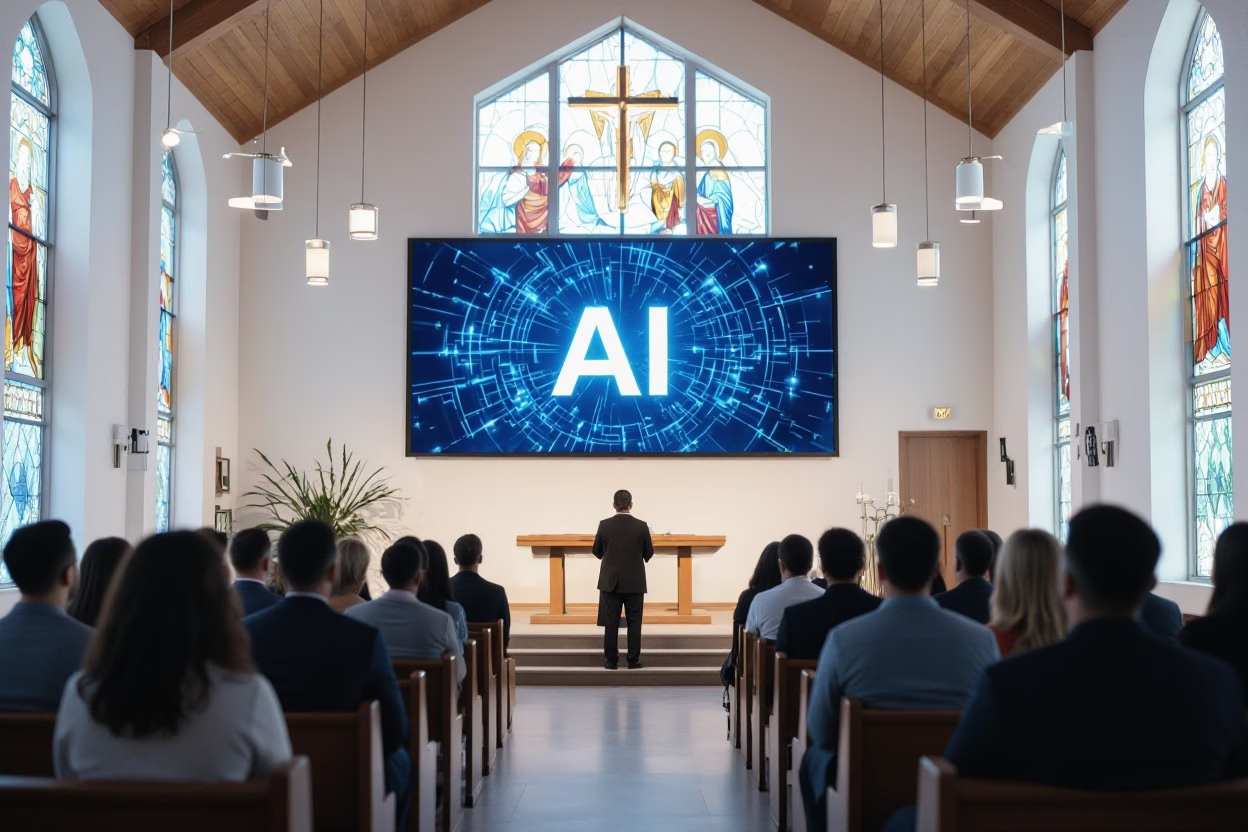
  • How Should Christians Think About Artificial Intelligence? (Faith Perspective)

    How Should Christians Think About Artificial Intelligence? (Faith Perspective)

    Over recent years, artificial intelligence has rapidly advanced, presenting both significant opportunities and serious ethical challenges. Christians are called to approach AI with discernment and hope, guided by biblical principles that emphasize human dignity, moral responsibility, and God’s sovereignty. While AI can enhance human flourishing, it also poses dangers such as reducing people to mere data or risking injustice through biased decisions. Therefore, believers must thoughtfully engage with AI to ensure it aligns with their faith and serves the common good.

    Key Takeaways:

    • Christians affirm that every person is created in the image of God (Imago Dei), so AI must respect and protect human dignity, privacy, and consent.
    • Trusting in God’s sovereignty offers assurance that AI and technological advances do not undermine God’s ultimate control and faithfulness.
    • AI should be used to promote justice, mercy, and humility, with vigilance against biases, discrimination, and dehumanizing practices.
    • Human moral agency and accountability must be preserved, ensuring that AI does not replace human conscience, empathy, and spiritual discernment.
    • Transparency and honesty are crucial; AI systems should be understandable and operate under clear ethical guidelines to safeguard individuals’ rights.
    • Christians are encouraged to actively engage in AI development, contributing biblical wisdom to influence ethical policies and technology design.
    • Faith provides a framework for evaluating AI, emphasizing technology’s role in serving God’s purposes and advancing the common good rather than diminishing human value.

    Affirming Human Dignity in a Digital Age

    The Imago Dei and Its Implications

    The biblical truth that every human is created in the image of God (Genesis 1:27) establishes the foundation for respecting inherent worth amid technological advances. This means AI development must prioritize enhancing rather than diminishing human value. Christians advocate for systems that protect personal dignity, ensuring individuals are not treated merely as data or algorithms. Upholding privacy, consent, and flourishing reflects the sacredness of each life and guards against reductions of identity to commodified inputs.

    The Risks of Dehumanization in AI

    Artificial intelligence can lead to dehumanization by abstracting people into datasets or predictive outputs, risking their reduction to algorithms without regard for their intrinsic dignity. When decisions affecting life, justice, or care shift to opaque AI systems, it undermines the person’s unique moral agency and can introduce biases that exacerbate discrimination or exclusion.

    Examples illustrate these pitfalls: facial recognition technology has shown higher error rates for marginalized groups, leading to wrongful identifications and unjust treatment in law enforcement. Automated hiring tools sometimes reflect and amplify existing biases, excluding qualified candidates based on flawed data patterns. The commodification of personal information and behavioral data without informed consent further detaches human beings from their autonomy. Such consequences emphasize the need for cautious stewardship and ethical vigilance, ensuring AI does not become a tool that erodes human dignity or obscures accountability in decision-making processes.

    Trusting Divine Sovereignty Amidst Technological Advancement

    Understanding God’s Control over Innovation

    God’s sovereignty extends over all human endeavors, including technological progress. Advances in AI, from early automation in the 20th century to recent breakthroughs like deep learning and natural language processing, unfold within His divine plan. Scriptures affirm that no innovation escapes His authority (Psalm 103:19). Christians can therefore view AI not as a chaotic force but as part of a providential unfolding, where human creativity coexists under God’s governance. This perspective fosters confidence that new technologies will ultimately serve human flourishing when aligned with God’s goodness and wisdom.

    Confronting Fear and Uncertainty with Faith

    Many respond to AI’s rapid evolution with anxiety, fearing loss of control, job displacement, or ethical dilemmas. Faith provides a stabilizing anchor amid such fears by reminding believers that God remains faithful and sovereign. Trusting in His promises encourages a posture of hope rather than despair when facing AI’s unknowns. The assurance that God’s purposes cannot be thwarted empowers Christians to engage thoughtfully with AI without succumbing to alarm or fatalism.

    Fear surrounding AI often stems from concerns about unintended consequences or the speed of change outpacing regulation and moral discernment. However, Christian faith offers a framework that emphasizes God’s ultimate authority over all temporal events, including disruptive technologies. By anchoring trust in God’s unchanging nature, believers can resist the impulse toward fear-driven reactions such as retreat or reckless acceptance. Instead, they can pursue wisdom, seek community discernment, and advocate for ethical stewardship of AI. This dynamic approach balances vigilance with hope, recognizing that divine sovereignty ensures technology’s use for positive ends despite challenges and uncertainties.

    Advocating for Justice, Mercy, and Humility in AI Development

    Recognizing and Addressing Bias in AI

    AI systems often inherit biases present in their training data, resulting in discriminatory outcomes that disproportionately affect marginalized groups. Studies reveal that facial recognition technologies misidentify people of color at rates up to 35% higher than white individuals, and credit algorithms can unfairly limit access to financial services. Christians advocating for justice emphasize the need for constant vigilance and proactive correction of these biases, ensuring AI promotes fairness rather than perpetuates injustice. This aligns with the biblical call to act justly and protect the vulnerable from harm caused by embedded prejudice within technology.[8]

    Ensuring AI Serves the Marginalized

    AI holds significant potential to uplift marginalized communities by improving access to education, healthcare, and legal assistance, but only when intentionally directed toward those ends. For example, AI-driven platforms can help identify gaps in medical care for rural populations or provide language translation for refugees. Christians committed to mercy and humility advocate for inclusive design practices that prioritize these vulnerable groups, ensuring AI supports equitable opportunities and respects human dignity rather than deepening existing inequalities.

    Deepening its impact, AI applications have already transformed areas like disaster relief by using predictive analytics to allocate resources more effectively to underserved regions, demonstrating how technology can embody mercy in practice. Christians engaging in AI development remain mindful that serving the marginalized involves ongoing collaboration with affected communities to understand their unique needs and contexts. Such participation echoes the biblical emphasis on humility—recognizing AI’s limitations and the necessity of human wisdom in deploying technology as a tool for compassionate service, not a substitute for genuine human care.[5][8]

    Navigating Moral Responsibility and Agency

    Human Oversight in Decision-Making Processes

    Decisions involving AI—especially those impacting life, justice, or care—must include consistent human oversight. Individuals retain moral agency by evaluating AI recommendations within ethical frameworks grounded in biblical truth. Examples reveal risks when AI acts unchecked, such as biased sentencing algorithms increasing disproportionate incarceration rates. The human conscience, accountability, and empathy remain indispensable for safeguarding the vulnerable, ensuring AI functions as a tool rather than a final arbiter in consequential choices.

    The Dangers of Delegating Ethics to Machines

    Relying on AI to resolve ethical dilemmas neglects AI’s incapacity for genuine moral reasoning. Machines operate through algorithms lacking divine insight, conscience, or empathy, which results in decisions that can inadvertently reinforce injustice or ignore the human context. Delegating moral responsibility to AI risks systemic errors, dehumanization, and diminished accountability, undermining Christian commitments to justice and compassion.

    The complexity of moral decisions requires discernment beyond pattern recognition or statistical inference. AI systems often rely on datasets infused with human biases, leading to outcomes that perpetuate inequality or overlook nuanced circumstances crucial for ethical judgment. For example, healthcare AI prioritizing treatment allocation without holistic understanding can marginalize the disabled or elderly. Additionally, automation may obscure who holds responsibility when harm occurs, creating ethical gray areas incompatible with Christian teaching on accountability before God and community. Protecting moral agency means ensuring technology supports rather than substitutes the reflective, grace-filled choices humans must make.

    Emphasizing Transparency and Accountability in AI Systems

    The Importance of Clear Ethical Guidelines

    Ethical frameworks for AI must be explicit and actionable, grounding development in principles that protect human dignity and rights. Clear guidelines prevent misuse and manipulation by setting boundaries on data handling, bias mitigation, and decision-making authority. For example, Microsoft’s Responsible AI Standard provides detailed requirements that ensure fairness and accountability across AI lifecycles, demonstrating how structured policies can uphold biblical ethics by safeguarding the vulnerable and promoting justice.

    The Role of Informed Consent in Technology Use

    Informed consent entails users understanding how their data is collected, analyzed, and applied by AI systems, preserving their autonomy and privacy. Transparency ensures people are not unwittingly commodified or exploited, aligning with the Christian emphasis on respecting the Imago Dei. Rights to consent empower individuals to engage with technology on their terms, avoiding opaque scenarios where AI-driven decisions are imposed without clear communication.

    Instances like the Cambridge Analytica controversy highlight risks when consent is overlooked, resulting in widespread data misuse and eroding trust. Christians advocating for transparency promote models where users receive straightforward explanations of AI functions and implications, enabling meaningful consent. Integrating consent protocols into AI technology supports moral accountability while reinforcing human responsibility over autonomous systems. This reinforces a community ethos where technology serves to enhance rather than diminish human worth.

    Engaging Cultures and Policies for Ethical AI

    The Church’s Role in Public Discourse

    The church serves as a moral compass in the broader societal conversation about AI, offering a biblical framework that centers on human dignity and justice. Through sermons, educational events, and public statements, church leaders can challenge prevailing narratives that either demonize or blindly celebrate AI. Bringing scriptural insights into policy discussions helps ensure that AI development aligns with ethical standards that resist commodification of people and promote equitable outcomes, fostering a balanced engagement between faith and technology within the culture.

    Mobilizing Christians for Responsible Innovation

    Mobilizing Christians involves equipping believers to actively participate in AI research, development, and policymaking, advocating for innovations that reflect biblical values. Organizations and networks focused on faith and technology facilitate training, dialogue, and collaboration among Christian technologists, ethicists, and policymakers. This movement encourages Christians to bring discernment and proactive leadership into a field where ethical frameworks are still evolving, ensuring AI tools support human flourishing rather than exploitation or bias.

    Expanding this engagement, Christian institutions can partner with universities, tech companies, and policy groups to foster ethical AI startups and initiatives. Programs such as tech incubators designed with Christian ethical principles help cultivate innovations that prioritize transparency, privacy, and justice. Notably, some initiatives have led to the development of AI applications aimed at reducing systemic bias in hiring or providing equitable healthcare solutions, models that exemplify how faith-led innovation can reshape AI’s impact positively. This concerted effort strengthens the church’s witness by demonstrating a commitment to both moral responsibility and practical solutions within technological progress.

    Harmonizing Faith and Technology: A New Paradigm

    Integrating Biblical Wisdom into Tech Design

    Embedding biblical principles into AI development calls for intentional design choices that prioritize human dignity, transparency, and moral accountability. This includes implementing ethical algorithms that avoid bias, respect consent, and ensure AI serves human flourishing rather than exploitation. For example, designers might collaborate with ethicists and theologians to translate values like mercy and justice into concrete technical standards, fostering AI systems that reflect integrity and humility embedded in Scripture.

    Envisioning a Future Where AI Reflects God’s Values

    Imagining AI that mirrors God’s values involves creating technologies that uphold the inherent worth of every individual and promote equitable outcomes across society. Such AI would not only assist in practical tasks but also support justice, compassion, and stewardship, aligning innovation with divine purposes for human flourishing.

    Concrete steps towards this vision include developing AI applications that detect and mitigate systemic biases—such as in hiring or lending—thus advancing fairness and inclusivity. Initiatives like faith-driven AI ethics councils can guide developers toward frameworks that integrate scriptural values, emphasizing mercy and humility to prevent overreliance on machines for moral judgment. When AI systems are designed with these priorities, they become tools that enhance human stewardship and reflect the sovereignty and love that define God’s character.

    To wrap up

    From above, Christians should thoughtfully engage with artificial intelligence by affirming human dignity, trusting in God’s sovereignty, and promoting justice and humility. He or she must ensure that moral responsibility and accountability remain with humans, recognizing AI’s limitations. They are called to demand transparency and participate actively in shaping AI to align with biblical principles and serve the common good. This faith-informed approach enables Christians to navigate technological advancements confidently while upholding ethical standards grounded in scripture.

    FAQ

    Q1: How does the Christian belief in Imago Dei influence the approach to artificial intelligence?

    A: The Christian doctrine of Imago Dei, which teaches that every person is created in the image of God (Genesis 1:27), emphasizes the inherent dignity and worth of each human being. This belief calls Christians to support the development and use of AI technologies that respect and enhance human life, avoiding any treatment of people as mere data or commodities. AI should promote human flourishing, privacy, and consent in alignment with this foundational truth.

    Q2: Should Christians be concerned that AI threatens God’s sovereignty?

    A: Christians are encouraged to trust in God’s sovereignty regardless of technological advancements, including AI. Scripture affirms that God’s rule and promises remain unthreatened by human innovation. Therefore, while AI represents significant change, believers need not fear the future but should hold to the assurance that God remains faithful and in control.

    Q3: In what ways can AI be used to promote justice, mercy, and humility according to Christian ethics?

    A: Christian ethics call for using AI to advance fairness, equity, and compassion (Micah 6:8). This involves vigilant attention to preventing bias and discrimination in AI systems, ensuring technology serves the vulnerable, and recognizing AI’s limitations. Humility requires Christians to avoid over-relying on AI for moral judgment, instead valuing human wisdom and spiritual discernment alongside technological tools.

    Q4: Why is maintaining human moral agency important in interactions with AI?

    A: AI lacks divine insight, conscience, and empathy—qualities central to human moral reasoning. Christians assert that humans must retain oversight and responsibility for decisions involving life, justice, and care for others. Delegating moral or ethical decision-making fully to AI risks injustice and error, making active human accountability imperative.

    Q5: What role does transparency and accountability play in Christian perspectives on AI?

    A: Honesty and transparency are ethical imperatives within Christian thought. AI systems should be designed to be understandable and accountable to users, with informed consent as a key principle. Christians advocate for clear ethical frameworks that safeguard individual rights and prevent misuse or manipulation of technology.

    Q6: How should Christians engage with the development and governance of AI?

    A: Christians are encouraged to actively participate in shaping AI’s trajectory rather than withdrawing from the conversation. Bringing biblical wisdom into public discussions, policy-making, and technological design helps ensure AI aligns with God’s purposes and protects human dignity. The church bears a responsibility to advocate for ethical AI use in society.

    Q7: Can faith provide hope about the future implications of artificial intelligence?

    A: Yes, Christian faith offers a hopeful outlook on AI by emphasizing trust in God’s sovereignty and moral order. This hope motivates believers to approach AI with discernment, guiding technology’s development to serve the common good and reflect divine values, rather than succumbing to fear or uncertainty about the unknown.

  • AI in the Church: Potential Benefits and Theological Concerns

    AI in the Church: Potential Benefits and Theological Concerns

    AI is increasingly influencing church life by offering streamlined administration, personalized engagement, and 24/7 pastoral support, helping leaders enhance ministry and outreach. However, they must also address theological concerns such as the authenticity of spiritual experience and the preservation of human dignity and agency. While AI can augment communication and resource accessibility, it cannot replace genuine faith, discernment, or embodied community. Church leaders need to apply thoughtful discernment to ensure technology serves to support, rather than supplant, the church’s mission and relational ministry.

    Key Takeaways:

    • AI streamlines church administration by automating routine tasks, which allows staff to focus more on pastoral care and ministry.
    • Personalized engagement through AI enhances communication, event recommendations, and accessibility for diverse congregations.
    • AI tools support discipleship and outreach by generating study materials and offering virtual pastoral assistance around the clock.
    • Despite its benefits, AI cannot replace authentic spiritual experiences, pastoral empathy, or the relational nature of faith communities.
    • Theological concerns include the risk of undermining human dignity, the potential spread of misinformation, and the ethical handling of personal data.
    • Church leaders should use AI to complement, not substitute, human discernment, spiritual authenticity, and embodied fellowship.
    • Effective use of AI can reduce costs, improve decision-making, and break down language and ability barriers, making ministry more inclusive and efficient.

    Transforming Church Operations: The Streamlined Path to Efficiency

    Automating Mundane Tasks

    AI tackles repetitive church duties such as scheduling volunteers, managing attendance records, and coordinating facility use with remarkable precision and speed. This automation relieves staff from time-consuming data entry and visitor follow-up, allowing leaders to dedicate more energy toward pastoral care and community-building efforts. For example, AI-driven calendar systems can seamlessly match room availability with event needs, minimizing conflicts and human error. By handling these mundane but vital tasks, AI helps maintain smooth operational flow while enhancing staff productivity and focus.

    A Data-Driven Approach to Church Management

    Church leaders increasingly rely on AI-powered analytics to interpret complex data sets—tracking attendance trends, donation patterns, and engagement metrics. This data-driven insight equips them to make informed decisions that align resources with congregational growth and local outreach. Predictive models can identify members at risk of disengagement and suggest targeted interventions, helping sustain community health. Such analytics also enable budgeting accuracy and facility planning, ensuring stewardship aligns with mission priorities. Harnessing these actionable insights transforms administrative strategy from reactive to proactive management.

    Beyond basic reporting, AI platforms can integrate data from multiple streams—online giving, event participation, and social media engagement—to present a holistic view of church vitality. By segmenting congregants based on demographics, spiritual interests, or attendance frequency, ministry teams tailor communication and programming with greater precision. For instance, one mid-sized church increased its volunteer retention by 30% after applying AI insights to personalize outreach messages. Additionally, predictive analytics forecast seasonal attendance variations and giving patterns, empowering leadership to optimize staffing and financial planning. Such comprehensive data synthesis enables churches to anticipate needs rather than simply respond, fostering strategic growth and deeply informed pastoral care.

    Personalized Engagement: A New Era of Member Interaction

    Tailoring Communications for Impact

    AI-enabled platforms analyze individual member profiles, attendance history, and engagement patterns to craft messages that resonate deeply. Churches employing these tools can deliver targeted invitations to relevant events or ministries, increasing participation and retention. For instance, AI might suggest family-oriented programs to parents while highlighting volunteer opportunities to active members. Such precision reduces communication fatigue and fosters a sense of personalized care, helping congregations bridge the gap between digital interaction and meaningful connection[1][2][5].

    Breaking Down Barriers: Accessibility and Inclusion

    AI-powered translation services and adaptive technologies dissolve language and ability barriers, enabling churches to serve diverse communities more effectively. Automated multilingual content delivery and speech-to-text features allow non-native speakers and individuals with disabilities to engage fully, enriching the church’s inclusivity[1][5][8].

    Implementing AI translation apps, some churches now provide sermons and devotionals in multiple languages simultaneously, expanding their reach to global audiences. Beyond language, AI-driven accessibility tools support those with visual, hearing, or cognitive impairments—such as real-time captioning or customizable interface options—thereby fostering an environment where all members feel valued and included. These advances align with the church’s mission to embody Christ’s love across cultural and ability differences, offering practical means to uphold a truly welcoming community.

    Discipleship Reinvented: AI Tools for Spiritual Growth

    Innovative Content Creation for Faith Development

    AI-powered platforms transform discipleship by generating tailored Bible study guides, devotionals, and sermon outlines aligned with current congregational themes or cultural moments. Some churches employ AI to adapt scriptural commentary for different learning styles and age groups, significantly expanding accessibility and engagement. This dynamic content creation fosters deeper spiritual growth, enabling leaders to address diverse needs without compromising theological integrity, while maintaining a focus on Scripture as the foundation of faith development.

    The Rise of Virtual Missionaries and Chatbots

    Virtual missionaries and AI chatbots increasingly serve as frontline evangelists, providing 24/7 biblically grounded conversations to seekers and believers alike. These tools greet visitors on church websites, answer theological questions, and recommend personalized spiritual resources, expanding ministry reach beyond physical limitations. Their ability to engage users in multiple languages and time zones creates a persistent presence for outreach that complements traditional mission work.

    Several ministries report measurable impact through AI chatbots that facilitate spiritual conversations and guide users toward local church involvement or deeper discipleship materials. For example, platforms like “FaithBot” have engaged tens of thousands worldwide, delivering tailored Scripture insights, prayer prompts, and event invitations in real-time. AI-driven virtual missionaries not only address common faith questions but also identify when human pastoral intervention is needed, integrating technology seamlessly with compassionate ministry. These emerging tools exemplify how AI enhances accessibility while raising important questions about maintaining authentic relational connections within the body of Christ.

    24/7 Pastoral Care: Expanding Support in the Digital Age

    The Role of AI in Immediate Spiritual Counsel

    AI-powered chatbots and virtual assistants now provide round-the-clock access to biblical guidance and emotional support, responding instantly to users’ spiritual questions or crises. Several churches report increased engagement through AI platforms that offer scripture-based encouragement, prayer prompts, and tailored faith resources anytime someone reaches out. This continuous availability helps bridge the gap during off-hours or when clergy resources are limited, extending pastoral care into digital spaces where many seek comfort.

    Challenges and Limitations of Virtual Support

    While AI enables immediate assistance, it cannot replace the deep empathy and discernment provided by human pastors. Digital responses often lack the nuance required for complex emotional or spiritual issues, potentially leading to superficial interactions. Dependence on virtual support risks diminishing vital pastoral relationships, which require embodied presence and personal connection beyond scripted or algorithm-driven answers.

    AI’s inability to fully grasp contextual subtleties presents significant challenges. For example, an AI chatbot may interpret a user’s distress incorrectly, offering generic or even inappropriate responses rather than personalized care rooted in pastoral wisdom. Moreover, sensitive topics involving trauma or mental health demand the compassion and ethical judgment of trained ministers, something no current AI can authentically replicate. Churches must therefore treat AI as an adjunct tool, supplementing but never substituting genuine ministry, mindful that overreliance could undermine the relational foundation imperative to spiritual growth and healing.

    Harnessing Community Insights: Predictive Analytics for Growth

    Understanding Attendance Patterns and Trends

    AI-powered analytics reveal detailed attendance behaviors, identifying peak service times, seasonal fluctuations, and demographic shifts within congregations. For example, by analyzing past data, some churches have pinpointed that younger families attend midweek events more regularly than Sunday mornings, allowing tailored programming. These insights enable leaders to adjust schedules and outreach efforts effectively, maximizing engagement and fostering sustained growth through data-driven decisions.

    Resource Allocation through Data Insights

    Data analytics guide churches in directing resources where they have the greatest impact. By interpreting giving trends alongside participation rates, leaders can strategically invest in ministries and facilities that meet evolving community needs, enhancing stewardship and mission effectiveness.

    More specifically, churches using predictive models have optimized budget distribution by correlating attendance metrics with donation patterns, leading to informed choices such as expanding youth programs or upgrading worship technology. For instance, one congregation discovered that investing in accessible parking and childcare increased both attendance and giving, validating resource shifts. Such targeted allocation not only improves operational efficiency but also strengthens the church’s capacity to serve its members and surrounding community responsibly.

    Ethical Dilemmas: Navigating the Theological Landscape

    Preserving Spiritual Authenticity in Automated Systems

    AI-generated prayers, sermons, and faith content risk reducing deep spiritual experiences to formulaic outputs lacking genuine connection with God. While automation can support ministry logistics, the inability of AI to be guided by the Holy Spirit means it cannot replace the authenticity and relational depth crucial to worship and discipleship. Leaders must carefully balance convenience with maintaining meaningful, Spirit-led engagement that respects the sacred nature of Christian practices.

    The Dangers of Information Manipulation and Bias

    AI systems rely on data sets that may carry inherent biases, potentially distorting theological messaging or marginalizing certain voices within the church community. Algorithmic gatekeeping risks censoring Christian content or amplifying misinformation unintentionally, challenging leaders to ensure that technology upholds truth and doctrinal integrity rather than undermining it through unseen manipulation.

    Examples show how YouTube’s algorithm once suppressed videos with gospel messages amid broader misinformation controls, exemplifying AI’s potential to silence authentic faith expressions unintentionally. Additionally, biases embedded within training data can privilege majority cultural perspectives over marginalized groups, raising concerns about equitable representation in AI-driven resources. Church leaders must engage in ongoing oversight and rigorous discernment to detect and correct these issues, ensuring that AI tools serve faithful and inclusive ministry goals without compromising scriptural truth or community diversity.

    Human Agency: The Dilemma of AI in Ministry Decision-Making

    Assessing the Value of Human Leadership

    Human leadership in ministry remains foundational because it embodies relational depth and spiritual discernment that AI lacks. Leaders integrate prayerful reflection, ethical considerations, and personal experience when guiding congregations—a combination that defies algorithmic replication. While AI can process attendance data or suggest communication strategies, it cannot substitute the nuanced judgment and pastoral sensitivity required to navigate complex, faith-centered decisions. Their role safeguards the church’s mission by ensuring that technology enhances rather than overrides human responsibility and care.

    The Risks of Over-Reliance on Technology

    Relying too heavily on AI in ministry decision-making risks diminishing human accountability and the distinctive callings of pastors and church leaders. Automated analytics might prioritize efficiency over spiritual wisdom, leading to decisions driven by data trends instead of congregational wellbeing. Overdependence on algorithms can also hamper spontaneity and the responsive nature of pastoral care, causing a flattening of relational dynamics that are imperative for healthy church life.

    Case studies reveal instances where churches using predictive tools to allocate resources prioritized numerical growth metrics, inadvertently neglecting the pastoral needs of marginalized groups less visible in the data. AI systems, while adept at handling large datasets, often lack contextual awareness, leading to recommendations that may conflict with core theological values or community realities. This highlights the danger that unchecked technological reliance can erode the fundamentally incarnational and compassionate character of ministry, emphasizing the necessity of integrating AI tools under vigilant human oversight.

    Privacy Concerns: Safeguarding Congregational Data

    Transparency and Consent in Data Use

    Churches employing AI for member engagement collect sensitive information ranging from attendance records to giving history. Maintaining clear communication about data collection practices helps foster trust. Several ministries now provide explicit consent forms and privacy policies, ensuring individuals understand how their information supports personalized outreach or pastoral care. Transparency about data usage not only aligns with ethical standards but also respects congregants’ autonomy, allowing them to make informed choices about participation in AI-enhanced ministries[1][6].

    Balancing Engagement and Ethical Responsibilities

    Personalized communications generated through AI increase congregant participation, but they also raise questions about respecting privacy boundaries and avoiding manipulation. Ministries must balance the desire for meaningful connection with ethical stewardship of personal data, safeguarding members from intrusive surveillance or coercive practices[1][6].

    AI’s capacity to analyze behavioral patterns can enhance engagement by recommending tailored spiritual resources or events; however, this same data, if mishandled, risks exploitation or inadvertent bias. For instance, over-targeting vulnerable populations could create pressure rather than support, undermining the church’s mission of love and care. Implementing robust privacy safeguards, including data minimization and regular audits, serves as a proactive measure against misuse. Churches that prioritize ongoing dialogue with their communities about data ethics demonstrate commitment to both effective ministry and kingdom values[6].

    Final Words

    Now, as AI continues to shape church life, leaders must thoughtfully balance its significant benefits with theological concerns. While AI offers tools that enhance administration, engagement, and outreach, they must ensure it does not replace genuine spiritual experience, human discernment, or the embodied community crucial to the faith. By using AI as a servant—not a substitute—church leaders can harness technology to support ministry while upholding the church’s mission to embody Christ’s love with integrity and wisdom.

    FAQ

    Q1: How can AI improve administrative tasks within the church?

    A1: AI can automate routine and time-consuming administrative duties such as scheduling, data entry, visitor follow-up, and facility management. This automation helps church staff and leaders dedicate more time and energy to pastoral care and ministry activities, enhancing overall efficiency and effectiveness.

    Q2: In what ways does AI enhance personalized engagement for church members?

    A2: AI analyzes member data to tailor communications, recommend relevant events or resources, and deliver content in preferred languages. These capabilities increase accessibility for diverse congregations and foster deeper connection and involvement by addressing individual preferences and needs.

    Q3: What are the theological concerns regarding AI-generated spiritual content?

    A3: While AI can generate prayers, sermons, and devotional materials, it lacks genuine faith, relationship with God, and guidance from the Holy Spirit. There is concern that relying on AI-generated content might lead to superficial spiritual experiences or replace authentic, Spirit-led ministry.

    Q4: How might AI impact human dignity and agency in church ministry?

    A4: Christian theology emphasizes that humans are uniquely created in God’s image. Extensive dependence on AI for decision-making or pastoral functions risks diminishing the value of human presence, discernment, and relational ministry, which are crucial for genuine pastoral care and leadership.

    Q5: What role does AI play in improving discipleship and outreach efforts?

    A5: AI-powered tools can offer creative resources such as Bible study materials and small group ideas, and virtual assistants or chatbots can act as missionaries by engaging people beyond church walls. This extends the church’s reach and supports discipleship in innovative ways.

    Q6: What ethical issues arise from the use of AI in church data management?

    A6: Using AI for personalization and analytics involves handling personal information, raising concerns about privacy, consent, transparency, and data security. Churches must carefully safeguard sensitive data and ensure ethical use in line with Christian values.

    Q7: Can AI replace the relational and embodied nature of church community?

    A7: AI cannot replicate the authentic, embodied fellowship and incarnational presence central to Christian community. Although AI can supplement communication and accessibility, it should not substitute face-to-face relationships and the lived experience of worship and community.

  • Artificial Intelligence & Christian Faith: Ethical Questions & Implications

    Artificial Intelligence & Christian Faith: Ethical Questions & Implications

    Most people are unaware of the profound ethical challenges and opportunities that artificial intelligence presents to your Christian faith community. As AI rapidly advances, you face complex questions about human dignity, moral responsibility, and the protection of truth. At the same time, AI offers positive potential to enhance justice and support vulnerable populations. Understanding these issues is vital for you to engage thoughtfully and ensure that technology aligns with biblical principles and serves the common good without undermining your values or identity.

    Key Takeaways:

    • Human dignity is foundational, as Christians affirm that people are created in God’s image, and AI must never diminish this intrinsic worth.
    • Human moral agency and responsibility must be preserved, ensuring that AI does not replace or undermine ethical accountability.
    • Honesty and truth are vital; Christians are called to resist AI-driven deception, misinformation, and manipulation in society and public discourse.
    • Justice and equity require protecting vulnerable populations and preventing AI from exacerbating inequalities or biases.
    • Transparency, privacy, and informed consent are ethical priorities in the use of AI, opposing exploitative or secretive data practices.
    • The church is encouraged to engage actively in AI development and policy, contributing biblical wisdom to guide technology ethically.
    • Spiritual formation involves cultivating discernment, humility, and wisdom as Christians navigate the promises and risks that AI presents.

    Theological Foundations of Human Dignity

    The Imago Dei: Understanding Humanity’s Unique Value

    The biblical concept of Imago Dei affirms that every person bears God’s image, granting inherent worth beyond abilities or achievements. Unlike AI, humans reflect divine creativity, morality, and relationality—qualities no algorithm can replicate. This sacred identity anchors your dignity in God’s design, not in productivity or social metrics. Recognizing this ensures technology remains a tool for supporting your flourishing rather than redefining what it means to be truly human.

    The Implications of Diminishing Human Worth in AI Contexts

    As AI increasingly excels in tasks once thought uniquely human, there is a subtle shift toward measuring value by efficiency and output. When human worth becomes tied to performance or utility, you risk treating people as mere resources, overlooking their intrinsic dignity. Such reductionism can lead to alienation, dehumanization, and ethical blind spots where decisions prioritize machine-like productivity over compassionate care.

    The consequences extend beyond individual identity into societal structures. For example, automated hiring algorithms that prioritize certain skill sets without accounting for human context can marginalize vulnerable groups, reinforcing systemic inequalities. In healthcare, overreliance on AI diagnostics might diminish the patient’s personhood, neglecting holistic needs like empathy and spiritual support. Christian ethics warns against this trend by underscoring that technology must not erode the sacredness of human life or diminish moral responsibility. Instead, you are called to advocate for AI designs that enhance human dignity, promote justice, and sustain the unique worth that cannot be encoded or replaced by machines.

    Moral Agency in a World of Algorithms

    Retaining Human Oversight in Automated Decisions

    You face a growing number of AI systems making high-stakes choices—empowering employers to screen candidates, hospitals to prioritize care, or defense systems to identify targets. Yet, relinquishing control entirely to algorithms risks sidelining the human conscience and discernment necessary to ethical decision-making. Maintaining human oversight means integrating AI as a tool, not a replacement for judgment, ensuring that personnel can intervene, question, or override automated outputs to protect dignity and uphold justice.

    Accountability: Who Bears the Moral Responsibility?

    Assigning responsibility for AI-driven outcomes becomes complex as algorithms grow more autonomous. You cannot allow diffuse accountability to create moral blind spots where neither developers, users, nor leaders accept consequences for errors or harm. Christians assert that humans remain ultimately accountable for choices made by or with AI, requiring clear lines of responsibility and mechanisms for redress when technology fails or causes injustice.

    The maze of AI decision-making demands that you identify who carries the ethical burden when things go wrong. For instance, if an AI system denies a vulnerable patient access to care due to biased data, is the fault in the algorithm’s design, the healthcare provider’s reliance on it, or policy frameworks regulating its use? Establishing accountability requires transparent documentation of algorithmic processes and active human engagement—not just passive reliance. Without accountability, you risk enabling abdication of moral responsibility, allowing AI to become a scapegoat while human agents evade ethical consequences. Faith communities can call for structures that keep leaders and users accountable, combining technical audits with moral reflection rooted in biblical notions of stewardship and justice.

    Navigating Truth in the Age of Misinformation

    The Rise of AI-Generated Content and Its Impact on Faith

    The surge of AI-generated content—ranging from deepfake videos to automated sermons—poses a multifaceted threat to authentic Christian witness. As AI can produce convincingly false theological arguments or misrepresent scripture, you face the challenge of discerning genuine faith expressions from manipulative fabrications. This flood of synthetic content risks diluting biblical truth and eroding trust within your community, making vigilance and critical engagement important to maintain integrity amidst the noise.

    Combating Algorithmic Bias in Biblical Discourse

    Algorithmic biases embedded in search engines, social media feeds, and content recommendation systems can marginalize Christian perspectives or skew theological conversations. You may notice that AI amplifies dominant cultural narratives while sidelining minority or orthodox voices, unintentionally distorting how the gospel is presented online. Addressing these biases requires proactive advocacy for transparency in AI design and collaboration with developers to ensure equitable representation of Christian teaching in digital spaces.

    Delving deeper, you encounter several concrete instances where algorithmic bias distorts biblical discourse: keyword filtering systems might suppress sermons on controversial doctrines, or recommendation algorithms prioritize sensationalist spiritual content over sober theology. Studies show that AI trained on biased datasets perpetuates stereotypes or omits theological nuance, effectively silencing faithful teachings. Engaging with AI designers to implement inclusive datasets, auditing recommendation algorithms, and educating your community on digital discernment emerge as effective strategies. By demanding ethical oversight and transparency, you help safeguard the diversity and depth of Christian witness in AI-curated environments.

    Justice and Equity: The Ethical Imperative for AI

    Addressing Systemic Biases and Vulnerabilities in AI

    AI systems often inherit and amplify existing societal prejudices, disproportionately impacting marginalized groups. For example, facial recognition technologies have demonstrated higher error rates in identifying people of color, leading to wrongful accusations or exclusion. You must remain vigilant against these embedded biases and advocate for rigorous testing and auditing of AI tools to prevent the entrenchment of inequality. Christian ethics calls you to prioritize the dignity and protection of vulnerable populations, ensuring AI does not exacerbate injustices you would otherwise seek to dismantle.

    Strategies for Ensuring Fairness and Equity in Technological Deployment

    Integrating fairness into AI deployment requires deliberate policies that promote inclusivity and transparency. Implementing diverse development teams, conducting impact assessments, and enforcing legal safeguards against discrimination can help correct imbalances rather than perpetuate them. Through partnership with policymakers and technologists, you can champion frameworks that hold AI accountable to standards of justice, reflecting the biblical mandate to protect the least advantaged in society.

    Expanding beyond surface-level fixes, effective strategies embrace continuous monitoring and community involvement to ensure AI serves all equitably. For instance, establishing independent oversight bodies with diverse representation enables ongoing evaluation of AI’s social impact, such as analyzing how automated hiring algorithms might unintentionally exclude qualified candidates due to skewed data. Transparency initiatives that publicly disclose decision-making criteria promote trust, while mandating informed consent empowers individuals over their data and how it’s used. Emphasizing restorative justice, these approaches align AI innovation with protecting human dignity, demanding concrete accountability rather than technocratic neutrality.

    Transparency, Privacy, and the Ethical Use of AI

    The Dangers of Data Exploitation and Lack of Consent

    Your personal data fuels many AI systems, yet often it is gathered without clear consent or full understanding of the risks involved. Instances like the Cambridge Analytica scandal revealed how data harvested under vague pretenses can manipulate public opinion and disenfranchise vulnerable groups. Exploiting individuals without informed consent not only violates privacy but also diminishes human dignity—a core Christian concern that technology must never trample. You are called to advocate for practices that respect your autonomy and protect your personal information from opaque or unethical use.

    Advocating for Ethical Standards in Surveillant Technologies

    AI-enabled surveillance tools deployed in public spaces or online use powerful data analytics that often escape thorough oversight. As algorithms monitor behavior, predict risks, or flag individuals, biases or lack of transparency can lead to unfair targeting or discrimination. You are challenged to press for regulatory frameworks that mandate accountability, transparency, and respect for privacy rights, ensuring these technologies align with Christian commitments to justice and fairness.

    Developing ethical standards means demanding clear guidelines on how surveillant AI is designed and deployed, including independent audits and community involvement in oversight processes. For example, the widespread use of facial recognition technology in some cities has sparked protests due to errors disproportionately affecting minorities and the poor. These challenges highlight the need for policies requiring explicit consent, limits on data retention, and clear avenues for redress when harms occur. Churches and Christian organizations can be influential voices urging governments and companies to prioritize transparency and protect the vulnerable from intrusive, unchecked surveillance that might threaten both individual freedoms and collective trust.

    The Church’s Role: Engaging with AI Development

    Mobilizing Christian Ethics in Technological Advocacy

    You can step into advocacy by championing AI development that aligns with biblical principles—emphasizing human dignity, justice, and moral agency. Christian organizations have successfully influenced policy frameworks by promoting transparency, fairness, and safeguards against misuse, such as algorithmic bias or privacy violations[1][6]. Drawing on testimonies from faith leaders who worked alongside policymakers, you understand that mobilizing a coherent ethical voice strengthens public discourse and ensures AI serves the common good rather than commercial expediency.

    Encouraging Active Participation of Faith Communities

    Faith communities provide a vital perspective in shaping AI’s trajectory by engaging directly in technology conversations. You can support workshops, educational programs, and dialogues that equip believers with digital discernment and ethical reflection tools, enabling them to contribute thoughtfully to AI design and governance[3][5]. This active presence contests the passive consumer role, inviting churches to be collaborators, not bystanders, in the technology age.

    Expanding this participation, churches could establish dedicated task forces integrating theologians, ethicists, and tech experts to evaluate AI advances alongside scriptural values. For instance, some congregations partner with local universities to host forums that examine AI’s impact on employment and privacy, fostering informed community responses. By doing so, you nurture a grassroots movement that influences not only policy but also the cultural narratives around AI, empowering Christians to articulate a vision where technology uplifts human dignity and justice. This hands-on involvement also prepares believers to identify subtler threats like algorithmic censorship of religious content, ensuring their voices remain heard amid rapid digital change.

    Spiritual Formation in the Context of AI

    Cultivating Discernment and Wisdom Amidst Technological Change

    Your engagement with AI requires grounded in biblical wisdom, especially as new technologies subtly shape moral perspectives and daily decisions. Developing spiritual acuity means actively questioning AI-driven narratives, recognizing biases embedded in algorithms, and resisting the temptation to equate technological progress with moral advancement. By cultivating humility and seeking God’s guidance, you can navigate complex ethical terrain with clarity, ensuring that your faith informs not only your understanding of AI’s possibilities but also its limitations and risks.

    The Role of Prayer and Reflection in Navigating AI Challenges

    Prayer and reflection provide you with spiritual grounding amid the rapid expansion of AI technologies, fostering sensitivity to God’s guidance and wisdom beyond human calculation. Engaging in intentional prayer cultivates patience and ethical insight, equipping you to respond thoughtfully to AI’s ethical dilemmas rather than react impulsively. This spiritual practice nurtures a heart aligned with God’s purposes, empowering you to discern when AI serves human flourishing and when it risks undermining it.

    Regular prayer invites you to wrestle with the moral ambiguities that AI presents, such as issues surrounding privacy violations, bias in algorithmic decisions, and the challenge of maintaining genuine human connection in an age of automation. Reflective practices can open your mind to the Spirit’s prompting, reminding you that technology itself is not neutral but must be stewarded with care and ethical intentionality. In community prayer or solitary meditation, you find space to listen—to God, to others impacted by AI, and to your own conscience—helping you embody both wisdom and compassion in this unfolding digital landscape.

    Protecting Religious Expression in the Digital Sphere

    Defending Against Algorithmic Censorship

    AI-driven algorithms increasingly determine which voices gain visibility online, yet Christian content often faces subtle suppression through shadow bans or reduced reach. Platforms employing opaque content-moderation policies risk silencing faith-based perspectives under vague guidelines targeting “misinformation” or “hate speech.” You must engage with advocacy groups pressing for transparent algorithms that respect religious expression while addressing legitimate harms, ensuring Christian voices remain part of public discourse rather than marginalized by automated filtering systems[2].

    Promoting Digital Literacy and Faith in Online Spaces

    Faith communities can empower believers by teaching digital literacy skills alongside spiritual discernment, helping you navigate misinformation and manipulative AI content. Equipping church members with tools to critically evaluate sources preserves biblical truth and fosters resilience against deceptive algorithms that may distort or suppress faith narratives[2][3].

    Developing comprehensive digital literacy programs involves not only instructing believers on spotting deepfakes or biased AI outputs but also integrating theological reflection that anchors identity in the image of God—not in online validation or algorithmic popularity. Case studies from ministries successfully blending tech education with discipleship show improved confidence and participation in online faith spaces. Training pastors and lay leaders in this integrated approach can multiply its impact, strengthening the church’s presence and witness amid a rapidly evolving digital landscape.

    To wrap up

    With these considerations in mind, you are invited to actively engage with the ethical challenges AI presents to your faith and community. Upholding human dignity, ensuring moral responsibility, and advocating for justice must guide your approach to technology. By cultivating spiritual discernment and participating in shaping AI’s development, you help ensure it serves God’s purposes and the common good. Your vigilance against deception, inequity, and privacy violations fosters a future where AI supports—not undermines—Christian values and human flourishing.

    FAQ

    Q: How does Christian teaching view the relationship between human dignity and artificial intelligence?

    A: Christian ethics teaches that human dignity is grounded in being created in the image of God, a uniqueness that AI cannot replicate. While AI may mimic or exceed human capabilities in certain areas, it should always be designed and used to support human flourishing and never reduce people to mere productivity or efficiency measures. The inherent worth of each person must remain central in conversations about AI development and application.

    Q: Who holds moral responsibility when AI systems make significant decisions?

    A: From a Christian perspective, humans must retain ultimate moral agency and oversight over AI systems. Even when AI is involved in decision-making—such as in healthcare, employment, or defense—people bear responsibility for the outcomes. This ensures accountability and prevents ethical risks associated with delegating decisions entirely to machines.

    Q: What are the concerns regarding AI and truth in Christian communities?

    A: AI technologies can generate misinformation, deepfakes, and biased content that threaten public trust and distort biblical truth in society. Christian responses stress the importance of promoting honesty and resisting forms of manipulation or deception. Also, there is attention to the possibility that AI algorithms might marginalize Christian voices or perspectives, calling for vigilance and digital discernment.

    Q: How can AI impact social justice and equity from a Christian ethical standpoint?

    A: AI has the potential to either deepen social inequalities or advance fairness, depending on its use and regulation. Christians advocate for the protection of vulnerable populations by ensuring AI does not perpetuate biases or unfair practices, such as automated job displacement without support. Justice and charity guide calls for technology that uplifts communities rather than exploits or harms them.

    Q: What are Christian concerns about privacy and consent in AI applications?

    A: The use of AI in data collection, surveillance, and profiling raises important ethical questions about individuals’ privacy and the need for informed consent. Christians emphasize transparency and equitable treatment, warning against hidden or non-consensual uses of AI that compromise people’s dignity or freedom.

    Q: In what ways should churches and Christian organizations engage with AI?

    A: Churches and related groups are encouraged to actively engage in conversations about AI development by contributing biblical wisdom and ethical principles. This engagement includes advocating for policies that embody honesty, stewardship, and respect for human dignity, as well as modeling ethical AI practices in their own ministries and activities.

    Q: How does engagement with AI affect spiritual formation in Christian faith?

    A: AI is not only a technical issue but also a spiritual one that shapes how individuals understand themselves, others, and God. Christians are called to cultivate spiritual discernment, humility, and wisdom when interacting with AI. This ongoing formation helps believers navigate AI’s promises and risks with thoughtful reflection rooted in their faith.