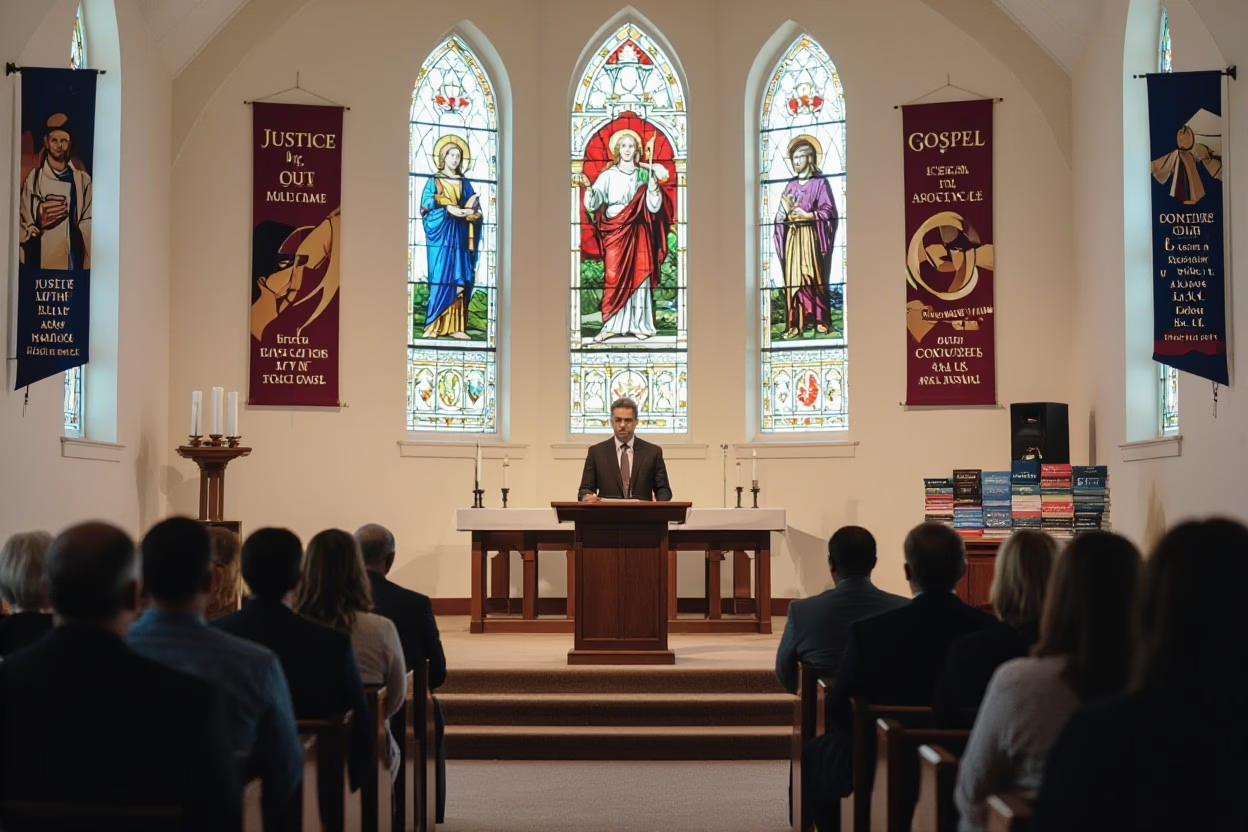
Category: Theology and Doctrine

Delving into biblical interpretation and doctrinal debates.

  • Biblical Perspective on Homosexuality: Understanding Christian Debates

    Biblical Perspective on Homosexuality: Understanding Christian Debates

    It’s a complex and often controversial topic within Christianity, where differing interpretations of scripture shape various views on homosexuality. While many uphold the traditional belief that the Bible prohibits homosexual behavior, others advocate for a contextual and culturally sensitive understanding of the same passages. He, she, or they may encounter passionate debates focusing on whether biblical commands are timeless or historically bound. Throughout, there remains a strong call for grace, respect, and compassion toward all individuals, regardless of their sexual orientation.

    Key Takeaways:

    • The traditional Christian interpretation generally views homosexual behavior as sinful, based on specific Old and New Testament passages.
    • Marriage is consistently portrayed in the Bible as a union between one man and one woman, reflecting God’s intended design for human sexuality.
    • All direct biblical references to homosexual acts are uniformly negative, with no explicit endorsement of same-sex relationships found in scripture.
    • Some revisionist perspectives suggest biblical prohibitions reflect ancient cultural contexts and may not apply to modern, consensual same-sex relationships.
    • Debate exists over whether certain biblical commands are timeless moral laws or culturally-bound regulations subject to reinterpretation.
    • Minority scholarly views question the traditional readings of key passages but are not widely accepted within mainstream biblical scholarship.
    • Despite differing views, there is a shared emphasis on responding to the topic with grace, love, and respect for all individuals.

    The Foundation of Traditional Beliefs: Scripture’s Stance on Homosexuality

    Key Biblical Texts and Their Interpretations

    The Old Testament contains several passages often cited in discussions on homosexuality, with Leviticus 18:22 and 20:13 standing out for their explicit prohibition of male same-sex acts, labeling them as an “abomination.” These texts are part of the Holiness Code, a set of laws aimed at setting Israel apart from surrounding nations, which frames homosexual behavior as a breach of covenantal purity. In the New Testament, passages such as Romans 1:26–27 reaffirm this stance by describing same-sex relations as contrary to natural order and divine intent. The Apostle Paul’s letters, including 1 Corinthians 6:9–10 and 1 Timothy 1:10, list “men who practice homosexuality” within groups excluded from inheriting the kingdom of God, reflecting a consistent theological position across both Testaments.

    Many traditional interpreters highlight that these passages do not merely address behavior but are embedded within a broader biblical sexual ethic, emphasizing marriage as a union exclusively between one man and one woman (see Genesis 2:24; Mark 10:6–8). This model underpins the understanding of sexual relations within the covenant of marriage as God’s ordained framework. Despite variations in translation and some contextual nuances, the overarching narrative offers no explicit endorsement of same-sex relationships, instead presenting homosexual acts as incompatible with God’s design for human sexuality.

    The Role of Context in Scriptural Understanding

    Scriptural prohibitions on homosexuality are often read in light of their ancient Near Eastern contexts, where same-sex acts appeared frequently intertwined with idolatry, temple prostitution, or exploitative power dynamics rather than consensual, committed relationships. This raises questions about whether biblical condemnations universally apply to all forms of same-sex intimacy or specifically to practices violating social and religious norms of the time. Some contextual approaches argue that the Bible’s focus was more on condemning behaviors linked to pagan rituals than addressing loving, monogamous same-sex partnerships.

    The continuity of sexual ethics across Scripture suggests a rootedness in the created order, yet cultural factors undeniably influenced how certain behaviors were perceived and legislated. Scholars engaging this aspect point to the difference between prescriptive laws tied to covenantal identity and broader moral imperatives. Incorporating the historical and cultural background enriches understanding but does not necessarily overturn the traditional interpretation. Instead, it invites careful discernment regarding which biblical commands are culturally conditioned and which are integral to Christian ethics.

    Further exploration into the role of context reveals how the ancient authors’ intentions and the socio-religious milieu shaped the articulation of sexual norms. For instance, the prohibitions in Leviticus also regulate dietary practices and ceremonial cleanliness, many of which Christians consider fulfilled or transcended in the New Covenant. This selective observance underlines ongoing debates about applying Old Testament laws today. Meanwhile, the New Testament writings serve to both reaffirm and deepen moral teachings, though understanding their rhetorical style and audience-specific concerns remains important. Such contextual analysis encourages a nuanced approach, balancing respect for Scripture’s authority with awareness of its historical settings.

    Marriage Through the Ages: A Biblical Paradigm

    The Genesis Model: Marriage as Divine Design

    The foundational biblical depiction of marriage is found in Genesis 2:24, where man and woman are united to become “one flesh.” This union is presented as a deliberate act of God’s creation, establishing a marital bond that reflects both relational intimacy and complementary roles. Jesus’ reaffirmation of this model in the New Testament, particularly in Mark 10:6–8, underscores the continuity of marriage as a divine institution intended for lifelong, exclusive partnership between a man and a woman.

    This model not only defines the marital relationship but also anchors human sexuality within a created order. The union is meant to signify unity and procreation, as reflected in the Genesis narrative and echoed throughout Scripture. By situating marriage within God’s design, the biblical paradigm resists social redefinition, emphasizing instead an ordained structure that shapes Christian ethics on sexuality and family life.

    Continuity and Change in Cultural Practices

    While the Genesis model establishes the theological ideal of marriage, cultural expressions of this institution have varied significantly throughout history. Ancient Israelite marriage customs, New Testament practices, and later Christian traditions reflect adaptations shaped by social context, legal systems, and prevailing moral codes. For example, practices such as polygamy or arranged marriages appear in early biblical times but do not receive affirmation as the normative standard in later Christian teaching, which consistently moves toward monogamous union.

    Church history reveals further modifications influenced by cultural and theological developments. Early Christian writers like Augustine emphasized marriage’s sacramental and covenantal dimensions, refining biblical understandings in dialogue with Greco-Roman cultural norms. By the Middle Ages, marriage became a legally and ecclesiastically regulated institution, codified in canon law and linked to social order and inheritance.

    The ongoing conversation within Christianity about marriage exemplifies this balance between continuity and adaptation. While the core biblical vision remains—as a covenantal union between a man and a woman—the outward practices, rituals, and social functions have evolved in response to changing cultural realities. This dynamic interplay challenges Christians to discern which elements of marriage are divinely instituted and which are culturally conditioned, a distinction that directly informs contemporary debates on sexual ethics and the application of Scripture.

    Grace in Confrontation: Theological Implications of Homosexuality

    Sin, Redemption, and Christian Response

    The traditional Christian understanding categorizes homosexual behavior as sin, based on clear biblical injunctions found in both Old and New Testaments. Passages such as Romans 1:26–27 and 1 Corinthians 6:9–10 explicitly list homosexual acts among behaviors inconsistent with God’s holiness. This theological framing places homosexual behavior within the broader narrative of human fallenness and the need for redemption. However, the concept of sin in Christian doctrine is consistently coupled with the availability of grace through Christ, emphasizing the possibility of forgiveness and transformation rather than condemnation without hope.

    Christian communities that uphold the traditional interpretation often emphasize pastoral care centered on offering compassion alongside correction. They encourage individuals who experience same-sex attraction to seek spiritual growth and holiness while affirming their inherent dignity as bearers of God’s image. This dual emphasis reflects a commitment to uphold scriptural teachings as well as the call to love one’s neighbor, aligning with the overarching biblical message of redemption that includes all people regardless of their struggles or identities.

    The Tension Between Doctrine and Compassion

    The intersection of rigid doctrinal positions and the imperative of compassion generates a persistent tension within Christian responses to homosexuality. Many churches articulate unequivocal stances against homosexual acts while simultaneously stressing the church’s mission as a safe haven for all individuals. This balance seeks to navigate between adhering to what they interpret as divine moral law and extending grace and unconditional love to those affected. The challenge intensifies in pastoral situations where individuals face alienation, mental health struggles, or discrimination both within and outside faith communities.

    This tension often manifests in a spectrum of approaches, from exclusionary practices to more inclusive pastoral care models that maintain doctrinal boundaries yet prioritize relationship and support. Some doctrinally conservative congregations have adopted counseling ministries that aim to help individuals reconcile their faith with their experiences, underscoring the transformative hope in Christ without compromising traditional biblical ethics. The complexity of these approaches illustrates the evolving landscape Christian communities navigate while engaging with contemporary social realities.

    Numerous denominational responses exemplify this tension, such as those seen in the Southern Baptist Convention’s official statements emphasizing sexual purity alongside calls for loving outreach, or the Anglican Communion’s varied provincial approaches that range from strict adherence to traditional teachings to more affirming stances. Such diversity reflects the ongoing negotiation within Christianity as it wrestles with maintaining doctrinal integrity while embodying the radical hospitality modeled by Jesus. This tension persists as both a challenge and a catalyst for deeper theological reflection and communal discernment.

    The Revisionist Perspective: Reinterpreting Ancient Texts

    Contextualization of Scriptural Prohibitions

    Revisionist scholars and theologians emphasize that many biblical injunctions concerning homosexual behavior were embedded within specific historical, cultural, and religious contexts. For example, the prohibitions in Leviticus (18:22, 20:13) are part of a broader holiness code aimed at distinguishing Israelite society from neighboring peoples, and these rules include a range of practices now understood as culturally bound, such as dietary laws and ritual purity regulations. They argue that applying these laws wholesale to contemporary ethical questions overlooks the original intent and setting of the texts.

    New Testament passages, particularly Romans 1:26–27, are reexamined with similar caution. Some researchers highlight the language of exploitation, excess, and idolatry that surrounds these verses, suggesting Paul was condemning practices linked to pagan temple rites or abusive relationships rather than committed, consensual same-sex partnerships. This dynamic re-reading invites consideration that biblical prohibitions may not directly address modern understandings of sexual orientation or faithful same-sex unions, challenging the assumption that these texts offer timeless moral adjudications.

    Exploring the Cultural Norms of Biblical Times

    In the ancient Near Eastern and Greco-Roman worlds, same-sex acts often carried social meanings very different from those in contemporary society. Typically, such behaviors were interwoven with power imbalances, dominance, and ritualistic practices designed to reinforce status hierarchies or religious devotion. For instance, some scholars note that sexual acts condemned in the Bible were frequently linked to prostitution, temple cult practices, or exploitative scenarios involving slaves or youths, contexts far removed from consensual adult relationships grounded in mutual commitment.

    Understanding the pervasive presence of patriarchy, honor-shame culture, and strict gender roles in biblical-era societies sheds light on why certain sexual behaviors were stigmatized. These factors shaped social cohesion and religious identity, meaning that sexual conduct outside these norms threatened more than personal morality—it challenged communal order. Revisionists argue this lens helps explain why the biblical texts might strongly denounce specific homosexual acts while leaving out any mention of enduring same-sex relationships conceived as egalitarian partnerships.

    Ancient perceptions of sexuality were tightly connected to social structures, with homosexual acts often symbolizing subjugation or temple-related idolatry rather than expressions of romantic love. For example, in Greco-Roman contexts, same-sex relations commonly involved hierarchical relationships, such as between an active adult male and a younger or lower-status male, rarely portraying mutual affection or equality. The persistence of such social dynamics suggests that biblical condemnations targeted specific exploitative or cultic behaviors rather than a broader condemnation of all same-sex intimacy as understood today.

    Bridging the Divide: Points of Agreement Among Scholars

    Common Ground on Biblical Authority

    Despite divergent interpretations, nearly all scholars engaged in the debate uphold the Bible as the authoritative foundation for Christian ethics and belief. Both traditionalists and revisionists accept that Scripture carries profound weight in shaping moral understanding, even as they disagree on hermeneutical methods. This shared conviction anchors the conversation, ensuring that discussions do not devolve into relativism but remain tethered to a common textual source.

    Scholars also commonly acknowledge that interpreting biblical texts requires rigorous engagement with original languages, historical contexts, and theological coherence. Regardless of conclusions about homosexuality, there is consensus that passages addressing sexual behavior demand close exegetical attention, rather than casual or simplistic reading. Such agreement on biblical authority not only maintains respect for sacred texts but also fosters continued scholarly dialogue across differing perspectives.

    The Nature of Timeless Moral Commands vs. Cultural Norms

    The heart of the debate centers on whether prohibitions against homosexual behavior reflect timeless moral imperatives or context-specific cultural regulations. Most scholars agree that some biblical laws, such as dietary restrictions or ceremonial rituals, were clearly tied to the cultural and religious milieu of ancient Israel and have been rightly set aside in contemporary practice. The contention arises when determining if sexual ethics, particularly concerning same-sex relationships, fall into the same category or stand as enduring divine mandates.

    This issue presses scholars to wrestle with how to apply biblical morality amid changing social and historical realities. Those affirming timeless commands argue that consistent scriptural condemnations of homosexual acts indicate an unchanging divine standard. Conversely, revisionist scholars emphasize interpretive frameworks that highlight cultural context and question whether biblical texts address the types of loving, consensual relationships present today. Both sides pose significant hermeneutical challenges, expanding the conversation beyond simple biblical literalism.

    Exploring distinctions between eternal moral truths and culturally conditioned rules invites a nuanced appreciation of biblical ethics. The debate encourages Christians to critically assess how divine revelation interacts with human history, promoting humility and openness in engaging with Scripture’s complex witness regarding sexuality.

    The Future of Christian Engagement: Navigating Controversy with Love

    Compassionate Dialogue and Mutual Respect

    Conversations around homosexuality within Christian circles often reveal deep-seated convictions and emotions, yet the path forward increasingly demands compassionate dialogue grounded in genuine respect. Various Christian communities are adopting forums and small group discussions that prioritize listening over arguing, enabling individuals of differing views to share personal stories alongside theological reflection. Initiatives such as the “Living the Questions” series and the work of organizations like the Ekklesia Project demonstrate how respectful engagement can foster understanding, even when fundamental disagreements persist. Encouraging such dialogue helps dismantle stereotypes, promotes empathy, and shifts the discourse from polarized rhetoric to relational connection.

    Mutual respect acknowledges the inherent dignity of all persons, regardless of sexual orientation, while allowing theological convictions to coexist with empathy. For example, some churches have begun training leaders to approach pastoral care without immediate judgment, recognizing the tension between upholding doctrinal beliefs and ministering to individuals with love. This approach fosters environments where LGBTQ+ members and allies feel heard and valued without pressure to conform, advancing a relational ethic aligned with Christ’s example of grace. Such intentional, respectful engagement models how complex issues can be navigated without sacrificing spiritual integrity or human kindness.

    The Role of the Church in Contemporary Issues

    The Church’s response to questions surrounding homosexuality increasingly intersects with broader cultural, legal, and social developments, positioning it as a significant voice in ongoing debates about marriage, civil rights, and religious freedom. Denominations like the United Methodist Church and the Episcopal Church have experienced substantial internal conflict and even schism precisely because of differing stances on LGBTQ+ inclusion; these divisions highlight how pivotal this issue has become in shaping ecclesial identity and mission. In parishes and congregations across the globe, pastoral leaders are challenged to articulate Christian teaching while offering ministries that address loneliness, mental health, and discrimination affecting LGBTQ+ individuals, illustrating the Church’s multifaceted role beyond doctrinal declarations.

    Engagement with contemporary issues requires the Church to balance fidelity to its understanding of biblical teaching with responsiveness to the lived realities of its members and society at large. Public statements by bodies such as the Vatican and the World Council of Churches emphasize upholding human dignity and opposing all forms of unjust discrimination, signaling a global Christian imperative to integrate justice and mercy. Programs focused on reconciliation and education often seek to equip believers to interact thoughtfully with this topic in secular spheres, while fostering internal community resilience. This dynamic rightly reflects how the Church remains a living institution, tasked with navigating cultural change without abandoning its theological foundations.

    Case Studies: Perspectives from Different Christian Denominations

    • Roman Catholic Church: Maintains a traditional stance that homosexual acts are intrinsically disordered and sinful, based on longstanding theological teachings and papal documents such as the Catechism of the Catholic Church (1992). While emphasizing pastoral care, the Church explicitly rejects blessing same-sex unions or permitting same-sex marriage rites.
    • Southern Baptist Convention (SBC): As the largest Protestant body in the United States, SBC actively upholds the biblical prohibition of homosexual behavior. Its 2000 resolution asserts marriage is solely between one man and one woman, and it disfavors ordaining practicing homosexuals as clergy.
    • United Methodist Church (UMC): This denomination exhibits sharp internal conflict. The 2019 General Conference reaffirmed a traditional View, prohibiting same-sex marriage and LGBTQ clergy. However, significant factions advocate for full inclusion, leading to global tensions and a proposed denominational split.
    • Evangelical Lutheran Church in America (ELCA): Since 2009, ELCA permits ordination of LGBTQ clergy in committed relationships and allows ministers to officiate same-sex marriages. The denomination represents a shift toward revising traditional interpretations in light of contemporary insights.
    • Episcopal Church (USA): Embraced same-sex marriage rites in 2015 and ordained openly LGBTQ bishops prior to that. It exemplifies a progressive approach, focusing on inclusion and reinterpretation of scripture within evolving cultural contexts.
    • Eastern Orthodox Churches: Uniformly maintain that homosexual behavior is sinful, emphasizing asceticism and repentance. Same-sex unions are not recognized or blessed, reflecting deeply rooted traditional understandings.
    • Presbyterian Church (USA): Since 2011, PC(USA) has permitted ordination of LGBTQ individuals and allows same-sex marriage ceremonies, representing a significant institutional move toward affirming LGBTQ Christians.
    • Church of Sweden: A Lutheran national church, it officially blesses same-sex marriages and ordains LGBTQ clergy, demonstrating how cultural shifts in Scandinavian countries have influenced ecclesiastical policies.
    • Assemblies of God: As a Pentecostal denomination, it strongly adheres to the traditional prohibition of homosexual practice, framing this as incompatible with biblical holiness and the Spirit-filled life.
    • Metropolitan Community Church (MCC): Founded to serve LGBTQ Christians explicitly, MCC embraces full inclusion and advocates that scripture supports loving same-sex relationships, representing a revisionist theological approach outside mainstream Christianity.

    Mainstream Denominations vs. Progressive Movements

    Mainstream Christian denominations largely continue to affirm the traditional biblical interpretation prohibiting homosexual behavior and uphold marriage as a union between a man and a woman. For example, the Roman Catholic Church and many Orthodox jurisdictions adhere strictly to these teachings, citing both scripture and centuries of doctrinal consistency. They often emphasize pastoral sensitivity without changing core moral doctrines. In contrast, progressive movements and some Protestant denominations have adopted more inclusive policies, permitting same-sex marriage and ordaining LGBTQ clergy. The Episcopal Church USA and the Evangelical Lutheran Church in America are prominent examples, where cultural engagement and contemporary hermeneutics have driven significant theological shifts.

    This divergence reflects broader debates over scriptural authority and hermeneutics. Traditionalists prioritize historic exegesis and view biblical prohibitions as universally applicable. Progressive factions argue that certain prohibitions must be contextualized, emphasizing the values of love, justice, and inclusion. The tension affects governance, clergy appointments, and sacramental theology, often producing institutional conflicts such as seen in the United Methodist Church’s ongoing denominational fractures.

    The Impact of Cultural Shifts on Church Doctrine

    Changing social attitudes toward LGBTQ issues have exerted profound influence on various churches’ doctrinal positions. In regions with greater societal acceptance of same-sex relationships, such as Western Europe and parts of North America, denominations have increasingly revised their teachings to affirm LGBTQ inclusion. The Church of Sweden’s official blessing of same-sex unions and the Presbyterian Church (USA)’s ordination policies embody how cultural openness encourages doctrinal adaptation. Conversely, churches in societies maintaining conservative moral values, including much of Africa and Eastern Europe, have reinforced traditional stances, sometimes in reaction to perceived cultural pressure.

    This dynamic illustrates how cultural shifts intersect with theological interpretation, leading to ecclesiastical pluralism regarding homosexuality. Churches navigate between upholding inherited doctrines and responding pastorally to congregants’ lived experiences. For some denominations, this has necessitated synods and councils explicitly addressing LGBTQ inclusion, often resulting in intensely publicized debates, schisms, and redefinitions of community identity.

    Additionally, cultural changes have prompted examination of scriptural texts through modern linguistic and historical scholarship, influencing doctrinal reconsiderations. The interplay between evolving societal norms and church teachings continues to shape Christianity’s diverse landscape on human sexuality.

    The Importance of Contextual Understanding in Modern Debates

    The Influence of Social Movements on Biblical Interpretation

    Social movements advocating for LGBTQ+ rights have played a significant role in shaping contemporary approaches to biblical interpretation concerning homosexuality. These movements have pressured many Christian communities to reexamine traditional stances by framing same-sex relationships within the context of equality, human dignity, and civil rights. In many cases, proponents of more inclusive theology argue that ancient biblical prohibitions fail to account for the lived experiences of loving, committed same-sex couples today, challenging longstanding interpretations as culturally conditioned rather than divinely mandated.

    Conversely, the rise of progressive readings has prompted a defensive consolidation among traditionalists, who view shifts in biblical interpretation as influenced by external societal values rather than scriptural fidelity. This dynamic has heightened the polarization of Christian responses to homosexuality, with both sides appealing to scripture but often reading it through vastly different hermeneutical lenses shaped by the broader social climate. The intersection between activism and theology thus continues to influence not only public discourse but also internal denominational debates and pastoral approaches within churches.

    Strategies for Engaging with Diverse Perspectives

    Engaging thoughtfully with the diverse perspectives within Christianity on homosexuality requires a willingness to acknowledge both the complexity of biblical texts and the lived realities of individuals. One effective strategy involves distinguishing between descriptive and prescriptive elements in scripture, recognizing when cultural practices are specifically addressed versus when moral principles are intended as timeless. For example, some churches have adopted frameworks that hold fast to the marriage model presented in Genesis and the New Testament while exploring pastoral care approaches that emphasize respect and inclusion for all parishioners, regardless of orientation.

    Dialogue initiatives that include voices from traditional, revisionist, and LGBTQ-affirming perspectives foster greater understanding and reduce polarization. Facilitated conversations in ecumenical settings or academic symposiums help participants unpack assumptions, clarify definitions, and explore how contextual factors—such as language, historical background, and cultural shifts—affect interpretation. These forums encourage Christians to engage with empathy and intellectual rigor, moving beyond caricatures to address the nuanced realities within the body of Christ.

    Further refining these strategies involves developing educational resources rooted in sound biblical scholarship that remain accessible to lay audiences, coupled with training clergy to navigate sensitive pastoral situations with both doctrinal clarity and compassionate presence. Such efforts equip the church to maintain theological integrity while upholding a posture of grace—a balance that sustains communal unity amid ongoing debates.

    Summing up

    Drawing together the various viewpoints, the biblical perspective on homosexuality remains a deeply contested issue within Christianity, shaped largely by differing interpretations of scripture and theological emphasis. The traditional view, which dominates historic Christian teaching, holds that the Bible unequivocally prohibits homosexual behavior and affirms marriage as a covenant exclusively between a man and a woman. Proponents of this stance affirm that these positions are supported by a consistent reading of key biblical texts and emphasize the importance of grace and compassion in responding to individuals regardless of sexual orientation.

    Conversely, revisionist and contextual approaches argue for a nuanced understanding that takes into account the cultural and historical settings of biblical texts, suggesting that some prohibitions may not apply universally to loving, committed same-sex relationships today. While these perspectives remain a minority within biblical scholarship, they reflect ongoing efforts among Christians to reconcile scriptural authority with contemporary experience and ethical reflection. Across all positions, there is a shared call for respectful and thoughtful dialogue, highlighting the intersection of faith, interpretation, and pastoral care in this complex debate.

    FAQ

    Q: What does the Bible say about homosexual behavior?

    A: The Bible contains several passages that address homosexual behavior, including Leviticus 18:22, Leviticus 20:13, Romans 1:26–27, 1 Corinthians 6:9–10, and 1 Timothy 1:10. Traditionally, these texts have been interpreted as prohibiting homosexual acts, portraying them as inconsistent with God’s design for human sexuality.

    Q: Is marriage in the Bible strictly defined as between a man and a woman?

    A: Yes, the biblical model of marriage is described as a union between one man and one woman. This is evident in passages such as Genesis 2:24 and Mark 10:6–8, where marriage is established as part of God’s original design and intended for the complementarity of male and female partners.

    Q: Are there alternative interpretations of biblical passages about homosexuality?

    A: Some Christians and scholars propose that biblical prohibitions on same-sex acts were contextually tied to ancient cultural practices, such as idolatry or exploitation, and may not directly apply to loving, consensual same-sex relationships today. However, these revisionist views remain minority positions and are not widely accepted in traditional biblical scholarship.

    Q: Why do some Christians question the applicability of certain Old Testament laws?

    A: Certain Old Testament laws, such as dietary restrictions or ceremonial rules, are no longer observed by many Christians because they are considered part of the old covenant. This raises questions about which commands regarding sexual ethics remain binding, leading some to reassess how biblical prohibitions on homosexuality should be interpreted in the modern context.

    Q: What areas of agreement exist among Christians regarding homosexuality?

    A: Most scholars and Christian traditions agree that the Bible does not affirm homosexual behavior when interpreted in the traditional sense. The key point of discussion is whether biblical prohibitions are timeless moral laws or culturally specific rules that require reinterpretation in light of contemporary understanding.

    Q: How are Christians encouraged to respond to individuals with a homosexual orientation?

    A: Across various perspectives, Christians are called to respond with grace, love, and respect to all individuals, regardless of sexual orientation. Even those holding to traditional views emphasize the importance of compassion and recognizing the dignity of every person while upholding their theological convictions.

    Q: What is the significance of cultural context in interpreting biblical texts on homosexuality?

    A: Cultural context is significant because some scholars argue that biblical prohibitions addressed specific practices common in the ancient world, such as exploitative or idolatrous acts, rather than committed, consensual relationships. Understanding the historical and cultural background can influence how passages are applied today, though this approach remains debated within the Christian community.


  • Forgiven Once and for All: Did Jesus’ Death Cover Future Sins?

    Forgiven Once and for All: Did Jesus’ Death Cover Future Sins?

    You may wonder whether Jesus’ sacrifice on the cross truly covers not only your past sins but also those you have yet to commit. Understanding how forgiveness works in your faith journey is crucial to finding peace and assurance in God’s grace. This article explores what the Bible says about Jesus’ ability to forgive future sins, clarifying common questions and helping you grasp the relationship between repentance, forgiveness, and living a life aligned with God’s will.

    Key Takeaways:

    • Jesus’ sacrifice on the cross was once and for all, providing forgiveness not only for past sins but also for future sins.
    • Sin is defined biblically as any action, deliberate or accidental, against God’s nature or commands, creating separation from Him.
    • Though Jesus can forgive future sins, believers are called to confess their sins and maintain a repentant heart to receive ongoing forgiveness (1 John 1:9).
    • Forgiveness is not a license to continue sinning; Christians are urged to live transformed lives, resisting the temptation to misuse grace (Romans 6:1-2).
    • Deliberate, continuous sin after coming to the knowledge of the truth threatens the loss of forgiveness and invokes serious biblical warnings (Hebrews 10:26-29).
    • Spiritual disciplines such as prayer, Bible study, worship, and communion help believers stay close to God and grow in faithfulness.
    • Walking in forgiveness involves a balance of God’s grace and personal responsibility to live in a way that honors God and reflects His love.

    Understanding Sin and Forgiveness

    A fundamental part of your faith journey involves grasping the nature of sin and how forgiveness operates through Jesus’ sacrifice. If you have ever asked yourself questions like Does God forgive the sins we will commit in the future, or just those from our past?, you are not alone. Diving into this topic is crucial for aligning your theology with the biblical truth that Jesus’ death on the cross was a once-and-for-all event—a complete atonement for your sins, past, present, and future. Understanding what sin really means will help you recognize why forgiveness is offered to you and how you can maintain a relationship with God that is free from the burden of guilt but full of ongoing responsibility.

    At its core, forgiveness is the divine response to a broken relationship caused by sin. The Bible describes sin as any action, thought, or attitude that separates you from God’s holy nature and His commands. You don’t have to perfectly obey every rule to feel this separation because even unintentional disobedience creates a rift. However, the promise that Jesus’ sacrifice covers all your sins—whether you’ve already committed them or will commit them in the future—offers profound peace and hope. This is why your faith in Jesus is not just about your past mistakes but about your ongoing life and your future choices.

    Ultimately, embracing Jesus’ forgiveness invites you into a restored relationship with God. This relationship acknowledges the reality of your sin but also celebrates God’s grace and mercy that bridge the gap sin has created. As you learn more about sin and forgiveness, you will be empowered to live in freedom while respecting the transformative power of Jesus’ sacrifice, which covers all sins once and for all.

    Definition of Sin

    To understand forgiveness, you first need clarity on what sin actually is. Sin, according to Scripture, is anything you do that goes against God’s nature or violates His commandments. It includes both deliberate choices and accidental mistakes that run counter to God’s perfect will. When you engage in sin, you are crucially resisting the relationship God desires to have with you, which separates you from His presence and His blessings.

    Sin is not limited to outward actions but also includes your inner attitudes and thoughts. You might struggle with anger, pride, or selfishness—each of these is considered sin because it reflects a heart condition that does not align with God’s character. In the story of Cain and Abel in Genesis 4:7, God warns Cain that sin is “crouching at your door” and that he must master it. This vivid imagery reminds you that sin is an ever-present temptation seeking control over your life, but it is something you are called to resist.

    When you fully grasp the nature of sin, it becomes clear why forgiveness is so necessary. Sin disrupts the harmony between you and God, and no matter how hard you try on your own, you cannot erase it by effort or good deeds. That is why the Bible points to the need for a sacrifice to atone for sin, ultimately fulfilled in Jesus. Your awareness of sin as rebellion against God prepares you to receive forgiveness with humility and gratitude, recognizing it as a gift rather than an entitlement.

    Consequences of Sin

    To realize the importance of forgiveness, you must understand the consequences that sin brings into your life. Sin creates separation between you and God—a spiritual death that breaks the perfect relationship He intended for you. From the time of Adam and Eve’s transgression, the effects of sin have impacted humanity physically, emotionally, and spiritually. This separation affects not only your standing with God but can also influence your sense of peace, purpose, and well-being here on earth.

    You also face the weight of guilt and shame because sin goes against your conscience and God’s law. These feelings let you know that something is wrong and nudge you to seek reconciliation. Without forgiveness, the burden of sin can become overwhelming, leading to feelings of despair and hopelessness. But unlike temporary solutions offered through the Old Testament sacrifices, Jesus’ sacrifice provides a permanent atonement that frees you from ongoing condemnation when you come to Him in faith.

    Understanding these consequences reshapes how you view your life and decisions. It helps you realize why forgiveness is more than a one-time event; it is an ongoing necessity as you face trials and temptations daily. Being forgiven by Jesus means not only being rescued from eternal separation but also being empowered to live a renewed life in right relationship with God.

    This spiritual death and separation brought about by sin highlight why God instituted sacrifices in the Old Testament, such as those described in Leviticus, to cover sin temporarily. But these were only precursors to the ultimate sacrifice of Jesus. His death was once and for all, a perfect and final payment that no longer requires repeated offerings. Because of this, you can approach God confidently, knowing that your sins—past, present, and future—are fully covered if you come in faith and repentance. This truth assures you of forgiveness, but it also invites you to live responsibly, never taking the gift of grace for granted or using it as a license to continue in sin.

    Jesus’ Sacrifice: The Once and For All Offering

    One of the most profound truths you encounter as a believer is the understanding that Jesus’ death on the cross was a definitive, once and for all atonement for sin. Unlike ongoing sacrifices that were required continuously in the past, Jesus’ sacrifice transcends time, covering not only your past sins but also your present and future transgressions. This means you do not need to worry about earning forgiveness repeatedly through works or rituals. The sufficiency of Jesus’ offering is grounded in the perfect and complete nature of His obedience and sacrifice, which opened the door for a restored relationship with God. By embracing this reality, you can approach God with confidence, knowing your forgiveness is secure because of what Christ accomplished.

    Because Jesus died long before you were born, every sin you commit—whether before or after coming to faith—is encompassed in His sacrifice. His atoning work is not limited by time or circumstance; it is eternal and all-encompassing. Therefore, when you come to Jesus in faith, you access the power of His blood to cleanse and cover your sins, not just from the past, but those yet to occur in your life. This means your spiritual peace rests not in your ability to be sinless, which no one can achieve, but in the promise that Jesus continually offers forgiveness when you come to Him with repentant hearts. You are invited into a covenant of grace that sustains you daily.

    However, understanding this gift also places a responsibility on your shoulders. The forgiveness extended through Jesus is not a license to sin freely or complacently. While His death offers full and free atonement, your response to God’s grace should lead you into deeper repentance and transformation. Your relationship with God is dynamic and calls you to live in a way that honors His sacrifice—turning away from sin and walking in obedience. The assurance you have through Jesus’ once-for-all sacrifice should inspire you toward a life marked by gratitude and faithfulness, not just dependence on forgiveness alone.

    Old Testament Atonement

    Against the backdrop of the Old Testament, the system of atonement centered on the shedding of animal blood to cover sin, which pointed toward the ultimate sacrifice that was to come. You see, after Adam and Eve sinned, God provided a covering for their nakedness by sacrificing an animal, illustrating from the very beginning that sin required payment through the death of a substitute. Throughout the Mosaic Law, sacrifices were prescribed to atone for the deliberate and inadvertent sins of the people of Israel, but these offerings were temporary and repetitive. Every year, priests offered sacrifices in the temple, symbolizing that full forgiveness had not yet been secured for the people.

    The law revealed to you the seriousness of sin and the necessity of a means to address it, but it could not remove sin permanently from your life or restore your relationship with God fully. The repeated sacrifices were a constant reminder that the barrier between humanity and God remained due to sin’s stain. These offerings highlighted the holiness of God and the cost required to approach Him, but they also pointed to the need for a perfect, final sacrifice that would address sin once and for all, rather than continually.

    In this way, you can appreciate that the Old Testament atonement was preparatory and symbolic. It set the spiritual context within which Jesus’ sacrifice would one day fulfill God’s plan for reconciliation. Understanding this background equips you with greater insight into why Jesus’ death represents such a transformative event—you no longer rely on continual sacrifices but instead stand on the promise of a single, comprehensive atonement that covers every sin, past, present, and future.

    New Covenant through Christ

    With the coming of Jesus, the Old Testament system of sacrifices found its fulfillment in a new covenant that secures your forgiveness permanently. Jesus voluntarily took upon Himself the penalty for all sin by offering His body once on the cross as the perfect sacrifice. Unlike the animal offerings that could not permanently remove sin, Christ’s blood was shed to provide a definitive cleansing for your sins, establishing a new way for you to be reconciled with God. This covenant guarantees eternal life to everyone who believes, bridging the separation caused by sin and restoring your relationship with the Father.

    By embracing this new covenant, you receive more than forgiveness—you gain access to a transformative relationship that empowers you to live free from the dominion of sin. The apostle Paul emphasized this in Romans 6, reminding you that grace is not a permission slip to continue in sin, but the power to live a changed life. Your acceptance of Jesus’ sacrifice is the beginning of a lifelong journey of repentance, sanctification, and renewal, all made possible through this once-for-all atoning work.

    This new covenant underscores God’s loving initiative and ongoing faithfulness to you. It invites you to confess your sins and receive forgiveness continually, as the apostle John teaches in 1 John 1:9, fostering a relationship that grows deeper with each act of repentance and grace received. Jesus’ once-for-all sacrifice assures you that forgiveness is never out of reach, as long as you walk with a repentant heart and a desire to honor Him.

    Through this covenant, you are invited into a new life that transcends the limitations of the Old Testament sacrificial system. Rather than repeatedly offering sacrifices, you now experience a direct and continuous connection with God through Jesus. The sacrifice of Christ is not only sufficient but also timely and relational, empowering you to live in the freedom of forgiveness every single day. This means your spiritual walk is marked by both assurance in God’s mercy and an active pursuit of holiness empowered by the Holy Spirit, reflecting the fullness of the new covenant found in Christ.

    The Scope of Forgiveness

    Keep in mind that Jesus’ sacrifice on the cross was a defining moment that reshaped your relationship with God forever. The scope of forgiveness offered through Christ is both expansive and transformative—it covers every sin you have committed, are committing, and will commit in the future. This is not just theoretical or abstract; it is a profound reality rooted in the biblical teaching that Jesus died “once, and for all” to atone for the sins of humanity (Hebrews 10:10). Forgiveness is available to you not only for your past failures but also as an assurance that your future falls will not separate you from the love and grace of God, as long as you remain open to His conviction and ready to confess. Engaging with this truth means understanding the balance between grace and responsibility, between receiving forgiveness and living a life aligned with God’s will.

    In embracing the scope of Jesus’ forgiveness, you are invited into a continuous relationship that is defined by repentance and renewal. Forgiveness is not a one-time transaction in isolation from your ongoing life; rather, it is an active process that carries you through your spiritual journey. This divine forgiveness liberates you from the weight of guilt and shame that past sins bring, allowing you to move forward without being trapped by previous mistakes. The Bible calls sin anything that violates God’s nature or commands, whether intentional or accidental, and this universal standard sets the stage for why forgiveness is necessary and how infinitely needed it is in your life (Genesis 4:7; 1 John 1:9). You are able to embrace the freedom that comes from knowing your past does not define you.

    At the same time, the scope of forgiveness challenges you to live with integrity and faithfulness. Even as Jesus offers complete and lasting atonement, He calls you to resist complacency, which might arise from assuming all future sins are automatically “covered” without repentance. You are called to respond to the Holy Spirit’s prompting and to confess your sins honestly, embracing the grace that purifies and transforms you (Romans 6:1-2). As you grow in your faith through prayer, Bible study, and fellowship, you build spiritual strength that helps you honor this gift of forgiveness daily. By understanding the full scope of forgiveness, you gain not only peace but also motivation to live in a way that honors the sacrifice Jesus made for you.

    Past Sins

    Along your spiritual journey, the burden of past sins can often feel overwhelming. These are the actions and choices you’ve made before coming to faith or before fully understanding God’s expectations. Your conscience might replay those mistakes, making you question whether forgiveness can truly cover everything you have done. The reassurance found in Scripture is clear: Jesus’ death pays the penalty for all your past sins, fully and completely. This becomes the foundation of your faith, offering you rest and freedom from guilt that once held you captive. You don’t need to carry the weight of regret or be stuck in shame because Christ’s sacrifice has dealt with every offense from your past.

    It’s important for you to grasp that this forgiveness is not limited or conditional on your past performance but is an outpouring of God’s grace extended through faith. By coming to Jesus in faith, you are welcomed into a restored relationship with God, forgiven for those sins that separated you from Him. This restoration is not something to be taken lightly—it is the core of the gospel message that alters your identity from sinner to beloved child of God. Understanding this truth empowers you to let go of old guilt and begin anew, walking in the freedom that only Christ can provide.

    Moreover, this forgiveness for past sins has a sanctifying effect on your life. It changes your perspective and calls you into a new way of living where you are no longer enslaved by former habits or failures. The promise of forgiveness enables you to extend grace to yourself as well, acknowledging that your value is not defined by your past but by God’s unchanging love. You are invited to live forward, confident that your past has been covered once and for all, allowing you to focus on growing in holiness and obedience as you walk with the Lord every day.

    Future Sins

    Below the surface of your daily life, the reality of future sins may feel unsettling, especially when you consider that temptation and weakness remain present. You might wonder if the forgiveness Jesus offers can truly cover the mistakes you have yet to make. The good news is profound: because Jesus’ sacrifice is “once and for all,” it extends to every sin you have not yet committed as well as those you already have (Hebrews 10:10). His forgiveness is not limited by time or circumstance—it reaches forward into your future, offering a continual chance to experience mercy whenever you turn to Him in faith and repentance.

    This ongoing offer of forgiveness means you are not condemned by the sins you will face, provided you do not reject God’s grace or harden your heart against His prompting. You must remain attentive to your spiritual condition and willing to confess honestly when you stumble. The Apostle John assures you that if you confess your sins, God is faithful to forgive and cleanse you from all unrighteousness (1 John 1:9). This means your walk with God involves a daily commitment to humility and openness, recognizing that future sins do not have the power to separate you from His love unless you refuse to seek His forgiveness.

    However, you also need to be aware of the tension that exists within this forgiveness. Knowing that future sins can be forgiven carries the risk of complacency or taking grace for granted. The Apostle Paul warns explicitly against continuing in sin under the assumption that grace will simply increase (Romans 6:1-2). It is your responsibility to engage actively with God’s will, ensuring that you do not use forgiveness as a license to sin but as a motivation to live in obedience and holiness. Embracing this balance allows you to fully appreciate the scope of forgiveness as both a gift and a call to transformation.

    This understanding of future sins further deepens your spiritual journey, reminding you that while Jesus covers all sin, your cooperation through repentance and faith is vital. It highlights that forgiveness is not a one-time box to check but a continual process where you meet God daily, confess your shortcomings, and receive His cleansing power. This ongoing relationship helps you avoid falling into despair or moral laxity, empowering you instead to grow in grace and truth throughout your life.

    The Role of Repentance

    Not all sins are alike in how they affect your relationship with God, and repentance plays an important role in maintaining that relationship after you come to faith. While Jesus’ death covers your past, present, and future sins, forgiveness is not a license to ignore your need to confess and turn away from sin continually. True repentance requires a heartfelt recognition of your wrongdoing and a willingness to change your behavior, demonstrating your desire to live according to God’s will. Without repentance, you risk distancing yourself from the grace freely offered through Jesus’ sacrifice.

    Not only does repentance restore your fellowship with God, but it also transforms your life by helping you align your actions with His purpose for you. The Bible highlights this in Hebrews 10:26-29, stressing that deliberately continuing in sin after knowing the truth leaves no sacrifice for sins and leads to judgment. This warns you that persistent rebellion against God’s commands, without repentance, can place you outside forgiveness. Therefore, repentance isn’t a one-time event but an ongoing attitude that keeps your heart tuned to God’s leading and draws you closer to Him daily.

    Not engaging in repentance undermines the joy and peace that come from walking in God’s forgiveness. By choosing to repent whenever you falter, you respond to the Holy Spirit’s promptings and sustain a vibrant relationship with the Lord. In doing so, you experience the purification and renewal mentioned in 1 John 1:9–10, where God is faithful to forgive and cleanse you from all unrighteousness when you confess your sins. Your willingness to repent actively participates in the grace that Jesus has made available to you and strengthens your spiritual journey.

    Importance of Confession

    Among the ways you maintain your connection with God, confession of sin stands as a vital practice. Confession is not merely admitting wrong; it is an act of humility that acknowledges your need for God’s forgiveness and your desire to be restored. When you confess, you allow God to work in your life, purifying you from the sin that separates you from His presence. This aligns with the Apostle John’s promise that God is faithful and just to forgive your sins when you confess them.

    Among believers, confession fosters transparency and accountability, helping you avoid the trap of denial that can lead to spiritual stagnation. Claiming you have not sinned, as John warns, makes God out to be a liar and pushes you away from the truth that should dwell within you. By regularly confessing your sins, you open your heart to God’s transformative power and receive His cleansing grace, which helps you grow in holiness and spiritual maturity.

    Among the many blessings of confession is the restoration of peace in your soul. Sin causes separation and unrest, but when you bring your shortcomings before God, you experience relief from guilt and shame. This act of confession also restores your fellowship with God, enabling you to walk in the freedom that Christ’s sacrifice has won. It is through this practice that you continue to live in the light of God’s forgiveness rather than in the darkness of hidden sin.

    The Danger of Complacency

    One of the greatest risks you face after embracing the forgiveness offered by Jesus is falling into complacency regarding sin. Knowing that your sins—past, present, and future—are forgiven can sometimes lead to a false sense of security, tempting you to live without genuine concern for holiness. This attitude can diminish your sensitivity to sin and dull your responsiveness to the Holy Spirit’s convictions, setting a dangerous precedent for ongoing disobedience.

    One way complacency manifests is through the misconception that grace provides a permanent cover for careless living. However, the Apostle Paul strongly opposes this notion in Romans 6:1-2, challenging you to reject the idea that grace encourages continual sinning. You are called to recognize that having died to sin through Christ, your life should reflect a departure from it, not a continuation. Living with this awareness helps you avoid habits that can erode your spiritual integrity over time.

    One more subtle danger is the potential desensitization to sin’s consequences, both personally and in your witness to the world. When sin is treated lightly, it damages your relationship with God and confuses others about the seriousness of holiness. Staying vigilant and responsive to the Holy Spirit’s leading guards against this complacency, encouraging you to live in a way that honors God and reflects the transformative power of forgiveness.

    Further, complacency can stunt your spiritual growth by making you passive rather than proactive in your faith journey. If you neglect the disciplines of prayer, Bible study, and regular fellowship, you may find yourself drifting away from the vibrant relationship God desires with you. The article reminds you that these practices cultivate your love for God and maintain your awareness of His will, which serves as a protective barrier against the temptation to sin without remorse. Remaining engaged and diligent helps you respond to forgiveness not as a license to sin but as a call to live responsibly in God’s grace.

    Living in Light of Forgiveness

    Unlike the idea that forgiveness frees you to act without regard for God’s will, living in light of Jesus’ forgiveness calls you into a deeper awareness of the grace you have received. The forgiveness offered through Jesus’ sacrifice is not a license to continue in sin, but rather an invitation to a transformed life that reflects God’s holiness. You are invited to approach each day with a posture of humility and gratitude, understanding that God provides new grace daily to empower you to walk faithfully. This ongoing relationship with God means that forgiveness is a dynamic experience—it involves continuously coming before Him, laying your burdens and shortcomings at the foot of the cross, and seeking mercy for those moments when you fall short.

    When you embrace forgiveness as a living reality, it shapes every aspect of how you interact with the world and with God. Forgiveness brings freedom, but it also brings responsibility and opportunity. It releases you from the weight of guilt and shame, but encourages you to grow into a life that honors God’s will. As you nurture your faith through practices such as prayer, Bible study, worship, and participation in communion, you are reminded not only of what Jesus has done for you but also of how you are called to reflect His love and holiness in your daily decisions. Living in light of forgiveness is a journey that invites continual renewal and commitment.

    Ultimately, understanding the breadth of Jesus’ forgiveness reshapes your identity. You are a beloved child of God, forgiven once and for all, yet called to live responsibly within that grace. This means that while your sins—past, present, and future—have been covered by His sacrifice, your life is meant to be an active response to that grace. You are empowered to pursue righteousness, extend grace to others, and remain vigilant against the temptation to misuse the freedom that forgiveness brings. In this way, the reality of forgiveness deeply influences your walk with God and the impact you have in the world.

    Responsibility of Believers

    Along with the gift of forgiveness comes a responsibility that you are expected to uphold as a believer. This responsibility begins with the acknowledgement that even though Jesus’ death covers all sins, including those you have yet to commit, you must still take sin seriously. As the Apostle John explained, confessing your sins is crucial because it affirms your awareness of sin’s reality and your dependence on God’s mercy (1 John 1:9-10). You are not to treat sin lightly or pretend it does not exist; rather, you recognize it as a real offense against God that requires ongoing repentance and confession.

    Carrying this responsibility means living as someone who has died to sin, as Paul instructs in Romans 6:1-2. You cannot continue in sin, expecting grace to cover it without consequence. Instead, you are called to reject sinful patterns and pursue a transformed life that aligns with God’s will. Doing so requires vigilance and a heart committed to obedience, because the freedom you have in Christ is not freedom to indulge the flesh but freedom to serve God with sincerity and faithfulness. This responsibility is not burdensome because it is supported by the grace and strength God provides daily.

    Moreover, your responsibility as a believer extends beyond your own life to include your witness to others. Embracing forgiveness means demonstrating the power of God’s grace in your actions, words, and attitudes. You are called to love God fully and love your neighbor as yourself, reflecting the heart of the gospel through your relationships and conduct. By accepting this responsibility, you ensure that forgiveness remains a life-changing force that motivates holy living, not a justification for complacency or sinfulness.

    Spiritual Growth and Accountability

    Beside acknowledging your responsibility, spiritual growth and accountability play vital roles in how you live out forgiveness. You are invited to deepen your relationship with God through spiritual disciplines like prayer, Bible study, and worship, which help you stay connected to His guidance and truth. Surrounding yourself with a community of believers provides the encouragement and correction needed to grow in faith and avoid falling into patterns of sin. In this way, accountability acts as a safeguard, reminding you that forgiveness is not a one-time event, but an ongoing process of sanctification.

    Developing your spiritual maturity requires intentionality. When you make time for worship and fellowship, you create space to hear the Holy Spirit’s prompting to confess and repent when necessary. These practices help keep your conscience sensitive to sin and enable you to respond appropriately. Accountability relationships provide honest feedback and prayer support, strengthening your resolve to live a life that honors the sacrifice Jesus made and embraces the forgiveness He continually offers.

    Trusting in forgiveness encourages you to pursue growth actively rather than passively assuming your sins are covered regardless of your lifestyle. The writer to the Hebrews warned against deliberately continuing in sin after knowing the truth, highlighting the weight of such a choice (Hebrews 10:26-29). Your commitment to spiritual growth and accountability is a vital part of demonstrating that you take forgiveness seriously and desire to walk in obedience and grace every day.

    Further, engaging consistently in spiritual growth and accountability not only protects you from falling into complacency but also fosters resilience in your faith journey. By regularly reflecting on God’s word and inviting others to speak into your life, you develop a posture of openness and dependence on God. This openness equips you to identify areas where sin may be creeping in and encourages timely repentance. Beyond personal benefits, your growth and accountability contribute to the strength of the broader community of believers, creating a culture where forgiveness leads to transformation, not just absolution.

    Conclusion

    Upon reflecting on the question of whether Jesus’ death covers your future sins, you can find assurance in the profound truth that His sacrifice was indeed made “once and for all.” This means that when you come to faith in Him, you are not only forgiven for your past transgressions but also receive grace that extends into the future. The biblical teachings make it clear that the forgiveness granted through Jesus’ sacrifice is unlimited in scope—covering every sin you have yet to commit, as well as those already behind you. This divine provision offers you the peace of mind that your relationship with God is restored and sustained through His mercy and love.

    However, this understanding doesn’t give you a license to live irresponsibly or apart from God’s will. You are called to a life of sincere repentance and continual growth in your faith. While Jesus’ death provides the foundation for forgiveness, it is your response through confession, repentance, and a commitment to follow His teachings that keeps you aligned with God’s purpose. The biblical exhortations against willfully persisting in sin remind you that your faith journey involves actively turning away from wrongdoing and embracing the transformative power of the Holy Spirit. This ongoing relationship with God honors the sacrifice He made on your behalf.

    Ultimately, knowing that your future sins are covered invites you into a deeper freedom and responsibility. You are empowered every day to live in the light of God’s grace—engaging in prayer, study, worship, and fellowship to sustain your walk with Him. The forgiveness offered through Jesus’ death is not merely a one-time event; it is an ongoing invitation to experience renewal, mercy, and restoration as you navigate life’s challenges. Through this understanding, you can confidently step forward, trusting that your faith anchors you in a secure, loving relationship with God that transcends time and circumstance.

    FAQ

    Q: Does Jesus’ sacrifice cover only the sins committed before becoming a believer?

    A: No, Jesus’ sacrifice covers all sins—past, present, and future. His death on the cross was a once-for-all atonement, which means anyone who places their faith in Him receives forgiveness for all their sins, including those they have not yet committed.

    Q: How can God forgive sins that have not yet been committed?

    A: Since Jesus’ sacrifice happened outside of time from our perspective, it is sufficient to cover all sins throughout a believer’s life. Because He died once for all people, His forgiveness applies to future sins when we come to Him in faith and repent.

    Q: Does knowing that Jesus forgives future sins mean we can continue sinning without consequence?

    A: No, while God’s forgiveness is available, believers are called to live a transformed life. Scripture warns against using grace as an excuse to keep sinning. True faith involves repentance and turning away from sin, not continuing in it intentionally.

    Q: What role does repentance play if future sins are forgiven?

    A: Repentance is vital. Confessing sins and seeking God’s forgiveness keeps the believer’s heart aligned with God’s will. Without repentance, persistent deliberate sin can lead to spiritual danger, as noted in Hebrews 10, where deliberate rejection of Christ’s sacrifice has serious consequences.

    Q: Can someone lose their forgiveness if they sin after becoming a believer?

    A: Forgiveness is available as long as the believer confesses their sins and repents. However, a total and final rejection of Christ—turning away completely and refusing repentance—leads to a separation where forgiveness no longer applies.

    Q: How can believers avoid falling into complacency knowing their future sins are forgiven?

    A: Believers can stay close to God through regular prayer, Bible study, worship, fellowship, and listening to the Holy Spirit’s guidance. These practices help maintain awareness of sin and encourage sincere repentance rather than complacency.

    Q: Why is participating in communion or the Eucharist important in the context of forgiveness?

    A: Communion serves as a continual reminder of the cost of forgiveness—Jesus’ sacrifice. It helps believers reflect on the meaning of grace, renew their faith, and recommit to living in a way that honors the gift of salvation provided through Christ’s death and resurrection.

  • The Gospel and Social Justice: Balancing Truth & Action (Theology)

    The Gospel and Social Justice: Balancing Truth & Action (Theology)

    Theology explores the relationship between gospel truth and social justice, a dynamic often debated within Christian circles today. While some view social justice as a distraction from the gospel’s core, many leading voices emphasize that the gospel inherently calls for both personal transformation and societal renewal. They argue that separating the two creates a false dichotomy that risks weakening the church’s witness. By upholding both the proclamation of Christ’s forgiveness and the active pursuit of justice for the marginalized, theology presents a holistic vision that reflects the fullness of Christ’s mission.

    Key Takeaways:

    • The gospel encompasses both personal salvation and the restoration of society, reflecting God’s kingdom in holistic transformation.
    • Jesus’ ministry explicitly connects the gospel with justice, liberation, and healing, highlighting social justice as a biblical imperative.
    • Biblical teaching consistently advocates for care of the marginalized and actively pursuing justice as integral expressions of faith.
    • Separating gospel truth from social justice is a false dichotomy; both address individual and societal brokenness.
    • The church’s witness is strengthened when it combines clear gospel proclamation with tangible action for justice and mercy.
    • Social justice efforts must remain rooted in Christ-centered truth to avoid becoming disconnected activism or ideology.
    • Authentic Christian faith unites truth and action, exemplified by “faith working through love,” where proclamation and justice coexist.

    The Gospel’s Redemptive Narrative

    The Comprehensive Scope of Salvation

    Salvation encompasses far more than individual forgiveness; it represents a cosmic restoration of all creation fractured by sin and injustice. Biblical theology presents God’s redemptive work as both personal and societal, extending from inner renewal to systemic healing. Scripture portrays salvation as the inauguration of God’s kingdom, where broken relationships, economic disparities, and structural oppression are addressed alongside spiritual reconciliation. This comprehensive salvation dismantles barriers that divide people, reflecting the gospel’s power to renew communities and transform societal systems in accordance with God’s justice and mercy.

    Jesus’ Manifesto: Justice and Liberation

    Jesus’ inaugural proclamation in Luke 4:18–21 outlines the gospel’s inseparability from justice: “He has sent me to proclaim good news to the poor, freedom for the prisoners, and recovery of sight for the blind.” These statements link salvation with liberation and healing, signaling a mission that confronts oppression and uplifts the marginalized. His manifesto served as a radical call to both spiritual renewal and social justice, emphasizing that the kingdom of God advances through tangible acts of compassion and systemic change.

    Within this manifesto, Jesus explicitly identifies with the suffering and excluded, embodying God’s commitment to those burdened by poverty, captivity, and injustice. His ministry reversed conventional power dynamics, elevating the least and challenging religious and political structures that perpetuated inequality. This pattern echoes the prophetic tradition and reframes the gospel as an active force for liberation, not only promising eternal life but also addressing present realities of social brokenness. The extensive healing, acts of mercy, and calls for repentance intertwined in his teaching demonstrate that faith without social justice is incomplete—Jesus’ mission rooted salvation deeply in the pursuit of justice and restoration for all.

    Scriptural Foundations of Social Justice

    The Prophetic Call to Action

    The Old Testament prophets consistently emphasized that faithfulness to God is inseparable from justice for the oppressed. Passages like Micah 6:8 offer a succinct mandate: “to do justice, love kindness, and walk humbly with your God.” Prophets such as Amos and Isaiah denounced exploitation and called for societal transformation, holding rulers and communities accountable. This prophetic tradition challenges believers to pursue active justice rooted in God’s character, making social justice an enduring, divine imperative rather than a human invention.

    Jesus and the Marginalized: A Model for Ministry

    Jesus exemplified social justice by prioritizing the marginalized—lepers, tax collectors, widows, and the poor—demonstrating that the kingdom of God includes liberation and restoration for all. His proclamation in Luke 4:18–21 directly connected the gospel to freeing the oppressed and bringing healing. Jesus’ consistent engagement with outcasts modeled compassionate justice, showing that ministry to the vulnerable must accompany spiritual renewal in the gospel mission.

    Throughout his earthly ministry, Jesus consistently disrupted social norms by aligning with those marginalized by religious, social, and economic systems. For instance, his interaction with the Samaritan woman at the well (John 4) countered ethnic and gender prejudices, while his healing of the paralytic (Mark 2) challenged religious legalism. Such examples reveal an integrated approach where evangelism and social restoration are intertwined, illustrating that gospel ministry topples barriers and fosters inclusion. The early church carried forward this model by advocating for widows and orphans, showing how gospel truth demands practical social engagement as a reflection of God’s kingdom in action.

    The Interwoven Nature of Gospel and Justice

    Debunking the Dichotomy: Misunderstandings of the Gospel

    Separating the gospel from social justice creates a false dichotomy that misrepresents biblical teaching. The gospel’s good news transcends individual salvation, extending into societal restoration as Jesus demonstrated through His ministry to the marginalized (Luke 4:18–21). Overlooking justice dilutes the fullness of the gospel, relegating it to mere spiritual transaction instead of a transformative kingdom movement. Key theologians highlight that gospel proclamation without justice is incomplete and risks neglecting the brokenness Jesus came to heal in both heart and society.

    The Church’s Witness: Belief in Action

    The church’s credibility and witness hinge on embodying gospel truth through justice-oriented action. Acts 16:5 records how churches’ growth was linked to faithful deeds and a communal commitment to justice. Failure to engage in social justice often renders the gospel message hollow, weakening its appeal and authenticity in the eyes of both believers and skeptics. In practical terms, church-led social programs, advocacy for vulnerable populations, and prophetic denunciations of injustices serve as tangible expressions of gospel faith.

    Historical and contemporary examples reinforce this reality. The early church’s care for widows and orphans (James 1:27) established a model where belief necessitated practical love. Modern movements, such as civil rights activism led by faith leaders, affirm that gospel belief flourishes when combined with courageous justice efforts. Churches engaging in holistic ministries—addressing poverty, racial reconciliation, and systemic injustice—exemplify how integrity in faith demands visible action. Without this, the church risks being perceived as indifferent or disconnected from lived realities, undermining its mission to represent Christ’s kingdom here and now.

    Challenges in Balancing Truth and Action

    The Risk of Activism Over Discipleship

    Emphasizing social justice without anchoring it in gospel discipleship can lead to activism that prioritizes societal change over spiritual transformation. Some movements focus heavily on policy reform or social causes, unintentionally sidelining the call to follow Christ personally. This shift risks reducing the gospel to a social agenda, losing sight of repentance, grace, and the transformation wrought by the Holy Spirit. A church driven more by activism than discipleship may generate impressive social programs yet neglect the deeper heart-change that grounds authentic justice and mercy.

    Maintaining a Christ-Centered Focus

    Social justice initiatives must arise directly from Christ’s lordship and redemptive work to avoid drifting into mere social or political causes. The temptation to adopt secular ideologies under the banner of justice threatens the gospel’s uniqueness and redirects the church’s mission. Maintaining a Christ-centered focus means continually returning to Scripture’s revelation of Jesus as the ultimate justice-bearer, whose kingdom calls for both repentance and restoration. When Christ is at the center, acts of justice become tangible expressions of his love rather than standalone political strategies.

    Historical examples reveal the danger of losing this focus. The Social Gospel movement in the early 20th century, while pioneering in addressing poverty and inequality, struggled by sometimes sidelining the necessity of personal salvation. More recently, some churches have embraced social causes aligned with cultural trends but failed to emphasize Christ’s sacrifice and resurrection, inadvertently blurring gospel clarity. Biblical balance insists that social justice flows from identity in Christ, not from human agendas, ensuring every effort mirrors his reconciliatory work—uniting truth with compassionate action that points back to the cross.

    Practical Strategies for Integration

    Proclaiming the Gospel with Boldness

    Clear proclamation centers on Jesus’ death and resurrection as the foundation of salvation. Boldness means articulating this core truth unapologetically while contextualizing it within the realities of contemporary society. Effective gospel proclamation resonates by addressing both spiritual brokenness and social injustice, following Jesus’ example of linking good news with liberation for the oppressed. Preachers and believers alike can draw upon passages like Romans 1:16, which declares the gospel as “the power of God for salvation to everyone who believes,” to fuel confident witness in all spheres of life.

    Engaging in Effective Justice Work

    Justice efforts thrive when they flow naturally from gospel transformation rather than political agendas. Integrating social justice requires sustained advocacy for the vulnerable, such as refugees or the impoverished, alongside practical ministries like food banks, legal aid, and community development. The early church’s example in Acts 4:32-35 shows believers pooling resources to meet needs, modeling solidarity alongside proclamation. Effectiveness grows when justice work is both informed by Scripture and partnered with local contexts, ensuring interventions are relevant and empowering rather than merely charitable.

    Deeper engagement in justice work also means recognizing systemic injustice and committing to long-term change. Churches involved in restorative justice programs, anti-human trafficking initiatives, or affordable housing projects bring gospel compassion into tangible structures. Training members to understand social issues Biblically enables advocacy that blends mercy with truth. Collaboration with other faith-based organizations or civic groups magnifies impact, reflecting the biblical mandate to “seek the peace and prosperity of the city” (Jeremiah 29:7). This approach avoids superficial fixes and emphasizes lasting societal renewal as an outgrowth of gospel faith.

    Historic Perspectives: How the Church Has Responded

    Notable Movements and Leaders

    Throughout history, Christian leaders like William Wilberforce, Martin Luther King Jr., and Dietrich Bonhoeffer have embodied the integration of gospel truth and social justice. Wilberforce’s leadership in abolishing the slave trade in Britain combined evangelical conviction with passionate social reform. King’s civil rights activism rooted in biblical principles showcased how faithful witness could challenge systemic racism. Bonhoeffer’s resistance against Nazi tyranny highlighted costly discipleship aligned with justice. These figures demonstrate how gospel-centered action has propelled significant societal change, affirming the inseparability of spiritual renewal and social responsibility.

    Lessons Learned from Past Mistakes

    The church’s engagement with social justice has sometimes faltered when activism overshadowed gospel foundations, leading to ideological distortion or moral compromise. Certain movements, though well-intentioned, drifted toward political agendas disconnected from biblical truth, causing division or disillusionment among believers. At other times, Christianity’s complicity in injustice—such as endorsing slavery or colonialism—damaged its witness. These failures emphasize the need for a balance where social action flows from gospel transformation, ensuring that justice efforts remain deeply rooted in Christ’s mission rather than secular priorities.

    Reflecting on these past mistakes, it becomes clear how harmful it is when the church embraces social justice without anchoring it in gospel truth. Historic complicity in oppressive systems revealed how a lack of spiritual vigilance leads to systemic sin being perpetuated under Christian authority. Conversely, movements that prioritized public advocacy at the expense of proclaiming salvation often lost their distinctive Christian identity, proving less effective and alienating the faithful. The overarching lesson remains that social justice initiatives must be inseparable from spiritual renewal, with gospel proclamation energizing and informing every effort for societal change.

    The Future of Faith in Social Justice

    Emerging Trends in Theology and Activism

    Theological reflection increasingly integrates social justice with gospel proclamation, emphasizing holistic discipleship. Movements like liberation theology and intersectional justice highlight systemic injustices alongside personal sin, urging the church to address racism, economic inequality, and environmental stewardship together. Digital platforms enable wider advocacy and resource-sharing, empowering local congregations to participate in global justice networks. Scholars propose renewed biblical hermeneutics that affirm justice as an necessary dimension of faith rather than an optional add-on, shaping the next generation of Christian leaders to embody both conviction and compassionate action.

    Opportunities for Churches to Lead in Justice Initiatives

    Churches possess unique potential to initiate transformative justice work by leveraging their community presence and moral authority. Expanding partnerships with local organizations, churches can tackle homelessness, human trafficking, and food insecurity with gospel-rooted responses. Programs like legal aid clinics, reconciliation ministries, and socioeconomic empowerment projects showcase how congregations translate faith into impactful social change. Training members in advocacy and public theology equips believers to influence policy and cultural attitudes, fostering a church-wide culture where truth and action coexist as expressions of authentic discipleship.

    Beyond standard charity, churches increasingly adopt integrated frameworks that address root causes of injustice through education, advocacy, and sustained community engagement. For instance, the desegregation efforts led by church coalitions in various U.S. cities during the Civil Rights Movement provide historical precedents for contemporary involvement. Today, faith communities mobilize around immigrant rights and environmental justice, often serving as trusted mediators between marginalized populations and policymakers. Such leadership fosters long-term societal transformation, demonstrating how ecclesial influence extends beyond liturgical spaces into the public square with tangible, gospel-driven impact.

    Final Words

    To wrap up, he or she understands that the gospel and social justice are deeply intertwined facets of Christian faith. They recognize that the proclamation of truth and the pursuit of justice must go hand in hand, reflecting both personal and societal transformation. The gospel calls believers to embody Christ’s compassion through actions that promote justice while firmly anchoring their faith in the message of salvation. By balancing these elements, Christians effectively witness to the fullness of God’s kingdom and fulfill their calling to love and serve both God and neighbor.

    FAQ

    Q1: How does the gospel relate to social justice in Christian theology?

    A1: The gospel encompasses both personal salvation and the announcement of God’s kingdom, which includes restoring brokenness on personal, social, and cosmic levels. Social justice is integral to this message because it reflects God’s concern for the marginalized, the oppressed, and the pursuit of righteousness as demonstrated in Jesus’ ministry and biblical teachings. Thus, social justice flows naturally from the gospel’s goal of transformation.

    Q2: Why is the idea of separating gospel truth from social justice considered a false dichotomy?

    A2: Dividing gospel truth from social justice overlooks the comprehensive nature of Christ’s mission, which addresses both individual brokenness and systemic injustice. Many theologians argue that preaching the gospel without engaging social justice misses important aspects of Jesus’ teachings and diminishes the church’s witness. Authentic faith involves both proclaiming salvation and actively pursuing justice.

    Q3: What biblical examples support the connection between the gospel and social justice?

    A3: Several biblical passages highlight this connection. For instance, Luke 4:18–21 shows Jesus linking good news with justice for the poor and liberation for the oppressed. The prophets (e.g., Micah 6:8) call for doing justice and loving kindness, and the New Testament repeatedly emphasizes care for the vulnerable (Matthew 25:31–46, James 1:27). These examples demonstrate that social justice is a consistent theme throughout Scripture.

    Q4: How can the church maintain a balance between upholding gospel truth and engaging in social justice?

    A4: Maintaining balance requires holding both proclamation and action together—communicating the central gospel truths such as Jesus’ death and resurrection while also actively loving neighbors and advocating for justice as a response to gospel transformation. The goal is to avoid reducing the gospel to activism or political ideology, ensuring social justice work remains rooted in Christ-centered faith.

    Q5: What are some challenges related to integrating social justice with the gospel?

    A5: One challenge is the risk that social justice efforts become disconnected from the gospel’s spiritual foundation, focusing only on earthly change and neglecting personal transformation. Another challenge lies in avoiding the politicization of the gospel, which can alienate believers and detract from the core message of salvation. The church must carefully balance truth and action to maintain faithfulness.

    Q6: In what ways does social justice demonstrate authentic gospel faith?

    A6: Social justice embodies the gospel by putting faith into practice—loving neighbors, seeking justice for the marginalized, and physically responding to suffering. Biblical instructions to “do justice, love kindness, and walk humbly” are seen as genuine expressions of faith, reflecting God’s character and aligning with Jesus’ teachings and example.

    Q7: What practical steps can Christians take to live out the gospel through social justice?

    A7: Christians can begin by clearly proclaiming gospel truths about Christ’s forgiveness and resurrection, while also engaging in acts of compassion and advocacy for vulnerable populations. Participation in community service, standing against systemic injustice, and promoting equitable treatment align with living out a faith that actively works through love, as described in Galatians 5:6.

  • Core Gospel Message Debate: What is the Essential Truth?

    Core Gospel Message Debate: What is the Essential Truth?

    Debate surrounding the core gospel message has long engaged theologians and believers alike, as they seek to define the important truth of Christianity. While many agree that Jesus Christ’s death, burial, and resurrection for the forgiveness of sins lies at the heart of the gospel, differing views on secondary matters sometimes cloud this central message. As he or she explores these perspectives, readers can gain clarity on what unites diverse traditions and why the bold proclamation of salvation by grace through faith remains foundational to the Christian faith.

    Key Takeaways:

    • The core gospel message centers on humanity’s sinfulness and the need for salvation through Jesus Christ.
    • Jesus Christ’s death, burial, and resurrection form the foundation of the gospel, providing atonement for sin.
    • Salvation is offered by God’s grace alone and received through faith, not by human works or effort.
    • The gospel calls individuals to repent from sin and place their trust solely in Jesus for salvation.
    • Believers are promised eternal life and a restored relationship with God through faith in Christ.
    • Debates often focus on secondary issues such as baptism or church practices, but do not alter the gospel’s crucial message.
    • The overarching truth is that salvation in Jesus, through His redemptive work, is the heart of the gospel shared across Christian traditions.

    The Foundation of the Gospel: Humanity’s Sin and Spiritual Need

    The Nature of Sin: Defining Fallenness

    Sin represents humanity’s universal condition of moral failure and rebellion against God’s perfect standards. It is more than isolated acts; sin describes the persistent state of falling short of God’s glory, as Paul emphasizes in Romans 3:23. This inherent fallen nature distorts human desires, motivations, and actions, creating a separation that defines every person’s spiritual reality. The accumulated weight of sin affects not only individual choices but also the brokenness of human relationships and society at large.

    Consequences of Sin: Separation from God

    Sin disrupts the intimate fellowship between God and humanity, creating a profound spiritual separation. This alienation is not merely relational but also existential, resulting in spiritual death—an eternal condition apart from God’s presence. The Bible highlights this separation as the ultimate consequence of disobedience, with eternal ramifications that no human effort can overcome. The gospel’s message directly addresses this rupture by offering reconciliation through Christ’s redeeming work.

    Beyond the immediate relational pain, separation from God leads to a loss of purpose, hope, and internal peace. Studies in spiritual psychology indicate that a sense of disconnection from the divine correlates strongly with increased anxiety, despair, and ethical confusion. The biblical narrative consistently portrays sin’s separation as the root cause of systemic brokenness, including societal injustice and personal despair. This comprehensive fracture underscores the necessity of restoration, making the gospel’s promise of reconciliation through Jesus not only spiritually transformative but vitally necessary for holistic human flourishing.

    The Central Figure of Faith: The Atonement of Jesus Christ

    The Life and Ministry of Jesus: Why It Matters

    Jesus’ sinless life and authoritative teachings established Him as the promised Messiah and the perfect example of obedience to God. His miracles, compassion, and proclamation of the kingdom of God revealed His divine identity and purpose. By fulfilling Old Testament prophecies, Jesus demonstrated both His deity and humanity, making His ministry indispensable for understanding salvation. His ethical teachings and sacrificial love transformed countless lives and set the foundation for the gospel’s call to repentance and faith.

    The Cross and Resurrection: The Heart of the Gospel Message

    The atonement accomplished through Jesus’ death and resurrection stands at the very core of the gospel. His death on the cross paid the penalty for humanity’s sin, addressing the separation from God caused by disobedience. The resurrection three days later validated His victory over sin and death, guaranteeing eternal life for all who trust Him. This event confirms the fulfillment of Scripture and offers a living hope grounded not in human effort but in divine grace.

    The cross and resurrection define the gospel’s transformative power. Jesus’ sacrificial death was substitutionary, satisfying divine justice by bearing the punishment deserved by sinners. Scriptural passages like Romans 3:25–26 emphasize this act as God’s demonstration of righteousness and mercy united. His resurrection conquers the finality of death, reinforcing the promise of new life. The early church’s message, as recorded by Paul in 1 Corinthians 15, hinges on these facts—without which faith would be futile. This historic and theological event remains the foundation for salvation, indicating that through Christ alone, reconciliation and eternal life are made freely accessible.

    Grace Alone: Understanding Salvation by Faith

    The Role of Grace: Unpacking the Free Gift

    Grace represents God’s unmerited favor, extending forgiveness and reconciliation without dependence on human effort. Biblical texts emphasize that salvation is not earned but freely given, highlighting Ephesians 2:8-9, where Paul asserts that it is “by grace you have been saved through faith” and not from works. This free gift stands in stark contrast to systems based on merit, underscoring that no one can earn righteousness. This foundational truth safeguards the gospel message from becoming a checklist of human achievements.

    Faith as Response: What it Means to Believe

    Faith functions as the means by which individuals receive God’s gracious gift of salvation. It entails more than intellectual assent—faith involves trust and reliance on Jesus Christ’s atoning work as sufficient for forgiveness. By trusting in His death and resurrection, one enters into a restored relationship with God, embracing what Christ accomplished on their behalf rather than their own efforts.

    Faith expresses itself both as a personal trust and an alignment with the gospel’s claims. The New Testament presents faith as a firm reliance on Jesus, evident especially in passages like Romans 3:28, where Paul states that a person is justified by faith apart from works of the law. Historical examples—from the thief on the cross who believed in Jesus moments before death, to the early church’s testimony—demonstrate that faith is an active commitment to Christ alone. It corresponds to repentance, signifying a turning away from self-reliance toward dependence on what Christ has finished, making it a dynamic, transformative stance rather than a passive belief.

    The Call to Repentance: A Radical Transformation

    The Concept of Repentance: Turning Away from Sin

    Repentance involves a decisive turning away from sin, reflecting a profound change in one’s direction and desires. It is not merely remorse or regret but a deliberate commitment to forsake sinful behaviors and patterns. This transformation aligns the heart with God’s holiness, breaking the power of sin’s hold. Biblical calls to repentance emphasize that without this turning, separation from God remains, underscoring repentance as an indispensable response to the gospel invitation[1][2][4].

    Trusting in Christ Alone: Not by Works but by Faith

    Salvation hinges on trusting in Jesus Christ alone, placing faith fully in His atoning death and resurrection rather than human effort. This trust acknowledges that no one can earn forgiveness or reconciliation through good deeds. Scripture repeatedly affirms that salvation is a free gift received by faith, highlighting grace as the foundation of the gospel message. Human works are insufficient to bridge the divide caused by sin; only Christ’s righteousness can restore the broken relationship with God.

    Expanding further, trusting in Christ alone means embracing His finished work on the cross as wholly sufficient for forgiveness. The apostle Paul clarifies in Ephesians 2:8–9 that salvation “is by grace through faith—and this is not from yourselves, it is the gift of God—not by works, so that no one can boast.” This doctrine counters any notion that baptism, moral behavior, or religious rituals contribute to one’s standing before God. Instead, faith acts as the hand that receives the gift of grace. Countless testimonies attest to lives radically changed when individuals cease relying on self-righteousness and rest fully in Christ’s substitutionary sacrifice, demonstrating that true faith produces both assurance and transformation.

    Assurance of Eternal Life: The Promise for Believers

    Eternal Security: What It Means to Be Saved

    Eternal security affirms that those who have genuinely trusted in Christ’s atoning work receive a permanent standing before God. This assurance is based on the unchanging character of God’s promise and Jesus’ resurrection, confirming believers are sealed by the Holy Spirit (Ephesians 1:13-14). While various traditions differ on the nuances of “once saved, always saved,” the core gospel message assures that salvation is not contingent on human effort but rests securely on Christ’s finished work.

    The Transformative Impact of the Gospel on Life

    Receiving the gospel message initiates a profound transformation, marked by a new identity in Christ and a growing desire to live in obedience to God. This change goes beyond mere behavior modification; it reshapes priorities, values, and relationships, reflecting the fruit of the Spirit (Galatians 5:22-23). Believers often report a deep and lasting peace rooted in their restored relationship with God, providing resilience amid life’s trials.

    The gospel’s impact extends into all spheres of a believer’s life, reshaping community involvement, ethical decision-making, and personal purpose. Research in spiritual formation highlights that those grounded in gospel assurance demonstrate increased altruism and commitment to justice, motivated by gratitude rather than obligation. This ongoing renewal confirms that salvation is not simply an event but a lifelong journey of sanctification—a dynamic interplay between divine grace and human response. Case studies of historically influential Christians reveal consistent patterns of transformed character and societal engagement directly linked to the gospel’s power.

    Navigating the Modern Debate: Secondary Issues and Their Implications

    Baptism and Church Membership: Differences in Interpretation

    Baptism often sparks significant debate regarding its role in the believer’s journey, with some traditions emphasizing it as an imperative act of obedience linked closely to salvation, while others view it as a public declaration of faith rather than a salvific requirement. Church membership similarly varies, with certain denominations considering formal membership a vital expression of belonging and accountability, whereas others prioritize personal faith and community involvement without rigid membership boundaries. These differences illustrate how secondary practices can shape Christian identity without altering the gospel’s fundamental message of salvation through faith in Christ alone.

    The Intersection of Social Justice and the Gospel Message

    Social justice issues stir considerable discussion about how the gospel message applies to contemporary societal challenges. While some argue that addressing systemic injustice is a natural outgrowth of gospel compassion, others caution against conflating social activism with the proclamation of salvation through Christ’s atoning work. The tension lies in maintaining the gospel’s core focus—Christ’s death and resurrection for sin—while recognizing that biblical faith demands both personal transformation and concern for the marginalized. This dynamic often highlights varying priorities but does not shift the gospel’s imperative truths.

    Examining the relationship between social justice and the gospel reveals historical and theological complexities. Movements like the Civil Rights era show how gospel motivation fueled advocacy for equality and dignity, yet the gospel itself remained the foundation, not the agenda. Contemporary debates involve weighing urgent calls to address poverty, racial reconciliation, and human rights alongside the gospel proclamation. Effective engagement insists that social justice initiatives flow from gospel conviction rather than replace it, ensuring that Christ’s redemptive work remains central while believers actively exemplify His love through justice and mercy.

    Voice of the Critics: Challenges to Core Gospel Tenets

    Modern Skepticism: Misconceptions About the Gospel

    Modern skeptics often dismiss the gospel as outdated myth or mere moral teaching, overlooking its core claims about Jesus’ death and resurrection as historical events. Some argue the message is exclusive or divisive, ignoring that its invitation extends to all people regardless of background. Misunderstandings about concepts like grace and faith lead critics to charge the gospel with promoting passivity or denying personal responsibility, when in fact it calls for active repentance and transformation rooted in trust in Christ’s redemptive work.

    Addressing Diverse Perspectives on the Gospel Message

    The diversity of theological perspectives—ranging from Calvinism and Arminianism to liberation theology—often shapes how the gospel is understood and emphasized among different communities. While these viewpoints may highlight various aspects of salvation, grace, or social implications, they tend to agree on the central necessity of Christ’s atoning death and resurrection. This plurality sometimes breeds confusion but also reflects the gospel’s dynamic engagement with cultures and contexts throughout history.

    Further examination reveals how theologians across denominational lines debate secondary doctrines such as predestination or faith’s relationship to works, yet consistently affirm the gospel’s core as summarized in 1 Corinthians 15:3–4. For example, while some traditions stress God’s sovereign election, others emphasize human free will in responding to the gospel call, demonstrating that doctrinal nuances coexist with unified imperative truths. This balance preserves the gospel’s integrity while fostering rich dialogue about its full implications for faith and practice worldwide.

    Practical Applications: Living Out the Gospel Daily

    Integrating Faith into Daily Life: Practical Steps

    Daily decisions reflect one’s faith through acts of love, integrity, and humility. He or she can develop consistent habits such as prayer, Scripture reading, and intentional service within their community. Small choices—like responding with grace under pressure or extending forgiveness—demonstrate the gospel’s transformative power. Incorporating faith involves prioritizing God’s truth in work, relationships, and even leisure, allowing the gospel to shape character and actions beyond Sunday worship.

    Sharing the Message: Engaging Others with the Gospel

    Engaging others begins by listening to their stories and respectfully sharing the gospel’s necessary truths about sin, salvation, and grace. He or she might use personal testimony or relevant Scripture passages, tailored to individual understanding. Clear communication of Christ’s death, burial, and resurrection remains central, avoiding secondary debates. Living authentically as a witness often opens doors, inviting others into dialogue about faith and eternal life.

    Effective gospel sharing combines both relational presence and intentional proclamation. Studies show people respond more to trust built over time than to confrontational approaches; for example, the “Friendship Evangelism” model encourages ongoing fellowship rather than one-time presentations. Equipping oneself with concise articulations of the gospel, like the three core facts highlighted by Paul in 1 Corinthians 15, helps maintain focus on the necessary message. Engaging respectfully with doubts or questions reveals confidence in the gospel’s power without reliance on religious jargon or works-based appeals.

    To wrap up

    With this in mind, the core gospel message centers on the necessary truth that salvation is found in Jesus Christ, who died, was buried, and rose again for the forgiveness of sins. While secondary issues like baptism and church membership often spark debate, he, she, or they can agree that faith in Christ’s atoning work and God’s grace alone brings eternal life. The necessary gospel remains the proclamation of Christ’s death and resurrection as the foundation for reconciliation with God and the promise of salvation for all who believe.

    FAQ

    Q: What is considered the imperative truth of the gospel message?

    A: The imperative truth of the gospel message centers on Jesus Christ’s death, burial, and resurrection for the forgiveness of sins. Salvation is offered by God’s grace through faith in Jesus, who provides eternal life to all who trust in Him.

    Q: Why do different Christian traditions agree on the core gospel despite other disagreements?

    A: While various traditions debate secondary matters like baptism or social justice, there is broad consensus that the heart of the gospel is the proclamation of Jesus’ atoning work and resurrection. These foundational truths unite Christians across denominations.

    Q: How is salvation described in the gospel message?

    A: Salvation is described as a gift from God, received by grace through faith, not by human effort or works. This means forgiveness and reconciliation with God come when a person trusts in Jesus Christ alone for salvation.

    Q: What role does repentance play in the gospel message?

    A: Repentance involves turning away from sin and placing trust in Jesus Christ. The gospel calls individuals to repent as part of responding to God’s offer of salvation, relying on Jesus’ finished work rather than personal merit.

    Q: How does the gospel message address humanity’s condition?

    A: The gospel acknowledges that all people have sinned and fall short of God’s glory, resulting in separation from Him and spiritual death. This condition creates the need for salvation through Jesus Christ.

    Q: What promise is given to those who believe in the gospel message?

    A: Those who trust in Jesus Christ receive the promise of eternal life along with assurance of a restored relationship with God. Eternal life is a key aspect of the gospel’s hope for believers.

    Q: Are issues like baptism or church membership part of the core gospel?

    A: No, such issues are considered secondary debates within Christianity. The core gospel focuses on Jesus’ death, burial, resurrection, and the gift of salvation through faith, while topics like baptism or church participation are important but not imperative to the gospel message itself.