Category: Global Christianity & Missions

Exploring the growth and challenges of faith worldwide.

  • Impact of Global Migration on Christian Communities: New Challenges & Opportunities

    Impact of Global Migration on Christian Communities: New Challenges & Opportunities

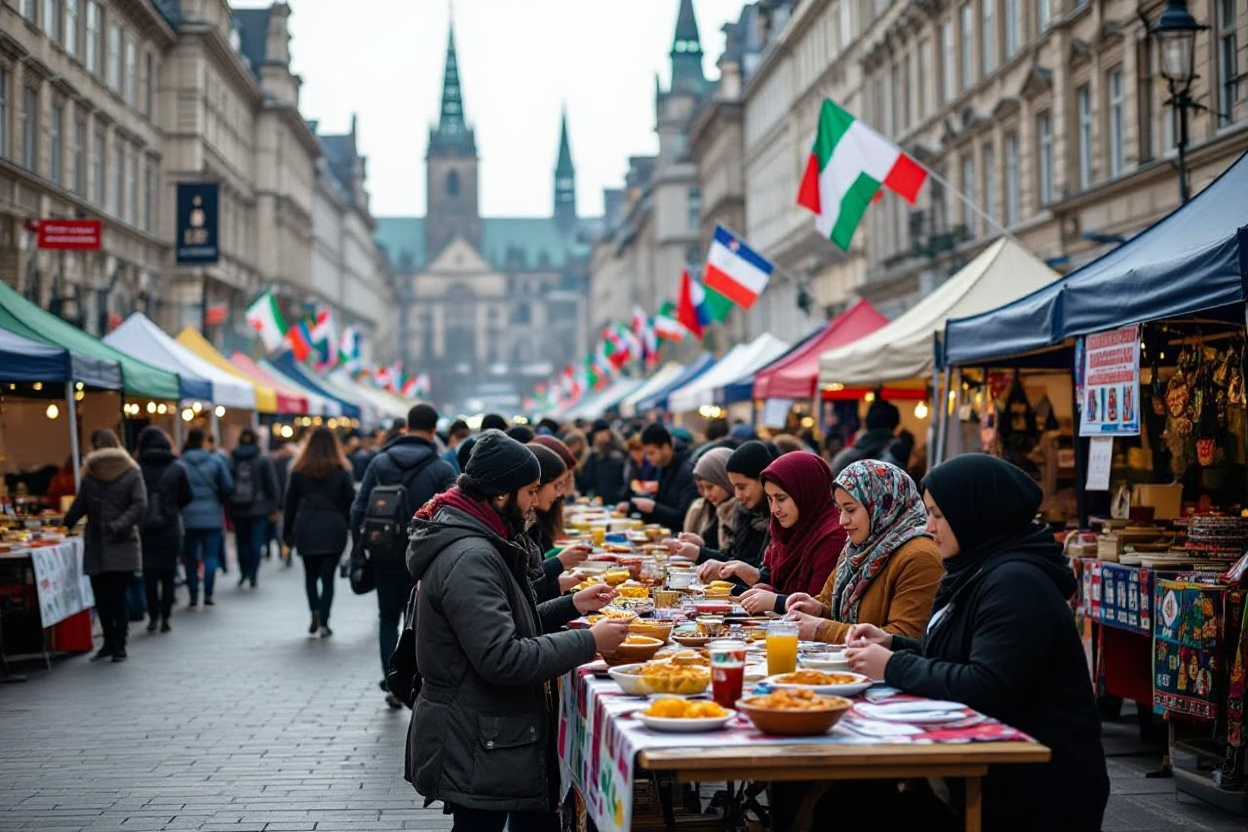
    You might not realize how profoundly global migration reshapes Christian communities worldwide. As people move across borders, they bring diverse cultural practices and faith expressions, which challenge traditional structures yet also enrich spiritual life. They face risks like social fragmentation and discrimination but also discover opportunities for growth, dialogue, and renewed unity. Understanding these dynamics helps leaders and members respond thoughtfully to both the threats and blessings migration presents in sustaining their faith and community cohesion.

    Key Takeaways:

      • Global migration is reshaping Christian communities by increasing cultural and linguistic diversity within congregations.
      • Migrants often bring new religious expressions and traditions that can enrich existing Christian practices and foster intercultural dialogue.
      • The movement of people can lead to challenges such as integration difficulties, social isolation, and tensions between different cultural groups in churches.
      • Christian communities have an opportunity to serve as welcoming spaces for migrants, offering spiritual support and practical assistance.
      • Churches can play a significant role in advocating for migrants’ rights and promoting social justice in their host countries.
      • New migrant populations stimulate the development of innovative ministry models that address the evolving needs of diverse congregations.
      • Collaboration among churches across borders is becoming more important to address global migration’s impact comprehensively.

      The Global Migration Landscape: Trends and Statistics

      Current Migration Patterns and Data

      More than 280 million people globally are migrants, representing roughly 3.6% of the world’s population—a figure that has shown steady growth over the past decades. Recent data indicates that migration flows are increasingly complex, with significant urban-to-urban migration in addition to traditional cross-border movements. Regions such as North America and Europe continue to attract large migrant populations seeking economic opportunities and safety, while parts of Africa and Asia experience substantial internal displacement, often driven by economic disparity and social instability.

      Christian communities in both sending and receiving countries experience the impacts of these shifts. For instance, Latin America’s large-scale emigration has led to dwindling congregations locally, while resulting in emergent diaspora communities abroad. European countries such as Germany and Italy have seen notable increases in Christian migrants from the Middle East and Africa, contributing fresh dynamics to ecclesial life but also presenting integration challenges. Statistical reports from the International Organization for Migration reveal that Christian migrants often face unique issues regarding religious freedom and the preservation of cultural identity during relocation.

      The Role of Conflict and Climate Change

      Conflict remains a primary driver in displacement, especially in regions where Christian minorities reside alongside other groups. Syria, Iraq, and parts of sub-Saharan Africa have witnessed mass exoduses of Christian populations due to sectarian violence and persecution. UNHCR figures show that millions of these migrants have sought asylum in neighboring countries or further abroad, reshaping Christian demographic patterns globally. Violence not only displaces individuals but fractures established community networks, challenging the sustainability of Christian institutions in affected areas.

      Beyond conflict, climate change increasingly acts as a catalyst for migration. Rising sea levels, desertification, and extreme weather events disproportionately affect vulnerable communities, often forcing relocations within fragile geographical zones. For example, Pacific Island nations face existential threats from inundation, compelling Christian islanders to migrate to countries like New Zealand and Australia. These environmental pressures intertwine with social and economic factors, creating multifaceted migration motives that Christian organizations must understand in deployment and ministry efforts.

      Additional analysis reveals how overlapping crises magnify displacement risks. In regions like the Sahel, erratic rainfall and resource scarcity exacerbate communal tensions and armed conflicts, propelling further migration. Such compounded challenges require nuanced responses from Christian aid agencies, which must navigate humanitarian assistance alongside faith-based outreach amid volatile environments.

      The Transformation of Christian Demographics in the Global Context

      Migration Trends and Statistics

      Recent decades have witnessed significant shifts in the geographic distribution of Christian populations, largely propelled by global migration flows. Between 2010 and 2020, over 50 million Christians migrated from regions such as sub-Saharan Africa and Latin America to Europe, North America, and parts of Asia. These migrations have resulted in the rapid expansion of Christian minorities in typically non-Christian societies. For example, the number of Latin American Christians in the United States grew by approximately 25% during this period, profoundly influencing local church dynamics and outreach strategies.

      Additionally, the emergence of migration corridors within and between the Global South and North has altered the composition of Christian communities worldwide. The World Migration Report of 2022 highlights that migrants from predominantly Christian countries now represent nearly 30% of the total international migrant population. This phenomenon has not only increased attendance in established Christian denominations abroad but also facilitated the rise of Pentecostal and Evangelical movements, which appeal strongly to migrant populations seeking communal and spiritual support in unfamiliar environments.

      Shifts in Congregational Composition

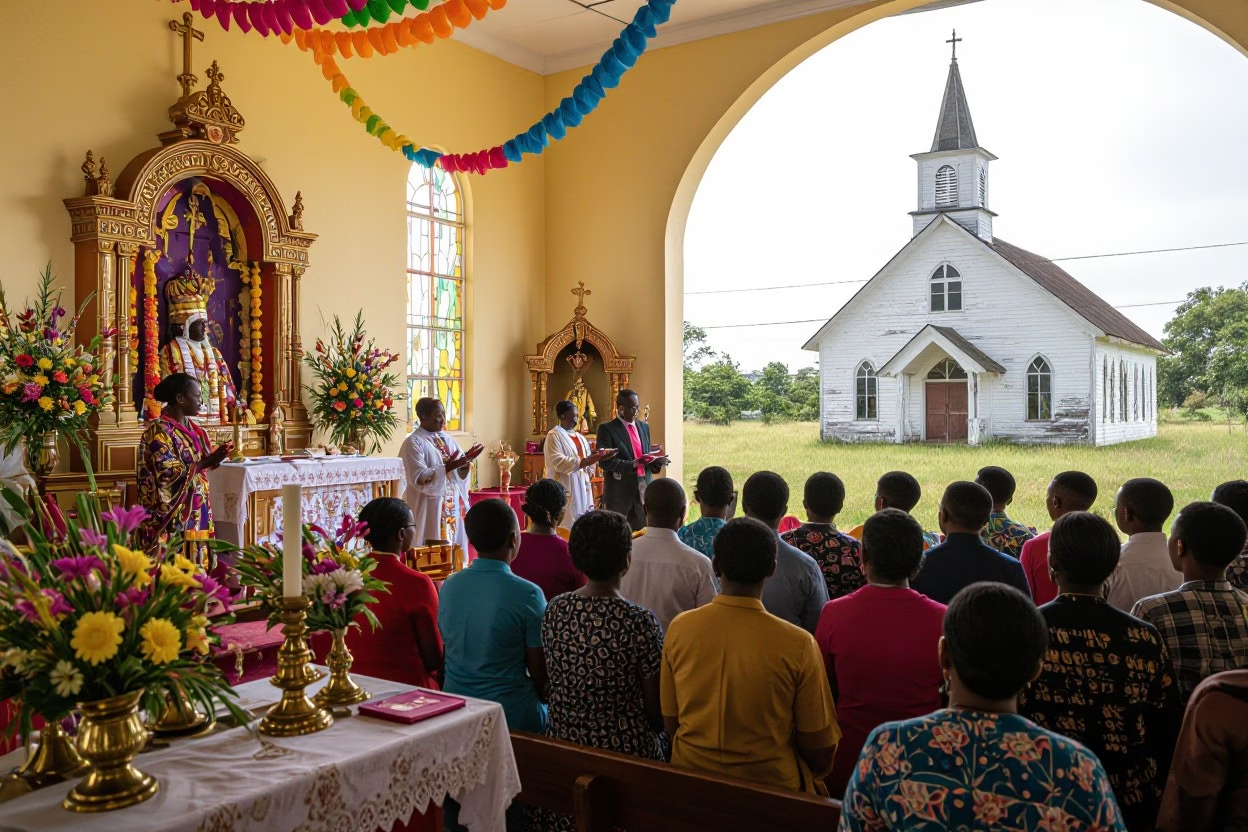
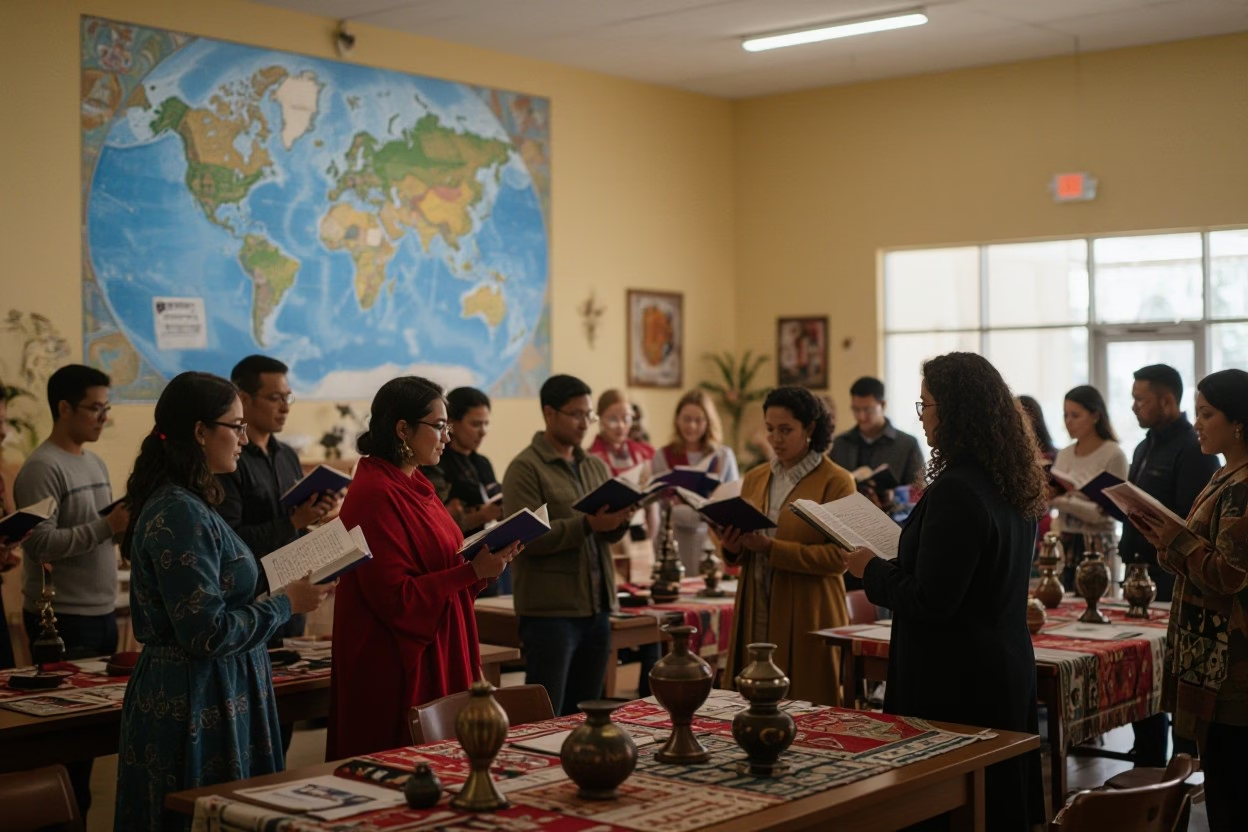
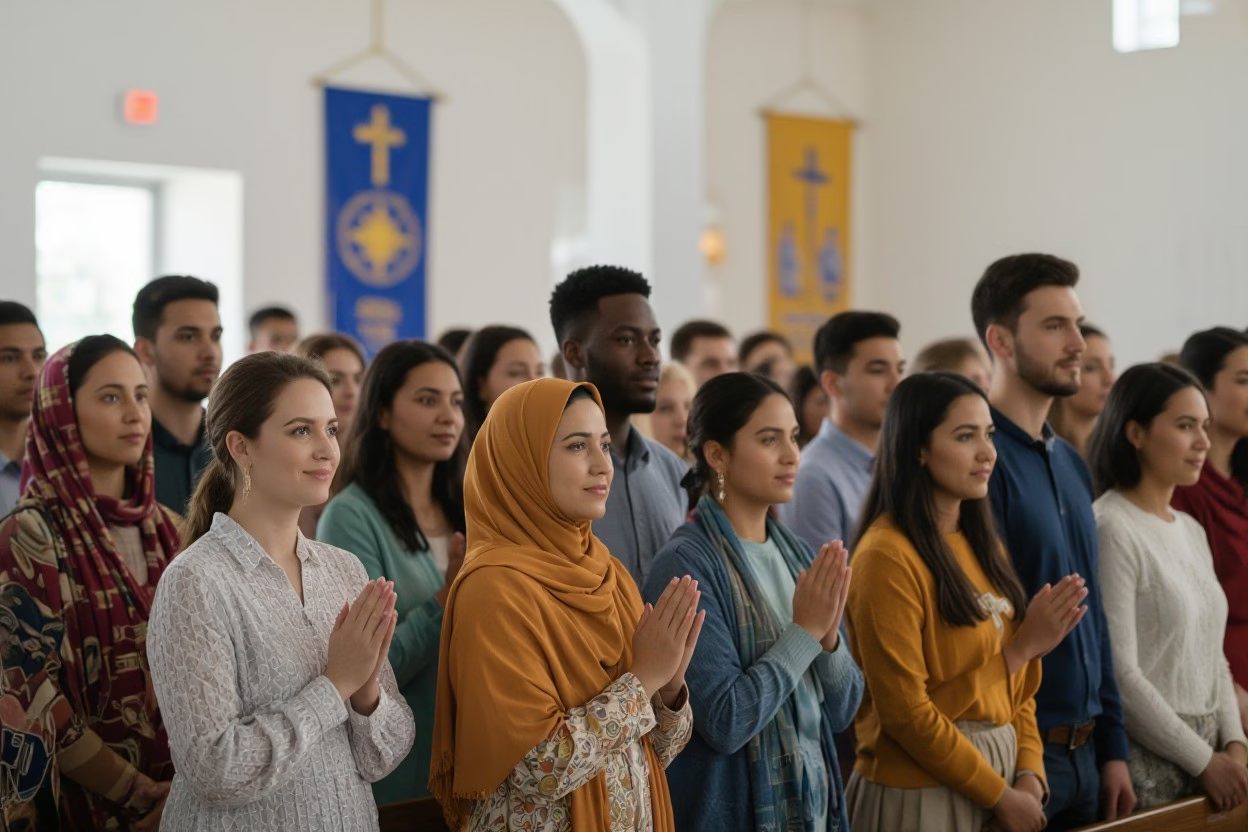
      The inflow of Christian migrants has led to noticeable diversification within congregations, particularly in urban centers. Churches are encountering a broader spectrum of cultural backgrounds, languages, and worship styles coexisting under one roof. For instance, a Pentecostal church in London has integrated services in English, Spanish, and various African languages to accommodate its multiethnic membership. This blending often challenges traditional liturgical norms but also fosters enriched worship experiences and deeper intercultural understanding.

      Such demographic shifts require congregations to address new pastoral and administrative challenges. Church leaders increasingly find themselves adapting outreach programs, leadership structures, and community services to support migrants’ unique circumstances. Furthermore, the presence of first- and second-generation migrants within congregations has sparked greater emphasis on youth engagement and intergenerational dialogue, creating fresh opportunities for faith transmission and social cohesion.

      The transformation in congregational makeup also significantly influences theological emphases and community priorities. Migrant Christians often bring distinctive spiritual expressions and social concerns, such as advocacy for migrant rights and services addressing displacement trauma. This integration fosters dynamic exchanges between indigenous and migrant believers, resulting in evolving forms of Christian witness that resonate with broader societal realities shaped by migration.

      The Diverse Faces of Christian Communities Worldwide

      Demographic Shifts: Who Migrates?

      Migration within and across continents has altered the demographic composition of Christian communities in notable ways. Young adults, particularly those aged 18 to 35, constitute a significant proportion of Christian migrants, driven both by economic opportunities and the search for political stability. For example, a 2022 Pew Research study revealed that over 60% of African Christian migrants moving to Europe fell within this age bracket, imbuing host nations with a youthful vibrancy uncommon to their generally aging native populations. The gender balance also varies significantly; while male migrants often dominate labor-driven movements, female Christians increasingly migrate solo or as heads of household, impacting family structures and community dynamics abroad.

      Religious affiliation among migrants further complicates migration patterns. Latin America has seen sizable movements of Pentecostal and Evangelical Christians into North American urban centers, reshaping local worship styles and church demographics. Conversely, migration from the Middle East tends to involve a higher proportion of Eastern Orthodox and Catholic Christians escaping persecution, such as Syriac Orthodox refugees integrating into European diasporas. This interplay between demographic factors and religious identity influences the types of Christian communities formed and their integration pathways within global contexts.

      Cultural and Theological Diversity within Christian Faiths

      The variety of Christian traditions across migrant populations introduces a multifaceted layer of cultural and theological diversity into host countries. Migrants bring with them liturgical practices, worship styles, and doctrinal emphases distinct from dominant local churches. For example, Ethiopian Orthodox Christians in diaspora maintain ancient liturgical languages like Ge’ez, preserving a unique spiritual heritage that differs markedly from Latin-rite Catholicism prevalent in Western migration destinations. This diversity introduces challenges related to ecclesiastical recognition and cooperation, with denominational boundaries sometimes hardening around cultural identities.

      Moreover, theological perspectives carried by migrant Christians often influence local debates on social and ethical issues. Pentecostal and charismatic movements, widespread among Latin American migrants, prioritize spiritual gifts and expressive worship, contrasting with the more formal traditions of mainline Protestant or Orthodox churches. These differences affect how migrant communities engage with social services, political activism, and interfaith dialogue. Consequently, Christian institutions in receiving countries frequently need to navigate complex intra-faith relations arising from diverse theological frameworks.

      Additional layers of nuance emerge when considering language use, ritual practices, and theological education levels among migrants. Churches serving immigrant populations often become cultural centers, not merely places of worship, sustaining ethnic languages and customs under religious auspices. In some instances, theological training in home countries varies widely, which influences leadership styles and community organization within diaspora churches. The coexistence of these varied cultural and theological traditions within the broader Christian faith highlights both the enrichment and complexity of contemporary migrant Christian communities.

      The Intersection of Faith and Cultural Exchange

      Enriched Worship Experiences

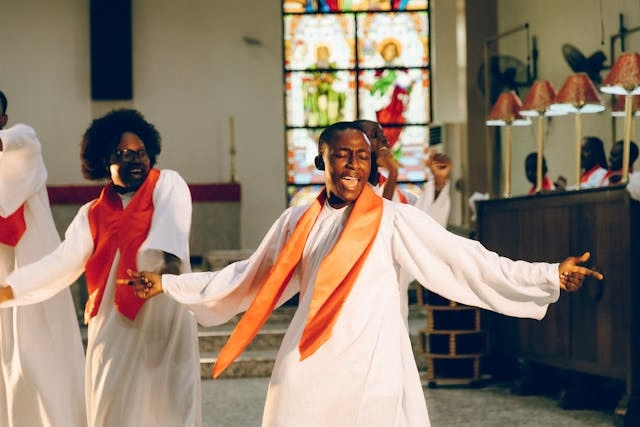
      Global migration introduces a rich tapestry of cultural traditions into Christian worship, often leading to hybrid liturgical expressions that resonate deeply with diverse congregants. For example, in cities like Toronto and London, churches now blend gospel music with indigenous instruments or incorporate multilingual scripture readings that reflect their communities’ heritage. This blending not only enhances the emotional depth of worship but also facilitates a greater sense of belonging among immigrants, who find familiar cultural elements within the Christian framework.

      Moreover, such cultural fusion challenges longstanding liturgical norms and invites creativity in worship practices. Churches that embrace these changes report increased attendance and engagement, indicating that faith communities benefit from the infusion of diverse cultural expressions. The incorporation of traditional dances, foods, or fasting practices tied to migrants’ native lands further broadens the spiritual experience, providing opportunities for congregations to explore Christianity through new cultural lenses.

      Cross-Cultural Dialogue and Faith Sharing

      The interaction between migrants and established Christian communities fosters dynamic cross-cultural dialogue, leading to deeper understanding and mutual enrichment. Migrants often bring fresh theological perspectives shaped by their lived experiences, including African or Latin American liberation theology, which prompts established congregations to reevaluate their approaches to social justice and mission. These exchanges create spaces where faith transcends cultural boundaries, allowing for a more inclusive interpretation of Christian teachings.

      Faith sharing extends beyond sermon content or worship styles, manifesting in community programs, intergenerational mentorship, and collaborative social outreach that reflect diverse cultural priorities. For instance, in Berlin, churches have partnered with migration organizations to provide language classes and legal assistance, demonstrating faith in action while respecting cultural nuances. This practical collaboration strengthens bonds between different ethnic groups and enhances the church’s role as a mediator in multicultural societies.

      Further analysis reveals that such dialogue also promotes resilience within Christian communities facing the challenges of integration and identity preservation. As congregations negotiate differences in ritual, language, and worldview, they build adaptive capacities that prepare them for ongoing demographic shifts. The resulting hybrid faith communities often combine compassionate social engagement with vibrant cultural expression, positioning churches as key actors in both spiritual and societal transformation.

      Unpacking the Challenges: Identity and Belonging

      Navigating Cultural Friction in Host Countries

      Christian migrants often encounter cultural friction that signifies more than simple adjustment issues; it challenges the core sense of identity and community cohesion. Host countries with distinct religious majorities or secular orientations can present environments where Christian migrants face misunderstandings or stereotypes. For example, Syrian Christian refugees in predominantly Muslim Jordan frequently report tension arising from different social customs and expectations, which complicates integration and sometimes prompts them to form insulated church communities to preserve their cultural and religious heritage.

      Moreover, the younger generation of migrant Christians, growing up straddling two cultures, often struggles to reconcile traditional faith practices with the societal norms of their host countries. This dynamic can lead to generational gaps within migrant families and church groups, as elders might emphasize adherence to familiar practices, while youth seek ways to express their faith that resonate with their bicultural realities. Churches that fail to address these tensions risk losing engagement and unity among diverse congregants.

      The Struggle for Religious Freedom and Acceptance

      In many regions, Christian migrants face significant challenges regarding religious freedom, impacting their ability to worship openly and participate fully in civic life. Nations with restrictive laws or social hostilities toward minority religions pose barriers that can lead to discrimination, harassment, or exclusion. In parts of Southeast Asia, for instance, the influx of Christian migrants has been met with suspicion or outright hostility by local populations and authorities, narrowing the public space for Christian worship and religious expression.

      Discriminatory policies also extend to employment and housing opportunities, indirectly affecting Christian migrants’ ability to build stable communities. In some European countries, despite legal protections, xenophobic attitudes fueled by nationalism translate into social rejection of migrant faith communities, reinforcing marginalization and complicating efforts to foster mutual understanding and acceptance. Such environments require resilient community leadership and advocacy to negotiate rights while also building bridges with broader society.

      Understanding the complex interplay between legal frameworks and social attitudes reveals the multilayered nature of the religious freedom challenges faced by Christian migrants. Even in countries with formal religious protections, informal biases and local enforcement practices can sharply restrict the freedoms that migrants expect. Continued research tracking incidents of religious discrimination alongside migration flows provides critical insight into how Christian communities can strategically navigate and influence these regional realities to safeguard their rights and promote inclusive acceptance.

      Challenges to Traditional Church Structures

      Language Barriers and Communication Issues

      Language differences pose a significant challenge as churches increasingly serve multicultural congregations. In many cases, worship leaders and church staff struggle to communicate effectively with new members who speak limited or no English, which can hinder participation and spiritual growth. Studies have shown that nearly 30% of migrant congregants report feeling isolated during services due to language gaps, which impacts their sense of belonging and engagement within the community. This barrier extends beyond liturgy to pastoral care, outreach, and educational programs, making it difficult to address the holistic needs of diverse groups.

      Some churches have responded by incorporating multilingual services and hiring bilingual staff to bridge communication divides. However, balancing the needs of longtime members with those of new migrants remains complex. In regions like Western Europe and North America, some parishes offer simultaneous translation, while others rotate services in different languages to accommodate varying groups. Despite these adaptations, navigating linguistic diversity requires continuous effort and resources to ensure all worshippers can connect meaningfully.

      Resistance to Change within Established Communities

      Longstanding congregations often resist structural adjustments needed to embrace cultural diversity fully, fearing loss of identity or dilution of traditional practices. Established church members may view the introduction of new languages, worship styles, or leadership as disruptive and perceive migrants as outsiders altering the community’s fabric. Historical examples from migrant-heavy dioceses reveal tensions that sometimes lead to segregated services or informal divisions within one parish, undermining unity. Reticence to alter familiar routines can stall initiatives designed to nurture inclusion and equitable participation.

      Some church leaders observe that resistance frequently stems from concerns over institutional stability and preservation of doctrinal purity. The challenge lies in addressing these fears empathetically while fostering openness to change. Educational workshops and dialogue sessions have proven effective in easing mistrust and encouraging collaboration across cultural lines. Yet, progress is uneven, as demographic shifts continually reshape congregations’ social dynamics, demanding ongoing attention to these internal challenges.

      Beyond internal reluctance, resistance is often reinforced by generational divides, with older members more attached to traditional modes of worship and governance. This divergence can complicate leadership transitions and decision-making processes as churches seek to remain relevant while honoring their heritage. Initiatives that include voices from multiple age groups and cultural backgrounds in planning have shown greater success in overcoming resistance and cultivating a shared vision for the church’s future.

      Opportunities for Growth: Enriching Faith Practices

      Cross-Pollination of Worship Styles and Traditions

      Migration has introduced a dynamic blend of worship styles that invigorate congregational life, fostering a unique fusion of expressions within Christian communities. For instance, African Pentecostal rhythms have seamlessly integrated with European liturgical traditions in many urban parishes, creating vibrant, multisensory worship experiences. These combinations not only enrich ritualistic diversity but also deepen congregants’ engagement by appealing to a broader array of spiritual sensibilities.

      Many churches report increased attendance and spiritual renewal as they incorporate elements such as gospel choirs alongside traditional hymnody or utilize indigenous languages and instruments during services. This cross-pollination also encourages theological reflection on the varied ways God’s presence manifests across cultures, prompting leaders to develop more inclusive liturgies. Such blending strengthens communal bonds by honoring the heritage of all members and fostering a shared spiritual identity.

      Strengthening Interfaith Dialogues

      The presence of migrant populations often places Christian communities in closer contact with diverse religious traditions, creating openings for meaningful interfaith dialogue. Cities like London and Toronto exemplify environments where churches engage with Muslim, Hindu, and Buddhist neighbors through joint community projects and educational forums. These interactions build mutual respect and reduce prejudice, while highlighting common ethical principles and social concerns.

      Programs facilitating conversations about faith, peacebuilding, and social justice enable Christians to articulate their beliefs alongside others, promoting empathy and collaborative problem-solving. Such dialogues encourage churches to reconsider exclusivist interpretations of doctrine and embrace a pluralistic understanding of coexistence. Furthermore, these encounters help prepare congregants to navigate increasingly multicultural societies with grace and wisdom.

      Research from the Pew Forum on Religion & Public Life indicates that places with robust interfaith initiatives report lower incidents of religiously motivated violence and higher levels of community satisfaction. By cultivating spaces where diverse faith narratives coexist respectfully, Christian communities can expand their impact beyond purely spiritual domains and contribute meaningfully to social cohesion and mutual understanding.

      Revitalizing Christian Missions in Diverse Environments

      New Opportunities for Outreach and Evangelism

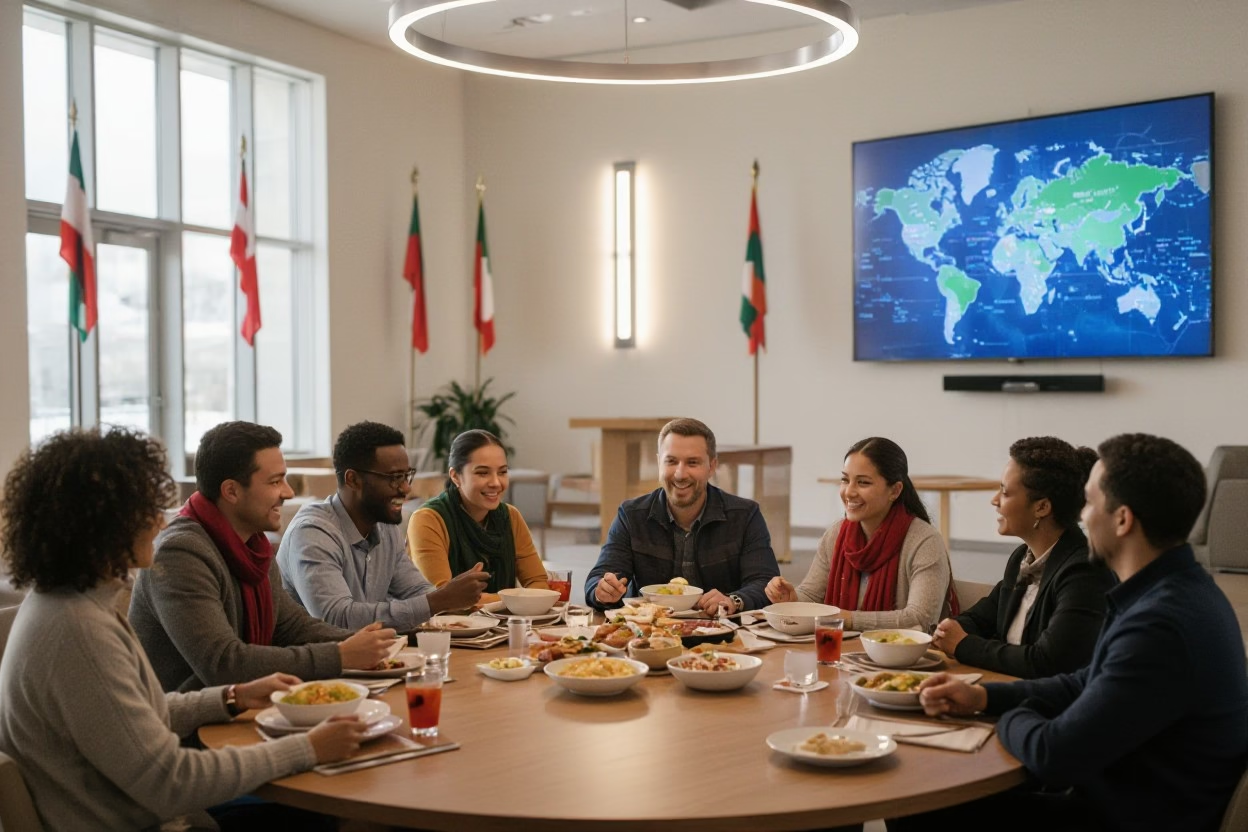
      The diversification of migrant populations opens significant channels for creative outreach in places previously homogeneous in culture and language. Mission organizations are experimenting with multilingual worship services and digital platforms that connect believers across continents, allowing the Gospel to resonate with a broader audience. For instance, in cities like Berlin and Toronto, churches have established weekly gatherings that include cultural storytelling and shared meals, fostering both community and cross-cultural understanding. These initiatives have resulted in not only increased attendance but also deeper engagement from members of various ethnic backgrounds who feel their identity respected and represented.

      Another growing trend involves leveraging migrant networks to spread the Christian message organically. Migrants, often trusted within their own circles, can serve as natural ambassadors of faith when equipped with theological resources and pastoral support tailored to their cultural contexts. Organizations such as the International Mission Board report that training migrant believers in evangelistic techniques specific to their communities has led to organic church plants and sustained discipleship programs, demonstrating the effective empowerment of migrant evangelists.

      Engaging Migrant Communities Through Service

      Addressing the tangible needs of migrant communities has become an effective pathway for Christian missions to build rapport and trust. Many churches provide support ranging from legal assistance and language classes to job training and healthcare clinics. These services not only meet immediate practical needs but also embody the Christian principle of loving one’s neighbor, creating credible witness opportunities. For example, a church-based initiative in Los Angeles offers free ESL classes coupled with spiritual counseling, attracting hundreds of migrants weekly and facilitating meaningful relationships that open doors for spiritual conversations.

      Mission groups adopting a holistic approach have observed that such services reduce barriers migrants face, including social isolation and cultural alienation. When ministry teams partner with local NGOs and government agencies, they amplify their reach and resources, enabling sustainable support systems that benefit migrants beyond sporadic aid. This collaborative model demonstrates positive outcomes like increased community participation and a measurable rise in volunteerism within migrant congregations.

      Linking service initiatives directly with discipleship efforts maximizes their impact. By creating structured follow-up programs, churches ensure that assistance given extends into spiritual growth and integration within the broader Christian community. Programs that integrate English learning with Bible study or vocational training with mentorship not only equip migrants for life’s challenges but also foster enduring faith commitment and leadership development—building resilient, diverse congregations for the future.

      The Role of Churches: Adaptive Strategies and Solutions

      Innovative Approaches to Community Building

      Several churches have adopted creative methods to nurture inclusive Christian communities amid increasing cultural diversity. For instance, intergenerational cultural exchange programs have proven effective; older congregants teach traditional hymns and stories, while younger migrants introduce contemporary worship practices and native languages. Such reciprocal engagement fosters mutual respect and enhances communal bonds across different ethnicities. Additionally, some churches have developed digital fellowship platforms, enabling remote participation for migrants who face mobility constraints or precarious schedules, thus reinforcing a sense of belonging despite physical distance.

      Moreover, collaborative worship services that blend diverse liturgical styles cater to the varied spiritual expressions within migrant communities. In Berlin, a Lutheran church’s monthly ‘Global Praise Service’ integrates African drumming, Latin American chants, and Eastern European choir arrangements, attracting over 300 participants from at least 15 national backgrounds. This approach respects cultural identities while uniting believers under shared faith, presenting a model for sustaining vibrant, multicultural worship environments amid rapid demographic shifts.

      Outreach to Migrants: Programs and Initiatives

      Church-led outreach initiatives have expanded beyond traditional charity, emphasizing empowerment and integration. Numerous faith communities operate language and vocational training centers that address migrants’ immediate socioeconomic needs alongside spiritual support. For example, the Catholic Archdiocese of Milan runs a network of centers offering Italian classes, job placement assistance, and counseling services, directly impacting over 5,000 migrants annually. These programs not only aid practical assimilation but also facilitate meaningful church involvement by reducing barriers to participation.

      In addition to training programs, specialized ministries target vulnerable subgroups such as unaccompanied minors and female refugees. The Evangelical Alliance in the UK launched a Safe Harbor project providing trauma-informed care, legal assistance, and community mentorship. This initiative has successfully created over 200 safe spaces across various congregations, promoting healing and integration. By aligning outreach with holistic migrant needs, churches enhance their role as critical agents of social support within global migration dynamics.

      Further amplifying impact, partnerships between churches and secular organizations have multiplied the range of services accessible to migrants. Collaboration between religious groups and local governments in cities like Toronto results in co-hosted cultural festivals and employment fairs, blending spiritual outreach with community resource networks. These alliances broaden contacts beyond church walls, embedding Christian communities more deeply within the urban fabric while responding effectively to evolving migrant realities.

      The Role of Churches as Community Anchors

      Providing Support Services and Resources

      Churches frequently act as primary support centers for migrant Christians adjusting to new social environments. Many congregations have developed tailored programs offering language classes, legal aid clinics, and counseling services that address the unique needs of displaced individuals. For example, the Catholic Diocese of Brooklyn has established a network of support centers that serve over 30,000 migrants annually, ensuring access to necessary resources such as housing assistance and employment guidance.

      In addition to practical assistance, churches often provide vital emotional and spiritual support, acting as safe spaces where migrants can share experiences and cultivate resilience. Programs like pastoral care groups and mentorship initiatives have demonstrated measurable improvements in migrants’ psychological well-being, reducing feelings of isolation often exacerbated by cultural displacement. This comprehensive approach positions churches as indispensable institutions for integrating new arrivals into broader societal frameworks.

      Fostering Integration and Cohesion in Local Areas

      Churches play a pivotal role in bridging cultural divides by fostering integration and social cohesion among migrant populations and their host communities. Multiethnic worship services and intercultural events organized by churches encourage mutual understanding and respect, mitigating tensions that sometimes arise from diversity. For instance, an interdenominational church in London annually hosts a “Cultural Harmony Festival” attracting over 5,000 attendees from diverse backgrounds, promoting shared values while celebrating distinct heritages.

      Collaborative partnerships between churches and local organizations further strengthen community ties by addressing social challenges collectively. Initiatives like neighborhood clean-up campaigns and joint social outreach enhance both migrant inclusion and neighborhood stability. Such active engagement fosters a sense of belonging and shared responsibility, which has been linked to decreased social fragmentation in urban areas heavily impacted by migration.

      Beyond tangible programs, churches often act as informal mediators during cultural conflicts, leveraging their moral authority to encourage dialogue. By facilitating conversations and offering educational workshops on cultural sensitivity, they help reduce prejudice and promote peaceful coexistence. This mediatory function complements institutional efforts, positioning churches as indispensable agents of social harmony amid demographic transitions.

      The Economic Impact: Contributions of Migrant Christians

      Filling Labor Gaps in Religious and Secular Sectors

      Migrant Christians often bridge significant labor shortages within both religious institutions and broader secular industries. Many come with specialized skills in theology, pastoral care, and community outreach, thus revitalizing struggling congregations and expanding service offerings. For example, in countries experiencing clergy shortages, migrant pastors have stepped in, providing leadership in worship, counseling, and church administration. This influx sustains vibrant faith communities and enables churches to maintain diverse programs that might otherwise shutter.

      Beyond religious contexts, migrant Christians contribute substantially to sectors like healthcare, education, and construction. Their participation helps address demographic shifts, such as aging populations and declining birth rates in Europe, where migrants frequently fill imperative roles as nurses, teachers, and tradespeople. Such occupational integration not only supports local economies but also fosters intercultural exchange, strengthening social cohesion within host societies.

      Funding and Supporting Local Ministries

      Remittances sent by migrant Christians frequently fund local ministries in their home countries, bolstering church infrastructure, humanitarian projects, and educational initiatives. For instance, many migrants allocate part of their earnings to establish or refurbish community centers, enabling sustained religious activities and social services. These financial flows help maintain critical local ministries that otherwise might face closure due to economic hardships.

      In some urban areas hosting large migrant populations, newly formed migrant-led congregations attract funding from both diaspora networks and international Christian organizations. These resources enable program expansion, such as language classes, job training, and youth mentoring, benefiting both migrants and native residents. This strategic investment fosters community resilience and demonstrates how migrant Christians serve as vital agents of economic and social development.

      Moreover, migrant communities have increasingly embraced innovative crowdfunding and digital platforms to channel funds toward local ministries back home. Platforms dedicated to missionary work or church projects allow for transparent, efficient fundraising, broadening financial support networks. Such financial empowerment not only sustains ministry operations but also enhances the capacity for outreach and charitable work in underserved regions.

      The Threat of Fragmentation and Sectarianism

      Protecting Unity amidst Diversity

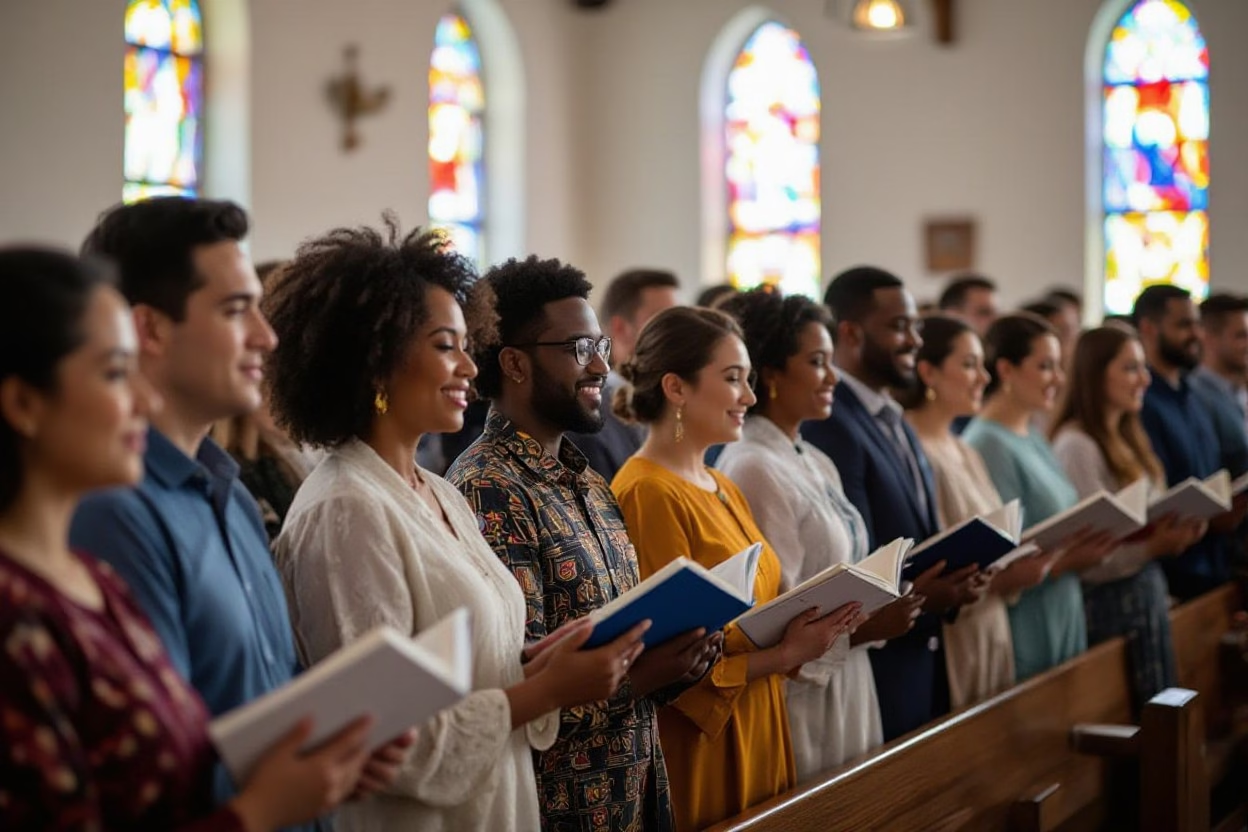
      Christian communities impacted by global migration often face the complex task of maintaining unity while honoring a multitude of cultural expressions of faith. The emergence of migrant congregations bringing distinct worship styles, languages, and leadership models can unintentionally lead to fragmentation if these differences are seen as barriers rather than assets. Churches that succeed in bridging these gaps typically implement intentional integration strategies, such as multilingual services and intercultural small groups, which foster mutual respect and shared identity.

      In metropolitan areas like London and Toronto, where hundreds of ethnic churches coexist, denominational leaders have pioneered forums and joint services to reinforce common theological ground and mutual mission. These gatherings not only ease misunderstandings but also promote collaboration across diverse communities, reinforcing the broader unity of the church body. Neglecting such proactive engagement risks strengthening sectarian divides, particularly as migrants seek spiritual nourishment within familiar cultural contexts.

      Navigating Differences in Doctrine and Practice

      Migrants frequently bring varying doctrinal interpretations and liturgical practices shaped by their countries of origin, which can challenge existing church norms in host societies. Divergent views on sacraments, gender roles, and worship forms may spark controversy when migrant and local congregations merge or interact closely. This calls for sensitive dialogue and theological education that respects diversity while upholding core Christian convictions.

      Theological seminaries and denominational bodies that offer cross-cultural training have observed improved cohesion where clergy and lay leaders understand the historical and cultural reasons behind different expressions. For instance, some Eastern Orthodox migrants emphasize icon veneration and liturgical languages unfamiliar to Western churches, prompting constructive conversations about the boundaries of orthodoxy and cultural adaptation. Establishing shared frameworks for interpreting scripture and practice enables communities to honor differences without splintering.

      Further exploration of doctrinal and practical diversity reveals both challenges and opportunities for growth. Migrant communities often serve as a catalyst for re-examining rigid paradigms, encouraging indigenous congregations to expand their theological vision. However, unresolved tensions over issues like charismatic gifts or premarital counseling can hinder integration unless addressed through intentional dialogue processes facilitated by experienced leaders who value both tradition and innovation.

      Future Directions: Addressing Disparities and Bridging Gaps

      Sustainable Policies and Inclusive Practices

      Effective policy frameworks must account for the complex interplay between migration patterns and the evolving needs of Christian communities. Research from the Pew Research Center indicates that in regions such as Europe and North America, migrant Christians often encounter systemic barriers to accessing social services and equitable participation within local churches. Developing sustainable policies that integrate ethical immigration practices with community support mechanisms can reduce marginalization while promoting cultural exchange. For example, Germany’s recent initiatives to train migrant faith leaders to assist in social integration illustrate how policy and inclusive practice can synergize to empower both the migrants and host communities.

      Beyond governmental policies, religious institutions themselves have begun instituting inclusive practices to address disparities. Many dioceses now offer multilingual liturgies and cross-cultural programs that accommodate diverse worship styles, enabling migrant congregants to maintain their heritage within the broader Christian fellowship. In cities like Toronto and London, interdenominational efforts have facilitated resource sharing that bridges gaps between established and migrant communities. These institutional adaptations serve not only to affirm diverse identities but also to strengthen communal resilience against sectarian divides.

      The Future of Christian Unity Amidst Diversity

      Global migration reshapes the demographic and theological landscape of Christianity, presenting a profound opportunity for fostering unity through diversity. Sub-Saharan African and Latin American migrants bring new vitality to churches in Europe and North America, often reinvigorating declining congregations with different traditions and emphases. According to a 2023 study by the World Council of Churches, cross-cultural dialogue among migrant and local Christian groups has increased by 40% over the past decade, facilitating a deeper appreciation of shared beliefs despite diverse expressions of faith.

      Historical sectarian tensions, however, still pose risks to unity. Communities that fail to engage in open dialogue may experience fragmentation, particularly where migration intersects with ethnic or doctrinal differences. Intentional ecumenical initiatives that prioritize inclusivity, education, and conflict resolution are emerging as effective tools. Programs like the Global Christian Migration Network, which convenes leaders from various denominations to address migration challenges collaboratively, demonstrate how unity in diversity can be intentionally cultivated for the future well-being of the global Church.

      Further exploration into the dynamics of Christian unity reveals that such efforts often hinge on grassroots involvement, where lay members play a vital role in bridging cultural divides. Testimonials from migrant congregants in metropolitan hubs highlight the importance of shared worship experiences that honor both traditional heritage and new cultural contexts. Expanding these inclusive practices not only reduces sectarian risks but also enriches the global Christian witness, paving the way for a more interconnected and resilient faith community worldwide.

      Embracing Technology as a Bridge

      Digital Platforms for Remote Worship and Connection

      Digital platforms have transformed worship experiences for Christian communities dispersed by migration. Churches now stream services via platforms like YouTube, Facebook Live, and Zoom, allowing migrants to participate integrally despite geographical distances. For instance, the International Church of Las Vegas reports a 40% increase in virtual attendance since adopting multi-language streaming, effectively connecting members from over 20 different countries. Such platforms provide not only live worship but also interactive features like real-time prayer requests, enabling a shared spiritual environment akin to in-person gatherings.

      Besides live streaming, mobile apps tailored for faith-based engagement expand community connection. Applications like Pray.com offer daily devotionals customizable to various cultural contexts, while Church Center App allows migrants to join small groups and access church resources on-demand. This adaptability supports migrant Christians integrating into new societies without losing their rootedness in faith communities, fostering a sense of belonging and support amid transitional challenges.

      Online Resources for Multicultural Education

      Online educational tools are advancing intercultural understanding within Christian communities. Platforms such as the Bible Project provide animated videos and study guides that encompass diverse biblical interpretations, reflecting a wide range of cultural backgrounds. By offering resources in multiple languages including Spanish, Arabic, and Swahili, these tools aid migrant Christians and local congregations in exploring their faith through a multicultural lens.

      Additionally, organizations like Global Christian Education Network facilitate webinars and workshops specifically addressing the dynamics of cultural integration in church contexts. These resources enable church leaders and members to navigate cultural sensitivities and celebrate diversity, helping to transform potential conflicts into opportunities for enriched fellowship and mutual growth.

      Further leveraging these educational resources, many churches have incorporated online curricula focusing on topics such as cross-cultural communication and migration narratives. For example, the “Faith Across Borders” program offers interactive modules that support both migrants and host community members in understanding each other’s traditions and experiences. This approach fosters empathy and strengthens bonds within increasingly diverse Christian populations.

      Final Words

      Following this exploration of the impact of global migration on Christian communities, it is clear that the phenomenon presents both significant challenges and promising opportunities. Christian congregations are often called to navigate complex cultural integrations, shifts in demographic patterns, and varying degrees of religious tolerance in host countries. These challenges require thoughtful leadership and adaptive strategies to maintain unity and foster inclusion among diverse believers. At the same time, migration enriches Christian communities by introducing new perspectives, practices, and cultural expressions, which can invigorate faith experiences and broaden theological understanding.

      Moreover, the ongoing movement of peoples across borders encourages deeper engagement with global Christianity, inspiring collaborative efforts that transcend geographical boundaries. As Christian leaders and communities respond with resilience and openness, they have the opportunity to extend their mission and witness in innovative ways. Thus, the interaction between migration and Christian life is shaping a dynamic landscape—one where the intersection of faith, identity, and cultural exchange offers both a test and a testament to the transformative power of Christianity in the modern world.

      FAQ

      Q: How has global migration affected the demographic composition of Christian communities?

      A: Global migration has led to significant changes in the demographic makeup of many Christian communities worldwide. Migrants from predominantly Christian regions often establish new congregations or revitalize existing ones in their host countries. This influx creates more ethnically and culturally diverse Christian communities, which can enrich worship practices and community life but also require greater cultural sensitivity and adaptation.

      Q: What are some challenges Christian communities face due to increased migration?

      A: Christian communities encountering migration face several challenges, including language barriers, cultural misunderstandings, and occasional tensions between long-standing members and newcomers. Additionally, there can be logistical difficulties in providing adequate pastoral care and social support to a diverse population, as well as addressing varying theological perspectives brought by migrants from different Christian traditions.

      Q: In what ways can global migration offer opportunities for Christian communities?

      A: Migration creates opportunities for Christian communities to deepen their multicultural engagement and broader understanding of faith expressions. It fosters the sharing of different liturgical traditions and spiritual practices, encouraging mutual enrichment. Moreover, migrant Christians often bring renewed energy and commitment to evangelization, social justice efforts, and community service initiatives.

      Q: How do Christian leaders typically respond to the needs of migrant populations in their communities?

      A: Christian leaders often respond by establishing ministries focused on welcoming and integrating migrants, such as language classes, cultural orientation sessions, and social support groups. They may also advocate for migrants’ rights and collaborate with other faith-based and secular organizations to address issues like housing, employment, and legal assistance.

      Q: What role does inter-denominational cooperation play in responding to migration-related challenges?

      A: Inter-denominational cooperation is vital in effectively meeting the complex needs of migrant populations, as it allows pooling of resources and sharing of expertise among different Christian groups. Such collaboration can enhance outreach efforts, create unified advocacy platforms, and promote a spirit of unity and reconciliation amid diversity.

      Q: How can local Christian communities prepare to engage positively with migrant populations?

      A: Local Christian communities can prepare by educating their members about cultural diversity and migration issues, promoting inclusion within church activities, and developing programs that specifically address the social and spiritual needs of migrants. Building partnerships with migrant organizations and fostering open dialogue can also help create a welcoming environment.

      Q: What impact does migration have on Christian theological perspectives and practices?

      A: Migration often introduces Christians to different theological viewpoints and worship styles, leading to richer and more varied expressions of faith. It challenges communities to reflect on their own beliefs in light of new experiences and to embrace a global outlook. This dynamic can result in more inclusive theology that addresses the realities of displacement, identity, and cross-cultural encounter.

    • Church Decline in the West vs. Boom in Global South: What's Happening?

      Church Decline in the West vs. Boom in Global South: What's Happening?

      Many people notice that Christianity is changing dramatically around the world, and you might wonder why church attendance is falling sharply in Europe and North America while thriving in Africa, Asia, and Latin America. This decline in the West stems from growing secularization, generational shifts, and a deep loss of trust in religious institutions. Meanwhile, the Global South experiences a vibrant boom fueled by youthful populations, dynamic local leadership, and churches serving vital social roles. Understanding these contrasting trends helps you grasp the evolving global face of Christianity today.

      Key Takeaways:

      • Christianity in the Western world is declining largely due to secularization, generational shifts, and reduced institutional trust caused by scandals and perceived irrelevance.
      • Younger generations in Europe and North America participate less in church activities and often identify as religiously unaffiliated or “nones.”
      • Philosophical and cultural changes, including increased individualism and pluralism, have led many in the West to seek spirituality outside traditional church frameworks.
      • In contrast, Christianity is rapidly growing in the Global South due to high birth rates, youthful populations, and active local evangelism adapted to cultural contexts.
      • The church in Global South countries often serves as a vital community center offering social services, which enhances its social relevance and influence.
      • Despite persecution and political challenges, Christianity in regions like Africa and Asia shows resilience, often flourishing through underground or house churches.
      • The global center of Christianity is shifting southward, with the majority of Christians expected to reside in Africa, Asia, and Latin America by 2050.

      Declining Faith: The Generational Shift in the West

      The Rise of the “Nones”

      The most striking hallmark of generational religious change across Europe and North America is the rapid rise of the “nones”—those who identify as having no religious affiliation. Surveys show this group growing steadily, particularly among millennials and Generation Z. In the United States, for example, over 30% of adults now report being religiously unaffiliated, a figure that climbs sharply in younger cohorts where it reaches nearly 40% or more. This trend reflects not just a drift away from organized Christianity but a broader cultural shift towards secular identity and skepticism about traditional religious claims.

      This surge among the “nones” signals a deeper erosion of Christianity’s social and cultural foothold. It correlates closely with declining church attendance, reduced belief in God, and fewer religious practices such as prayer and scripture reading. Many in this group express dissatisfaction with the church’s perceived stance on contemporary social issues or feel religion simply doesn’t resonate with their life experiences. The fast expansion of the “nones” is transforming the religious landscape, presenting challenges for churches seeking relevance in an increasingly secular society.

      Trends in Youth Engagement with Religion

      Younger generations display markedly different patterns of religious engagement compared to their parents and grandparents. Data highlights that church attendance among adolescents and young adults has fallen sharply over recent decades, with weekly attendance rates in many Western countries now below 20% for this age group[7][2]. Instead of formal church involvement, many young people express interest in spirituality outside traditional institutions, exploring mindfulness, alternative beliefs, or personal moral frameworks[4]. This reflects a broader cultural inclination toward individualism and skepticism about authority, including religious authority.

      Moreover, religious disaffiliation among youth often links to perceptions of the church as out of step with modern values, especially around LGBTQ+ inclusion, gender equality, and social justice. The institutional scandals and historic abuses that have come to light further compound this distrust, making many hesitant to embrace Christianity in its conventional form. However, this disengagement does not necessarily equate with the disappearance of spiritual seeking—instead, it points to a shifting mode of engagement where religious identities are more fluid and less labeled.

      Programs that focus on authenticity, social relevance, and community connection have seen some success in retaining or attracting youth involvement. Churches that adapt to offer inclusive spaces and address social concerns find openings to rebuild trust. Still, without significant innovation, many traditional congregations risk continued decline among young demographics who favor diverse, non-institutional spiritual expressions.

      Trust Erosion: Institutional Failures and Their Impact

      Scandals and Abuse within the Church

      Younger generations often cite the systematic scandals and abuse cases within Western religious institutions as a key factor in their growing disengagement. The Catholic Church, in particular, has faced numerous high-profile revelations of sexual abuse by clergy, coupled with institutional cover-ups that span decades. Research shows that trust in the Church as an institution dropped significantly after these scandals surfaced, with many congregants feeling betrayed by the very leaders meant to uphold moral authority. The ripple effect has extended beyond Catholics, undermining confidence across broader Christian communities.

      The consequences of these failures go beyond headline tragedies. When you look at regions with the sharpest declines in church attendance—such as Western Europe and parts of North America—you’ll notice a strong correlation between exposure to scandal and sharp drops in membership[2][6]. The perception of hypocrisy—where doctrines preached do not align with actions taken by church leaders—feeds the wider secularization trend. This erosion of trust pushes many to abandon formal religious affiliation altogether, instead seeking spirituality through more individualized or alternative means.

      The Disconnection from Social Issues

      Many Western churches have further alienated themselves by appearing out of touch with contemporary social concerns, especially on LGBTQ+ rights, gender equality, and racial justice. Churches perceived as resistant or slow to respond to these movements foster a sense of exclusion among younger, more progressive demographics. You might notice that these stances conflict with the pluralistic and inclusive values that are increasingly dominant in public discourse. This clash leaves churches marginalized, seen as unwilling to engage constructively with the ethical challenges of modern life.

      Political entanglement has deepened this rift, as churches are often associated with conservative agendas, alienating potential believers who prioritize social justice. For example, surveys reveal that attitudes toward marriage equality and women’s rights strongly influence religious affiliation, with many younger people rating supportive stances as a sign of a church’s relevance and moral authority[2][6]. Where churches lag behind, they risk fading into cultural irrelevance, accelerating attendance drops and the rise of the “nones.”

      The impact of this disconnect becomes clearer when examining church attendance and membership data side-by-side with social attitudes. Regions with more progressive social climates tend to see sharper declines in traditional church loyalty, reflecting a growing sentiment that institutional religion fails to align with personal values and lived realities. This dynamic creates a feedback loop, where disaffection feeds institutional inertia and vice versa, making recovery more challenging for Western churches struggling to stay relevant amid rapid cultural shifts.

      Cultural Disengagement: The Rise of Individualism and Secular Thought

      Philosophical Movements Challenging Christian Doctrine

      The post-Enlightenment wave of existentialism and humanism has reshaped how many perceive meaning and morality, moving the focus away from traditional Christian frameworks. Thinkers like Sartre, Camus, and Nietzsche emphasized individual freedom, authenticity, and the inherent absurdity of existence, which challenged the church’s claims of absolute truth and divine purpose. This philosophical shift encouraged younger generations in the West to prioritize personal experience and ethical autonomy over institutionalized belief.

      Alongside existentialism, pluralism and secular ethics have gained traction in public discourse, promoting a worldview where multiple belief systems coexist without one holding primacy. This pluralistic landscape diminishes Christianity’s cultural centrality, as people increasingly embrace spiritual bricolage or wholly secular identities. In effect, the church’s once-dominant narrative competes with diverse philosophies that question doctrines like salvation, sin, and divine judgment, feeding into the broader decline in religious commitment.

      Technology’s Role in Shaping New Worldviews

      The digital revolution exposes you to an unprecedented diversity of ideas and communities, often outside religious parameters. Online forums, social media, and accessible academic content have democratized knowledge, allowing you to explore secular, agnostic, and alternative spiritual perspectives without geographical or institutional barriers. This environment accelerates the fragmentation of religious authority as the internet fosters individual exploration rather than collective adherence.

      Moreover, the rise of algorithms and personalized content delivery means your worldview can be continuously reinforced by tailored information streams, sometimes creating echo chambers that challenge traditional Christian teachings. Platforms like YouTube and Reddit host thousands of channels and groups debating theology, philosophy, and secularism, which often present Christianity as outdated or incongruent with modern values, particularly regarding equality and scientific understanding.

      Technology also facilitates the prominence of “nones,” those who disaffiliate from organized religion but still seek meaning through digital communities centered on mindfulness, ethics, or human rights. Podcasts and apps focused on meditation, well-being, and rational inquiry compete with churches for your attention and commitment, contributing to shifting patterns of faith engagement in the West.

      The Physical Manifestations of Decline

      Church Closures Across Europe and North America

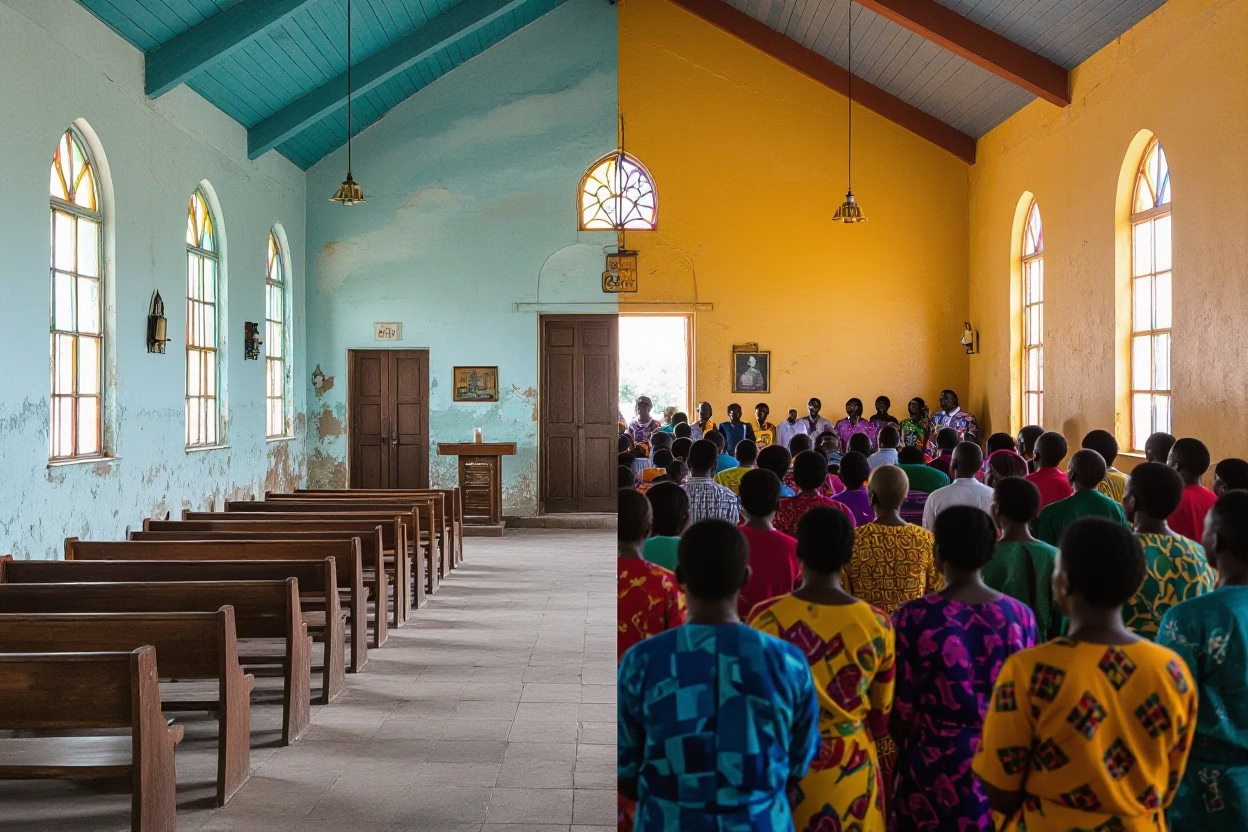
      Many cities and towns across Europe and North America are witnessing a significant number of church closures due to dwindling congregations and financial constraints. In the UK, for example, over 1,500 churches have closed in the past two decades, with Catholic and Protestant parishes alike consolidating or merging to cope with fewer attendees. This trend stretches across the continent, where iconic churches once central to community life now stand empty or are repurposed into museums, residential apartments, or even commercial spaces. The pattern signals not just a loss of religious practice but also changing urban landscapes and priorities.

      In North America, the decline can be seen in sharp attendance drops leading to parish closures and church sales. A recent Gallup poll reported a continued fall in weekly church attendance, hitting historic lows, which directly affects churches’ financial sustainability. Some denominations have responded by closing multiple local churches together, creating regional hubs instead. These closures often provoke public debate, highlighting the tension between preserving architectural heritage and accommodating new social realities shaped by secularization and shifting demographics.

      The Impact on Community Structures

      Churches in many Western communities have historically served not only as places of worship but as vital hubs for social gatherings, support networks, and charitable activities. Their decline disrupts this intricate web of social cohesion. You’ll find that neighborhoods once anchored by church-run events and programs now lack similar local institutions to foster connection and collective identity. This absence often leaves vulnerable populations without reliable access to community support, especially older adults who depended on church outreach.

      The erosion of church-based community structures also affects cultural continuity and local traditions. Annual events, holiday festivities, and rites of passage frequently centered around churches have diminished in scale or disappeared altogether. This can contribute to a broader sense of fragmentation and loss of shared purpose among residents, reducing opportunities for intergenerational interaction and mutual aid.

      Moreover, the decline reveals a gap in social services that churches once filled—from food banks to counseling centers—especially in areas where government or secular organizations haven’t stepped in to replace these roles. Without these established social anchors, you may observe increased social isolation and a weakening of informal support systems, further challenging community resilience in the face of economic and demographic stressors.

      The Global Surge: Unpacking Growth in the Global South

      Demographic Dynamics Fueling Growth

      The explosive growth of Christianity in Africa, Asia, and Latin America is deeply tied to demographic realities. You can observe in regions like Sub-Saharan Africa that birth rates remain among the highest globally, with many countries maintaining fertility rates above four children per woman. This youthful population naturally increases the number of potential new Christians through family growth alone. In countries such as Nigeria and the Democratic Republic of Congo, populations are projected to double or even triple by 2050, providing a massive base for church expansion.

      Beyond births, conversion plays a significant role fueled by urban migration and social change. As cities grow rapidly, young people encounter new ideas and forms of worship that often feel more immediate and relevant than traditional institutions. This demographic momentum isn’t just a statistic; it actively shapes the vibrancy and resilience of churches, keeping them forward-looking and growing even as Western congregations shrink.

      The Role of Charismatic and Indigenous Leadership

      Charismatic and indigenous leadership styles have reinvented Christianity’s appeal across the Global South. Many churches embrace Pentecostal and charismatic movements, which emphasize experiential worship, healing, and prophecy. These elements resonate with local spiritual sensibilities, making Christianity feel authentic and deeply personal. Leaders who arise from within the community—not foreign missionaries—bridge cultural gaps and adapt theology to fit social contexts. This contrasts sharply with Western churches, where congregants often perceive leaders as distant or institutionally out of touch.

      In places like Brazil, Kenya, and the Philippines, church leaders have become prominent public figures who combine pastoral care with entrepreneurial and social activism. Their influence extends beyond worship into healthcare, education, and poverty alleviation programs. This holistic approach anchors churches as indispensable parts of community life and enhances institutional trust—something largely eroded in Western contexts.

      These leaders are often bilingual or multilingual, adept at mixing indigenous languages with global Christian liturgies, which further strengthens cultural relevance. Their ability to contextualize worship while staying connected to the global church network creates a dynamic balance between local identity and universal faith. The experience of navigating persecution or legal limitations also refines their leadership strategies, making them remarkably adaptable and resilient—a vital factor in sustained growth amid hardship[9][11].

      Community Resilience: Churches as Social Support Systems

      Providing Services Beyond Spiritual Needs

      In many parts of the Global South, churches serve as much more than places of worship—they act as critical providers of vital social services. You’ll find that in rapidly urbanizing regions of Africa, Asia, and Latin America, churches often manage schools, health clinics, and food distribution programs, meeting immediate needs that governments and other institutions frequently fail to address. For example, in Nigeria and Kenya, Christian organizations deliver basic healthcare to underserved rural areas, significantly improving local health outcomes.

      These social services strengthen the church’s position within communities and deepen engagement among congregants. When churches step in to fill gaps in education and welfare systems, they become trusted social hubs, fostering long-term loyalty. This direct involvement in everyday life contrasts sharply with many Western contexts, where churches increasingly struggle to maintain relevance amid widespread social safety nets and declining institutional trust.

      Adapting to Urbanization and Changing Demographics

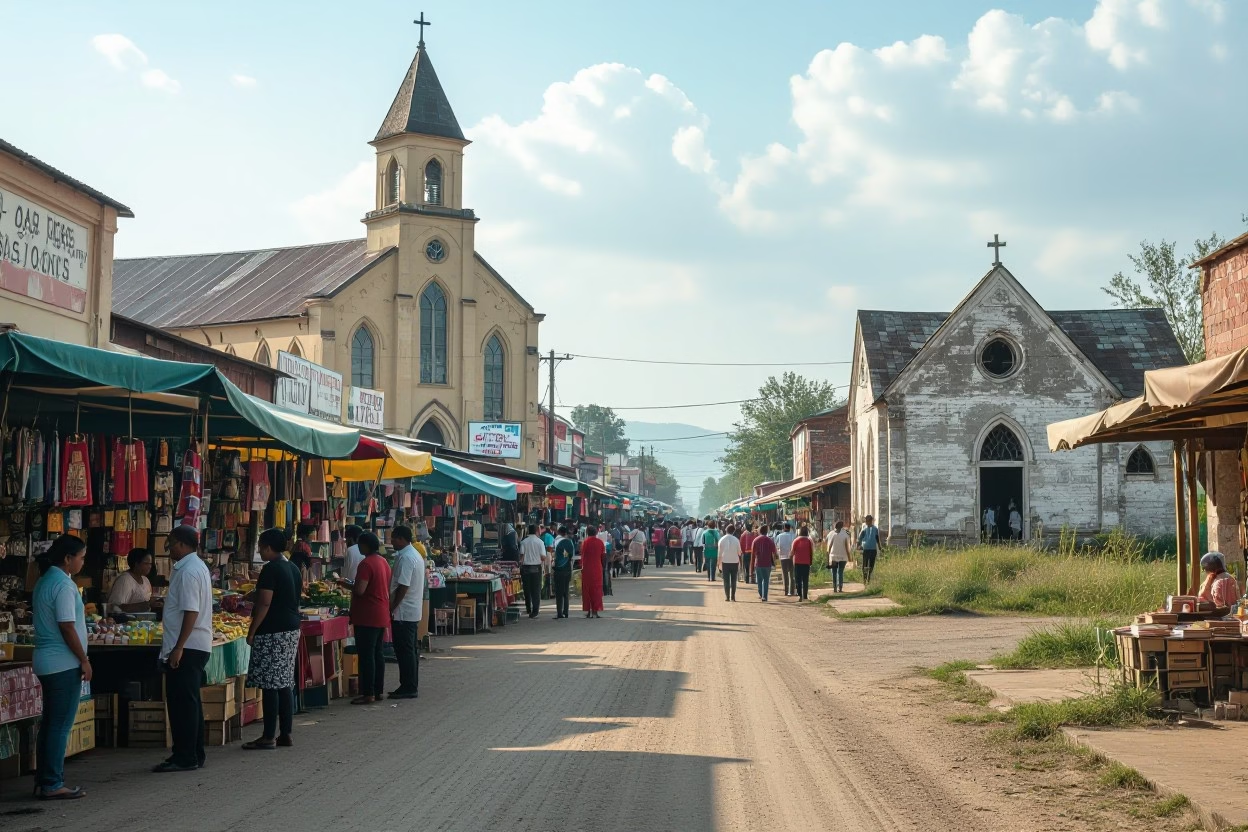
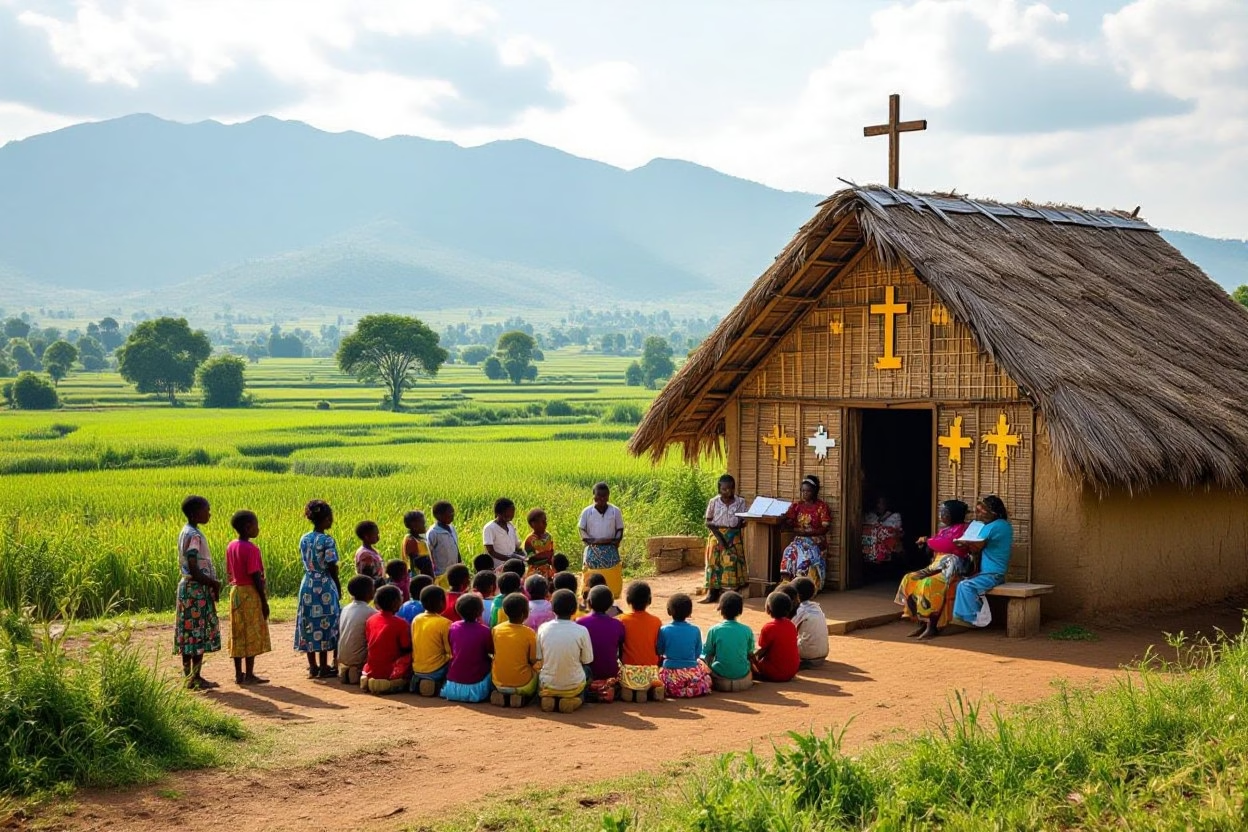
      The rise of megachurches in cities across the Global South reflects how Christianity has adapted to the pressures and opportunities of rapid urban growth. In places like Lagos and São Paulo, you’ll see congregations that attract tens of thousands, offering contemporary music, dynamic preaching, and community events tailored for young professionals and families navigating busy urban lifestyles. This urban church model contrasts with the often aging and shrinking rural parishes typical in the West.

      Churches have also responded to shifting demographics by incorporating local languages, cultural expressions, and leadership styles that resonate with diverse populations. This contextualization allows congregations to remain both culturally relevant and spiritually engaging. For instance, Pentecostal and charismatic movements often blend indigenous music and communal worship practices, creating a powerful sense of belonging and identity that appeals particularly to younger urban dwellers.

      Expanding beyond traditional Sunday services, many urban churches in the Global South offer vocational training, counseling, and networking opportunities, directly addressing the complex needs of migrants and the urban poor. These adaptations not only sustain growth but also foster resilience, enabling communities to thrive despite economic hardships and social change.

      The Emerging Megachurch: A New Face of Global Christianity

      Characteristics of Megachurches in Urban Centers

      Megachurches in the Global South typically draw thousands of worshippers weekly, often congregating in purpose-built facilities equipped with state-of-the-art audiovisual technology and multifunctional spaces. These urban centers emphasize vibrant, high-energy worship services that blend local cultural elements with contemporary music styles, creating an immersive experience that feels both familiar and inspiring. Their services often include multiple language options or incorporate regional dialects, reflecting a deep commitment to accessibility and community engagement. Infrastructure-wise, these churches frequently function as social hubs, offering classrooms, childcare, health clinics, and business incubators alongside traditional religious activities.

      Unlike many Western churches facing declining attendance and financial strain, Global South megachurches benefit from rapid urbanization and rising middle-class populations who seek spiritual communities aligned with their social realities. Leadership structures in these churches are generally dynamic and adaptive, with pastors directly engaging congregants and leveraging media platforms ranging from radio and television broadcasts to social media livestreams. This blend of localized context and modern communication makes the megachurch model particularly effective in growing and sustaining large followings amidst the continent’s fast-paced urban environments.

      Their Appeal to Young Professionals and the Middle Class

      Young professionals and the urban middle class in many Global South cities gravitate toward megachurches because these institutions articulate faith in ways that resonate with their aspirations and daily experiences. Services are intentionally scheduled to accommodate busy work weeks, often including evening events, networking meetups, and seminars that connect spiritual messages with personal development and entrepreneurship. You’ll find that sermons frequently address practical topics such as financial stewardship, career challenges, and mental health, effectively bridging the often-perceived gap between faith and modern professional life.

      Megachurches also appeal through their community-building efforts, offering opportunities to connect with peers beyond Sunday worship. Small groups, social clubs, and volunteer networks foster a sense of belonging while addressing social needs relevant to this demographic. Additionally, the emphasis on contemporary worship music, multimedia presentations, and relatable preaching styles helps maintain engagement and challenge traditional notions of church being static or out of touch. This connection is particularly strong among those who might otherwise feel alienated by rigid or hierarchical religious institutions.

      The presence of skilled, charismatic leaders who embody both spiritual authority and modern professional success further amplifies the megachurches’ appeal to these groups. When pastors and church staff integrate entrepreneurial skills with theological teaching, they model a holistic approach to faith that includes economic empowerment and social mobility. Consequently, you see megachurches emerging not only as spiritual centers but also as influential players in urban middle-class culture, shaping social values and providing platforms for leadership development across the Global South’s rapidly growing cities.

      The Shifted Landscape: Reassessing Christianity’s Global Center

      Predictions for the Future of Christianity by 2050

      By 2050, the demographics of global Christianity will look markedly different from today. The Global South—encompassing Africa, Asia, and Latin America—is projected to house nearly 70% of the world’s Christians, a monumental shift from the mid-20th century when Europe and North America dominated Christian populations. This trend is driven largely by high birth rates and sustained conversions in these regions, in contrast to aging populations and secularization in the West. You can expect vibrant Christian communities in countries like Nigeria, Brazil, and the Philippines to continue expanding, influencing not only religious practice but also local politics, social services, and even global Christian networks.

      Meanwhile, Christianity in Europe and North America will likely consolidate into smaller, more diverse expressions rather than maintain large institutional churches. The rise of “nones” and individualized spiritualities suggests that organized Christianity may become increasingly fragmented, with traditional denominations losing their social authority. Yet, some faith communities in the West will adapt by embracing more inclusive theologies and new forms of worship that resonate with changing cultural values. Still, the overall center of gravity—socially, culturally, and numerically—will firmly rest in the Global South, shaping the future ethos and outreach strategies of Christianity worldwide.

      The Potential for Global Dialogue Between Regions

      The enlarged role of the Global South in Christian demographics opens up significant opportunities for global dialogue that challenge old hierarchies and hegemonies within Christianity. African and Asian church leaders, often characterized by their grassroots, charismatic, and Pentecostal approaches, bring fresh theological perspectives grounded in resilience amid persecution and practical community support. These insights could enrich Western churches struggling with decline and relevance. If Western institutions listen carefully, this exchange might foster mutual learning where the West benefits from the vitality and adaptability displayed by Global South communities, while the South gains from Western resources and theological scholarship.

      This dialogue is not without tensions. Historical power imbalances and differing views on issues such as gender roles, sexuality, and ecclesiastical authority complicate potential alliances. However, you should view these interactions as a necessary evolution within Christianity’s global ecosystem. Increasingly, conferences, mission partnerships, and digital platforms are facilitating conversations across continents. Such exchanges could bridge divides, helping churches worldwide address shared challenges like secularization, social justice, and interfaith relations by pooling diverse approaches and resources.

      Moreover, this emergent global conversation extends beyond theology into the practical realms of community development and social activism. You might see Global South churches offering models for engaging marginalized populations through health clinics, education, and poverty alleviation efforts—areas where Western churches have waned. Simultaneously, Western churches could contribute by advocating for religious freedom, human rights, and environmental care on international stages where Global South voices increasingly have moral authority. Together, this partnership could generate a more holistic Christian witness in an interconnected world.

      Conclusion

      With this in mind, you can see that the contrasting trends in Christianity’s presence across regions are shaped by deeply rooted social, cultural, and demographic factors. In the West, your experience may reflect a landscape where Christianity is less dominant, influenced by secularization, diminished institutional trust, and shifting cultural values that emphasize individualism and pluralism. This creates an environment where traditional church participation declines, and alternative forms of spirituality or non-affiliation become more common. Understanding these dynamics helps explain why many Western societies are experiencing shrinking congregations and doubts about organized religion’s relevance.

      At the same time, you should recognize that the Global South tells a very different story. Here, Christianity thrives through its dynamic, locally-led expressions that engage younger populations and adapt to cultural contexts. Your awareness of how churches function as centers of community support, vibrancy, and resilience under pressure reveals why this region is becoming the new heartland of global Christianity. By appreciating these divergent developments, you gain a clearer picture of how Christianity’s global future will be shaped by the interactions between demographic change, social needs, and cultural adaptation in very different parts of the world.

      FAQ

      Q: What are the main reasons behind the decline of church attendance in Western countries?

      A: The decline in Western church attendance is largely due to generational changes, where younger populations are less religious than previous ones, combined with increasing secularization. Additionally, loss of institutional trust from scandals and perceived hypocrisy, cultural shifts toward individualism and pluralism, and the diminished cultural relevance of traditional churches contribute significantly to this trend.

      Q: How does demographic change influence the growth of Christianity in the Global South?

      A: The Global South benefits from a young, rapidly growing population with high birth rates, which naturally expands Christian communities through family growth. This demographic momentum, coupled with conversions, fosters continued growth and vitality within churches in regions like Africa, Asia, and Latin America.

      Q: Why have churches in the Global South maintained higher levels of institutional trust compared to the West?

      A: Churches in the Global South often have strong local and indigenous leadership that is closely connected to their communities. This grassroots, charismatic approach, along with the delivery of crucial social services like education and healthcare, helps build and sustain trust, in contrast to the Western churches which have experienced scandals and perceived detachment from modern social issues.

      Q: In what ways have cultural and philosophical shifts contributed to Christianity’s decline in Western societies?

      A: Western societies have seen an increase in individualism, pluralistic worldviews, and secular philosophies that encourage spiritual exploration outside traditional religious institutions. Advances in science and technology also challenge the church’s role as a primary source of meaning, reducing its influence and appeal among many people.

      Q: How do churches in the Global South adapt to local contexts, and why is this important for their growth?

      A: Churches in the Global South adapt by incorporating local languages, cultures, and worship styles, often led by indigenous leaders. This contextualization makes Christianity more accessible and relevant to local communities, fostering a sense of ownership and participation that encourages growth and vibrancy in the faith.

      Q: What role does persecution play in the resilience and growth of Christianity in some Global South countries?

      A: In countries where Christians face persecution or legal restrictions, such as in parts of Asia, the faith often grows through underground and house churches. This persecution can strengthen community bonds and commitment, fueling a resilient growth despite external pressures.

      Q: How is the global center of Christianity shifting, and what are the implications for the future of the religion?

      A: The center of Christianity is moving away from Europe and North America toward Africa, Asia, and Latin America. By 2050, the majority of the world’s Christians are expected to live in the Global South. This shift means that Christian practices, leadership, and theological emphases will increasingly reflect the diverse cultures and experiences of these regions, shaping the future global identity of Christianity.

    • Signs of a Potential Religious Revival in Modern Culture

      Signs of a Potential Religious Revival in Modern Culture

      Most people might not expect it, but you are witnessing significant shifts in spirituality among younger generations that suggest a religious revival is underway. From rising church attendance to spiritual movements expanding beyond traditional settings, your cultural landscape is experiencing renewed faith and solidarity. Despite challenges from secular trends, you can observe how resilient religious identities and cross-denominational cooperation are shaping this dynamic transformation. Understanding these developments can help you grasp the emerging influence of faith in modern society.

      Key Takeaways:

      • Significant growth in Christian commitment has been recorded among younger generations, particularly Gen Z and Millennials in the U.S., with personal faith commitments rising notably between 2021 and 2025.
      • Church attendance among young adults is increasing, exemplified by a fourfold rise in monthly attendance among 18–24-year-olds in the UK from 2018 to 2025.
      • Spiritual revival is expanding beyond traditional church settings, with college campuses and community gatherings becoming key hubs for renewed faith activities.
      • There is a rise in cross-denominational cooperation among Catholics, Protestants, and Jews, fostering a countercultural religious solidarity in response to societal challenges.
      • Increasing skepticism toward secular cultural trends is linked to a renewed embrace of social conservatism and faith-based responses to perceived cultural crises.
      • Global revival narratives are gaining momentum, supported by prophetic expectations and the rapid dissemination of religious teachings via digital media and missions.
      • The emergence of “remnant worshipers” highlights a movement focused on deep, authentic spiritual transformation rather than superficial religious practice.

      Cultural Resurgence Among the Youth

      Surge in Spiritual Commitment

      Between 2021 and 2025, the proportion of adults in the U.S. who report having made a personal commitment to Jesus increased sharply from 54% to 66%. This surge is especially pronounced among Gen Z and Millennials, highlighting a renewed spiritual hunger within younger generations. Such growth challenges prevailing narratives of religious decline, revealing that many young people are actively embracing faith as a meaningful part of their identity today.

      Increased Church Attendance and Involvement

      Monthly church attendance among 18–24-year-olds in the UK rose dramatically, quadrupling from 4% in 2018 to 16% in 2025. Young men, in particular, have shown the most significant increase, signaling a notable cultural shift in how younger demographics engage with religious communities. This trend underlines an expanding commitment not only to private belief but also to public participation in faith life.

      Delving deeper, this rise in attendance reflects broader changes in youth culture where faith communities are becoming central hubs for social connection and purpose. Churches have adapted their approaches, integrating contemporary worship styles and addressing social issues relevant to younger adults, which boosts involvement. The shift also includes more young people taking leadership roles within congregations and participating in volunteer ministries, fostering a sense of ownership and authenticity that sustains their engagement.

      Spiritual Movements Beyond Traditional Settings

      Awakening on College Campuses

      College campuses across the U.S. have become vibrant hubs for spiritual resurgence, with gatherings and faith-based groups multiplying outside of conventional churches. Reports show a surge in student-led prayer meetings, worship nights, and discussion forums fostering authentic spiritual exploration. This groundswell among younger generations reflects a desire for community and purpose amidst secular academic environments, turning campuses into epicenters of revival where your fellow students engage deeply with faith in ways unseen for decades.

      Expanding Dialogue with Non-Believers

      Non-Christians are increasingly open to conversations about spirituality, often expressing beliefs that align closely with Christian values such as compassion, purpose, and moral accountability. This growing openness creates unique opportunities for dialogue and relational evangelism, signaling a more receptive cultural climate where you can encounter sincerely curious seekers willing to explore faith beyond labels.

      Many who don’t identify as Christians still resonate with core Christian principles, reflecting a blurred boundary between secular skepticism and spiritual hunger. For example, surveys indicate a rising percentage of young adults who reject institutional religion yet admit to personal experiences of transcendence or meaning that echo Christian teachings. This widespread cultural shift invites you to engage in honest, meaningful conversations that prioritize shared values and personal stories over dogmatic debate, fostering connections that often lead to genuine spiritual interest and, ultimately, faith exploration.

      The Rise of Interfaith Collaboration

      Unprecedented Solidarity Among Denominations

      Across the Western world, you’ve likely noticed increasing cooperation between Catholics, Protestants, and even Jewish communities. This wave of solidarity responds to mounting cultural and institutional pressures, uniting diverse faith groups around shared values. Such collaboration transcends historical divisions, forming a robust front against secular skepticism. It’s a deliberate move to embody a countercultural faith that prioritizes unity in belief and action, signaling a powerful and intentional religious resurgence.

      Emergence of ‘Remnant Worshipers’

      A growing segment of believers, often called “remnant worshipers,” distinguishes itself through intense devotion and a pursuit of deep spiritual transformation rather than mere religious routine. These individuals and communities emphasize authenticity, prayer, and renewal, creating spiritual vitality that energizes wider revival movements. Their dedication often fuels revival fires especially in areas where traditional religious engagement has waned.

      These remnant groups frequently operate on the margins, yet their impact ripples outward. You’ll find them fostering intimacy with God through extended worship sessions, prophetic prayer gatherings, and a lifestyle marked by radical faithfulness. Their existence challenges conventional metrics of church success, focusing instead on a spiritual core that resists cultural dilution. The passion and perseverance embodied by remnant worshipers offer a tangible glimpse into the ongoing spiritual renewal shaping today’s religious landscape.

      Countercultural Faith in the Age of Skepticism

      Critique of Secularism and Social Issues

      The rise of religious commitment often comes with a sharp critique of prevailing secular ideologies. You’ll notice many turning away from the sexual revolution’s expansive freedoms, embracing instead a social conservatism informed by faith. This pushback challenges assumptions around morality and identity, fueling debates on topics like marriage and gender in public discourse. The skepticism toward secular narratives is not just cultural but rooted in a desire for clear, transcendent truths that secularism increasingly fails to provide.

      Faith as a Unifying Response to Crisis

      Hostility toward religion in public life has paradoxically strengthened believers’ unity and resolve. You’ve seen how challenges in education, politics, and media provoke a countercultural solidarity among Christians and allied faith groups. This resilience creates a shared identity that transcends denominational lines, forging alliances that respond to cultural fragmentation with a cohesive spiritual front.

      Beyond mere solidarity, this unifying response acts as a stabilizing force amid societal upheaval. For example, joint initiatives among Catholics, Protestants, and Jews have emerged to address issues like religious freedom and family values, showing how faith-based unity can counteract pervasive cultural instability. These alliances are less about institutional power and more about forging authentic community that supports individuals facing social marginalization or ideological opposition. Your participation in such movements taps into a growing momentum aimed at redefining public virtues through the lens of enduring faith principles.

      Prophetic Expectations of Global Revival

      Predictions for 2025 and beyond: A Turning Point

      2025 is widely cited by Christian leaders and commentators as a pivotal year for spiritual awakening. Prophetic voices highlight unprecedented reports of revival in regions once resistant to Christianity, especially parts of Asia and Africa. You’ll find many referencing this year as a key moment when dormant faith movements ignite, with millions—particularly among younger generations—experiencing deep spiritual transformation. This aligns with data showing explosive growth in commitment to Jesus, reinforcing the idea that 2025 may mark a significant turning point in the global religious landscape.

      The Role of Technology in Missionary Efforts

      Digital platforms are accelerating the spread of the gospel like never before, fulfilling long-held missionary goals through new tech. Social media, podcasts, and streaming services allow missionaries to reach remote or previously inaccessible areas instantly. You see millions accessing Christian teachings online daily, enabling real-time engagement and community building across continents. This technology-driven outreach not only multiplies global impact but also empowers local believers to share their faith in culturally relevant ways.

      Emerging technologies are revolutionizing how missions operate worldwide. For example, Christian influencers reach tens of millions through Instagram and TikTok, while virtual reality experiences immerse users in biblical stories and worship environments. AI-driven translation tools break down language barriers, allowing scriptures and sermons to be understood in thousands of dialects without delay. These innovations foster networks of digital discipleship, connecting believers globally and enabling rapid mobilization during revival surges. As a result, technology acts both as a catalyst and amplifier of spiritual momentum, making it easier for you to engage with and participate in this worldwide awakening.

      The Transformative Power of Digital Outreach

      Engaging Young Adults Through Social Media

      Platforms like TikTok, Instagram, and YouTube have become pivotal arenas for spiritual engagement, especially among Gen Z and Millennials. You’ll find influencers and faith leaders using short videos and storytelling to communicate biblical truths in relatable ways. This digital presence has contributed to a notable rise in Christian commitment, with studies showing a jump from 54% to 66% of U.S. adults affirming a personal commitment to Jesus between 2021 and 2025. Social media’s accessibility allows you to connect with spiritual content anytime, fueling ongoing curiosity and conversations outside traditional church settings.

      Online Communities Fostering Spiritual Growth

      Faith-based online groups and forums are flourishing, creating spaces where you can explore spirituality, share testimonies, and deepen faith in a supportive virtual environment. These communities often transcend denominational boundaries, reflecting the trend toward increased cross-faith cooperation and authentic spiritual transformation. With hundreds of thousands engaging in daily devotional chats or prayer threads, digital fellowship is shaping a new model for religious solidarity.

      Expanding on this, you’ll encounter networks like “The Remnant Project” and “Faith Connect,” which claim tens of thousands of active members sharing resources, worship sessions, and ministry opportunities. These platforms leverage technology not just for outreach, but for ongoing discipleship, emphasizing real spiritual growth over mere attendance metrics. The combination of interactive study tools, live-streamed teachings, and peer encouragement creates a dynamic environment where spiritual renewal can take root long-term, even amid cultural resistance.

      Narratives of Hope: Global Stories of Revival

      Testimonies from Regions Historically Resistant to Christianity

      In places once known for strong resistance to Christianity, such as parts of Central Asia and North Africa, remarkable spiritual awakenings are unfolding. Local leaders report surges in both public and private expressions of faith, with new converts often facing intense opposition yet demonstrating unwavering commitment. These testimonies highlight not only personal transformation but also growing communities united by shared belief, offering powerful evidence that spiritual revival is no longer confined to traditionally Christian regions but is expanding into unexpected cultural landscapes.

      Impactful Movements Sparking Change Worldwide

      Movements like the Jesus Youth in India and the Every Home for Christ outreach in Latin America are driving significant momentum, mobilizing thousands across continents through prayer, evangelism, and social action. These efforts have fueled renewed spiritual vigor and measurable growth in local church participation, sparking hope that revival is becoming a global phenomenon rather than a localized event.

      Jesus Youth, for example, has grown exponentially since its inception, now engaging millions of young adults through small groups, retreats, and digital platforms that connect believers across socioeconomic barriers. The movement’s success lies in blending traditional faith practices with contemporary outreach, effectively bridging generational gaps. Similarly, Every Home for Christ’s door-to-door evangelism campaigns have resulted in increased conversions and community support projects, demonstrating how coordinated, grassroots efforts can ignite transformational change. These dynamic movements teach you that revival thrives where faith meets organized action and authentic community.

      Final Words

      As a reminder, you are witnessing clear indicators of a potential religious revival shaping modern culture, especially among younger generations in the West. Your awareness of rising spiritual interest, emerging movements beyond traditional church spaces, increased religious unity, and a cultural pushback against secularism highlights a dynamic shift in faith engagement. These signs suggest that your experience of spirituality and society may be entering a significant period of transformation, one that could redefine how faith influences both personal lives and broader cultural landscapes.

      FAQ

      Q1: What evidence shows a rise in religious commitment among young people?

      A1: Research indicates a notable increase in Christian commitment among younger generations, particularly Gen Z and Millennials. For example, in the U.S., the percentage of adults reporting a personal commitment to Jesus rose from 54% in 2021 to 66% in 2025. Additionally, church attendance among 18–24-year-olds in the UK has quadrupled from 4% in 2018 to 16% in 2025, with young men showing the most significant increase.

      Q2: How is spiritual revival extending beyond traditional church settings?

      A2: Spiritual movements are increasingly occurring outside conventional church buildings, such as on college campuses and in community gatherings. These alternative spaces have become centers for revival activities, especially in the U.S. Furthermore, non-Christians are demonstrating openness to spiritual conversations, often expressing beliefs that align with Christian principles, which indicates expanding possibilities for engagement and growth.

      Q3: What role does interfaith cooperation play in the current religious revival?

      A3: Cross-denominational and interfaith collaboration is growing as Catholics, Protestants, and Jews respond collectively to cultural and institutional challenges. This solidarity fosters a countercultural faith movement grounded in shared spiritual values and strengthens the religious community by focusing on authentic devotion over denominational divisions.

      Q4: Why is there a cultural pushback that appears linked to growing faith?

      A4: Increasing skepticism toward secular societal trends—such as aspects of the sexual revolution—is contributing to a resurgence of social conservatism, often motivated by religious beliefs. Additionally, perceived hostility toward faith in public institutions has unintentionally catalyzed a more resilient and unified religious identity among believers, deepening their commitment and solidarity.

      Q5: Are there specific signs pointing to a global religious revival?

      A5: Many Christian leaders and commentators are anticipating a global revival around 2025, supported by prophetic expectations and reports of spiritual awakenings in regions historically resistant to Christianity. The rapid dissemination of the gospel through digital platforms and international missions is also seen as fulfilling biblical prophecies about worldwide spiritual renewal.

      Q6: What defines “remnant worshipers” within this revival context?

      A6: “Remnant worshipers” refer to individuals and communities characterized by deep devotion and a strong desire for authentic spiritual transformation, rather than mere external religious observance. These groups often emphasize heartfelt faith and seek genuine renewal, serving as foundational elements within the broader revival movement.

      Q7: How might this potential revival impact future religious and cultural landscapes?

      A7: If current trends persist, the religious revival may lead to significant shifts in spiritual engagement, community formation, and cultural values. Increased youth involvement, cross-denominational cooperation, and a countercultural stance could result in renewed religious vitality and influence within societies, although the full long-term effects remain to be seen.

    • How Migration is Reshaping Global Christianity: A Deep Dive

      How Migration is Reshaping Global Christianity: A Deep Dive

      Just as migration flows reshape societies worldwide, they are fundamentally transforming global Christianity in ways that affect its demographic center, cultural expression, and community life. You will discover how Christians are overrepresented among migrants, with their numbers soaring by 80% since 1990, and how this movement fuels religious revitalization in destination countries. At the same time, you’ll see the challenges migrant Christians face integrating while maintaining their faith identity amidst cultural shifts. This deep dive reveals the dynamic and complex impact migration has on your understanding of Christianity’s evolving global landscape.

      Key Takeaways:

      • Christians are disproportionately represented among international migrants, accounting for 47% of all people living outside their birth countries despite being 30% of the global population.
      • The Christian migrant population increased by 80% from 73 million in 1990 to over 131 million in 2020, reflecting broader global migration trends.
      • Sub-Saharan Africa has become the largest center of Christianity worldwide, surpassing Europe due to both high birth rates and migration.
      • Europe and North America host the majority of Christian migrants, with countries like the U.S., Germany, and Spain experiencing significant growth in their Christian migrant communities.
      • Migrant Christians often exhibit higher levels of religious commitment than native-born populations, revitalizing churches through new worship styles and vibrant faith communities.
      • Migration fosters cross-cultural exchange in Christianity by blending traditions, languages, and customs, while maintaining transnational networks that connect believers globally.
      • Challenges for migrant Christians include integration, identity navigation, and occasional discrimination, but migration also supports the stabilization and growth of Christian populations in regions experiencing decline.

      The Rise of Christian Migration: Numbers that Matter

      Migration Statistics: Unpacking the Data on Christian Migrants

      You encounter a striking reality when looking at migration figures: Christians represent 47% of the global migrant population, even though they make up only about 30% of the world’s total population. This disproportionate presence highlights how Christian communities are deeply woven into the fabric of international migration. Between 1990 and 2020, the number of Christian migrants nearly doubled, climbing from 73 million to over 131 million. This 80% growth not only reflects demographic patterns but also points to broader social, economic, and political forces driving movement from regions with large Christian populations.

      Sub-Saharan Africa emerges as a key player in this narrative. Already surpassing Europe by the number of Christians, the region’s high birth rates combined with migration flows amplify its influence on global Christianity. Your understanding of migration statistics also shows how destination countries absorb these populations: Europe hosts 37% of Christian migrants worldwide, with North America close behind at 30%. Nations like the U.S., Germany, and Spain have witnessed the most significant increases, reshaping local church demographics and faith dynamics along the way.

      How Migration Trends Reflect Global Religious Dynamics

      Migration patterns offer a lens into shifting religious landscapes. The surge in Christian migration coincides with Christianity’s expanding base in Africa, Asia, and Latin America, marking a historic shift away from its traditional European and North American centers. Migrants bring vibrant faith expressions that tend to be more committed than those of native-born populations, revitalizing churches that in some places had been declining. You can see how these migrating populations act as carriers of religious innovation: introducing new worship styles, community engagement practices, and cross-cultural spiritual exchanges that rejuvenate established Christian institutions.

      Beyond demographics, migration underscores complex processes of religious adaptation and identity negotiation. Some migrants maintain their original religious traditions, yet others respond to their new environments by converting or becoming religiously unaffiliated. This fluidity shapes not only individual faith journeys but also how churches in host countries evolve, accommodating diverse rites, languages, and cultural forms. In regions like the Middle East and North Africa, migration plays a balancing role, offsetting Christian population decline elsewhere and sustaining community presence through new migration flows to Gulf states.

      These religious dynamics captured through migration data reveal how Christianity is becoming truly global and mobile. The faith’s center of gravity shifts continuously, fueled by the movement of believers who serve as both spiritual ambassadors and agents of change. Their journeys weave together cultural, institutional, and theological threads, producing a Christianity that is increasingly heterogeneous and interconnected worldwide.

      Where Faith Meets New Frontiers: Destination Trends

      Major Countries Welcoming Christian Migrants

      The United States continues to be the largest single destination for Christian migrants, hosting approximately 18 million as of 2020, which makes up a significant share of its immigrant population. You’ll find that the U.S. influx isn’t just numeric—it is reshaping local church landscapes, particularly in cities like New York, Los Angeles, and Houston, where immigrant congregations bring vibrant worship styles and community outreach. Germany and Spain, too, have seen dramatic growth in Christian migrant communities, with Germany’s numbers rising to over 7 million and Spain hosting nearly 5 million. Both countries have become hubs for African, Latin American, and Eastern European Christian migrants, contributing to the diversification of Christian practice and leadership within European Christianity.

      These countries demonstrate how migration flows not only shift demographics but also inject new life into religious institutions often grappling with aging congregations and secularization. Migrant Christians often display higher levels of religious commitment than native-born populations, sometimes leading revival movements and the establishment of new churches and ministries tailored to multilingual, multicultural congregations. The expansion of migrant Christian populations in these major receiving countries thus represents both an opportunity and a transformation—helping to anchor Christianity’s future in more diverse and dynamic settings.

      The Role of Urban Centers in Shaping Christian Communities

      Urban centers stand out as the primary environments where Christian migrants root themselves, creating rich, multifaceted faith communities. Cities like London, Toronto, and Paris act as crossroads where diverse ethnic groups—ranging from Nigerian Pentecostals to Filipino Catholics—intersect, fostering hybrid worship styles that blend music, liturgy, and language. In these settings, churches become vital social hubs not only for spiritual life but also for mutual aid, cultural preservation, and advocacy. This urban concentration magnifies both the opportunities and challenges of integration, as churches balance the maintenance of distinctive traditions with the need to engage broader society.

      You’ll notice that urban churches often serve dual roles: nurturing a sense of belonging for migrants navigating a new country, while also shaping the broader religious landscape by introducing fresh expressions of faith that resonate beyond immigrant communities. The vibrancy of city congregations can revitalize denominational structures and expand mission opportunities, as migrant Christians connect their urban faith lives to transnational networks of prayer, support, and outreach spanning continents.

      This dynamic means urban centers function as crucibles where Christianity’s future is being forged on new, diverse terms. As migrant Christians mobilize resources and build relationships within these metropolitan environments, the resulting faith communities often transcend ethnic boundaries, reflecting a Christianity that is increasingly global, adaptive, and interconnected.

      Cultural Convergence: Revitalizing Religious Expressions

      Integrating New Worship Styles and Practices

      The infusion of migrant Christians into established churches has sparked vibrant transformations in worship, introducing styles that often contrast sharply with traditional practices. You’ll find churches in the U.S. and Europe incorporating African drumming, Latin American praise and dance, or Asian-inspired meditative prayer, blending these elements with local liturgies. This cultural blending not only rejuvenates the musical and ritual life of congregations but also attracts younger generations and diverse ethnic groups seeking authentic spiritual experiences. For example, Pentecostal and charismatic forms of worship brought by Nigerian and Filipino migrants have infused new energy into churches that were previously marked by declining attendance.

      Migrant-led worship practices often emphasize communal participation and ecstatic expressions of faith, which challenge the sometimes more reserved styles of native-born congregations. Your church might notice services extending longer, with spirited singing and interactive prayer, reflecting the migrants’ higher levels of religious commitment documented in recent studies. These adaptations often require leadership to create space for different languages, musical traditions, and modes of prayer, ultimately fostering inclusive environments where diverse believers feel spiritually nourished and connected.

      Cultural Contributions of Migrant Communities

      Migrant Christians contribute rich cultural resources that enhance the global tapestry of Christianity, far beyond worship styles alone. You may observe festivals, culinary traditions, sacred art, and storytelling from places like Ethiopia, Brazil, or the Philippines becoming integral parts of church life in diaspora settings. These cultural expressions serve as bridges, deepening understanding among congregants of different backgrounds while preserving migrants’ identities. The presence of these cultural customs often galvanizes local churches to reevaluate and expand their own approaches to mission and hospitality.

      Furthermore, migrant communities frequently maintain strong transnational connections, linking churches across continents through shared prayer networks, charitable initiatives, and missionary efforts. These ties create dynamic channels for cross-cultural exchange and mutual support, transforming Christianity into a living, interconnected global faith. Your involvement in such networks can introduce fresh perspectives and resources, as well as opportunities for collaborative ministry that honors diverse Christian experiences.

      Consider communities where migrant-run festivals celebrating saints’ feast days or national holidays revive interest and participation in faith practices for congregants born in the host country. This has been observed in cities like Toronto and London, where multicultural parishes thrive on such intercultural celebrations. These events underscore how migrant cultural contributions enrich not only migrant believers but entire congregations, making global Christianity more tangible and alive in your local context.

      The Transnational Tapestry: Building Global Connections

      Retaining Ties: The Role of Communication and Community

      You’ll find that Christian migrants often maintain strong bonds with their countries of origin through an intricate web of communication tools and community structures. Digital platforms like WhatsApp, Facebook, and emerging faith-based apps enable instant sharing of prayer requests, sermons, and support across continents. Such connectivity reinvigorates spiritual life by bridging physical distance, allowing migrants to participate in religious events back home virtually, reinforcing identity and belonging. For example, Nigerian diaspora communities in Europe routinely stream church services from Lagos, creating a shared worship experience despite geographical separation.

      Beyond technology, these connections extend into organized community networks—ethnic churches, prayer groups, and cultural associations—that act as vital hubs for migrants. These organizations provide mutual aid, spiritual guidance, and cultural preservation, often hosting celebrations that blend homeland traditions with local customs. Your local church might witness the fusion of hymns sung in multiple languages or celebrations of feast days unfamiliar to native congregations, directly reflecting those ongoing transnational ties that migrants nurture.

      Migrant Networks: How Faith Bridges Borders

      Migrant Christian networks are far more than social clubs; they are powerful conduits for faith, mission, and cultural exchange. These transnational networks connect millions, creating a global community where resources, prayers, and leadership circulate freely. For instance, the Ethiopian Orthodox diaspora in North America remains deeply connected with churches in Addis Ababa, exchanging clergy and sponsoring educational programs. This dynamic sustains religious vitality not only abroad but also revitalizes churches back home through remittances and missionary initiatives.

      Faith-driven organizations among migrants also operate as bridges between cultures and societies. They assist newcomers in navigating local institutions, provide language and job support, and encourage civic engagement rooted in Christian ethics. Migrant-led ministries in cities like Berlin and Toronto have established partnerships with local churches to welcome refugees, blending worship styles and social outreach. This cross-border cooperation illustrates how faith networks transform both migrant and host communities, creating spaces of shared growth and understanding that transcend national borders.

      Such networks frequently defy traditional boundaries by fostering hybrid identities and shared missions that reflect both origin and adoption contexts. They mobilize spiritual resources to address social issues like poverty and displacement, leveraging the diaspora’s global perspective. Ultimately, their existence underscores a reality where global Christianity is less a series of disconnected local churches, and more an interconnected tapestry, continually woven through the lives and faith of migrant believers worldwide.

      Identity and Integration: Navigating Complex Realities

      Challenges of Assimilation in Host Countries

      The experience of Christian migrants often involves confronting language barriers and cultural misunderstandings that complicate their integration into host societies and churches. Even when attending local congregations, migrants might feel marginalized due to differences in worship styles, social customs, or leadership structures. For example, Christian migrants in Germany and Spain frequently report difficulties in fully participating in church life because of limited language proficiency and unfamiliarity with local religious practices. These challenges can sometimes lead to a sense of isolation or the creation of ethnically distinct congregations that offer comfort but limit broader social integration.

      Discrimination also plays a significant role in shaping migrants’ religious and social experiences. Facing biases—whether overt or subtle—can push migrant Christians to form tight-knit communities that preserve their heritage while adapting to new environments. Your awareness of such realities can help you appreciate how integration is not merely about adopting new cultural norms but involves constantly negotiating between acceptance and retention of identity. Within North America, studies highlight that many migrant Christians confront systemic obstacles in leadership roles within established churches, which affects both representation and the expression of their unique faith practices.

      Balancing Heritage and Host Culture: Stories of Adaptation

      Migrant Christians often embody a dynamic blending of their original heritage with the cultures of their host countries. Consider the vibrant Pentecostal congregations in the U.S. that combine African worship music with English sermons, or Latin American immigrant churches in Spain where Spanish theological traditions merge with indigenous prayer forms from migrants’ homelands. This adaptive expression helps migrants maintain a connection to their roots while fostering belonging in diverse communities. You’ll find that such hybrid identities serve as a bridge—enriching both migrant communities and their host societies through shared spiritual and cultural dialogue.

      Many dioceses and church networks actively encourage this blending by promoting multilingual services and intercultural leadership training. This nurtures spaces where migrants don’t have to choose between cultural fidelity and assimilation. For example, in Canada, migrant-led churches have introduced vibrant worship styles that have revitalized denominations facing decline, simultaneously offering cultural familiarity and new growth opportunities for native-born parishioners. These developments underscore how migrant Christians become agents of transformation, shaping the evolution of Christianity in destination countries.

      Migration-driven adaptation in faith communities also illustrates nuanced negotiation of identity beyond worship. Migrants balance maintaining customs such as traditional feast days and dress with embracing new social roles in their host countries, including women’s expanded leadership opportunities and youth engagement in church missions. Your recognition of these layered identities reveals how balancing heritage and host culture is an ongoing, creative process that reshapes not only individual belonging but also the character of global Christianity itself.

      Strengthening Faith or Fragmenting Identity?

      Migration’s Dual Impact on Religious Belief

      The surge of Christian migrants now represents nearly half of all international migrants worldwide, a phenomenon that is not just demographic but deeply spiritual. Many migrants arrive in host countries with a , often displaying greater devotion than native-born populations. For instance, studies show that migrants to the U.S. consistently report higher church attendance and religious practice than their American-born neighbors. This increased religiosity revitalizes local congregations, injecting churches with new energy, worship styles, and mission priorities that you might witness as vibrant, multicultural worship services blending music and traditions from around the world.

      Yet this religious vitality does not come without complexity. Migrants must navigate the tension between preserving their faith identity and adapting to new cultural and religious environments. In some cases, this leads to a strengthening of faith communities bound by shared heritage and worship, offering social support amid cultural displacement. Conversely, some migrants experience a form of religious fragmentation—where language barriers, discrimination, or exposure to secular norms cause weakening of original faith ties or even lead to conversion or religious disaffiliation. This dual dynamic means you often see both renewal and rupture coexisting within migrant Christian populations, making their religious experience multifaceted and fluid.

      The Emergence of New Christian Affiliations

      Migratory flows are not only increasing the numbers of Christians globally but also reshaping the very affiliations and denominations you find in churches throughout Europe, North America, and beyond. For example, Sub-Saharan African migrants bring Pentecostal and Charismatic expressions that differ significantly from the traditional mainline denominations dominant in host countries. This has led to the growth of vibrant immigrant-led congregations that often act as centers of cultural identity, linguistic preservation, and social networking within diaspora communities.

      Additionally, migration facilitates novel blends of Christian traditions, as second-generation migrants and converts create congregations that defy neat denominational categories. You might notice emerging churches that combine African liturgical elements with Western worship formats or Latin American devotional styles intertwined with European ecclesial structures. Such hybrid communities highlight how migration serves as an engine for Christian innovation, offering fresh platforms for cross-cultural dialogue and spiritual expression that challenge conventional boundaries.

      The rise of these new affiliations also reflects broader shifts in global Christianity’s center of gravity—away from Europe and North America toward Africa, Asia, and Latin America. Migrant churches often act as bridges between continents, maintaining transnational ties that facilitate mission, prayer, and humanitarian networks. This evolving landscape means you will increasingly encounter Christian communities whose identity is multi-layered, deeply interconnected with global migration patterns, and reflective of a truly mobile faith.

      The Future of Faith: Christianity’s New Demographic Map

      Mapping the Shift: From the West to the Global South

      The demographic center of Christianity is now unmistakably moving away from its historic strongholds in Europe and North America toward Africa, Asia, and Latin America. Sub-Saharan Africa alone hosts the largest Christian population globally, a shift driven by sustained high birth rates and significant migration flows. In 2020, over 131 million Christians lived outside their birth countries, representing 47% of all global migrants—far exceeding their 30% share of the world’s total population. This overrepresentation among migrants is accelerating Christianity’s transformation into a faith that is both inherently global and richly diverse.

      Europe and North America remain major destinations for Christian migrants, with about 67% of them residing in these regions, especially concentrated in countries like the United States, Germany, and Spain. However, your experience of Christianity in these hubs is now deeply influenced by vibrant faith communities originating from the Global South. Through migration, religious life here is infused with new cultural expressions, languages, and worship styles—creating a patchwork of global Christianity that reflects shifting demographics and increasing interconnectedness.

      The Implications of a Mobile Faith for Global Missions

      The mobility of Christian populations is redefining mission strategies and outreach worldwide. Migrant Christians act as bridges between their sending and receiving contexts, maintaining strong transnational networks that support prayer, evangelism, and humanitarian efforts across continents. These global connections enable you to witness how mission work transcends geographic borders, with diaspora communities actively shaping the religious landscape in both their host countries and countries of origin.

      As churches adapt to this mobile faith, you’ll notice a shift from traditional, one-way missionary paradigms toward mutual partnerships and shared leadership roles across diverse cultural backgrounds. The influx of migrant believers into declining churches often revitalizes local congregations, adding new energy and expanding mission outreach. Furthermore, the deeply committed faith exhibited by many migrants—frequently stronger than that of native-born populations—fuels renewed evangelistic efforts and community engagement in increasingly secular environments.

      These developments challenge established mission frameworks by requiring you to engage flexibly with multicultural realities and recognize the global South not simply as a recipient but also as a sender of missionary influence. Migrant communities often bring fresh perspectives on discipleship, social justice, and spiritual practices—shaping a more dynamic and reciprocal vision for global Christianity’s mission in the 21st century.

      Summing up

      The impact of migration on global Christianity is profound and multifaceted, reshaping the faith’s demographics, cultural expressions, and institutional presence around the world. As you observe, Christians are significantly overrepresented among international migrants, which not only shifts the geographic center of Christianity toward Africa, Asia, and Latin America but also revitalizes churches in traditional destinations like Europe and North America. Your understanding of Christianity’s future is enhanced by recognizing how migrant communities bring renewed religious commitment, diverse worship styles, and transnational connections that enrich and transform local faith landscapes.

      As you consider these changes, it becomes clear that migration presents both opportunities and challenges for churches worldwide. You see how migrant Christians must navigate integration and identity while influencing religious practices and leadership in their new homes. At the same time, migration helps offset declines in some regions and sparks a more global, interconnected Christianity. Through these dynamics, your perspective on the global Christian community grows to appreciate its evolving diversity, vitality, and mobility shaped by the ongoing movement of people across borders.

      FAQ

      Q1: How has migration affected the global distribution of Christians?

      A1: Migration has significantly shifted the demographic center of Christianity from Europe and North America to regions like Sub-Saharan Africa, Asia, and Latin America. While Christianity once was centered mostly in the West, the rise in Christian migrants and high birth rates in these areas have made them new hubs for the faith.

      Q2: Why are Christians overrepresented among international migrants?

      A2: Christians comprise about 30% of the world’s population but represent 47% of all international migrants as of 2020. This overrepresentation can be attributed to various factors, including migration patterns from predominantly Christian countries, social and economic motivation to move, and historical missionary and diaspora networks facilitating relocation.

      Q3: In what ways do Christian migrants influence religious life in their destination countries?

      A3: Christian migrants often bring heightened religious commitment, which can revitalize declining or aging churches. They introduce new worship styles, languages, and cultural practices, contributing to diverse and vibrant faith communities. Their presence also influences church leadership, mission priorities, and community outreach.

      Q4: How does migration contribute to the cultural adaptation of Christianity?

      A4: Migration promotes blending of traditions as churches adapt to the diverse cultural backgrounds of migrants. This includes mixing languages, music, and customs, resulting in Christianity becoming more globally interconnected and culturally rich, reflecting a wide range of expressions within the faith.

      Q5: What challenges do Christian migrants face when integrating into host societies and churches?

      A5: Migrant Christians often encounter language barriers, cultural differences, and occasionally discrimination. Navigating these challenges can affect their sense of identity and belonging, both within their new communities and religious institutions, requiring efforts toward inclusion and mutual understanding.

      Q6: Can migration lead to changes in religious identity among migrants?

      A6: Yes, migration can both reinforce and alter religious identity. Some migrants maintain their original faith traditions, while others may convert to the host country’s majority religion or become religiously unaffiliated. This dynamic reflects the complex impact of migration on personal and communal faith.

      Q7: How does migration impact Christian populations in regions experiencing decline?

      A7: In regions like the Middle East and North Africa, Christian migration — especially inflows to Gulf states — helps offset population losses due to emigration from other countries. This movement stabilizes or sometimes increases the Christian share of the population, providing a degree of demographic resilience in those areas.

    • Discipleship Strategies for International Christian Communities Today

      Discipleship Strategies for International Christian Communities Today

      Community dynamics within international Christian groups bring unique challenges and opportunities for discipleship. As you engage with diverse cultures and backgrounds, adopting contextually relevant and relational approaches becomes important to foster genuine spiritual growth. By empowering local leaders, encouraging small group connections, and addressing both practical and spiritual needs, you can build a sustainable and inclusive disciple-making movement. Understanding these strategies helps you navigate cultural differences while strengthening faith and unity across global congregations.

      Key Takeaways:

      • Discipleship is most effective when indigenous leaders, who share the language and culture of their community, are trained to lead and disciple within their own context.
      • Building deep relationships through listening and mutual understanding forms a solid foundation for spiritual growth and community integration.
      • Adapting discipleship materials and teaching methods to reflect local cultural expressions—such as stories, symbols, and music—enhances engagement and comprehension.
      • Small groups and house churches provide flexible, reproducible models that encourage sustainability and intimacy, especially in transient or persecuted environments.
      • Holistic approaches that address both spiritual and practical needs, like language support and counseling, foster trust and demonstrate Christ’s love effectively.
      • Intentional inclusion of migrants and international members in leadership roles promotes empowerment and unity within the diverse body of Christ.
      • Cross-cultural worship and partnerships between diverse churches support a sense of belonging, mutual learning, and shared identity across cultural boundaries.

      Bridging the Cultural Divide: Effective Near-Culture Discipling

      Near-culture discipling allows you to engage international Christian communities through leaders who inherently understand the nuances of language, customs, and worldview shared by their own people. These indigenous leaders naturally break down barriers of suspicion that often arise when outsiders bring the gospel, creating a bridge where spiritual truths can be communicated in familiar terms. The authenticity of near-culture leaders shines through in their use of culturally rooted expressions, proverbs, and storytelling methods that resonate deeply, fostering both trust and openness.

      When your discipleship strategies include near-culture discipling, the process transforms from a foreign imposition to a shared journey. This approach not only enhances receptivity but also ensures that discipleship is sustainable because it grows from within the community, avoiding dependency on external resources. You may find ethnic leaders who, having navigated migration challenges themselves, offer unique insights and empathy that strengthen both personal growth and communal bonds in very practical ways.

      Training Indigenous Leaders for Local Impact

      Equipping indigenous leaders goes far beyond imparting biblical knowledge; it also involves nurturing practical leadership skills that address the complex realities of international communities. You want to invest in holistic training programs that combine spiritual formation with conflict resolution, organizational management, and cross-cultural communication. These leaders often carry the responsibility of shepherding in contexts marked by displacement or persecution, so preparing them to lead small groups or house churches effectively is important.

      Programs that emphasize mentorship, peer learning, and contextualized curriculum have demonstrated higher effectiveness. For example, churches partnering with leaders in Central Asia report that focusing on empowering local believers rather than importing foreign models has resulted in exponential growth of disciple-making movements. This localized training equips leaders not only to teach but to multiply disciples through reproducible methods that honor their cultural identity while remaining biblically faithful.

      Building Trust Through Listening and Relationships

      Authentic discipleship hinges on your ability to listen deeply to the personal stories and cultural backgrounds that shape each disciple’s faith journey. Taking time to hear the challenges migrants and refugees face—whether linguistic barriers, trauma, or social isolation—builds a foundation of trust important for spiritual growth. Relationships cultivated in vulnerability foster openness to transformation and encourage new believers to engage actively in their communities with confidence and hope.

      Rather than relying on rigid teaching frameworks alone, you can adapt to the rhythms of life by investing in ongoing personal connections. Small group leaders and mentors skilled in cultural sensitivity create safe spaces where disciples feel valued beyond their backgrounds. This relational approach often sparks mutual learning, where you’ll discover that disciples themselves become teachers, cultivating a cycle of grace and growth that sustains the church’s global body.

      Consistently prioritizing listening and relationship-building requires intentional time and effort but yields exponential fruit. For example, ministries that conduct regular “listening sessions” with newcomers report enhanced integration and lower attrition rates. These conversations illuminate unspoken needs and open doors for practical support alongside spiritual mentoring, embodying the gospel in ways that tangibly demonstrate God’s love within diverse international congregations.

      Accelerating Growth: Strategies for Multiplication and Empowerment

      Multiplying discipleship efforts within international Christian communities hinges on creating systems that empower local leaders and foster networks of reproducible faith groups. The growth of a movement is not simply about increasing numbers but about equipping individuals who can replicate disciple-making in culturally authentic ways. Training indigenous leaders, especially those who intimately understand the cultural nuances and language of their contexts, multiplies effectiveness by bridging the gap between gospel truth and local worldview. These leaders not only teach but model disciple-making behaviors that resonate deeply, encouraging a ripple effect of growth beyond the initial groups.

      Developing multiplication also demands intentional strategies that release authority and responsibility to national leaders. Providing leadership training that combines spiritual formation with practical skills—such as conflict resolution, communication, and ministry management—prepares these leaders to sustain and expand their ministries. The result is a vibrant network of empowered believers who are equipped to disciple others, fostering a dynamic and self-perpetuating movement. This approach counters dependency on external missionaries or programs, shifting the center of growth to within the community itself.

      Equipping Local Leaders to Propel Movements

      Equipping local leaders involves more than imparting biblical knowledge; it requires cultivating their ability to lead within their own cultural frameworks. When you train leaders who share the lived experience and language of their communities, you enable them to contextualize discipleship effectively. For example, a leadership training initiative in South Asia coached indigenous pastors to incorporate local proverbs and storytelling into their teaching, resulting in significant increases in both attendance and spiritual engagement. By addressing both character development and leadership competencies, these leaders become catalysts for multiplying disciples.

      Leadership development programs that emphasize coaching and mentorship help you to nurture leaders who are adaptable and relational. Integrating ongoing evaluation and support structures ensures that leaders continue to grow and remain effective amidst the changing dynamics of their communities. Plus, training that encourages leaders to identify and develop emerging leaders within their groups enhances sustainability. Your intentional investment in local leadership turns potential into kinetic ministry impact, generating exponential growth in disciple-making movements.

      The Power of Small Groups and House Churches

      Small groups and house churches offer an exceptionally effective model for discipleship in international contexts marked by mobility, persecution, or limited resources. Their intimate size facilitates deeper relationships, personalized accountability, and a strong sense of belonging that traditional church settings may struggle to provide. Such environments create safe spaces for migrants and refugees to encounter Christ, share their stories, and grow together amidst the uncertainties of displacement and transition. The flexibility of meeting in homes or informal spaces removes many barriers related to access, cost, or legal restrictions.

      These micro-churches serve as multiplying hubs where disciple-making movements can begin and spread organically. Small groups generally require fewer resources, enabling rapid reproduction as new believers take ownership of leadership roles. For instance, a Middle Eastern migrant community saw their house churches multiply from a handful to over 50 within two years, each group intentionally reproducing leaders and disciples. This multiplication thrives on relational depth, cultural proximity, and empowerment, creating a resilient framework for spiritual growth even in challenging environments.

      The adaptability of small groups and house churches extends beyond just numerical growth. They provide you with a platform to closely integrate spiritual formation with practical support, such as language learning and counseling, which are vital for holistic growth. These groups allow for real-time cultural contextualization, enabling members to wrestle with faith questions specific to their experiences. Furthermore, they often become the initial point of integration into wider church networks, fostering connection and unity across diverse international bodies. Building and sustaining these groups facilitates a decentralized, yet deeply connected, approach to making disciples in the global context you minister within.

      Holistic Integration: Addressing Spiritual and Practical Needs

      You will find that addressing both spiritual growth and practical realities creates a deeply rooted discipleship experience in international Christian communities. Migrants and refugees often encounter significant challenges—language barriers, employment difficulties, legal uncertainties—that affect their spiritual engagement. Providing support for these practical needs alongside biblical teaching builds bridges of trust and affirms Christ’s love in tangible ways. For example, churches that offer language classes or job training alongside Bible studies often see increased participation and a stronger sense of belonging among newcomers.

      Beyond meeting immediate needs, holistic integration also involves counseling and emotional support tailored to cross-cultural stresses like identity loss or trauma from displacement. Integrating such care with discipleship allows you to nurture the whole person, not just their spiritual life. In many urban centers with large migrant populations, faith communities serving both spheres report higher retention and deeper transformation as people feel genuinely supported in every aspect of their lives.

      Creating Support Systems for Migrants and Newcomers

      Establishing intentional support systems within your community facilitates smoother transitions for migrants and refugees often uprooted from familiar environments. These may include language acquisition programs, employment assistance, legal aid clinics, and counseling services integrated into the church’s ministry offerings. By addressing these needs, you demonstrate solidarity and foster an environment where newcomers gain stability and confidence to pursue spiritual growth.

      In cities like London and Toronto, churches serving diverse immigrant populations have implemented “welcome ministries” that pair newcomers with established members who assist them practically and relationally. This model leverages indigenous leaders who understand cultural nuances and language, reflecting the principle of near-culture discipling. Such systems reduce isolation and create a support network that mirrors the early church’s communal life, strengthening bonds and deepening discipleship.

      Fostering Community through Shared Leadership

      Encouraging migrants and international members to take on leadership roles cultivates a sense of ownership and values their unique gifts and cultural perspectives. Shared leadership breaks down barriers of “insider” and “outsider” status, creating a body where every member contributes to disciple-making and ministry. You might notice that when leadership roles are inclusive, churches embody greater unity and demonstrate the kingdom principle of every member functioning fully within the body of Christ.

      When migrants lead worship, teach in their native languages, or coordinate outreach in their networks, they effectively bridge cultural gaps and foster authenticity in community life. For instance, a multiethnic church in Berlin that intentionally shares leadership among Nigerian, Syrian, and German believers reports increased engagement and ownership among its diverse members. This approach not only empowers individuals but also enriches the entire congregation by celebrating cultural diversity within shared mission.

      Shared leadership also encourages cross-cultural mentoring, where seasoned leaders and newer migrant leaders grow together, developing mutual respect and cultural sensitivity. You can support this by providing training that focuses on both biblical leadership principles and intercultural communication. The outcome is a more resilient, adaptable community capable of sustaining discipleship movements across cultural lines, reflecting a kingdom vision of unity without uniformity.

      Cultivating Cross-Cultural Engagement: Best Practices

      Engaging intentionally across cultures means embracing both the challenges and opportunities presented by diverse congregations. You can foster environments where cultural differences enrich rather than divide by weaving cultural expressions authentically into worship and community life. This includes recognizing power dynamics that may exist between long-established members and newer arrivals, then intentionally creating spaces where all voices—especially those often marginalized—are amplified. Practical steps like adopting bilingual communication, providing cultural orientation for leaders, and facilitating dialogue help build trust and deeper understanding, transforming potential cultural tensions into growth opportunities for discipleship and unity.

      Another effective approach is to cultivate intercultural curiosity within your community by encouraging members to share cultural practices and stories during gatherings and discipleship groups. This creates a dynamic learning environment where cultural distinctives become avenues to experience God’s kingdom in fuller dimensions. Integrating shared meals, festivals, and prayer times that reflect diverse heritages cultivates belonging and enriches spiritual formation. The result is a discipleship pathway that honors individual backgrounds while nurturing collective identity in Christ.

      Designing Inclusive Worship Experiences

      Inclusive worship intentionally reflects the diversity of languages, music styles, and liturgical expressions within your international community. You might integrate multiple languages into prayers and songs, either sequentially or simultaneously, enabling participants to engage fully in spiritual encounters regardless of their tongue. For example, including familiar local hymns alongside global worship songs recognizes different cultural rhythms and theological expressions, ensuring worship feels both authentic and accessible to all attendees.

      Physical space and liturgical elements also play vital roles. Consider how seating arrangements can foster cross-cultural interaction rather than segregation, and incorporate symbols, visuals, and gestures meaningful to various cultural groups. Using storytelling and testimonies within worship services not only enlivens the message but connects congregants through shared experiences. By designing worship with intentionality and flexibility, you help people feel truly seen and valued, which deepens their spiritual engagement and commitment.

      Collaborating Through Partnerships and Cultural Exchange

      Building intentional partnerships between established congregations and migrant or international churches opens avenues for mutual learning, resource sharing, and joint ministry. These relationships create fertile ground for discipleship that crosses cultural boundaries, as leaders and members encounter differing perspectives and ministry styles. For example, pairing churches for reciprocal visits, joint outreach projects, or combined prayer gatherings fosters solidarity and broadens understanding of God’s work globally and locally. This intentional collaboration goes beyond mere cooperation, cultivating genuine friendships grounded in shared mission.

      Such partnerships also help break down stereotypes and reduce isolation experienced by migrant believers. Engaging in cultural exchange—whether through language classes, shared festivals, or storytelling sessions—allows congregants to appreciate the richness each culture brings and challenges assumptions. When churches commit to these ongoing, relational exchanges, they empower their members to embody the kingdom’s diversity and unity, strengthening discipleship pathways across cultures.

      Beyond occasional events, effective partnerships prioritize ongoing dialogue and joint leadership initiatives. Establishing twinning relationships, where leaders regularly meet to strategize discipleship activities tailored to cultural contexts, leads to sustainable ministry impact. For instance, an established church mentoring a migrant congregation’s leaders can accelerate indigenous leadership development and contextual discipleship methods. These collaborations model the early church’s synergy, where diverse groups contributed unique gifts to the body, enabling you to nurture a globally connected and resilient community of disciples.

      Actionable Pathways: Practical Steps for Discipleship

      Building effective discipleship within international Christian communities involves intentional structures that respond to both spiritual and practical needs. Establishing dedicated prayer teams and nurturing mentoring relationships not only deepen faith but also create a resilient support network across diverse cultures. These practical steps help fuse biblical teaching with the lived experiences of migrants and multicultural congregations, encouraging sustainable spiritual growth in dynamic contexts.

      Discipleship flourishes when it is relational and participatory, so equipping believers to engage actively in prayer and personal accountability cultivates a living faith community. Careful attention to these foundational practices strengthens the overall disciple-making movement and complements broader strategies such as contextualized teaching and shared leadership.

      Establishing Prayer Teams Focused on Community Needs

      Prayer teams tailored to the specific challenges and opportunities of international communities serve as vital spiritual resources that sustain discipleship momentum. You can organize teams to intercede regularly for linguistic, cultural, and social barriers that affect newcomers and long-standing members alike. For example, a multilingual prayer group that meets weekly to lift up migrants facing integration difficulties or workplace discrimination fosters both empathy and spiritual solidarity.

      These teams often become conduits for discerning the Holy Spirit’s movement within the community, identifying needs that may not surface in formal gatherings. Strong prayer support also undergirds other discipleship activities like mentoring and small group leadership. When members commit to praying with intention for discernible outcomes—such as boldness in sharing faith or healing within families—the sense of unity and purpose within the church deepens markedly.

      Implementing Mentoring and Accountability Structures

      Pairing new believers with mature, culturally sensitive mentors accelerates spiritual formation by providing consistent encouragement and guidance tailored to the disciple’s background. In international settings where migrants often navigate multiple cultural frameworks, mentors who understand these complexities can offer personalized insights that foster authentic growth. For instance, a mentor fluent in a disciple’s native language and familiar with their cultural customs can bridge gaps that generic discipleship programs might overlook.

      Accountability structures woven through these mentoring relationships offer a safe space for honest conversations about faith struggles and victories. This relational dimension often proves more transformative than purely academic instruction. You might implement periodic check-ins or prayer sessions that emphasize both faith development and practical life application, helping disciples integrate biblical principles effectively into their daily contexts.

      Beyond one-on-one relationships, creating mentor networks provides a multiplier effect within the church, equipping leaders to disciple others cross-culturally. Training mentors in cultural sensitivity and discipleship methodology strengthens their effectiveness and nurtures a sustainable pipeline of disciple-makers, fostering long-term growth across linguistic and ethnic divides.

      Summing up

      Conclusively, when engaging in discipleship within international Christian communities, you must embrace approaches that are both biblically sound and culturally sensitive. Your strategy should prioritize building authentic relationships, empowering leaders from within the community, and adapting teachings to resonate with diverse cultural backgrounds. By fostering small groups, promoting shared leadership, and creating spaces for holistic support, you position your ministry to nurture sustainable growth and deeper spiritual formation among migrants and multicultural believers.

      Your effectiveness also depends on intentional cross-cultural practices, such as incorporating multicultural worship and encouraging storytelling, which foster inclusion and a shared sense of identity. Moreover, ongoing training and mentorship equip you and your team to disciple others with sensitivity and skill. Ultimately, discipleship in these settings thrives when you cultivate a relational, adaptive, and empowering environment that reflects the dynamic and diverse nature of the global body of Christ.

      FAQ

      Q: What is the importance of contextualizing discipleship within international Christian communities?

      A: Contextualizing discipleship helps make biblical teachings relevant and understandable by adapting materials and methods to local cultures, languages, and customs. This approach increases engagement and helps believers connect spiritual truths to their everyday lives, fostering deeper growth and authenticity in their faith journey.

      Q: How can near-culture discipling improve the effectiveness of faith formation among diverse groups?

      A: Near-culture discipling utilizes indigenous leaders who share language and cultural backgrounds with their communities, which breaks down barriers of suspicion or misunderstanding. These leaders can present the gospel in culturally familiar ways, making discipleship more accessible and relatable.

      Q: What role do small groups and house churches play in discipleship for migrant and persecuted communities?

      A: Small groups and house churches offer a flexible and reproducible model that is especially suited for transient, marginalized, or persecuted believers. These intimate settings enable stronger relationships, personal accountability, and sustainable growth even outside traditional church buildings.

      Q: Why is holistic support important in discipleship among international Christian communities?

      A: Holistic support addresses both spiritual needs and practical challenges—such as language barriers, employment, and emotional counseling—that migrants and refugees often face. Meeting these needs demonstrates Christ’s love tangibly and builds trust, facilitating openness to spiritual growth.

      Q: How can churches foster empowerment and shared leadership among diverse international members?

      A: Churches can invite migrants and international believers to take on ministry and leadership roles, recognizing their gifts and experiences. This inclusion promotes mutual respect, unity, and a sense of belonging, ensuring that discipleship is a shared and multiplying endeavor.

      Q: What strategies encourage cross-cultural worship that includes international Christian communities?

      A: Implementing bilingual or multilingual worship services and blending diverse worship styles reflects the cultural makeup of the congregation. This approach ensures that all members feel valued and included, enhancing unity and celebrating the global body of Christ.

      Q: In what ways do mentoring and accountability contribute to effective discipleship in cross-cultural settings?

      A: Pairing new believers with mature Christians for mentoring provides personalized guidance, encouragement, and spiritual accountability. This relational dynamic supports ongoing development, helps navigate cultural challenges, and strengthens faith within an inclusive community.

    • Why is Christianity Growing Fastest in Africa & Asia Today?

      Why is Christianity Growing Fastest in Africa & Asia Today?

      You may wonder why Christianity is expanding rapidly across Africa and Asia, becoming the new center of global faith. This growth is driven by high birth rates, vibrant local leadership, and dynamic evangelism that adapts to diverse cultures. Despite facing persecution and social challenges, communities find hope, empowerment, and social support through the church. As urbanization and education rise, Christianity continues to resonate deeply with your generation, transforming societies and reshaping the religious landscape worldwide.

      Key Takeaways:

      • High birth rates in Africa, combined with a young and rapidly expanding population, significantly contribute to the natural increase of Christians on the continent, while Asia experiences growth through a mix of birth rates and conversions.
      • Dynamic grassroots evangelism and the rise of indigenous churches make Christianity more accessible and culturally relevant in both Africa and Asia, fueling expansion.
      • Charismatic and Pentecostal movements play a powerful role, especially in Africa, attracting new believers through vibrant worship and focus on personal transformation.
      • Strong family and community networks in African societies support communal faith growth, while churches often deliver important social services like education and healthcare, strengthening their societal influence.
      • Christianity’s message of hope, compassion, and empowerment resonates deeply with populations facing economic, political, and social challenges in these regions.
      • Urbanization and increasing education levels help Christianity gain traction among young professionals and the middle class, particularly in Asia’s rapidly developing cities.
      • Despite persecution and legal restrictions, especially in parts of Asia, Christianity demonstrates resilience through underground churches and grassroots movements, contributing to its steady growth.

      The Fertile Ground: Demographics Driving Growth

      Youthful Populations and High Birth Rates

      The youthful demographic profile of Africa stands out as a powerhouse for Christian growth. With one of the highest fertility rates globally, many African nations boast median ages well below 20, fueling a natural increase in the number of Christians almost by default. By 2050, projections estimate Africa will host over a billion Christians, marking a substantial fraction of the global Christian community. This demographic momentum means that the spreading faith isn’t merely a result of conversion efforts but is significantly amplified through family growth, where children are born into Christian households and communities continue expanding organically.

      Asia, while having more varied birth rates, still contributes meaningfully to Christian population growth through regions with higher fertility combined with burgeoning youth populations. In countries like India and Indonesia, younger generations are increasingly engaging with Christianity, often influenced by local churches that resonate culturally. Although birth rates in Asia don’t match Africa’s intensity, the large population base means even modest growth translates into millions of new believers, pushing the Christian population past 380 million in some estimates. This blend of youthful populations and steady fertility rates sets a demographic bedrock for Christianity’s ongoing rise in both continents.

      Migration Patterns and Urbanization Trends

      Internal and cross-border migration plays a subtle but important role in the reshaping of Christianity’s demographic landscape. As rural populations move into cities in search of better opportunities, they bring their religious practices and affiliations with them, creating dynamic urban congregations. Cities across Africa and Asia witness an influx of young migrants who find in Christianity a familiar and supportive community amid rapid social change. Urban centers in countries such as Nigeria, Kenya, India, and the Philippines have seen churches grow rapidly, fueled by this migration-driven congregation expansion.

      Urbanization itself drives Christianity’s traction by exposing individuals to diverse belief systems while providing fertile soil for churches that address modern social and economic challenges. The rise of middle-class, educated youth in urban areas aligns closely with Christianity’s message of hope and empowerment, allowing it to take root in settings characterized by fast-paced lifestyle changes and growing social complexity. This transformation is especially visible in Asian metropolises like Seoul, Jakarta, and Mumbai, where churches actively engage with youth culture and contemporary issues.

      Mass migration toward urban hubs creates concentrated communities where churches can serve as pivotal social networks offering education, healthcare, and spiritual support. Beyond mere population shifts, this urban concentration enables churches to innovate worship styles, social outreach, and evangelism methods, closely aligning faith practice with the realities of urban life. As a result, Christianity’s embeddedness in city life strengthens its appeal among younger, upwardly mobile populations who shape the religious landscape of tomorrow.

      The Power of Local Movements: Evangelism Reimagined

      Grassroots Movements and Indigenous Leadership

      Indigenous leadership has become a cornerstone of Christianity’s expansion throughout Africa and Asia. You’ll find that local pastors and community leaders, deeply rooted in their cultural context, are uniquely positioned to communicate the Gospel in ways that resonate authentically with their communities. This approach has fostered a strong sense of ownership among believers and given rise to vibrant indigenous churches that reflect local languages, traditions, and social realities. In Africa, for example, churches led by African clergy have experienced rapid growth by integrating worship styles, music, and communal practices that connect powerfully with congregants’ daily lives.

      In Asia, the rise of indigenous churches is similarly transforming Christian witness. Countries like India, Indonesia, and China boast grassroots evangelists who navigate complex social and political landscapes to nurture their flocks. This local leadership proves indispensable, especially under pressure from legal restrictions or societal hostility. Your support for these indigenous initiatives enables Christianity not only to survive but to thrive by fostering authentic spiritual communities that emphasize personal transformation and communal solidarity.

      Charismatic and Pentecostal Influence

      The dynamic energy of Charismatic and Pentecostal movements plays a major role in attracting millions across Africa and Asia. Their worship services, characterized by exuberant praise, healing ministries, and moments of spiritual empowerment, offer you an immersive, transformative faith experience. In many African countries, Pentecostal churches are among the fastest growing, drawing individuals hungry for hope and tangible encounters with God. This movement’s emphasis on personal renewal, miracles, and deliverance addresses real-life needs in contexts marked by poverty, illness, and social instability, making faith immediate and relevant.

      Asia’s burgeoning Pentecostal landscape reveals a similar pattern, particularly in urban centers where young professionals seek both community and spiritual vitality. Despite facing persecution or government restrictions, Pentecostal networks continue to expand through underground churches and vibrant house gatherings in nations like China and Indonesia. Their success hinges on offering believers a sense of empowerment and agency amid challenging environments, fueling growth that defies adversity.

      Charismatic and Pentecostal movements emphasize a lived experience of the Holy Spirit that goes beyond traditional liturgies, focusing intensely on the present-day power of God to heal, transform, and empower. This approach resonates deeply with people confronting poverty, illness, and social upheaval, creating a faith that is not just theological, but practical and deeply experiential. Their growth reflects adaptability—meeting people where they are with messages of hope, healing, and divine intervention that carry tangible impact in daily life across both continents.

      Community as Catalyst: The Role of Social Support

      Churches as Community Hubs

      You’ll find that churches in both Africa and Asia serve as much more than places of worship—they act as vital community centers where social life revolves around shared faith. In many African societies, the church is deeply embedded within family and communal networks, enabling religious gatherings to double as social events. This communal nature encourages collective participation and fosters a strong sense of belonging, which in turn accelerates the spread of Christianity through word-of-mouth and communal activities. These hubs also provide a safe space for people to find emotional and spiritual support, especially in regions where socio-economic challenges are widespread.

      In Asia, the growth of indigenous churches has similarly transformed them into hubs of community life. Urban churches, particularly, have become centers where young professionals and students gather not only for worship but also to network and discuss social issues. These churches often host cultural events, language classes, and youth programs that adapt Christianity to local customs and modern urban demands, making the faith more relevant and approachable. The dynamic, community-centered approach makes churches natural catalysts for faith expansion as they meet both spiritual and social needs simultaneously.

      Educational and Health Services Provided by Churches

      Churches in Africa and Asia have long provided imperative educational and health services, significantly strengthening their influence within communities. Thousands of church-run schools across sub-Saharan Africa serve millions of children annually, often filling gaps left by underfunded public education systems. For example, Catholic and Pentecostal networks operate schools that emphasize not only literacy but also moral and character education, creating enduring bonds between families and the church. In Asia, churches have expanded similar educational outreach, particularly in countries like India and Indonesia, where church schools provide affordable, quality education to underserved populations.

      Beyond education, health services offered by churches contribute tangibly to their growing social role. Clinics and hospitals affiliated with Christian organizations deliver imperative healthcare in remote and impoverished areas, sometimes being the only reliable medical resource available. Programs focused on HIV/AIDS awareness and treatment, maternal health, and child nutrition have not only improved community well-being but have also enhanced the church’s reputation as a caring and indispensable institution. Your awareness of this comprehensive social support highlights why Christianity often grows hand-in-hand with the societal development these churches promote.

      One standout example is the impact of faith-based healthcare in rural African regions, where church-operated clinics provide vaccinations and maternal care, reaching populations often neglected by government agencies. Similarly, in parts of Asia facing legal restrictions or persecution, underground house churches often pair spiritual ministry with discreet social services, quietly strengthening community resilience. These tangible benefits create positive associations with Christianity, fostering higher retention rates and encouraging conversions despite broader social or political obstacles.

      Cultural Resonance: Spiritual and Social Appeal

      Christianity’s Message of Hope and Empowerment

      Across Africa and Asia, Christianity taps into a profound yearning for hope, compassion, and personal transformation amid widespread social and economic challenges. You see communities grappling with poverty, political instability, and rapid modernization, where traditional structures often feel overwhelmed or fractured. Christianity’s teachings offer not only spiritual solace but also an empowering vision that uplifts individuals and families, promising dignity and a future beyond current hardships. This message resonates especially through charismatic and Pentecostal movements, which emphasize healing, renewal, and a tangible experience of the divine, drawing millions into vibrant worship and renewed faith.

      In urban centers and rural areas alike, you’ll find Christianity providing a framework for meaningful change, encouraging adherents to embrace resilience and agency. The faith’s emphasis on love and community makes it more than a private belief system—it becomes a source of practical support and moral encouragement. For many, this sense of belonging and hope transforms lives amidst uncertainty, contributing to dynamic church growth seen across countries like Nigeria, South Korea, and Indonesia.

      Appeal Among Marginalized Populations

      Christianity’s growth in marginalized populations across Africa and Asia stems from more than doctrine; it addresses tangible needs for inclusion and justice. The faith’s teachings foreground equality and care for the downtrodden, reaching people historically excluded from social and economic power. Dalits in India, rural villagers in sub-Saharan Africa, and ethnic minorities in Indonesia often find in Christianity a community that acknowledges their worth and advocates for their rights, offering both spiritual dignity and social uplift.

      This social embrace manifests through church-led initiatives in education, healthcare, and social welfare, which help bridge gaps left by state institutions. You encounter a faith movement that actively counters marginalization by creating spaces where empowerment is practiced daily. In contexts where caste, ethnicity, or economic class have dictated one’s status, Christianity’s inclusive message bolsters identity and hope, fueling its rapid expansion among these groups.

      Further strengthening this appeal is Christianity’s adaptability to local cultures, languages, and struggles, making its message relatable rather than foreign. By incorporating indigenous leadership and contextual worship styles, churches foster a sense of ownership and pride among marginalized believers. Additionally, despite persecution in some regions, these communities often demonstrate remarkable resilience, deepening their commitment and drawing others into a faith that insists on human dignity and collective upliftment.

      Resilience in Adversity: Growing Amidst Persecution

      The Underground Church Phenomenon

      In countries like China, India, and Indonesia, you witness Christianity flourishing despite stringent government restrictions and societal opposition. Many believers gather in underground house churches, which operate covertly to avoid detection by authorities. These small, intimate congregations enable Christians to worship, study scripture, and support one another without drawing unwanted attention, demonstrating a remarkable ability to sustain faith under pressure. For instance, in China alone, estimates suggest tens of millions attend these unofficial gatherings, a number that has only grown over the past decades despite intensified crackdowns.

      Such clandestine communities often foster deep bonds of trust and solidarity, which strengthen the spiritual resilience of their members. The underground church model prioritizes adaptability—meetings may change location frequently, rely on encrypted communication, and emphasize discipleship in daily life. This resilience is not limited to survival but fuels expansion, as converts are drawn by the tangible commitment and sense of purpose exhibited by believers who risk persecution for their faith.

      Cultural Adaptations and Community Strength

      Christianity’s growth in Asia and Africa also rests heavily on its ability to embed itself within local customs and social networks. Rather than imposing foreign traditions, many indigenous churches incorporate native languages, music styles, and cultural expressions into worship, creating a faith experience that feels both authentic and relevant. You can see this across Pentecostal and charismatic movements, where worship blends vibrant local rhythms with spiritual fervor, attracting especially young people and families.

      Community structures play a powerful role as well. In African societies, for instance, the church often functions as an extended family, where mutual support and collective worship encourage new adherents to join and stay. The communal nature of faith means conversion often happens in social clusters rather than isolated individuals. Churches also serve as centers providing education, healthcare, and practical assistance, making them indispensable pillars within their communities. This integration within everyday life creates a social safety net that encourages steady growth even in difficult circumstances.

      Beyond worship practices, local church leaders are frequently drawn from the community itself, which deepens trust and relevance. When your pastor shares your language, customs, and daily challenges, the message of Christianity resonates more profoundly. This grassroots leadership has proven crucial in sustaining faith under persecution and rapid social change, ensuring that the gospel not only survives but thrives by reflecting the lived realities of its congregants.

      Urbanization Unleashed: Christianity in Modern Cities

      Rise of the Middle Class and Young Professionals

      Younger generations in African and Asian cities are increasingly finding Christianity aligning with their aspirations and lifestyles. As urban centers expand, the burgeoning middle class—comprised largely of young professionals—seeks communities that provide both spiritual guidance and practical support in navigating fast-paced city life. In places like Lagos, Nairobi, Seoul, and Manila, you’ll notice vibrant urban churches offering relevant programs tailored to professionals, ranging from career mentoring to business networking and community service.

      The appeal of Christianity among this demographic also lies in its ability to foster identity and purpose amid rapid social change. You witness middle-class believers embracing faith groups that emphasize personal development alongside communal worship, blending modernity with tradition. This balance attracts those striving for upward mobility, as churches often serve as hubs for social capital, offering connections and a sense of belonging. Estimates suggest that urban Christian populations in Asia alone could reach over 300 million by 2030, underscoring the faith’s resonance with city dwellers.[4][9]

      Addressing Contemporary Issues Through Faith

      Christian institutions in urban Africa and Asia have adapted their messages to engage directly with modern challenges such as unemployment, inequality, and mental health. Faith leaders speak openly about these issues, presenting Christianity as a source of empowerment and practical hope. Urban churches often run workshops on financial literacy, leadership skills, and even entrepreneurship, helping you to see faith as a tool for overcoming economic hardships rather than a distant spiritual ideal.

      In rapidly developing cities, where social fragmentation can leave many isolated, churches provide spaces for connection, healing, and advocacy. For example, Pentecostal and charismatic movements popular in these regions emphasize personal transformation, offering emotional and psychological support alongside spiritual renewal.[3][7] This holistic approach addresses both your everyday struggles and deeper existential questions, making Christianity highly relevant in the urban context.

      Such churches also engage actively with contemporary debates on ethics, justice, and social responsibility. Their growing use of media and technology amplifies messages that challenge corruption, promote gender equality, and encourage youth participation in civic life. This responsiveness to pressing societal concerns strengthens your trust in Christianity as a dynamic force addressing not only spiritual needs but also contributing meaningfully to the shape of modern cities.

      Global Dynamics: The Shift in Christianity’s Center of Gravity

      The Transition from the Global North to South

      The landscape of global Christianity has undergone a profound transformation over the last century. What was once predominantly centered in Europe and North America now finds its vibrant epicenter in Africa, Asia, and Latin America. Sub-Saharan Africa, in particular, has witnessed explosive growth fueled by high birth rates and dynamic indigenous leadership, pushing it toward becoming the largest concentration of Christians worldwide. By 2060, projections indicate that 40% of the world’s Christians will reside in sub-Saharan Africa alone, eclipsing traditional strongholds in the West.

      Asia mirrors this shift with a growing Christian population exceeding 380 million, spread across countries like China, India, Indonesia, and South Korea. You can see how grassroots evangelism combined with the resilience of underground house churches amidst persistent persecution has allowed Christianity to deepen roots across the continent. This transition highlights a move away from Christianity as a faith associated with Western cultures toward a truly global and multicultural religion, shaped increasingly by African and Asian believers themselves.

      Projections for Future Growth and Influence

      Looking ahead, Christianity’s growth trajectory in Africa and Asia is set to outpace other regions dramatically. Africa’s youthful demographic offers a powerful engine for natural growth, with families expanding and new generations embracing the faith within culturally resonant contexts. The rise of Pentecostal and Charismatic movements is amplifying this surge, as these energetic and community-focused expressions of Christianity appeal strongly to the continent’s diverse populations. By 2050, you can expect Africa to be home to over one billion Christians, a number that redefines global religious demographics and influence.

      In Asia, the interplay of urbanization, education, and social upheaval creates fertile ground for Christianity’s continued expansion, even in places where it faces legal challenges and persecution. The resilience of believers and their capacity to adapt church models to local traditions ensures Christianity’s presence will deepen. As middle classes grow and more young professionals find resonance in the faith’s message, Christianity’s influence within Asian societies is likely to expand into cultural and social arenas far beyond worship, shaping the region’s future.

      These projections show that Christianity’s future influence will be defined by its demographic vitality, cultural adaptability, and persistent social relevance in the global South. You’ll see the global Christian community become increasingly diverse and decentralized, with Africa and Asia not only driving numerical growth but also setting new theological, liturgical, and missional trends worldwide. This reshaping challenges you to reconsider Christianity’s global identity, as well as the leadership and voices that will shape its next century.

      Conclusion

      Upon reflecting on why Christianity is growing fastest in Africa and Asia today, you can see that multiple interwoven factors are at play. Your understanding of the demographic momentum, where high birth rates and youthful populations fuel natural growth, helps illuminate one of the foundational drivers. Additionally, the influence of dynamic evangelism, indigenous leadership, and charismatic movements highlights how the faith is not simply spreading through numbers but through culturally adapted and locally led expressions that resonate deeply with communities. This adaptability, combined with strong family and social networks, allows Christianity to flourish in ways that are meaningful and enduring for many people in these regions.

      As you consider the social and spiritual appeal Christianity offers, especially amid rapid urbanization, educational advances, and societal challenges, you realize how the faith meets the needs for hope, purpose, and community. Your awareness of the resilience Christianity shows despite persecution in some areas further underscores the dedication of believers and the faith’s capacity to thrive under pressure. Together, these elements explain why the center of global Christianity has decisively shifted to Africa and Asia, reflecting a transformation that shapes the present and future of the religion worldwide.

      FAQ

      Q1: Why is Christianity experiencing rapid growth in Africa compared to other continents?

      A1: Christianity’s rapid growth in Africa is largely driven by high birth rates and a youthful population, which naturally increases the number of Christians through family expansion. Additionally, strong community and family structures, dynamic grassroots evangelism, and the widespread influence of charismatic and Pentecostal movements further accelerate this growth. Churches also play a significant role by providing education, healthcare, and social support, strengthening their impact in society.

      Q2: How does the growth of Christianity in Asia differ from that in Africa?

      A2: While demographic momentum through high birth rates is a primary driver in Africa, growth in Asia relies more on dynamic evangelism, urbanization, education, and resilience amid persecution. Growth is notable in countries like China, India, South Korea, and Indonesia, where underground churches and grassroots movements thrive despite legal and social restrictions. Urban middle classes and young professionals are increasingly drawn to Christianity as well.

      Q3: What role do indigenous churches and local leadership play in the spread of Christianity in these regions?

      A3: Indigenous churches and local leadership are vital to Christianity’s expansion in both Africa and Asia. By adapting Christian teachings to local languages, traditions, and cultures, these leaders make the faith more relatable and accessible. They spearhead grassroots evangelism efforts, ensuring that Christianity resonates with the cultural context of diverse communities, which enhances its appeal and sustainability.

      Q4: Why are charismatic and Pentecostal movements particularly influential in Africa and parts of Asia?

      A4: Charismatic and Pentecostal movements attract many new believers through their energetic worship styles, emphasis on personal transformation, healing ministries, and experiential faith practices. These movements often address the spiritual and social needs of communities, offering hope and empowerment in contexts marked by economic challenges or social instability, making them especially appealing in Africa and certain Asian countries.

      Q5: How do social services provided by churches contribute to the growth of Christianity in Africa and Asia?

      A5: Churches often provide imperative services such as education, healthcare, and social support, which improve the quality of life in their communities. This provision of social goods increases the churches’ standing and trust among local populations, creating an environment where faith can spread more effectively. Social support networks linked to churches also reinforce communal bonds and collective religious participation.

      Q6: In what ways does Christianity address social and economic challenges faced by populations in Africa and Asia?

      A6: Christianity offers messages of hope, compassion, dignity, and empowerment that resonate deeply with populations experiencing poverty, inequality, or political instability. By promoting care for the marginalized and emphasizing community support, Christianity provides both spiritual guidance and practical assistance, encouraging people to find stability, purpose, and solidarity in turbulent times.

      Q7: How does persecution affect the growth of Christianity, especially in Asian countries?

      A7: Despite persecution and legal restrictions in several Asian countries, Christianity continues to grow due to the resilience and adaptability of believers. Underground house churches and grassroots movements operate discreetly, fostering strong, committed communities. Persecution often strengthens faith among members, leading to increased determination to sustain and expand Christian presence.

    • Building Cross-Cultural Church Connections in a Mobile World (Migration Focus)

      Building Cross-Cultural Church Connections in a Mobile World (Migration Focus)

      There’s a growing need for churches to adapt as migration rapidly diversifies congregations worldwide. They encounter both opportunities for renewal and challenges around integration. By creating welcoming spaces, embracing bilingual practices, and fostering shared leadership, churches become vital communities where migrants find belonging and empowerment. As they invest in mutual relationships and practical support, congregations not only enhance migrant wellbeing but also enrich their own spiritual life, reflecting a microcosm of God’s global family in today’s mobile, multi-ethnic world.

      Key Takeaways:

      • Creating welcoming church spaces provides migrants with a sense of belonging, safety, and opportunities to develop social capital.
      • Incorporating bilingual and bicultural practices supports migrants’ integration and enriches worship without compromising core beliefs.
      • Empowering migrants through shared leadership and service builds mutual respect and strengthens the entire congregation.
      • Partnerships between congregations and immigrant churches foster mutual learning, fellowship, and cultural exchange.
      • Engagement in church life connects migrants to broader community storytelling networks, enhancing civic participation and belonging.
      • Holistic ministry approaches combining spiritual care with practical support advance trust and show Christ’s love in action.
      • Intentional listening, celebrating diversity, investing in relationships, and broad collaboration expand the church’s impact in a mobile, diverse world.

      Creating Spaces of Belonging

      Churches become transformative places when they transcend mere hospitality and foster genuine belonging. Migrants often seek not only spiritual nourishment but also environments where they feel seen, valued, and connected. Intentional efforts to design spaces and experiences that affirm identity and dignity enable newcomers to move from isolation to active participation. This shift elevates the church from a transactional site of aid to a vibrant community that mirrors the diverse tapestry of God’s kingdom.

      Within such spaces, established members gain fresh perspectives, enriching their faith and broadening cultural understanding. The reciprocal nature of belonging builds social capital, reducing feelings of alienation while encouraging cross-cultural friendships and partnerships. This dynamic creates a foundation where migrants and longtime congregants alike contribute to a resilient and inclusive church identity.

      Designing Welcoming Environments for Migrants

      Physical and symbolic markers convey belonging in powerful ways. Strategically placed signage in multiple languages, culturally resonant artwork, and inclusive worship practices signal openness and respect. For example, a church in Sydney integrates English, Spanish, Arabic, and Mandarin on directional signs and bulletin materials, immediately easing newcomers’ navigation and fostering comfort. Spaces designated for informal fellowship, such as shared meal areas where traditional foods are brought and shared, help bridge cultural divides.

      The subtle incorporation of familiar cultural expressions in worship—like diverse musical styles or bilingual prayers—enhances participation without compromising theological integrity. This bicultural and bilingual approach not only supports migrants’ transition but also invites all attendees to experience a richer, more expansive expression of faith. Such environments demonstrate a lived theology of inclusion and celebrate diversity as an asset rather than a challenge.

      Fostering Social Capital through Community Engagement

      Social capital emerges when relationships extend beyond church walls into neighborhoods and workplaces, creating networks of mutual support. Migrants often arrive with limited social connections, and churches that facilitate friendships, mentoring, and communal activities serve as vital hubs for social integration. A notable example is a Minneapolis church that organizes monthly community service days, where migrant and long-term members work side by side on local improvement projects, strengthening trust and solidarity.

      These engagements allow migrants to build practical connections while contributing their own skills and experiences. Churches that intentionally create such opportunities move beyond one-way assistance to cultivate environments where migrants become active agents of change and community builders. This approach not only enhances individual wellbeing but also promotes the flourishing of the wider neighborhood.

      Research supports that churches serving as centers of social capital can mitigate the risks associated with social exclusion and isolation. By linking migrants to local storytelling networks—informal clusters of relationships tied to shared histories and civic activities—churches empower newcomers to participate fully in civic life. This networked integration encourages greater community stability and fosters a collective resilience that safeguards against divisions often exacerbated by rapid demographic shifts.

      Embracing Language and Cultural Fusion

      Migrants often arrive with distinct linguistic backgrounds that shape how they engage with church life. Creating bilingual environments within congregations not only facilitates understanding but also signals a deep respect for cultural identity. Churches incorporating multiple languages in services, announcements, and educational programs help bridge divides, making participation accessible and meaningful. For example, a church offering simultaneous translation or alternating sermons between languages sees higher attendance and retention among migrant members, demonstrating that language inclusion is a practical key to sustained integration.

      The blending of cultural expressions alongside language enriches the spiritual experience for all congregants. When churches welcome diverse cuisines during fellowship gatherings or celebrate festivals significant to different communities, they foster a multifaceted worship environment. These practices address the emotional and social needs migrants have, reducing isolation and encouraging authentic relationships across cultural lines. The mutual sharing of traditions offers existing members an opportunity to broaden their worldview and deepen empathy, nurturing a unified yet diverse congregation.

      Implementing Bilingual and Bicultural Practices

      Programs that actively incorporate bilingual materials and bicultural cues create an inviting atmosphere where migrants feel seen and valued. This may include bilingual hymnals, signage in multiple languages, or outreach materials tailored to specific communities. Congregations that incorporate these strategies report a notable increase in engagement, especially among younger migrants who navigate multiple cultural identities. These efforts also minimize language barriers that often persist in secular institutions, positioning the church as a beacon of inclusivity.

      Training volunteer interpreters or employing bilingual staff strengthens communication channels and helps bridge cultural nuances that simple translation may miss. Additionally, bicultural practices manifest in the recognition and integration of cultural customs within worship times, such as incorporating cultural dress or customary gestures of greeting. Such intentional bridging of language and culture fosters a sense of belonging that extends beyond the service, encouraging migrants to actively participate in ministry and leadership opportunities.

      Blending Worship Styles for Inclusive Communities

      Worship services that blend musical styles, liturgical elements, and spiritual expressions from multiple cultures create a richer, more inclusive environment. This synthesis respects the doctrinal core while allowing cultural distinctives to resonate within the communal worship setting. For instance, some churches alternate between traditional hymns and contemporary songs influenced by diverse global rhythms, engaging a broad spectrum of worshippers. This approach affirms the spiritual depth migrants bring and invites established members to experience faith anew through fresh cultural lenses.

      Research indicates that multi-style worship not only enhances participation but also reduces cultural tension within congregations. Churches blending charismatic praise with solemn liturgy, or integrating storytelling traditions alongside scripted prayers, model unity without erasing differences. This holistic worship design cultivates a sense of shared identity and mutual respect as members recognize their collective contributions to the church’s life and mission.

      Moreover, churches that embrace blended worship provide platforms for migrant musicians and worship leaders to contribute authentically, empowering new voices within the community. This practice counters tendencies toward cultural dominance and helps dismantle barriers that might otherwise marginalize migrant members. As a result, the church becomes a dynamic, living space that reflects the global diversity of God’s family.

      Empowering Migrants through Shared Leadership

      Churches that move beyond viewing migrants solely as beneficiaries of help begin to unlock transformative potential within their communities. Inviting migrants into meaningful leadership roles not only affirms their gifts but actively reshapes congregational life. Evidence from diverse ministries shows that when migrants assume responsibilities in worship planning, pastoral care, and community outreach, they bridge cultural divides and foster trust across long-standing and newly arrived members alike. Their unique experiences enrich decision-making processes and inspire fresh visions that reflect a truly global church identity.

      Empowerment through shared leadership enhances a sense of ownership among migrants, which in turn strengthens commitment and participation. Migrants who serve as leaders or ministers gain confidence and practical skills that resonate beyond the church walls, supporting broader social integration. Models from multiple cities demonstrate that this approach encourages second-generation migrants to remain engaged, preventing attrition that often results from cultural disconnection. The church thus becomes a dynamic space where diverse talents coalesce into a unified mission.

      Transitioning from Service to Empowerment

      Many congregations start with good intentions by providing services—such as language classes, job referrals, or cultural orientation—for migrants. However, transitioning from a service framework to one of genuine empowerment involves intentional shifts in posture and practice. This means creating structures where migrants are invited to propose initiatives, lead committees, and participate in governance rather than exclusively receiving aid. For example, churches in metropolitan areas like Toronto and Berlin have found success by involving refugee leaders in program design, resulting in more relevant and sustainable ministry outcomes.

      Moving beyond a helper-recipient dynamic also challenges churches to examine power imbalances and cultural assumptions. Empowerment acknowledges migrants as co-creators of community, not just beneficiaries. This reorientation enhances relational equity and increases resilience within the congregation. When migrants are empowered, their diverse voices and leadership styles enrich church life and inspire wider congregational engagement with multicultural realities.

      Cultivating Leadership Skills in New Congregants

      Developing leadership capacity among migrants requires dedicated investment in training, mentorship, and experiential learning opportunities. Churches that establish tailored leadership development programs provide migrants with theological education, practical ministry skills, and confidence-building workshops adapted to their cultural contexts. For instance, congregations partnering with seminaries or nonprofit leadership institutes often report greater success in integrating new leaders into established church structures.

      Intentional mentorship facilitates the transfer of institutional knowledge while honoring migrants’ distinct perspectives. Small group leadership, youth ministry roles, and outreach coordination offer accessible entry points to leadership that help build competence and trust over time. Offering language support alongside ministry training further ensures barriers do not impede participation. Such holistic approaches produce leaders who are not only effective within the church but able to serve as brokers in the broader community.

      Enhancing leadership skills among migrants also involves recognizing and harnessing informal leadership capacities already present. Many migrants bring experience from community organizing, business, or pastoral ministry in their countries of origin. Churches that actively identify and integrate these competencies create hybrid leadership models that draw strength from varied backgrounds. Peer-led training cohorts and leadership residencies have proven effective in nurturing these qualities, fostering an environment where new congregants develop into visionary, culturally fluent church leaders.

      Building Collaborative Networks

      Cross-cultural church connections thrive when congregations actively build networks that transcend individual communities. Collaborative networks enable churches to pool resources, exchange knowledge, and coordinate efforts in serving migrant populations more effectively. By working together, churches create a stronger collective presence that not only addresses immediate needs like language support or employment assistance but also fosters long-term integration and leadership development among migrants. These networks often include partnerships with nonprofits, local agencies, and other faith communities, amplifying the church’s capacity to provide holistic care and build bridges across cultural divides.

      Such collaboration fosters a dynamic environment where diverse voices influence decision-making and ministry design. Instead of isolated programs, networks encourage fluid partnerships that respond swiftly to changing migration patterns and community needs. Churches embedded in these collaborative frameworks frequently report increased trust among members and migrants alike, reflecting deeper social capital and a shared commitment to mutual flourishing. These networks can also reduce duplication of services and create avenues for cross-cultural worship and fellowship, thus enriching the spiritual life of all involved.

      Twinning with Immigrant Churches for Mutual Growth

      Twinning arrangements between established congregations and immigrant churches serve as powerful vehicles for mutual learning and relationship-building. By pairing churches from different cultural backgrounds, twinning fosters shared leadership opportunities and joint initiatives that celebrate cultural distinctiveness while uniting around common faith values. These partnerships often include combined worship services, intercultural prayer meetings, and collaborative community outreach projects that dismantle social barriers and deepen a sense of belonging for migrants and long-standing members alike.

      One documented example involved a predominantly Anglo congregation partnering with a recently arrived Ghanaian church, resulting in a monthly joint service alternating languages and worship styles. This arrangement not only nurtured cross-cultural friendships but also saw migrant leaders stepping into key ministry roles, highlighting the empowering aspect of such twinning efforts. Beyond worship, twinning facilitates resource sharing—ranging from pastoral training to social service programs—enhancing both churches’ capacities to meet the diverse needs of their growing congregations while modeling unity within diversity.

      Engaging in Community Storytelling Initiatives

      Storytelling initiatives in church settings offer migrants a platform to share their experiences, identities, and hopes, contributing significantly to their social integration. These narratives become part of broader “storytelling networks” that connect individuals to local neighborhoods and civic life, cultivating empathy and understanding across cultural lines. Beyond individual testimonies, storytelling projects often incorporate multimedia approaches—such as video documentaries or digital archives—that preserve migrant histories and highlight their contributions to the community. Churches that facilitate these initiatives help migrants reclaim their voices, fostering belonging and resilience while enriching the congregation’s collective memory and identity.

      Engagement in storytelling also functions as a relational bridge, drawing in long-term residents who might otherwise remain distant from migration realities. By participating in shared storytelling events or exhibitions, established church members gain insights into migrants’ journeys, breaking down stereotypes and building trust. These interactions form important social capital that supports civic participation, mental wellbeing, and neighborhood cohesion. Churches integrating storytelling with other ministry activities—such as language learning or cultural celebrations—create holistic environments where migrant narratives inform not only social integration but also spiritual growth.

      Expanding community storytelling initiatives further can include partnering with local schools, libraries, and cultural institutions to host intergenerational workshops where migrants and longtime residents co-create stories reflecting the area’s evolving demographics. Digital storytelling platforms provide additional opportunities for preserving these narratives, ensuring migrants’ voices are accessible beyond immediate church walls. Such approaches underscore the transformative potential of storytelling to amplify marginalized voices, promote intercultural dialogue, and actively shape inclusive community identities.

      Holistic Approaches for Lasting Integration

      Integration extends far beyond spiritual nourishment, demanding comprehensive strategies that address the multifaceted realities migrants face. Churches fostering cross-cultural connections increasingly adopt holistic models that weave together spiritual support with tangible services, recognizing that unmet practical needs can hinder full participation and belonging. By attending to areas such as language proficiency, employment, housing stability, and mental health, congregations create environments where migrants are equipped not only to survive but to thrive within both church and society. These approaches ultimately reinforce trust, deepen relationships, and cultivate resilience across cultural divides.

      Thoughtful engagement with migrants involves leveraging the church’s unique position as a community hub to bridge gaps between newcomers and local systems. When churches integrate social services with spiritual care, they embody a lived theology of love and hospitality that resonates powerfully amid migration challenges. This integration also benefits the wider congregation by fostering empathy, dismantling stereotypes, and unlocking shared leadership contributions from migrants who bring diverse experiences and skills. Such holistic ministries serve as models for other institutions navigating rapid demographic change, highlighting how faith communities can creatively respond to complex social realities.

      Addressing Practical Needs Beyond Spiritual Care

      Many cross-cultural churches now offer targeted programs that meet practical needs head-on, ranging from language classes and job readiness workshops to counseling and legal aid referrals. One urban congregation, for example, partners with local vocational training centers to provide migrants with certification courses aligned to regional labor market demands. This kind of direct intervention bridges the gap between faith community support and economic empowerment, enabling newcomers to achieve sustainable self-sufficiency. By addressing barriers such as limited English proficiency or credential recognition, churches equip migrants with tools vital for independent living and greater confidence in their new environment.

      Furthermore, pastoral teams often coordinate volunteer networks to deliver wrap-around services, including childcare during classes, transportation assistance, and peer mentorship. This comprehensive care model acknowledges the multiple stresses migrants face and reduces isolation by fostering a supportive relational fabric. Programs combining spiritual nurture with practical aid have demonstrated increased retention and active participation in church life, as migrants embody full membership rather than remain peripheral recipients of benevolence. Offering such holistic care also exemplifies the gospel’s call to love one’s neighbor in tangible, relevant ways.

      Connecting Migrants to Local Resources and Support

      Effective integration depends on swift, informed connection to existing community resources beyond the church walls. Many congregations build strategic partnerships with nonprofits, health providers, legal clinics, and municipal services to create referral pathways that ensure migrants access comprehensive support. For instance, a mid-sized church might maintain a regularly updated resource directory in multiple languages, supplemented by trained volunteers who assist newcomers in navigating bureaucratic systems. This networked approach extends the church’s ministry reach and diminishes obstacles like misinformation or fear of authority that frequently affect migrant populations.

      Beyond referrals, churches function as trusted intermediaries in the exchange of knowledge and cultural orientation, helping migrants understand local customs, rights, and responsibilities. These efforts enable newcomers to engage more confidently within civic spaces and community organizations, advancing integration beyond mere survival to active and informed citizenship. Partnerships that involve joint workshops, legal aid clinics hosted on church premises, or collaborative social events promote sustained relational contact between migrants and institutional actors, thereby deconstructing barriers and nurturing inclusive belonging.

      Expanding these local connections further, some churches participate in city-wide coalitions that target systemic challenges migrants face, such as affordable housing shortages or healthcare access disparities. Through advocacy and shared resources, they contribute to structural changes that create more equitable environments for all, reinforcing the church’s role as both sanctuary and catalyst for social transformation.

      Final Words

      Upon reflecting on the dynamics of building cross-cultural church connections in a migration-driven world, one sees that intentional inclusivity and shared leadership are foundational to fostering vibrant, unified communities. When churches actively engage with migrants by creating welcoming spaces, embracing bilingual and bicultural practices, and empowering newcomers to participate fully in ministry and leadership, they nurture environments where all members can contribute and grow. This intentional approach not only supports the spiritual and social wellbeing of migrants but also revitalizes the broader congregation through enriched cultural exchange and mutual learning.

      Furthermore, by establishing partnerships, encouraging storytelling, and providing holistic support, churches can serve as vital hubs for integration and belonging within their wider communities. They become microcosms of God’s global family, where diversity is celebrated and collaboration flourishes. As migrants and established members build authentic relationships grounded in respect and shared purpose, the church strengthens its witness and reflects a more inclusive vision of faith that adapts to the realities of a mobile world.

      FAQ

      Q: Why is it important for churches to create welcoming spaces for migrants?

      A: Welcoming spaces help migrants feel a sense of belonging and safety, often providing a “home away from home.” Churches that engage migrants intentionally become centers for wellbeing and social capital development, offering friendship, assistance, and emotional support that benefit both migrants and established members through new relationships and perspectives.

      Q: How can churches effectively incorporate language and cultural diversity into their services?

      A: Churches can embrace bilingual and bicultural practices by offering services, signage, and activities in multiple languages, and by blending worship styles and cultural traditions without compromising core doctrines. This approach supports migrants’ sense of belonging and facilitates long-term integration in ways that many secular institutions do not.

      Q: What does shared leadership with migrants look like in a church setting?

      A: Shared leadership involves moving beyond merely assisting migrants to actively empowering them by recognizing and utilizing their skills and gifts. Churches invite migrants into leadership roles, ministries, and service opportunities, creating genuine, respectful relationships where migrants contribute meaningfully to the church community.

      Q: What are the benefits of twinning relationships between churches and immigrant congregations?

      A: Twinning creates partnerships for mutual learning, fellowship, and shared leadership. It can include joint worship services, service projects, and cultural exchanges that enhance unity, break down cultural barriers, and foster deeper connections between diverse groups within the church body.

      Q: How does participation in church life aid migrants’ integration into the broader community?

      A: Being involved in church enables migrants to connect with local “storytelling networks” — informal relationships and shared narratives — which promote civic engagement and neighborhood belonging. This connection strengthens their sense of community and supports social integration beyond the church walls.

      Q: In what ways can churches provide holistic support to migrants beyond spiritual care?

      A: Holistic support includes practical assistance such as language classes, employment help, counseling, and access to social services. Providing these resources reflects Christ’s love in action and helps build trust across cultural divides, addressing multiple aspects of migrants’ needs during their integration process.

      Q: What practical steps can churches take to build effective cross-cultural connections?

      A: Churches can start by listening attentively to migrants’ stories and needs, celebrating diversity through cultural expressions like music and food, investing time in building genuine friendships, offering leadership training and ministry opportunities, and partnering with other churches and community organizations to enhance their impact.

    • Top 10 Regions Where Christianity is Growing Rapidly

      Top 10 Regions Where Christianity is Growing Rapidly

      It’s important for you to understand where Christianity is expanding most swiftly around the world. The fastest growth occurs mainly in the Global South, especially in Africa and Asia, driven by high birth rates, dynamic evangelism, and resilient faith communities facing social and political challenges. As you explore these regions, you will see how vibrant local movements and charismatic influences shape this remarkable expansion, offering insight into the shifting landscape of global Christianity today.

      Key Takeaways:

      • Nigeria leads the list with rapid Christian growth driven by high birth rates, charismatic movements, and resilience amid conflict.
      • China is experiencing notable expansion through house churches, urban outreach, and underground networks despite restrictions.
      • India’s growth is fueled by evangelism among marginalized groups and provides an alternative to dominant nationalist narratives.
      • Several African countries, including Ethiopia, Democratic Republic of Congo, Kenya, and Tanzania, show strong growth linked to population increases and Pentecostal/evangelical movements.
      • Indonesia and the Philippines are significant Asian hubs where charismatic influence and youth engagement contribute to Christianity’s rapid rise.
      • Brazil represents Latin America’s fastest growth area, marked by Pentecostal and charismatic surges alongside urban evangelism efforts.
      • Overall, the fastest growth is concentrated in the Global South—primarily Africa and Asia—with local leadership, demographic momentum, and vibrant faith communities playing key roles.

      The Current Landscape of Global Christianity

      Christianity’s rapid expansion in regions like Africa and Asia highlights a profound demographic and cultural transformation within global faith communities. You’ll notice that countries such as Nigeria and China stand out not only for their sheer numbers but also for the energy and resilience fueling this growth—ranging from charismatic movements in Nigeria to underground house churches in China navigating complex legal environments. The shift toward the Global South reflects a diversifying Christianity that deeply connects with local cultures, languages, and social realities, often thriving despite political unrest or societal pressure.

      The emerging Christian majority in Africa now surpasses traditional strongholds in Europe and North America, signaling a dynamic rebalancing of global Christianity. As you track these changes, it becomes clear that growth isn’t uniform but shaped by unique regional factors—whether urban evangelism in Brazil’s sprawling cities or youth-driven church planting in Tanzania. This evolving landscape challenges assumptions about the future of Christianity and presents new opportunities for engagement and partnership worldwide.

      Statistical Trends and Projections

      Recent data underscore the substantial growth rates in the Global South, where population increases amplify Christian demographics alongside active evangelism. For example, Nigeria’s Christian population continues to expand rapidly, supported by a young, growing population and rising Pentecostal and charismatic adherents. China’s Christian community, though often operating underground, is projected to grow into one of the largest globally within the next decade, driven by urban outreach initiatives and tightly knit house churches.

      In terms of projections, sub-Saharan Africa is expected to see its Christian population nearly double within the next 30 years, outpacing traditional Christian regions by several margins. Asia, too, shows strong upward trends, with countries like India and Indonesia experiencing sizable increases, particularly among marginalized and youth populations. The steady rise in Latin America, especially Brazil, reflects a powerful Pentecostal and charismatic surge that reshapes religious landscapes. The continued momentum across these regions signals a profound demographic shift, where the Global South will not only represent the majority of Christians but also influence global Christian culture and theology.

      Key Factors Influencing Growth

      You’ll find certain common elements driving Christianity’s rapid expansion across these diverse regions. High birth rates remain a significant factor in countries like Nigeria and Tanzania, where youthful populations contribute to organic growth within churches. Dynamic evangelism and vibrant local leadership also energize communities, whether through house churches in China, Pentecostal networks in the Democratic Republic of Congo, or youth engagement efforts in the Philippines and Kenya. These movements often flourish despite political or societal pressures, demonstrating the resilience and adaptability of these faith communities.

      Charismatic and Pentecostal expressions of faith provide compelling spiritual experiences and community belonging, making them particularly appealing in places undergoing social transformation or conflict. In addition, Christianity often presents itself as an alternative path for marginalized groups, offering hope and social support. Nigeria’s climate of resilience amid ongoing conflict and India’s evangelism among excluded populations exemplify how Christianity meets complex socio-political realities. The combined momentum of demographic growth, contextualized evangelism, and community resilience creates a powerful engine for expansion.

      Exploring these factors further reveals:

      • Demographic momentum: High birth rates in African and some Asian countries fuel rapid population increases in Christian communities.
      • Vibrant local leadership: Indigenous pastors and evangelists, deeply connected to cultural contexts, drive effective growth strategies.
      • Charismatic and Pentecostal movements: Their dynamic worship styles and community engagement appeal especially to youth and urban populations.
      • Resilience under pressure: Many growing Christian groups operate in restrictive environments, using underground networks and creative outreach methods.
      • Social alternatives: Christianity provides marginalized groups with a sense of identity and hope amid nationalist or socio-economic challenges.

      The interplay of these factors creates a multifaceted growth pattern that will continue reshaping Christianity’s global face for years to come.

      Africa: The Epicenter of Expansion

      Africa stands at the forefront of global Christian growth, now hosting more Christians than either Europe or North America. The continent’s dynamic demographic makeup—characterized by high birth rates and youthful populations—fuels this surge, while vibrant local churches and indigenous leadership strengthen faith communities from urban centers to rural villages. Sub-Saharan Africa, in particular, exemplifies this trend, with Pentecostal and charismatic movements flourishing alongside historic denominations, creating a mosaic of spiritual vitality that often thrives amid social and political upheaval.

      The resilience displayed by African Christians, especially in regions facing conflict or persecution, highlights not only perseverance but remarkable creativity in evangelism and discipleship. You’ll find churches pioneering innovative approaches like community development projects and digital outreach, harnessing local culture to inspire new generations. Growth is not merely numerical but deeply transformative, reshaping societies and redefining Christian witness across the continent.

      Nigeria: Navigating Growth Amidst Conflict

      Nigeria ranks first in the world for Christian growth, buoyed by high birth rates and a vibrant charismatic renewal that energizes congregations nationwide. Despite ongoing security challenges—including insurgencies and inter-communal violence—the resilience of Nigerian Christians stands out. These turbulent circumstances have in many ways intensified faith commitment, with numerous churches actively planting new congregations and expanding ministries across diverse regions.

      The youth play a pivotal role in Nigeria’s expansion story. Engaged through dynamic worship, social media, and grassroots evangelism, younger believers are breathing new life into traditional structures. Additionally, the rise of indigenous Pentecostal networks has provided a fresh, contextualized expression of Christianity that many find deeply resonant. This fusion of demographic momentum and adaptive leadership continues to fuel one of the most significant spiritual movements on the African continent.

      Ethiopia: Revival Rooted in History

      Ethiopia carries a profound Christian legacy as one of the world’s oldest Christian nations, with faith traditions dating back to the fourth century. Recent years have witnessed a significant evangelical revival that builds upon this deep historical foundation. You see growing numbers in evangelical churches alongside the ancient Ethiopian Orthodox Church, as the Christian landscape diversifies while maintaining strong cultural continuity.

      This revival is notable for its integration of traditional worship with contemporary evangelical fervor, appealing to younger generations without severing ties to heritage. Efforts in church planting and theological training have expanded rapidly, raising leaders who connect scripture with Ethiopia’s unique historical context. These developments combine to sustain an environment where both revival and preservation of ancient faith co-exist in dynamic tension.

      Moreover, Ethiopia’s Christian renewal has inspired community transformation initiatives focusing on education, healthcare, and social justice, linking spiritual growth with tangible societal impact. As you explore this vibrant scene, the interplay between Ethiopia’s storied past and its energetic present becomes clear—reflecting a Christianity that is both rooted and rapidly expanding.

      Asia’s Dynamic Faith Landscape

      The rapid growth of Christianity across Asia highlights a transformative shift within the continent’s religious makeup, as vibrant local movements blend with enduring historical roots. Nations like China, India, Indonesia, and the Philippines are at the forefront, where Christianity expands not only through demographic changes but also through deeply committed evangelism often carried out under challenging social or political conditions. Your understanding of this growth reveals how grassroots initiatives and urban outreach programs synergize, helping communities adopt and adapt Christian faith expressions in culturally relevant ways. The result is a dynamic landscape where Christianity is increasingly a significant force shaping societal values, youth engagement, and social services.

      In Asia, persistent faith communities, often fueled by charismatic and Pentecostal movements, sustain momentum even amidst restrictions or religious nationalism. This balance between growth and resilience makes Asia a hotbed for global Christian expansion, with millions finding new identities and purpose through the faith. Not only do the numbers rise steadily, but the diversity within these Christian expressions—ranging from underground house churches to mainstream denominations—offers a glimpse into a continent whose spiritual future is rapidly evolving and multifaceted.

      China: The Rise of House Churches

      China’s Christian growth owes much to its thriving network of house churches, which operate largely underground to avoid government regulation. You’ll find that these small, informal gatherings emphasize relational discipleship, biblical teaching, and community support, often in urban environments where official religious expression faces significant obstacles. Estimates suggest tens of millions of believers participate in such networks, surpassing the size of the registered church bodies, making house churches the largest expression of Christianity in China. This dynamic has created a spiritually vibrant yet cautious community where faith flourishes discreetly, making it a key engine for expansion despite political pressures.

      Urban outreach efforts increasingly focus on young professionals and students, connecting through community services and social media platforms discreetly. The resilience of these believers in the face of surveillance and crackdowns speaks to a deeper hunger for spiritual meaning, which you can observe in the rapid multiplication of house church groups. Their growth challenges conventional religious landscapes and has attracted global attention as China quietly becomes a major locus of Christian vitality.

      India: Evangelism in a Diverse Society

      Christian growth in India unfolds within a complex social and religious mosaic, where evangelism often reaches marginalized communities searching for new hope and identity. You engage with stories of grassroots ministries working among Dalit populations and tribal groups, offering education, healthcare, and spiritual renewal. The appeal of Christianity frequently comes as an alternative to dominant religious nationalism, fostering communities centered on inclusion and social justice. With over 28 million Christians in India and significant annual increases, this growth underscores the faith’s expanding footprint amidst a nation known for its religious diversity and tensions.

      India’s Christian expansion also benefits from a rich history of indigenous churches and mission-inspired networks that emphasize contextual theology and social empowerment. Local pastors and leaders apply culturally relevant evangelistic methods, enhancing accessibility and acceptance in various linguistic and ethnic settings. The interplay of historic roots with vibrant new movements enables Christianity to become a dynamic contributor to India’s social fabric, especially as younger generations embrace faith through educational and social programs.

      Ongoing evangelistic efforts in India highlight how faith communities directly respond to social inequalities and political pressures. Ministries focused on women’s empowerment, literacy, and healthcare serve as effective conduits for spreading Christian teachings, especially where governmental restrictions on religious conversion exist. Your insight into these developments reveals how Christianity there grows as a force for both spiritual transformation and tangible societal change, often navigating sensitive cultural contexts with care and commitment.

      Latin America’s Charismatic Surge

      Christianity’s rapid growth in Latin America stands out for its strong Pentecostal and charismatic movements transforming the religious landscape. Brazil, in particular, has seen an explosive rise in charismatic churches that emphasize contemporary worship styles, personal encounters with the Holy Spirit, and dynamic evangelism. These movements often thrive in urban centers, attracting younger generations through lively services and social outreach programs that address both spiritual and material needs. You’ll find that the appeal lies not only in faith renewal but in community-building that counters social inequality and offers hope amid economic challenges.

      This surge extends beyond Brazil’s borders, influencing neighboring countries where similar church models emerge in response to societal shifts. Latin America’s overall Christian population remains deeply connected to its Catholic heritage, but the charismatic wave is reshaping worship and church affiliation patterns. The region’s growth fuels a growing global presence of Latin American Christian voices and leaders, adding vibrant diversity to worldwide Christianity while navigating the complexities of cultural identity.

      Brazil: The Charismatic Phenomenon

      Brazil leads Latin America’s surge through a dramatic expansion of Pentecostal and charismatic churches, which now claim nearly a third of the country’s 215 million people. Churches like the Universal Church of the Kingdom of God and the Assemblies of God reach millions with vigorous evangelism and media outreach. These congregations focus on healing, spiritual warfare, and prosperity teachings that resonate amid widespread poverty and social unrest.

      Younger Brazilians, especially in sprawling metropolitan areas like São Paulo and Rio de Janeiro, gravitate toward these vibrant expressions of Christianity. The charismatic phenomenon also benefits from strong community networks and social services, addressing issues like violence and unemployment. This grassroots vitality signals a continuing shift that has not only religious implications but also political and cultural influence across Brazil’s diverse society.

      The Philippines: A Stronghold of Faith

      The Philippines remains a powerful center of Christian growth shaped by both Catholic and Protestant vitality. With over 80% of the population identifying as Christian, youth engagement drives vibrant church activities and evangelism efforts. Protestant and Pentecostal groups, in particular, have become more visible, employing media and indigenous leadership to expand their reach even in remote areas.

      Urban migration and access to digital platforms accelerate this expansion, drawing younger believers who seek more experiential worship and community connection. Local churches often serve as lifelines amid socio-economic challenges, combining spiritual teachings with practical support such as education and livelihood programs. This dual focus reinforces Christianity’s impact on daily life and personal transformation.

      Faith in the Philippines also intersects with national identity and social activism, where churches play prominent roles in both grassroots movements and larger societal conversations. As you explore this region, you’ll notice how the country’s deep-rooted spirituality fuels a resilient and adaptive Christian presence that continues to evolve alongside changing cultural dynamics.

      Emerging Players: The New Frontiers of Faith

      You’re witnessing Christianity’s vibrant expansion into new territories where dynamic local movements fuel rapid growth despite complex environments. These emerging players often showcase a blend of resilience and innovation, redefining how faith communities thrive amid both opportunity and adversity. The churches here grow not only by birth rates but through strategic planting, youth engagement, and Pentecostal zeal, transforming societies deeply rooted in traditional beliefs or facing socio-political challenges.

      The momentum in these regions leans heavily on grassroots leadership and culturally resonant expressions of worship. You’ll find communities actively embracing charismatic theology, leveraging modern media, and fostering networks that transcend urban-rural divides. This new frontier isn’t just about numbers—it’s about vitality and adaptability, which reveal how Christianity continually reshapes itself to meet the spiritual hunger of diverse populations.

      Democratic Republic of Congo: A Shift Towards Pentecostalism

      The Democratic Republic of Congo is a prime example of rapid Christian growth driven by explosive population increases and a marked shift toward Pentecostalism. This country’s youthful demographic, with one of the highest birth rates globally, creates a fertile ground for evangelical movements. You’ll notice Pentecostal churches emphasizing experiential faith, healing, and spiritual warfare, which resonate deeply in communities navigating ongoing social and political instabilities.

      This Pentecostal surge adds to the nation’s already rich Christian heritage, injecting fresh energy and expanding local expressions beyond the historically dominant Catholic and mainline Protestant traditions. In urban centers like Kinshasa, burgeoning congregations are often led by youthful pastors who harness media and community outreach, making the faith feel accessible and transformative even amid economic hardship.

      Kenya and Tanzania: Youth Influence and Church Planting

      In Kenya and Tanzania, Christianity’s growth is propelled by a remarkable wave of youth-led initiatives and prolific church planting efforts. Both countries exhibit high birth rates alongside vibrant evangelical and Pentecostal movements that actively engage young people as agents of change. You’ll find that new churches often function as centers of social interaction, education, and empowerment, appealing strongly to the younger generation’s desire for community and purpose.

      The strategic emphasis on church planting, often coupled with youth-focused discipleship programs, has led to rapid conversions and the proliferation of churches even in remote or underserved regions. These efforts also foster cross-generational leadership models, where young believers receive mentorship and platforms to innovate worship and service.

      In particular, Kenya’s dynamic urban centers and Tanzania’s rural areas provide contrasting yet complementary backdrops for this growth. Urban youth use digital platforms and social media to expand their influence, while rural church plants emphasize relational evangelism and contextualized ministry. This dual approach has strengthened Christianity’s foothold, making these nations pivotal hubs in Africa’s expanding Christian landscape.

      To wrap up

      On the whole, the rapid growth of Christianity in these top 10 regions underscores a significant shift in the global religious landscape, particularly highlighting the vibrant expansion in Africa and Asia. As you explore these trends, you’ll notice that factors such as high birth rates, dynamic evangelism, and the resilience of local faith communities play a major role in this development. The growth you observe is not merely numerical but also deeply rooted in cultural and social movements, with charismatic and Pentecostal expressions gaining momentum amid diverse challenges.

      By understanding the varied contexts—from Nigeria’s resilience amid conflict to China’s underground house churches and India’s outreach among marginalized groups—you gain insight into how Christianity adapts and thrives in different environments. This knowledge can enhance your perspective on global Christianity’s future trajectory and the ways faith continues to flourish through vibrant leadership and community engagement in regions often overlooked in broader discussions about religious growth.

      FAQ

      Q1: Which country leads the growth of Christianity globally?

      A1: Nigeria currently ranks first in the growth of Christianity worldwide. This rapid expansion is driven by high birth rates, charismatic Christian movements, and the resilience of faith communities despite ongoing conflicts.

      Q2: What are the main factors contributing to Christianity’s expansion in China?

      A2: In China, Christianity is growing primarily through house churches, urban outreach programs, and underground networks. These methods help the faith spread even under government restrictions and societal challenges.

      Q3: How does evangelism contribute to Christian growth in India?

      A3: In India, Christianity is expanding largely because of evangelistic efforts targeting marginalized and low-caste groups. The faith often presents an alternative to prevailing nationalist ideologies, which appeals to these communities.

      Q4: Are there particular Christian movements that influence this rapid growth?

      A4: Yes, charismatic and Pentecostal movements play a significant role in driving the rapid growth of Christianity in many regions, including Nigeria, Brazil, the Democratic Republic of Congo, and Kenya. These movements focus on dynamic worship styles and community engagement.

      Q5: How is youth engagement impacting the growth of Christianity in the Philippines?

      A5: The Philippines experiences strong Christian growth largely due to active involvement of youth in both Catholic and Protestant communities. Youth-focused outreach and church activities contribute to sustained membership growth and vibrant faith expression.

      Q6: Besides the top 10 countries, which other regions show significant Christian growth?

      A6: Other regions showing rapid Christian growth include Uganda, South Africa, Bangladesh, Mexico, Vietnam, and Argentina. These areas also benefit from factors such as demographic momentum and growing evangelical activities.

      Q7: How does sub-Saharan Africa compare to other continents in terms of Christian population growth?

      A7: Sub-Saharan Africa leads global Christian growth and is now home to more Christians than Europe or North America combined. High birth rates, expanding evangelical churches, and resilient communities continue to fuel this growth across the region.