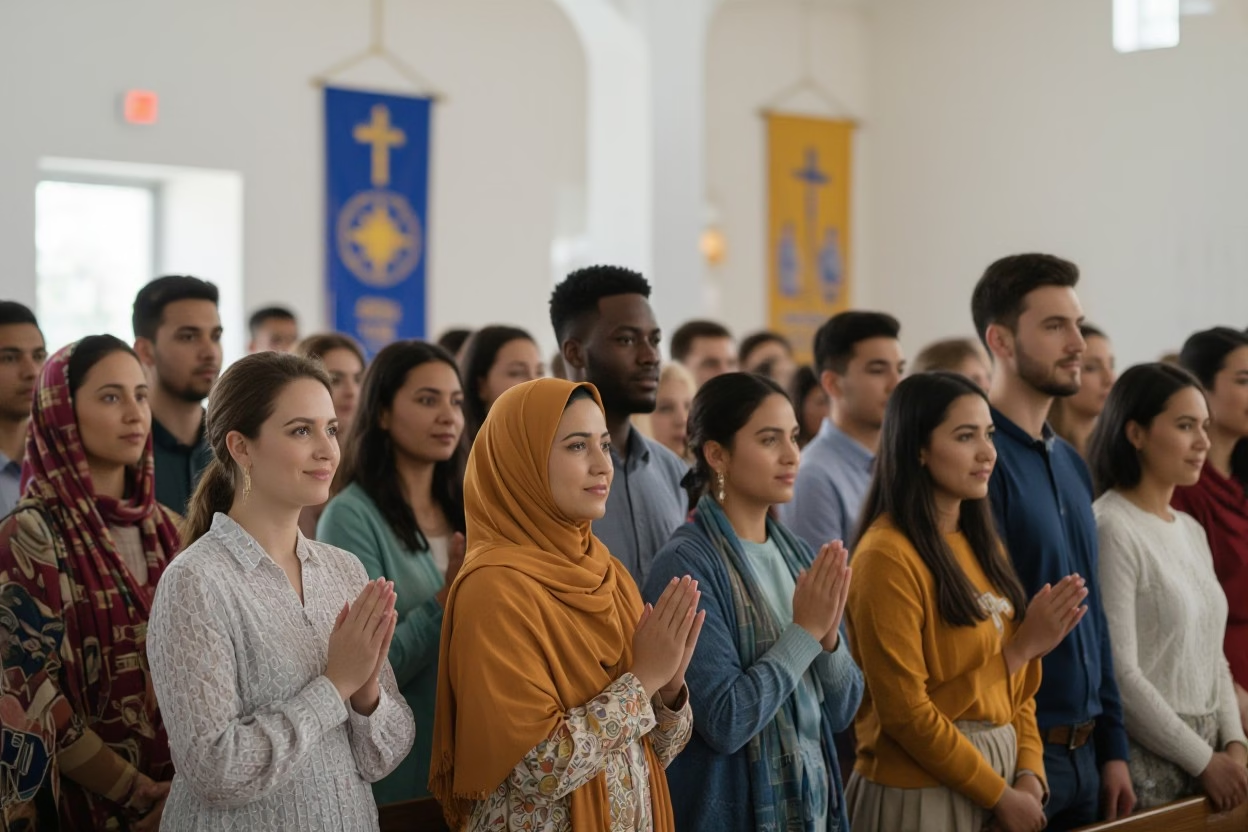
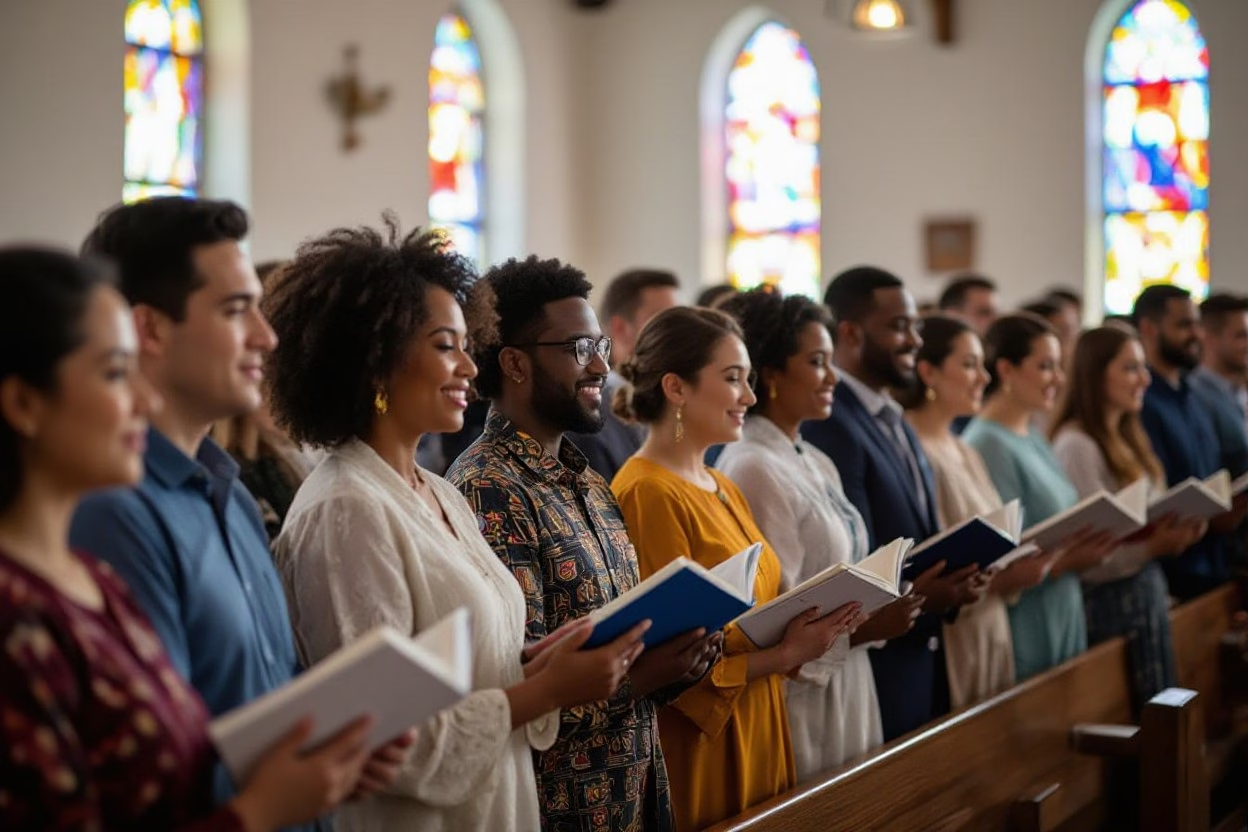
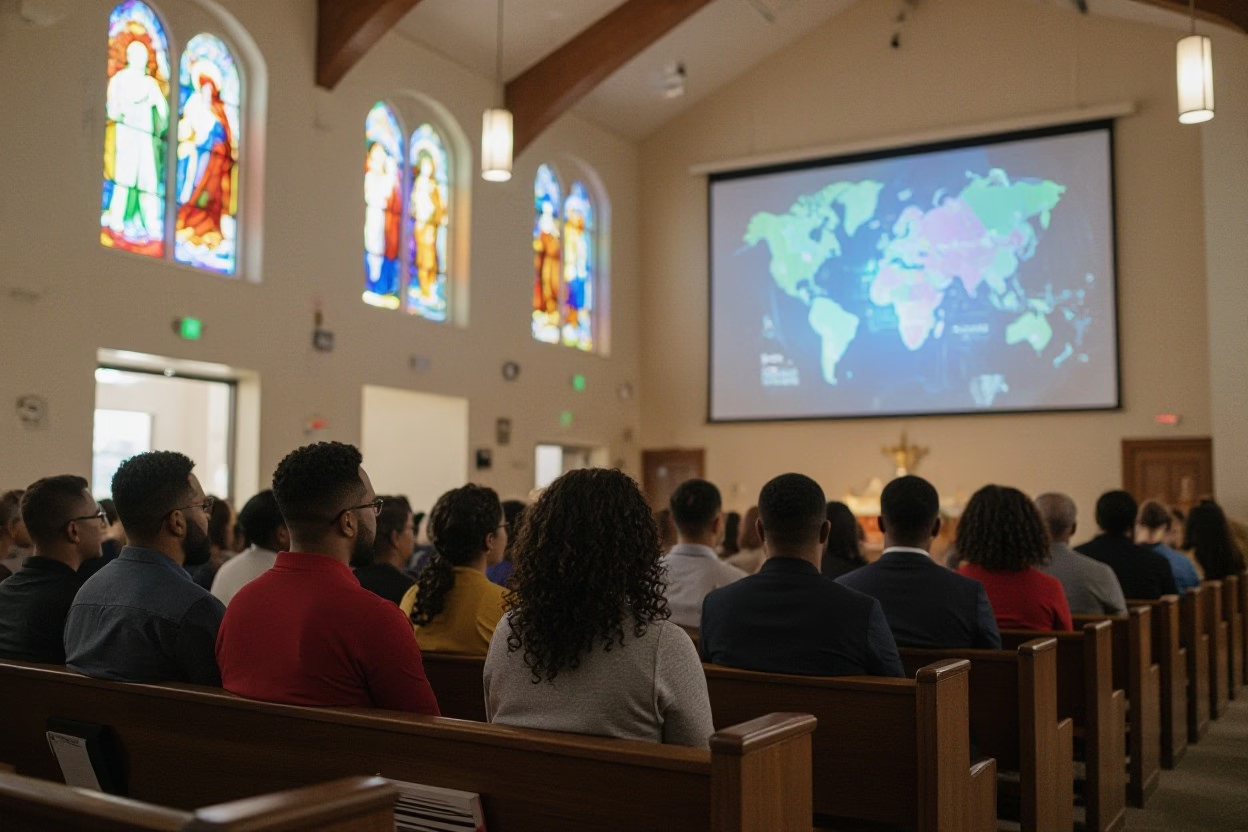
It’s natural to feel unsettled when life takes an unexpected direction, but you can learn to embrace these detours with confidence and calm. By shifting your perspective and relying on steadfast principles, you will discover how to maintain peace even amidst uncertainty. This guide will help you navigate sudden changes by focusing on your inner strength and faith, allowing you to move forward with resilience and purpose despite life’s unpredictable challenges.
Key Takeaways:
Life may take unexpected turns that challenge your plans and identity, similar to Daniel’s experience in Babylon.
Trusting in God’s sovereignty provides stability and hope during times of loss and change.
Even when circumstances are difficult, maintaining integrity and a strong work ethic honors God and leads to lasting impact.
God’s promises, like those found in Jeremiah and Colossians, encourage us to seek peace and prosperity in new environments.
Serving faithfully in every season reflects a heart focused on God rather than worldly approval.
Change is inevitable and often uncomfortable, but God’s unchanging nature offers reassurance through all seasons of life.
Hope and perseverance arise from knowing that God has a plan for us, even in times of uncertainty and detours.
Understanding Life’s Unexpected Twists
To navigate life’s unexpected twists, you need to recognize that change is a constant part of your journey. Just like Daniel, who faced loss and upheaval yet remained grounded in his faith, you can find peace by understanding that setbacks often provide opportunities for growth and resilience. Embracing this perspective helps you adapt with grace when your carefully planned path takes an unforeseen turn.
The Nature of Change
Between certainty and uncertainty lies the reality of change, which often comes without warning and disrupts your comfort zone. While you may not face exile as Daniel did, changes in your life—whether minor or profound—can feel unsettling as they challenge your identity and plans. Accepting change as inevitable allows you to approach new circumstances with openness rather than resistance.
Common Reactions to Life’s Detours
Around unexpected detours, you might experience a range of emotions such as confusion, frustration, or even fear. These responses are natural as you process unfamiliar situations that disrupt your sense of control. Understanding these reactions equips you to respond more thoughtfully and maintain your stability amid change.
Considering your usual response to disruptions can reveal patterns that either help or hinder your ability to adapt. When faced with adversity, like Daniel, who chose integrity and faith over despair, you have the choice to respond with resilience instead of succumbing to negative emotions. Drawing on supportive principles, such as those found in scripture and practical wisdom, can strengthen your ability to navigate through uncertainty and emerge stronger.
The Story of Daniel
Now, the story of Daniel shows how you can find peace amid unexpected detours. Despite being taken from his home and faced with a new identity in a foreign land, Daniel trusted God and remained faithful. His experience teaches you how to navigate life’s challenges without losing hope, maintaining integrity, and serving with excellence regardless of your circumstances.
Context of Daniel’s Journey
Context is key to understanding Daniel’s journey. You see, Daniel was forcibly taken from Jerusalem to Babylon, trained in its ways, and given a new name that challenged his faith and identity. Yet, through this difficult transition, he maintained his beliefs while adapting to a new culture, demonstrating how you might respond in moments when life uproots you unexpectedly.
Lessons from Daniel’s Resilience
Lessons from Daniel’s resilience highlight how you can thrive amidst adversity. Despite loss and upheaval, Daniel kept his faith strong and worked diligently, serving six kings across three nations with unwavering integrity. His example encourages you to embrace change with trust, work wholeheartedly, and hold on to hope even when circumstances shift.
Considering Daniel’s journey, you can apply his approach by focusing on what remains constant—your values and faith. Even when external situations change dramatically, maintaining a commitment to integrity and excellence helps you navigate challenges with purpose. Like Daniel, choosing to serve well and trust in a greater plan can bring peace and stability during life’s unexpected twists.
Finding Peace Amidst Chaos
Your life will inevitably face sudden changes and challenges that disrupt your plans. In these moments of uncertainty, finding peace may seem impossible, yet it is necessary to navigate these twists effectively. Embracing the truth that change is constant and that stability comes from within can transform your experience. For more insight, explore Do you Agree-Life is a journey filled with twists and turns … to deepen your understanding of the unpredictable nature of life’s path.
Embracing Faith in Uncertainty
After the unexpected disrupts your routine, turning to faith can offer a sustaining anchor. Just like Daniel, who trusted God’s word amidst exile and loss, you can place your confidence in something steady beyond your changing circumstances. This trust helps you navigate difficulties with resilience, knowing that peace and purpose remain possible, even when life feels unstable.
Practical Steps to Cultivate Peace
Faith moves you to act intentionally, focusing your energy on what you can control while releasing the rest. Developing a routine of prayer, reflection, and purposeful work aligns your heart with enduring values, easing anxiety. Acting “as though you were working for the Lord rather than for people” (Colossians 3:23) helps cultivate inner peace regardless of external chaos.
Uncertainty can overwhelm when left unchecked, but by adopting specific strategies—such as grounding yourself in meaningful routines, seeking supportive communities, and engaging in mindful practices—you nurture peace in daily life. These steps reinforce your ability to maintain integrity and hope, even when your surroundings seem unstable, echoing the example of steadfastness shown by Daniel in difficult times.
The Role of Community Support
Not all challenges can be faced alone; having a community around you provides strength and perspective during unexpected detours. Engaging with others who understand your journey can foster resilience and hope. If you’re looking for guidance on maintaining your faith and stability amid life’s twists, explore How to Navigate the Detours on Life’s Journey for practical advice and encouragement.
Importance of Connection
Along your path, building genuine connections offers emotional support and a sense of belonging that can help you weather difficult times. Sharing your experiences and listening to others creates bonds that uplift and sustain you, especially when change feels overwhelming or isolating.
Resources for Seeking Help
After facing unexpected life changes, it can be helpful to access support systems such as counseling, faith-based groups, or local community programs. These resources can provide guidance, comfort, and practical tools to help you move forward with confidence and peace.
Resources are available both within your faith community and through broader networks. At Coastal Church, for example, groups like Life Groups, Coastal Youth, and Coastal Kids offer environments where you can find encouragement and support, mirroring Daniel’s approach of serving faithfully despite adversity. Utilizing these avenues can strengthen your resilience and enrich your journey through life’s uncertainties.
Developing a Growth Mindset
After life throws unexpected detours your way, developing a growth mindset can transform obstacles into opportunities. Embracing change with a willingness to learn empowers you to adapt and thrive, just as Daniel did when faced with unimaginable loss and exile. By focusing on what you can control and trusting in a bigger plan, you cultivate resilience that carries you through difficult seasons, helping you grow stronger in both character and faith.
Learning from Challenges
To grow through challenges, you need to view setbacks as valuable lessons rather than failures. When Daniel was taken from his home and thrust into a foreign culture, he chose to maintain integrity and learn from his new circumstances. You can apply this by reflecting on what difficult experiences teach you about yourself and your path forward, allowing you to evolve rather than become discouraged.
Setting Goals for the Future
With a growth mindset, you can set clear, meaningful goals that guide your journey beyond the detours. Like Daniel, who served faithfully despite uncertainty, focusing on your values and purpose enables you to create a roadmap that aligns with your faith and priorities. Setting goals helps you channel your energy productively and maintain hope in the face of change.
At the heart of setting goals for the future is understanding the legacy you want to build through your actions today. Rather than waiting for perfect conditions, focus on consistent effort and integrity, as Daniel did by serving six kings across three nations with excellence. By breaking down your larger goals into manageable steps, you create momentum and confidence to move forward even when circumstances feel unstable.
Staying Grounded in Your Values
Keep holding onto the values that define who you are, especially when life takes unexpected turns. Like Daniel, who trusted God’s word and maintained integrity amid exile, your values can serve as a steady foundation. They provide clarity and strength, helping you navigate change without losing sight of your true self. When circumstances shift, leaning into your principles allows you to act with purpose and resilience, anchoring you even in chaos.
Identifying Core Beliefs
Beliefs shape your perspective and influence every decision you make. Taking time to identify what you truly stand for helps you remain steady amid uncertainty. These core beliefs become your guiding compass, enabling you to respond to challenges in a way that aligns with who you are. When you know your foundation, distractions and doubts lose power over your path.
The Power of Purpose
On your journey, purpose transforms challenges into meaningful growth opportunities. Purpose gives your actions direction, much like Daniel’s commitment to serve faithfully despite his circumstances. It motivates you to persist and excel, knowing your efforts contribute to a bigger plan that extends beyond immediate difficulties.
Identifying your purpose allows you to find peace in disruption by connecting daily tasks to a larger mission. This focus empowers you to pursue excellence and integrity, even when conditions aren’t ideal. Purpose fuels perseverance and helps maintain your resolve when facing life’s unexpected twists.
To wrap up
From above, you see that finding peace in the detour means embracing change with trust and resilience. When life’s unexpected twists disrupt your plans, your response shapes your journey. By grounding yourself in steady principles and focusing on what you can control, you maintain your integrity and purpose. Although challenges may feel overwhelming, you can navigate them with confidence, knowing that steady faith and a committed heart guide you through uncertainty towards growth and renewed hope.
FAQ
Q: How can I find peace when life doesn’t go as planned?
A: Finding peace in unexpected life changes begins with accepting the situation and focusing on what you can control. Trusting in God’s presence during difficult times can bring comfort and help you navigate through uncertainty with hope.
Q: What steps can I take to maintain faith during challenging detours?
A: Maintaining faith involves staying connected to spiritual practices such as prayer, reading scripture, and seeking support from a faith community. These actions can strengthen your trust in God’s plan even when the road ahead is unclear.
Q: How did Daniel’s story inspire resilience in times of hardship?
A: Daniel’s story shows that despite loss and forced change, he chose to serve with integrity and excellence, trusting God’s promises. His example encourages us to stay faithful and productive, even in difficult circumstances.
Q: Why is maintaining a strong work ethic important during unexpected life changes?
A: A strong work ethic helps preserve a sense of purpose and dignity regardless of circumstances. By dedicating your efforts as though serving a higher calling, you can find meaning and stay grounded through life’s transitions.
Q: How does trusting God’s word help when facing uncertainty?
A: Trusting God’s word provides assurance that He is unchanging and in control despite shifting situations. This confidence helps reduce anxiety and offers a steady foundation when everything else feels unstable.
Q: What practical advice would help me adapt to sudden life changes without losing hope?
A: Practical advice includes setting small goals, staying connected to supportive people, focusing on spiritual growth, and embracing patience. These approaches can help transition smoothly and maintain hope during challenging detours.
Q: Can finding peace in difficult times impact my future outlook?
A: Yes, discovering peace amid struggle can build resilience and deepen your faith, shaping a more hopeful and confident perspective for future challenges. It transforms difficulties into opportunities for personal and spiritual growth.
You might not realize how profoundly global migration reshapes Christian communities worldwide. As people move across borders, they bring diverse cultural practices and faith expressions, which challenge traditional structures yet also enrich spiritual life. They face risks like social fragmentation and discrimination but also discover opportunities for growth, dialogue, and renewed unity. Understanding these dynamics helps leaders and members respond thoughtfully to both the threats and blessings migration presents in sustaining their faith and community cohesion.
Key Takeaways:
Global migration is reshaping Christian communities by increasing cultural and linguistic diversity within congregations.
Migrants often bring new religious expressions and traditions that can enrich existing Christian practices and foster intercultural dialogue.
The movement of people can lead to challenges such as integration difficulties, social isolation, and tensions between different cultural groups in churches.
Christian communities have an opportunity to serve as welcoming spaces for migrants, offering spiritual support and practical assistance.
Churches can play a significant role in advocating for migrants’ rights and promoting social justice in their host countries.
New migrant populations stimulate the development of innovative ministry models that address the evolving needs of diverse congregations.
Collaboration among churches across borders is becoming more important to address global migration’s impact comprehensively.
The Global Migration Landscape: Trends and Statistics
Current Migration Patterns and Data
More than 280 million people globally are migrants, representing roughly 3.6% of the world’s population—a figure that has shown steady growth over the past decades. Recent data indicates that migration flows are increasingly complex, with significant urban-to-urban migration in addition to traditional cross-border movements. Regions such as North America and Europe continue to attract large migrant populations seeking economic opportunities and safety, while parts of Africa and Asia experience substantial internal displacement, often driven by economic disparity and social instability.
Christian communities in both sending and receiving countries experience the impacts of these shifts. For instance, Latin America’s large-scale emigration has led to dwindling congregations locally, while resulting in emergent diaspora communities abroad. European countries such as Germany and Italy have seen notable increases in Christian migrants from the Middle East and Africa, contributing fresh dynamics to ecclesial life but also presenting integration challenges. Statistical reports from the International Organization for Migration reveal that Christian migrants often face unique issues regarding religious freedom and the preservation of cultural identity during relocation.
The Role of Conflict and Climate Change
Conflict remains a primary driver in displacement, especially in regions where Christian minorities reside alongside other groups. Syria, Iraq, and parts of sub-Saharan Africa have witnessed mass exoduses of Christian populations due to sectarian violence and persecution. UNHCR figures show that millions of these migrants have sought asylum in neighboring countries or further abroad, reshaping Christian demographic patterns globally. Violence not only displaces individuals but fractures established community networks, challenging the sustainability of Christian institutions in affected areas.
Beyond conflict, climate change increasingly acts as a catalyst for migration. Rising sea levels, desertification, and extreme weather events disproportionately affect vulnerable communities, often forcing relocations within fragile geographical zones. For example, Pacific Island nations face existential threats from inundation, compelling Christian islanders to migrate to countries like New Zealand and Australia. These environmental pressures intertwine with social and economic factors, creating multifaceted migration motives that Christian organizations must understand in deployment and ministry efforts.
Additional analysis reveals how overlapping crises magnify displacement risks. In regions like the Sahel, erratic rainfall and resource scarcity exacerbate communal tensions and armed conflicts, propelling further migration. Such compounded challenges require nuanced responses from Christian aid agencies, which must navigate humanitarian assistance alongside faith-based outreach amid volatile environments.
The Transformation of Christian Demographics in the Global Context
Migration Trends and Statistics
Recent decades have witnessed significant shifts in the geographic distribution of Christian populations, largely propelled by global migration flows. Between 2010 and 2020, over 50 million Christians migrated from regions such as sub-Saharan Africa and Latin America to Europe, North America, and parts of Asia. These migrations have resulted in the rapid expansion of Christian minorities in typically non-Christian societies. For example, the number of Latin American Christians in the United States grew by approximately 25% during this period, profoundly influencing local church dynamics and outreach strategies.
Additionally, the emergence of migration corridors within and between the Global South and North has altered the composition of Christian communities worldwide. The World Migration Report of 2022 highlights that migrants from predominantly Christian countries now represent nearly 30% of the total international migrant population. This phenomenon has not only increased attendance in established Christian denominations abroad but also facilitated the rise of Pentecostal and Evangelical movements, which appeal strongly to migrant populations seeking communal and spiritual support in unfamiliar environments.
Shifts in Congregational Composition
The inflow of Christian migrants has led to noticeable diversification within congregations, particularly in urban centers. Churches are encountering a broader spectrum of cultural backgrounds, languages, and worship styles coexisting under one roof. For instance, a Pentecostal church in London has integrated services in English, Spanish, and various African languages to accommodate its multiethnic membership. This blending often challenges traditional liturgical norms but also fosters enriched worship experiences and deeper intercultural understanding.
Such demographic shifts require congregations to address new pastoral and administrative challenges. Church leaders increasingly find themselves adapting outreach programs, leadership structures, and community services to support migrants’ unique circumstances. Furthermore, the presence of first- and second-generation migrants within congregations has sparked greater emphasis on youth engagement and intergenerational dialogue, creating fresh opportunities for faith transmission and social cohesion.
The transformation in congregational makeup also significantly influences theological emphases and community priorities. Migrant Christians often bring distinctive spiritual expressions and social concerns, such as advocacy for migrant rights and services addressing displacement trauma. This integration fosters dynamic exchanges between indigenous and migrant believers, resulting in evolving forms of Christian witness that resonate with broader societal realities shaped by migration.
The Diverse Faces of Christian Communities Worldwide
Demographic Shifts: Who Migrates?
Migration within and across continents has altered the demographic composition of Christian communities in notable ways. Young adults, particularly those aged 18 to 35, constitute a significant proportion of Christian migrants, driven both by economic opportunities and the search for political stability. For example, a 2022 Pew Research study revealed that over 60% of African Christian migrants moving to Europe fell within this age bracket, imbuing host nations with a youthful vibrancy uncommon to their generally aging native populations. The gender balance also varies significantly; while male migrants often dominate labor-driven movements, female Christians increasingly migrate solo or as heads of household, impacting family structures and community dynamics abroad.
Religious affiliation among migrants further complicates migration patterns. Latin America has seen sizable movements of Pentecostal and Evangelical Christians into North American urban centers, reshaping local worship styles and church demographics. Conversely, migration from the Middle East tends to involve a higher proportion of Eastern Orthodox and Catholic Christians escaping persecution, such as Syriac Orthodox refugees integrating into European diasporas. This interplay between demographic factors and religious identity influences the types of Christian communities formed and their integration pathways within global contexts.
Cultural and Theological Diversity within Christian Faiths
The variety of Christian traditions across migrant populations introduces a multifaceted layer of cultural and theological diversity into host countries. Migrants bring with them liturgical practices, worship styles, and doctrinal emphases distinct from dominant local churches. For example, Ethiopian Orthodox Christians in diaspora maintain ancient liturgical languages like Ge’ez, preserving a unique spiritual heritage that differs markedly from Latin-rite Catholicism prevalent in Western migration destinations. This diversity introduces challenges related to ecclesiastical recognition and cooperation, with denominational boundaries sometimes hardening around cultural identities.
Moreover, theological perspectives carried by migrant Christians often influence local debates on social and ethical issues. Pentecostal and charismatic movements, widespread among Latin American migrants, prioritize spiritual gifts and expressive worship, contrasting with the more formal traditions of mainline Protestant or Orthodox churches. These differences affect how migrant communities engage with social services, political activism, and interfaith dialogue. Consequently, Christian institutions in receiving countries frequently need to navigate complex intra-faith relations arising from diverse theological frameworks.
Additional layers of nuance emerge when considering language use, ritual practices, and theological education levels among migrants. Churches serving immigrant populations often become cultural centers, not merely places of worship, sustaining ethnic languages and customs under religious auspices. In some instances, theological training in home countries varies widely, which influences leadership styles and community organization within diaspora churches. The coexistence of these varied cultural and theological traditions within the broader Christian faith highlights both the enrichment and complexity of contemporary migrant Christian communities.
The Intersection of Faith and Cultural Exchange
Enriched Worship Experiences
Global migration introduces a rich tapestry of cultural traditions into Christian worship, often leading to hybrid liturgical expressions that resonate deeply with diverse congregants. For example, in cities like Toronto and London, churches now blend gospel music with indigenous instruments or incorporate multilingual scripture readings that reflect their communities’ heritage. This blending not only enhances the emotional depth of worship but also facilitates a greater sense of belonging among immigrants, who find familiar cultural elements within the Christian framework.
Moreover, such cultural fusion challenges longstanding liturgical norms and invites creativity in worship practices. Churches that embrace these changes report increased attendance and engagement, indicating that faith communities benefit from the infusion of diverse cultural expressions. The incorporation of traditional dances, foods, or fasting practices tied to migrants’ native lands further broadens the spiritual experience, providing opportunities for congregations to explore Christianity through new cultural lenses.
Cross-Cultural Dialogue and Faith Sharing
The interaction between migrants and established Christian communities fosters dynamic cross-cultural dialogue, leading to deeper understanding and mutual enrichment. Migrants often bring fresh theological perspectives shaped by their lived experiences, including African or Latin American liberation theology, which prompts established congregations to reevaluate their approaches to social justice and mission. These exchanges create spaces where faith transcends cultural boundaries, allowing for a more inclusive interpretation of Christian teachings.
Faith sharing extends beyond sermon content or worship styles, manifesting in community programs, intergenerational mentorship, and collaborative social outreach that reflect diverse cultural priorities. For instance, in Berlin, churches have partnered with migration organizations to provide language classes and legal assistance, demonstrating faith in action while respecting cultural nuances. This practical collaboration strengthens bonds between different ethnic groups and enhances the church’s role as a mediator in multicultural societies.
Further analysis reveals that such dialogue also promotes resilience within Christian communities facing the challenges of integration and identity preservation. As congregations negotiate differences in ritual, language, and worldview, they build adaptive capacities that prepare them for ongoing demographic shifts. The resulting hybrid faith communities often combine compassionate social engagement with vibrant cultural expression, positioning churches as key actors in both spiritual and societal transformation.
Unpacking the Challenges: Identity and Belonging
Navigating Cultural Friction in Host Countries
Christian migrants often encounter cultural friction that signifies more than simple adjustment issues; it challenges the core sense of identity and community cohesion. Host countries with distinct religious majorities or secular orientations can present environments where Christian migrants face misunderstandings or stereotypes. For example, Syrian Christian refugees in predominantly Muslim Jordan frequently report tension arising from different social customs and expectations, which complicates integration and sometimes prompts them to form insulated church communities to preserve their cultural and religious heritage.
Moreover, the younger generation of migrant Christians, growing up straddling two cultures, often struggles to reconcile traditional faith practices with the societal norms of their host countries. This dynamic can lead to generational gaps within migrant families and church groups, as elders might emphasize adherence to familiar practices, while youth seek ways to express their faith that resonate with their bicultural realities. Churches that fail to address these tensions risk losing engagement and unity among diverse congregants.
The Struggle for Religious Freedom and Acceptance
In many regions, Christian migrants face significant challenges regarding religious freedom, impacting their ability to worship openly and participate fully in civic life. Nations with restrictive laws or social hostilities toward minority religions pose barriers that can lead to discrimination, harassment, or exclusion. In parts of Southeast Asia, for instance, the influx of Christian migrants has been met with suspicion or outright hostility by local populations and authorities, narrowing the public space for Christian worship and religious expression.
Discriminatory policies also extend to employment and housing opportunities, indirectly affecting Christian migrants’ ability to build stable communities. In some European countries, despite legal protections, xenophobic attitudes fueled by nationalism translate into social rejection of migrant faith communities, reinforcing marginalization and complicating efforts to foster mutual understanding and acceptance. Such environments require resilient community leadership and advocacy to negotiate rights while also building bridges with broader society.
Understanding the complex interplay between legal frameworks and social attitudes reveals the multilayered nature of the religious freedom challenges faced by Christian migrants. Even in countries with formal religious protections, informal biases and local enforcement practices can sharply restrict the freedoms that migrants expect. Continued research tracking incidents of religious discrimination alongside migration flows provides critical insight into how Christian communities can strategically navigate and influence these regional realities to safeguard their rights and promote inclusive acceptance.
Challenges to Traditional Church Structures
Language Barriers and Communication Issues
Language differences pose a significant challenge as churches increasingly serve multicultural congregations. In many cases, worship leaders and church staff struggle to communicate effectively with new members who speak limited or no English, which can hinder participation and spiritual growth. Studies have shown that nearly 30% of migrant congregants report feeling isolated during services due to language gaps, which impacts their sense of belonging and engagement within the community. This barrier extends beyond liturgy to pastoral care, outreach, and educational programs, making it difficult to address the holistic needs of diverse groups.
Some churches have responded by incorporating multilingual services and hiring bilingual staff to bridge communication divides. However, balancing the needs of longtime members with those of new migrants remains complex. In regions like Western Europe and North America, some parishes offer simultaneous translation, while others rotate services in different languages to accommodate varying groups. Despite these adaptations, navigating linguistic diversity requires continuous effort and resources to ensure all worshippers can connect meaningfully.
Resistance to Change within Established Communities
Longstanding congregations often resist structural adjustments needed to embrace cultural diversity fully, fearing loss of identity or dilution of traditional practices. Established church members may view the introduction of new languages, worship styles, or leadership as disruptive and perceive migrants as outsiders altering the community’s fabric. Historical examples from migrant-heavy dioceses reveal tensions that sometimes lead to segregated services or informal divisions within one parish, undermining unity. Reticence to alter familiar routines can stall initiatives designed to nurture inclusion and equitable participation.
Some church leaders observe that resistance frequently stems from concerns over institutional stability and preservation of doctrinal purity. The challenge lies in addressing these fears empathetically while fostering openness to change. Educational workshops and dialogue sessions have proven effective in easing mistrust and encouraging collaboration across cultural lines. Yet, progress is uneven, as demographic shifts continually reshape congregations’ social dynamics, demanding ongoing attention to these internal challenges.
Beyond internal reluctance, resistance is often reinforced by generational divides, with older members more attached to traditional modes of worship and governance. This divergence can complicate leadership transitions and decision-making processes as churches seek to remain relevant while honoring their heritage. Initiatives that include voices from multiple age groups and cultural backgrounds in planning have shown greater success in overcoming resistance and cultivating a shared vision for the church’s future.
Opportunities for Growth: Enriching Faith Practices
Cross-Pollination of Worship Styles and Traditions
Migration has introduced a dynamic blend of worship styles that invigorate congregational life, fostering a unique fusion of expressions within Christian communities. For instance, African Pentecostal rhythms have seamlessly integrated with European liturgical traditions in many urban parishes, creating vibrant, multisensory worship experiences. These combinations not only enrich ritualistic diversity but also deepen congregants’ engagement by appealing to a broader array of spiritual sensibilities.
Many churches report increased attendance and spiritual renewal as they incorporate elements such as gospel choirs alongside traditional hymnody or utilize indigenous languages and instruments during services. This cross-pollination also encourages theological reflection on the varied ways God’s presence manifests across cultures, prompting leaders to develop more inclusive liturgies. Such blending strengthens communal bonds by honoring the heritage of all members and fostering a shared spiritual identity.
Strengthening Interfaith Dialogues
The presence of migrant populations often places Christian communities in closer contact with diverse religious traditions, creating openings for meaningful interfaith dialogue. Cities like London and Toronto exemplify environments where churches engage with Muslim, Hindu, and Buddhist neighbors through joint community projects and educational forums. These interactions build mutual respect and reduce prejudice, while highlighting common ethical principles and social concerns.
Programs facilitating conversations about faith, peacebuilding, and social justice enable Christians to articulate their beliefs alongside others, promoting empathy and collaborative problem-solving. Such dialogues encourage churches to reconsider exclusivist interpretations of doctrine and embrace a pluralistic understanding of coexistence. Furthermore, these encounters help prepare congregants to navigate increasingly multicultural societies with grace and wisdom.
Research from the Pew Forum on Religion & Public Life indicates that places with robust interfaith initiatives report lower incidents of religiously motivated violence and higher levels of community satisfaction. By cultivating spaces where diverse faith narratives coexist respectfully, Christian communities can expand their impact beyond purely spiritual domains and contribute meaningfully to social cohesion and mutual understanding.
Revitalizing Christian Missions in Diverse Environments
New Opportunities for Outreach and Evangelism
The diversification of migrant populations opens significant channels for creative outreach in places previously homogeneous in culture and language. Mission organizations are experimenting with multilingual worship services and digital platforms that connect believers across continents, allowing the Gospel to resonate with a broader audience. For instance, in cities like Berlin and Toronto, churches have established weekly gatherings that include cultural storytelling and shared meals, fostering both community and cross-cultural understanding. These initiatives have resulted in not only increased attendance but also deeper engagement from members of various ethnic backgrounds who feel their identity respected and represented.
Another growing trend involves leveraging migrant networks to spread the Christian message organically. Migrants, often trusted within their own circles, can serve as natural ambassadors of faith when equipped with theological resources and pastoral support tailored to their cultural contexts. Organizations such as the International Mission Board report that training migrant believers in evangelistic techniques specific to their communities has led to organic church plants and sustained discipleship programs, demonstrating the effective empowerment of migrant evangelists.
Engaging Migrant Communities Through Service
Addressing the tangible needs of migrant communities has become an effective pathway for Christian missions to build rapport and trust. Many churches provide support ranging from legal assistance and language classes to job training and healthcare clinics. These services not only meet immediate practical needs but also embody the Christian principle of loving one’s neighbor, creating credible witness opportunities. For example, a church-based initiative in Los Angeles offers free ESL classes coupled with spiritual counseling, attracting hundreds of migrants weekly and facilitating meaningful relationships that open doors for spiritual conversations.
Mission groups adopting a holistic approach have observed that such services reduce barriers migrants face, including social isolation and cultural alienation. When ministry teams partner with local NGOs and government agencies, they amplify their reach and resources, enabling sustainable support systems that benefit migrants beyond sporadic aid. This collaborative model demonstrates positive outcomes like increased community participation and a measurable rise in volunteerism within migrant congregations.
Linking service initiatives directly with discipleship efforts maximizes their impact. By creating structured follow-up programs, churches ensure that assistance given extends into spiritual growth and integration within the broader Christian community. Programs that integrate English learning with Bible study or vocational training with mentorship not only equip migrants for life’s challenges but also foster enduring faith commitment and leadership development—building resilient, diverse congregations for the future.
The Role of Churches: Adaptive Strategies and Solutions
Innovative Approaches to Community Building
Several churches have adopted creative methods to nurture inclusive Christian communities amid increasing cultural diversity. For instance, intergenerational cultural exchange programs have proven effective; older congregants teach traditional hymns and stories, while younger migrants introduce contemporary worship practices and native languages. Such reciprocal engagement fosters mutual respect and enhances communal bonds across different ethnicities. Additionally, some churches have developed digital fellowship platforms, enabling remote participation for migrants who face mobility constraints or precarious schedules, thus reinforcing a sense of belonging despite physical distance.
Moreover, collaborative worship services that blend diverse liturgical styles cater to the varied spiritual expressions within migrant communities. In Berlin, a Lutheran church’s monthly ‘Global Praise Service’ integrates African drumming, Latin American chants, and Eastern European choir arrangements, attracting over 300 participants from at least 15 national backgrounds. This approach respects cultural identities while uniting believers under shared faith, presenting a model for sustaining vibrant, multicultural worship environments amid rapid demographic shifts.
Outreach to Migrants: Programs and Initiatives
Church-led outreach initiatives have expanded beyond traditional charity, emphasizing empowerment and integration. Numerous faith communities operate language and vocational training centers that address migrants’ immediate socioeconomic needs alongside spiritual support. For example, the Catholic Archdiocese of Milan runs a network of centers offering Italian classes, job placement assistance, and counseling services, directly impacting over 5,000 migrants annually. These programs not only aid practical assimilation but also facilitate meaningful church involvement by reducing barriers to participation.
In addition to training programs, specialized ministries target vulnerable subgroups such as unaccompanied minors and female refugees. The Evangelical Alliance in the UK launched a Safe Harbor project providing trauma-informed care, legal assistance, and community mentorship. This initiative has successfully created over 200 safe spaces across various congregations, promoting healing and integration. By aligning outreach with holistic migrant needs, churches enhance their role as critical agents of social support within global migration dynamics.
Further amplifying impact, partnerships between churches and secular organizations have multiplied the range of services accessible to migrants. Collaboration between religious groups and local governments in cities like Toronto results in co-hosted cultural festivals and employment fairs, blending spiritual outreach with community resource networks. These alliances broaden contacts beyond church walls, embedding Christian communities more deeply within the urban fabric while responding effectively to evolving migrant realities.
The Role of Churches as Community Anchors
Providing Support Services and Resources
Churches frequently act as primary support centers for migrant Christians adjusting to new social environments. Many congregations have developed tailored programs offering language classes, legal aid clinics, and counseling services that address the unique needs of displaced individuals. For example, the Catholic Diocese of Brooklyn has established a network of support centers that serve over 30,000 migrants annually, ensuring access to necessary resources such as housing assistance and employment guidance.
In addition to practical assistance, churches often provide vital emotional and spiritual support, acting as safe spaces where migrants can share experiences and cultivate resilience. Programs like pastoral care groups and mentorship initiatives have demonstrated measurable improvements in migrants’ psychological well-being, reducing feelings of isolation often exacerbated by cultural displacement. This comprehensive approach positions churches as indispensable institutions for integrating new arrivals into broader societal frameworks.
Fostering Integration and Cohesion in Local Areas
Churches play a pivotal role in bridging cultural divides by fostering integration and social cohesion among migrant populations and their host communities. Multiethnic worship services and intercultural events organized by churches encourage mutual understanding and respect, mitigating tensions that sometimes arise from diversity. For instance, an interdenominational church in London annually hosts a “Cultural Harmony Festival” attracting over 5,000 attendees from diverse backgrounds, promoting shared values while celebrating distinct heritages.
Collaborative partnerships between churches and local organizations further strengthen community ties by addressing social challenges collectively. Initiatives like neighborhood clean-up campaigns and joint social outreach enhance both migrant inclusion and neighborhood stability. Such active engagement fosters a sense of belonging and shared responsibility, which has been linked to decreased social fragmentation in urban areas heavily impacted by migration.
Beyond tangible programs, churches often act as informal mediators during cultural conflicts, leveraging their moral authority to encourage dialogue. By facilitating conversations and offering educational workshops on cultural sensitivity, they help reduce prejudice and promote peaceful coexistence. This mediatory function complements institutional efforts, positioning churches as indispensable agents of social harmony amid demographic transitions.
The Economic Impact: Contributions of Migrant Christians
Filling Labor Gaps in Religious and Secular Sectors
Migrant Christians often bridge significant labor shortages within both religious institutions and broader secular industries. Many come with specialized skills in theology, pastoral care, and community outreach, thus revitalizing struggling congregations and expanding service offerings. For example, in countries experiencing clergy shortages, migrant pastors have stepped in, providing leadership in worship, counseling, and church administration. This influx sustains vibrant faith communities and enables churches to maintain diverse programs that might otherwise shutter.
Beyond religious contexts, migrant Christians contribute substantially to sectors like healthcare, education, and construction. Their participation helps address demographic shifts, such as aging populations and declining birth rates in Europe, where migrants frequently fill imperative roles as nurses, teachers, and tradespeople. Such occupational integration not only supports local economies but also fosters intercultural exchange, strengthening social cohesion within host societies.
Funding and Supporting Local Ministries
Remittances sent by migrant Christians frequently fund local ministries in their home countries, bolstering church infrastructure, humanitarian projects, and educational initiatives. For instance, many migrants allocate part of their earnings to establish or refurbish community centers, enabling sustained religious activities and social services. These financial flows help maintain critical local ministries that otherwise might face closure due to economic hardships.
In some urban areas hosting large migrant populations, newly formed migrant-led congregations attract funding from both diaspora networks and international Christian organizations. These resources enable program expansion, such as language classes, job training, and youth mentoring, benefiting both migrants and native residents. This strategic investment fosters community resilience and demonstrates how migrant Christians serve as vital agents of economic and social development.
Moreover, migrant communities have increasingly embraced innovative crowdfunding and digital platforms to channel funds toward local ministries back home. Platforms dedicated to missionary work or church projects allow for transparent, efficient fundraising, broadening financial support networks. Such financial empowerment not only sustains ministry operations but also enhances the capacity for outreach and charitable work in underserved regions.
The Threat of Fragmentation and Sectarianism
Protecting Unity amidst Diversity
Christian communities impacted by global migration often face the complex task of maintaining unity while honoring a multitude of cultural expressions of faith. The emergence of migrant congregations bringing distinct worship styles, languages, and leadership models can unintentionally lead to fragmentation if these differences are seen as barriers rather than assets. Churches that succeed in bridging these gaps typically implement intentional integration strategies, such as multilingual services and intercultural small groups, which foster mutual respect and shared identity.
In metropolitan areas like London and Toronto, where hundreds of ethnic churches coexist, denominational leaders have pioneered forums and joint services to reinforce common theological ground and mutual mission. These gatherings not only ease misunderstandings but also promote collaboration across diverse communities, reinforcing the broader unity of the church body. Neglecting such proactive engagement risks strengthening sectarian divides, particularly as migrants seek spiritual nourishment within familiar cultural contexts.
Navigating Differences in Doctrine and Practice
Migrants frequently bring varying doctrinal interpretations and liturgical practices shaped by their countries of origin, which can challenge existing church norms in host societies. Divergent views on sacraments, gender roles, and worship forms may spark controversy when migrant and local congregations merge or interact closely. This calls for sensitive dialogue and theological education that respects diversity while upholding core Christian convictions.
Theological seminaries and denominational bodies that offer cross-cultural training have observed improved cohesion where clergy and lay leaders understand the historical and cultural reasons behind different expressions. For instance, some Eastern Orthodox migrants emphasize icon veneration and liturgical languages unfamiliar to Western churches, prompting constructive conversations about the boundaries of orthodoxy and cultural adaptation. Establishing shared frameworks for interpreting scripture and practice enables communities to honor differences without splintering.
Further exploration of doctrinal and practical diversity reveals both challenges and opportunities for growth. Migrant communities often serve as a catalyst for re-examining rigid paradigms, encouraging indigenous congregations to expand their theological vision. However, unresolved tensions over issues like charismatic gifts or premarital counseling can hinder integration unless addressed through intentional dialogue processes facilitated by experienced leaders who value both tradition and innovation.
Future Directions: Addressing Disparities and Bridging Gaps
Sustainable Policies and Inclusive Practices
Effective policy frameworks must account for the complex interplay between migration patterns and the evolving needs of Christian communities. Research from the Pew Research Center indicates that in regions such as Europe and North America, migrant Christians often encounter systemic barriers to accessing social services and equitable participation within local churches. Developing sustainable policies that integrate ethical immigration practices with community support mechanisms can reduce marginalization while promoting cultural exchange. For example, Germany’s recent initiatives to train migrant faith leaders to assist in social integration illustrate how policy and inclusive practice can synergize to empower both the migrants and host communities.
Beyond governmental policies, religious institutions themselves have begun instituting inclusive practices to address disparities. Many dioceses now offer multilingual liturgies and cross-cultural programs that accommodate diverse worship styles, enabling migrant congregants to maintain their heritage within the broader Christian fellowship. In cities like Toronto and London, interdenominational efforts have facilitated resource sharing that bridges gaps between established and migrant communities. These institutional adaptations serve not only to affirm diverse identities but also to strengthen communal resilience against sectarian divides.
The Future of Christian Unity Amidst Diversity
Global migration reshapes the demographic and theological landscape of Christianity, presenting a profound opportunity for fostering unity through diversity. Sub-Saharan African and Latin American migrants bring new vitality to churches in Europe and North America, often reinvigorating declining congregations with different traditions and emphases. According to a 2023 study by the World Council of Churches, cross-cultural dialogue among migrant and local Christian groups has increased by 40% over the past decade, facilitating a deeper appreciation of shared beliefs despite diverse expressions of faith.
Historical sectarian tensions, however, still pose risks to unity. Communities that fail to engage in open dialogue may experience fragmentation, particularly where migration intersects with ethnic or doctrinal differences. Intentional ecumenical initiatives that prioritize inclusivity, education, and conflict resolution are emerging as effective tools. Programs like the Global Christian Migration Network, which convenes leaders from various denominations to address migration challenges collaboratively, demonstrate how unity in diversity can be intentionally cultivated for the future well-being of the global Church.
Further exploration into the dynamics of Christian unity reveals that such efforts often hinge on grassroots involvement, where lay members play a vital role in bridging cultural divides. Testimonials from migrant congregants in metropolitan hubs highlight the importance of shared worship experiences that honor both traditional heritage and new cultural contexts. Expanding these inclusive practices not only reduces sectarian risks but also enriches the global Christian witness, paving the way for a more interconnected and resilient faith community worldwide.
Embracing Technology as a Bridge
Digital Platforms for Remote Worship and Connection
Digital platforms have transformed worship experiences for Christian communities dispersed by migration. Churches now stream services via platforms like YouTube, Facebook Live, and Zoom, allowing migrants to participate integrally despite geographical distances. For instance, the International Church of Las Vegas reports a 40% increase in virtual attendance since adopting multi-language streaming, effectively connecting members from over 20 different countries. Such platforms provide not only live worship but also interactive features like real-time prayer requests, enabling a shared spiritual environment akin to in-person gatherings.
Besides live streaming, mobile apps tailored for faith-based engagement expand community connection. Applications like Pray.com offer daily devotionals customizable to various cultural contexts, while Church Center App allows migrants to join small groups and access church resources on-demand. This adaptability supports migrant Christians integrating into new societies without losing their rootedness in faith communities, fostering a sense of belonging and support amid transitional challenges.
Online Resources for Multicultural Education
Online educational tools are advancing intercultural understanding within Christian communities. Platforms such as the Bible Project provide animated videos and study guides that encompass diverse biblical interpretations, reflecting a wide range of cultural backgrounds. By offering resources in multiple languages including Spanish, Arabic, and Swahili, these tools aid migrant Christians and local congregations in exploring their faith through a multicultural lens.
Additionally, organizations like Global Christian Education Network facilitate webinars and workshops specifically addressing the dynamics of cultural integration in church contexts. These resources enable church leaders and members to navigate cultural sensitivities and celebrate diversity, helping to transform potential conflicts into opportunities for enriched fellowship and mutual growth.
Further leveraging these educational resources, many churches have incorporated online curricula focusing on topics such as cross-cultural communication and migration narratives. For example, the “Faith Across Borders” program offers interactive modules that support both migrants and host community members in understanding each other’s traditions and experiences. This approach fosters empathy and strengthens bonds within increasingly diverse Christian populations.
Final Words
Following this exploration of the impact of global migration on Christian communities, it is clear that the phenomenon presents both significant challenges and promising opportunities. Christian congregations are often called to navigate complex cultural integrations, shifts in demographic patterns, and varying degrees of religious tolerance in host countries. These challenges require thoughtful leadership and adaptive strategies to maintain unity and foster inclusion among diverse believers. At the same time, migration enriches Christian communities by introducing new perspectives, practices, and cultural expressions, which can invigorate faith experiences and broaden theological understanding.
Moreover, the ongoing movement of peoples across borders encourages deeper engagement with global Christianity, inspiring collaborative efforts that transcend geographical boundaries. As Christian leaders and communities respond with resilience and openness, they have the opportunity to extend their mission and witness in innovative ways. Thus, the interaction between migration and Christian life is shaping a dynamic landscape—one where the intersection of faith, identity, and cultural exchange offers both a test and a testament to the transformative power of Christianity in the modern world.
FAQ
Q: How has global migration affected the demographic composition of Christian communities?
A: Global migration has led to significant changes in the demographic makeup of many Christian communities worldwide. Migrants from predominantly Christian regions often establish new congregations or revitalize existing ones in their host countries. This influx creates more ethnically and culturally diverse Christian communities, which can enrich worship practices and community life but also require greater cultural sensitivity and adaptation.
Q: What are some challenges Christian communities face due to increased migration?
A: Christian communities encountering migration face several challenges, including language barriers, cultural misunderstandings, and occasional tensions between long-standing members and newcomers. Additionally, there can be logistical difficulties in providing adequate pastoral care and social support to a diverse population, as well as addressing varying theological perspectives brought by migrants from different Christian traditions.
Q: In what ways can global migration offer opportunities for Christian communities?
A: Migration creates opportunities for Christian communities to deepen their multicultural engagement and broader understanding of faith expressions. It fosters the sharing of different liturgical traditions and spiritual practices, encouraging mutual enrichment. Moreover, migrant Christians often bring renewed energy and commitment to evangelization, social justice efforts, and community service initiatives.
Q: How do Christian leaders typically respond to the needs of migrant populations in their communities?
A: Christian leaders often respond by establishing ministries focused on welcoming and integrating migrants, such as language classes, cultural orientation sessions, and social support groups. They may also advocate for migrants’ rights and collaborate with other faith-based and secular organizations to address issues like housing, employment, and legal assistance.
Q: What role does inter-denominational cooperation play in responding to migration-related challenges?
A: Inter-denominational cooperation is vital in effectively meeting the complex needs of migrant populations, as it allows pooling of resources and sharing of expertise among different Christian groups. Such collaboration can enhance outreach efforts, create unified advocacy platforms, and promote a spirit of unity and reconciliation amid diversity.
Q: How can local Christian communities prepare to engage positively with migrant populations?
A: Local Christian communities can prepare by educating their members about cultural diversity and migration issues, promoting inclusion within church activities, and developing programs that specifically address the social and spiritual needs of migrants. Building partnerships with migrant organizations and fostering open dialogue can also help create a welcoming environment.
Q: What impact does migration have on Christian theological perspectives and practices?
A: Migration often introduces Christians to different theological viewpoints and worship styles, leading to richer and more varied expressions of faith. It challenges communities to reflect on their own beliefs in light of new experiences and to embrace a global outlook. This dynamic can result in more inclusive theology that addresses the realities of displacement, identity, and cross-cultural encounter.
Anger is a powerful emotion that often arises during times of suffering and loss, and you might find yourself questioning whether it is right to direct that anger toward God. Understanding the difference between feeling anger and expressing disapproval is key to navigating your righteous frustration. This discussion will help you explore when anger toward God might be appropriate, how to process those feelings faithfully, and how to align your heart with trust and wisdom in difficult seasons.
Key Takeaways:
Being angry at God is different from expressing anger toward Him; the former implies disapproval of God’s actions, while the latter acknowledges human emotional struggle.
It is never right to be angry with God in the sense of judging or disapproving His sovereign decisions, as God’s judgments are always just and righteous.
Feelings of anger toward God often arise during times of suffering, loss, or unanswered questions, but these feelings should be brought to God honestly and confessed.
Jacob’s story and biblical examples, like Jonah and Job, highlight that anger toward God’s actions or mercy is complex and not justified if it implies disapproval of God’s perfect will.
Anger at God differs from anger at circumstances or people; anger toward God suggests moral judgment, which is inappropriate given His divine justice and wisdom.
God permits suffering and trials, sometimes through Satan’s actions, but these do not justify anger against God’s character or sovereign authority.
Faith in God’s goodness and wisdom is the proper response to suffering and frustration, encouraging believers to commit their struggles into God’s hands with humility and trust.
Understanding Anger
Definition of Anger
Your experience of anger begins as an intense emotional state that arises from displeasure. Against this backdrop, anger toward a person implies disapproval of their choices or actions, while anger at a situation is simply frustration with circumstances. For instance, you may be displeased by a broken tool or bad weather, which causes irritation but not moral judgment. Anger directed at God, however, carries the weight of disapproving His decisions, which scripture teaches is never right because God’s judgments are just and perfect.
Different Types of Anger
Against the broad range of your emotions, anger presents itself in different forms depending on its cause and target. You may feel frustration at events that inconvenience you, righteous anger at injustice, or misplaced anger towards God when suffering hits. Each type reflects a unique motivation and moral implication. Knowing how your anger manifests can help you respond thoughtfully rather than react impulsively.
This variety of anger can be understood more clearly by examining its types, effects, and appropriate responses. As you navigate your feelings, recognizing whether your anger is justified or misdirected can transform how you process hardship and disappointment, particularly when it challenges your faith.
Type of Anger
Description
Situational Anger
Displeasure caused by inconvenient or painful events without moral judgment.
Righteous Anger
Indignation toward injustice or sin, directing disapproval at wrongful acts.
Misplaced Anger
Anger directed at God for His decisions or allowed suffering, which scripture forbids.
Constructive Anger
Motivates positive change or action without harboring ill will toward others.
Destructive Anger
Leads to bitterness, resentment, and harmful attitudes toward people or God.
Anger at things differs from anger at people in intent and judgment.
Righteous anger can motivate justice without sinning.
Misplaced anger toward God involves disapproving His just judgments.
Constructive anger encourages healing and reconciliation.
Destructive anger risks spiritual harm and broken relationships.
Knowing these distinctions can help you discern when anger is a natural response and when it becomes a barrier to faith and peace.
Biblical Perspectives on Anger
Anger in the Old Testament
Anger in the Old Testament is often portrayed as a natural human response to injustice, suffering, or God’s mysterious actions. You see instances like Jonah’s displeasure at God’s mercy toward Nineveh, showing that feeling anger toward God is not foreign to biblical characters. However, the Scriptures also emphasize that God’s judgments are always just and righteous, as in Genesis 18:25 and Deuteronomy 32:39, inviting you to consider carefully when your anger is directed at God’s sovereign will versus sinful rebellion.
Anger in the New Testament
By the New Testament, the conversation around anger shifts toward reconciliation and mercy, highlighting the transformative power of Christ. You encounter teachings that urge controlling anger and turning to forgiveness, while Jesus Himself exemplifies righteous indignation without sin. The New Testament invites you to express your feelings honestly but with a heart inclined toward faith and trust in God’s greater purposes.
Testament teachings deeply explore how Jesus removed the wrath of God from believers through His sacrifice, opening the door for you to approach God with confidence despite moments of distress. While you may cry out in pain, as Jesus did, the call is to commit your spirit into God’s merciful hands and reject anger that disapproves of His wisdom (Romans 8:1; Revelation 16:7).
Examples of Human Anger Toward God
With biblical figures like Job and Jonah, you observe that anger at God arises from pain, confusion, and injustice. Job’s outcry amid suffering and Jonah’s frustration at God’s mercy reveal your own struggles to understand divine actions in times of hardship. These stories show you that such anger is a common human experience, yet they also demonstrate the journey toward submission and trust.
Indeed, these examples teach you that while feeling anger toward God is understandable, it is never right to disapprove of His just judgments. The wisdom offered is to express your honest emotions to God, confess any sinful anger, and seek His help to replace frustration with faith in His goodness and purpose, following the model of humility and repentance found throughout Scripture.
The Nature of God
Once again, when you wrestle with feelings of anger toward God, it’s important to ground yourself in a clear understanding of His nature. God is just, sovereign, and merciful, even when life seems unjust or confusing. If you’re struggling with these emotions, resources like Anger with God When Life Seems Unfair can offer guidance as you explore your feelings. Your anger, when directed toward God, challenges you to probe deeper into who He truly is beyond your present pain.
God’s Justice and Righteousness
To understand God’s justice, you need to see that He is the ultimate Judge who always acts rightly. Any disapproval or anger directed at God for His judgments assumes that you know better, which is arrogant for a finite being. You may mourn your suffering, but you cannot rightly oppose God’s righteous decisions, for “true and righteous are Your judgments” (Revelation 16:7).
Understanding God’s Sovereignty
To recognize God’s sovereignty means realizing that He is in control of all things, even when circumstances seem chaotic or painful. You might struggle with why God allows hardship, but His authority over all events is never broken or accidental.
But sovereignty does not imply that God is distant or indifferent. Instead, it means that His plans are wise and purposeful, even when you cannot see the full picture. The story of Job teaches that God permits trials for reasons beyond your understanding, yet His hand remains just and protective in the final outcome.
The Mercy of God
God’s mercy shapes how you can approach Him, even with your feelings of anguish and anger. While He never deserves your disapproval, His mercy invites you to come honestly with your pain and doubts.
This mercy is shown supremely in the cross, where Jesus took upon Himself the wrath you deserved. Because of this, God’s disposition toward you is now one of compassion and grace, even amid discipline. You can bring your most difficult emotions before Him and trust that He remains lovingly present, inviting you to faith beyond your frustration.
Reasons for Anger Towards God
Personal Suffering and Loss
Not all anger towards God arises without cause; behind your personal suffering and loss—whether through illness, death, or broken relationships—there is a deep emotional response that often feels overwhelming. These experiences shake the foundations of your world and can naturally lead to feelings of frustration and anger as you wrestle with pain and unanswered questions.
Injustice and Pain in the World
The presence of injustice and widespread pain around you can fuel anger at God when you witness suffering that seems undeserved or unchecked. Seeing evil triumph or innocent people harmed often stirs a desire for explanation and justice, which can feel lacking in the face of divine silence or permission.
Anger triggered by observing injustice reflects your deep sense of right and wrong; however, this anger questions God’s governance and justice, which raises complex theological and emotional struggles. While it’s natural to be disturbed by sin and suffering, directing indignation at God for what He allows requires careful reflection on His righteous nature and overarching purposes beyond what you can immediately see or understand.
Unmet Expectations
Reasons for anger at God sometimes stem from unmet expectations, where you feel let down because life has not unfolded as you hoped or prayed. These disappointments lead to frustration when God’s actions or allowances do not align with your desires or plans.
Indeed, when your hopes collide with harsh realities, it’s easy to interpret God’s silence or decisions as failures on His part. This clash between expectation and experience often provokes anger, as you struggle to reconcile your personal desires with God’s sovereign will and the complexities of His righteous judgments.
Discerning Righteous Frustration
Difference Between Righteous Anger and Sinful Anger
Anger can take many forms, but not all anger is the same. Righteous anger arises from a place of justice, often directed against sin, injustice, or harmful actions, whereas sinful anger involves disapproving of God’s sovereign actions or allowing bitterness to take root. When you experience frustration toward God, it’s important to discern if your anger is at His will or merely your personal displeasure. You should avoid disapproving God’s judgments, as He acts with perfect wisdom and justice, even when His ways are difficult to understand.
The Role of Faith in Anger
One imperative way to handle your anger is through faith—trusting in God’s goodness despite painful circumstances. Faith helps you move beyond raw emotion to a deeper understanding that God’s judgments are true and righteous. Instead of letting anger consume you, faith encourages you to express your feelings honestly while submitting to His sovereign plan.
Righteous faith doesn’t suppress your emotions but brings them under the lordship of God’s wisdom and mercy. When you feel anger toward God, faith prompts you to confess that anger openly, seek His help to overcome it, and rely on His promises that He works all things for your good. This spiritual posture helps you avoid hypocrisy and grow in trust, even when you face suffering or unanswered questions.
Biblical Examples of Righteous Frustration
Frustration with God appears in Scripture, showing that honest emotions are part of the human experience, yet they come with boundaries. Jonah’s anger over God’s mercy on Nineveh illustrates how it’s possible to be displeased with God’s decisions, but also how anger toward God’s kindness was not justified. Job’s lamenting anguish demonstrates sincere struggle yet ultimate submission to God’s sovereign will.
And these examples teach you that expressing frustration is not the same as disapproving God’s wisdom. You can voice your pain and sorrow, even anger, while maintaining faith in God’s righteousness. These stories guide you to wrestle with feelings honestly but to reject any sense of entitlement to judge God’s actions as wrong.
Expressing Anger to God
Despite the strong convictions that anger toward God can reflect disapproval of His divine justice, expressing anger to God is a natural and honest part of your spiritual journey. When suffering weighs heavily on your heart, you might find yourself wrestling with feelings of frustration and confusion. These emotions do not make you a hypocrite or less faithful; rather, openly expressing your anger can be a step toward deeper trust. As Pastor John suggests, confessing these feelings allows you to bring your true emotions before God, asking Him to replace your anger with faith in His wisdom and goodness.
The Importance of Honesty with God
Behind your anger at God often lies a deeper struggle to reconcile pain with faith. Being honest with God about your feelings does not mean questioning His righteousness—it means inviting Him into your pain. When you express your anger openly, you participate in a transparent relationship with the divine, where your emotions are acknowledged rather than hidden. This honesty creates space for healing, as God understands your heart and longs to guide you through your struggles.
How to Channel Anger Constructively
With anger directed at God, you have an opportunity to transform frustration into growth. Instead of letting anger fester into bitterness, you can use it as a catalyst for deeper reflection, prayer, and seeking understanding. Recognizing that anger often springs from a desire for justice or relief can guide you toward actions and attitudes that align with faith, rather than rebellion.
Constructively channeling your anger involves redirecting energy toward spiritual disciplines like meditation on Scripture, which reminds you of God’s justice and mercy—”the Almighty, true and righteous are Your judgments” (Revelation 16:7). You might also seek counsel within your faith community or engage in acts of service that refocus your heart on God’s love, helping to move your emotions from turmoil toward peace and hope.
Prayer as a Means of Expression
Between you and God, prayer stands as a sacred channel where even your most intense emotions find a voice. When you pray in anger, you are not hiding your feelings but presenting them authentically before the One who understands your heart completely. This honest communication invites God’s presence into your struggle, enabling you to process your pain within the context of faith.
But prayer does more than express anger; it becomes a means of surrender and transformation. By speaking honestly in prayer, you acknowledge your weaknesses and ask for God’s help to overcome resentment. This practice aligns with the idea that Jesus’ death removed God’s wrath from believers, replacing judgment with mercy (Romans 8:1). Prayer thus becomes a way to move from frustration toward trust, committing your spirit into God’s hands despite unanswered questions.
Moving Beyond Anger
For many, anger at God stems from deep pain and confusion. However, moving beyond this emotion invites you into a path of healing and spiritual growth. It is a journey where you can confront your feelings honestly while seeking restoration and renewed trust in God’s nature and purposes.
Seeking Forgiveness and Healing
An important step in moving beyond anger is seeking forgiveness—not to mask your feelings, but to acknowledge them before God. Confess your anger openly, knowing He already sees your heart. This honesty opens the door to His healing grace, allowing faith to replace frustration as you invite His wisdom and goodness into your life.
Trusting in God’s Plan
At times, trusting God’s plan can feel impossible when suffering overwhelms you. Yet, trusting does not mean ignoring your pain; instead, it is choosing to believe that God, as the righteous Judge, exercises justice and mercy beyond your understanding.
Moving from anger towards trust involves recognizing that God permits trials for reasons often hidden from you. His sovereign hand guides all things according to His wisdom, even when it includes suffering. This trust enables you to relinquish control, accept divine discipline as a sign of His love, and remain confident that He works all things for your ultimate good.
Finding Joy and Peace Again
Before you can experience lasting joy and peace, you must allow yourself to grieve fully but without condemning God. You may cry out in pain, but then you lean into His mercy, committing your spirit to Him with faith.
With joy restored, you rediscover the everlasting happiness found in Jesus Christ, the One who bore your suffering and removed wrath from your life. This peace sustains you even amid trials, transforming your perspective and strengthening your hope for the future.
Summing up
With these considerations, you can understand that while feelings of anger toward God may arise in times of suffering, it is never right to disapprove of His actions or judgments. Your anger should be expressed honestly but confessed and surrendered, trusting in God’s perfect wisdom and mercy. Instead of harboring resentment, you are called to place your faith in His goodness, allowing His grace to transform your frustration into hope and submission.
FAQ
Q: Is it ever right to feel anger towards God?
A: While feeling anger is a natural human emotion, it is never right to disapprove of God for what He does or permits. Anger directed at God implies judgment of His actions, which, according to Scripture, are always just and righteous.
Q: What is the difference between being angry at God and expressing anger at God?
A: Being angry at God means holding disapproval toward His actions or decisions, which is wrong. Expressing anger at God involves honestly sharing one’s feelings, including frustration or pain, without necessarily condemning God. The latter can be a part of a faithful struggle in difficult times.
Q: Can we be angry with God during times of great suffering?
A: It is understandable for people to experience anger during intense suffering or loss. However, this anger should not turn into disapproval of God’s character or judgment. Instead, individuals are encouraged to bring their feelings to God in honesty and seek His help to trust His goodness.
Q: How should someone deal with sinful anger toward God in their heart?
A: If someone recognizes anger toward God that includes judgment of His actions, they should confess this sin to God, ask for forgiveness, and seek His help in replacing anger with faith in His wisdom and mercy.
Q: Does Scripture give examples of people being angry with God? What can we learn from them?
A: Yes, for example, Jonah was angry with God’s mercy toward Nineveh. His anger was displeasure with God’s actions, which Scripture suggests was not right. Such stories remind us that God’s decisions are just, even when they challenge our expectations.
Q: What role does faith play in overcoming anger at God?
A: Faith helps believers to trust in God’s justice and goodness despite difficult circumstances. By committing their spirits to God and relying on His mercy, believers can move beyond anger and experience peace, even in trials.
Q: Is it acceptable to question God’s actions or have doubts when suffering?
A: Questioning and expressing feelings of doubt or anguish are part of a genuine relationship with God and can be done without sinful judgment. It is important to bring these emotions honestly before God, who understands our hearts, and to seek His guidance toward acceptance and trust.
Hope guides your understanding as you explore vital scriptures that shed light on the end times and the promised return of Christ. These 11 biblical passages offer both encouragement and solemn warnings, helping you discern the profound truths about what’s to come. To deepen your study, you can explore 100 Bible Verses about The Second Coming Of Jesus that further illuminate this powerful topic, enriching your faith and insight into eschatology.
Key Takeaways:
The Bible contains numerous passages that describe the events and conditions surrounding the end times and the return of Jesus Christ.
The Book of Revelation is a central source for end times prophecy but is not the only scriptural reference addressing the last days.
Passages like 1 Thessalonians 4:13-18 and 1 Corinthians 15:52-54 describe the resurrection of the dead and the transformation of believers at Christ’s coming.
Warnings about moral decay and societal turmoil in the last days are outlined in verses such as 2 Timothy 3:1-5 and Matthew 24:6-7.
Jesus teaches that no one knows the exact timing of the end, including Himself, as noted in Mark 13:32 and Matthew 24:36.
Signs including wars, natural disasters, and widespread deception are illustrated in several passages to indicate the approach of the final days.
The promise of salvation and deliverance for those who call on the Lord is emphasized, offering hope amid prophetic warnings (Joel 2:28-32).
Understanding Eschatology
Definition of Eschatology
One way to approach the study of the end times is through eschatology, a branch of theology focused on the final events of history and the ultimate destiny of humanity. This field examines biblical prophecies about the return of Jesus Christ, the resurrection, judgment, and the establishment of God’s kingdom. By exploring eschatology, you gain clarity on how scripture portrays these future occurrences and their significance for your faith and hope.
The Importance of End Times Prophecy
An understanding of end times prophecy helps you navigate current events with a biblical perspective, providing both warnings and encouragement. These prophecies, such as those found in the Book of Revelation and the Gospels, offer insights into challenges and triumphs yet to come, strengthening your spiritual preparedness and faith in God’s promises.
Even as you witness global unrest, natural disasters, and moral decline—issues described in passages like Matthew 24 and 2 Timothy 3—you can find assurance that these signs align with what the Bible foretells. Engaging with end times prophecy encourages you to live intentionally, grounded in hope and truth amid uncertain times.
Key Themes in End Times Scripture
Any study of biblical prophecy about the end times will reveal several key themes that shape your understanding of what the future holds. Exploring these themes helps you grasp the layered messages of both hope and warning throughout Scripture. For a deeper dive, you can explore 67 Bible Verses About the Second Coming of Jesus, which offer extensive insight into this foundational prophetic topic.
The Return of Jesus
Along with the hope found in the promise of eternal life, the Bible clearly outlines the future return of Jesus Christ as a defining event. Passages like 1 Thessalonians 4:13-18 describe this moment as one when Jesus will descend with a loud command, bringing resurrection and reunion with those who have died in faith, ensuring that you and all believers will ultimately be with Him forever.
Signs of the End Times
Jesus provided detailed signs to help you identify the last days, including wars, famines, and natural disasters as indicated in Matthew 24:6-7. These signs are meant to guide your awareness without causing alarm, showing that while difficult times will arise, the ultimate fulfillment of God’s plan remains certain.
To understand these signs further, note that throughout history and today, you can see nations rising against each other and various calamities unfolding, all echoing the prophetic warnings. These events remind you not only of the challenges ahead but also provide context for interpreting current world affairs through a biblical lens.
The Rapture and Resurrection
Themes surrounding the rapture and resurrection unfold the hope you can hold onto amid uncertainty. 1 Corinthians 15:52-54 speaks of a sudden transformation at the last trumpet, where the dead in Christ will rise imperishable, and believers still alive will be changed, symbolizing victory over death and mortal frailty.
Hence, these scriptures emphasize your participation in a divine event where mortality is exchanged for immortality, assuring you that death is not the end but a passage into eternal life. This promise brings encouragement as you navigate life’s complexities anticipating Christ’s assured return.
Prominent Biblical Passages on the End Times
Matthew 24: The Olivet Discourse
The Olivet Discourse reveals Jesus’ detailed teaching about the signs that will precede the end times, including wars, natural disasters, and widespread deception. In Matthew 24:6-7, you learn that these events are inevitable but should not cause alarm. This passage invites you to watch closely, discerning the times while maintaining faith, as it also highlights the suddenness and unpredictability of Christ’s return.
1 Thessalonians 4: The Coming of the Lord
Olivet’s message about the end times is complemented by 1 Thessalonians 4:13-18, where you are given comforting hope regarding the resurrection and reunion with Christ. This passage emphasizes that Jesus will return with a loud command, raising the dead in Christ first and then gathering those still alive to be with Him forever.
Even as you navigate uncertainties about the future, 1 Thessalonians 4 assures you that death does not have the final word. You will witness a transformative moment when believers—both deceased and living—are caught up to meet the Lord, reinforcing the promise of eternal life and encouraging you to stand firm in hope.
Revelation: Insights from the Apocalypse
From the vivid and symbolic imagery of Revelation, you gain a complex yet powerful vision of the spiritual battle playing out during the last days. This book reveals the ultimate victory of Christ over evil, and the establishment of God’s eternal kingdom, offering you assurance amid turmoil and uncertainty.
Revelation challenges you to grasp the profound spiritual realities underlying the end times. Through its prophetic visions, you are reminded that despite trials and deception, the faithful will triumph and experience God’s judgment and restoration. This encourages you to remain steadfast and prepared for Christ’s return.
2 Timothy 3: Characteristics of the Last Days
Between warnings about moral decay and societal breakdown, 2 Timothy 3 paints a picture of the conditions that will prevail in the last days. You will encounter descriptions of people becoming selfish, arrogant, and rejecting true godliness in favor of empty appearances.
This passage invites you to discern the signs of the times by observing these troubling traits in the world around you. It also warns you to avoid such behaviors and to hold fast to genuine faith, enabling you to navigate the challenges of these days with integrity and spiritual strength.
Hope Amidst Warning
The Promise of Salvation
Amidst the many warnings about the end times, the Bible offers you a powerful promise of salvation. Scriptures like 1 Thessalonians 4:13-18 reassure you that those who have died in Christ will be raised and that you who are alive will be caught up to be with the Lord forever. This hope anchors you in the certainty of Jesus’ return and the eternal life that awaits, providing peace even as you face uncertain times.
The Role of Faithfulness
For you, faithful living is necessary during the last days, especially as 2 Timothy 3:1-5 outlines the challenges such times will bring. Staying true to your faith amidst a world that often opposes godly values strengthens your witness and aligns your life with God’s purposes. Your perseverance reflects a deep trust in God’s timing and sovereignty.
Another important aspect of faithfulness is embracing the call to live with godliness and integrity despite widespread deception. As 1 Timothy 4:1 warns, some will abandon the faith, yet your steadfastness helps you navigate through days marked by moral decay and spiritual confusion with confidence and hope.
Encouragement in Tribulation
For you, tribulation is not the end but a season where God’s presence is still near. Passages like Matthew 24:21 acknowledge the great distress that will occur, but they also remind you that God is in control and offers deliverance for those who call on Him. This assurance can uplift your spirit when facing trials.
It is through understanding these promises that you can find encouragement during difficult times. Joel 2:28-32 speaks of the Spirit being poured out, visions, and salvation available even amidst turmoil, signaling that God’s power and compassion continue unabated as the last days unfold around you.
Interpreting Current Events Through a Biblical Lens
Aligning Scripture with Signs in the World
World events often prompt you to consider how biblical prophecies relate to what’s happening today. Passages such as Matthew 24:6-7, which speaks of wars, famines, and earthquakes, invite you to observe these occurrences through a scriptural perspective. While these signs do not pinpoint the exact timing, they encourage you to stay vigilant and discerning as you witness events unfold globally, seeing them as part of a broader divine narrative outlined in Scripture.
The Role of the Church in the Last Days
Among believers, the Church holds a pivotal position in the last days as both a beacon of hope and a community called to uphold faith amid rising challenges like those described in 2 Timothy 3:1-5. You are part of this body, entrusted with encouraging one another and standing firm against deception and moral decline, serving as a witness to God’s enduring promises as the world approaches fulfillment of end times prophecies.
In fact, the Church’s role extends beyond spiritual encouragement; it acts as a source of guidance and truth in tumultuous times, countering false teachings noted in 1 Timothy 4:1. You are invited to engage deeply with Scripture and support those around you in understanding the signs and remaining rooted in hope as you anticipate Christ’s return, demonstrating faithfulness through both words and actions.
Debates and Theological Perspectives
Pre-Millennialism vs. Post-Millennialism
Your exploration of end times theology will encounter key debates, including Pre-Millennialism and Post-Millennialism. An crucial difference lies in the timing of Christ’s return in relation to the millennium—a thousand-year reign of peace. Pre-Millennialism holds that Jesus will return before this period to establish His kingdom, whereas Post-Millennialism suggests His return will follow a golden age of Christian influence on earth. Understanding these views equips you to better grasp the diverse interpretations within biblical prophecy.
The Great Tribulation: Varied Views
Perspectives on the Great Tribulation, a period of intense suffering mentioned in scriptures like Matthew 24:21, differ widely among believers. These varied views impact how you interpret prophetic events and the sequence of the end times described in the Bible. Engaging with these helps you appreciate the complexity of eschatological teachings.
For instance, some see the Great Tribulation as a literal seven-year period marked by unparalleled distress, as depicted in the Book of Revelation and supported by films like “The Dark: Great Deceiver” on Great American Pure Flix. Others view it more symbolically, as a representation of ongoing spiritual struggles. Your understanding can deepen by exploring such interpretations and how they align with verses like 1 Timothy 4:1 and Joel 2:28-32.
To wrap up
Following this exploration of Scriptures of Hope and Warning: 11 Biblical Passages That Reveal the Truth About the End Times and the Second Coming of Jesus, you gain insight into the profound messages God has shared about the future. These passages guide your understanding of the signs, challenges, and promises that define the last days. By engaging with these scriptures, you equip yourself to approach the subject with clarity and faith, prepared to discern truth amidst uncertainty and to find hope in the fulfillment of God’s ultimate plan.
FAQ
Q1: What do the Scriptures say about the return of Jesus Christ?
A1: Several passages, such as 1 Thessalonians 4:13-18 and 1 Corinthians 15:52-54, describe Jesus’ return as a future event where the dead in Christ will rise, and believers will be transformed and caught up to meet the Lord. This triumphant event is often referred to as the resurrection and the rapture.
Q2: Are there signs that will indicate the approach of the end times?
A2: Yes, scriptures like Matthew 24:6-7 and 2 Timothy 3:1-5 list various signs including wars, natural disasters, moral decline, and widespread deception. These signs collectively indicate the unfolding of the “last days” before the final return of Christ.
Q3: Who knows the exact timing of the end times and Jesus’ return?
A3: According to Mark 13:32 and Matthew 24:36, only God the Father knows the day or hour of these events. Even Jesus and the angels do not have this knowledge, emphasizing that the timing is hidden from humanity.
Q4: What warnings does the Bible give to those living in the last days?
A4: Biblical passages such as 1 Timothy 4:1 and 2 Timothy 3:1-5 warn of deception, false teachings, and moral corruption. Believers are advised to be discerning, avoid falsehoods, and hold firmly to genuine faith and godly conduct.
Q5: How does the Bible describe the condition of the world just before the end times?
A5: The world is described as experiencing turmoil including wars, famines, natural disasters, and great distress (Matthew 24:21, Joel 2:28-32). These events serve as a prelude to the final day of the Lord’s judgment and salvation.
Q6: What hope do believers have during the events of the end times?
A6: Believers are assured of salvation and eternal life with Jesus Christ, as highlighted in passages like Joel 2:32 and 1 Thessalonians 4:18. Those who call on the name of the Lord will be saved and reunited with Him forever.
Q7: How can I learn more about the biblical understanding of the end times?
A7: Exploring additional resources such as biblical commentaries, movies inspired by scripture, and free eBooks like “End Times Movies and the Theology That Inspired Them” can provide deeper insight into eschatology and related biblical prophecies.
God invites you to nurture your inner self, creating a fertile environment where His presence can take root and flourish. In this guide, you’ll discover gentle ways to prepare your heart, allowing you to open up fully to His love and promises. By tending to your soul’s soil, you make space for growth, transformation, and a deeper connection with God that will inspire and sustain you every day.
Key Takeaways:
Prepare your inner self by nurturing openness and receptivity to spiritual growth.
Regular reflection and prayer help create a fertile ‘soil’ for receiving God’s presence.
Cultivating patience and trust allows you to respond to God’s timing and promises effectively.
Consistent spiritual disciplines deepen your connection and awareness of God’s guidance.
Letting go of past hurts and distractions prepares your heart to fully embrace God’s love.
Embrace humility and surrender as foundational attitudes in your spiritual journey.
Community support and shared faith experiences enrich your readiness to receive and respond.
Understanding the Types of Soil in Your Soul
Before you can nurture your soul to fully embrace God’s presence, it’s important to recognize the different types of soil within it. Each soil type reflects how you receive and respond to God’s word and promises. Below is a table illustrating these varieties:
Soil Type
Description
Rocky Soil
Hard areas where faith struggles against challenges.
Thorny Soil
Distracted by worries and life’s pressures.
Good Soil
Open and ready to accept spiritual growth.
Path Soil
Hardened and unreceptive to God’s word.
Mixed Soil
Combines various elements of openness and resistance.
The way you tend to these soils will shape the depth of your spiritual journey.
The Rocky Soil: Challenges and Obstacles
Understanding the rocky soil in your soul reveals the surface-level faith that struggles when difficulties arise. This soil is shallow and often leads to quick enthusiasm fading in the face of trials or pain. Your faith may start strong but is easily shaken without deep roots for support. The rocky soil reminds you to cultivate patience and perseverance to withstand life’s obstacles.
The Thorny Soil: Distractions and Worries
You encounter thorny soil when the daily stresses and anxieties around you choke your ability to grow spiritually. This soil represents the fears, doubts, and distractions that divert your heart from fully receiving God’s promises. Recognizing this helps you manage these intrusive worries and focus on what truly matters in your soul’s growth.
Rocky attitudes can sometimes overlap with thorny distractions, making it harder to nurture your faith. The thorns symbolize those inner struggles that consume your attention and prevent deep spiritual connection. Working to clear these thorns allows your heart to breathe and expand in God’s love.
The Good Soil: Readiness and Openness
Challenges prepare you for the good soil, where your soul is receptive and ready to grow stronger in faith. This soil is fertile ground for God’s word to take root deeply, producing lasting spiritual fruit. Being in this state means you welcome God’s presence and promises with an open heart and intentional acceptance.
Types of good soil vary, reflecting different levels of readiness and openness in your soul. Some may nurture faith continually, while others grow steadily after overcoming obstacles. Embracing this readiness helps ensure your spiritual life flourishes abundantly.
Step-by-Step Guide to Preparing Your Soul
Clearly, preparing your soul involves intentional steps to nurture a heart ready to receive God’s presence and promises. This journey includes evaluating where you stand spiritually, removing obstacles that hinder your growth, and enriching your inner being with spiritual nutrients. Following this guide will help you create fertile ground for faith to flourish.
Step
Purpose
Assessing Your Current State
Identify your spiritual strengths and areas needing growth
Clearing the Weeds: Letting Go of Negativity
Remove harmful thoughts and habits that block spiritual growth
Enriching the Soil: Adding Spiritual Nutrients
Fill your soul with truth, prayer, and positive influences
Assessing Your Current State
If you take time to honestly evaluate your heart and mind, you can better understand what needs attention. Reflect on your feelings, beliefs, and patterns to see where you feel close to God and where distance exists. This self-awareness is the foundation for meaningful spiritual growth.
Clearing the Weeds: Letting Go of Negativity
StepbyStep, begin identifying and releasing grudges, doubts, and fears that clutter your soul. As you clear these weeds, you make space for grace and peace to take root. This process encourages a lighter, more open heart ready for transformation.
It often takes patience and prayerful reflection to truly let go of negativity. You may find that journaling or talking with a trusted friend helps in recognizing hidden doubts or resentments. Gradually, as you surrender these burdens, your soul becomes more receptive to God’s healing and promises.
Enriching the Soil: Adding Spiritual Nutrients
Current practices like reading Scripture, praying regularly, and surrounding yourself with uplifting community nourish your soul’s growth. These spiritual nutrients build strength and prepare your heart to thrive in faith.
The consistent intake of nourishing spiritual habits replenishes your soul’s energy and deepens your connection with God. As you cultivate these practices, you embody hope and love, creating fertile soil for God’s presence and promises to flourish within you.
Tips for Cultivating a Heart Ready to Receive
For your heart to be ready to embrace God’s presence and promises, it’s important to nurture openness and humility.
Practice patience and trust in God’s timing.
Let go of distractions and focus on inner stillness.
Engage in regular reflection to understand your spiritual needs.
Invite forgiveness and release grudges that weigh down your soul.
Thou art preparing fertile ground where divine grace can grow freely and abundantly.
Daily Practices for Spiritual Growth
Heart-centered daily practices sustain and deepen your connection with God. Consistent prayer, meditation, and scripture reading help quiet your mind and open your spirit. Engaging in acts of kindness and gratitude also nurtures spiritual maturity, allowing you to respond more fully to divine guidance. These simple habits gently shape your soul’s landscape each day.
Creating a Supportive Environment
Assuming a nurturing environment surrounds your spiritual journey encourages growth and receptivity. This includes both physical spaces that inspire peace and relationships that uplift and encourage your faith walk. Your surroundings can either reflect the openness of your heart or create barriers to listening deeply to God’s voice.
Creating a supportive environment means intentionally designing your space and community to foster spiritual receptivity. This could involve setting aside a quiet corner for prayer or connecting regularly with like-minded individuals who uplift your faith. By surrounding yourself with reminders of God’s love and promises, you cultivate a welcoming atmosphere where your soul can thrive.
Factors That Influence Spiritual Readiness
All aspects of your life weave together to shape your spiritual readiness. Key influences include:
Your personal background and experiences
The support and relationships within your community
Your openness and willingness to grow
The challenges you face and how you respond to them
After understanding these factors, you can better prepare your heart to receive and respond to God’s presence and promises.
Personal Background and Experiences
With your unique history and experiences, you bring a distinctive perspective to your spiritual journey. Past joys, struggles, and lessons shape how you relate to God and interpret spiritual messages. Embracing this personal story helps you recognize areas where your heart is fertile for growth and moments when healing may be needed to deepen your readiness.
Community Support and Relationships
Now, the people around you can greatly influence your spiritual development. Supportive relationships encourage you, provide guidance, and reflect God’s love in tangible ways. Being part of a faith community offers shared experiences that nurture your soul and help you stay grounded during times of doubt or challenge.
That connection within your community not only uplifts you but also offers opportunities to serve and grow alongside others. Engaging with like-minded individuals fosters spiritual encouragement and accountability, making your journey more meaningful and dynamic.
Pros and Cons of Different Spiritual Practices
Now, understanding the benefits and challenges of various spiritual practices can help you choose the ones that nourish your soul best. Here’s a quick look at some common practices:
Pros
Cons
Deepens personal connection with God
Can require significant time and effort
Offers peace and clarity through meditation
May be challenging to maintain focus initially
Builds supportive community bonds
Group settings might feel intimidating to introverts
Encourages accountability in faith journey
Potential for groupthink over personal discernment
Provides diverse perspectives and insights
Conflicting beliefs can sometimes cause confusion
Facilitates regular spiritual discipline
Rigidity may limit spontaneous spiritual experiences
Supports emotional and mental well-being
Emotional vulnerability can be uncomfortable
Enhances understanding of scripture and teachings
Requires commitment to study and reflection
Promotes humility and patience
Progress can feel slow or discouraging
Invites creative expressions of faith
Creative practices may feel unfamiliar or awkward
Meditation and Reflection
To deepen your spiritual life, meditation and reflection allow you to quiet your mind and listen closely for God’s voice. These practices help you become more aware of God’s presence and promises, fostering inner peace and guidance. While it might take patience to silence distractions, the personal insights you gain are often deeply rewarding, making your heart more receptive and attentive.
Community Worship and Fellowship
Different spiritual practices can be enriched through community worship and fellowship, where shared experiences build strength in faith. Engaging in group worship connects you to others on a similar journey, encouraging mutual support and collective praise, which can amplify your joy and deepen your spiritual roots.
Fellowship in a community offers you a safe space to grow, learn, and share your faith. When you participate regularly, you benefit from encouragement during challenges and celebrate spiritual milestones together. This shared journey can make God’s presence and promises feel more real and alive in your daily life, nurturing your soul in ways that solitude alone might not provide.
Overcoming Challenges in Your Spiritual Journey
Many people encounter obstacles on their path to spiritual growth, which can make cultivating a heart open to God’s presence feel daunting. You can find encouragement by Tilling the Soil of the Heart: God’s Voice, a helpful resource that guides you in nurturing your soul through difficult seasons and deepening your connection with God despite challenges.
Recognizing and Addressing Doubts
Spiritual doubts are a natural part of your journey. When questions arise, gently acknowledge them instead of pushing them away. Exploring your uncertainties can lead you to a stronger, more authentic faith as you seek honest dialogue with God and consider trusted wisdom to guide your understanding.
Staying Committed During Hard Times
Little moments of perseverance build a resilient spirit. Even when your enthusiasm feels low, maintaining your spiritual practices helps you stay rooted. Your consistent efforts prepare your heart to receive God’s presence and promises, especially when faced with difficulty.
Understanding the value of steadfast commitment can transform how you experience your spiritual journey. When you commit through hard times, you create a foundation that sustains your hope and trust. It also shapes your character, enabling you to grow in faith and embrace God’s guidance more fully, even when the path feels uncertain.
Final Words
Conclusively, preparing the soil of your soul is a beautiful journey that invites you to open your heart and mind to God’s presence and promises. By nurturing patience, faith, and openness within yourself, you create a fertile ground where spiritual growth can blossom. As you tend to your inner landscape with care and attention, you’ll find that your connection with God deepens, allowing His guidance and grace to flourish in your life. Embrace this process with kindness toward yourself, knowing that every step you take brings you closer to the abundant life He desires for you.
Q: What does it mean to prepare the soil of your soul?
A: Preparing the soil of your soul involves creating an inner environment that is open and receptive to spiritual growth. This means removing emotional and spiritual obstacles, nurturing positive habits, and cultivating a mindset that welcomes God’s presence and promises. Just as fertile soil supports healthy plants, a well-prepared soul fosters a deeper connection with God and a more responsive heart.
Q: How can I recognize the areas in my soul that need cultivation or healing?
A: Reflection and honesty are key to identifying areas that need attention. You may notice feelings of spiritual dryness, unresolved emotional wounds, or patterns of resistance to God’s guidance. Taking time for prayer, journaling, or seeking counsel can help uncover these areas. Awareness is the first step toward cultivating a heart that is ready to receive and respond.
Q: What practical steps can I take to cultivate a heart ready to receive God’s presence?
A: Some practical steps include regular prayer and meditation, reading and reflecting on Scripture, practicing gratitude, and engaging in acts of kindness. Developing disciplines that promote inner peace and humility, such as fasting or silence, can also prepare the soul. These practices nurture spiritual sensitivity and openness.
Q: How does trusting God’s promises impact the preparation of my soul?
A: Trusting in God’s promises fosters hope and confidence, which help the soul remain steady amid challenges. This trust allows you to surrender fears and doubts, making room for faith to grow. When the heart is anchored in God’s faithfulness, it becomes fertile ground for His presence to flourish.
Q: What role does forgiveness play in cultivating a receptive heart?
A: Forgiveness is imperative because it releases burdens of anger, resentment, and guilt that can harden the soul. By forgiving others and oneself, emotional and spiritual blockages are cleared, allowing love and grace to enter more freely. A forgiving heart is more open and aligned with God’s desire for restoration.
Q: Can cultivating community support help in preparing the soil of my soul?
A: Yes, community provides encouragement, accountability, and shared wisdom that nurture spiritual growth. Engaging with others who seek God fosters an environment of support and inspiration. Through fellowship, you can gain new perspectives and strength to continue cultivating your heart and faith.
Q: How do patience and persistence relate to cultivating a heart ready to receive God?
A: Spiritual growth is often gradual and requires ongoing effort. Patience helps you endure times of waiting or struggle without becoming discouraged. Persistence means continually choosing to nurture your soul despite challenges. Together, they enable the heart to remain open over time, allowing God’s presence and promises to take root deeply.
It’s a complex and often controversial topic within Christianity, where differing interpretations of scripture shape various views on homosexuality. While many uphold the traditional belief that the Bible prohibits homosexual behavior, others advocate for a contextual and culturally sensitive understanding of the same passages. He, she, or they may encounter passionate debates focusing on whether biblical commands are timeless or historically bound. Throughout, there remains a strong call for grace, respect, and compassion toward all individuals, regardless of their sexual orientation.
Key Takeaways:
The traditional Christian interpretation generally views homosexual behavior as sinful, based on specific Old and New Testament passages.
Marriage is consistently portrayed in the Bible as a union between one man and one woman, reflecting God’s intended design for human sexuality.
All direct biblical references to homosexual acts are uniformly negative, with no explicit endorsement of same-sex relationships found in scripture.
Some revisionist perspectives suggest biblical prohibitions reflect ancient cultural contexts and may not apply to modern, consensual same-sex relationships.
Debate exists over whether certain biblical commands are timeless moral laws or culturally-bound regulations subject to reinterpretation.
Minority scholarly views question the traditional readings of key passages but are not widely accepted within mainstream biblical scholarship.
Despite differing views, there is a shared emphasis on responding to the topic with grace, love, and respect for all individuals.
The Foundation of Traditional Beliefs: Scripture’s Stance on Homosexuality
Key Biblical Texts and Their Interpretations
The Old Testament contains several passages often cited in discussions on homosexuality, with Leviticus 18:22 and 20:13 standing out for their explicit prohibition of male same-sex acts, labeling them as an “abomination.” These texts are part of the Holiness Code, a set of laws aimed at setting Israel apart from surrounding nations, which frames homosexual behavior as a breach of covenantal purity. In the New Testament, passages such as Romans 1:26–27 reaffirm this stance by describing same-sex relations as contrary to natural order and divine intent. The Apostle Paul’s letters, including 1 Corinthians 6:9–10 and 1 Timothy 1:10, list “men who practice homosexuality” within groups excluded from inheriting the kingdom of God, reflecting a consistent theological position across both Testaments.
Many traditional interpreters highlight that these passages do not merely address behavior but are embedded within a broader biblical sexual ethic, emphasizing marriage as a union exclusively between one man and one woman (see Genesis 2:24; Mark 10:6–8). This model underpins the understanding of sexual relations within the covenant of marriage as God’s ordained framework. Despite variations in translation and some contextual nuances, the overarching narrative offers no explicit endorsement of same-sex relationships, instead presenting homosexual acts as incompatible with God’s design for human sexuality.
The Role of Context in Scriptural Understanding
Scriptural prohibitions on homosexuality are often read in light of their ancient Near Eastern contexts, where same-sex acts appeared frequently intertwined with idolatry, temple prostitution, or exploitative power dynamics rather than consensual, committed relationships. This raises questions about whether biblical condemnations universally apply to all forms of same-sex intimacy or specifically to practices violating social and religious norms of the time. Some contextual approaches argue that the Bible’s focus was more on condemning behaviors linked to pagan rituals than addressing loving, monogamous same-sex partnerships.
The continuity of sexual ethics across Scripture suggests a rootedness in the created order, yet cultural factors undeniably influenced how certain behaviors were perceived and legislated. Scholars engaging this aspect point to the difference between prescriptive laws tied to covenantal identity and broader moral imperatives. Incorporating the historical and cultural background enriches understanding but does not necessarily overturn the traditional interpretation. Instead, it invites careful discernment regarding which biblical commands are culturally conditioned and which are integral to Christian ethics.
Further exploration into the role of context reveals how the ancient authors’ intentions and the socio-religious milieu shaped the articulation of sexual norms. For instance, the prohibitions in Leviticus also regulate dietary practices and ceremonial cleanliness, many of which Christians consider fulfilled or transcended in the New Covenant. This selective observance underlines ongoing debates about applying Old Testament laws today. Meanwhile, the New Testament writings serve to both reaffirm and deepen moral teachings, though understanding their rhetorical style and audience-specific concerns remains important. Such contextual analysis encourages a nuanced approach, balancing respect for Scripture’s authority with awareness of its historical settings.
Marriage Through the Ages: A Biblical Paradigm
The Genesis Model: Marriage as Divine Design
The foundational biblical depiction of marriage is found in Genesis 2:24, where man and woman are united to become “one flesh.” This union is presented as a deliberate act of God’s creation, establishing a marital bond that reflects both relational intimacy and complementary roles. Jesus’ reaffirmation of this model in the New Testament, particularly in Mark 10:6–8, underscores the continuity of marriage as a divine institution intended for lifelong, exclusive partnership between a man and a woman.
This model not only defines the marital relationship but also anchors human sexuality within a created order. The union is meant to signify unity and procreation, as reflected in the Genesis narrative and echoed throughout Scripture. By situating marriage within God’s design, the biblical paradigm resists social redefinition, emphasizing instead an ordained structure that shapes Christian ethics on sexuality and family life.
Continuity and Change in Cultural Practices
While the Genesis model establishes the theological ideal of marriage, cultural expressions of this institution have varied significantly throughout history. Ancient Israelite marriage customs, New Testament practices, and later Christian traditions reflect adaptations shaped by social context, legal systems, and prevailing moral codes. For example, practices such as polygamy or arranged marriages appear in early biblical times but do not receive affirmation as the normative standard in later Christian teaching, which consistently moves toward monogamous union.
Church history reveals further modifications influenced by cultural and theological developments. Early Christian writers like Augustine emphasized marriage’s sacramental and covenantal dimensions, refining biblical understandings in dialogue with Greco-Roman cultural norms. By the Middle Ages, marriage became a legally and ecclesiastically regulated institution, codified in canon law and linked to social order and inheritance.
The ongoing conversation within Christianity about marriage exemplifies this balance between continuity and adaptation. While the core biblical vision remains—as a covenantal union between a man and a woman—the outward practices, rituals, and social functions have evolved in response to changing cultural realities. This dynamic interplay challenges Christians to discern which elements of marriage are divinely instituted and which are culturally conditioned, a distinction that directly informs contemporary debates on sexual ethics and the application of Scripture.
Grace in Confrontation: Theological Implications of Homosexuality
Sin, Redemption, and Christian Response
The traditional Christian understanding categorizes homosexual behavior as sin, based on clear biblical injunctions found in both Old and New Testaments. Passages such as Romans 1:26–27 and 1 Corinthians 6:9–10 explicitly list homosexual acts among behaviors inconsistent with God’s holiness. This theological framing places homosexual behavior within the broader narrative of human fallenness and the need for redemption. However, the concept of sin in Christian doctrine is consistently coupled with the availability of grace through Christ, emphasizing the possibility of forgiveness and transformation rather than condemnation without hope.
Christian communities that uphold the traditional interpretation often emphasize pastoral care centered on offering compassion alongside correction. They encourage individuals who experience same-sex attraction to seek spiritual growth and holiness while affirming their inherent dignity as bearers of God’s image. This dual emphasis reflects a commitment to uphold scriptural teachings as well as the call to love one’s neighbor, aligning with the overarching biblical message of redemption that includes all people regardless of their struggles or identities.
The Tension Between Doctrine and Compassion
The intersection of rigid doctrinal positions and the imperative of compassion generates a persistent tension within Christian responses to homosexuality. Many churches articulate unequivocal stances against homosexual acts while simultaneously stressing the church’s mission as a safe haven for all individuals. This balance seeks to navigate between adhering to what they interpret as divine moral law and extending grace and unconditional love to those affected. The challenge intensifies in pastoral situations where individuals face alienation, mental health struggles, or discrimination both within and outside faith communities.
This tension often manifests in a spectrum of approaches, from exclusionary practices to more inclusive pastoral care models that maintain doctrinal boundaries yet prioritize relationship and support. Some doctrinally conservative congregations have adopted counseling ministries that aim to help individuals reconcile their faith with their experiences, underscoring the transformative hope in Christ without compromising traditional biblical ethics. The complexity of these approaches illustrates the evolving landscape Christian communities navigate while engaging with contemporary social realities.
Numerous denominational responses exemplify this tension, such as those seen in the Southern Baptist Convention’s official statements emphasizing sexual purity alongside calls for loving outreach, or the Anglican Communion’s varied provincial approaches that range from strict adherence to traditional teachings to more affirming stances. Such diversity reflects the ongoing negotiation within Christianity as it wrestles with maintaining doctrinal integrity while embodying the radical hospitality modeled by Jesus. This tension persists as both a challenge and a catalyst for deeper theological reflection and communal discernment.
The Revisionist Perspective: Reinterpreting Ancient Texts
Contextualization of Scriptural Prohibitions
Revisionist scholars and theologians emphasize that many biblical injunctions concerning homosexual behavior were embedded within specific historical, cultural, and religious contexts. For example, the prohibitions in Leviticus (18:22, 20:13) are part of a broader holiness code aimed at distinguishing Israelite society from neighboring peoples, and these rules include a range of practices now understood as culturally bound, such as dietary laws and ritual purity regulations. They argue that applying these laws wholesale to contemporary ethical questions overlooks the original intent and setting of the texts.
New Testament passages, particularly Romans 1:26–27, are reexamined with similar caution. Some researchers highlight the language of exploitation, excess, and idolatry that surrounds these verses, suggesting Paul was condemning practices linked to pagan temple rites or abusive relationships rather than committed, consensual same-sex partnerships. This dynamic re-reading invites consideration that biblical prohibitions may not directly address modern understandings of sexual orientation or faithful same-sex unions, challenging the assumption that these texts offer timeless moral adjudications.
Exploring the Cultural Norms of Biblical Times
In the ancient Near Eastern and Greco-Roman worlds, same-sex acts often carried social meanings very different from those in contemporary society. Typically, such behaviors were interwoven with power imbalances, dominance, and ritualistic practices designed to reinforce status hierarchies or religious devotion. For instance, some scholars note that sexual acts condemned in the Bible were frequently linked to prostitution, temple cult practices, or exploitative scenarios involving slaves or youths, contexts far removed from consensual adult relationships grounded in mutual commitment.
Understanding the pervasive presence of patriarchy, honor-shame culture, and strict gender roles in biblical-era societies sheds light on why certain sexual behaviors were stigmatized. These factors shaped social cohesion and religious identity, meaning that sexual conduct outside these norms threatened more than personal morality—it challenged communal order. Revisionists argue this lens helps explain why the biblical texts might strongly denounce specific homosexual acts while leaving out any mention of enduring same-sex relationships conceived as egalitarian partnerships.
Ancient perceptions of sexuality were tightly connected to social structures, with homosexual acts often symbolizing subjugation or temple-related idolatry rather than expressions of romantic love. For example, in Greco-Roman contexts, same-sex relations commonly involved hierarchical relationships, such as between an active adult male and a younger or lower-status male, rarely portraying mutual affection or equality. The persistence of such social dynamics suggests that biblical condemnations targeted specific exploitative or cultic behaviors rather than a broader condemnation of all same-sex intimacy as understood today.
Bridging the Divide: Points of Agreement Among Scholars
Common Ground on Biblical Authority
Despite divergent interpretations, nearly all scholars engaged in the debate uphold the Bible as the authoritative foundation for Christian ethics and belief. Both traditionalists and revisionists accept that Scripture carries profound weight in shaping moral understanding, even as they disagree on hermeneutical methods. This shared conviction anchors the conversation, ensuring that discussions do not devolve into relativism but remain tethered to a common textual source.
Scholars also commonly acknowledge that interpreting biblical texts requires rigorous engagement with original languages, historical contexts, and theological coherence. Regardless of conclusions about homosexuality, there is consensus that passages addressing sexual behavior demand close exegetical attention, rather than casual or simplistic reading. Such agreement on biblical authority not only maintains respect for sacred texts but also fosters continued scholarly dialogue across differing perspectives.
The Nature of Timeless Moral Commands vs. Cultural Norms
The heart of the debate centers on whether prohibitions against homosexual behavior reflect timeless moral imperatives or context-specific cultural regulations. Most scholars agree that some biblical laws, such as dietary restrictions or ceremonial rituals, were clearly tied to the cultural and religious milieu of ancient Israel and have been rightly set aside in contemporary practice. The contention arises when determining if sexual ethics, particularly concerning same-sex relationships, fall into the same category or stand as enduring divine mandates.
This issue presses scholars to wrestle with how to apply biblical morality amid changing social and historical realities. Those affirming timeless commands argue that consistent scriptural condemnations of homosexual acts indicate an unchanging divine standard. Conversely, revisionist scholars emphasize interpretive frameworks that highlight cultural context and question whether biblical texts address the types of loving, consensual relationships present today. Both sides pose significant hermeneutical challenges, expanding the conversation beyond simple biblical literalism.
Exploring distinctions between eternal moral truths and culturally conditioned rules invites a nuanced appreciation of biblical ethics. The debate encourages Christians to critically assess how divine revelation interacts with human history, promoting humility and openness in engaging with Scripture’s complex witness regarding sexuality.
The Future of Christian Engagement: Navigating Controversy with Love
Compassionate Dialogue and Mutual Respect
Conversations around homosexuality within Christian circles often reveal deep-seated convictions and emotions, yet the path forward increasingly demands compassionate dialogue grounded in genuine respect. Various Christian communities are adopting forums and small group discussions that prioritize listening over arguing, enabling individuals of differing views to share personal stories alongside theological reflection. Initiatives such as the “Living the Questions” series and the work of organizations like the Ekklesia Project demonstrate how respectful engagement can foster understanding, even when fundamental disagreements persist. Encouraging such dialogue helps dismantle stereotypes, promotes empathy, and shifts the discourse from polarized rhetoric to relational connection.
Mutual respect acknowledges the inherent dignity of all persons, regardless of sexual orientation, while allowing theological convictions to coexist with empathy. For example, some churches have begun training leaders to approach pastoral care without immediate judgment, recognizing the tension between upholding doctrinal beliefs and ministering to individuals with love. This approach fosters environments where LGBTQ+ members and allies feel heard and valued without pressure to conform, advancing a relational ethic aligned with Christ’s example of grace. Such intentional, respectful engagement models how complex issues can be navigated without sacrificing spiritual integrity or human kindness.
The Role of the Church in Contemporary Issues
The Church’s response to questions surrounding homosexuality increasingly intersects with broader cultural, legal, and social developments, positioning it as a significant voice in ongoing debates about marriage, civil rights, and religious freedom. Denominations like the United Methodist Church and the Episcopal Church have experienced substantial internal conflict and even schism precisely because of differing stances on LGBTQ+ inclusion; these divisions highlight how pivotal this issue has become in shaping ecclesial identity and mission. In parishes and congregations across the globe, pastoral leaders are challenged to articulate Christian teaching while offering ministries that address loneliness, mental health, and discrimination affecting LGBTQ+ individuals, illustrating the Church’s multifaceted role beyond doctrinal declarations.
Engagement with contemporary issues requires the Church to balance fidelity to its understanding of biblical teaching with responsiveness to the lived realities of its members and society at large. Public statements by bodies such as the Vatican and the World Council of Churches emphasize upholding human dignity and opposing all forms of unjust discrimination, signaling a global Christian imperative to integrate justice and mercy. Programs focused on reconciliation and education often seek to equip believers to interact thoughtfully with this topic in secular spheres, while fostering internal community resilience. This dynamic rightly reflects how the Church remains a living institution, tasked with navigating cultural change without abandoning its theological foundations.
Case Studies: Perspectives from Different Christian Denominations
Roman Catholic Church: Maintains a traditional stance that homosexual acts are intrinsically disordered and sinful, based on longstanding theological teachings and papal documents such as the Catechism of the Catholic Church (1992). While emphasizing pastoral care, the Church explicitly rejects blessing same-sex unions or permitting same-sex marriage rites.
Southern Baptist Convention (SBC): As the largest Protestant body in the United States, SBC actively upholds the biblical prohibition of homosexual behavior. Its 2000 resolution asserts marriage is solely between one man and one woman, and it disfavors ordaining practicing homosexuals as clergy.
United Methodist Church (UMC): This denomination exhibits sharp internal conflict. The 2019 General Conference reaffirmed a traditional View, prohibiting same-sex marriage and LGBTQ clergy. However, significant factions advocate for full inclusion, leading to global tensions and a proposed denominational split.
Evangelical Lutheran Church in America (ELCA): Since 2009, ELCA permits ordination of LGBTQ clergy in committed relationships and allows ministers to officiate same-sex marriages. The denomination represents a shift toward revising traditional interpretations in light of contemporary insights.
Episcopal Church (USA): Embraced same-sex marriage rites in 2015 and ordained openly LGBTQ bishops prior to that. It exemplifies a progressive approach, focusing on inclusion and reinterpretation of scripture within evolving cultural contexts.
Eastern Orthodox Churches: Uniformly maintain that homosexual behavior is sinful, emphasizing asceticism and repentance. Same-sex unions are not recognized or blessed, reflecting deeply rooted traditional understandings.
Presbyterian Church (USA): Since 2011, PC(USA) has permitted ordination of LGBTQ individuals and allows same-sex marriage ceremonies, representing a significant institutional move toward affirming LGBTQ Christians.
Church of Sweden: A Lutheran national church, it officially blesses same-sex marriages and ordains LGBTQ clergy, demonstrating how cultural shifts in Scandinavian countries have influenced ecclesiastical policies.
Assemblies of God: As a Pentecostal denomination, it strongly adheres to the traditional prohibition of homosexual practice, framing this as incompatible with biblical holiness and the Spirit-filled life.
Metropolitan Community Church (MCC): Founded to serve LGBTQ Christians explicitly, MCC embraces full inclusion and advocates that scripture supports loving same-sex relationships, representing a revisionist theological approach outside mainstream Christianity.
Mainstream Denominations vs. Progressive Movements
Mainstream Christian denominations largely continue to affirm the traditional biblical interpretation prohibiting homosexual behavior and uphold marriage as a union between a man and a woman. For example, the Roman Catholic Church and many Orthodox jurisdictions adhere strictly to these teachings, citing both scripture and centuries of doctrinal consistency. They often emphasize pastoral sensitivity without changing core moral doctrines. In contrast, progressive movements and some Protestant denominations have adopted more inclusive policies, permitting same-sex marriage and ordaining LGBTQ clergy. The Episcopal Church USA and the Evangelical Lutheran Church in America are prominent examples, where cultural engagement and contemporary hermeneutics have driven significant theological shifts.
This divergence reflects broader debates over scriptural authority and hermeneutics. Traditionalists prioritize historic exegesis and view biblical prohibitions as universally applicable. Progressive factions argue that certain prohibitions must be contextualized, emphasizing the values of love, justice, and inclusion. The tension affects governance, clergy appointments, and sacramental theology, often producing institutional conflicts such as seen in the United Methodist Church’s ongoing denominational fractures.
The Impact of Cultural Shifts on Church Doctrine
Changing social attitudes toward LGBTQ issues have exerted profound influence on various churches’ doctrinal positions. In regions with greater societal acceptance of same-sex relationships, such as Western Europe and parts of North America, denominations have increasingly revised their teachings to affirm LGBTQ inclusion. The Church of Sweden’s official blessing of same-sex unions and the Presbyterian Church (USA)’s ordination policies embody how cultural openness encourages doctrinal adaptation. Conversely, churches in societies maintaining conservative moral values, including much of Africa and Eastern Europe, have reinforced traditional stances, sometimes in reaction to perceived cultural pressure.
This dynamic illustrates how cultural shifts intersect with theological interpretation, leading to ecclesiastical pluralism regarding homosexuality. Churches navigate between upholding inherited doctrines and responding pastorally to congregants’ lived experiences. For some denominations, this has necessitated synods and councils explicitly addressing LGBTQ inclusion, often resulting in intensely publicized debates, schisms, and redefinitions of community identity.
Additionally, cultural changes have prompted examination of scriptural texts through modern linguistic and historical scholarship, influencing doctrinal reconsiderations. The interplay between evolving societal norms and church teachings continues to shape Christianity’s diverse landscape on human sexuality.
The Importance of Contextual Understanding in Modern Debates
The Influence of Social Movements on Biblical Interpretation
Social movements advocating for LGBTQ+ rights have played a significant role in shaping contemporary approaches to biblical interpretation concerning homosexuality. These movements have pressured many Christian communities to reexamine traditional stances by framing same-sex relationships within the context of equality, human dignity, and civil rights. In many cases, proponents of more inclusive theology argue that ancient biblical prohibitions fail to account for the lived experiences of loving, committed same-sex couples today, challenging longstanding interpretations as culturally conditioned rather than divinely mandated.
Conversely, the rise of progressive readings has prompted a defensive consolidation among traditionalists, who view shifts in biblical interpretation as influenced by external societal values rather than scriptural fidelity. This dynamic has heightened the polarization of Christian responses to homosexuality, with both sides appealing to scripture but often reading it through vastly different hermeneutical lenses shaped by the broader social climate. The intersection between activism and theology thus continues to influence not only public discourse but also internal denominational debates and pastoral approaches within churches.
Strategies for Engaging with Diverse Perspectives
Engaging thoughtfully with the diverse perspectives within Christianity on homosexuality requires a willingness to acknowledge both the complexity of biblical texts and the lived realities of individuals. One effective strategy involves distinguishing between descriptive and prescriptive elements in scripture, recognizing when cultural practices are specifically addressed versus when moral principles are intended as timeless. For example, some churches have adopted frameworks that hold fast to the marriage model presented in Genesis and the New Testament while exploring pastoral care approaches that emphasize respect and inclusion for all parishioners, regardless of orientation.
Dialogue initiatives that include voices from traditional, revisionist, and LGBTQ-affirming perspectives foster greater understanding and reduce polarization. Facilitated conversations in ecumenical settings or academic symposiums help participants unpack assumptions, clarify definitions, and explore how contextual factors—such as language, historical background, and cultural shifts—affect interpretation. These forums encourage Christians to engage with empathy and intellectual rigor, moving beyond caricatures to address the nuanced realities within the body of Christ.
Further refining these strategies involves developing educational resources rooted in sound biblical scholarship that remain accessible to lay audiences, coupled with training clergy to navigate sensitive pastoral situations with both doctrinal clarity and compassionate presence. Such efforts equip the church to maintain theological integrity while upholding a posture of grace—a balance that sustains communal unity amid ongoing debates.
Summing up
Drawing together the various viewpoints, the biblical perspective on homosexuality remains a deeply contested issue within Christianity, shaped largely by differing interpretations of scripture and theological emphasis. The traditional view, which dominates historic Christian teaching, holds that the Bible unequivocally prohibits homosexual behavior and affirms marriage as a covenant exclusively between a man and a woman. Proponents of this stance affirm that these positions are supported by a consistent reading of key biblical texts and emphasize the importance of grace and compassion in responding to individuals regardless of sexual orientation.
Conversely, revisionist and contextual approaches argue for a nuanced understanding that takes into account the cultural and historical settings of biblical texts, suggesting that some prohibitions may not apply universally to loving, committed same-sex relationships today. While these perspectives remain a minority within biblical scholarship, they reflect ongoing efforts among Christians to reconcile scriptural authority with contemporary experience and ethical reflection. Across all positions, there is a shared call for respectful and thoughtful dialogue, highlighting the intersection of faith, interpretation, and pastoral care in this complex debate.
FAQ
Q: What does the Bible say about homosexual behavior?
A: The Bible contains several passages that address homosexual behavior, including Leviticus 18:22, Leviticus 20:13, Romans 1:26–27, 1 Corinthians 6:9–10, and 1 Timothy 1:10. Traditionally, these texts have been interpreted as prohibiting homosexual acts, portraying them as inconsistent with God’s design for human sexuality.
Q: Is marriage in the Bible strictly defined as between a man and a woman?
A: Yes, the biblical model of marriage is described as a union between one man and one woman. This is evident in passages such as Genesis 2:24 and Mark 10:6–8, where marriage is established as part of God’s original design and intended for the complementarity of male and female partners.
Q: Are there alternative interpretations of biblical passages about homosexuality?
A: Some Christians and scholars propose that biblical prohibitions on same-sex acts were contextually tied to ancient cultural practices, such as idolatry or exploitation, and may not directly apply to loving, consensual same-sex relationships today. However, these revisionist views remain minority positions and are not widely accepted in traditional biblical scholarship.
Q: Why do some Christians question the applicability of certain Old Testament laws?
A: Certain Old Testament laws, such as dietary restrictions or ceremonial rules, are no longer observed by many Christians because they are considered part of the old covenant. This raises questions about which commands regarding sexual ethics remain binding, leading some to reassess how biblical prohibitions on homosexuality should be interpreted in the modern context.
Q: What areas of agreement exist among Christians regarding homosexuality?
A: Most scholars and Christian traditions agree that the Bible does not affirm homosexual behavior when interpreted in the traditional sense. The key point of discussion is whether biblical prohibitions are timeless moral laws or culturally specific rules that require reinterpretation in light of contemporary understanding.
Q: How are Christians encouraged to respond to individuals with a homosexual orientation?
A: Across various perspectives, Christians are called to respond with grace, love, and respect to all individuals, regardless of sexual orientation. Even those holding to traditional views emphasize the importance of compassion and recognizing the dignity of every person while upholding their theological convictions.
Q: What is the significance of cultural context in interpreting biblical texts on homosexuality?
A: Cultural context is significant because some scholars argue that biblical prohibitions addressed specific practices common in the ancient world, such as exploitative or idolatrous acts, rather than committed, consensual relationships. Understanding the historical and cultural background can influence how passages are applied today, though this approach remains debated within the Christian community.
Conversations around LGBTQ+ issues within churches remain complex and multifaceted, as many faith communities strive to balance theological convictions with pastoral sensitivity. While some denominations have made historic policy changes toward inclusion, others uphold traditional teachings yet emphasize grace and respect for all individuals. They engage in ongoing dialogue, wrestling with internal tensions and diverse viewpoints, seeking to create spaces where people can express their identities authentically without compromising their faith. In this evolving landscape, churches pursue both truth and compassion in their approach to LGBTQ+ conversations today.
Key Takeaways:
Several denominations, such as the United Methodist Church, have updated policies to remove restrictions on LGBTQ+ participation in ministry, signaling a move toward greater inclusion.
Many churches adopt “welcoming and affirming” stances, openly supporting LGBTQ+ members, celebrating Pride, and advocating for marriage equality.
Organizations like The Reformation Project promote theological engagement that upholds biblical authority while affirming same-sex relationships.
Traditional views on marriage remain prevalent, but there is increasing emphasis on offering grace, pastoral care, and respect to LGBTQ+ individuals regardless of doctrinal differences.
Ongoing debates within and between denominations reflect a spectrum of beliefs and practices, sometimes resulting in internal conflict and policy shifts.
Church communities aim to balance biblical convictions with compassion, fostering authentic dialogue and safe spaces for LGBTQ+ conversations.
LGBTQ+ issues continue to impact church governance and partnerships, highlighting the complexity of navigating inclusion within faith contexts.
Breaking Down Barriers: Church Policies Evolving Toward Inclusion
Historical Perspectives on LGBTQ+ Participation
Historically, many Christian denominations maintained explicit prohibitions against LGBTQ+ individuals serving in ordained ministry or fully participating in church life. These restrictions were often rooted in traditional interpretations of Scripture that defined marriage and sexual ethics narrowly, resulting in widespread exclusion. Formal policies barring openly LGBTQ+ clergy from leadership roles were common throughout the 20th century, reflecting broader societal attitudes and theological convictions that viewed homosexuality as incompatible with Christian teaching.
Over time, shifts in societal understanding and growing theological reflection began to influence pockets of change. Some churches offered pastoral care to LGBTQ+ members while still maintaining doctrinal opposition, creating a complex dynamic of both welcome and limitation. The persistence of these restrictive policies, however, contributed to significant marginalization, prompting many LGBTQ+ Christians to seek reform or alternative worship communities that affirm their identities and callings.
Current Trends in Policy Changes Across Denominations
Recent years have witnessed accelerating policy shifts within several major denominations aiming to remove formal barriers to LGBTQ+ participation. The United Methodist Church stands out for its landmark decision to fully eliminate bans on LGBTQ+ clergy and lift restrictions on same-sex marriage rites, signaling an official move toward inclusion after decades of internal conflict. Many congregations now embrace “welcoming and affirming” frameworks, integrating LGBTQ+ members in both leadership and sacramental life.
A growing number of faith communities support public celebrations of Pride and advocate for equal marriage rights, visibly aligning their mission with broader movements for LGBTQ+ justice. Denominations such as the Episcopal Church and the Evangelical Lutheran Church in America have strengthened inclusive policies, including ordination standards that no longer exclude on the basis of sexual orientation or gender identity. Local congregations often exercise increased autonomy to adopt affirming practices reflective of their community contexts, intensifying a mosaic of approaches across the Christian landscape.
These evolving policies not only reshape internal church structures but also influence ecumenical relationships and partnerships beyond denominational boundaries. Inclusion efforts often extend into educational programs, theological training, and worship styles that reflect a more diverse understanding of God’s call. Nonetheless, such changes sometimes provoke backlash within traditionalist factions, sustaining a persistent tension that requires ongoing dialogue and pastoral sensitivity.
Theological Foundations: Grappling with Scriptural Interpretation
Diverse Interpretations of Key Biblical Texts
The interpretation of biblical passages traditionally referenced in discussions about LGBTQ+ identity remains highly varied and deeply contested among Christian communities. Texts such as Leviticus 18:22 and Romans 1:26-27 are often cited by those holding to a traditional view of sexuality, emphasizing prohibitions against same-sex behavior. Conversely, many scholars and theologians argue these verses must be understood within their original cultural and historical contexts, suggesting that the biblical authors were addressing specific practices unrelated to modern understandings of committed same-sex relationships. This contextual reading has gained traction in denominations moving toward full inclusion.
Several churches confront these divergent interpretations by encouraging rigorous theological study and honest dialogue. The complex nature of ancient languages, historical context, and varying manuscript traditions means that no single interpretation has universal consensus. For example, some faith communities highlight Jesus’ overarching message of love and justice as a lens through which ambiguous or contested texts should be read, advocating for an inclusive approach consistent with the broader biblical narrative. This diversity of interpretation continues to shape how denominations define doctrine and pastoral practice regarding LGBTQ+ members.
Engaging Biblical Scholars in the Dialogue
Christian communities increasingly turn to biblical scholars and theologians to navigate these challenging scriptural issues. Organizations like The Reformation Project have played a pivotal role in disseminating scholarship that upholds the authority of Scripture while advocating for a more affirming understanding of same-sex relationships. By grounding their arguments in rigorous exegesis, linguistic analysis, and historical research, such efforts provide pastors and laypeople with critical resources to engage Scripture thoughtfully and compassionately.
Conferences, seminars, and publications featuring respected scholars have allowed churches to foster environments where difficult questions regarding biblical interpretation can be explored openly. This engagement involves voices from a wide theological spectrum—from conservative to progressive—helping to broaden the conversation beyond polarized debates. In some cases, seminaries have adjusted curricula to include diverse perspectives on sexuality and scripture, responding to the demand for more nuanced, informed theological education.
Scholars contributing to this dialogue often emphasize that faithful engagement with the Bible requires both intellectual honesty and pastoral sensitivity. Their work demonstrates that biblical interpretation is not static but dynamic, inviting communities to wrestle with Scripture in ways that honor both tradition and the lived realities of LGBTQ+ Christians. These scholarly contributions underpin many of the policy shifts and pastoral approaches currently emerging within churches grappling with LGBTQ+ inclusion.
Leading with Compassion: Balancing Tradition and Modernity
The Role of Pastoral Care in LGBTQ+ Inclusion
Pastoral care increasingly serves as a vital bridge in churches striving to balance traditional doctrines with the pastoral need to support LGBTQ+ individuals. Many pastors emphasize providing a welcoming environment that upholds dignity and respect, even when the official church stance maintains a traditional view of marriage. By focusing on listening attentively to personal stories and struggles, clergy can offer meaningful spiritual guidance that reflects both compassion and theological conviction. This approach creates space where LGBTQ+ members can experience belonging without feeling forced to compromise deeply held beliefs on either side.
Church leaders who engage in pastoral care for LGBTQ+ congregants often adopt careful language and empathetic practices designed to reduce feelings of alienation or judgment. Many utilize counseling, prayer ministry, and community-building efforts to foster connection and healing. This pastoral commitment allows churches to maintain doctrinal fidelity while extending genuine love and support, often mitigating tensions that arise from sharply divergent views within the congregation. Such pastoral strategies emphasize grace without abandoning truth, reflecting a nuanced response to complex personal and theological realities.
Case Studies of Churches Embracing Grace
Several churches and denominations exemplify how grace-driven leadership models can function effectively alongside traditional beliefs or emerging inclusive policies. These case studies highlight measurable outcomes such as increased LGBTQ+ participation, expanded community engagement, and shifts in congregational attitudes reflecting growing acceptance and dialogue. Each example demonstrates how specific pastoral initiatives, policy adaptations, and public stances shape the lived experience of LGBTQ+ Christians and influence wider church culture.
United Methodist Church (UMC): In 2024, the UMC voted to fully implement policy changes removing bans on LGBTQ+ clergy and same-sex marriage ceremonies, resulting in over 200 new LGBTQ+ clergy appointments within the first year post-policy. This inclusion effort has sparked both celebration and internal conflict, reflecting the broader denominational divide.
Metropolitan Community Churches (MCC): MCC has long maintained an explicit inclusive stance and reported a 25% increase in membership from LGBTQ+ individuals between 2022 and 2025, attributed to their ongoing promotion of both spiritual affirmation and social justice advocacy.
Presbyterian Church in Ireland (PCI): PCI experienced significant debates in 2023–2024 over LGBTQ+ inclusion in worship and partnerships. A notable outcome was a conditional suspension of partnerships with certain aid organizations perceived as conflicting with the church’s traditional teachings, highlighting the complex interplay of doctrine and social engagement.
St. Paul’s Episcopal Church, Minneapolis: This congregation developed a comprehensive pastoral counseling program specifically for LGBTQ+ members by 2025, leading to quantified improvements in member retention and participation rates among younger adults exploring questions of identity and faith.
The Reformation Project: As an influential advocacy group, it has conducted over 150 training sessions worldwide to equip pastors and congregations to engage Scripture with an affirming lens, thereby fostering informed theological reflection and reducing polarization.
These case studies reveal that churches embracing a posture of grace tend to integrate intentional pastoral care, clear policy affirmations, and educational initiatives to address LGBTQ+ concerns holistically. While each context presents unique challenges—ranging from denominational governance to local congregational culture—the commitments to respect, dialogue, and scripture-centered inclusion form a common thread. Such examples serve as important models for communities seeking to navigate the intersection of tradition and modern expressions of faith with integrity and love.
Navigating Internal Conflicts: The Spectrum of Belief
Understanding Divisions Within Denominations
Internal divisions over LGBTQ+ inclusion frequently arise within denominations that encompass a wide array of theological convictions. For example, the United Methodist Church’s recent removal of restrictions on LGBTQ+ clergy participation sparked both jubilation and dissent, illustrating the persistent fault lines between progressive and traditionalist factions. Such rifts extend beyond policy changes into congregational life, where local churches may diverge significantly in their approaches to worship, ministry roles, and pastoral care. The spectrum of belief can range from fully affirming LGBTQ+ identities and relationships to upholding a traditional biblical definition of marriage, often within the same denominational structure.
Moreover, these divisions often correlate with generational and regional differences. Younger members and urban congregations tend to advocate for more open affirmation and inclusion, while older generations and more conservative or rural communities frequently resist changes that they perceive as compromising biblical authority. These contrasting perspectives create ongoing tension that challenges denominational unity and can lead to significant debates over governance, resource allocation, and partnerships with external organizations—as seen in disputes within the Presbyterian Church in Ireland.
Strategies for Conflict Resolution and Unity
Many churches are experimenting with intentional processes to manage internal conflicts by fostering respectful dialogue and theological reflection. For instance, denominational assemblies may commission task forces composed of representatives from diverse viewpoints to examine scripture and church tradition alongside contemporary experiences. These groups often seek to develop consensus documents or pastoral guidelines that acknowledge differing convictions while emphasizing shared commitments to love and community. Such approaches enable leaders and laity to express their concerns openly and facilitate conversations that emphasize mutual listening rather than immediate resolution.
Decentralizing decisions to the local congregational level has emerged as another strategy for maintaining unity across divergent perspectives. By empowering pastors and regional bodies to discern how best to engage LGBTQ+ inclusion, some denominations avoid top-down mandates that often deepen fractures. This localized discretion allows churches to tailor their pastoral responses within a broader denominational framework, accommodating both affirming and traditional views while minimizing institutional conflict. However, this approach requires ongoing communication and intentional efforts to prevent fragmentation into isolated factions.
Additional efforts toward conflict resolution include retreats, mediation sessions, and ecumenical dialogues designed to build empathy and reduce polarization. Churches employing these strategies often prioritize creating safe spaces for vulnerable storytelling and theological exploration, which can pave the way for increased understanding across difference. While no single method guarantees resolution, these practices represent growing attempts within Christian communities to embody grace and truth in the midst of profound disagreement, seeking pathways toward sustained fellowship amid theological diversity.
Creating Safe Spaces: Fostering Open Dialogue
The Importance of Listening and Vulnerability
Church communities that prioritize open dialogue recognize that genuine listening goes beyond polite hearing—it requires vulnerability from all participants. Individuals identifying as LGBTQ+ often share experiences of exclusion or hurt within faith environments. When church leaders and members listen attentively and with humility, acknowledging these stories without defensiveness, it opens pathways to deeper understanding and healing. This dynamic shifts conversations from debate toward relationship, allowing both LGBTQ+ persons and those with traditional convictions to feel seen and respected.
Programs that encourage storytelling and personal testimony have reported increased empathy and reduced polarization in congregations. For example, some churches have implemented listening sessions where participants agree to refrain from immediate judgment or rebuttal, focusing instead on understanding. In these settings, revealing personal struggles and questions fosters a culture of grace, creating a foundation for ongoing dialogue grounded in authenticity. This approach often softens previously rigid stances, encouraging mutual respect even amid theological differences.
Developing Workshops and Seminars for Congregations
Several denominations and local churches have invested in structured educational programs designed to equip congregations for thoughtful engagement around LGBTQ+ issues. Workshops commonly combine biblical scholarship, psychological insights, and testimonies from LGBTQ+ Christians who articulate their faith journeys. Such seminars aim to demystify misconceptions and provide tools for compassionate conversation, enabling participants to explore complex questions in a guided setting. The United Methodist Church’s renewed policies on inclusion have inspired many of its congregations to adopt similar workshops, emphasizing the integration of grace and truth in practical ministry.
Interactive elements—such as role-playing exercises and small group discussions—help participants practice empathetic communication and conflict resolution. Facilitators with expertise in theology and pastoral care are often brought in to lead these sessions, fostering safe environments where doubts and fears can be expressed openly. Evaluations of these programs show that congregations reporting higher levels of engagement subsequently experience fewer internal conflicts related to LGBTQ+ issues and greater cohesion around shared values of respect and hospitality.
Beyond weekend seminars, some churches have developed ongoing small-group curricula that allow deeper exploration of scripture, identity, and community life over several weeks or months. These sustained formats support sustained growth and relationship-building, ensuring that the commitment to safe dialogue is not temporary but woven into the fabric of congregational life.
Celebrating Diversity: Community Engagement and Visibility
Strategies for Participating in Pride and LGBTQ+ Events
Many churches have embraced active participation in Pride events as a way to visibly demonstrate support for LGBTQ+ members and foster community inclusion. Denominations such as the United Church of Christ and certain United Methodist congregations now field walking groups in Pride parades, often carrying banners that highlight their commitment to welcoming and affirming spaces. These public acts of solidarity serve not only to celebrate LGBTQ+ identities but also to challenge negative stereotypes often associated with religious institutions, fostering dialogue in wider society.
Church leaders frequently organize educational forums and worship services aligned with Pride Month, integrating testimonies from LGBTQ+ congregants to deepen understanding and empathy. Such events sometimes include hosting or sponsoring local LGBTQ+ resource centers and health outreach programs, connecting congregants with practical forms of affirmation and care. In doing so, faith communities move beyond symbolic gestures toward sustained engagement, signaling that support for LGBTQ+ inclusion extends into everyday ministry and social outreach.
Building Alliances with LGBTQ+ Organizations
Faith communities increasingly collaborate with LGBTQ+ organizations to advance shared goals of inclusion, justice, and pastoral care. Partnerships might involve joint advocacy on policy issues such as marriage equality, anti-discrimination laws, and HIV/AIDS awareness campaigns. For example, the Reformation Project has worked closely with progressive churches to equip Christians with resources that facilitate biblical literacy around LGBTQ+ identities, helping to bridge divides between traditional scripture interpretation and affirming theology.
Local alliances often take shape through interfaith coalitions and community forums where churches contribute their unique pastoral perspectives while learning from LGBTQ+ advocacy expertise. Such collaboration strengthens public witness and builds trust across groups that have historically faced tension. In some contexts, these partnerships have sparked innovative ministries, including mental health support groups and reconciliation initiatives that address both spiritual and emotional needs within LGBTQ+ populations.
Expanding these networks encourages churches to listen carefully to lived experiences and cultural realities, fostering humility and adaptive ministry strategies. Engagement with LGBTQ+ organizations thus becomes a two-way street—faith communities offer ethical frameworks and care, while learning how to better embody grace, truth, and authentic inclusivity. This dynamic interplay nurtures a more nuanced ecclesial response capable of sustaining ongoing transformation.
Future Directions: Perspectives Shaping the Next Generation
Youth Engagement and the Shifting Landscape
Younger generations within Christian communities are driving a noticeable shift in how LGBTQ+ issues are approached, placing a premium on authenticity and inclusivity alongside theological integrity. Surveys indicate that Millennials and Gen Z members increasingly expect churches to engage openly with questions of sexuality and gender identity, seeking spaces where they can explore faith without hiding aspects of their identity. Many youth-led ministries and campus groups openly integrate LGBTQ+ affirming perspectives while maintaining a commitment to biblical exploration, signaling a move toward more dialogical and less polarized conversations.
This embracing of both faith and LGBTQ+ identities challenges older paradigms that often positioned the two as mutually exclusive. Programs such as those promoted by The Reformation Project have gained traction by equipping young Christians with scholarly resources and pastoral frameworks to affirm LGBTQ+ people without abandoning traditional Scriptural devotion. As more young leaders emerge who identify as LGBTQ+ or allies, the landscape of faith communities continues to broaden, pushing denominations toward reconsideration of policies and encouraging congregations to prioritize relational empathy over rigid categorization.
Predictions for Church Responses to LGBTQ+ Issues
Projection models from religious scholars and denominational analysts suggest that churches will continue to diverge on LGBTQ+ matters, but the overall trajectory points toward increased polarization paired with localized adaptability. Denominations with hierarchical structures, such as the United Methodist Church, may oscillate between large-scale policy reforms and grassroots resistance, resulting in hybrid models where regional bodies exercise significant autonomy. This decentralization could lead to further fragmentation but also allows congregations to tailor pastoral care and inclusion practices to culturally specific contexts.
Meanwhile, evangelical and conservative branches may experience sustained internal tension as younger members advocate for more inclusive stances, even as senior leadership maintains traditional theological boundaries. This tension may produce new networks of churches and parachurch organizations emphasizing either reaffirmation of biblical literalism or innovative hermeneutics that include LGBTQ+ affirming theology. The proliferation of digital platforms will amplify these voices, creating both opportunities for connection and potential sources of division.
Many experts foresee a scenario in which churches increasingly embrace “both/and” approaches, attempting to hold doctrinal convictions and affirming pastoral care simultaneously. Trends suggest that the interplay between evolving societal norms and internal faith commitments will shape a dynamic environment where policy experimentation, theological education, and relational outreach coexist. The challenge for most churches will lie in navigating these tensions without fragmenting their communities, emphasizing that the future of LGBTQ+ engagement in Christianity is not linear but marked by ongoing conversation and adaptation.
Conclusion
As a reminder, churches navigating LGBTQ+ conversations today engage a dynamic and multifaceted process that intertwines theological conviction with pastoral sensitivity. They balance adherence to their scriptural interpretations alongside efforts to extend grace, respect, and genuine care for LGBTQ+ individuals. This approach reflects a commitment to maintaining both truth and compassion, recognizing the importance of authentic relationships and open dialogue within their communities. Many Christian leaders and congregations actively foster safe spaces where questions of identity, faith, and inclusion can be discussed thoughtfully and respectfully.
The landscape remains diverse, with varying denominational policies and theological perspectives influencing how churches engage this sensitive topic. Some affirm inclusive policies and celebrate LGBTQ+ members openly, while others uphold traditional teachings yet emphasize pastoral care. Through ongoing conversations, policy reassessments, and an emphasis on humility, churches continue to evolve in their responses—seeking to embody both faithfulness to their beliefs and a loving embrace of all individuals within their fellowship.
FAQ
Q: How are different Christian denominations approaching LGBTQ+ inclusion in their policies?
A: Christian denominations vary widely in their approaches. Some, like the United Methodist Church, have removed restrictions on LGBTQ+ individuals serving in ministry and clergy roles, promoting full inclusion and equal dignity. Others maintain traditional teachings on marriage but seek to offer pastoral care and respect to LGBTQ+ members without affirming same-sex relationships. Many denominations allow local congregations flexibility to determine their level of inclusion based on their community’s convictions.
Q: What role does theological engagement play in churches’ conversations about LGBTQ+ issues?
A: Theological engagement is significant in helping communities explore scripture and tradition with openness. Groups such as The Reformation Project provide resources to highlight biblical interpretations that support LGBTQ+ inclusion. Pastors and authors are encouraging deeper reflection and honest dialogue among congregants, particularly younger people, to reconcile faith with questions about sexuality and identity while upholding biblical authority.
Q: How do churches attempt to balance grace and truth in their pastoral responses to LGBTQ+ individuals?
A: Many churches seek a balance by holding firmly to their doctrinal convictions while also emphasizing love, kindness, and respectful pastoral care. This approach involves welcoming LGBTQ+ people to worship and fellowship and creating safe environments for open conversation. The aim is to integrate a spirit of understanding and support without compromising on the beliefs rooted in scripture.
Q: What are some examples of tensions or conflicts that arise within Christian communities over LGBTQ+ inclusion?
A: Tensions often occur when differing views exist inside the same denomination or congregation, leading to debates over church governance, partnerships, and doctrinal statements. For example, disputes have affected partnerships with external organizations and led to policy shifts or fractures within communities. These internal debates highlight the ongoing struggle to maintain unity amid differing convictions regarding LGBTQ+ inclusion.
Q: In what ways do churches show support for LGBTQ+ people during events like Pride Month?
A: Many churches with welcoming and affirming stances actively participate in Pride Month through public declarations of solidarity, celebrating LGBTQ+ members, and hosting inclusive events. Faith leaders might make visible commitments to equality, engage in education surrounding LGBTQ+ issues, and partner with advocacy organizations to promote acceptance and justice both within the church and in society.
Q: How do churches that uphold traditional views on marriage incorporate respect for LGBTQ+ individuals?
A: Churches holding to traditional marriage doctrines typically emphasize pastoral care that extends love and respect to LGBTQ+ individuals without endorsing same-sex relationships. This can include ministering to LGBTQ+ members, welcoming them to worship services, and fostering an environment of compassion that acknowledges their worth while maintaining doctrinal beliefs regarding marriage.
Q: What is the significance of open dialogue and authenticity in churches’ LGBTQ+ conversations?
A: Open dialogue and authenticity help communities address complex and sensitive issues respectfully. By creating spaces for honest conversations, prayer, and learning, churches encourage empathy and understanding across diverse perspectives. This practice enables individuals to share experiences, ask questions, and build relationships that reflect both biblical convictions and compassionate engagement.
You may wonder whether Jesus’ sacrifice on the cross truly covers not only your past sins but also those you have yet to commit. Understanding how forgiveness works in your faith journey is crucial to finding peace and assurance in God’s grace. This article explores what the Bible says about Jesus’ ability to forgive future sins, clarifying common questions and helping you grasp the relationship between repentance, forgiveness, and living a life aligned with God’s will.
Key Takeaways:
Jesus’ sacrifice on the cross was once and for all, providing forgiveness not only for past sins but also for future sins.
Sin is defined biblically as any action, deliberate or accidental, against God’s nature or commands, creating separation from Him.
Though Jesus can forgive future sins, believers are called to confess their sins and maintain a repentant heart to receive ongoing forgiveness (1 John 1:9).
Forgiveness is not a license to continue sinning; Christians are urged to live transformed lives, resisting the temptation to misuse grace (Romans 6:1-2).
Deliberate, continuous sin after coming to the knowledge of the truth threatens the loss of forgiveness and invokes serious biblical warnings (Hebrews 10:26-29).
Spiritual disciplines such as prayer, Bible study, worship, and communion help believers stay close to God and grow in faithfulness.
Walking in forgiveness involves a balance of God’s grace and personal responsibility to live in a way that honors God and reflects His love.
Understanding Sin and Forgiveness
A fundamental part of your faith journey involves grasping the nature of sin and how forgiveness operates through Jesus’ sacrifice. If you have ever asked yourself questions like Does God forgive the sins we will commit in the future, or just those from our past?, you are not alone. Diving into this topic is crucial for aligning your theology with the biblical truth that Jesus’ death on the cross was a once-and-for-all event—a complete atonement for your sins, past, present, and future. Understanding what sin really means will help you recognize why forgiveness is offered to you and how you can maintain a relationship with God that is free from the burden of guilt but full of ongoing responsibility.
At its core, forgiveness is the divine response to a broken relationship caused by sin. The Bible describes sin as any action, thought, or attitude that separates you from God’s holy nature and His commands. You don’t have to perfectly obey every rule to feel this separation because even unintentional disobedience creates a rift. However, the promise that Jesus’ sacrifice covers all your sins—whether you’ve already committed them or will commit them in the future—offers profound peace and hope. This is why your faith in Jesus is not just about your past mistakes but about your ongoing life and your future choices.
Ultimately, embracing Jesus’ forgiveness invites you into a restored relationship with God. This relationship acknowledges the reality of your sin but also celebrates God’s grace and mercy that bridge the gap sin has created. As you learn more about sin and forgiveness, you will be empowered to live in freedom while respecting the transformative power of Jesus’ sacrifice, which covers all sins once and for all.
Definition of Sin
To understand forgiveness, you first need clarity on what sin actually is. Sin, according to Scripture, is anything you do that goes against God’s nature or violates His commandments. It includes both deliberate choices and accidental mistakes that run counter to God’s perfect will. When you engage in sin, you are crucially resisting the relationship God desires to have with you, which separates you from His presence and His blessings.
Sin is not limited to outward actions but also includes your inner attitudes and thoughts. You might struggle with anger, pride, or selfishness—each of these is considered sin because it reflects a heart condition that does not align with God’s character. In the story of Cain and Abel in Genesis 4:7, God warns Cain that sin is “crouching at your door” and that he must master it. This vivid imagery reminds you that sin is an ever-present temptation seeking control over your life, but it is something you are called to resist.
When you fully grasp the nature of sin, it becomes clear why forgiveness is so necessary. Sin disrupts the harmony between you and God, and no matter how hard you try on your own, you cannot erase it by effort or good deeds. That is why the Bible points to the need for a sacrifice to atone for sin, ultimately fulfilled in Jesus. Your awareness of sin as rebellion against God prepares you to receive forgiveness with humility and gratitude, recognizing it as a gift rather than an entitlement.
Consequences of Sin
To realize the importance of forgiveness, you must understand the consequences that sin brings into your life. Sin creates separation between you and God—a spiritual death that breaks the perfect relationship He intended for you. From the time of Adam and Eve’s transgression, the effects of sin have impacted humanity physically, emotionally, and spiritually. This separation affects not only your standing with God but can also influence your sense of peace, purpose, and well-being here on earth.
You also face the weight of guilt and shame because sin goes against your conscience and God’s law. These feelings let you know that something is wrong and nudge you to seek reconciliation. Without forgiveness, the burden of sin can become overwhelming, leading to feelings of despair and hopelessness. But unlike temporary solutions offered through the Old Testament sacrifices, Jesus’ sacrifice provides a permanent atonement that frees you from ongoing condemnation when you come to Him in faith.
Understanding these consequences reshapes how you view your life and decisions. It helps you realize why forgiveness is more than a one-time event; it is an ongoing necessity as you face trials and temptations daily. Being forgiven by Jesus means not only being rescued from eternal separation but also being empowered to live a renewed life in right relationship with God.
This spiritual death and separation brought about by sin highlight why God instituted sacrifices in the Old Testament, such as those described in Leviticus, to cover sin temporarily. But these were only precursors to the ultimate sacrifice of Jesus. His death was once and for all, a perfect and final payment that no longer requires repeated offerings. Because of this, you can approach God confidently, knowing that your sins—past, present, and future—are fully covered if you come in faith and repentance. This truth assures you of forgiveness, but it also invites you to live responsibly, never taking the gift of grace for granted or using it as a license to continue in sin.
Jesus’ Sacrifice: The Once and For All Offering
One of the most profound truths you encounter as a believer is the understanding that Jesus’ death on the cross was a definitive, once and for all atonement for sin. Unlike ongoing sacrifices that were required continuously in the past, Jesus’ sacrifice transcends time, covering not only your past sins but also your present and future transgressions. This means you do not need to worry about earning forgiveness repeatedly through works or rituals. The sufficiency of Jesus’ offering is grounded in the perfect and complete nature of His obedience and sacrifice, which opened the door for a restored relationship with God. By embracing this reality, you can approach God with confidence, knowing your forgiveness is secure because of what Christ accomplished.
Because Jesus died long before you were born, every sin you commit—whether before or after coming to faith—is encompassed in His sacrifice. His atoning work is not limited by time or circumstance; it is eternal and all-encompassing. Therefore, when you come to Jesus in faith, you access the power of His blood to cleanse and cover your sins, not just from the past, but those yet to occur in your life. This means your spiritual peace rests not in your ability to be sinless, which no one can achieve, but in the promise that Jesus continually offers forgiveness when you come to Him with repentant hearts. You are invited into a covenant of grace that sustains you daily.
However, understanding this gift also places a responsibility on your shoulders. The forgiveness extended through Jesus is not a license to sin freely or complacently. While His death offers full and free atonement, your response to God’s grace should lead you into deeper repentance and transformation. Your relationship with God is dynamic and calls you to live in a way that honors His sacrifice—turning away from sin and walking in obedience. The assurance you have through Jesus’ once-for-all sacrifice should inspire you toward a life marked by gratitude and faithfulness, not just dependence on forgiveness alone.
Old Testament Atonement
Against the backdrop of the Old Testament, the system of atonement centered on the shedding of animal blood to cover sin, which pointed toward the ultimate sacrifice that was to come. You see, after Adam and Eve sinned, God provided a covering for their nakedness by sacrificing an animal, illustrating from the very beginning that sin required payment through the death of a substitute. Throughout the Mosaic Law, sacrifices were prescribed to atone for the deliberate and inadvertent sins of the people of Israel, but these offerings were temporary and repetitive. Every year, priests offered sacrifices in the temple, symbolizing that full forgiveness had not yet been secured for the people.
The law revealed to you the seriousness of sin and the necessity of a means to address it, but it could not remove sin permanently from your life or restore your relationship with God fully. The repeated sacrifices were a constant reminder that the barrier between humanity and God remained due to sin’s stain. These offerings highlighted the holiness of God and the cost required to approach Him, but they also pointed to the need for a perfect, final sacrifice that would address sin once and for all, rather than continually.
In this way, you can appreciate that the Old Testament atonement was preparatory and symbolic. It set the spiritual context within which Jesus’ sacrifice would one day fulfill God’s plan for reconciliation. Understanding this background equips you with greater insight into why Jesus’ death represents such a transformative event—you no longer rely on continual sacrifices but instead stand on the promise of a single, comprehensive atonement that covers every sin, past, present, and future.
New Covenant through Christ
With the coming of Jesus, the Old Testament system of sacrifices found its fulfillment in a new covenant that secures your forgiveness permanently. Jesus voluntarily took upon Himself the penalty for all sin by offering His body once on the cross as the perfect sacrifice. Unlike the animal offerings that could not permanently remove sin, Christ’s blood was shed to provide a definitive cleansing for your sins, establishing a new way for you to be reconciled with God. This covenant guarantees eternal life to everyone who believes, bridging the separation caused by sin and restoring your relationship with the Father.
By embracing this new covenant, you receive more than forgiveness—you gain access to a transformative relationship that empowers you to live free from the dominion of sin. The apostle Paul emphasized this in Romans 6, reminding you that grace is not a permission slip to continue in sin, but the power to live a changed life. Your acceptance of Jesus’ sacrifice is the beginning of a lifelong journey of repentance, sanctification, and renewal, all made possible through this once-for-all atoning work.
This new covenant underscores God’s loving initiative and ongoing faithfulness to you. It invites you to confess your sins and receive forgiveness continually, as the apostle John teaches in 1 John 1:9, fostering a relationship that grows deeper with each act of repentance and grace received. Jesus’ once-for-all sacrifice assures you that forgiveness is never out of reach, as long as you walk with a repentant heart and a desire to honor Him.
Through this covenant, you are invited into a new life that transcends the limitations of the Old Testament sacrificial system. Rather than repeatedly offering sacrifices, you now experience a direct and continuous connection with God through Jesus. The sacrifice of Christ is not only sufficient but also timely and relational, empowering you to live in the freedom of forgiveness every single day. This means your spiritual walk is marked by both assurance in God’s mercy and an active pursuit of holiness empowered by the Holy Spirit, reflecting the fullness of the new covenant found in Christ.
The Scope of Forgiveness
Keep in mind that Jesus’ sacrifice on the cross was a defining moment that reshaped your relationship with God forever. The scope of forgiveness offered through Christ is both expansive and transformative—it covers every sin you have committed, are committing, and will commit in the future. This is not just theoretical or abstract; it is a profound reality rooted in the biblical teaching that Jesus died “once, and for all” to atone for the sins of humanity (Hebrews 10:10). Forgiveness is available to you not only for your past failures but also as an assurance that your future falls will not separate you from the love and grace of God, as long as you remain open to His conviction and ready to confess. Engaging with this truth means understanding the balance between grace and responsibility, between receiving forgiveness and living a life aligned with God’s will.
In embracing the scope of Jesus’ forgiveness, you are invited into a continuous relationship that is defined by repentance and renewal. Forgiveness is not a one-time transaction in isolation from your ongoing life; rather, it is an active process that carries you through your spiritual journey. This divine forgiveness liberates you from the weight of guilt and shame that past sins bring, allowing you to move forward without being trapped by previous mistakes. The Bible calls sin anything that violates God’s nature or commands, whether intentional or accidental, and this universal standard sets the stage for why forgiveness is necessary and how infinitely needed it is in your life (Genesis 4:7; 1 John 1:9). You are able to embrace the freedom that comes from knowing your past does not define you.
At the same time, the scope of forgiveness challenges you to live with integrity and faithfulness. Even as Jesus offers complete and lasting atonement, He calls you to resist complacency, which might arise from assuming all future sins are automatically “covered” without repentance. You are called to respond to the Holy Spirit’s prompting and to confess your sins honestly, embracing the grace that purifies and transforms you (Romans 6:1-2). As you grow in your faith through prayer, Bible study, and fellowship, you build spiritual strength that helps you honor this gift of forgiveness daily. By understanding the full scope of forgiveness, you gain not only peace but also motivation to live in a way that honors the sacrifice Jesus made for you.
Past Sins
Along your spiritual journey, the burden of past sins can often feel overwhelming. These are the actions and choices you’ve made before coming to faith or before fully understanding God’s expectations. Your conscience might replay those mistakes, making you question whether forgiveness can truly cover everything you have done. The reassurance found in Scripture is clear: Jesus’ death pays the penalty for all your past sins, fully and completely. This becomes the foundation of your faith, offering you rest and freedom from guilt that once held you captive. You don’t need to carry the weight of regret or be stuck in shame because Christ’s sacrifice has dealt with every offense from your past.
It’s important for you to grasp that this forgiveness is not limited or conditional on your past performance but is an outpouring of God’s grace extended through faith. By coming to Jesus in faith, you are welcomed into a restored relationship with God, forgiven for those sins that separated you from Him. This restoration is not something to be taken lightly—it is the core of the gospel message that alters your identity from sinner to beloved child of God. Understanding this truth empowers you to let go of old guilt and begin anew, walking in the freedom that only Christ can provide.
Moreover, this forgiveness for past sins has a sanctifying effect on your life. It changes your perspective and calls you into a new way of living where you are no longer enslaved by former habits or failures. The promise of forgiveness enables you to extend grace to yourself as well, acknowledging that your value is not defined by your past but by God’s unchanging love. You are invited to live forward, confident that your past has been covered once and for all, allowing you to focus on growing in holiness and obedience as you walk with the Lord every day.
Future Sins
Below the surface of your daily life, the reality of future sins may feel unsettling, especially when you consider that temptation and weakness remain present. You might wonder if the forgiveness Jesus offers can truly cover the mistakes you have yet to make. The good news is profound: because Jesus’ sacrifice is “once and for all,” it extends to every sin you have not yet committed as well as those you already have (Hebrews 10:10). His forgiveness is not limited by time or circumstance—it reaches forward into your future, offering a continual chance to experience mercy whenever you turn to Him in faith and repentance.
This ongoing offer of forgiveness means you are not condemned by the sins you will face, provided you do not reject God’s grace or harden your heart against His prompting. You must remain attentive to your spiritual condition and willing to confess honestly when you stumble. The Apostle John assures you that if you confess your sins, God is faithful to forgive and cleanse you from all unrighteousness (1 John 1:9). This means your walk with God involves a daily commitment to humility and openness, recognizing that future sins do not have the power to separate you from His love unless you refuse to seek His forgiveness.
However, you also need to be aware of the tension that exists within this forgiveness. Knowing that future sins can be forgiven carries the risk of complacency or taking grace for granted. The Apostle Paul warns explicitly against continuing in sin under the assumption that grace will simply increase (Romans 6:1-2). It is your responsibility to engage actively with God’s will, ensuring that you do not use forgiveness as a license to sin but as a motivation to live in obedience and holiness. Embracing this balance allows you to fully appreciate the scope of forgiveness as both a gift and a call to transformation.
This understanding of future sins further deepens your spiritual journey, reminding you that while Jesus covers all sin, your cooperation through repentance and faith is vital. It highlights that forgiveness is not a one-time box to check but a continual process where you meet God daily, confess your shortcomings, and receive His cleansing power. This ongoing relationship helps you avoid falling into despair or moral laxity, empowering you instead to grow in grace and truth throughout your life.
The Role of Repentance
Not all sins are alike in how they affect your relationship with God, and repentance plays an important role in maintaining that relationship after you come to faith. While Jesus’ death covers your past, present, and future sins, forgiveness is not a license to ignore your need to confess and turn away from sin continually. True repentance requires a heartfelt recognition of your wrongdoing and a willingness to change your behavior, demonstrating your desire to live according to God’s will. Without repentance, you risk distancing yourself from the grace freely offered through Jesus’ sacrifice.
Not only does repentance restore your fellowship with God, but it also transforms your life by helping you align your actions with His purpose for you. The Bible highlights this in Hebrews 10:26-29, stressing that deliberately continuing in sin after knowing the truth leaves no sacrifice for sins and leads to judgment. This warns you that persistent rebellion against God’s commands, without repentance, can place you outside forgiveness. Therefore, repentance isn’t a one-time event but an ongoing attitude that keeps your heart tuned to God’s leading and draws you closer to Him daily.
Not engaging in repentance undermines the joy and peace that come from walking in God’s forgiveness. By choosing to repent whenever you falter, you respond to the Holy Spirit’s promptings and sustain a vibrant relationship with the Lord. In doing so, you experience the purification and renewal mentioned in 1 John 1:9–10, where God is faithful to forgive and cleanse you from all unrighteousness when you confess your sins. Your willingness to repent actively participates in the grace that Jesus has made available to you and strengthens your spiritual journey.
Importance of Confession
Among the ways you maintain your connection with God, confession of sin stands as a vital practice. Confession is not merely admitting wrong; it is an act of humility that acknowledges your need for God’s forgiveness and your desire to be restored. When you confess, you allow God to work in your life, purifying you from the sin that separates you from His presence. This aligns with the Apostle John’s promise that God is faithful and just to forgive your sins when you confess them.
Among believers, confession fosters transparency and accountability, helping you avoid the trap of denial that can lead to spiritual stagnation. Claiming you have not sinned, as John warns, makes God out to be a liar and pushes you away from the truth that should dwell within you. By regularly confessing your sins, you open your heart to God’s transformative power and receive His cleansing grace, which helps you grow in holiness and spiritual maturity.
Among the many blessings of confession is the restoration of peace in your soul. Sin causes separation and unrest, but when you bring your shortcomings before God, you experience relief from guilt and shame. This act of confession also restores your fellowship with God, enabling you to walk in the freedom that Christ’s sacrifice has won. It is through this practice that you continue to live in the light of God’s forgiveness rather than in the darkness of hidden sin.
The Danger of Complacency
One of the greatest risks you face after embracing the forgiveness offered by Jesus is falling into complacency regarding sin. Knowing that your sins—past, present, and future—are forgiven can sometimes lead to a false sense of security, tempting you to live without genuine concern for holiness. This attitude can diminish your sensitivity to sin and dull your responsiveness to the Holy Spirit’s convictions, setting a dangerous precedent for ongoing disobedience.
One way complacency manifests is through the misconception that grace provides a permanent cover for careless living. However, the Apostle Paul strongly opposes this notion in Romans 6:1-2, challenging you to reject the idea that grace encourages continual sinning. You are called to recognize that having died to sin through Christ, your life should reflect a departure from it, not a continuation. Living with this awareness helps you avoid habits that can erode your spiritual integrity over time.
One more subtle danger is the potential desensitization to sin’s consequences, both personally and in your witness to the world. When sin is treated lightly, it damages your relationship with God and confuses others about the seriousness of holiness. Staying vigilant and responsive to the Holy Spirit’s leading guards against this complacency, encouraging you to live in a way that honors God and reflects the transformative power of forgiveness.
Further, complacency can stunt your spiritual growth by making you passive rather than proactive in your faith journey. If you neglect the disciplines of prayer, Bible study, and regular fellowship, you may find yourself drifting away from the vibrant relationship God desires with you. The article reminds you that these practices cultivate your love for God and maintain your awareness of His will, which serves as a protective barrier against the temptation to sin without remorse. Remaining engaged and diligent helps you respond to forgiveness not as a license to sin but as a call to live responsibly in God’s grace.
Living in Light of Forgiveness
Unlike the idea that forgiveness frees you to act without regard for God’s will, living in light of Jesus’ forgiveness calls you into a deeper awareness of the grace you have received. The forgiveness offered through Jesus’ sacrifice is not a license to continue in sin, but rather an invitation to a transformed life that reflects God’s holiness. You are invited to approach each day with a posture of humility and gratitude, understanding that God provides new grace daily to empower you to walk faithfully. This ongoing relationship with God means that forgiveness is a dynamic experience—it involves continuously coming before Him, laying your burdens and shortcomings at the foot of the cross, and seeking mercy for those moments when you fall short.
When you embrace forgiveness as a living reality, it shapes every aspect of how you interact with the world and with God. Forgiveness brings freedom, but it also brings responsibility and opportunity. It releases you from the weight of guilt and shame, but encourages you to grow into a life that honors God’s will. As you nurture your faith through practices such as prayer, Bible study, worship, and participation in communion, you are reminded not only of what Jesus has done for you but also of how you are called to reflect His love and holiness in your daily decisions. Living in light of forgiveness is a journey that invites continual renewal and commitment.
Ultimately, understanding the breadth of Jesus’ forgiveness reshapes your identity. You are a beloved child of God, forgiven once and for all, yet called to live responsibly within that grace. This means that while your sins—past, present, and future—have been covered by His sacrifice, your life is meant to be an active response to that grace. You are empowered to pursue righteousness, extend grace to others, and remain vigilant against the temptation to misuse the freedom that forgiveness brings. In this way, the reality of forgiveness deeply influences your walk with God and the impact you have in the world.
Responsibility of Believers
Along with the gift of forgiveness comes a responsibility that you are expected to uphold as a believer. This responsibility begins with the acknowledgement that even though Jesus’ death covers all sins, including those you have yet to commit, you must still take sin seriously. As the Apostle John explained, confessing your sins is crucial because it affirms your awareness of sin’s reality and your dependence on God’s mercy (1 John 1:9-10). You are not to treat sin lightly or pretend it does not exist; rather, you recognize it as a real offense against God that requires ongoing repentance and confession.
Carrying this responsibility means living as someone who has died to sin, as Paul instructs in Romans 6:1-2. You cannot continue in sin, expecting grace to cover it without consequence. Instead, you are called to reject sinful patterns and pursue a transformed life that aligns with God’s will. Doing so requires vigilance and a heart committed to obedience, because the freedom you have in Christ is not freedom to indulge the flesh but freedom to serve God with sincerity and faithfulness. This responsibility is not burdensome because it is supported by the grace and strength God provides daily.
Moreover, your responsibility as a believer extends beyond your own life to include your witness to others. Embracing forgiveness means demonstrating the power of God’s grace in your actions, words, and attitudes. You are called to love God fully and love your neighbor as yourself, reflecting the heart of the gospel through your relationships and conduct. By accepting this responsibility, you ensure that forgiveness remains a life-changing force that motivates holy living, not a justification for complacency or sinfulness.
Spiritual Growth and Accountability
Beside acknowledging your responsibility, spiritual growth and accountability play vital roles in how you live out forgiveness. You are invited to deepen your relationship with God through spiritual disciplines like prayer, Bible study, and worship, which help you stay connected to His guidance and truth. Surrounding yourself with a community of believers provides the encouragement and correction needed to grow in faith and avoid falling into patterns of sin. In this way, accountability acts as a safeguard, reminding you that forgiveness is not a one-time event, but an ongoing process of sanctification.
Developing your spiritual maturity requires intentionality. When you make time for worship and fellowship, you create space to hear the Holy Spirit’s prompting to confess and repent when necessary. These practices help keep your conscience sensitive to sin and enable you to respond appropriately. Accountability relationships provide honest feedback and prayer support, strengthening your resolve to live a life that honors the sacrifice Jesus made and embraces the forgiveness He continually offers.
Trusting in forgiveness encourages you to pursue growth actively rather than passively assuming your sins are covered regardless of your lifestyle. The writer to the Hebrews warned against deliberately continuing in sin after knowing the truth, highlighting the weight of such a choice (Hebrews 10:26-29). Your commitment to spiritual growth and accountability is a vital part of demonstrating that you take forgiveness seriously and desire to walk in obedience and grace every day.
Further, engaging consistently in spiritual growth and accountability not only protects you from falling into complacency but also fosters resilience in your faith journey. By regularly reflecting on God’s word and inviting others to speak into your life, you develop a posture of openness and dependence on God. This openness equips you to identify areas where sin may be creeping in and encourages timely repentance. Beyond personal benefits, your growth and accountability contribute to the strength of the broader community of believers, creating a culture where forgiveness leads to transformation, not just absolution.
Conclusion
Upon reflecting on the question of whether Jesus’ death covers your future sins, you can find assurance in the profound truth that His sacrifice was indeed made “once and for all.” This means that when you come to faith in Him, you are not only forgiven for your past transgressions but also receive grace that extends into the future. The biblical teachings make it clear that the forgiveness granted through Jesus’ sacrifice is unlimited in scope—covering every sin you have yet to commit, as well as those already behind you. This divine provision offers you the peace of mind that your relationship with God is restored and sustained through His mercy and love.
However, this understanding doesn’t give you a license to live irresponsibly or apart from God’s will. You are called to a life of sincere repentance and continual growth in your faith. While Jesus’ death provides the foundation for forgiveness, it is your response through confession, repentance, and a commitment to follow His teachings that keeps you aligned with God’s purpose. The biblical exhortations against willfully persisting in sin remind you that your faith journey involves actively turning away from wrongdoing and embracing the transformative power of the Holy Spirit. This ongoing relationship with God honors the sacrifice He made on your behalf.
Ultimately, knowing that your future sins are covered invites you into a deeper freedom and responsibility. You are empowered every day to live in the light of God’s grace—engaging in prayer, study, worship, and fellowship to sustain your walk with Him. The forgiveness offered through Jesus’ death is not merely a one-time event; it is an ongoing invitation to experience renewal, mercy, and restoration as you navigate life’s challenges. Through this understanding, you can confidently step forward, trusting that your faith anchors you in a secure, loving relationship with God that transcends time and circumstance.
FAQ
Q: Does Jesus’ sacrifice cover only the sins committed before becoming a believer?
A: No, Jesus’ sacrifice covers all sins—past, present, and future. His death on the cross was a once-for-all atonement, which means anyone who places their faith in Him receives forgiveness for all their sins, including those they have not yet committed.
Q: How can God forgive sins that have not yet been committed?
A: Since Jesus’ sacrifice happened outside of time from our perspective, it is sufficient to cover all sins throughout a believer’s life. Because He died once for all people, His forgiveness applies to future sins when we come to Him in faith and repent.
Q: Does knowing that Jesus forgives future sins mean we can continue sinning without consequence?
A: No, while God’s forgiveness is available, believers are called to live a transformed life. Scripture warns against using grace as an excuse to keep sinning. True faith involves repentance and turning away from sin, not continuing in it intentionally.
Q: What role does repentance play if future sins are forgiven?
A: Repentance is vital. Confessing sins and seeking God’s forgiveness keeps the believer’s heart aligned with God’s will. Without repentance, persistent deliberate sin can lead to spiritual danger, as noted in Hebrews 10, where deliberate rejection of Christ’s sacrifice has serious consequences.
Q: Can someone lose their forgiveness if they sin after becoming a believer?
A: Forgiveness is available as long as the believer confesses their sins and repents. However, a total and final rejection of Christ—turning away completely and refusing repentance—leads to a separation where forgiveness no longer applies.
Q: How can believers avoid falling into complacency knowing their future sins are forgiven?
A: Believers can stay close to God through regular prayer, Bible study, worship, fellowship, and listening to the Holy Spirit’s guidance. These practices help maintain awareness of sin and encourage sincere repentance rather than complacency.
Q: Why is participating in communion or the Eucharist important in the context of forgiveness?
A: Communion serves as a continual reminder of the cost of forgiveness—Jesus’ sacrifice. It helps believers reflect on the meaning of grace, renew their faith, and recommit to living in a way that honors the gift of salvation provided through Christ’s death and resurrection.
Just as migration flows reshape societies worldwide, they are fundamentally transforming global Christianity in ways that affect its demographic center, cultural expression, and community life. You will discover how Christians are overrepresented among migrants, with their numbers soaring by 80% since 1990, and how this movement fuels religious revitalization in destination countries. At the same time, you’ll see the challenges migrant Christians face integrating while maintaining their faith identity amidst cultural shifts. This deep dive reveals the dynamic and complex impact migration has on your understanding of Christianity’s evolving global landscape.
Key Takeaways:
Christians are disproportionately represented among international migrants, accounting for 47% of all people living outside their birth countries despite being 30% of the global population.
The Christian migrant population increased by 80% from 73 million in 1990 to over 131 million in 2020, reflecting broader global migration trends.
Sub-Saharan Africa has become the largest center of Christianity worldwide, surpassing Europe due to both high birth rates and migration.
Europe and North America host the majority of Christian migrants, with countries like the U.S., Germany, and Spain experiencing significant growth in their Christian migrant communities.
Migrant Christians often exhibit higher levels of religious commitment than native-born populations, revitalizing churches through new worship styles and vibrant faith communities.
Migration fosters cross-cultural exchange in Christianity by blending traditions, languages, and customs, while maintaining transnational networks that connect believers globally.
Challenges for migrant Christians include integration, identity navigation, and occasional discrimination, but migration also supports the stabilization and growth of Christian populations in regions experiencing decline.
The Rise of Christian Migration: Numbers that Matter
Migration Statistics: Unpacking the Data on Christian Migrants
You encounter a striking reality when looking at migration figures: Christians represent 47% of the global migrant population, even though they make up only about 30% of the world’s total population. This disproportionate presence highlights how Christian communities are deeply woven into the fabric of international migration. Between 1990 and 2020, the number of Christian migrants nearly doubled, climbing from 73 million to over 131 million. This 80% growth not only reflects demographic patterns but also points to broader social, economic, and political forces driving movement from regions with large Christian populations.
Sub-Saharan Africa emerges as a key player in this narrative. Already surpassing Europe by the number of Christians, the region’s high birth rates combined with migration flows amplify its influence on global Christianity. Your understanding of migration statistics also shows how destination countries absorb these populations: Europe hosts 37% of Christian migrants worldwide, with North America close behind at 30%. Nations like the U.S., Germany, and Spain have witnessed the most significant increases, reshaping local church demographics and faith dynamics along the way.
How Migration Trends Reflect Global Religious Dynamics
Migration patterns offer a lens into shifting religious landscapes. The surge in Christian migration coincides with Christianity’s expanding base in Africa, Asia, and Latin America, marking a historic shift away from its traditional European and North American centers. Migrants bring vibrant faith expressions that tend to be more committed than those of native-born populations, revitalizing churches that in some places had been declining. You can see how these migrating populations act as carriers of religious innovation: introducing new worship styles, community engagement practices, and cross-cultural spiritual exchanges that rejuvenate established Christian institutions.
Beyond demographics, migration underscores complex processes of religious adaptation and identity negotiation. Some migrants maintain their original religious traditions, yet others respond to their new environments by converting or becoming religiously unaffiliated. This fluidity shapes not only individual faith journeys but also how churches in host countries evolve, accommodating diverse rites, languages, and cultural forms. In regions like the Middle East and North Africa, migration plays a balancing role, offsetting Christian population decline elsewhere and sustaining community presence through new migration flows to Gulf states.
These religious dynamics captured through migration data reveal how Christianity is becoming truly global and mobile. The faith’s center of gravity shifts continuously, fueled by the movement of believers who serve as both spiritual ambassadors and agents of change. Their journeys weave together cultural, institutional, and theological threads, producing a Christianity that is increasingly heterogeneous and interconnected worldwide.
Where Faith Meets New Frontiers: Destination Trends
Major Countries Welcoming Christian Migrants
The United States continues to be the largest single destination for Christian migrants, hosting approximately 18 million as of 2020, which makes up a significant share of its immigrant population. You’ll find that the U.S. influx isn’t just numeric—it is reshaping local church landscapes, particularly in cities like New York, Los Angeles, and Houston, where immigrant congregations bring vibrant worship styles and community outreach. Germany and Spain, too, have seen dramatic growth in Christian migrant communities, with Germany’s numbers rising to over 7 million and Spain hosting nearly 5 million. Both countries have become hubs for African, Latin American, and Eastern European Christian migrants, contributing to the diversification of Christian practice and leadership within European Christianity.
These countries demonstrate how migration flows not only shift demographics but also inject new life into religious institutions often grappling with aging congregations and secularization. Migrant Christians often display higher levels of religious commitment than native-born populations, sometimes leading revival movements and the establishment of new churches and ministries tailored to multilingual, multicultural congregations. The expansion of migrant Christian populations in these major receiving countries thus represents both an opportunity and a transformation—helping to anchor Christianity’s future in more diverse and dynamic settings.
The Role of Urban Centers in Shaping Christian Communities
Urban centers stand out as the primary environments where Christian migrants root themselves, creating rich, multifaceted faith communities. Cities like London, Toronto, and Paris act as crossroads where diverse ethnic groups—ranging from Nigerian Pentecostals to Filipino Catholics—intersect, fostering hybrid worship styles that blend music, liturgy, and language. In these settings, churches become vital social hubs not only for spiritual life but also for mutual aid, cultural preservation, and advocacy. This urban concentration magnifies both the opportunities and challenges of integration, as churches balance the maintenance of distinctive traditions with the need to engage broader society.
You’ll notice that urban churches often serve dual roles: nurturing a sense of belonging for migrants navigating a new country, while also shaping the broader religious landscape by introducing fresh expressions of faith that resonate beyond immigrant communities. The vibrancy of city congregations can revitalize denominational structures and expand mission opportunities, as migrant Christians connect their urban faith lives to transnational networks of prayer, support, and outreach spanning continents.
This dynamic means urban centers function as crucibles where Christianity’s future is being forged on new, diverse terms. As migrant Christians mobilize resources and build relationships within these metropolitan environments, the resulting faith communities often transcend ethnic boundaries, reflecting a Christianity that is increasingly global, adaptive, and interconnected.
Cultural Convergence: Revitalizing Religious Expressions
Integrating New Worship Styles and Practices
The infusion of migrant Christians into established churches has sparked vibrant transformations in worship, introducing styles that often contrast sharply with traditional practices. You’ll find churches in the U.S. and Europe incorporating African drumming, Latin American praise and dance, or Asian-inspired meditative prayer, blending these elements with local liturgies. This cultural blending not only rejuvenates the musical and ritual life of congregations but also attracts younger generations and diverse ethnic groups seeking authentic spiritual experiences. For example, Pentecostal and charismatic forms of worship brought by Nigerian and Filipino migrants have infused new energy into churches that were previously marked by declining attendance.
Migrant-led worship practices often emphasize communal participation and ecstatic expressions of faith, which challenge the sometimes more reserved styles of native-born congregations. Your church might notice services extending longer, with spirited singing and interactive prayer, reflecting the migrants’ higher levels of religious commitment documented in recent studies. These adaptations often require leadership to create space for different languages, musical traditions, and modes of prayer, ultimately fostering inclusive environments where diverse believers feel spiritually nourished and connected.
Cultural Contributions of Migrant Communities
Migrant Christians contribute rich cultural resources that enhance the global tapestry of Christianity, far beyond worship styles alone. You may observe festivals, culinary traditions, sacred art, and storytelling from places like Ethiopia, Brazil, or the Philippines becoming integral parts of church life in diaspora settings. These cultural expressions serve as bridges, deepening understanding among congregants of different backgrounds while preserving migrants’ identities. The presence of these cultural customs often galvanizes local churches to reevaluate and expand their own approaches to mission and hospitality.
Furthermore, migrant communities frequently maintain strong transnational connections, linking churches across continents through shared prayer networks, charitable initiatives, and missionary efforts. These ties create dynamic channels for cross-cultural exchange and mutual support, transforming Christianity into a living, interconnected global faith. Your involvement in such networks can introduce fresh perspectives and resources, as well as opportunities for collaborative ministry that honors diverse Christian experiences.
Consider communities where migrant-run festivals celebrating saints’ feast days or national holidays revive interest and participation in faith practices for congregants born in the host country. This has been observed in cities like Toronto and London, where multicultural parishes thrive on such intercultural celebrations. These events underscore how migrant cultural contributions enrich not only migrant believers but entire congregations, making global Christianity more tangible and alive in your local context.
The Transnational Tapestry: Building Global Connections
Retaining Ties: The Role of Communication and Community
You’ll find that Christian migrants often maintain strong bonds with their countries of origin through an intricate web of communication tools and community structures. Digital platforms like WhatsApp, Facebook, and emerging faith-based apps enable instant sharing of prayer requests, sermons, and support across continents. Such connectivity reinvigorates spiritual life by bridging physical distance, allowing migrants to participate in religious events back home virtually, reinforcing identity and belonging. For example, Nigerian diaspora communities in Europe routinely stream church services from Lagos, creating a shared worship experience despite geographical separation.
Beyond technology, these connections extend into organized community networks—ethnic churches, prayer groups, and cultural associations—that act as vital hubs for migrants. These organizations provide mutual aid, spiritual guidance, and cultural preservation, often hosting celebrations that blend homeland traditions with local customs. Your local church might witness the fusion of hymns sung in multiple languages or celebrations of feast days unfamiliar to native congregations, directly reflecting those ongoing transnational ties that migrants nurture.
Migrant Networks: How Faith Bridges Borders
Migrant Christian networks are far more than social clubs; they are powerful conduits for faith, mission, and cultural exchange. These transnational networks connect millions, creating a global community where resources, prayers, and leadership circulate freely. For instance, the Ethiopian Orthodox diaspora in North America remains deeply connected with churches in Addis Ababa, exchanging clergy and sponsoring educational programs. This dynamic sustains religious vitality not only abroad but also revitalizes churches back home through remittances and missionary initiatives.
Faith-driven organizations among migrants also operate as bridges between cultures and societies. They assist newcomers in navigating local institutions, provide language and job support, and encourage civic engagement rooted in Christian ethics. Migrant-led ministries in cities like Berlin and Toronto have established partnerships with local churches to welcome refugees, blending worship styles and social outreach. This cross-border cooperation illustrates how faith networks transform both migrant and host communities, creating spaces of shared growth and understanding that transcend national borders.
Such networks frequently defy traditional boundaries by fostering hybrid identities and shared missions that reflect both origin and adoption contexts. They mobilize spiritual resources to address social issues like poverty and displacement, leveraging the diaspora’s global perspective. Ultimately, their existence underscores a reality where global Christianity is less a series of disconnected local churches, and more an interconnected tapestry, continually woven through the lives and faith of migrant believers worldwide.
Identity and Integration: Navigating Complex Realities
Challenges of Assimilation in Host Countries
The experience of Christian migrants often involves confronting language barriers and cultural misunderstandings that complicate their integration into host societies and churches. Even when attending local congregations, migrants might feel marginalized due to differences in worship styles, social customs, or leadership structures. For example, Christian migrants in Germany and Spain frequently report difficulties in fully participating in church life because of limited language proficiency and unfamiliarity with local religious practices. These challenges can sometimes lead to a sense of isolation or the creation of ethnically distinct congregations that offer comfort but limit broader social integration.
Discrimination also plays a significant role in shaping migrants’ religious and social experiences. Facing biases—whether overt or subtle—can push migrant Christians to form tight-knit communities that preserve their heritage while adapting to new environments. Your awareness of such realities can help you appreciate how integration is not merely about adopting new cultural norms but involves constantly negotiating between acceptance and retention of identity. Within North America, studies highlight that many migrant Christians confront systemic obstacles in leadership roles within established churches, which affects both representation and the expression of their unique faith practices.
Balancing Heritage and Host Culture: Stories of Adaptation
Migrant Christians often embody a dynamic blending of their original heritage with the cultures of their host countries. Consider the vibrant Pentecostal congregations in the U.S. that combine African worship music with English sermons, or Latin American immigrant churches in Spain where Spanish theological traditions merge with indigenous prayer forms from migrants’ homelands. This adaptive expression helps migrants maintain a connection to their roots while fostering belonging in diverse communities. You’ll find that such hybrid identities serve as a bridge—enriching both migrant communities and their host societies through shared spiritual and cultural dialogue.
Many dioceses and church networks actively encourage this blending by promoting multilingual services and intercultural leadership training. This nurtures spaces where migrants don’t have to choose between cultural fidelity and assimilation. For example, in Canada, migrant-led churches have introduced vibrant worship styles that have revitalized denominations facing decline, simultaneously offering cultural familiarity and new growth opportunities for native-born parishioners. These developments underscore how migrant Christians become agents of transformation, shaping the evolution of Christianity in destination countries.
Migration-driven adaptation in faith communities also illustrates nuanced negotiation of identity beyond worship. Migrants balance maintaining customs such as traditional feast days and dress with embracing new social roles in their host countries, including women’s expanded leadership opportunities and youth engagement in church missions. Your recognition of these layered identities reveals how balancing heritage and host culture is an ongoing, creative process that reshapes not only individual belonging but also the character of global Christianity itself.
Strengthening Faith or Fragmenting Identity?
Migration’s Dual Impact on Religious Belief
The surge of Christian migrants now represents nearly half of all international migrants worldwide, a phenomenon that is not just demographic but deeply spiritual. Many migrants arrive in host countries with a , often displaying greater devotion than native-born populations. For instance, studies show that migrants to the U.S. consistently report higher church attendance and religious practice than their American-born neighbors. This increased religiosity revitalizes local congregations, injecting churches with new energy, worship styles, and mission priorities that you might witness as vibrant, multicultural worship services blending music and traditions from around the world.
Yet this religious vitality does not come without complexity. Migrants must navigate the tension between preserving their faith identity and adapting to new cultural and religious environments. In some cases, this leads to a strengthening of faith communities bound by shared heritage and worship, offering social support amid cultural displacement. Conversely, some migrants experience a form of religious fragmentation—where language barriers, discrimination, or exposure to secular norms cause weakening of original faith ties or even lead to conversion or religious disaffiliation. This dual dynamic means you often see both renewal and rupture coexisting within migrant Christian populations, making their religious experience multifaceted and fluid.
The Emergence of New Christian Affiliations
Migratory flows are not only increasing the numbers of Christians globally but also reshaping the very affiliations and denominations you find in churches throughout Europe, North America, and beyond. For example, Sub-Saharan African migrants bring Pentecostal and Charismatic expressions that differ significantly from the traditional mainline denominations dominant in host countries. This has led to the growth of vibrant immigrant-led congregations that often act as centers of cultural identity, linguistic preservation, and social networking within diaspora communities.
Additionally, migration facilitates novel blends of Christian traditions, as second-generation migrants and converts create congregations that defy neat denominational categories. You might notice emerging churches that combine African liturgical elements with Western worship formats or Latin American devotional styles intertwined with European ecclesial structures. Such hybrid communities highlight how migration serves as an engine for Christian innovation, offering fresh platforms for cross-cultural dialogue and spiritual expression that challenge conventional boundaries.
The rise of these new affiliations also reflects broader shifts in global Christianity’s center of gravity—away from Europe and North America toward Africa, Asia, and Latin America. Migrant churches often act as bridges between continents, maintaining transnational ties that facilitate mission, prayer, and humanitarian networks. This evolving landscape means you will increasingly encounter Christian communities whose identity is multi-layered, deeply interconnected with global migration patterns, and reflective of a truly mobile faith.
The Future of Faith: Christianity’s New Demographic Map
Mapping the Shift: From the West to the Global South
The demographic center of Christianity is now unmistakably moving away from its historic strongholds in Europe and North America toward Africa, Asia, and Latin America. Sub-Saharan Africa alone hosts the largest Christian population globally, a shift driven by sustained high birth rates and significant migration flows. In 2020, over 131 million Christians lived outside their birth countries, representing 47% of all global migrants—far exceeding their 30% share of the world’s total population. This overrepresentation among migrants is accelerating Christianity’s transformation into a faith that is both inherently global and richly diverse.
Europe and North America remain major destinations for Christian migrants, with about 67% of them residing in these regions, especially concentrated in countries like the United States, Germany, and Spain. However, your experience of Christianity in these hubs is now deeply influenced by vibrant faith communities originating from the Global South. Through migration, religious life here is infused with new cultural expressions, languages, and worship styles—creating a patchwork of global Christianity that reflects shifting demographics and increasing interconnectedness.
The Implications of a Mobile Faith for Global Missions
The mobility of Christian populations is redefining mission strategies and outreach worldwide. Migrant Christians act as bridges between their sending and receiving contexts, maintaining strong transnational networks that support prayer, evangelism, and humanitarian efforts across continents. These global connections enable you to witness how mission work transcends geographic borders, with diaspora communities actively shaping the religious landscape in both their host countries and countries of origin.
As churches adapt to this mobile faith, you’ll notice a shift from traditional, one-way missionary paradigms toward mutual partnerships and shared leadership roles across diverse cultural backgrounds. The influx of migrant believers into declining churches often revitalizes local congregations, adding new energy and expanding mission outreach. Furthermore, the deeply committed faith exhibited by many migrants—frequently stronger than that of native-born populations—fuels renewed evangelistic efforts and community engagement in increasingly secular environments.
These developments challenge established mission frameworks by requiring you to engage flexibly with multicultural realities and recognize the global South not simply as a recipient but also as a sender of missionary influence. Migrant communities often bring fresh perspectives on discipleship, social justice, and spiritual practices—shaping a more dynamic and reciprocal vision for global Christianity’s mission in the 21st century.
Summing up
The impact of migration on global Christianity is profound and multifaceted, reshaping the faith’s demographics, cultural expressions, and institutional presence around the world. As you observe, Christians are significantly overrepresented among international migrants, which not only shifts the geographic center of Christianity toward Africa, Asia, and Latin America but also revitalizes churches in traditional destinations like Europe and North America. Your understanding of Christianity’s future is enhanced by recognizing how migrant communities bring renewed religious commitment, diverse worship styles, and transnational connections that enrich and transform local faith landscapes.
As you consider these changes, it becomes clear that migration presents both opportunities and challenges for churches worldwide. You see how migrant Christians must navigate integration and identity while influencing religious practices and leadership in their new homes. At the same time, migration helps offset declines in some regions and sparks a more global, interconnected Christianity. Through these dynamics, your perspective on the global Christian community grows to appreciate its evolving diversity, vitality, and mobility shaped by the ongoing movement of people across borders.
FAQ
Q1: How has migration affected the global distribution of Christians?
A1: Migration has significantly shifted the demographic center of Christianity from Europe and North America to regions like Sub-Saharan Africa, Asia, and Latin America. While Christianity once was centered mostly in the West, the rise in Christian migrants and high birth rates in these areas have made them new hubs for the faith.
Q2: Why are Christians overrepresented among international migrants?
A2: Christians comprise about 30% of the world’s population but represent 47% of all international migrants as of 2020. This overrepresentation can be attributed to various factors, including migration patterns from predominantly Christian countries, social and economic motivation to move, and historical missionary and diaspora networks facilitating relocation.
Q3: In what ways do Christian migrants influence religious life in their destination countries?
A3: Christian migrants often bring heightened religious commitment, which can revitalize declining or aging churches. They introduce new worship styles, languages, and cultural practices, contributing to diverse and vibrant faith communities. Their presence also influences church leadership, mission priorities, and community outreach.
Q4: How does migration contribute to the cultural adaptation of Christianity?
A4: Migration promotes blending of traditions as churches adapt to the diverse cultural backgrounds of migrants. This includes mixing languages, music, and customs, resulting in Christianity becoming more globally interconnected and culturally rich, reflecting a wide range of expressions within the faith.
Q5: What challenges do Christian migrants face when integrating into host societies and churches?
A5: Migrant Christians often encounter language barriers, cultural differences, and occasionally discrimination. Navigating these challenges can affect their sense of identity and belonging, both within their new communities and religious institutions, requiring efforts toward inclusion and mutual understanding.
Q6: Can migration lead to changes in religious identity among migrants?
A6: Yes, migration can both reinforce and alter religious identity. Some migrants maintain their original faith traditions, while others may convert to the host country’s majority religion or become religiously unaffiliated. This dynamic reflects the complex impact of migration on personal and communal faith.
Q7: How does migration impact Christian populations in regions experiencing decline?
A7: In regions like the Middle East and North Africa, Christian migration — especially inflows to Gulf states — helps offset population losses due to emigration from other countries. This movement stabilizes or sometimes increases the Christian share of the population, providing a degree of demographic resilience in those areas.
You may not always recognize how envy subtly influences your heart, steering your desires away from God’s provision toward a longing for what others possess. This dangerous craving can replace genuine contentment with restlessness and dissatisfaction. Understanding the nature of envy and its impact on your spiritual life is vital to guarding your heart and cultivating true joy grounded in God’s grace. In this post, you will learn how envy can erode your faith and how to reclaim godly contentment in the midst of comparison.
Key Takeaways:
Covetousness is an intense, obsessive desire for what belongs to others, distinct from envy, which resents that others possess something we do not.
Both envy and covetousness harm relationships, but while envy values others wrongly, covetousness wrongly prioritizes possessions over people.
Coveting is a form of idolatry that replaces the inherent value of a person with the value of their possessions, robbing both God and neighbor of their due honor.
Trusting in earthly wealth as a source of security and happiness leads to emptiness and spiritual ruin, as illustrated by the parable of the rich man.
True life and lasting joy do not come from accumulating possessions but from seeking God’s kingdom and storing up eternal treasures.
Freedom from covetousness comes from valuing a superior, eternal treasure—God Himself—over temporal goods.
Where your treasure is, your heart will be also; therefore, pursuing heavenly treasure redirects desires away from destructive covetousness toward lasting contentment in God.
Understanding Envy
Definition of Envy
For you to grasp the seriousness of envy, it is important to understand what envy truly entails. Envy is more than mere frustration or jealousy; it is an intense, often bitter desire for what another person possesses coupled with a resentful feeling toward them for having it. Unlike simple admiration or healthy ambition, envy involves a personal discontent that can consume your thoughts and distort your view of both yourself and others. When you envy, you are not simply acknowledging another’s success—you are gripped by a painful longing and a deep dissatisfaction with your own state.
Understanding envy also means recognizing its emotional weight and spiritual impact. This desire to possess what belongs to someone else can disrupt your peace and joy, replacing contentment with turmoil and restlessness. You may find yourself constantly comparing your circumstances with others, measuring your worth against their possessions or achievements. Such comparisons can lead to a toxic mindset, one where your sense of value becomes tied to material things or positions of influence rather than the enduring qualities of character and faith.
In the biblical context, envy is depicted as an evil force capable of devastating relationships and communities. The examples given in scripture, such as Cain’s murder of Abel and Saul’s enmity toward David, show envy’s power to corrupt your heart and actions. It is an interior sin that starts quietly but can erupt into outward actions that harm others and alienate you from God’s intended joy. This is why it is important for you to identify envy early and address it with the truths of God’s Word and the grace He provides.
Distinction Between Envy and Covetousness
Covetousness, while closely related to envy, is a distinct sin that you need to distinguish in your heart and mind. Unlike envy, which is focused on your neighbor as a person—resenting their success or blessings—covetousness is primarily about the possessions themselves, wanting what belongs to another regardless of who they are. Covetousness directs your affection and desire toward material things or status, while envy targets the individual who holds those things with ill will or discontent.
Understanding this difference helps you see why covetousness is called a “double-edged form of idolatry” in Scripture (Colossians 3:5). When you covet, you assign a value to possessions that should rightly be reserved for God and for honoring your neighbor as a fellow image-bearer. Envy, on the other hand, distorts your view of people, making you wish to be like them rather than loving and valuing them for who they are. This subtler distinction clarifies that your fight against these sins requires both a reorientation of your affections and a renewed love for both God and your neighbor.
Hence, while envy and covetousness both threaten your spiritual well-being, they do so from slightly different angles. Envy attacks your heart by twisting your relationships and breeding resentment. Covetousness undermines your soul by elevating possessions above God and others. Both forms of desire demand vigilance and a commitment to cultivate contentment rooted in your identity in Christ rather than the temporary things of this world.
The Roots of Envy in the Human Heart
Understanding the roots of envy is imperative for you to confront it effectively. Envy springs from a deeper place of dissatisfaction and unmet needs within your heart. It often arises when you feel insecure, inadequate, or deprived in some way compared to others. This inner emptiness or sense of lack opens the door for envy to tempt you to look outward instead of inward, to fixate on what others have instead of what God has already provided you.
Moreover, envy is fueled by the fallen human condition—not only the broken world you live in but the pride and selfishness that remain in your heart. Because the original design for your life was to find joy and fullness in God alone, any attempt to replace that chief satisfaction with worldly things will always fall short. The craving that leads to envy is in fact a misdirected longing for ultimate fulfillment, which only God can satisfy. When you allow envy to take root, you are trying to fill an eternal hunger with temporary things, setting yourself on a path to frustration and spiritual ruin.
The examples from Scripture remind you that envy’s roots often lead to tragic outcomes—from fratricide to destruction of community—highlighting how seriously God views this sin. Your personal struggle with envy is not just a private battle but a spiritual one, where the enemy seeks to steal the joy and peace that come from trusting God’s provision and goodness. Discerning the origin of envy in your own heart is the first step toward allowing God to uproot it and replace it with contentment and gratitude.
Envy ultimately thrives where there is a failure to see and cherish the unparalleled worth of God’s kingdom treasure. When you are caught up in longing for the fleeting treasures of this world, it blinds you to the “moneybags that do not grow old” (Luke 12:33), the eternal riches awaiting those who seek God’s kingdom first. Recognizing this will help you choose daily to reject envy’s lies and embrace a life of joy rooted in the incomparable value of God himself.
The Dangers of Envy
One undeniable reality is that envy, though often dismissed as a harmless emotion, carries profound spiritual dangers that can deeply affect your inner life and relationship with God. When you allow envy to take root, it becomes a corrosive force that distorts your vision of what truly matters, leading you away from godly contentment. The yearning for what someone else possesses gradually replaces gratitude for your own blessings and obstructs your path toward joy in Jesus Christ.
Spiritual Implications of Envy
Behind the surface of envy lies a spiritual condition that warps your relationship with both God and others. Envy is fundamentally a disorder of the heart, an overweening desire for what does not belong to you, as described in the last of the Ten Commandments (Exodus 20:17). When you covet what your neighbor has, you value their possessions—and thus them—in a way that is misplaced and idolatrous. This idolatry, as highlighted in the context, is a form of devaluing the person in favor of their stuff, robbing God of the glory He deserves and your neighbor of their dignity. As a result, envy is far more than simple jealousy—it is a spiritual rebellion against God’s created order.
Allowing envy to dominate your thoughts creates a dangerous pattern of comparison and dissatisfaction that erodes your peace. Instead of trusting that God’s provision is enough, you begin to hunger for more in a way that undermines your faith. Jesus cautioned against this when He warned against covetousness, reminding you that “one’s life does not consist in the abundance of his possessions” (Luke 12:15). When your heart clings to what others have, you risk hardening your spirit to the grace and sufficiency of God’s kingdom, which He desires for you to seek first.
Moreover, envy can blind you to the deeper joy available only through a relationship with God. The false promise that happiness lies in possessing what others own can seduce you into chasing material treasures that ultimately perish. Jesus’ parable of the rich man reminds you of the futility in hoarding earthly wealth for personal security, as death ultimately renders such pursuits meaningless (Luke 12:16–21). Envy blinds you to the eternal, liberating treasure found in God, which alone satisfies the soul’s deepest longings.
Relationships and Community Impact
Envy runs much deeper than your private spiritual struggles; it seeps into your relationships and the wider community in ways that can be potent and painful. Envy drives wedges between people by fostering resentment and bitterness toward those you perceive as more fortunate or successful. This often isolates you from genuine fellowship, as envy distorts your view of others not as companions worth celebrating, but as rivals who possess what should be yours.
When envy controls your interactions, it robs you of the capacity to love your neighbor as yourself, skewing your perspective into one where others’ blessings are threats rather than joys. Such an outlook damages trust and erodes the bonds that unify families, friendships, and church communities. The context’s depiction of envy as devaluing your neighbor reminds you how this sin fractures not only individuals but the very fabric of the social whole, breeding division where there should be generosity.
In many ways, envy contributes to a toxic climate within communities, where comparison and coveting become the norm rather than exceptions. This unhealthy atmosphere keeps you and others from experiencing the liberating joy of giving and receiving, which are cornerstones of Christian fellowship. Instead, envy encourages hoarding—whether of material goods or social status—and encourages suspicion over support.
And when envy gains ground in your community, the ripple effects can stifle spiritual growth and collective joy. Instead of mutual encouragement and shared contentment in God’s provision, you may find yourself and others stuck in cycles of rivalry and discontentment that derail the mission of fostering everlasting joy in Jesus Christ.
Envy as a Path to Destruction
Envy is far from a harmless inclination; it is a pathway that leads to profound personal and spiritual ruin. Envy intensifies your dissatisfaction with your own life and stirs up desires that can lead to destructive behaviors. The biblical record provides severe warnings by highlighting how envy incited Cain to murder his brother (Genesis 4) and how it moved David to an adulterous and murderous cover-up (2 Samuel 11). These examples show how envy can escalate from internal unrest to actions that cause harm and even death.
The destructive nature of envy also lies in its ability to blind you to the reality of God’s grace and provision. Like the rich man in Jesus’ parable, you may be tempted to trust in your own accumulation of possessions or status, but envy festers in such self-reliance and leads you away from God’s sustaining hand (Luke 12:20–21). This leads to a spiritual poverty even when temporal wealth is abundant, as you are never content but always craving more.
Envy functions as a spiritual snare, enticing you to wander from faith, as Paul points out in 1 Timothy 6:10. It pierces you with many pangs, bringing about stress, anxiety, and a restless heart that cannot find peace. Such continuous craving is ultimately empty, ending tragically in spiritual death if you do not escape by turning your heart toward the true Treasure in heaven, the God who supplies all your needs.
For instance, many who have been ensnared by covetousness and envy find themselves plagued by fear of loss, greed, and anxiety despite whatever material gains they secure. This confirms Jesus’ teaching that life does not consist in an abundance of possessions but rather in being rich toward God (Luke 12:15, 21). Without this perspective, envy pulls you into ruin rather than restoration.
Scriptural Insights on Envy
Biblical Examples of Envy
Among the many narratives in Scripture that reveal the destructive power of envy, the story of Cain and Abel is one of the most profound. Cain’s envy towards his brother’s favor with God did not merely breed resentment—it led to the first murder, a brutal act that fractured human relationships from the very beginning. When you consider Cain’s story, you can see how envy twists your perception, turning what should be love for your neighbor into deadly hostility. It illustrates that envy is not just a feeling but a force that can drive you to harm those closest to you.
Another vivid example is the case of Achan, who covetously took spoils prohibited by God during Israel’s conquest of Jericho. His secret theft brought disaster not only upon himself but on many in his community, demonstrating that envy and covetousness extend beyond personal destruction—they can bring collective consequences. When you covet what belongs to others, it’s not just your own life you endanger but potentially the lives and well-being of those around you. This story shows that envy often cloaks itself in secrecy but erupts into chaos and calamity once revealed.
The lives of Saul and David further illustrate the deadly spiral of envy and coveting, as Saul’s jealousy toward David’s rising favor led to repeated attempts on David’s life. Meanwhile, David’s own covetous desire for Bathsheba and subsequent murder of her husband reveals how closely envy and covetousness intertwine, fueling sin that disrupts entire kingdoms and families. You can see from their stories how envy corrupts leadership, destroys trust, and ultimately unravels communities. These biblical episodes challenge you to confront envy within your own heart before it escalates into harmful actions.
Teachings of Jesus on Coveting and Envy
Any examination of envy in the Bible would be incomplete without exploring Jesus’ direct teaching on covetousness and its spiritual dangers. When confronted by a man pleading for an inheritance, Jesus didn’t address the legal issue alone but exposed the deeper root of the man’s request: covetousness. Jesus warned, “Take care and be on your guard against all covetousness, for one’s life does not consist in the abundance of possessions” (Luke 12:15). Here, you are invited to see that your life’s value is not measured by what you own but by the heart’s orientation toward God, highlighting that envy is a misspoken attempt to find fulfillment in material gain rather than divine riches.
Jesus further illustrated the trajectory of covetousness by telling the parable of the rich fool, who hoarded abundant wealth but was suddenly called away by death. This story isn’t just about one man’s folly but a warning to you about where coveting leads—into emptiness and spiritual death despite outward abundance. The rich man’s focus on earthly treasure blinded him to true riches in God, showing you how envy, when unchecked, keeps you tethered to fleeting possessions instead of eternal life.
Beyond warning against covetousness, Jesus encourages a radically different pursuit: seeking God’s kingdom and storing up “treasure in heaven” (Luke 12:31-34). This call to a heavenly mindset invites you to reorient your desires, giving you a way out of the destructive cycle of envy. Rather than being consumed by anxious striving for material goods, you are told to trust in God’s provision and to generously give to others, freeing your heart from the snare of coveting.
Jesus consistently connects your heart’s treasure to your spiritual life, teaching that “where your treasure is, there your heart will be also” (Luke 12:34). This reveals that envy signals a misplaced treasure and that true contentment comes when you fix your heart on eternal realities rather than temporary wealth.
Proverbs on the Consequences of Envy
Below the wisdom literature of Proverbs offers sharp insights into the consequences of envy, revealing its toxic effects on individuals and communities. Proverbs warns that envy “rots the bones” (Proverbs 14:30), illustrating how jealousy gnaws away at your vitality, peace, and joy from the inside out. This metaphor encourages you to recognize envy not merely as an external behavior but as an internal corrosion that damages your very well-being.
Proverbs also contrasts envy with generosity and contentment, urging you to embrace a spirit of kindness rather than begrudging what others receive. When you envy, you foster quarrels and strife, but those who cultivate a cheerful and generous heart promote peace and harmony within their relationships. This contrast challenges you to evaluate where envy may be disrupting your interpersonal connections and invites you to choose a path of love and gratitude instead.
Furthermore, Proverbs links envy to foolishness and a lack of understanding, indicating that envy blinds you to the blessings already surrounding you and traps you in a cycle of dissatisfaction. When you allow envy to guide your desires, you become like one who chases shadows rather than embracing genuine, lasting joy. These teachings encourage you to seek wisdom by cultivating contentment, which stands as an antidote to the bitterness and ruin envy brings.
Envy, as portrayed in Proverbs, is not a harmless or insignificant emotional state but a powerful force that can undermine your health, relationships, and spiritual insight. Recognizing this allows you to take intentional steps to root envy out of your heart and replace it with wisdom, gratitude, and generosity that honor God and bless your community.
Overcoming Envy
Cultivating Godly Contentment
Envy often fills the heart when you fix your gaze on what others possess rather than what you have been graciously given. Cultivating godly contentment means learning to appreciate your own blessings with a deep sense of satisfaction rooted in faith. It invites you to shift your focus from worldly comparisons to a posture of trust in God’s provision, recognizing that true life does not consist in the abundance of possessions (Luke 12:15). Contentment grows when you embrace the truth that your value and security come from God alone, not from acquiring what others have or from material wealth.
To nurture this contentment, consistently reflect on the dangers of covetousness as illustrated in Scripture—where longing for what belongs to another becomes a spiritual snare that drains joy and distorts your relationship with both God and neighbor. As you actively resist the urge to measure your worth by comparison, you create space for gratitude to take root, changing your heart’s orientation to what God has entrusted to you. This internal transformation guards against the toxic spirit of envy and promotes peace even in seasons where external circumstances might be challenging.
Additionally, cultivating godly contentment calls for intentional dependence on God’s kingdom priorities. Jesus teaches that seeking God’s kingdom first liberates you from anxiety about life’s necessities (Luke 12:22-31). By aligning your desires with eternal treasures rather than transient possessions, your heart is freed to rejoice in God’s good pleasure to provide (Luke 12:32). This realignment not only protects you from the allure of envy but also draws you deeper into the abundant life God desires for you, where lasting joy is found in Him rather than in the shifting sands of material wealth.
The Role of Gratitude in Combating Envy
At the heart of overcoming envy lies the powerful practice of gratitude. When you intentionally thank God for the blessings in your life—both seen and unseen—you begin to reframe your perspective away from scarcity and rivalry toward abundance and contentment. Gratitude anchors your soul in the reality that God’s provision is sufficient, even if it differs from the possessions or successes others enjoy. This acknowledgment helps diminish the corrosive ache of wanting what others have and cultivates delight in God’s unique plan for your journey.
Engaging in daily gratitude can be transformative because it activates the mind and spirit to focus on God’s goodness rather than on what you lack. It slows down the inclination to compare or covet and pauses your heart to celebrate the present blessings that sustain you. Over time, this spiritual discipline builds resilience against covetousness, drawing on the biblical truth that your treasure is not in earthly abundance but in the treasure of heaven, which no thief can steal nor moth destroy (Luke 12:33).
Moreover, gratitude acts as a protective filter that helps you recognize when envy tries to creep in. By regularly counting your blessings, you become more aware of subtle desires that may threaten your spiritual health. This awareness invites humility and dependence on God, who alone satisfies the deepest longings of your heart and prevents you from wandering away from faith through the craving for more (1 Timothy 6:10). In cultivating gratitude, you take practical steps toward guarding your heart and embracing a life rich in divine contentment.
For instance, you might begin a gratitude journal where you write daily about the specific ways God has met your needs and been faithful. This practice rewires your thought patterns to focus on abundance rather than lack, making it less likely that envy will take root. Regularly reflecting on your personal blessings encourages you to celebrate the individual course God has designed for you, reducing the pull to covet what others possess and reinforcing the truth that your identity and joy are grounded in God’s love.
Seeking Fulfillment in God Alone
One of the most profound ways to overcome envy is by seeking your deepest fulfillment in God alone, rather than in worldly possessions or status. The parable Jesus shares in Luke 12 reveals how placing your hope in any treasure other than God can lead to emptiness and loss, even when it seems like you have gained everything. God offers a treasure that cannot be stolen or destroyed—a treasure of eternal significance that liberates you from the relentless pursuit of earthly wealth and the dissatisfaction that fuels envy.
By turning your heart toward God as your ultimate treasure, you resist exchanging His glory for mortal things, a sin described as idolatry with a double edge—valuing possessions over people and over God Himself (Romans 1:23). When God is your treasure, you begin to see others not as competitors for limited resources but as image-bearers of God, deserving love rather than resentment. This shift transforms how you relate to neighbors and their blessings, fostering community rather than conflict born from covetousness.
Seeking fulfillment in God also means embracing His promise that when you seek His kingdom, everything else you need will be added to you (Luke 12:31). This pursuit doesn’t negate your legitimate needs but reorients your heart towards trust in God’s provision rather than anxious striving or coveting what belongs to someone else. It equips you to live generously, giving freely and loving well without the bondage of fear or hoarding, because your security is firmly grounded in God’s unchanging nature.
Fulfillment found in God alone offers you an unshakable foundation against the dangers of envy. As you cultivate a life rich toward God, you partner with the Spirit to develop a heart that delights in God’s presence above all things. This eternal perspective sets you free from the destructive patterns of craving and comparison, giving you rest in the knowledge that your true treasure is secure, overflowing, and life-giving—far beyond anything that earthly wealth could provide.
The Psychological Effects of Envy
Emotional Responses Associated with Envy
For you, experiencing envy can trigger a complex set of emotional responses that often leave you feeling unsettled and conflicted. At its core, envy involves a deep yearning for what another person possesses, whether it be material wealth, relationships, or opportunities. This desire is frequently intertwined with feelings of inadequacy and dissatisfaction with your own circumstances. You might find yourself caught in a turbulent emotional state where admiration switches quickly to resentment, as your focus shifts from gratitude for your own blessings to fixation on what others have.
When you sense envy rising, it can provoke feelings of shame and guilt because, on some level, you may recognize that this longing goes against your values or your understanding of godly contentment. This internal conflict can intensify your emotional turmoil, making it increasingly difficult to break free from the grip of envy. The emotional strain is not just limited to sadness or frustration; envy often stirs an anxious restlessness, feeding a cycle of dissatisfaction that blocks you from experiencing lasting joy in your own life.
Moreover, envy can create emotional distancing, as you might unconsciously withdraw from others out of bitterness or jealousy. This distance can erode your relationships and deepen feelings of loneliness. The deception underlining envy is that by coveting another’s blessings, you may temporarily alleviate your discontent, but ultimately, your soul remains unsettled, as Jesus warned when he said, “one’s life does not consist in the abundance of possessions” (Luke 12:15). Understanding these emotional responses is key to recognizing the negative impact envy can have on your heart and mind.
How Envy Affects Mental Health
Among the many psychological impacts of envy, one of the most significant is its toll on your mental health. When you perpetually compare yourself unfavorably to others, it can breed feelings of worthlessness, low self-esteem, and chronic stress. These mental states don’t exist in isolation—they can compound, leading to symptoms commonly associated with anxiety and depression. The sense of lack that fuel envy gnaws away at your peace of mind, rendering it difficult to focus on positive aspects of your own life or to cultivate genuine contentment.
Envy also affects your cognitive processes, often causing a pessimistic outlook on your circumstances and future prospects. You might find yourself ruminating on perceived injustices or missed opportunities, which fuels a mindset of scarcity rather than abundance. Over time, this distorted view can harden into a negative bias that impacts decisions and interactions, making you vulnerable to despair or hopelessness. Such mental challenges make it even more important to consciously redirect your focus toward spiritual truths, such as the value of a “treasure in the heavens” (Luke 12:33), which offers a healthier framework for contentment.
Beyond subjective experience, studies have linked envy to worsening mental well-being and reduced life satisfaction. This connection underscores the importance of addressing envy not just as a fleeting feeling, but as a mental health concern that can erode your overall quality of life if left unchecked. Actively seeking to replace envy with thankfulness and trust in God’s provision fosters mental resilience and promotes a healthier, more balanced perspective.
Mental struggles triggered by envy can sometimes insidiously interfere with your ability to engage fully in daily life and relationships. When envy takes root, it can manifest subtly through irritability, difficulty concentrating, or even social withdrawal. By identifying these signs early and seeking spiritual and psychological support, you position yourself to overcome envy’s negative influence and move toward a more peaceful and fulfilling existence.
The Cycle of Envy and Self-Pity
About the cycle of envy and self-pity, you should be aware that it often feeds on itself in a destructive loop. When you envy others, you may begin to focus excessively on your own perceived deficiencies and shortcomings. This inward gaze can quickly turn into self-pity—a consuming sense of victimhood where you view yourself as unfairly deprived or wronged. Self-pity deepens feelings of helplessness and resentment, which in turn amplify your longing for what others possess, thereby intensifying envy.
Within this cycle, you might find yourself trapped emotionally, oscillating between bitterness toward others and a sense of personal failure. This dynamic can distort your understanding of both your situation and your relationship with God, leading away from the freedom Jesus promises. The parable of the rich man in Luke 12 illustrates the danger of such misplaced focus on earthly treasures, urging you to break this pattern by seeking a wealth that “does not fail” (Luke 12:33).
The entanglement of envy and self-pity also erodes your ability to find joy and gratitude in daily life. When you wallow in self-pity, you risk neglecting opportunities for growth, generosity, and contentment that come from recognizing God’s goodness and providence. This cycle can stifle your spiritual progress and damage your emotional well-being, making it imperative to intervene intentionally by cultivating gratitude and redirecting your heart toward divine treasure.
A sustaining pattern of envy intertwined with self-pity can significantly affect your relationships, increasing isolation and decreasing your capacity for empathy. It’s not only damaging internally but also outwardly, creating barriers between you and those around you. Recognizing and interrupting this cycle opens the door for restoration and deeper connection with both God and others.
Practical Steps to Avoid Envy
Recognizing Envy in Our Lives
Despite the subtle nature of envy, it often creeps into your heart unnoticed, influencing your thoughts and actions more than you realize. Below the surface, envy may appear as harmless curiosity or admiration, but it can quickly turn into an unhealthy obsession with what others possess. This desire, if left unchecked, can distort your view of both God and your neighbor, making you value possessions over people—a dynamic highlighted in the biblical distinction between covetousness and envy. By recognizing these feelings early, you create space to address them before they spiral into deeper discontent and spiritual harm.
Below the surface, envy manifests not only in external comparisons but also in internal dissatisfaction. When you find yourself discontented with your blessings, fixating excessively on another’s success, or feeling restless about your own position, you are likely encountering envy’s influence. This is more than mere discontent; it is a symptom of misplaced desire that pulls your heart away from the treasure that truly satisfies—God Himself. Envy contradicts the call to value your neighbor as yourself by turning your attention toward possessions, a double-edged form of idolatry that devalues both God and others.
Below these manifestations lies a deeper spiritual battle. Envy distracts you from pursuing the real treasure Jesus describes—seeking the kingdom of God and treasures in heaven rather than earthly wealth. Recognizing envy means acknowledging moments when you prioritize material or intangible gains over your relationship with God. You become aware that true contentment and joy cannot be found in what others have but in God’s unchanging grace and provision for your life. This awareness is the first step toward freedom from envy’s grip.
Establishing Accountability with Others
Practical accountability is an crucial measure to keep envy from taking root and growing unchecked in your life. When you openly share your struggles with trusted individuals, you allow others to help you see blind spots that you might overlook on your own. This intentional transparency creates an environment where sin, including envy, loses its power because it is brought into the light rather than hidden in secret. Accountability partners can encourage you to pursue godly contentment rather than the destructive desire to possess what belongs to another.
Practical accountability involves more than casual conversation; it requires cultivating relationships marked by honesty, trust, and spiritual maturity. You need people who will lovingly confront you when envy shows itself in your words or actions and who will guide you back to godly values. This kind of relationship helps you resist the temptation to compare yourself constantly and instead roots you firmly in your identity as a beloved child of God. Proverbs 27:17 says, “Iron sharpens iron,” emphasizing how mutual encouragement and correction build a stronger faith.
Practical accountability also serves as protection against isolation, which often intensifies envy. When you surround yourself with others who pursue godly contentment and generosity, you are reminded daily of what matters most. These relationships foster a culture where shared struggles become opportunities for growth, prayer, and renewed focus on eternal treasures. As you engage with others in this way, envy loses its isolating power and instead becomes a catalyst for spiritual transformation.
Others who commit to accountability with you provide a mirror for your heart, offering perspective grounded in Scripture and love. Through their encouragement and correction, you gain strength to resist the enticement of envies and the deceptive promises of earthly possessions. This kind of fellowship aligns your treasure with God’s kingdom rather than the fleeting riches that Luke 12 warns us not to store for ourselves.
Fostering Healthy Comparisons
For many, comparisons are inevitable, but how you approach them can either fuel envy or foster growth. You can transform comparisons into a tool that deepens your appreciation for God’s unique plan for your life rather than a source of covetous desire. The key lies in reframing your perspective to focus on personal growth and gratitude, using others’ blessings as inspiration instead of competition. Healthy comparisons encourage you to rejoice in the success of others while firmly anchoring your hope in God’s provision.
Healthy Comparison
Unhealthy Comparison
Motivates personal growth and gratitude
Leads to jealousy and resentment
Acknowledges God’s unique blessings in each life
Focuses on what you lack compared to others
Strengthens your trust in God’s sufficiency
Causes dissatisfaction with God’s provision
For fostering healthy comparisons, you intentionally choose to celebrate others’ achievements instead of begrudging them. This shifts your focus from a scarcity mindset, where you perceive limited blessings, to an abundant mindset rooted in God’s generosity. By practicing thankfulness and highlighting the blessings already in your life, you reduce the space envy demands. Cultivate a heart that seeks to bless others and learn from them, recognizing that their success does not diminish your own potential or God’s love for you.
For this mindset to take root, you can practice regular reflection on scripture that reminds you where true treasure lies. Passages like Luke 12:15 and Colossians 3:5 remind you that life and value are not measured by possessions, but by your relationship with God. Viewing others’ blessings through this lens helps you resist the temptation to devalue your neighbor while craving what they have, which is a form of idolatry. Instead, you embrace the freedom to pursue your unique calling and the eternal wealth offered by God.
With intentionality and commitment, you can rely on fostering healthy comparisons to protect your heart from envy’s snare. Use this tool together with accountability and self-awareness to walk the path toward godly contentment. These spiritual disciplines invite you to focus your heart on treasures that last forever rather than the fleeting and often deceptive allure of possessing what belongs to another.
To wrap up: The Dangers of Envy: When Desire for What Others Have Becomes a Substitute for Godly Contentment
Conclusively, you must understand that envy is not merely a fleeting emotion but a dangerous spiritual condition that can quietly take root in your heart, leading you away from the true source of contentment found in God. When you allow the desire for what others possess to become a driving force in your life, you risk substituting God’s provision and satisfaction with a restless craving that can never be satiated. This covetousness, as described in Scripture, is not just about longing but about valuing material things above the well-being of yourself, your neighbor, and even your relationship with God. It distorts your perspective, making possessions and status idols that rob you of genuine joy and peace.
As you reflect on your own heart, it’s important to recognize how easily envy can masquerade as motivation or ambition, yet it ultimately breeds dissatisfaction, discontent, and spiritual blindness. Instead of lifting you up, it drags you down into a cycle of comparison and greed—both of which threaten your ability to trust in God’s faithful provision. The lesson from Jesus’ warning and parables is clear: no amount of earthly wealth or possessions can replace the richness of a life anchored in God’s kingdom. By pursuing the true treasure—God’s eternal kingdom and grace—you are invited to exchange fleeting covetous cravings for lasting joy that sustains your soul through every circumstance.
If you want to explore more about how envy can undermine your spiritual walk and practical ways to cultivate godly contentment, investigate deeper into conversations and insights about THE DANGERS OF ENVY ENVY IS ONE OF THE …. Here, you can find encouragement and wisdom for guarding your heart against the subtle and destructive power of envy, allowing you to live freely and fully in the grace and peace God desires for you. Ultimately, by turning away from the plague of covetousness, you open yourself to the abundant life Jesus promised, where true treasure, not possessions, becomes your everlasting inheritance.
FAQ
Q: What is the difference between envy and covetousness?
A: Envy is a feeling of resentment or anger that someone else has something we desire, focusing on the person themselves. Covetousness, however, is an obsessive desire for the possessions or advantages that belong to another, focusing on the things rather than the individual.
Q: Why is covetousness considered a form of idolatry?
A: Covetousness elevates material things above the value of the person who owns them, effectively exchanging the glory of God, reflected in human dignity, for created possessions. This places belongings and wealth in God’s rightful place, making it a double-edged idolatry against both God and neighbor.
Q: How does covetousness affect our relationship with God?
A: When we allow covetousness to dominate our desires, we prioritize earthly wealth and possessions over God’s kingdom. This shifts our hearts away from trusting in God’s provision and leads to spiritual impoverishment, as true life does not come from abundance of possessions but from a relationship with God.
Q: What does Jesus teach about the lasting value of earthly wealth?
A: Jesus warns that earthly wealth is deceptive and fleeting. He illustrates this with the parable of the rich fool, who stored up abundant possessions but lost his life suddenly. The lesson is that material wealth cannot provide true, everlasting joy or security.
Q: Can wealth ever be a positive part of a Christian’s life?
A: Yes. Jesus is not against wealth itself but against wealth that becomes a deceptive trap. True wealth is described as a treasure in heaven—spiritual riches that liberate us from covetousness and lead to generosity, generosity, and trust in God’s provision.
Q: How can someone overcome the temptation to covet what others have?
A: Overcoming covetousness requires seeking God’s kingdom and His righteousness above material possessions. By focusing on eternal treasures and cultivating contentment through faith, believers break free from the desire to hoard and instead embrace generosity and trust in God.
Q: What impact does covetousness have on relationships with others?
A: Covetousness devalues others by placing more importance on their possessions than on their humanity. This can lead to resentment, strife, and even harmful actions, as it distorts how we view and treat our neighbors, undermining love and community.
Restoration begins when you embrace the truth found in God’s Word and the promises He has made for your healing. By deepening your understanding of Scripture, you unlock the authority and faith needed to experience wholeness in your body and spirit. This knowledge empowers you to resist sickness and walk confidently in the healing Christ purchased for you. In this post, you will discover how to apply biblical principles to receive the healing and restoration that is available to every believer.
Key Takeaways:
Healing power has already been placed within every believer and is available under their authority to bring restoration.
God never wills sickness for His people; healing is a consistent part of His plan and desire for every believer.
Faith and healing are rooted in the knowledge of God’s Word, which provides the foundation for believing and receiving healing.
Believers are called to actively resist sickness and the devil’s influence, not to submit to sickness as from God.
The atonement of Christ includes physical healing, as affirmed in scriptures like Isaiah 53 and Matthew 8.
Healing ministry is not limited to ordained ministers; all believers have authority and responsibility to minister healing.
Renewing the mind through scriptural truths unlocks the ability to see miracles happen in one’s life and through one’s prayers.
The Foundation of Healing
Before you can experience healing by faith, it is imperative to grasp the foundational truths found in God’s Word. Healing is not just an occasional miracle given to a few; it is rooted deeply in Scripture and the promises God has made to every believer. Understanding these truths equips you to walk confidently in the authority and power God has placed within you for wholeness and restoration.
Understanding Healing in Scripture
Against the common misconception that sickness is from God or a form of punishment, Scripture makes it clear that healing is part of God’s plan for you. Verses like Isaiah 53:5 affirm that Jesus bore your sicknesses and was wounded for your healing, showing that physical restoration is included in the salvation He purchased. This means sickness does not originate from God but from opposition to His will, and you have the right to claim healing through faith.
The Relationship Between Faith and Healing
Before you can receive healing, you must align your faith with God’s promises. Healing is not a random occurrence but the result of believing and acting on the truths found in Scripture. Your faith, grounded in knowledge of God’s Word, activates the healing power that Jesus made available when He overcame sickness and sin. Without that faith, healing remains out of reach even when God’s promises are clear.
Consequently, your healing is directly linked to the quality of your faith and understanding. As faith grows through knowing and applying God’s Word, you become an active participant in releasing His healing power. This is why the Apostle Peter emphasizes knowledge as the basis for faith (2 Peter 1:3-4). When you renew your mind with God’s promises and recognize the authority He has given you, healing moves from being a distant hope to a living reality in your life.
The Power of God’s Promises
It is through understanding and embracing God’s promises that you unlock the power to experience healing and restoration. His Word is filled with assurances of His desire for your wholeness, giving you a firm foundation for faith. As you study and apply these promises, your mind is renewed, and your faith is strengthened to receive the healing that God has already made available to you.
Identifying God’s Promises for Healing
Promises of healing are abundant throughout Scripture, revealing God’s intention for you to be healthy in body and spirit. By focusing on passages like 3 John 2 and Isaiah 53, you recognize that God’s will is for you to prosper and be well. Understanding these promises shifts your perspective from sickness to health, empowering you to stand firm in faith knowing divine healing is your rightful inheritance.
How to Claim God’s Promises in Prayer
For your prayers to be effective in accessing God’s healing power, you must confidently claim His promises and speak them back to Him with faith. Prayer is a conversation where you declare God’s Word over your life, resisting doubt and standing on His truth. This aligns your spirit with God’s will, opening the way for your healing to manifest.
Claim these promises boldly by declaring Scriptures that affirm your healing, such as “by His stripes, I am healed” (Isaiah 53:5) and “resist the devil, and he will flee from you” (James 4:7). When you proclaim these truths in prayer, you exercise the authority given to you as a believer. This activates the healing power already placed within you, changing how you relate to God and how healing flows through you.
The Role of Faith in Receiving Healing
All healing begins with faith—faith in God’s promises, faith in His Word, and faith in His power to bring restoration and wholeness. When you embrace faith, you align yourself with the divine authority given to every believer to receive and minister healing. The Bible emphasizes that the works Jesus did, including healing, are works you too can perform by belief (John 14:12). Faith opens the door for God’s healing power to manifest in your life and others’. For a deeper understanding of how faith operates within God’s covenant and inspires healing, explore this insightful Faith: A Journey to Wholeness and Healing.
Defining Faith in the Context of Healing
Above all, faith in healing is trusting firmly in God’s promises and recognizing that His healing power is already within you, waiting to be released. It means believing that sickness is not from God and that you have the authority to resist the enemy’s attacks. Faith involves a mindset renewed by God’s Word, empowering you to act confidently in line with Scripture and God’s will for your health and wholeness.
Overcoming Doubt and Fear
Among the greatest barriers to receiving healing are doubt and fear, which can paralyze your spiritual progress and prevent God’s power from flowing freely through you. Overcoming these feelings requires persistent trust in God’s faithfulness and a deliberate choice to resist the devil’s lies, as highlighted in James 4:7. Without facing these internal obstacles, your faith remains weak, limiting the miraculous work God desires to accomplish in your life.
Hence, to move beyond doubt and fear, you must actively submit yourself to God’s truth and reject any notion that sickness is His will for you. Fear often stems from misinformation and religious misconceptions, but God’s Word affirms that healing is part of your inheritance as a believer. Embracing this truth allows faith to flourish, enabling you to stand firmly against the devil’s attacks and step into the fullness of health that Jesus purchased for you through His sacrifice.
The Ministry of Healing
After embracing the truths found in God’s Word, you come to understand that healing is not just a distant possibility but an active ministry available to you. When you stand on the promises of Scripture, you align yourself with God’s desire to bring restoration and wholeness into your life and the lives of others. As you grow in faith, you realize that God Will Do What He Promises (Jeremiah 1:12), and His healing power is already placed within you, ready to be released through your faith and obedience.
Jesus’ Healing Ministry in the Gospels
At the heart of the Gospels, Jesus demonstrated God’s power through miraculous healings. He healed the blind, opened deaf ears, and set the lame free, showing you a personal example of heaven’s healing touch. His ministry was marked by compassion and authority, proving that physical healing was part of His mission to restore people completely—body, soul, and spirit.
The Role of Believers in Healing Today
The ministry of healing is not limited to Jesus’ time or to a select group of ministers; it is a gift and responsibility given to every believer who follows Him in faith. You can be an instrument of God’s healing power, praying for and witnessing miracles, just as many have before you.
Today, you are called to step out in faith and participate actively in this ministry. The Apostle Peter taught that Jesus’ healing power was not only for Himself but was commissioned to those who believe (Mark 16:18). As you grow in knowledge and confidence, you will see healing take place through your prayers. It is encouraging to know that many who have never witnessed a miracle before suddenly experience the power of God firsthand—and their lives are transformed. You have access to this same authority, and by applying biblical truth and submitting to God, you can join the growing number of believers ministering healing in their communities.
Renewing the Mind for Healing
To experience healing by faith, you must begin with the renewing of your mind. Healing power flows when your thoughts align with God’s Word and His promises. Faith is born from knowledge—knowledge grounded in Scripture—so embracing and applying biblical truths is crucial. As 2 Peter 1:3-4 explains, divine power is made available through the knowledge of God, enabling you to share in His nature and receive healing as part of His promise to you.
The Importance of Biblical Knowledge
Knowledge of God’s Word forms the foundation for healing faith. When you understand truth, such as God’s will always being health and wholeness rather than sickness, your mind shifts from doubt to confidence. This biblical insight empowers you to operate in the authority Jesus gave you, releasing His healing power. Without this understanding, you may struggle to believe in the promises meant for every believer.
Practical Steps for Renewing the Mind
Against the confusion caused by popular but mistaken teachings, you must actively take in Scripture that declares your healing. Meditate on promises like 3 John 2 that speak of health and prosperity, and resist thoughts that contradict God’s will. Consistently filling your mind with God’s truth displaces fear and builds firm faith, enabling you to walk in victory over sickness.
Hence, renewing your mind requires intentional actions such as daily reading and studying the Bible, memorizing healing scriptures, and declaring them in prayer. Surround yourself with teachings that reinforce God’s healing promises, and join a community where faith in divine healing is practiced and encouraged. By applying these spiritual disciplines, you release the authority given to you to resist sickness and see miracles manifest through your faith.
The Impact of Community and Support
Once again, healing by faith is not meant to be a solitary journey. You benefit greatly when you engage with a community that supports your spiritual growth and healing. Being part of a group allows you to share breakthroughs, witness miracles, and draw strength from collective faith. The Apostle Peter’s teaching in 2 Peter 1:3-4 highlights how knowledge, hope, and promises are given to believers to participate in the divine nature, which is often experienced tangibly within a supportive fellowship. For biblical encouragement, you may find inspiration in Healing Scriptures – Jeremiah 30:17, which affirms God’s promise to restore health and healing.
The Role of Prayer Partners
By joining with prayer partners, you open up channels through which God’s healing power can flow more freely. Prayer partners extend your reach and multiply the spiritual authority you exercise. As described in testimonies from ministries, when believers pray together, the healing presence of God frequently moves in profound ways. You don’t have to carry the burden alone; unity in prayer creates an atmosphere where miracles become more common and accessible.
Testimonies of Healing in Community
To hear stories of healing in a community setting is to witness faith in action. When people come together to pray and minister to one another, incredible things happen—blind eyes open, the sick recover, and lives are transformed. These testimonies show that healing is not limited to any one person; rather, the power is available to all believers who step out in faith and obedience.
Partners in prayer reflect the biblical model of ministry where the body of Christ works collectively. As you connect with others who are trained and motivated to minister healing, you’ll find that experiencing and witnessing miracles becomes natural and frequent. This shared journey strengthens your confidence and helps establish a lasting foundation for your own healing walk as well as for others around you.
Healing by Faith: How Understanding God’s Word and Promises Can Bring Wholeness and Restoration
Hence, by deeply understanding God’s Word and embracing His promises, you unlock the faith necessary for healing and restoration. Your healing is not left to chance but is accessed through the authority given to you as a believer. By aligning your mind with biblical truths and actively resisting sickness, you position yourself to experience the wholeness God intends. This faith-based approach empowers you to partner with God’s healing power in your life and in the lives of others, fulfilling the divine design for health and restoration.
FAQ
Q: How can understanding God’s Word help me receive healing?
A: Understanding God’s Word provides a foundation of faith and knowledge that empowers believers to access God’s healing power. The Scriptures reveal that healing is part of Christ’s atonement and that believers have authority to receive and minister healing, enabling them to live in wholeness and restoration.
Q: Is healing available to all believers or just ministers?
A: Healing is available to every true follower of Christ, not just ministers. Jesus promised that all believers would do the works He did, including healing the sick. The key is developing faith through knowledge and applying God’s Word in prayer and ministry.
Q: Why is it important to resist sickness as something from the devil?
A: The Bible teaches that sickness is not from God but from the devil. Resisting sickness as a work of the devil, according to James 4:7, breaks its hold and enables the believer to receive healing. Accepting sickness as God’s will can hinder healing and give room for satanic influence.
Q: Does God always want us to be healed?
A: Yes, God desires for every person to be healed and healthy. Scriptures like 3 John 2 affirm that God wants believers to prosper and be in health. Healing is part of God’s promise and His will for believers, along with spiritual and emotional well-being.
Q: How does the atonement of Christ relate to physical healing?
A: The atonement purchased through Christ’s sacrifice includes healing from sickness. Isaiah 53:4-5 and Matthew 8:17 explain that Jesus bore our infirmities and carried our sicknesses, making physical healing accessible to believers today as part of their redemption.
Q: What role does faith play in receiving healing?
A: Faith is imperative for receiving healing because it connects believers to God’s promises and activates His power. Renewing the mind with God’s Word builds faith, guiding believers to confidently use the authority given to them to pray for and receive healing.
Q: Can anyone be trained to minister healing effectively?
A: Yes, believers can be trained to minister healing effectively. Instruction based on God’s Word helps develop faith and understanding of the authority they have in Christ. Many prayer ministers have witnessed miracles after receiving proper teaching and practice.
Over time, you may have found yourself questioning whether watching TV aligns with your Christian faith. Navigating entertainment choices can be challenging when you desire to honor God in all areas of your life. This post explores what the Bible says about screen time and offers guidance to help you decide how to engage with television wisely, ensuring that your viewing habits reflect biblical principles and support your spiritual growth.
Key Takeaways:
The Bible does not explicitly mention entertainment like TV or movies but encourages filling the mind with things that are true, noble, right, and pure (Philippians 4:8).
Watching movies or listening to music is not inherently sinful; the key is being discerning about the content and how it influences your heart and mind.
Entertainment becomes problematic when it replaces reliance on God or leads to craving worldly pleasures over spiritual growth.
Watching or listening to ungodly content, such as horror or sexually explicit scenes, can negatively impact spiritual well-being and provoke temptation.
Christians are encouraged to seek guidance from the Holy Spirit when choosing appropriate forms of entertainment.
Inspirational, Christian-based faith movies can be positive tools for encouragement and spiritual growth.
Using scripture and prayer as daily practices helps maintain focus on God amid cultural distractions and entertainment choices.
Understanding Entertainment from a Biblical Viewpoint
For Christians navigating the world of entertainment, it helps to know that the Bible does not explicitly address modern forms like movies or TV shows. Instead, your focus should be on discerning what aligns with God’s principles. Entertainment can be neither inherently good nor evil; it is your choice and the impact it has on your heart and mind that matter most. By seeking guidance from Scripture and listening to the Holy Spirit, you can enjoy wholesome content that encourages spiritual growth and peace.
The Lack of Direct References to Entertainment in Scripture
On examining the Bible, you will find that it rarely mentions entertainment as you experience it today. The term is mostly linked to hospitality rather than amusement or leisure. While music and instruments are noted, the Bible offers no direct commentary on movies, TV, or games, leaving you the responsibility to interpret and decide what honors God based on your faith and understanding.
The Importance of Filling Your Mind with Goodness
About what you expose yourself to, Philippians 4:8 encourages you to focus your thoughts on things that are true, noble, right, pure, and lovely. This teaching helps you evaluate the content you watch or listen to, ensuring it nourishes your spirit rather than distracting or leading you away from God’s path. Filling your mind with goodness supports your spiritual well-being and peace.
Mindfully choosing uplifting and God-honoring media strengthens your inner life and guards against conforming to worldly patterns, as Romans 12:2 advises. When you prioritize wholesome input, you build resilience against temptation and maintain closeness with God, making your entertainment not just harmless but a positive influence on your faith journey.
The Impact of Movies on Christian Life
The influence of movies on your Christian life depends largely on the content you consume and how it aligns with your faith. While movies themselves are not sin, indulging in worldly pleasures that distract you from God’s Word can lead you away from spiritual growth. When you seek comfort or relief from movies instead of turning to God, you risk depending on temporary pleasure rather than lasting peace. It is important to evaluate how your viewing habits affect your mind and relationship with God, ensuring they support, rather than hinder, your spiritual journey.
Distinguishing Between Edifying and Harmful Content
At the heart of choosing entertainment is knowing the difference between content that builds you up and that which tears you down. Your mind should be filled with what Philippians 4:8 describes as true, noble, and pure. Edifying movies, like Christian or inspirational films, encourage spiritual growth, while movies filled with violence, immorality, or worldly values may lead you away from God’s will. You must be intentional about the movies and songs you allow to influence your heart and mind, aligning your choices with what honors God.
The Role of the Holy Spirit in Media Choices
One of your most important guides in selecting what to watch is the Holy Spirit. He helps you discern which movies and music are beneficial and which may be spiritually harmful. As Romans 12:2 advises, do not conform to the world’s standards but allow God to transform your thinking. By praying and seeking the Spirit’s guidance, you become better equipped to choose media that strengthens your faith instead of leading you into temptation or distraction.
For instance, when faced with a movie that has both positive and questionable elements, you can rely on the Holy Spirit to reveal whether it aligns with God’s will for your life. This discernment protects you from being influenced by content that promotes sin or distracts from your relationship with God. The Holy Spirit empowers you to filter your choices so that even your entertainment serves your spiritual growth, helping you stay rooted in God’s peace rather than fleeting worldly pleasures.
Biblical Guidance on Spiritual Growth Through Entertainment
After exploring how entertainment fits into your spiritual life, it’s important to use discernment when choosing what to watch or listen to. The Bible encourages you to focus on what is true, noble, and pure (Philippians 4:8), helping you strengthen your faith rather than weaken it. By selecting media that aligns with God’s word—like inspirational or Christian-based films—you nurture your soul and guard your heart from influences that could lead you astray.
Scripture Verses for Moments of Weakness
Among the many Bible verses that support you during challenging times, passages like Psalm 55:22 remind you to cast your burdens on the Lord, ensuring He sustains you. Holding onto scriptures that encourage you to resist temptation and seek God’s peace equips you to stand firm whenever distractions or doubts threaten your walk. These verses become spiritual anchors, guiding your thoughts away from worldly pleasures and back to divine strength.
The Relationship Between Faith and Media Consumption
Alongside your faith journey, the media you consume deeply influences your spiritual health. Engaging with movies or music isn’t inherently sinful, but allowing them to replace your reliance on God can cause trouble, especially when you turn to them for comfort over prayer or scripture. Romans 12:2 warns against conforming to worldly standards, urging you to let God renew your mind. Thus, your media choices should reflect the transformation God desires in you.
Consequently, you need to be intentional about your screen time and media habits. When you find yourself seeking relief in movies or secular music during difficult moments, it may be a sign that your trust is shifting from God to worldly distractions. Instead, leaning on the Holy Spirit’s guidance helps you discern which forms of entertainment uplift your spirit and which ones could hinder your spiritual growth. This awareness protects your heart and keeps you aligned with God’s will as you navigate a media-saturated world.
Recommended Christian Movies for Spiritual Enrichment
Now, to nurture your faith while enjoying screen time, consider watching movies that align with biblical values. Films like The Lost Husband and War Room offer uplifting stories rooted in Christian principles. If you seek guidance on balancing media use wisely, check out How Much Media Is Too Much Media? to help you make informed choices about what you watch and how it affects your spiritual walk.
Family-Oriented Films
About family-friendly movies, you’ll find films like The Lost Husband that provide wholesome entertainment suitable for all ages. These stories promote Christian values and encourage healthy discussions at home, helping you and your loved ones grow together in faith through shared viewing experiences that align with God’s word.
Documentaries and Faith-Based Dramas
On documentaries and faith-based dramas, these films often dive deeper into real-life inspirations and biblical truths. Titles such as The Case for Heaven and Tyson’s Run are designed to strengthen your understanding of spiritual concepts and motivate you in your daily Christian journey.
It is important that you choose documentaries and dramas that reinforce positive spiritual growth, avoiding content that veers into worldly distractions. These films can become powerful tools to help you focus on godly principles and remain anchored in your faith amidst a culture full of conflicting messages.
The Dangers of Worldly Entertainment
Not all entertainment is harmless, especially when it distracts you from your faith or draws you toward worldly desires. When you indulge excessively in secular media, you risk filling your mind with values that conflict with God’s Word. This can cloud your judgment and weaken your spiritual resolve, making it easier to conform to the patterns of this world instead of renewing your mind as Romans 12:2 advises. Staying vigilant about what you watch or listen to helps you maintain a heart aligned with God’s will.
Misplaced Comfort in Secular Media
By turning to movies or music as an escape from life’s challenges, you may unintentionally rely more on these sources for comfort than on the Lord. Psalm 55:22 encourages you to cast your burdens on God, yet when tension arises, seeking relief primarily through secular entertainment can become a spiritual trap. This habit pulls your confidence away from God’s sustaining power and instead places it in temporary pleasures that ultimately fade, leading you further from true peace.
Potential Spiritual Consequences of Negative Influences
Beside merely wasting your time, exposure to ungodly themes in entertainment can lead to spiritual unrest and confusion. As you absorb harmful content, your thoughts and desires may shift away from holiness, paving the way for sin to take root. This not only disrupts your relationship with God but may cause inner turmoil mistaken for external attacks, as some believers experience torment linked to influences like horror movies and inappropriate scenes.
The spiritual consequences of negative influences go beyond surface-level discomfort. When you repeatedly expose yourself to worldly and immoral themes, you risk desensitization and a weakened spiritual defense. Romans 12:2 warns against conforming to the world’s standards, urging transformation through renewed thinking. If you allow secular entertainment to shape your mind, you might struggle to discern God’s will, making it harder to resist temptations and live a life pleasing to Him. Choosing entertainment wisely, with the guidance of the Holy Spirit, guards your spiritual health.
Practical Tips for Christians Navigating Screen Time
Your time spent on screens can either nourish or harm your spiritual walk. Prioritize watching content that aligns with biblical values and uplifts your faith.
Choose inspirational or Christian-based movies
Limit exposure to secular films or shows that promote ungodly behavior
Pray for guidance before engaging with entertainment
Use screen time to rest and recharge without compromising your beliefs
Assume that your entertainment choices affect not only your heart but also your testimony to others.
Setting Boundaries with Entertainment
Tips for managing your entertainment involve creating clear limits on what and when you watch. Avoid content that fosters craving worldly pleasures over God’s Word, as warned in the context of Psalm 55:22 and Romans 12:2-3. Schedule specific times for viewing, and don’t rely on movies or music as emotional escape routes. This will help you maintain a balanced spiritual life and protect your mind as Philippians 4:8 encourages.
Encouraging Fellow Christians in Media Choices
Boundaries are also about supporting others to make wise media choices. Sharing uplifting, faith-based films and scriptures can strengthen your Christian community and discourage indulgence in harmful entertainment. Encourage open discussions about media impact and pray together for discernment in what to watch or listen to.
Practical ways to encourage fellow believers include recommending movies like “The Lost Husband” or “War Room,” which promote spiritual growth, and reminding them of the importance of seeking the Holy Spirit’s guidance. By fostering accountability and offering alternatives, you help each other resist worldly influences and stay rooted in God’s will.
Summing up
Hence, you should approach screen time with discernment, aligning your entertainment choices with biblical principles. Watching TV or movies is not inherently sinful, but your selections and the role they play in your life matter. Fill your mind with what is good and uplifting, and avoid content that leads you away from God’s truth. Let your Holy Spirit guide you in maintaining a balance that fosters spiritual growth and peace, ensuring your screen habits support rather than hinder your walk of faith.
FAQ
Q: Does the Bible explicitly mention watching TV or movies?
A: The Bible does not specifically mention watching TV or movies since these technologies did not exist at the time. However, it provides principles about what we should focus our minds on, encouraging believers to fill their thoughts with things that are true, noble, and pure (Philippians 4:8), which can guide decisions about screen time and entertainment content.
Q: Is watching TV or movies considered a sin according to Scripture?
A: Watching TV or movies in itself is not a sin. The Bible cautions against conforming to the patterns of this world and urges believers to seek God’s will (Romans 12:2). The content and the attitude towards entertainment matter; craving worldly pleasures in place of seeking God’s Word can become problematic.
Q: How can a Christian determine what kind of TV shows or movies are appropriate to watch?
A: Christians are encouraged to discern using Scripture and the guidance of the Holy Spirit. Content that promotes godly values, uplifts faith, and avoids sinful behavior aligns more closely with biblical principles. Philippians 4:8 serves as a practical filter for evaluating entertainment choices.
Q: What are some potential spiritual dangers of excessive or improper screen time?
A: Excessive screen time, especially engaging with ungodly content, can lead to distractions from spiritual growth, provoke sinful thoughts, and increase dependence on worldly pleasures instead of God. Some may start trusting entertainment for comfort instead of casting their burdens on the Lord (Psalm 55:22).
Q: Can music and movies be used as tools for spiritual growth?
A: Yes, music and movies that are faith-based or promote positive Christian messages can encourage spiritual growth and provide inspiration. Watching Christian movies like “War Room” or “The Case for Heaven” can strengthen faith and provide encouragement during difficult times.
Q: What should a Christian do when feeling tempted by ungodly entertainment?
A: When tempted, a Christian should turn to prayer, scripture reading, and seek the Holy Spirit’s guidance to resist temptation. Instead of relying on entertainment to relieve stress or trouble, Psalm 55:22 advises believers to cast their burdens on the Lord for true peace and sustainment.
Q: How can managing screen time contribute to a healthier Christian life?
A: Managing screen time wisely helps protect the mind from impurity and worldly distractions, allowing more time for prayer, study of the Word, and fellowship with God and others. It aligns daily habits with spiritual priorities and supports a Christ-centered lifestyle focused on transformation rather than conformity to the world.
Just because you’re involved in a disagreement with your spouse doesn’t mean you have to prove you’re right every time. In fact, learning when to let go and yield in an argument can strengthen your relationship far more than winning ever could. By choosing peace over pride and understanding over insistence, you create a foundation where love and respect thrive. This guide will show you how embracing the art of yielding can transform conflicts into opportunities for connection, helping you win in marriage by sometimes choosing to lose the fight.
Key Takeaways:
Not every argument needs a winner; sometimes yielding promotes harmony in a marriage.
Avoid picking fights when you or your spouse are tired, hungry, or emotionally depleted.
Identify and address underlying needs (like hunger or exhaustion) before engaging in conflicts.
Using threats or ultimatums during disagreements tends to escalate tension and cause resentment.
Choosing to let your spouse win on minor issues can strengthen respect, love, and connection.
Standing firm is important for major issues, but selecting battles wisely helps maintain peace.
Small acts of yielding can create a healthier, more joyful relationship environment overall.
Understanding the Concept of Yielding
Definitions and Misconceptions
There’s often a misunderstanding that yielding means surrendering completely or becoming a doormat in your marriage. In reality, yielding is about choosing your battles wisely and recognizing when stepping back can preserve harmony. It doesn’t mean giving up on important needs but rather avoiding unnecessary conflict over small disagreements—like letting your spouse have their way with the toilet paper orientation. This subtle practice fosters respect and peace, helping you maintain a strong connection while still honoring your own values where it truly matters.
The Psychology Behind Yielding
Some psychological principles explain why yielding can be effective in relationships. When you allow yourself to yield in minor disputes, you reduce stress and prevent emotional escalation, especially during moments of exhaustion or frustration. This action often diffuses tension, signaling to your spouse that your relationship’s health is more important than winning a point. It enables you both to focus on deeper needs—rest, affection, understanding—rather than getting caught up in surface-level conflicts.
Yielding activates emotional regulation by helping you pause before reacting impulsively. When you step back and acknowledge the real issue, like hunger or fatigue, you avoid unnecessary arguments that could erode trust over time. This strategic choice promotes empathy and cooperation between you and your spouse, building a foundation where respect and love thrive, even amid disagreements.
Types of Arguments in Marriage
Assuming you want a healthier, more harmonious relationship, understanding the types of arguments you and your spouse experience is vital. Arguments can vary widely in nature and intensity, and recognizing these differences can help you decide when to hold your ground and when it’s wiser to yield. Here’s a brief overview:
Type of Argument
Description
Minor Disagreements
Everyday squabbles over small preferences or habits that don’t impact the overall health of the relationship.
Major Disputes
Conflicts involving core values, finances, parenting, or long-term goals that require deeper discussion and mutual understanding.
Emotional Baggage Arguments
Arguments triggered by unresolved issues or past hurts that influence how you react in the present.
Situational Arguments
Arguments that arise due to temporary stressors such as being tired, hungry, or frustrated, often unrelated to the real issue at hand.
Communication Breakdowns
Arguments caused by misunderstandings, misinterpretations, or failure to listen effectively.
Minor Disagreements
If you find yourself arguing over things like how the toilet paper roll should be placed or whether the bedroom chair is a seat or a laundry rack, these are minor disagreements. They are common and usually don’t affect your deeper connection. Opting to step back or even let your spouse “win” in these moments can save you unnecessary tension and foster goodwill. Such flexibility often leads to more peaceful interactions.
Major Disputes
You might face major disputes involving significant topics like money management, parenting styles, or differing life priorities. These require careful attention because they touch on foundational aspects of your marriage. These discussions need honest communication and compromise rather than simple yielding.
For instance, disagreements about how to raise children or budget household expenses reflect fundamental values you both hold. Approaching these with respect and an open mind will help you navigate these challenging conversations without creating resentment. Yielding here doesn’t mean surrender but choosing the right battles and strategies that keep your partnership strong.
Emotional Baggage and Arguments
With unresolved past hurts or sensitive dynamics, emotional baggage can color your reactions during arguments. This means that sometimes what triggers a fight might have little to do with the current issue but more about previous disappointments or unmet needs.
Major emotional wounds tend to intensify conflict because they bring layers of pain beyond the surface argument. Becoming aware of these underlying emotions and addressing them separately is key to preventing repetitive, hurtful disagreements. You can create a safe space to unpack these feelings, which ultimately makes your arguments less frequent and more constructive.
Factors to Consider Before Yielding
Your decision to yield in an argument can have a meaningful impact on your relationship. Before choosing to let go, consider these key factors carefully:
The emotional state of both partners
The importance of the issue at hand
Long-term goals for your relationship
Emotional State of Both Partners
While emotions run high, it’s easy for disagreements to feel larger than they are. When either you or your spouse are tired, hungry, or stressed, a small irritation can quickly escalate. Taking a moment to check in on how you both feel helps prevent unnecessary conflict and creates space for understanding. Recognizing when emotions cloud judgment allows you to approach disagreements more calmly and with more empathy.
Importance of the Issue
Even seemingly minor matters, like the direction of the toilet paper roll or how to load the dishwasher, can spark heated debates. However, some issues simply aren’t worth prolonged arguments. Choosing when to yield depends on whether the matter affects your core values or well-being. Before making that choice, assess if the issue truly impacts your relationship’s health or daily harmony, so you can decide how much energy it deserves.
Before you decide to concede, weigh if the disagreement touches on fundamental needs or boundaries. For example, important decisions involving finances, parenting, or intimacy require clear communication and mutual agreement. Yielding on these topics too readily can lead to unresolved tension or imbalance. Knowing which battles to fight helps maintain respect and ensures neither partner feels overlooked.
Long-term Relationship Goals
Issue resolution should align with your vision for the future together. If your goal is building lasting trust and connection, sometimes yielding is a strategic choice to preserve harmony and goodwill. Issue prioritization reflects your commitment to growth as a couple rather than winning isolated disputes.
Another perspective is to see yielding not as a loss but as an investment in relational health. This approach helps you focus on what really matters over time, like nurturing respect, love, and laughter—the true markers of a resilient marriage. When you embrace this viewpoint, you create space for empathy and cooperation to flourish.
Pros and Cons of Yielding in Arguments
Not every disagreement in marriage needs to turn into a showdown. Sometimes choosing to yield can bring more harmony than winning. However, it’s important to weigh both the advantages and potential risks before making that choice.
Pros
Cons
Reduces tension and immediate conflict
Can lead to feeling unheard or dismissed
Promotes peace and emotional safety
May encourage avoidance of important issues
Helps prioritize the relationship over being right
Risk of imbalance if yielding becomes a habit
Allows focus on bigger, more meaningful battles
Possible buildup of resentment over time
Improves communication by avoiding unnecessary fights
Might create misunderstandings if real problems are ignored
Shows maturity in managing emotions
Can be misinterpreted as weakness by your spouse
Fosters respect and positive feelings
May delay resolution of underlying conflicts
Creates space for laughter and connection
Could lower your self-confidence in your opinions
Encourages empathy and understanding
Risk of setting unrealistic expectations in relationship dynamics
Helps break cycles of escalation
May unintentionally teach your spouse to avoid compromise
Benefits of Choosing Peace
If you decide to yield at times, you create room for harmony and closeness. Avoiding unnecessary arguments, especially when emotions run high—as when you or your spouse are tired or hungry—makes it easier to reset your connection and focus on what truly matters. This intentional choice to prioritize peace over winning can strengthen your relationship and reduce the emotional toll that constant conflict brings.
Potential Drawbacks and Risks
An important caution with yielding is that it can sometimes mask unresolved feelings or discourage honest expression. When you routinely put your spouse’s preferences above your own, you might find yourself feeling overlooked or depleted, which can slowly erode your satisfaction within the relationship.
This dynamic can lead to a cycle where issues remain unaddressed, potentially breeding resentment or misunderstanding over time. While letting your spouse win on minor points like the toilet paper direction may feel harmless, consistently yielding without balance might unintentionally teach your partner to expect concession rather than true partnership. It’s crucial to assess when to hold firm and when to let go, ensuring your needs and voice also have space in your marriage.
Tips for Effective Yielding
Unlike simply giving in or feeling defeated, yielding in a marriage means choosing peace and connection over winning every argument. To do this effectively, consider these key approaches:
Pause and assess whether the issue truly matters in the long run.
Focus on your spouse’s feelings, not just the facts of the disagreement.
Use gentle language that encourages dialogue, not defensiveness.
Pick your battles wisely, understanding that some disagreements are better left unresolved.
Seek compromise where both of you can feel heard and valued.
Knowing how and when to yield will protect your relationship’s harmony and deepen your connection. For more insight, explore Relationship Fights: How to Yield to Win to inspire your journey.
Recognizing the Right Moments
Little things can sometimes feel monumental when you’re exhausted or hungry, but spotting the right moments to yield means noticing when emotions cloud judgment. When you or your spouse are tired, don’t let minor annoyances turn into full-blown fights. This awareness helps you avoid unnecessary conflict and strengthens the bond you share.
Communication Techniques for Yielding
To yield effectively, communication needs to be clear and compassionate. Instead of focusing on winning the argument, aim to express understanding and validation. Use “I” statements and emphasize your willingness to listen, which transforms tension into cooperation.
Effective communication techniques create a safe space for both partners to feel respected. When you pause to truly hear your spouse’s perspective without immediately rebutting, you demonstrate love and respect, encouraging them to do the same. This approach not only resolves minor conflicts but also prevents resentment from building up.
Fostering a Spirit of Compromise
Recognizing that yielding isn’t losing but part of give-and-take establishes a healthier relationship dynamic. Compromise allows both of you to meet in the middle, valuing each other’s opinions and feelings.
Communication forms the foundation of compromise. When you openly share your needs while remaining open to your spouse’s desires, you create mutual understanding. This spirit of cooperation transforms disagreements from power struggles into opportunities for connection and growth.
Step-by-Step Guide to Yielding in Arguments
Keep in mind, yielding in arguments isn’t about losing yourself; it’s about choosing peace and prioritizing your relationship over being right. This approach helps minimize unnecessary conflict and strengthens your connection. Here’s how you can do it effectively.
Step
Action
Assessing the Situation
To pause and identify whether this argument is worth engaging or if it’s driven by stress, hunger, or exhaustion.
Finding Common Ground
Ground yourself in shared values and look for areas where both of you can agree or compromise.
Making a Graceful Exit
Common sense suggests avoiding unnecessary escalation by stepping back thoughtfully when tensions rise.
Assessing the Situation
To assess the situation wisely, take a moment before replying. Consider if the disagreement is about something minor, like the placement of the toilet paper roll, or if emotions like fatigue or hunger are influencing your reaction. Often, the real issue lies beneath the surface, such as needing rest or affection. When you identify these triggers, you can avoid pointless disputes and approach conversations with a clearer, calmer mindset.
Finding Common Ground
Ground your thoughts in the understanding that your relationship outweighs the importance of winning individual arguments. By seeking shared interests or agreeing to disagree on small matters, you nurture respect and harmony. Yielding on trivial points, like the best way to load the dishwasher, demonstrates emotional intelligence and maturity, reinforcing your bond.
Plus, finding common ground fosters an environment where both partners feel heard and valued. When you focus on what unites you rather than what divides you, it becomes easier to let go of minor differences without resentment. This approach helps build a partnership where love and laughter prevail, even amid disagreements.
Making a Graceful Exit
Commonly, stepping away from an argument with tact allows you to cool down and reassess. Instead of issuing ultimatums or letting frustration build, gracefully withdrawing gives both partners space to regroup. This prevents escalation and helps maintain mutual respect.
Exit strategies involve using phrases like, “Let’s revisit this when we’re both calmer,” or simply acknowledging your spouse’s viewpoint without pressing further. Effective exits aren’t about conceding defeat but about prioritizing emotional well-being. This skill not only diffuses tension but also shows your commitment to sustaining a healthy, loving relationship.
To wrap up
Summing up, understanding the wisdom of yielding shows you that occasionally letting your spouse win an argument can strengthen your marriage. By choosing peace and prioritizing the relationship over being right, you create a more harmonious environment where respect and love thrive. You learn to pick your battles wisely, avoiding unnecessary conflict and fostering deeper connection. This approach doesn’t mean sacrificing your values but rather recognizing when preservation of harmony matters more than proving a point. Embracing this mindset helps you build a resilient, joyful partnership.
FAQ
Q: Why is letting your spouse win an argument sometimes beneficial?
A: Allowing your spouse to win occasional minor arguments can reduce unnecessary conflict, foster harmony, and prioritize the relationship over the need to be right. It helps maintain peace and shows that some battles aren’t worth escalating.
Q: Does yielding in arguments mean I am being weak or ignoring my own needs?
A: No, yielding does not mean weakness or neglecting your needs. It’s about choosing which issues are worth addressing and which ones can be let go to preserve emotional connection and avoid pointless disputes.
Q: How can I identify when it’s better to let an argument go?
A: Consider the significance of the issue and the emotional cost of debate. If the disagreement is over something small or trivial, like household preferences, and doesn’t affect core values, it can be a good opportunity to let it slide for the sake of peace.
Q: What should I do if I feel upset but the argument is actually caused by other stresses?
A: Take a moment to assess your physical and emotional state. If you are tired, hungry, or feeling disconnected, address those needs first before engaging. This reduces the chances of conflict spreading from unrelated frustrations.
Q: How do ultimatums affect disagreements in marriage?
A: Ultimatums tend to escalate disagreements and build resentment. They introduce pressure rather than cooperation, and once said, they are difficult to withdraw, often damaging trust and communication.
Q: Can choosing peace over being right improve intimacy in marriage?
A: Yes, valuing peace helps create an environment of respect, love, and laughter, which strengthens emotional closeness. It encourages partners to work together rather than opposing each other, improving overall intimacy.
Q: What are some practical ways to apply this wisdom in daily married life?
A: Practice patience during moments of fatigue or stress, pick your battles wisely, acknowledge when your spouse’s perspective matters more for peace, and use gentle phrases like, “You might be right,” to defuse tensions. Small gestures like these contribute to a healthier relationship atmosphere.
Most people wonder why God didn’t immediately forgive Adam and Eve after their sin, given His command to forgive others. When you explore the Bible’s teachings, you see that God’s holiness and justice require that sin be accounted for before forgiveness is granted. Understanding this helps you grasp the deep connection between God’s redemptive plan and the need for a perfect sacrifice, which God had prepared even before creation. This perspective reveals why forgiveness involves more than simply overlooking sin and points you toward the broader story of redemption through Jesus Christ.
Key Takeaways:
God did not immediately forgive Adam and Eve because of His holiness and perfect justice, which require payment for sin.
Adam and Eve’s disobedience introduced sin into the world, altering their perfect, sinless state and affecting all humanity and creation.
Forgiveness involves restoring fellowship without holding sins against someone, which necessitates a perfect, sinless sacrifice.
God’s redemptive plan was established before creation, with the promise of a Savior given immediately after the fall (Genesis 3:15).
God provided the first sacrifice by killing animals to clothe Adam and Eve, symbolizing the need for atonement through sacrifice.
Banishing Adam and Eve from the Garden prevented them from eating from the Tree of Life and living eternally in their sinful state.
Jesus Christ, the Last Adam, fulfilled God’s plan by offering the perfect sacrifice to reverse the curse and restore humanity’s relationship with God.
The Nature of Sin
Definition of Sin
While you may often think of sin simply as wrongdoing, the Bible presents it as much more profound. Sin, at its core, is rebellion against God’s commands and His perfect will. It reflects a break in the relationship between you and your Creator, an act that opposes His holiness and disrupts your fellowship with Him. Against this backdrop, sin is not merely a set of individual actions but a condition that affects your entire being and your standing before God.
Sin manifests in thoughts, words, and deeds that fall short of God’s standards. When you engage in sin, you turn away from God’s intended path and embrace a way that leads to spiritual death. The Bible makes clear through various passages how pervasive sin is and how it creates a barrier between God and humanity, emphasizing the need for forgiveness and redemption (Romans 3:20-24).
The Fall of Humanity
Any exploration of sin must begin with the historic event of humanity’s fall in the Garden of Eden. When Adam and Eve disobeyed God by eating from the tree of the knowledge of good and evil, they introduced sin into the world and altered the course of human existence profoundly. This act wasn’t just a simple mistake or misstep—it was a deliberate choice to rebel against the Creator’s perfect design (Genesis 3:6).
Due to their choice, not only were Adam and Eve separated from the intimate fellowship they once enjoyed with God, but sin also affected all of creation. The effects of their fall brought about spiritual death, a corrupted nature, and a world marked by toil, pain, and suffering, as outlined in Genesis 3:16-19. Their act carried consequences far beyond their own lives, influencing every future generation under the curse of sin.
Due to this profound change at the fall, humanity inherited a sinful state—a condition that shapes your nature and moral decisions even today. This means that sin is not merely what you do but also what you are born into, requiring more than just forgiveness of individual acts; it calls for ultimate redemption.
The Impact of Original Sin
Beside the personal sins you may commit, Original Sin refers to the inherent sinful condition inherited from Adam and Eve’s fall. This means that sin is a part of human nature itself, seeping into every aspect of your being and inclining you toward rebellion against God. Because of this, you cannot simply erase sin with a single pardon; its consequences touch your very soul and the structure of your life.
The impact of Original Sin also explains why God’s justice required more than immediate forgiveness after Adam and Eve’s transgression. It affected not only their relationship with God but also the natural world around them, altering creation itself into “thorns and thistles” (Genesis 3:18). You live in the aftermath of this broken world, which cries out for restoration that only God can provide.
Nature itself, corrupted by sin, reflects the fall and points you toward the need for a savior. This fallen state explains why God’s plan of redemption through Jesus Christ is crucial—because only a perfect sacrifice can reconcile your relationship with a holy and just God.
God’s Character
The Holiness of God
It is important to understand that God’s holiness means He is perfectly pure and completely separate from sin. Any imperfection or wrongdoing cannot coexist with His nature. When Adam and Eve sinned, they introduced imperfection into their relationship with God, which is why a simple pardon was not possible. Your understanding of God’s holiness shows why forgiveness comes with a requirement for purity and atonement.
Any forgiveness that overlooks sin would contradict the very nature of a holy God. God’s holiness demands that sin be addressed, not ignored. This sets the foundation for why forgiveness involves a process and why God established a redemptive plan rather than immediately nullifying Adam and Eve’s transgression.
The Justice of God
Below all things, God’s justice means that sin must have consequences. When Adam and Eve disobeyed, their act introduced sin and death into the world, affecting all humanity. You see in the Bible how justice is not simply punishment but a necessary part of God’s character to maintain the order and righteousness of His creation. Justice requires that God uphold His law, which includes the penalty sin brings.
Below God’s justice is the assurance that every wrong will be accounted for. You can rely on this truth in knowing that forgiveness without justice would undermine God’s authority and truth. The law and its penalties set the stage for a meaningful redemption rather than a dismissal of sin.
To balance His justice, God could not overlook the offense but instead provided a way to satisfy justice while extending forgiveness. This is seen when God made the first sacrifice to cover Adam and Eve’s sin, showing that sin’s penalty must be paid for, yet mercy is offered through provision.
The Mercy of God
By His mercy, God chose not to abandon humanity after the fall. Even though justice demanded a penalty for sin, God revealed His mercy by promising redemption and initiating a plan to restore fellowship with you. Mercy means that while justice is upheld, grace is extended—an undeserved gift that changes your standing before God.
By offering forgiveness through Jesus Christ, God fulfilled His plan to satisfy both holiness and justice through mercy. This mercy invites you to receive forgiveness not because of your own merit, but because of God’s loving kindness and compassion toward fallen humanity.
Further, God’s mercy guarantees that forgiveness is not just a one-time act but a continual offer for you to be reconciled and renewed. Mercy works hand in hand with justice and holiness, ensuring that your sins are covered and your relationship with God restored in a way that honors His character fully.
The Consequences of Adam and Eve’s Sin
Immediate Consequences
Before Adam and Eve ate from the tree of the knowledge of good and evil, they enjoyed perfect fellowship with God, living without shame or separation. However, the moment they disobeyed, their eyes were opened to their nakedness, and they experienced shame and fear for the first time (Genesis 3:6-7). You can understand this as an immediate rupture in their relationship with God, which led them to hide and attempt to cover themselves, signaling a loss of innocence and trust.
The LORD God confronted them about their disobedience, which led to a series of declarations outlining the consequences for their sin. They were expelled from the Garden of Eden, a place of perfect provision and closeness to God (Genesis 3:23-24). This separation was not just physical but spiritual, marking a break between human beings and the intimate presence of the Creator that had once been unbroken.
Long-term Effects on Humanity
The decision of Adam and Eve to disobey God had repercussions that extended far beyond their own lives. The sinful nature they adopted was passed down to all humanity, meaning you inherit a predisposition to rebellion against God (Romans 5:12). This inherited sin affects your thoughts, desires, and actions, making it impossible to restore perfect fellowship with God on your own.
Even though God’s justice demanded consequences, His mercy also provided a promised plan of redemption (Genesis 3:15). This means that while you bear the weight of that original sin, you also have the opportunity to be reconciled to God through faith in Jesus Christ, the Last Adam who reverses the effects of the fall.
Even as the sinful nature remains a part of human experience, you are not left without hope. Through the sacrifice of Jesus, who took upon Himself the consequences of sin, you can be forgiven and restored to a right relationship with God.
The Curse on Creation
After Adam and Eve’s disobedience, the impact of sin extended beyond humanity and affected all of creation. The ground itself was cursed, making the work of cultivating food hard and filled with thorns and thistles (Genesis 3:17-18). This symbolizes how the natural order, once harmonious and fruitful, became marred by decay and struggle.
As a result, the earth’s bounty became something that had to be struggled for, and the environment itself reflected the brokenness introduced by sin. You can see how this curse ties directly into the hardships that humanity faces in sustaining life, emphasizing that sin’s consequences affect every part of your existence.
Considering the curse on creation helps you understand that the brokenness in the world—whether through environmental challenges or human suffering—is ultimately linked back to that original disobedience. This underscores the scope of sin’s effects and the depth of God’s redemption plan to renew all things (Revelation 21:5).
The Concept of Forgiveness
Biblical Definition of Forgiveness
Not all forgiveness is the same, especially when comparing human forgiveness with divine forgiveness. In the Bible, forgiveness means more than merely overlooking a wrong or pretending it didn’t happen. It involves a deliberate choice to no longer hold sins against the offender and to restore the relationship that was damaged by sin. When God forgives, He does not dismiss justice or His holy nature; instead, He removes the guilt and condemnation that sin rightly deserves.
Any time you seek forgiveness or extend it to others, you engage in this deeper process of reconciliation. Forgiveness according to Scripture involves both the release of judgment and the healing of fellowship. It is an act motivated by mercy but bounded by justice, highlighting why God’s forgiveness operates on a level beyond what humans typically experience.
The Requirement for Sacrifice
Forgiveness, in the biblical sense, requires payment for sin because God is perfectly holy and just. The Bible reveals to you that sin demands consequences—its wages are death (Romans 6:23). God’s justice cannot ignore sin, so forgiveness must be made possible through a perfect, sinless sacrifice. This is why God could not simply forgive Adam and Eve immediately after their disobedience; without a sacrifice to cover their sins, true forgiveness could not be granted.
Also, this sacrificial requirement is foundational to God’s redemptive plan. When God made garments of skin to clothe Adam and Eve, He was instituting the principle that sin deserves death and that covering sin requires the shedding of blood. This foreshadowed the ultimate sacrifice of Jesus Christ, who alone could satisfy the demands of justice and extend forgiveness to all humanity.
The Role of Justice in Forgiveness
Biblical justice demands that sin be accounted for before forgiveness can be offered. God’s justice is not arbitrary but reflects His holy character, which cannot tolerate sin. When Adam and Eve sinned, God’s righteous judgment resulted in consequences that affected not only their lives but the entire created order. You see how justice is woven into forgiveness because God’s mercy does not abolish His justice but works through it.
But without justice being met, forgiveness would be incomplete and meaningless. If God had forgiven Adam and Eve immediately without addressing the sin, it would have undermined His holiness and the moral order of creation. Justice ensures that wrongdoing has consequences while mercy allows forgiveness and restoration to be possible through atonement.
God’s Plan for Redemption
The Protoevangelium
Your understanding of God’s plan for redemption begins with what is often called the protoevangelium, or the first gospel, found in Genesis 3:15. About this passage, God pronounces enmity between the serpent, representing Satan, and the woman, along with enmity between their offspring. This sets the stage for an ongoing spiritual conflict, with a promise that the woman’s Seed will ultimately crush the serpent’s head, though His heel will be bruised. This verse signals that despite humanity’s fall, God has a redemptive plan that will overcome sin and evil.
About the protoevangelium, you see not only a curse but also a message of hope. It is the first indication that God would not leave humanity in its fallen condition but would initiate a process to restore the broken relationship caused by sin. This foundational promise points toward the coming of a Redeemer who will deal a decisive blow to the enemy of mankind.
The Role of Christ as the Last Adam
Between the fall of the first Adam and God’s promised redemption lies the figure of Jesus Christ, known as the Last Adam. Between these two representative men, a great reversal occurs. While the first Adam brought sin and death into the world through disobedience, Christ brings the possibility of life and restoration through perfect obedience. His sinless life and sacrificial death address what God’s justice requires for forgiveness.
Between you and your redemption stands the work of Christ, who “takes away the sin of the world” (John 1:29). Through His sacrifice, the wages of sin—death—are conquered, allowing for eternal life to be offered freely to all who place their faith in Him. Christ’s resurrection powerfully confirms this victory over sin and death, establishing a new creation and restored fellowship with God.
Consequently, you can grasp that Jesus, as the Last Adam, does more than just restore what was lost; He brings transformation. Through Him, you are invited into a renewed life, no longer bound by the curse of sin. This hope becomes your foundation for salvation and the basis for living in the freedom and grace that only God can provide.
The Fulfillment of God’s Redemptive Plan
About the fulfillment of God’s redemptive plan, you recognize the culmination of divine promises in the life, death, and resurrection of Jesus Christ. This divine plan was always in motion, initiated before creation, and unfolds through Scripture as God acts to redeem you and all who believe. The resurrection marks the confirmation that God’s promises have been kept, providing a way back into fellowship with Him.
About this fulfillment, the Bible makes clear that you are part of a new creation when you come to Christ. As 2 Corinthians 5:17 expresses, “if anyone is in Christ, he is a new creation.” The old sinful condition is gone, replaced with the hope and power to live in alignment with God’s will. You are invited to walk daily in this new life, assured that God’s redemptive work is complete and active in you.
Considering your role in this ongoing story, God’s redemptive plan is not just historical but deeply personal. You participate in the new creation by embracing forgiveness through faith and repentance. This assurance invites you to live with confidence in God’s mercy and justice, celebrating the restoration made possible by Christ’s sacrifice and victory over sin and death.
Implications for Humanity
Acknowledgment of Sin
To understand why God did not immediately forgive Adam and Eve, you must first acknowledge the reality of sin and its impact on humanity. Their disobedience introduced a brokenness that affects every person born since. Sin is not just a mistake but a rebellion against God’s perfect holiness, separating you from Him and distorting the intended harmony of creation. This acknowledgment is the starting point for grasping the significance of God’s justice and holiness in response to sin.
When you recognize your own sinful state, you also grasp why forgiveness is not automatic or without cost. Adam and Eve’s sin set a pattern that shows the seriousness of turning away from God, which is why God’s redemptive plan required more than words—it required a perfect sacrifice to restore what was lost. This acknowledgment allows you to see forgiveness as a gift born out of divine mercy and justice working together.
The Path to Forgiveness
One imperative aspect of God’s redemptive plan is that forgiveness comes through the sacrifice and atonement provided by Jesus Christ. Because Adam and Eve became sinners, forgiveness could not be granted apart from a perfect, sinless offering. You see this fulfilled in Jesus, described in the New Testament as the spotless Lamb who takes away the sin of the world (John 1:29). Through Him, the debt of sin is paid, making it possible for your relationship with God to be restored.
Forgiveness requires your personal acceptance of this gift. It means acknowledging your need for salvation and surrendering to Jesus Christ in faith and repentance. The Bible makes clear that salvation is a gift of grace, not something earned by your own efforts (Ephesians 2:8). By trusting in Christ’s work on your behalf, you enter the path toward restored fellowship with God.
The path to forgiveness is a divine invitation extended to you, offering a way to overcome the consequences introduced by Adam and Eve’s sin. Through faith in the Last Adam, Jesus, you are reconciled to the Father and given new life, free from the bondage of sin and death.
The New Creation in Christ
Beside the restoration of your relationship with God, forgiveness brings about a transformation into a new creation. When you accept Christ, the old self—marked by sin and separation—is replaced with something new and whole, as the Apostle Paul explains, “if anyone is in Christ, he is a new creation. The old has passed away; behold, the new has come” (2 Corinthians 5:17). This new identity empowers you to live in freedom and spiritual renewal.
This transformation is not only spiritual but also a promise of future restoration for all creation. The curse that entered through Adam’s sin will ultimately be reversed, as God makes all things new (Revelation 21:5). You become part of God’s ongoing work to redeem and renew the world, living as a testimony to His mercy and power.
Consequently, your hope in Christ is not just for forgiveness of past sins but for a continual renewal that shapes your present and future. As a new creation, you are invited to worship God in Spirit and truth, experiencing the fullness of life He intended from the beginning.
Final Words
Considering all points, you can see that God’s refusal to immediately forgive Adam and Eve was deeply rooted in His perfect holiness and justice. Forgiveness requires that sin be accounted for, and because God is both just and merciful, He could not simply overlook the disobedience without offering a sufficient sacrifice. By instituting a redemptive plan that involved the coming of Jesus Christ as the perfect sacrifice, God upheld His righteous standard and made true forgiveness possible for you and all humanity.
As you reflect on this, understand that God’s actions highlight both His justice in addressing sin and His mercy in providing a way for restoration. His plan, initiated even before creation, demonstrates that forgiveness is not a casual or immediate act but part of a divine process that secures your reconciliation and hope in Christ. This understanding invites you to appreciate the seriousness of sin and the immense grace God extends, calling you into a restored relationship with Him through faith.
FAQ
Q: Why didn’t God immediately forgive Adam and Eve after their sin?
A: God’s holiness and justice required that sin be accounted for with a perfect sacrifice. Since Adam and Eve disobeyed God, creating a state of sinfulness, immediate forgiveness without a sinless atonement was not possible. God’s plan included redemption through Jesus Christ, the spotless Lamb, who would ultimately take away the sin of the world.
Q: What does God’s justice have to do with the delay in forgiving Adam and Eve?
A: God’s justice demands that sin has consequences and cannot be overlooked. Forgiveness means that the penalty for sin is paid or covered. Because Adam and Eve’s disobedience introduced sin and death into the world, God’s justice required an appropriate way to deal with that sin, which was fulfilled through His redemptive plan involving Jesus Christ.
Q: Did God have a plan for redemption even before Adam and Eve sinned?
A: Yes, God’s plan for redemption was established before the foundation of the world. The protoevangelium in Genesis 3:15, where God speaks of enmity between the serpent and the woman’s seed, points to the eventual victory of Christ over sin and Satan. This shows that God anticipated the fall and prepared a way for humanity’s restoration.
Q: How did God show mercy to Adam and Eve despite not immediately forgiving them?
A: God demonstrated mercy by providing a covering for Adam and Eve’s nakedness through the first sacrifice of animal skins, signifying the need for atonement. He also protected them from living eternally in their sinful state by barring access to the Tree of Life, giving humanity hope for future redemption rather than eternal condemnation.
Q: What is the significance of the Tree of Life in the context of forgiveness for Adam and Eve?
A: The Tree of Life represented eternal life. Had Adam and Eve eaten from it after sinning, they would have lived forever in their fallen, sinful condition. By preventing them from eating from this tree, God upheld justice and preserved the possibility for eventual salvation and restoration through Jesus Christ.
Q: How does Jesus Christ relate to the forgiveness that Adam and Eve could not immediately receive?
A: Jesus, referred to as the Last Adam, is the sinless sacrifice who reverses the curse brought by the original sin. Through His death and resurrection, Jesus paid the penalty for sin, making forgiveness possible for all humanity. Faith and repentance in Him restore the broken fellowship caused by Adam and Eve’s disobedience.
Q: Why is it important for believers today to understand God’s justice and mercy regarding sin?
A: Understanding God’s justice highlights the seriousness of sin and its consequences, while His mercy reveals the depth of His love and provision for redemption. This balance encourages believers to live repentant lives, appreciate the gift of grace through Jesus Christ, and remain hopeful for the ultimate restoration of all things.
Greatness lies within your reach when you learn to embrace the wisdom found in the eagle’s life cycle. By understanding these seven enduring principles from the eagle’s nest, you can gain strength, resilience, and clarity to overcome obstacles. These lessons will guide your journey toward personal growth and extraordinary achievement, helping you unlock your true potential and rise above adversity with renewed confidence. Let these timeless insights empower you to soar higher than ever before.
Key Takeaways:
Eagles symbolize strength and renewal, reflecting the spiritual renewal Christians experience through faith in God.
Like eagles, believers go through stages of growth and maturity, shedding old limitations and embracing new capabilities.
Challenges and periods of discomfort are part of the process of growth, much like an eagle’s painful renewal of feathers before soaring higher.
God provides for the needs of His creation in advance, nurturing believers through each phase of spiritual development.
Spiritual strength and endurance come from relying on God’s power, enabling believers to rise above difficulties.
The transformation of the eagle’s plumage serves as a metaphor for the ongoing renewal of the Christian life “in Him.”
Believers are called to soar above challenges, embracing their identity as God’s children empowered for greatness and purpose.
The Symbolism of the Eagle
To understand the eagle’s place in Christian symbolism, you need to look beyond its physical traits. The eagle represents renewal, strength, and spiritual elevation—qualities that align with your journey of faith and growth. Isaiah 40:31 speaks about those who hope in the Lord renewing their strength and soaring on wings like eagles, capturing the essence of God’s empowering presence in your life.
Majesty and Power
Among the birds of the Bible, the eagle stands out for its majesty and power. You can see this in its ability to soar high above storms, symbolizing an elevated strength that conquers adversity. Like the eagle, you are called to embody beauty and power as a magnificent new creation, flying high with God’s might guiding you.
Vision and Perspective
Beside its strength, the eagle’s keen eyesight offers a remarkable symbol of vision and perspective. You are encouraged to view challenges and opportunities with clarity, gaining insight that many overlook, much like the eagle surveys vast landscapes from great heights.
Also, as the eagle’s vision allows it to spot prey from miles away, you are invited to adopt a similar spiritual awareness. This perspective helps you discern God’s purpose and direction in your life, ensuring that you stay focused as you mature in faith—renewing your spiritual “plumage” as you grow, just as God provides for the eagle’s natural cycles of renewal.
Resilience and Strength
One of the eagle’s most inspiring qualities is its resilience. Enduring harsh conditions and renewing its feathers in times of growth echoes the strength you draw from God’s grace. Your path may require painful changes, but like the eagle, your renewal leads to greater vigor and maturity in life.
Further, this resilience is a testament to your spiritual journey where ups and downs are part of God’s refinement process. The cycle of soaring and nesting reflects how you are nurtured and strengthened by God’s continual work within you, empowering you to face challenges with unwavering faith.
Embracing Change
Clearly, embracing change is vital for growth and renewal, just as it is for the eagle. The ability to adapt allows you to shed old limitations and prepare for new heights in your personal and spiritual journey. Change may seem daunting, but it is an opportunity for transformation that leads to renewed strength and perspective.
The Molting Process
Among the most fascinating aspects of an eagle’s life is the molting process, where old feathers are shed to make way for new ones. This natural cycle reflects how you must let go of worn-out habits and thoughts to allow fresh growth. Just as the eagle’s new feathers strengthen its flight, your renewal empowers you to soar toward your potential.
Overcoming Fear of the Unknown
Before an eagle commences on its renewal, it must face uncertainty and vulnerability. Similarly, you encounter fear when stepping into unfamiliar territory. This fear can hold you back, but you can choose to move forward with trust and courage, knowing that growth awaits beyond the unknown.
At the heart of overcoming fear lies the understanding that change is not only natural but divinely guided. Just as God provides new feathers for the eagle, He supports your transformation. Embracing this truth enables you to face uncertainty with confidence, knowing the renewal you experience is part of a purposeful journey toward becoming your best self.
Growth Through Adversity
Beside the physical challenges the eagle faces during renewal, adversity strengthens its resilience. Likewise, you grow when you confront difficulties instead of avoiding them. These moments prepare you for greater achievements and deepen your character.
To truly grow through adversity, you need to view challenges as opportunities for refinement rather than setbacks. Just as the eagle’s strength is renewed through its life cycle, your perseverance through trials develops the qualities necessary for lasting success and spiritual maturity.
Seeking Higher Ground
All progress begins with your desire to rise above current circumstances, much like an eagle seeks the mountaintop to renew its strength. To soar higher in life, you must pursue a vantage point that gives you clarity and a broader perspective. Elevating your mindset allows you to face challenges with renewed vigor, drawing strength from your growth and faith as described in Isaiah 40:31.
The Importance of Setting Goals
Any journey toward higher ground requires clear goals to guide your efforts. Setting specific, meaningful objectives helps you focus your energy and measure progress. When you define what you want to achieve, your path becomes clearer, making it easier to navigate obstacles and stay motivated as you pursue new heights.
Finding Your Unique Path
For each person, the route to success and fulfillment is distinct. Finding your unique path means embracing your strengths, passions, and values without simply imitating others. You grow in your own time and way, much like an eagle’s natural cycle of renewal, trusting that God is working within you as Philippians 2:13 affirms.
At times, societal pressures or comparisons may tempt you to stray from your authentic journey. However, embracing your unique path allows you to develop a new “plumage” of maturity and strength. As you pursue a course aligned with your purpose, you will soar higher and gain deeper insight into your true potential.
The Role of Faith and Trust
Goals alone cannot carry you through challenges without the support of faith and trust. Goals grounded in spiritual confidence enable you to rely on strength beyond yourself, as noted in Philippians 4:13. This inner assurance fuels resilience and empowers you to continue rising, even when the path seems uncertain.
A strong foundation of faith helps you accept periods of rest and renewal, much like the eagle’s time on the mountaintop preparing to soar again. Trust that God is constantly at work within you, orchestrating the growth and transformation needed to reach your highest potential.
Community and Support
After encountering challenges, you discover that no great achievement occurs in isolation. Just as the eagle relies on its community to thrive, your journey toward greatness benefits immensely from the support and connections you cultivate along the way. Embracing this principle allows you to rise above obstacles with renewed strength and confidence, drawing inspiration from the eagle’s example of growth and renewal within its natural environment.
The Eagle’s Family Dynamics
With a deep bond forged within their family units, eagles exemplify how close relationships nurture growth and resilience. As young eagles mature, they depend on their parents’ protection, guidance, and provision, reflecting the importance of a secure and supportive foundation in your own pursuit of success.
Building a Supportive Network
Support from a trusted network empowers you to face life’s difficulties more effectively, much like an eagle relies on favorable conditions provided by its natural surroundings. Actively nurturing your network creates opportunities for mutual encouragement and shared wisdom important for continual renewal and progress.
For instance, the eagle’s life stages illustrate a cycle of renewal and strength provided by its environment, akin to how your connections contribute to your ongoing growth. Scriptures like Philippians 4:13 emphasize that strength comes from beyond yourself, underscoring the value of these supportive relationships in your journey.
Collaborating for Success
Across the landscape of your endeavors, collaboration amplifies your potential. Eagles may soar individually, but their survival and continued vitality depend on interactions within their ecosystem, highlighting how cooperation with others elevates your efforts and achievements.
Due to the collective wisdom and shared purpose found in collaboration, you gain access to diverse ideas and resources that enrich your capabilities. Just as God works within the renewal process of believers (Philippians 2:13), your partnerships foster the growth necessary to overcome challenges and reach new heights in your pursuits.
The Art of Perseverance
Keep pushing forward even when obstacles seem insurmountable. The eagle’s ability to renew its strength and soar to great heights reflects the power of perseverance rooted in faith and resilience. As explored in Soaring to New Heights: Leadership Lessons from the Majestic Eagle, you can rise above challenges by embracing renewal and trusting in the process of growth. Like the eagle’s renewing feathers, your perseverance is part of a cycle that continuously prepares you for higher achievements and deeper strength.
Lessons from the Eagle’s Journey
Along its life stages, the eagle undergoes renewal and transformation guided by a natural cycle of growth. You can apply this principle by viewing challenges as opportunities to shed the old and embrace new strength. This process is similar to the spiritual renewal described in Scripture, encouraging you to trust in ongoing personal development and resilience through life’s trials.
Turning Setbacks into Comebacks
One setback does not define your journey; instead, it sets the stage for a powerful comeback. Eagles endure periods of transformation that may feel painful, yet these moments lead to greater strength and renewed purpose. You are invited to reflect on your challenges as necessary growth phases that build your capacity to rise stronger and soar higher.
Journey through hardship can be a transformative experience where adversity becomes your teacher. Just as an eagle’s renewal involves a sometimes difficult process of shedding and regrowth, your setbacks are part of a divine cycle of maturity. Embracing this perspective will help you to harness your inner strength and comprehend that each trial is preparing you for a new phase of growth and accomplishment.
Cultivating a Resilient Mindset
About resilience, the eagle exemplifies a mindset focused on renewal and steadfast faith. Your ability to cultivate such resilience impacts how you respond to life’s pressures and opportunities. Emulating the eagle, your inner strength renews through intentional growth and trust in the continuous work being done within you.
But developing resilience is an ongoing commitment to embrace change and growth, much like the eagle’s recurring renewal of feathers. This process requires you to be receptive to new learning and persistent faith, supported by an awareness that strength is both a spiritual and practical journey. As you cultivate resilience, you reinforce your capacity to withstand and thrive through adversity.
Legacy and Inspiration
Not all legacies are built on grand gestures; many are forged quietly, like the steady growth of an eagle readying to soar. Your journey, with its challenges and triumphs, sets the foundation for those who follow, just as the eagle’s life cycle symbolizes renewal and strength deeply rooted in perseverance and faith.
Inspiring Future Generations
By embodying resilience and growth, you become a living example for those who look to you. Just as the eagle renews its strength and plumage over time, your steady progress encourages future generations to embrace transformation and rise above obstacles with confidence and grace.
Sharing Wisdom and Lessons Learned
For your experiences to have lasting impact, you must actively share the insights and lessons shaped by your journey. The eagle’s renewal process mirrors your growth in knowledge and spiritual maturity, enabling you to guide others with clarity and purpose.
Wisdom gained through your trials and growth is like the eagle’s new feathers—each renewal equips you better to mentor, uplift, and provide direction. Drawing on the strength and grace found in passages like Isaiah 40:31 and Philippians 4:13, you can offer valuable counsel that empowers others to persevere and evolve.
Becoming a Beacon of Hope
Between moments of soaring and rest, you have the opportunity to shine as a source of hope for those facing uncertainty. Your renewed strength inspires others to trust that they too can overcome and flourish through life’s ebb and flow.
With the understanding that God works within you to renew and strengthen your spirit (Philippians 2:13), your steadfastness becomes a beacon. Your example reassures others that transformation and victory are possible, encouraging them to hold fast and rise even when weighed down.
Conclusion
Presently, you have the opportunity to apply the timeless principles inspired by the eagle’s nest to your own life. By embracing renewal, resilience, and vision, you can rise above challenges and reach new heights of greatness. These lessons encourage you to rely on strength beyond yourself and to keep growing through every season. As you internalize these teachings, you will find yourself soaring with confidence and purpose, equipped to achieve the extraordinary in your personal and spiritual journey.
FAQ
Q: What is the core message of “Soaring to New Heights: 7 Timeless Principles from the Eagle’s Nest”?
A: The core message emphasizes personal growth and resilience by drawing inspiration from the life cycle and characteristics of eagles. It encourages individuals to rise above difficulties, embrace renewal, and pursue greatness through steadfast faith and purposeful action.
Q: How does the eagle symbolize overcoming challenges in this context?
A: The eagle represents strength, vision, and renewal. Just as eagles endure change and grow stronger through their natural cycles, individuals are inspired to face challenges with courage, grow through hardship, and gain a broader perspective on life and faith.
Q: What lessons about renewal can one learn from the eagle’s life cycle?
A: Eagles undergo a process of molting old feathers and growing new ones, symbolizing renewal and transformation. This mirrors how individuals can continually rejuvenate their spirit, develop new skills, and deepen their relationship with God in a cycle of continual growth.
Q: How do these principles relate to spiritual growth?
A: The principles highlight that spiritual growth involves phases of maturation, perseverance, and renewal, just like the eagle’s development. They reinforce the idea that God provides strength and guidance for believers to mature in faith and character.
Q: Can these principles be applied in everyday life challenges?
A: Absolutely. The principles offer practical encouragement to stay strong during trials, seek guidance beyond oneself, and maintain hope and faith. They inspire individuals to persist through adversity while growing stronger and wiser.
Q: How does the post encourage readers to view failure or setbacks?
A: Setbacks are portrayed as natural parts of growth, much like the eagle’s molting process which can be uncomfortable but necessary. Readers are encouraged to view challenges as opportunities for renewal and preparation for greater achievements.
Q: What role does faith play in “Soaring to New Heights”?
A: Faith is foundational and is presented as the source of strength and renewal. Just as the eagle’s strength is renewed by God’s provision, individuals relying on faith gain renewed courage and the ability to rise above obstacles toward their purpose.