Author: Oluwaseun Afolabi

  • Church Decline in the West vs. Boom in Global South: What's Happening?

    Church Decline in the West vs. Boom in Global South: What's Happening?

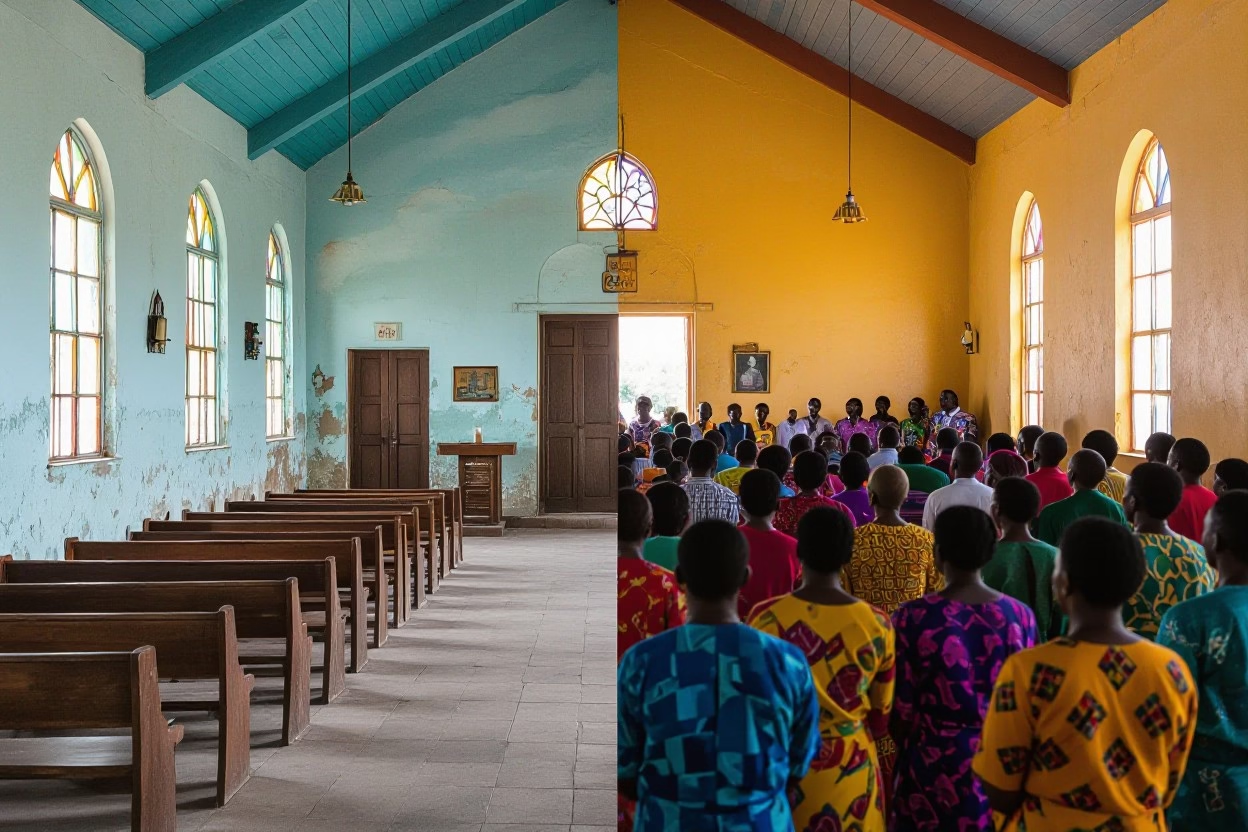
    Many people notice that Christianity is changing dramatically around the world, and you might wonder why church attendance is falling sharply in Europe and North America while thriving in Africa, Asia, and Latin America. This decline in the West stems from growing secularization, generational shifts, and a deep loss of trust in religious institutions. Meanwhile, the Global South experiences a vibrant boom fueled by youthful populations, dynamic local leadership, and churches serving vital social roles. Understanding these contrasting trends helps you grasp the evolving global face of Christianity today.

    Key Takeaways:

    • Christianity in the Western world is declining largely due to secularization, generational shifts, and reduced institutional trust caused by scandals and perceived irrelevance.
    • Younger generations in Europe and North America participate less in church activities and often identify as religiously unaffiliated or “nones.”
    • Philosophical and cultural changes, including increased individualism and pluralism, have led many in the West to seek spirituality outside traditional church frameworks.
    • In contrast, Christianity is rapidly growing in the Global South due to high birth rates, youthful populations, and active local evangelism adapted to cultural contexts.
    • The church in Global South countries often serves as a vital community center offering social services, which enhances its social relevance and influence.
    • Despite persecution and political challenges, Christianity in regions like Africa and Asia shows resilience, often flourishing through underground or house churches.
    • The global center of Christianity is shifting southward, with the majority of Christians expected to reside in Africa, Asia, and Latin America by 2050.

    Declining Faith: The Generational Shift in the West

    The Rise of the “Nones”

    The most striking hallmark of generational religious change across Europe and North America is the rapid rise of the “nones”—those who identify as having no religious affiliation. Surveys show this group growing steadily, particularly among millennials and Generation Z. In the United States, for example, over 30% of adults now report being religiously unaffiliated, a figure that climbs sharply in younger cohorts where it reaches nearly 40% or more. This trend reflects not just a drift away from organized Christianity but a broader cultural shift towards secular identity and skepticism about traditional religious claims.

    This surge among the “nones” signals a deeper erosion of Christianity’s social and cultural foothold. It correlates closely with declining church attendance, reduced belief in God, and fewer religious practices such as prayer and scripture reading. Many in this group express dissatisfaction with the church’s perceived stance on contemporary social issues or feel religion simply doesn’t resonate with their life experiences. The fast expansion of the “nones” is transforming the religious landscape, presenting challenges for churches seeking relevance in an increasingly secular society.

    Trends in Youth Engagement with Religion

    Younger generations display markedly different patterns of religious engagement compared to their parents and grandparents. Data highlights that church attendance among adolescents and young adults has fallen sharply over recent decades, with weekly attendance rates in many Western countries now below 20% for this age group[7][2]. Instead of formal church involvement, many young people express interest in spirituality outside traditional institutions, exploring mindfulness, alternative beliefs, or personal moral frameworks[4]. This reflects a broader cultural inclination toward individualism and skepticism about authority, including religious authority.

    Moreover, religious disaffiliation among youth often links to perceptions of the church as out of step with modern values, especially around LGBTQ+ inclusion, gender equality, and social justice. The institutional scandals and historic abuses that have come to light further compound this distrust, making many hesitant to embrace Christianity in its conventional form. However, this disengagement does not necessarily equate with the disappearance of spiritual seeking—instead, it points to a shifting mode of engagement where religious identities are more fluid and less labeled.

    Programs that focus on authenticity, social relevance, and community connection have seen some success in retaining or attracting youth involvement. Churches that adapt to offer inclusive spaces and address social concerns find openings to rebuild trust. Still, without significant innovation, many traditional congregations risk continued decline among young demographics who favor diverse, non-institutional spiritual expressions.

    Trust Erosion: Institutional Failures and Their Impact

    Scandals and Abuse within the Church

    Younger generations often cite the systematic scandals and abuse cases within Western religious institutions as a key factor in their growing disengagement. The Catholic Church, in particular, has faced numerous high-profile revelations of sexual abuse by clergy, coupled with institutional cover-ups that span decades. Research shows that trust in the Church as an institution dropped significantly after these scandals surfaced, with many congregants feeling betrayed by the very leaders meant to uphold moral authority. The ripple effect has extended beyond Catholics, undermining confidence across broader Christian communities.

    The consequences of these failures go beyond headline tragedies. When you look at regions with the sharpest declines in church attendance—such as Western Europe and parts of North America—you’ll notice a strong correlation between exposure to scandal and sharp drops in membership[2][6]. The perception of hypocrisy—where doctrines preached do not align with actions taken by church leaders—feeds the wider secularization trend. This erosion of trust pushes many to abandon formal religious affiliation altogether, instead seeking spirituality through more individualized or alternative means.

    The Disconnection from Social Issues

    Many Western churches have further alienated themselves by appearing out of touch with contemporary social concerns, especially on LGBTQ+ rights, gender equality, and racial justice. Churches perceived as resistant or slow to respond to these movements foster a sense of exclusion among younger, more progressive demographics. You might notice that these stances conflict with the pluralistic and inclusive values that are increasingly dominant in public discourse. This clash leaves churches marginalized, seen as unwilling to engage constructively with the ethical challenges of modern life.

    Political entanglement has deepened this rift, as churches are often associated with conservative agendas, alienating potential believers who prioritize social justice. For example, surveys reveal that attitudes toward marriage equality and women’s rights strongly influence religious affiliation, with many younger people rating supportive stances as a sign of a church’s relevance and moral authority[2][6]. Where churches lag behind, they risk fading into cultural irrelevance, accelerating attendance drops and the rise of the “nones.”

    The impact of this disconnect becomes clearer when examining church attendance and membership data side-by-side with social attitudes. Regions with more progressive social climates tend to see sharper declines in traditional church loyalty, reflecting a growing sentiment that institutional religion fails to align with personal values and lived realities. This dynamic creates a feedback loop, where disaffection feeds institutional inertia and vice versa, making recovery more challenging for Western churches struggling to stay relevant amid rapid cultural shifts.

    Cultural Disengagement: The Rise of Individualism and Secular Thought

    Philosophical Movements Challenging Christian Doctrine

    The post-Enlightenment wave of existentialism and humanism has reshaped how many perceive meaning and morality, moving the focus away from traditional Christian frameworks. Thinkers like Sartre, Camus, and Nietzsche emphasized individual freedom, authenticity, and the inherent absurdity of existence, which challenged the church’s claims of absolute truth and divine purpose. This philosophical shift encouraged younger generations in the West to prioritize personal experience and ethical autonomy over institutionalized belief.

    Alongside existentialism, pluralism and secular ethics have gained traction in public discourse, promoting a worldview where multiple belief systems coexist without one holding primacy. This pluralistic landscape diminishes Christianity’s cultural centrality, as people increasingly embrace spiritual bricolage or wholly secular identities. In effect, the church’s once-dominant narrative competes with diverse philosophies that question doctrines like salvation, sin, and divine judgment, feeding into the broader decline in religious commitment.

    Technology’s Role in Shaping New Worldviews

    The digital revolution exposes you to an unprecedented diversity of ideas and communities, often outside religious parameters. Online forums, social media, and accessible academic content have democratized knowledge, allowing you to explore secular, agnostic, and alternative spiritual perspectives without geographical or institutional barriers. This environment accelerates the fragmentation of religious authority as the internet fosters individual exploration rather than collective adherence.

    Moreover, the rise of algorithms and personalized content delivery means your worldview can be continuously reinforced by tailored information streams, sometimes creating echo chambers that challenge traditional Christian teachings. Platforms like YouTube and Reddit host thousands of channels and groups debating theology, philosophy, and secularism, which often present Christianity as outdated or incongruent with modern values, particularly regarding equality and scientific understanding.

    Technology also facilitates the prominence of “nones,” those who disaffiliate from organized religion but still seek meaning through digital communities centered on mindfulness, ethics, or human rights. Podcasts and apps focused on meditation, well-being, and rational inquiry compete with churches for your attention and commitment, contributing to shifting patterns of faith engagement in the West.

    The Physical Manifestations of Decline

    Church Closures Across Europe and North America

    Many cities and towns across Europe and North America are witnessing a significant number of church closures due to dwindling congregations and financial constraints. In the UK, for example, over 1,500 churches have closed in the past two decades, with Catholic and Protestant parishes alike consolidating or merging to cope with fewer attendees. This trend stretches across the continent, where iconic churches once central to community life now stand empty or are repurposed into museums, residential apartments, or even commercial spaces. The pattern signals not just a loss of religious practice but also changing urban landscapes and priorities.

    In North America, the decline can be seen in sharp attendance drops leading to parish closures and church sales. A recent Gallup poll reported a continued fall in weekly church attendance, hitting historic lows, which directly affects churches’ financial sustainability. Some denominations have responded by closing multiple local churches together, creating regional hubs instead. These closures often provoke public debate, highlighting the tension between preserving architectural heritage and accommodating new social realities shaped by secularization and shifting demographics.

    The Impact on Community Structures

    Churches in many Western communities have historically served not only as places of worship but as vital hubs for social gatherings, support networks, and charitable activities. Their decline disrupts this intricate web of social cohesion. You’ll find that neighborhoods once anchored by church-run events and programs now lack similar local institutions to foster connection and collective identity. This absence often leaves vulnerable populations without reliable access to community support, especially older adults who depended on church outreach.

    The erosion of church-based community structures also affects cultural continuity and local traditions. Annual events, holiday festivities, and rites of passage frequently centered around churches have diminished in scale or disappeared altogether. This can contribute to a broader sense of fragmentation and loss of shared purpose among residents, reducing opportunities for intergenerational interaction and mutual aid.

    Moreover, the decline reveals a gap in social services that churches once filled—from food banks to counseling centers—especially in areas where government or secular organizations haven’t stepped in to replace these roles. Without these established social anchors, you may observe increased social isolation and a weakening of informal support systems, further challenging community resilience in the face of economic and demographic stressors.

    The Global Surge: Unpacking Growth in the Global South

    Demographic Dynamics Fueling Growth

    The explosive growth of Christianity in Africa, Asia, and Latin America is deeply tied to demographic realities. You can observe in regions like Sub-Saharan Africa that birth rates remain among the highest globally, with many countries maintaining fertility rates above four children per woman. This youthful population naturally increases the number of potential new Christians through family growth alone. In countries such as Nigeria and the Democratic Republic of Congo, populations are projected to double or even triple by 2050, providing a massive base for church expansion.

    Beyond births, conversion plays a significant role fueled by urban migration and social change. As cities grow rapidly, young people encounter new ideas and forms of worship that often feel more immediate and relevant than traditional institutions. This demographic momentum isn’t just a statistic; it actively shapes the vibrancy and resilience of churches, keeping them forward-looking and growing even as Western congregations shrink.

    The Role of Charismatic and Indigenous Leadership

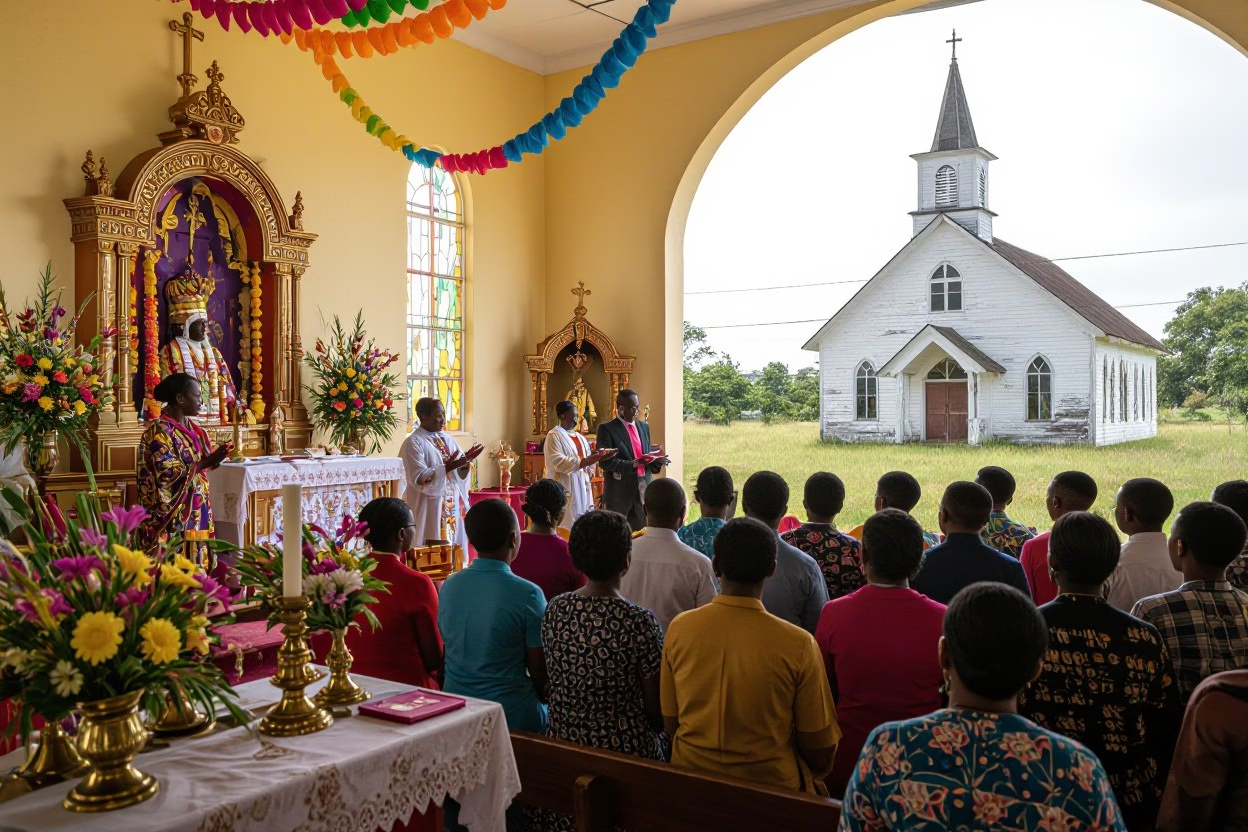
    Charismatic and indigenous leadership styles have reinvented Christianity’s appeal across the Global South. Many churches embrace Pentecostal and charismatic movements, which emphasize experiential worship, healing, and prophecy. These elements resonate with local spiritual sensibilities, making Christianity feel authentic and deeply personal. Leaders who arise from within the community—not foreign missionaries—bridge cultural gaps and adapt theology to fit social contexts. This contrasts sharply with Western churches, where congregants often perceive leaders as distant or institutionally out of touch.

    In places like Brazil, Kenya, and the Philippines, church leaders have become prominent public figures who combine pastoral care with entrepreneurial and social activism. Their influence extends beyond worship into healthcare, education, and poverty alleviation programs. This holistic approach anchors churches as indispensable parts of community life and enhances institutional trust—something largely eroded in Western contexts.

    These leaders are often bilingual or multilingual, adept at mixing indigenous languages with global Christian liturgies, which further strengthens cultural relevance. Their ability to contextualize worship while staying connected to the global church network creates a dynamic balance between local identity and universal faith. The experience of navigating persecution or legal limitations also refines their leadership strategies, making them remarkably adaptable and resilient—a vital factor in sustained growth amid hardship[9][11].

    Community Resilience: Churches as Social Support Systems

    Providing Services Beyond Spiritual Needs

    In many parts of the Global South, churches serve as much more than places of worship—they act as critical providers of vital social services. You’ll find that in rapidly urbanizing regions of Africa, Asia, and Latin America, churches often manage schools, health clinics, and food distribution programs, meeting immediate needs that governments and other institutions frequently fail to address. For example, in Nigeria and Kenya, Christian organizations deliver basic healthcare to underserved rural areas, significantly improving local health outcomes.

    These social services strengthen the church’s position within communities and deepen engagement among congregants. When churches step in to fill gaps in education and welfare systems, they become trusted social hubs, fostering long-term loyalty. This direct involvement in everyday life contrasts sharply with many Western contexts, where churches increasingly struggle to maintain relevance amid widespread social safety nets and declining institutional trust.

    Adapting to Urbanization and Changing Demographics

    The rise of megachurches in cities across the Global South reflects how Christianity has adapted to the pressures and opportunities of rapid urban growth. In places like Lagos and São Paulo, you’ll see congregations that attract tens of thousands, offering contemporary music, dynamic preaching, and community events tailored for young professionals and families navigating busy urban lifestyles. This urban church model contrasts with the often aging and shrinking rural parishes typical in the West.

    Churches have also responded to shifting demographics by incorporating local languages, cultural expressions, and leadership styles that resonate with diverse populations. This contextualization allows congregations to remain both culturally relevant and spiritually engaging. For instance, Pentecostal and charismatic movements often blend indigenous music and communal worship practices, creating a powerful sense of belonging and identity that appeals particularly to younger urban dwellers.

    Expanding beyond traditional Sunday services, many urban churches in the Global South offer vocational training, counseling, and networking opportunities, directly addressing the complex needs of migrants and the urban poor. These adaptations not only sustain growth but also foster resilience, enabling communities to thrive despite economic hardships and social change.

    The Emerging Megachurch: A New Face of Global Christianity

    Characteristics of Megachurches in Urban Centers

    Megachurches in the Global South typically draw thousands of worshippers weekly, often congregating in purpose-built facilities equipped with state-of-the-art audiovisual technology and multifunctional spaces. These urban centers emphasize vibrant, high-energy worship services that blend local cultural elements with contemporary music styles, creating an immersive experience that feels both familiar and inspiring. Their services often include multiple language options or incorporate regional dialects, reflecting a deep commitment to accessibility and community engagement. Infrastructure-wise, these churches frequently function as social hubs, offering classrooms, childcare, health clinics, and business incubators alongside traditional religious activities.

    Unlike many Western churches facing declining attendance and financial strain, Global South megachurches benefit from rapid urbanization and rising middle-class populations who seek spiritual communities aligned with their social realities. Leadership structures in these churches are generally dynamic and adaptive, with pastors directly engaging congregants and leveraging media platforms ranging from radio and television broadcasts to social media livestreams. This blend of localized context and modern communication makes the megachurch model particularly effective in growing and sustaining large followings amidst the continent’s fast-paced urban environments.

    Their Appeal to Young Professionals and the Middle Class

    Young professionals and the urban middle class in many Global South cities gravitate toward megachurches because these institutions articulate faith in ways that resonate with their aspirations and daily experiences. Services are intentionally scheduled to accommodate busy work weeks, often including evening events, networking meetups, and seminars that connect spiritual messages with personal development and entrepreneurship. You’ll find that sermons frequently address practical topics such as financial stewardship, career challenges, and mental health, effectively bridging the often-perceived gap between faith and modern professional life.

    Megachurches also appeal through their community-building efforts, offering opportunities to connect with peers beyond Sunday worship. Small groups, social clubs, and volunteer networks foster a sense of belonging while addressing social needs relevant to this demographic. Additionally, the emphasis on contemporary worship music, multimedia presentations, and relatable preaching styles helps maintain engagement and challenge traditional notions of church being static or out of touch. This connection is particularly strong among those who might otherwise feel alienated by rigid or hierarchical religious institutions.

    The presence of skilled, charismatic leaders who embody both spiritual authority and modern professional success further amplifies the megachurches’ appeal to these groups. When pastors and church staff integrate entrepreneurial skills with theological teaching, they model a holistic approach to faith that includes economic empowerment and social mobility. Consequently, you see megachurches emerging not only as spiritual centers but also as influential players in urban middle-class culture, shaping social values and providing platforms for leadership development across the Global South’s rapidly growing cities.

    The Shifted Landscape: Reassessing Christianity’s Global Center

    Predictions for the Future of Christianity by 2050

    By 2050, the demographics of global Christianity will look markedly different from today. The Global South—encompassing Africa, Asia, and Latin America—is projected to house nearly 70% of the world’s Christians, a monumental shift from the mid-20th century when Europe and North America dominated Christian populations. This trend is driven largely by high birth rates and sustained conversions in these regions, in contrast to aging populations and secularization in the West. You can expect vibrant Christian communities in countries like Nigeria, Brazil, and the Philippines to continue expanding, influencing not only religious practice but also local politics, social services, and even global Christian networks.

    Meanwhile, Christianity in Europe and North America will likely consolidate into smaller, more diverse expressions rather than maintain large institutional churches. The rise of “nones” and individualized spiritualities suggests that organized Christianity may become increasingly fragmented, with traditional denominations losing their social authority. Yet, some faith communities in the West will adapt by embracing more inclusive theologies and new forms of worship that resonate with changing cultural values. Still, the overall center of gravity—socially, culturally, and numerically—will firmly rest in the Global South, shaping the future ethos and outreach strategies of Christianity worldwide.

    The Potential for Global Dialogue Between Regions

    The enlarged role of the Global South in Christian demographics opens up significant opportunities for global dialogue that challenge old hierarchies and hegemonies within Christianity. African and Asian church leaders, often characterized by their grassroots, charismatic, and Pentecostal approaches, bring fresh theological perspectives grounded in resilience amid persecution and practical community support. These insights could enrich Western churches struggling with decline and relevance. If Western institutions listen carefully, this exchange might foster mutual learning where the West benefits from the vitality and adaptability displayed by Global South communities, while the South gains from Western resources and theological scholarship.

    This dialogue is not without tensions. Historical power imbalances and differing views on issues such as gender roles, sexuality, and ecclesiastical authority complicate potential alliances. However, you should view these interactions as a necessary evolution within Christianity’s global ecosystem. Increasingly, conferences, mission partnerships, and digital platforms are facilitating conversations across continents. Such exchanges could bridge divides, helping churches worldwide address shared challenges like secularization, social justice, and interfaith relations by pooling diverse approaches and resources.

    Moreover, this emergent global conversation extends beyond theology into the practical realms of community development and social activism. You might see Global South churches offering models for engaging marginalized populations through health clinics, education, and poverty alleviation efforts—areas where Western churches have waned. Simultaneously, Western churches could contribute by advocating for religious freedom, human rights, and environmental care on international stages where Global South voices increasingly have moral authority. Together, this partnership could generate a more holistic Christian witness in an interconnected world.

    Conclusion

    With this in mind, you can see that the contrasting trends in Christianity’s presence across regions are shaped by deeply rooted social, cultural, and demographic factors. In the West, your experience may reflect a landscape where Christianity is less dominant, influenced by secularization, diminished institutional trust, and shifting cultural values that emphasize individualism and pluralism. This creates an environment where traditional church participation declines, and alternative forms of spirituality or non-affiliation become more common. Understanding these dynamics helps explain why many Western societies are experiencing shrinking congregations and doubts about organized religion’s relevance.

    At the same time, you should recognize that the Global South tells a very different story. Here, Christianity thrives through its dynamic, locally-led expressions that engage younger populations and adapt to cultural contexts. Your awareness of how churches function as centers of community support, vibrancy, and resilience under pressure reveals why this region is becoming the new heartland of global Christianity. By appreciating these divergent developments, you gain a clearer picture of how Christianity’s global future will be shaped by the interactions between demographic change, social needs, and cultural adaptation in very different parts of the world.

    FAQ

    Q: What are the main reasons behind the decline of church attendance in Western countries?

    A: The decline in Western church attendance is largely due to generational changes, where younger populations are less religious than previous ones, combined with increasing secularization. Additionally, loss of institutional trust from scandals and perceived hypocrisy, cultural shifts toward individualism and pluralism, and the diminished cultural relevance of traditional churches contribute significantly to this trend.

    Q: How does demographic change influence the growth of Christianity in the Global South?

    A: The Global South benefits from a young, rapidly growing population with high birth rates, which naturally expands Christian communities through family growth. This demographic momentum, coupled with conversions, fosters continued growth and vitality within churches in regions like Africa, Asia, and Latin America.

    Q: Why have churches in the Global South maintained higher levels of institutional trust compared to the West?

    A: Churches in the Global South often have strong local and indigenous leadership that is closely connected to their communities. This grassroots, charismatic approach, along with the delivery of crucial social services like education and healthcare, helps build and sustain trust, in contrast to the Western churches which have experienced scandals and perceived detachment from modern social issues.

    Q: In what ways have cultural and philosophical shifts contributed to Christianity’s decline in Western societies?

    A: Western societies have seen an increase in individualism, pluralistic worldviews, and secular philosophies that encourage spiritual exploration outside traditional religious institutions. Advances in science and technology also challenge the church’s role as a primary source of meaning, reducing its influence and appeal among many people.

    Q: How do churches in the Global South adapt to local contexts, and why is this important for their growth?

    A: Churches in the Global South adapt by incorporating local languages, cultures, and worship styles, often led by indigenous leaders. This contextualization makes Christianity more accessible and relevant to local communities, fostering a sense of ownership and participation that encourages growth and vibrancy in the faith.

    Q: What role does persecution play in the resilience and growth of Christianity in some Global South countries?

    A: In countries where Christians face persecution or legal restrictions, such as in parts of Asia, the faith often grows through underground and house churches. This persecution can strengthen community bonds and commitment, fueling a resilient growth despite external pressures.

    Q: How is the global center of Christianity shifting, and what are the implications for the future of the religion?

    A: The center of Christianity is moving away from Europe and North America toward Africa, Asia, and Latin America. By 2050, the majority of the world’s Christians are expected to live in the Global South. This shift means that Christian practices, leadership, and theological emphases will increasingly reflect the diverse cultures and experiences of these regions, shaping the future global identity of Christianity.

  • Building Cross-Cultural Church Connections in a Mobile World (Migration Focus)

    Building Cross-Cultural Church Connections in a Mobile World (Migration Focus)

    There’s a growing need for churches to adapt as migration rapidly diversifies congregations worldwide. They encounter both opportunities for renewal and challenges around integration. By creating welcoming spaces, embracing bilingual practices, and fostering shared leadership, churches become vital communities where migrants find belonging and empowerment. As they invest in mutual relationships and practical support, congregations not only enhance migrant wellbeing but also enrich their own spiritual life, reflecting a microcosm of God’s global family in today’s mobile, multi-ethnic world.

    Key Takeaways:

    • Creating welcoming church spaces provides migrants with a sense of belonging, safety, and opportunities to develop social capital.
    • Incorporating bilingual and bicultural practices supports migrants’ integration and enriches worship without compromising core beliefs.
    • Empowering migrants through shared leadership and service builds mutual respect and strengthens the entire congregation.
    • Partnerships between congregations and immigrant churches foster mutual learning, fellowship, and cultural exchange.
    • Engagement in church life connects migrants to broader community storytelling networks, enhancing civic participation and belonging.
    • Holistic ministry approaches combining spiritual care with practical support advance trust and show Christ’s love in action.
    • Intentional listening, celebrating diversity, investing in relationships, and broad collaboration expand the church’s impact in a mobile, diverse world.

    Creating Spaces of Belonging

    Churches become transformative places when they transcend mere hospitality and foster genuine belonging. Migrants often seek not only spiritual nourishment but also environments where they feel seen, valued, and connected. Intentional efforts to design spaces and experiences that affirm identity and dignity enable newcomers to move from isolation to active participation. This shift elevates the church from a transactional site of aid to a vibrant community that mirrors the diverse tapestry of God’s kingdom.

    Within such spaces, established members gain fresh perspectives, enriching their faith and broadening cultural understanding. The reciprocal nature of belonging builds social capital, reducing feelings of alienation while encouraging cross-cultural friendships and partnerships. This dynamic creates a foundation where migrants and longtime congregants alike contribute to a resilient and inclusive church identity.

    Designing Welcoming Environments for Migrants

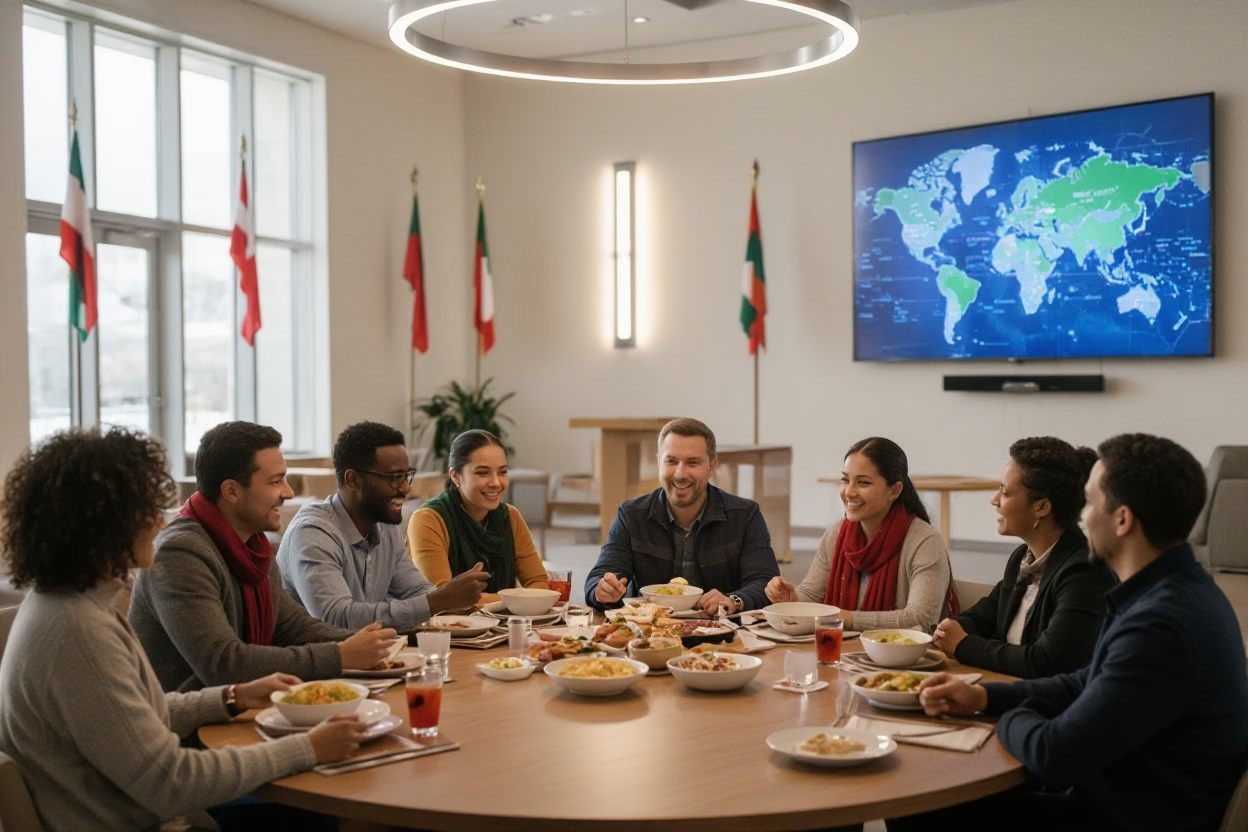
    Physical and symbolic markers convey belonging in powerful ways. Strategically placed signage in multiple languages, culturally resonant artwork, and inclusive worship practices signal openness and respect. For example, a church in Sydney integrates English, Spanish, Arabic, and Mandarin on directional signs and bulletin materials, immediately easing newcomers’ navigation and fostering comfort. Spaces designated for informal fellowship, such as shared meal areas where traditional foods are brought and shared, help bridge cultural divides.

    The subtle incorporation of familiar cultural expressions in worship—like diverse musical styles or bilingual prayers—enhances participation without compromising theological integrity. This bicultural and bilingual approach not only supports migrants’ transition but also invites all attendees to experience a richer, more expansive expression of faith. Such environments demonstrate a lived theology of inclusion and celebrate diversity as an asset rather than a challenge.

    Fostering Social Capital through Community Engagement

    Social capital emerges when relationships extend beyond church walls into neighborhoods and workplaces, creating networks of mutual support. Migrants often arrive with limited social connections, and churches that facilitate friendships, mentoring, and communal activities serve as vital hubs for social integration. A notable example is a Minneapolis church that organizes monthly community service days, where migrant and long-term members work side by side on local improvement projects, strengthening trust and solidarity.

    These engagements allow migrants to build practical connections while contributing their own skills and experiences. Churches that intentionally create such opportunities move beyond one-way assistance to cultivate environments where migrants become active agents of change and community builders. This approach not only enhances individual wellbeing but also promotes the flourishing of the wider neighborhood.

    Research supports that churches serving as centers of social capital can mitigate the risks associated with social exclusion and isolation. By linking migrants to local storytelling networks—informal clusters of relationships tied to shared histories and civic activities—churches empower newcomers to participate fully in civic life. This networked integration encourages greater community stability and fosters a collective resilience that safeguards against divisions often exacerbated by rapid demographic shifts.

    Embracing Language and Cultural Fusion

    Migrants often arrive with distinct linguistic backgrounds that shape how they engage with church life. Creating bilingual environments within congregations not only facilitates understanding but also signals a deep respect for cultural identity. Churches incorporating multiple languages in services, announcements, and educational programs help bridge divides, making participation accessible and meaningful. For example, a church offering simultaneous translation or alternating sermons between languages sees higher attendance and retention among migrant members, demonstrating that language inclusion is a practical key to sustained integration.

    The blending of cultural expressions alongside language enriches the spiritual experience for all congregants. When churches welcome diverse cuisines during fellowship gatherings or celebrate festivals significant to different communities, they foster a multifaceted worship environment. These practices address the emotional and social needs migrants have, reducing isolation and encouraging authentic relationships across cultural lines. The mutual sharing of traditions offers existing members an opportunity to broaden their worldview and deepen empathy, nurturing a unified yet diverse congregation.

    Implementing Bilingual and Bicultural Practices

    Programs that actively incorporate bilingual materials and bicultural cues create an inviting atmosphere where migrants feel seen and valued. This may include bilingual hymnals, signage in multiple languages, or outreach materials tailored to specific communities. Congregations that incorporate these strategies report a notable increase in engagement, especially among younger migrants who navigate multiple cultural identities. These efforts also minimize language barriers that often persist in secular institutions, positioning the church as a beacon of inclusivity.

    Training volunteer interpreters or employing bilingual staff strengthens communication channels and helps bridge cultural nuances that simple translation may miss. Additionally, bicultural practices manifest in the recognition and integration of cultural customs within worship times, such as incorporating cultural dress or customary gestures of greeting. Such intentional bridging of language and culture fosters a sense of belonging that extends beyond the service, encouraging migrants to actively participate in ministry and leadership opportunities.

    Blending Worship Styles for Inclusive Communities

    Worship services that blend musical styles, liturgical elements, and spiritual expressions from multiple cultures create a richer, more inclusive environment. This synthesis respects the doctrinal core while allowing cultural distinctives to resonate within the communal worship setting. For instance, some churches alternate between traditional hymns and contemporary songs influenced by diverse global rhythms, engaging a broad spectrum of worshippers. This approach affirms the spiritual depth migrants bring and invites established members to experience faith anew through fresh cultural lenses.

    Research indicates that multi-style worship not only enhances participation but also reduces cultural tension within congregations. Churches blending charismatic praise with solemn liturgy, or integrating storytelling traditions alongside scripted prayers, model unity without erasing differences. This holistic worship design cultivates a sense of shared identity and mutual respect as members recognize their collective contributions to the church’s life and mission.

    Moreover, churches that embrace blended worship provide platforms for migrant musicians and worship leaders to contribute authentically, empowering new voices within the community. This practice counters tendencies toward cultural dominance and helps dismantle barriers that might otherwise marginalize migrant members. As a result, the church becomes a dynamic, living space that reflects the global diversity of God’s family.

    Empowering Migrants through Shared Leadership

    Churches that move beyond viewing migrants solely as beneficiaries of help begin to unlock transformative potential within their communities. Inviting migrants into meaningful leadership roles not only affirms their gifts but actively reshapes congregational life. Evidence from diverse ministries shows that when migrants assume responsibilities in worship planning, pastoral care, and community outreach, they bridge cultural divides and foster trust across long-standing and newly arrived members alike. Their unique experiences enrich decision-making processes and inspire fresh visions that reflect a truly global church identity.

    Empowerment through shared leadership enhances a sense of ownership among migrants, which in turn strengthens commitment and participation. Migrants who serve as leaders or ministers gain confidence and practical skills that resonate beyond the church walls, supporting broader social integration. Models from multiple cities demonstrate that this approach encourages second-generation migrants to remain engaged, preventing attrition that often results from cultural disconnection. The church thus becomes a dynamic space where diverse talents coalesce into a unified mission.

    Transitioning from Service to Empowerment

    Many congregations start with good intentions by providing services—such as language classes, job referrals, or cultural orientation—for migrants. However, transitioning from a service framework to one of genuine empowerment involves intentional shifts in posture and practice. This means creating structures where migrants are invited to propose initiatives, lead committees, and participate in governance rather than exclusively receiving aid. For example, churches in metropolitan areas like Toronto and Berlin have found success by involving refugee leaders in program design, resulting in more relevant and sustainable ministry outcomes.

    Moving beyond a helper-recipient dynamic also challenges churches to examine power imbalances and cultural assumptions. Empowerment acknowledges migrants as co-creators of community, not just beneficiaries. This reorientation enhances relational equity and increases resilience within the congregation. When migrants are empowered, their diverse voices and leadership styles enrich church life and inspire wider congregational engagement with multicultural realities.

    Cultivating Leadership Skills in New Congregants

    Developing leadership capacity among migrants requires dedicated investment in training, mentorship, and experiential learning opportunities. Churches that establish tailored leadership development programs provide migrants with theological education, practical ministry skills, and confidence-building workshops adapted to their cultural contexts. For instance, congregations partnering with seminaries or nonprofit leadership institutes often report greater success in integrating new leaders into established church structures.

    Intentional mentorship facilitates the transfer of institutional knowledge while honoring migrants’ distinct perspectives. Small group leadership, youth ministry roles, and outreach coordination offer accessible entry points to leadership that help build competence and trust over time. Offering language support alongside ministry training further ensures barriers do not impede participation. Such holistic approaches produce leaders who are not only effective within the church but able to serve as brokers in the broader community.

    Enhancing leadership skills among migrants also involves recognizing and harnessing informal leadership capacities already present. Many migrants bring experience from community organizing, business, or pastoral ministry in their countries of origin. Churches that actively identify and integrate these competencies create hybrid leadership models that draw strength from varied backgrounds. Peer-led training cohorts and leadership residencies have proven effective in nurturing these qualities, fostering an environment where new congregants develop into visionary, culturally fluent church leaders.

    Building Collaborative Networks

    Cross-cultural church connections thrive when congregations actively build networks that transcend individual communities. Collaborative networks enable churches to pool resources, exchange knowledge, and coordinate efforts in serving migrant populations more effectively. By working together, churches create a stronger collective presence that not only addresses immediate needs like language support or employment assistance but also fosters long-term integration and leadership development among migrants. These networks often include partnerships with nonprofits, local agencies, and other faith communities, amplifying the church’s capacity to provide holistic care and build bridges across cultural divides.

    Such collaboration fosters a dynamic environment where diverse voices influence decision-making and ministry design. Instead of isolated programs, networks encourage fluid partnerships that respond swiftly to changing migration patterns and community needs. Churches embedded in these collaborative frameworks frequently report increased trust among members and migrants alike, reflecting deeper social capital and a shared commitment to mutual flourishing. These networks can also reduce duplication of services and create avenues for cross-cultural worship and fellowship, thus enriching the spiritual life of all involved.

    Twinning with Immigrant Churches for Mutual Growth

    Twinning arrangements between established congregations and immigrant churches serve as powerful vehicles for mutual learning and relationship-building. By pairing churches from different cultural backgrounds, twinning fosters shared leadership opportunities and joint initiatives that celebrate cultural distinctiveness while uniting around common faith values. These partnerships often include combined worship services, intercultural prayer meetings, and collaborative community outreach projects that dismantle social barriers and deepen a sense of belonging for migrants and long-standing members alike.

    One documented example involved a predominantly Anglo congregation partnering with a recently arrived Ghanaian church, resulting in a monthly joint service alternating languages and worship styles. This arrangement not only nurtured cross-cultural friendships but also saw migrant leaders stepping into key ministry roles, highlighting the empowering aspect of such twinning efforts. Beyond worship, twinning facilitates resource sharing—ranging from pastoral training to social service programs—enhancing both churches’ capacities to meet the diverse needs of their growing congregations while modeling unity within diversity.

    Engaging in Community Storytelling Initiatives

    Storytelling initiatives in church settings offer migrants a platform to share their experiences, identities, and hopes, contributing significantly to their social integration. These narratives become part of broader “storytelling networks” that connect individuals to local neighborhoods and civic life, cultivating empathy and understanding across cultural lines. Beyond individual testimonies, storytelling projects often incorporate multimedia approaches—such as video documentaries or digital archives—that preserve migrant histories and highlight their contributions to the community. Churches that facilitate these initiatives help migrants reclaim their voices, fostering belonging and resilience while enriching the congregation’s collective memory and identity.

    Engagement in storytelling also functions as a relational bridge, drawing in long-term residents who might otherwise remain distant from migration realities. By participating in shared storytelling events or exhibitions, established church members gain insights into migrants’ journeys, breaking down stereotypes and building trust. These interactions form important social capital that supports civic participation, mental wellbeing, and neighborhood cohesion. Churches integrating storytelling with other ministry activities—such as language learning or cultural celebrations—create holistic environments where migrant narratives inform not only social integration but also spiritual growth.

    Expanding community storytelling initiatives further can include partnering with local schools, libraries, and cultural institutions to host intergenerational workshops where migrants and longtime residents co-create stories reflecting the area’s evolving demographics. Digital storytelling platforms provide additional opportunities for preserving these narratives, ensuring migrants’ voices are accessible beyond immediate church walls. Such approaches underscore the transformative potential of storytelling to amplify marginalized voices, promote intercultural dialogue, and actively shape inclusive community identities.

    Holistic Approaches for Lasting Integration

    Integration extends far beyond spiritual nourishment, demanding comprehensive strategies that address the multifaceted realities migrants face. Churches fostering cross-cultural connections increasingly adopt holistic models that weave together spiritual support with tangible services, recognizing that unmet practical needs can hinder full participation and belonging. By attending to areas such as language proficiency, employment, housing stability, and mental health, congregations create environments where migrants are equipped not only to survive but to thrive within both church and society. These approaches ultimately reinforce trust, deepen relationships, and cultivate resilience across cultural divides.

    Thoughtful engagement with migrants involves leveraging the church’s unique position as a community hub to bridge gaps between newcomers and local systems. When churches integrate social services with spiritual care, they embody a lived theology of love and hospitality that resonates powerfully amid migration challenges. This integration also benefits the wider congregation by fostering empathy, dismantling stereotypes, and unlocking shared leadership contributions from migrants who bring diverse experiences and skills. Such holistic ministries serve as models for other institutions navigating rapid demographic change, highlighting how faith communities can creatively respond to complex social realities.

    Addressing Practical Needs Beyond Spiritual Care

    Many cross-cultural churches now offer targeted programs that meet practical needs head-on, ranging from language classes and job readiness workshops to counseling and legal aid referrals. One urban congregation, for example, partners with local vocational training centers to provide migrants with certification courses aligned to regional labor market demands. This kind of direct intervention bridges the gap between faith community support and economic empowerment, enabling newcomers to achieve sustainable self-sufficiency. By addressing barriers such as limited English proficiency or credential recognition, churches equip migrants with tools vital for independent living and greater confidence in their new environment.

    Furthermore, pastoral teams often coordinate volunteer networks to deliver wrap-around services, including childcare during classes, transportation assistance, and peer mentorship. This comprehensive care model acknowledges the multiple stresses migrants face and reduces isolation by fostering a supportive relational fabric. Programs combining spiritual nurture with practical aid have demonstrated increased retention and active participation in church life, as migrants embody full membership rather than remain peripheral recipients of benevolence. Offering such holistic care also exemplifies the gospel’s call to love one’s neighbor in tangible, relevant ways.

    Connecting Migrants to Local Resources and Support

    Effective integration depends on swift, informed connection to existing community resources beyond the church walls. Many congregations build strategic partnerships with nonprofits, health providers, legal clinics, and municipal services to create referral pathways that ensure migrants access comprehensive support. For instance, a mid-sized church might maintain a regularly updated resource directory in multiple languages, supplemented by trained volunteers who assist newcomers in navigating bureaucratic systems. This networked approach extends the church’s ministry reach and diminishes obstacles like misinformation or fear of authority that frequently affect migrant populations.

    Beyond referrals, churches function as trusted intermediaries in the exchange of knowledge and cultural orientation, helping migrants understand local customs, rights, and responsibilities. These efforts enable newcomers to engage more confidently within civic spaces and community organizations, advancing integration beyond mere survival to active and informed citizenship. Partnerships that involve joint workshops, legal aid clinics hosted on church premises, or collaborative social events promote sustained relational contact between migrants and institutional actors, thereby deconstructing barriers and nurturing inclusive belonging.

    Expanding these local connections further, some churches participate in city-wide coalitions that target systemic challenges migrants face, such as affordable housing shortages or healthcare access disparities. Through advocacy and shared resources, they contribute to structural changes that create more equitable environments for all, reinforcing the church’s role as both sanctuary and catalyst for social transformation.

    Final Words

    Upon reflecting on the dynamics of building cross-cultural church connections in a migration-driven world, one sees that intentional inclusivity and shared leadership are foundational to fostering vibrant, unified communities. When churches actively engage with migrants by creating welcoming spaces, embracing bilingual and bicultural practices, and empowering newcomers to participate fully in ministry and leadership, they nurture environments where all members can contribute and grow. This intentional approach not only supports the spiritual and social wellbeing of migrants but also revitalizes the broader congregation through enriched cultural exchange and mutual learning.

    Furthermore, by establishing partnerships, encouraging storytelling, and providing holistic support, churches can serve as vital hubs for integration and belonging within their wider communities. They become microcosms of God’s global family, where diversity is celebrated and collaboration flourishes. As migrants and established members build authentic relationships grounded in respect and shared purpose, the church strengthens its witness and reflects a more inclusive vision of faith that adapts to the realities of a mobile world.

    FAQ

    Q: Why is it important for churches to create welcoming spaces for migrants?

    A: Welcoming spaces help migrants feel a sense of belonging and safety, often providing a “home away from home.” Churches that engage migrants intentionally become centers for wellbeing and social capital development, offering friendship, assistance, and emotional support that benefit both migrants and established members through new relationships and perspectives.

    Q: How can churches effectively incorporate language and cultural diversity into their services?

    A: Churches can embrace bilingual and bicultural practices by offering services, signage, and activities in multiple languages, and by blending worship styles and cultural traditions without compromising core doctrines. This approach supports migrants’ sense of belonging and facilitates long-term integration in ways that many secular institutions do not.

    Q: What does shared leadership with migrants look like in a church setting?

    A: Shared leadership involves moving beyond merely assisting migrants to actively empowering them by recognizing and utilizing their skills and gifts. Churches invite migrants into leadership roles, ministries, and service opportunities, creating genuine, respectful relationships where migrants contribute meaningfully to the church community.

    Q: What are the benefits of twinning relationships between churches and immigrant congregations?

    A: Twinning creates partnerships for mutual learning, fellowship, and shared leadership. It can include joint worship services, service projects, and cultural exchanges that enhance unity, break down cultural barriers, and foster deeper connections between diverse groups within the church body.

    Q: How does participation in church life aid migrants’ integration into the broader community?

    A: Being involved in church enables migrants to connect with local “storytelling networks” — informal relationships and shared narratives — which promote civic engagement and neighborhood belonging. This connection strengthens their sense of community and supports social integration beyond the church walls.

    Q: In what ways can churches provide holistic support to migrants beyond spiritual care?

    A: Holistic support includes practical assistance such as language classes, employment help, counseling, and access to social services. Providing these resources reflects Christ’s love in action and helps build trust across cultural divides, addressing multiple aspects of migrants’ needs during their integration process.

    Q: What practical steps can churches take to build effective cross-cultural connections?

    A: Churches can start by listening attentively to migrants’ stories and needs, celebrating diversity through cultural expressions like music and food, investing time in building genuine friendships, offering leadership training and ministry opportunities, and partnering with other churches and community organizations to enhance their impact.