Unity within your diverse congregation is both a powerful opportunity and a delicate challenge. As you navigate differing cultural backgrounds and theological perspectives, you must intentionally foster an environment that honors differences while building on shared faith. This guide offers practical strategies to help you promote humility, inclusive leadership, and open dialogue, all grounded in the universal message of the Gospel. By embracing respectful communication and diversity as a strength, you can lead your church toward a deeper, lasting fellowship that overcomes division and reflects the body of Christ authentically.
Key Takeaways:
Focus on shared core Christian beliefs to unite members while respecting doctrinal differences.
Encourage humility and mutual respect to foster open, respectful dialogue amid disagreements.
Promote intentional leadership diversity to reflect the congregation’s cultural and ethnic makeup.
Incorporate inclusive worship styles and communication methods that celebrate the congregation’s diversity.
Create safe spaces for honest conversations about race, culture, and tradition within the church.
Make prayer and reliance on God’s guidance central to efforts toward genuine unity and inclusion.
Celebrate diversity as a strength, highlighting diverse stories and perspectives to enrich the church community.
Foundational Christian Tenets: The Heart of Unity
Core Beliefs that Transcend Differences
Centering your congregation on the divinity of Christ and the authority of Scripture anchors unity amid diversity. These foundational doctrines provide a shared faith platform that surpasses cultural, ethnic, and doctrinal variances. While acknowledging differing interpretations, focusing on what unites—Christ’s saving work and God’s Word as ultimate truth—helps you keep unity intact without minimizing distinct perspectives.
Biblical Imperatives for Unity in Diversity
The New Testament models and commands unity within diversity, urging believers to maintain the bond of peace (Ephesians 4:3) and celebrate many members forming one body (1 Corinthians 12:12-27). Scripture calls you to embrace differences while cultivating love, tolerance, and mutual submission, reflecting the diverse yet unified nature of the Body of Christ.
Paul’s letters to early churches emphasize that unity does not demand uniformity; rather, your church can flourish by valuing varied gifts and backgrounds as expressions of God’s design. For example, Romans 12:4-5 illustrates how each believer functions uniquely but imperative to overall health. Drawing on this biblical framework, fostering humility and respect becomes an active obedience to God’s will, challenging you to transcend cultural barriers and doctrinal disputes to embody the holy unity Christ prayed for (John 17:21).
Cultivating Humility: The First Step Towards Harmony
Encouraging Active Listening and Empathy
You foster unity by encouraging active listening that goes beyond hearing words to understanding the emotions and perspectives behind them. Empathy grows as members intentionally suspend judgment and engage with stories from different cultural and doctrinal backgrounds. Research shows that congregations practicing active listening report 30% fewer conflicts and experience deeper cross-cultural friendships. This creates a posture of holy humility where you meet others not as opponents, but as fellow heirs of grace, opening space for genuine connection and growth.
Navigating Disagreements with Grace and Respect
The way you handle disagreements sets the tone for lasting unity. Approaching conflicts with grace means embracing differences without forcing uniformity, enabling open, respectful dialogue rooted in shared faith. Promoting these conversations reduces division by up to 40% in diverse churches[1][3]. You model Christ’s humility by listening attentively, responding kindly, and allowing space for varying convictions to coexist under the umbrella of the Gospel.
Disagreements inevitably arise in diverse congregations, but you can transform these moments into opportunities for spiritual maturity and deeper understanding. Keeping conversations anchored in the authority of Scripture and the divinity of Christ—foundational beliefs that unite the body—helps keep dialogue constructive rather than confrontational. Facilitating small group discussions where members practice reflective listening and ask clarifying questions often diffuses tension and fosters empathy. Employing a commitment to respect over winning preserves relationships, allowing you to navigate differences without fracturing fellowship. This approach not only protects unity but also enriches the community by highlighting diverse viewpoints as valuable parts of the church’s collective wisdom.
Embracing Leadership Diversity: The Role of Influencers
Representation in Leadership Roles: Why It Matters
Visible diversity in leadership signals that all members of your congregation have a valued voice and place. When leaders reflect the cultural, ethnic, and racial makeup of the church, it fosters trust and demonstrates that inclusivity moves beyond rhetoric to practice. Studies show that congregations with diverse leadership experience stronger community engagement and greater resilience in addressing racial and cultural challenges. You strengthen unity by inviting leaders who not only share the vision but also embody the multiplicity of the Body of Christ in their life stories.
Strategies for Inclusive Recruitment and Promotion
Expanding your leadership pool means actively seeking out candidates from underrepresented backgrounds through intentional outreach and unbiased selection criteria. Implementing structured recruitment processes, such as diverse search committees and clear role descriptions that emphasize cultural competencies, ensures fairness. Offering leadership development and mentorship programs targeted at emerging leaders from various demographics encourages sustained growth and succession planning. Such strategies transform leadership from a fixed status into a dynamic, inclusive calling aligned with your congregation’s diversity.
To deepen inclusive recruitment and promotion, conduct regular audits of leadership demographics compared to your congregation’s composition, identifying gaps and opportunities. Partnering with local multicultural ministries and community organizations can also widen the talent pipeline. By removing informal networks that often lead to homogeneous selections, you open the door to fresh perspectives and innovations. Transparent communication about leadership pathways and the criteria used for promotion helps break down barriers of skepticism. Incorporating ongoing training in cultural awareness and anti-bias equips decision-makers to evaluate candidates holistically, fostering a leadership team that models the unity you seek to cultivate in the congregation.
Worshiping Together: Crafting a Shared Experience
Integrating Varied Worship Styles and Practices
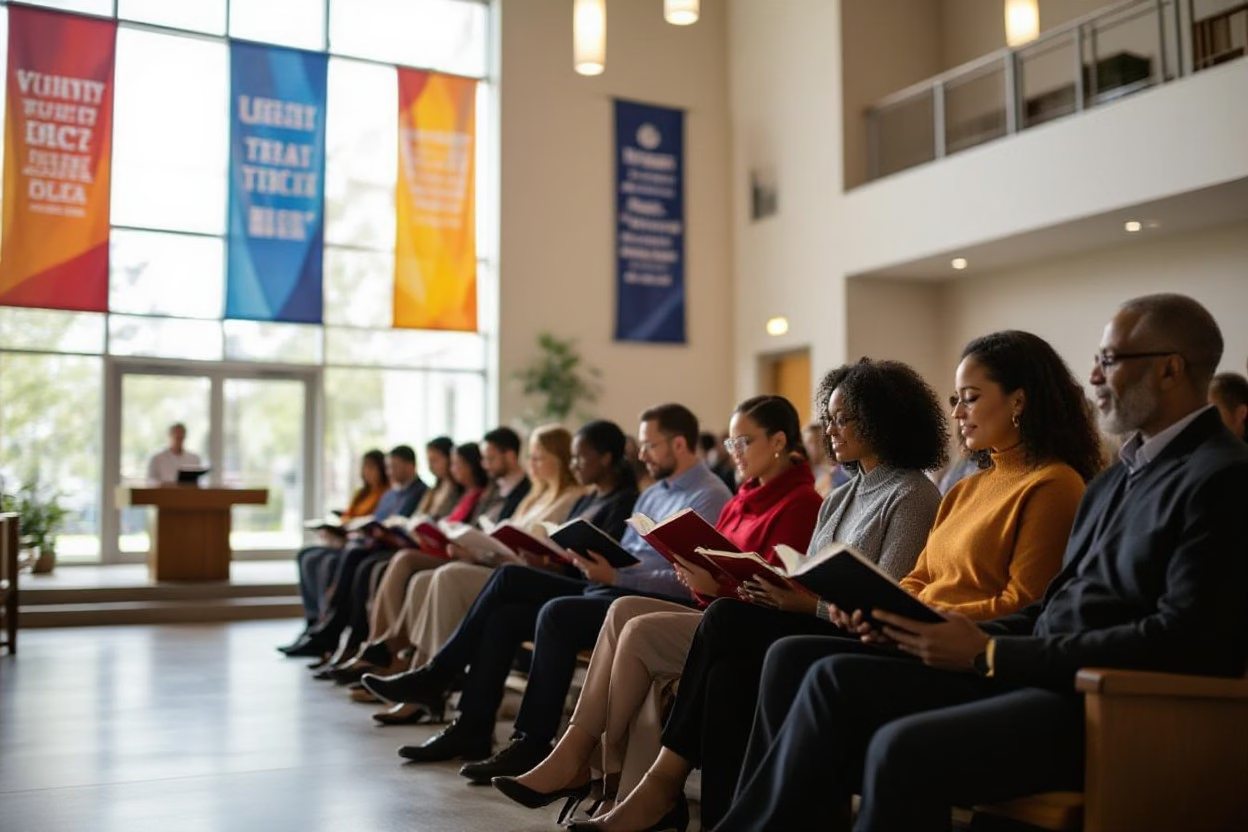
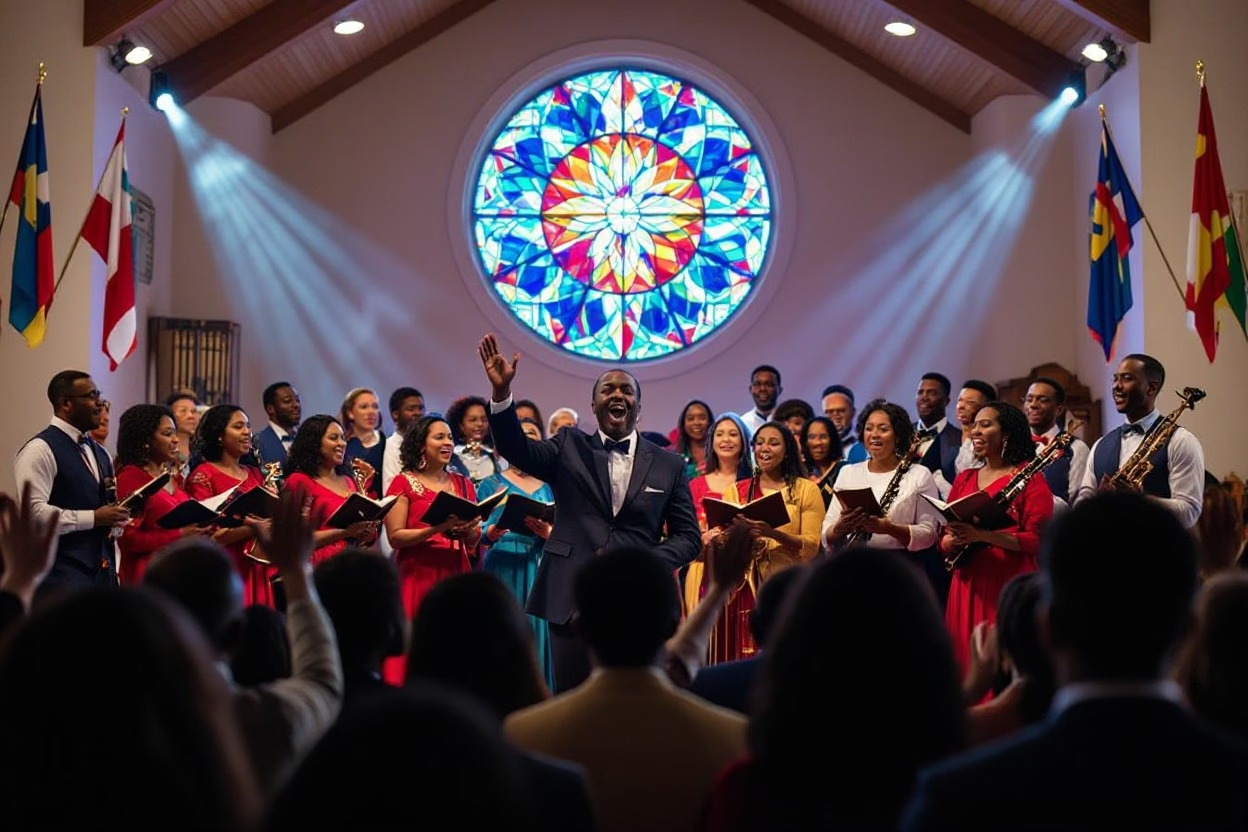
Drawing from different worship traditions enriches your congregation’s spiritual life and honors its diversity. Blending contemporary praise music with traditional hymns, incorporating elements like gospel choirs alongside liturgical readings, allows members to experience worship inclusively. This approach encourages participation across generations and cultures, turning services into a celebration of unity through diverse expressions. Experimenting with varied rhythms and artistic forms not only reflects your congregation’s makeup but also fosters a deeper sense of belonging and shared encounter with God.
Utilizing Multilingual Approaches in Worship Services
Incorporating multiple languages in worship enhances accessibility and affirms the cultural identities within your church. Offering bilingual prayers, scripture readings, or song verses ensures that non-native speakers feel included and valued. Strategic use of languages during worship signals that all voices matter and creates a welcoming atmosphere where linguistic diversity becomes a bridge rather than a barrier. This practice aligns with biblical principles of unity amid diversity and strengthens communal bonds.
Expanding on multilingual worship, many churches successfully integrate translation technologies, such as live interpretation or projected lyrics in several languages, enabling real-time understanding and participation. For example, a multicultural congregation in Houston offers Spanish and English worship streams simultaneously, supported by volunteer interpreters and multilingual materials. These efforts demonstrate how embracing linguistic variety promotes inclusiveness and spiritual connection without fragmenting the congregation. You can also incorporate language learning moments—brief explanations or teaching—within services to build empathy and cross-cultural appreciation among members, cultivating a richer, more unified worship experience.
Creating Open Dialogue: Safe Spaces for Conversation
Structuring Small Groups for Cross-Cultural Connections
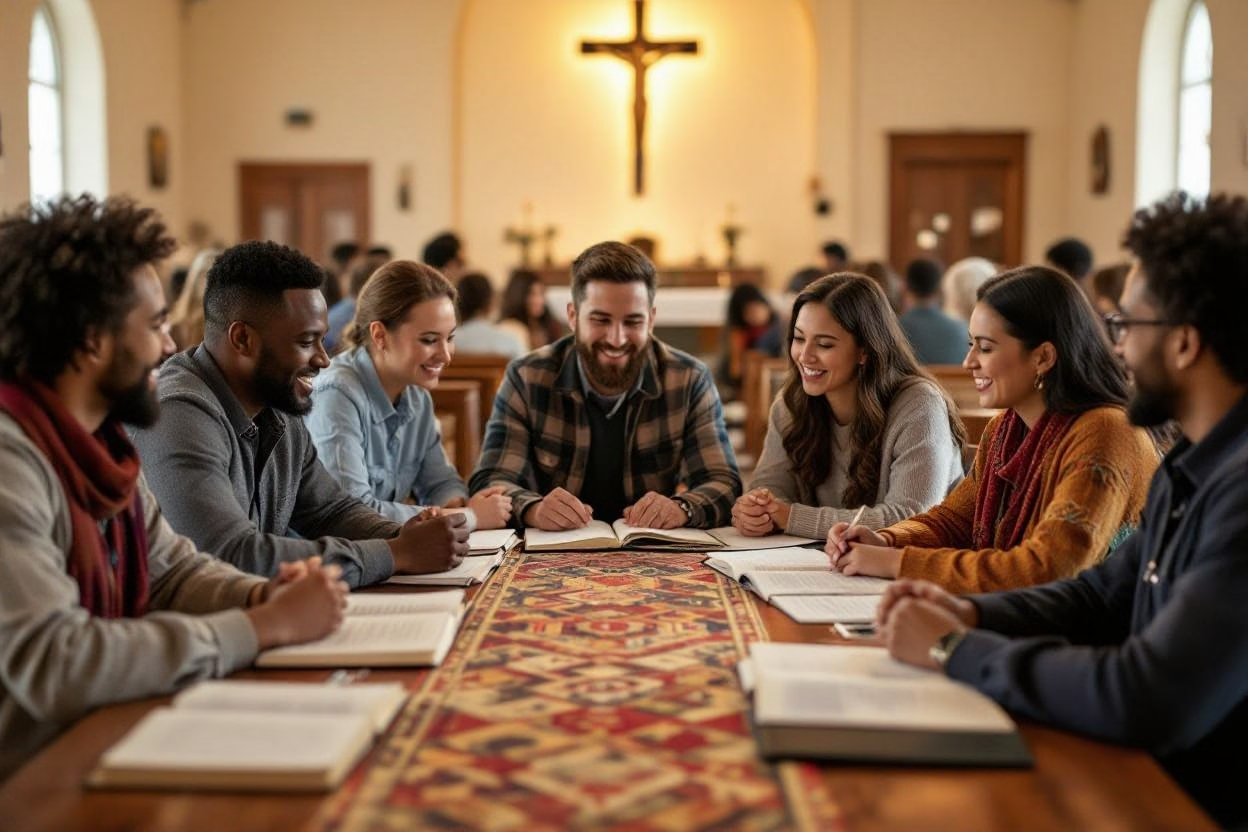
Design small groups with intentional diversity by mixing participants from different ethnic, cultural, and age backgrounds. Groups of 6-10 members provide an intimate setting where authentic relationships can form over time. Incorporate shared activities, such as discussing scripture passages or service projects, that encourage mutual learning and perspective-taking. This structure fosters deeper empathy and breaks down cultural barriers, helping you cultivate friendships across traditional divides within your congregation.
Facilitating Difficult Conversations on Race and Tradition
Guide conversations around race and tradition with clear ground rules that emphasize respect, listening, and vulnerability. Use facilitators trained in cultural competency to navigate emotionally charged topics, highlighting common Christian values that unite rather than divide. Introducing storytelling and personal testimony can humanize perspectives and reduce defensiveness, enabling open, honest dialogue rather than mere debate.
Effective facilitation recognizes that discussions about race and tradition often surface deep emotions alongside historical wounds. You can create a supportive atmosphere by acknowledging feelings without judgment and encouraging participants to ask questions seeking understanding rather than confrontation. Integrating biblical frameworks on reconciliation and unity helps anchor the conversation in shared faith, providing a foundation that transcends cultural differences. Over time, these dialogues build trust, reduce implicit biases, and empower your congregation to address conflict constructively, fostering long-term harmony.
The Power of Prayer: Seeking Divine Guidance
Incorporating Prayer into Unity Initiatives
Integrate prayer intentionally within your church’s unity efforts by dedicating specific moments during meetings, services, and events to seek God’s guidance. Structured prayer times that focus on healing divisions and softening hearts can transform gatherings, helping members move beyond surface-level cooperation to deep spiritual connection. Using diverse prayer expressions—spoken, silent, or written—allows all voices to participate, reinforcing inclusion while inviting the Holy Spirit to lead your congregation toward lasting harmony.
Fostering a Culture of Intercessory Prayer for the Congregation
Encourage members to regularly intercede on behalf of those from different backgrounds, cultures, and experiences within the congregation. This collective spiritual commitment nurtures empathy and unity by aligning hearts in supplication for shared growth and understanding. Developing prayer ministries that focus on reconciliation and diversity fosters an environment where unity is not only spoken about but actively prayed into existence.
Establishing such a prayer culture often begins with training intercessory teams to pray specifically for racial and cultural reconciliation, healing historic wounds within the church body. Some churches have seen participation increase by over 40% after introducing guided prayer journals focusing on unity themes, reinforcing personal accountability. Hosting quarterly prayer nights devoted exclusively to diverse concerns highlights the congregation’s commitment to spiritual inclusion, strengthening bonds as you collectively seek God’s transformative power.
Prioritizing the Gospel Message: Beyond Cultural Preferences
Identifying and Promoting Core Gospel Values
You can strengthen unity by centering your congregation on core gospel values like grace, redemption, and the love of Christ, which transcend cultural divides. Highlighting these foundational truths allows members from diverse backgrounds to connect deeply, even when worship styles or traditions differ. Teaching on Christ’s salvation and Biblical authority continually redirects focus away from secondary issues, fostering a shared identity grounded in eternal, unchanging principles.
Sharing Testimonies that Align with Universal Truths
Sharing testimonies that reflect the universal truths of the gospel fosters a powerful sense of connection across cultural lines. When members hear stories of redemption and transformation shaped by Christ’s love, the message resonates beyond ethnic or cultural specifics, emphasizing the shared spiritual journey. These testimonies inspire empathy and demonstrate how the gospel actively works in varied contexts, uniting your congregation around a common faith story.
Expanding on this approach, you can curate testimonies that emphasize themes like forgiveness, hope, and God’s faithfulness, ensuring they are relatable to all congregants regardless of background. For example, a testimony about overcoming hardship through Christ’s grace speaks universally, encouraging listeners to find common ground. Including testimonies during services or in church publications also promotes diversity by highlighting voices from different ethnicities and traditions, illustrating how the gospel transcends cultural boundaries while affirming each person’s unique journey of faith.
Building Bridges: Partnerships with Multicultural Organizations
Collaborative Outreach Programs: Engaging the Community
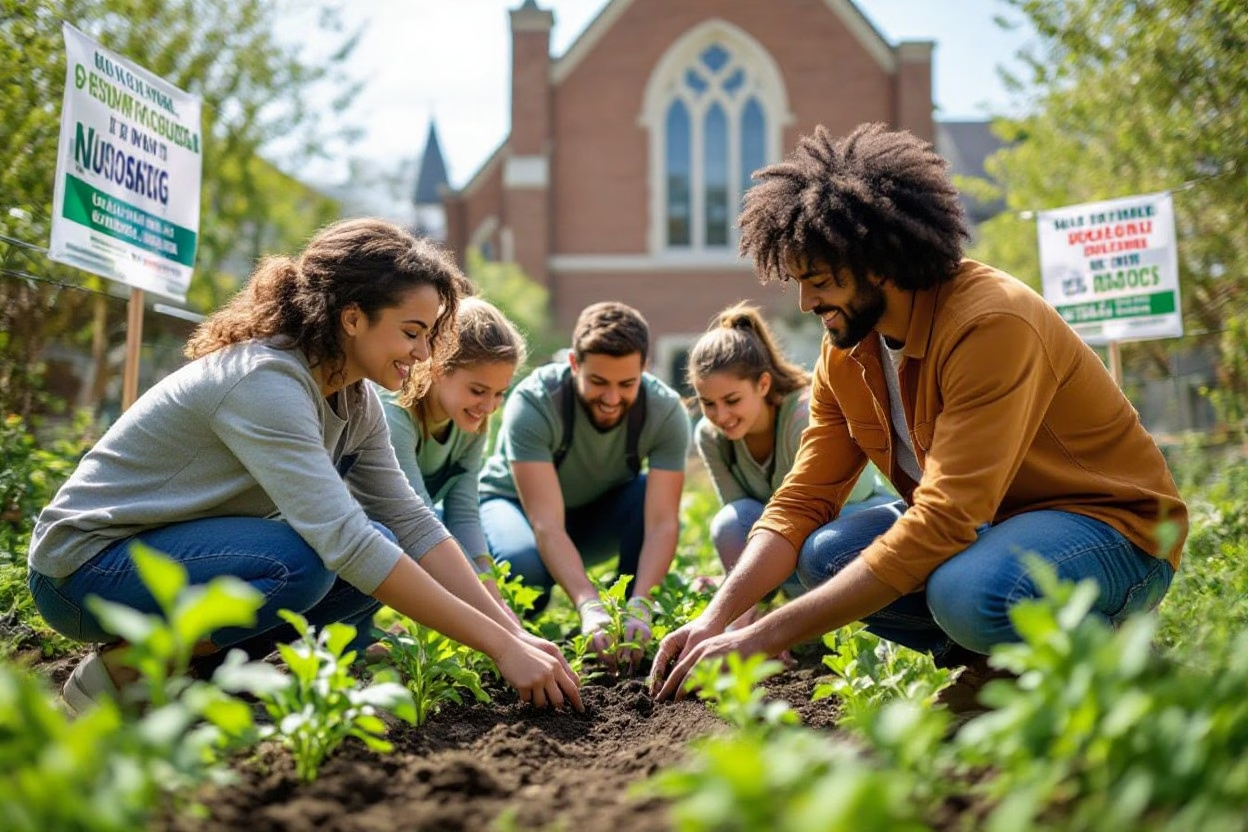
You can expand your church’s reach by partnering with multicultural organizations to co-host outreach programs that address local needs, such as food drives, language classes, or cultural festivals. These collaborative events not only serve the community practically but also create authentic opportunities for cross-cultural relationships to form. For example, teaming up with a local immigrant support center to offer ESL classes attracts diverse attendees and demonstrates your commitment to embracing all backgrounds in tangible ways.
Leveraging Partnerships for Broader Impact
Engaging in strategic partnerships allows your church to amplify impact beyond what isolated efforts can achieve. By aligning with ministries and nonprofits that already have trust within diverse communities, your church can participate in larger initiatives that address systemic issues like poverty and racial reconciliation. Such partnerships also help challenge your congregation to view itself as part of the global Body of Christ, inspiring shared responsibility and vision.
Establishing long-term relationships with multicultural organizations creates a sustainable network that supports both evangelistic and social justice efforts. For instance, churches collaborating with city-wide coalitions have reported increased volunteer engagement and resource sharing, which deepens community ties and broadens ministry influence. Leveraging these partnerships invites diverse leadership and cultivates a culture of mutual learning, where your church grows in both faith and cultural competency.
Celebrating Diversity: A Strength, Not a Challenge
Highlighting Unique Contributions of Diverse Members
Recognizing the distinct gifts and experiences each member brings creates a vibrant, unified body. When you intentionally highlight individuals’ stories and talents—from cultural insights to unique ministry approaches—you foster a sense of belonging and empowerment. This practice not only validates diverse expressions of faith but also enriches the entire congregation, as fresh perspectives inspire new ways to serve and grow.
Promoting Events that Showcase Cultural Richness
Organizing events that celebrate different cultural backgrounds enables your congregation to experience the multifaceted beauty within the church. You can invite diverse worship styles, traditional foods, and artistic expressions that reflect your members’ heritage. Such gatherings transform abstract diversity into tangible fellowship, drawing members closer through shared joy and appreciation.
Events like multicultural Sundays, festivals, or heritage months serve as dynamic platforms where language, music, dance, and storytelling highlight the global reach of the Gospel. For example, a church that hosts an annual “Unity in Christ” celebration featuring Hispanic mariachi music, African drum workshops, and Asian liturgical dance demonstrates how cultural expressions deepen worship and understanding. These occasions become opportunities for education and relationship-building, breaking down barriers while emphasizing that every culture enriches the Body of Christ.
Patience in Progress: The Long Game of Unity
Understanding the Timeframe for Change
Transformation within diverse congregations often unfolds over years rather than months. You’ll face setbacks and breakthroughs as attitudes shift slowly, shaped by ongoing relationships and repeated opportunities for humility and dialogue. Studies show that churches embracing cultural diversity experience meaningful change after consistently investing in inclusive leadership and shared worship practices for at least three to five years. This gradual process reflects the complexity of reconciling deeply rooted traditions and worldviews, requiring stamina to maintain momentum without expecting instant results.
Measuring Growth and Success in Unity Initiatives
Tracking progress goes beyond attendance or demographic numbers; look for qualitative indicators such as the frequency of cross-cultural interactions and increased comfort in discussing sensitive topics. Surveys that assess feelings of belonging and representation can reveal shifts in the congregation’s pulse. You might also notice more diverse voices in leadership meetings or the integration of multicultural worship elements as tangible signs of advancement. These markers help you evaluate what’s working and where further intentionality is needed.
Delving deeper, the success of unity initiatives depends on identifying measurable yet nuanced outcomes. For example, in one multiethnic church, a six-month mentoring program pairing members from different backgrounds led to a 40% increase in reported cross-cultural friendships. Feedback from these relationships provided insights into areas of lingering misunderstanding. Another effective approach involves longitudinal surveys administered annually to gauge shifts in attitudes toward inclusivity and shared mission. By combining objective data with personal testimonies, you can refine strategies that nurture sustained, transformative community growth.
Educational Initiatives: Learning Together for Growth
Workshops and Seminars on Cultural Competence
Leading targeted workshops equips your congregation with practical skills to navigate cultural differences thoughtfully. Sessions focusing on communication styles, implicit bias, and historical contexts foster empathy and greater understanding. For example, a recent seminar series in a multiethnic church led to a 40% increase in cross-cultural volunteer collaboration within six months, demonstrating how education directly strengthens unity through shared knowledge and experience.
Resource Development for Ongoing Learning
Developing accessible, culturally diverse learning materials encourages sustained growth beyond one-off events. Curating books, podcasts, and study guides tailored to various backgrounds ensures your congregation engages continuously with perspectives that challenge and expand their worldview. Providing a dedicated online resource library or monthly discussion prompts invites deeper reflection and conversation centered on unity in faith.
Building a comprehensive resource hub involves selecting content that reflects the breadth of your church’s diversity, including theological works from diverse authors and testimonies from global Christian communities. Incorporating multimedia tools—such as video testimonies and interactive Bible studies—addresses different learning styles and keeps engagement high. Establishing a feedback loop where members suggest materials also strengthens ownership and relevance, fostering a culture of ongoing education that supports lasting unity.
Technology and Communication: Bridging Gaps
Utilizing Digital Media for Inclusive Messaging
Leveraging digital platforms allows your church to broadcast messages that resonate across cultural lines. Including sermons in multiple languages, sharing testimonies from diverse members, and featuring multicultural worship music on social media amplifies inclusivity. Churches that integrate visually diverse imagery and subtitles in videos report up to a 30% increase in engagement from minority groups[5]. Your website and newsletters become vital tools to showcase unity, ensuring every member feels represented and heard in the digital space.
Ensuring Accessibility for All Congregation Members
Digital communication must extend accessibility beyond language. Providing closed captions, sign language interpretation during livestreams, and mobile-friendly platforms addresses the needs of deaf, hard-of-hearing, and differently-abled members. Assistive technology integration signals your commitment to inclusiveness and expands participation. Accessibility features encourage broader connection, making it easier for all to join worship, small groups, and church events regardless of physical or sensory limitations[5].
Expanding accessibility involves more than basic accommodations. For instance, churches that adopted real-time translation apps and screen-reader compatible websites welcomed a more diverse attendance, including older adults and those with limited English proficiency. Accessibility audits conducted annually help track where barriers remain, allowing you to update digital tools continuously. Interactive platforms with customizable text sizes and audio descriptions assist visually impaired members as well. By embedding such technologies, you promote not only inclusion but an active invitation to engage fully in church life, strengthening unity through thoughtful, tangible actions.
The Role of Youth: Empowering Future Generations
Engaging Young Leaders in Unity Initiatives
Equip young leaders with meaningful roles in planning and leading unity-focused events and ministries. Involving youth councils or leadership teams that represent diverse backgrounds allows you to tap into fresh perspectives and energy. Studies show that churches with active youth participation in multicultural initiatives experience stronger cross-generational bonds and a deeper commitment to inclusion[5]. You can empower your young leaders by providing training on cultural intelligence and facilitating their voices in preaching, worship, and outreach programs, which builds ownership and vision for a unified congregation.
Mentorship Programs to Foster Cross-Cultural Relationships
Connecting youth across racial and cultural lines through mentorship programs creates intentional spaces for mutual learning and spiritual growth. When you pair young people from different backgrounds, it opens pathways for empathy and broadens their understanding of the Body of Christ. Effective mentorship models include consistent one-on-one meetings, shared service projects, and group discussions that highlight both diversity and unity within the faith community[5].
Delving deeper, mentorship programs that focus on cross-cultural relationships cultivate lasting friendships by embedding these interactions in practical ministry settings and spiritual disciplines. Regularly scheduled activities like joint Bible studies, cultural exchange nights, and community service help mentees and mentors build trust and break down stereotypes. Data from churches implementing such programs reveal increased youth retention and stronger inter-ethnic collaboration in church leadership over time[5]. Encouraging mentors to share testimonies and cultural traditions nurtures a spirit of holy humility and respect, which aligns with the broader goals of unity in your congregation.
Conclusion
Conclusively, creating unity in diverse Christian congregations requires you to actively embrace shared faith while valuing differences. By fostering humility, promoting inclusive leadership, encouraging open dialogue, and celebrating cultural richness, you build a community grounded in mutual respect and love. Your commitment to prayer and intentional actions invites God’s guidance, enabling your church to grow in genuine unity that honors both diversity and the Gospel message. This practical guide equips you to lead your congregation toward a deeper fellowship that transcends differences and strengthens the Body of Christ.
FAQ
Q: What are the foundational beliefs that help unify diverse Christian congregations?
A: Emphasizing core Christian doctrines such as the divinity of Christ and the authority of Scripture helps create common ground among believers. While recognizing doctrinal differences, focusing on these shared beliefs supports unity without dismissing individual convictions.
Q: How can church leadership contribute to fostering unity in diverse congregations?
A: Intentional leadership diversity is important. Churches should ensure that leadership and volunteer roles reflect the cultural, ethnic, and racial makeup of the congregation. This inclusivity empowers members, promotes representation, and models unity in diversity.
Q: What role does worship style play in creating an inclusive church environment?
A: Incorporating diverse languages, music, and worship traditions acknowledges the varied backgrounds within the congregation. This approach makes worship more accessible and meaningful for everyone, celebrating the richness that multiple expressions bring to communal praise.
Q: How can congregations address sensitive topics such as race and culture in a respectful manner?
A: Creating safe spaces for open dialogue is key. Churches can facilitate small groups and mentoring relationships that intentionally mix different backgrounds, encouraging honest conversations. This environment allows members to share experiences and build mutual understanding without fear of judgment.
Q: Why is prayer emphasized in efforts to promote unity in diverse churches?
A: Prayer serves as a foundation for seeking God’s guidance and grace in overcoming division. It invites the Holy Spirit to soften hearts and align the congregation’s focus on love and inclusion, fostering genuine fellowship beyond human efforts alone.
Q: How can a church balance honoring cultural traditions while prioritizing the Gospel message?
A: Focusing on the universal Gospel ensures the church’s identity is centered on Christ’s message rather than any single cultural practice. At the same time, celebrations of diversity acknowledge and appreciate different traditions, creating a harmonious blend that upholds faith while embracing cultural expression.
Q: What are practical steps for a church to sustain progress in building unity over time?
A: Patience and persistence are important as unity develops gradually. Churches should commit to ongoing prayer, respectful dialogue, and consistent actions that promote inclusion. Additionally, partnering with multicultural organizations and highlighting diverse stories help maintain momentum in fostering unity.
It’s important for you to understand how drifting from the centrality of the cross can deeply impact your spiritual journey. When you move away from the power and sacrifice of Jesus Christ, your faith weakens, and worldly distractions take hold. This shift leads to compromise, spiritual confusion, and separation from God’s purpose for your life. By staying firmly rooted in the cross, you embrace forgiveness, strength, and true transformation, maintaining a life aligned with God’s will and protected from the influences that seek to pull you away.
Key Takeaways:
Drifting away from the cross often begins with small compromises, such as neglecting prayer and Scripture.
Distractions from the world—like social media, materialism, and cultural influences—can slowly pull believers away from Christ.
Hebrews 2:1 urges believers to pay close attention to their faith to prevent gradual drifting from the truth of the gospel.
Choosing friendship with the world results in hostility toward God, as highlighted in James 4:4.
Compromise opens the door to deeper entanglement in sin, which ultimately enslaves those who do not turn back.
The cross remains a constant invitation for repentance, forgiveness, and restoration for anyone who has wandered.
Maintaining a strong spiritual foundation involves staying committed to prayer, Scripture, godly community, and keeping focus on Jesus.
The Centrality of the Cross
Historical Perspective on the Cross
Cross has always been a powerful symbol in Christian history, representing both suffering and salvation. From its early use by believers to proclaim Jesus’ sacrifice to its enduring presence in worship, the cross anchors the faith. Understanding its historical weight helps you grasp that the cross is not merely a relic but the foundation upon which Christianity stands, a constant reminder that Jesus bore the world’s sin to bring you redemption.
Theological Significance of the Cross
Across Scripture, the cross is the centerpiece of God’s redemptive plan. It reveals the depth of God’s love through Jesus’ sacrifice, providing forgiveness and reconciliation. The cross is where justice and mercy meet, allowing you to experience grace and new life through faith. This central truth shapes your understanding of salvation and motivates your walk with Christ.
At the heart of Christian theology, the cross represents victory over sin and death. It is not just an event but an ongoing source of power for transformation, breaking sin’s hold as John 8:34 reminds us: “everyone who commits sin is a slave of sin.” By embracing the cross, you are invited into freedom and continual renewal, aligning your life with God’s will and resisting the world’s pull to drift away.
The Cross in the Life of a Believer
Behind your daily faith journey, the cross stands as the constant call to surrender and commitment. It shapes how you live, confront temptation, and endure trials. The cross demands intentionality, urging you not to drift but to keep Christ at the center of your heart and actions.
In fact, living in the reality of the cross means actively choosing repentance and reliance on Jesus, as 1 John 1:9 encourages: “If we confess our sins, He is faithful and righteous, so that He will forgive us our sins and cleanse us from all unrighteousness.” This ongoing commitment keeps you anchored, helping you resist distractions and remain steadfast in your faith.
The Danger of Drifting
There’s a subtle but real danger when you begin to drift away from the centrality of the cross in your spiritual walk. It rarely happens overnight; rather, it is often a gradual distancing caused by distractions, compromises, or shifting priorities. If left unchecked, this drift can erode your faith, leaving you vulnerable to the world’s pull and ultimately drawing you further from the life God intends for you. Recognizing the signs and understanding the forces at work is imperative to staying anchored in Christ and His sacrifice.
Understanding Spiritual Drift
By allowing small, seemingly harmless compromises to accumulate—like neglecting prayer or skipping time in the Word—you open the door to spiritual drift. It begins when your focus shifts from intentionally pursuing Jesus to being passively influenced by the busyness and desires of life. Hebrews 2:1 warns against this slow fade, urging you to pay close attention so that you do not drift away from the faith you’ve heard. Staying alert to this process helps you resist losing sight of the cross.
Signs of Drifting Away from the Cross
From decreasing your time in prayer and Scripture to becoming more influenced by worldly values, signs of drifting often emerge subtly in your life. You might find yourself justifying decisions that don’t align with God’s will or tolerating behaviors that once felt clearly wrong. These warning signs indicate that your heart and mind are slowly separating from the foundation Christ provides.
It is important to acknowledge that what begins as a slight shift—missing church, engaging in idle talk, or relaxing convictions—can quickly harden into a lifestyle that moves you farther from God’s design. As John 8:34 reveals, sin desires more than a foothold; it seeks control. When these signs appear, they should prompt you to reevaluate your spiritual health and renew your commitment to the cross.
The Impact of Cultural Influences
Against the persistent pull of cultural trends and values, you face ongoing pressure that can erode your spiritual foundation. The world loudly promotes self-indulgence, materialism, and viewpoints that often conflict with biblical truth, challenging your allegiance to Christ and the cross.
A strong cultural influence can reshape your priorities, making it easier to drift without immediately noticing. Social media, entertainment, and societal attitudes can subtly reorient your values away from God’s word, fostering friendships with the world that James 4:4 warns against. Being aware of these influences and purposefully countering them with the power of Scripture is vital to remaining rooted in your faith and the sacrifice of Jesus Christ.
Consequences of Forsaking the Cross
Spiritual Consequences
Despite the many distractions that surround you, forsaking the cross leads to a gradual drifting from God’s presence and truth. Around your heart, spiritual dryness begins to set in as you neglect the Word and prayer, leaving you vulnerable to the world’s influence. Hebrews 2:1 warns you to pay close attention so you do not drift away, because failure to stay anchored in Christ results in a loss of direction and the weakening of your faith.
Emotional and Mental Consequences
Emotional turmoil often arises when you distance yourself from the peace found in the cross. The inner struggle grows as unresolved sin and guilt weigh heavily on your mind, causing anxiety and restlessness. Due to this disconnect from Christ’s sustaining grace, stress and confusion can cloud your judgment, making it difficult to experience true joy or contentment. The world’s distractions cannot fill the deep longing your soul has for purpose and peace.
Due to neglecting the power and sacrifice of Jesus, you become more susceptible to emotional instability. Without the spiritual foundation the cross provides, feelings of despair and isolation can intensify. Your mind is left to battle negative thoughts alone, while the calming assurance of forgiveness and redemption fades, making it harder to navigate life’s challenges with hope and strength.
Relational Consequences
Consequences on your relationships emerge as you drift from the cross’s influence. When your life is no longer governed by Christ’s love and humility, selfishness and pride can take root, leading to conflict and division with others. James 4:4 reminds you that friendship with the world creates enmity with God, and this often spills over into weakened connections with those around you.
And as you walk further from Christ’s example, your ability to foster patience, forgiveness, and selflessness in relationships diminishes. The cross is meant to shape how you relate to others, reflecting God’s grace and mercy. Without it, relational wounds deepen, community breaks down, and loneliness can become a painful reality.
The Power of the Cross
For you to truly grasp the significance of the cross, you must see it as the foundation of your faith, the source from which all spiritual blessings flow. The cross embodies God’s unmatched love, demonstrating the price Jesus paid for your redemption, transformation, and empowerment. It is not just a symbol but the very power of God to save, renew, and strengthen you amid a world eager to pull you away. When you focus on the cross, you embrace the source of grace that keeps you anchored and victorious in your walk with Christ.
Redemption and Forgiveness
After recognizing the weight of your sin and its grip, the cross offers you redemption and forgiveness. Through Jesus’ sacrifice, your sins are not only covered but fully cleansed, opening the way for restoration with God. 1 John 1:9 assures you that confessing your sins invites His faithful and righteous forgiveness, breaking the chains of guilt and shame that the world uses to hold you captive.
Transformation and New Life
By embracing the cross, you step into a process of transformation where your old self is replaced with a new creation in Christ. This new life empowers you to turn away from sin’s slavery, as John 8:34 warns, and to pursue the holiness and purpose God intended for you. The cross reorients your desires and actions toward God’s will, giving you a fresh start and a renewed identity centered on Christ.
Indeed, transformation through the cross goes beyond mere behavior change; it reshapes your heart, mind, and priorities. As you remain rooted in Jesus’ sacrifice, you begin to reflect His character more deeply, gaining strength to resist worldly influences and live out a faith that impacts everything around you. This ongoing renewal guards against drifting and anchors you firmly in God’s truth.
Empowerment through the Holy Spirit
For your walk to be effective, the power of the cross is complemented by the Holy Spirit, who empowers you to live according to God’s purpose. Through the Spirit, you receive strength to overcome temptations, wisdom to discern God’s voice, and boldness to stand firm against the world’s pressures. This empowerment is not optional but crucial to remain anchored in Christ amid life’s challenges.
The Holy Spirit acts as the active presence of Christ within you, transforming the cross from a distant event into a living reality. This ongoing empowerment fuels your daily obedience, fuels spiritual growth, and equips you to be a witness in a world often hostile to God. Without this power, the world’s distractions and temptations become overwhelming, but with it, you can stand strong and unmovable.
Staying Rooted in Christ
The Importance of Daily Devotion
One of the most effective ways to remain firmly grounded in Christ is through consistent daily devotion. This intentional time allows you to prioritize your relationship with Jesus amidst the distractions of life. As the world seeks to pull your attention away, daily devotion strengthens your heart and mind, fostering a spirit that resists drifting. Without this regular commitment, it becomes easier to let small compromises creep in, ultimately undermining your walk with God.
Engaging with Scripture Regularly
Staying connected to the Word of God is vital for maintaining your spiritual foundation. Scripture acts as both a guide and a guard, helping you to discern truth from the world’s many competing voices. The Bible calls you to pay close attention so you do not drift away (Hebrews 2:1), highlighting the necessity of frequent and deliberate engagement with God’s truth.
Consequently, regularly immersing yourself in Scripture transforms your thinking and anchors your values in Christ rather than the shifting tides of culture. It equips you to confront temptation and self-justification with God’s promises, preventing sin from gaining a foothold in your life. The habit of reading, meditating, and applying God’s Word keeps you rooted and steadfast in the face of worldly distractions.
The Role of Prayer in Maintaining Focus
Beside Scripture, prayer is a vital discipline that preserves your focus on Christ. It creates a direct line of communication with God, allowing you to express dependence, confess sin, and seek guidance. This continual dialogue nurtures intimacy with the Savior who calls you back whenever you begin to drift.
Devotion to prayer replenishes your spiritual strength and aligns your will with God’s purpose. It fosters an ongoing awareness of His presence, which empowers you to resist the enemy’s attempts to pull you away from the cross. Through prayer, you maintain the clarity and conviction necessary to live a life fully devoted to Jesus.
Building a Supportive Community
Keep in mind that remaining rooted in the power and sacrifice of Jesus Christ requires more than individual effort; it demands a network of believers who strengthen and uphold one another through shared faith and commitment.
The Value of Christian Fellowship
At the heart of sustaining your walk with Christ is Christian fellowship, where you engage with others who share your dedication to the cross. This connection nourishes your spirit, offers encouragement during trials, and counters the distractions the world offers. Hebrews 2:1 warns against drifting away, highlighting the need for a community that keeps you anchored in God’s truth and love.
Accountability in the Christian Life
Above all, accountability provides a framework where you can honestly examine your walk with Christ. It challenges you to stay faithful, confronts compromises before they take root, and supports your growth in holiness. Without this, it’s easy to justify small compromises that lead you away from the cross, as seen in James 4:4’s warning about friendship with the world.
Even when you feel strong in your faith, accountability partners help reveal blind spots and encourage repentance when you stray. This ongoing, loving correction empowers you to maintain integrity in your spiritual journey and resist the subtle drift from the life God has called you to live.
Encouraging One Another in Faith
Value the encouragement that comes from sharing your struggles and victories with fellow believers. Mutual support builds resilience against temptations that seek to pull you away from the cross, nurturing your heart through the trials of daily life.
Hence, when you uplift others, you not only strengthen their faith but also reaffirm your own commitment to Christ. This reciprocal encouragement aligns your desires with God’s will, helping you stay focused on the sacrifice that defines your salvation and sustains your hope.
Conclusion
Now, as you reflect on your spiritual journey, recognize that forsaking the foundation of the cross leads to a drifting that weakens your faith and leaves you vulnerable to the world’s influence. Your strength lies in remaining firmly rooted in the power and sacrifice of Jesus Christ. Only by continually embracing His grace and truth can you withstand temptation and grow in spiritual maturity. Choose to keep your focus on Him, allowing His sacrifice to shape your life, and you will find enduring hope and purpose amidst life’s challenges.
FAQ
Q: What does it mean to drift away from the centrality of the cross in a believer’s life?
A: Drifting away from the centrality of the cross involves gradually shifting focus away from the sacrifice and power of Jesus Christ. It often begins with small compromises—like neglecting prayer or Scripture—which lead to a life less anchored in Christ and more influenced by worldly values and desires.
Q: What are some signs that someone might be moving away from the foundational message of the cross?
A: Signs include decreased time spent in spiritual disciplines such as prayer and Bible study, growing comfort with sinful habits, prioritizing cultural or material interests over spiritual growth, and a diminished desire to live according to God’s will.
Q: Why is staying rooted in the power and sacrifice of Jesus Christ important for a Christian?
A: Staying rooted in Jesus’ sacrifice keeps believers aligned with God’s purpose, strengthens their resistance to temptation, and fosters ongoing spiritual growth. The cross is the source of forgiveness, transformation, and victory over sin; without this foundation, faith can weaken and drift into worldly influences.
Q: How does the world actively attempt to pull believers away from Christ and the cross?
A: The world draws believers away through distractions such as social media, entertainment, politics, and materialism. These can consume time and shape values, often promoting self-indulgence and desires contrary to God’s teachings, leading to a gradual distancing from Christ.
Q: What are the consequences of forsaking the foundation of the cross?
A: Forsaking the foundation of the cross can lead to spiritual drift, bondage to sin, and ultimately separation from God’s intended life for believers. It opens the door for sin to gain control, diminishing joy, peace, and purpose in one’s faith journey.
Q: How can believers keep themselves anchored in the power and sacrifice of Christ?
A: Believers can stay anchored by dedicating time to prayer, engaging regularly with Scripture, participating in godly community for accountability, and consciously choosing to live out the teachings of Jesus. Continuous repentance and reliance on God’s grace also maintain this connection.
Q: Is it possible to return to a right relationship with Christ after drifting away, and how?
A: Yes, it is possible to return. The cross remains available to all who repent and confess their sins. God’s forgiveness is promised to those who turn back to Him, cleansing them from unrighteousness and restoring their relationship. Sincere repentance and recommitment to Christ realign believers with His purpose and power.
Choices shape the course of your life, and when you align them with God’s Word, you set yourself on a path toward lasting blessings. By making faithful decisions grounded in biblical principles, you invite God’s guidance and favor into every area of your life. Though the rewards may not always be immediate, they are sure and eternal. To deepen your understanding of the incredible eternal rewards awaiting you, explore how living according to God’s instructions transforms both your present and your future.
Key Takeaways:
God’s Word serves as a guide to help us make good choices in every area of life, leading to peace, joy, and stability.
Obedience to God’s instructions may involve discipline and facing consequences, but it stems from His love for us.
Doing what is right can sometimes be challenging and may not bring immediate rewards, yet it plants seeds for a future harvest.
Choosing integrity, even under pressure, honors God and can lead to unexpected blessings and increased responsibility.
God sees every decision and motivation, and He will reward faithful actions at the right time.
Standing firm in right choices may lead to temporary loss or hardship, but it aligns us with God’s purpose and ultimate blessing.
Faithful decisions made daily build a lifetime of spiritual harvest and bring honor to God, who promises to honor those who honor Him.
Understanding God’s Guidance
Before making important choices, you need to recognize that God desires to guide every part of your life. His direction brings peace, joy, and stability, even when decisions seem difficult. By seeking His wisdom and trusting His Word, you align your path with His purpose, ensuring that the choices you make honor Him and lead to lasting rewards.
The Role of the Bible in Decision Making
At the center of God’s guidance is the Bible—your spiritual instruction manual. It provides clear principles and examples to help you navigate life’s challenges. When you base your decisions on Scripture, you’re not just choosing what feels right but what is aligned with God’s perfect will, setting you up for a life full of blessings and growth.
The Importance of Obedience
Role plays a vital part in your spiritual journey. Doing what God instructs, even when it’s difficult or unpopular, strengthens your faith and character. Obedience is a demonstration of your trust in God’s plan, and it activates the blessings He promises in His Word for those who honor Him.
But obedience goes beyond simple compliance; it reflects your commitment to live as God intends. Even when facing pressure to compromise or shortcuts that seem easier, faithfully following God’s commands sets you apart. Your consistent choice to obey, despite challenges, will produce a harvest of peace, favor, and eternal rewards that no one else may immediately see, but God always honors.
The Challenge of Doing Right
One of the toughest aspects of living by God’s Word is consistently making the right decisions, especially when doing so feels difficult or isolating. You may face moments where your values are tested, and the easy path is tempting. Yet, choosing what is right—because it’s right—sets you on a path toward peace, joy, and emotional stability. Your faithful decisions, although often challenging, plant seeds for a future harvest of blessings that God promises to honor in His perfect timing.
Facing Temptations and Pressures
The pressures you encounter—from friends, work, or society—can make standing firm in your beliefs feel overwhelming. You might feel tempted to compromise just a little, thinking no one will notice or that it will make things easier. However, God sees beyond the surface. When you choose to stand your ground and do what aligns with His Word, even if it costs you in the moment, you position yourself for long-term growth and spiritual reward.
The Impact of Choices on Relationships
Impact on your relationships is often one of the most immediate consequences of making faithful decisions. You might lose friends or feel isolated when you stick to your principles, especially if others around you choose differently. Yet, your obedience to God sets an example and builds a foundation of trust and respect that can strengthen your connections over time.
In addition, your choices influence not only your direct relationships but also your reputation and environment. When you honor God by acting with integrity, those around you eventually recognize your character and the stability it brings. Even if you experience rejection or misunderstanding initially, your steadfastness can inspire others and open doors to deeper, more meaningful interactions that reflect godly values.
The Rewards of Faithful Decisions
Despite the challenges and pressure you may face when making godly choices, your commitment to integrity brings lasting benefits. Choosing to align your actions with God’s Word may not always seem popular, but your choice is respected—by God and others who value righteousness. These faithful decisions lead to peace, joy, and emotional stability, setting you on a path toward harvesting the blessings God has prepared for you.
Immediate and Long-term Benefits
Immediate benefits of making wise, faith-driven decisions include inner peace and confidence in your actions, even when others disagree. Over time, these decisions build a solid foundation that yields greater emotional stability and joy. The harvest of your consistent obedience may not appear overnight, but as the principle of sowing and reaping shows, the long-term rewards are abundant and lasting.
God’s Promises for the Faithful
With every right choice you make because it’s right, you honor God—and He promises to honor you in return (1 Samuel 2:30). His Word assures you that faithful obedience, even when it costs you, positions you to receive His blessings in due season, making your life fruitful and aligned with His divine purpose.
Considering Scripture and personal experiences, you can trust that God sees every decision you make and why you make it. Though you might face setbacks or feel alone in your stand, God’s faithfulness means He will reward your obedience at the right time. This assurance helps you persevere, knowing your choices are cultivating a rich spiritual harvest that benefits you eternally.
Cultivating a Mindset of Integrity
Once again, integrity forms the foundation of a life aligned with God’s Word. When you commit to honest choices—even when it’s difficult or unpopular—you build a lifestyle that reflects God’s truth and love. Integrity means doing what’s right because it’s right, not for recognition or reward. This mindset strengthens your faith and shapes the way you navigate daily decisions, allowing you to experience the peace and joy God promises.
Building Character Through Choices
Any choice you make contributes to the development of your character. When you consistently choose honesty, kindness, and obedience to God’s Word, you reinforce values that lead to emotional stability and lasting spiritual growth. These small, faithful decisions create a strong foundation that will support you through challenges and temptations.
Trusting God’s Plan in Uncertainty
Cultivating trust in God’s plan is vital when you face uncertainty. Even when situations seem unclear or difficult, you can rely on God’s promise that following His guidance will ultimately lead to a fruitful harvest. Your faith allows you to stand firm and make wise decisions that honor Him, knowing that your perseverance will be rewarded.
Mindset deeply affects how you respond during uncertain times. Holding onto God’s faithfulness helps you act with confidence instead of fear, even when no immediate results are visible. By seeing your choices as seeds planted for a future harvest, you align your heart with God’s timing and purpose, securing blessings that go beyond the moment.
Practical Steps for Aligning Choices with Faith
For your daily decisions to truly reflect your faith, you need to intentionally seek guidance through God’s Word and live out its principles consistently. This means choosing actions that honor God, even when it’s difficult or unpopular. Embrace the process of planting wise seeds through each choice you make, knowing that the harvest of blessings will come over time as a result of your faithful obedience and perseverance in following God’s instructions.
Seeking God in Daily Decisions
After you face daily challenges or temptations, take time to consult Scripture and pray for wisdom before acting. Aligning your choices with God’s Word encourages peace, joy, and emotional stability, helping you navigate life’s pressures with confidence. By inviting God into even the small decisions, you ensure that your path honors Him and leads to lasting growth and blessings.
Accountability and Support Systems
Across your journey of faithful decision-making, having people who encourage, challenge, and pray with you strengthens your resolve. Surround yourself with those who share your values and can help you stand firm when difficult choices arise. This support cultivates consistency and helps you remain true to your commitment to honor God in every area of your life.
It is often through the encouragement and accountability of others that you find the courage to do what’s right, even when it means standing alone. These relationships serve as vital reminders that you are not alone in your pursuit of God-honoring decisions. Through mutual support, you grow stronger, and the spiritual principle of honoring God—and being honored in return—becomes a shared reality.
Anticipating Blessings and Outcomes
Keep trusting in God’s timing as you make faithful choices, knowing that the blessings from your obedience may not appear immediately. Just as seeds take time to grow, your wise decisions today are sowing a harvest for the future. Even when it seems like others are prospering by doing what’s wrong, your actions honor God and set you up for lasting rewards that align with His promises. Your consistent faithfulness will bring peace, joy, and emotional stability as you anticipate the unseen outcomes God is preparing for you.
Recognizing the Invisible Harvest
Recognizing the invisible harvest means understanding that your good decisions plant seeds that may not sprout right away but will eventually produce fruit. When you choose what is right, even if no one else sees, God sees and values those actions. What looks like delay is often God’s way of nurturing your growth and blessing you in ways you cannot yet perceive. Trust that your steadfastness is cultivating a future of abundance beyond immediate appearances.
The Role of Patience in Receiving Rewards
Behind every blessing is the virtue of patience, which enables you to stay faithful despite delayed results. Your willingness to stand firm in doing what’s right—especially when it is difficult or unpopular—demonstrates trust in God’s perfect timing. Patience helps you endure periods when the rewards aren’t visible yet, assuring you that the harvest will come as promised when the time is right.
Receiving the rewards God has promised requires embracing patience as an active part of your spiritual journey. It means continuing to make choices aligned with His Word, even when immediate benefits aren’t evident. In those waiting seasons, your faith grows stronger, and your character is refined. This process ensures that when your harvest arrives, it is rich and lasting, reflecting a lifetime of steadfast obedience and honor toward God.
Faithful Decisions, Eternal Rewards: Aligning Your Choices with God’s Word and Anticipating the Blessings to Come
So as you align your choices with God’s Word, you position yourself to experience the lasting blessings He promises. Your faithful decisions reflect your commitment to live by His truth, even when challenges arise. By choosing what is right, you are sowing seeds that will yield a harvest of peace, joy, and spiritual growth. Trust that God sees your efforts and will honor your obedience in His perfect timing, leading you toward a future filled with His eternal rewards.
FAQ
Q: How can aligning my decisions with God’s Word impact my daily life?
A: Making choices that reflect God’s Word can lead to a life filled with peace, joy, and emotional stability. When you follow His guidance, you are sowing seeds for a future harvest of blessings, even if the benefits are not immediately visible.
Q: What should I do when following God’s instructions causes me to face opposition or challenges?
A: Standing firm in doing what is right, even when it brings temporary difficulty such as losing friends or missing out on activities, is an act of faith that honors God. Though others may not always understand, God observes your integrity and will reward you in His perfect time.
Q: If others around me seem to succeed by ignoring God’s principles, how should I respond?
A: It’s important to focus on your own path and trust that God’s rewards come according to His timing and purposes. The successes others experience may not reveal what consequences they may face later, but by staying faithful, you are investing in a lasting, meaningful harvest.
Q: Can you share an example of a real-life situation where obedience to God’s Word brought unexpected blessings?
A: Once, a woman working in a financial role discovered an error involving a double payment. Though pressured by her employer to keep both payments, she chose honesty in line with her faith. As a result, instead of losing her job, she earned greater responsibility and respect, illustrating how God honors integrity.
Q: How does God view the motivations behind the choices I make?
A: God not only looks at the actions themselves but also the reasons behind them. Choosing to do what is right simply because it aligns with His Word honors Him, and such obedience invites His blessing and favor in your life.
Q: What can help me stay committed to making godly decisions when it feels like no one else is?
A: Reflecting on God’s promises and the principle that honoring Him leads to being honored by Him can strengthen your resolve. It helps to know you are not alone; God is with you, and your faithful choices build a foundation for future blessings.
Q: How do small daily decisions affect my spiritual journey and future rewards?
A: Each wise choice is like planting a seed. While the impact may not be immediate, consistently making decisions aligned with God’s Word produces a harvest over time. These daily acts of faithfulness accumulate to shape your character and the blessings you receive.
This period of waiting can feel challenging, but it is also an opportunity for growth and preparation. In this guide, you will discover practical and spiritual ways to stay faithful and focused as you await the fulfillment of your calling. By applying these principles, you strengthen your trust in God’s timing and nurture your character. For further insights and encouragement, check out 10 things to do while waiting for Destiny 2: The Final Shape.
Key Takeaways:
Do not worry or envy others, as fretting opposes faith (Psalm 37:1).
Trust in the Lord and maintain faith, knowing He supports and cares for you (Psalm 37:3, 5).
Engage in doing good and serving others, which aligns your heart with God’s plan (Psalm 37:3).
Dwell in the present season while keeping your heart focused on God’s promises (Psalm 37:3).
Delight yourself in the Lord by setting your affection on Him rather than just on your dreams (Psalm 37:4).
Stay faithful by committing your way fully to God and being still in His presence (Psalm 37:5, 7).
Maintain integrity by turning away from evil and actively doing good as you wait (Psalm 37:27, 33).
Understanding Destiny
A clear understanding of destiny helps you navigate the seasons of waiting with purpose and patience. Destiny is not just about a final achievement but about the journey of faithfulness and growth. As you wait, you are developing qualities that prepare you for the fulfillment of your calling, just as Joseph’s waiting led to his ultimate purpose.
Definition of Destiny
Assuming destiny is the fulfillment of God’s unique plan for your life, it involves more than just reaching goals. It represents your divine purpose and the role only you can play in God’s greater design. Destiny is shaped through faithfulness and waiting, aligning your actions with God’s promises, as highlighted in Psalm 37.
The Importance of Waiting
Even if waiting feels frustrating, it is a vital season where your character is refined. This period encourages you to cultivate faithfulness, trust, and meekness, just like Joseph who remained faithful through trials. Embracing waiting prepares you to inherit the promises God has set for you.
Understanding the importance of waiting helps you see these moments as opportunities for growth instead of setbacks. In this time, focusing on God’s word and serving others can anchor your faith and keep your heart aligned with His purpose. Your destiny unfolds as you patiently trust and commit your journey into God’s hands.
Key Factors in the Waiting Process
You face many challenges during the waiting period for your destiny, but certain attitudes help you endure and grow. Focus on these key factors:
Patience – accepting the timing of God’s plan.
Faithfulness – continuing to serve and trust God despite delays.
Trust – committing your way to the Lord and relying on His care.
Integrity – avoiding evil and maintaining your moral character.
Delight – setting your affections on Jesus above your circumstances.
Assume that by embracing these qualities, you align with God’s promises and prepare yourself for the fulfillment of your calling.
Patience
Waiting can feel discouraging, but patience allows you to endure the in-between seasons without giving in to worry or envy. Like Joseph, who spent years in hardship before his dreams unfolded, you must embrace patience as a way to trust God’s perfect timing. Patience calms your heart and opens you to receive God’s blessings when the moment is right.
Faithfulness
An important aspect of your journey is faithfulness: continuing to do good and serve God even when results aren’t immediate. Joseph’s example shows that faithfulness anchors you during long waits, helping you stay focused on God’s promises. By cultivating faithfulness, you keep your heart aligned with God’s will and demonstrate trust in His plan.
Process-wise, faithfulness involves consistently acting with integrity and diligence, regardless of your current situation. Whether in waiting or hardship, serving others and honoring God builds a foundation for your destiny. This ongoing commitment sustains you, as God “will not forsake you” and establishes the steps of those who delight in His ways (Psalm 37:23-24). Faithfulness transforms waiting into purposeful preparation for what lies ahead.
Step-by-Step Guide to Waiting
To wait faithfully for your destiny, you need a clear and practical approach. Below is a step-by-step guide to help you stay grounded and focused during the waiting season, inspired by Psalm 37 and Joseph’s example.
Step
Action
1
Evaluate Your Current Situation
2
Set Realistic Goals
3
Delight in the Lord Daily
4
Be Still and Trust God’s Timing
5
Commit Your Way to the Lord
Evaluate Your Current Situation
Your waiting season is an opportunity to assess where you truly are in your journey. This helps you identify areas for growth, recognize challenges, and understand what God is teaching you right now. Like Joseph, who faced years of testing before his destiny unfolded, you must see your present circumstances clearly to move forward faithfully.
Set Realistic Goals
Current dreams may feel distant, but setting achievable goals helps you stay proactive and meaningful in your waiting. These goals should align with your calling and build your faithfulness daily.
The process of setting realistic goals allows you to break your bigger destiny into manageable steps. This helps prevent discouragement and keeps your heart focused on serving and growing rather than fretting. By taking small, consistent actions, you cultivate the faithfulness that Psalm 37 encourages, enabling you to inherit “the land” promised by God in due time.
Tips for Staying Focused
Many find it challenging to stay focused while waiting for their destiny to unfold. To keep your mind clear and spirit steady, consider these approaches:
Practice daily reflection and prayer to maintain spiritual clarity.
Set small, achievable goals that align with your greater purpose.
Engage in uplifting activities that nurture your faith and patience.
Surround yourself with positive influences that encourage perseverance.
Perceiving the waiting season as an opportunity for growth rather than delay can sustain your focus and faith.
Cultivate Gratitude
Clearly, cultivating gratitude helps you shift your attention from what is lacking to what is already present. Focusing on daily blessings, no matter how small, builds resilience and joy. As Psalm 37 advises, delighting yourself in the Lord transforms waiting into a meaningful journey. Practicing gratitude grounds you in faith and eases the frustration that can come with unfulfilled dreams, equipping you to patiently embrace your unfolding destiny.
Stay Connected with Community
With connection to a supportive community, you gain encouragement and accountability during the waiting season. Life Groups, Coastal Youth, or Church Online offer spaces where you can share burdens, celebrate progress, and foster spiritual growth together. Being part of a faith community helps anchor your trust in God’s promises and provides practical ways to serve, mimicking Joseph’s faithful actions in Potiphar’s house.
Another vital benefit of staying connected with your community is that it combats isolation, which often fuels doubt and insecurity. Your community offers diverse perspectives and wisdom found in collective experience and scripture. This support empowers you to remain meek and faithful, mirroring Joseph’s perseverance, and it deepens your understanding that destiny is nurtured through shared obedience and service rather than solo struggle.
Types of Actions to Take
Not all waiting is passive; there are meaningful actions you can engage in while your destiny unfolds. Focus on intentional steps that build faithfulness, serve others, and strengthen your character:
Trust in the Lord and commit your way to Him.
Do good and bless those around you daily.
Be still and practice patience through prayer and reflection.
Turn away from negativity and maintain integrity.
Delight in God and cultivate a joyful heart.
Knowing these types of actions helps you cultivate faithfulness, keeping you anchored in hope during the waiting season.
Action
Purpose
Trust in the Lord
Builds spiritual confidence and patience
Do Good
Strengthens your community impact and blessings
Be Still
Allows clarity, peace, and spiritual alignment
Turn from Evil
Keeps your integrity and faithfulness intact
Delight in God
Deepens your joy and focus on His promises
Serving Others
Take every opportunity to serve those around you as a practical expression of faith. By blessing others, you align with God’s plan and cultivate a heart of faithfulness, much like Joseph, who served in Potiphar’s house with excellence despite his circumstances. Serving removes discontentment and keeps your spirit active and hopeful during waiting seasons.
Personal Development
Even while waiting, invest in growing your character and skills through studying God’s word and personal reflection. Cultivating faithfulness anchors you in truth, enabling you to navigate hardships with grace. This growth prepares you for the destiny God has set, just as Joseph developed leadership and integrity during his long wait.
With intentional personal development, you create a foundation that supports your spiritual and emotional resilience. Engaging daily in scripture, prayer, and self-discipline not only strengthens your faith but also equips you for the opportunities and responsibilities awaiting you. This readiness reflects a heart committed to God’s timing and plan, ensuring you inherit the promises as you remain steadfast.
Pros and Cons of the Waiting Period
After receiving a calling or dream, the waiting period can bring both opportunities and difficulties. Understanding these pros and cons helps you navigate this season with clarity and purpose, making faithfulness easier to sustain while you trust God’s timing.
Pros
Cons
Time to cultivate faithfulness (Psalm 37:3)
Feelings of discouragement and impatience
Opportunity to develop skills and serve others
Uncertainty about when or if destiny will manifest
Chance to deepen your relationship with God (v.4, v.7)
Temptation to fret, envy, or doubt (v.1)
Space for personal growth and resilience
Potential isolation or feeling forgotten
Preparation for future opportunities and blessings
Risk of focusing too much on the dream, ignoring God
Benefits of Embracing the Wait
Assuming you actively embrace the waiting period, you open yourself to significant spiritual and personal growth. This season allows you to cultivate patience, strengthen faith, and build character, much like Joseph did. You learn to delight in the Lord rather than solely the outcome, anchoring your heart in His promises and preparing yourself fully for the destiny ahead.
Challenges Faced During Waiting
If you find yourself struggling during the wait, you are not alone. Common challenges include battling discouragement, resisting envy toward others’ success, and maintaining trust when outcomes seem delayed or unclear.
For instance, like Joseph who spent years unjustly imprisoned, you might experience extended periods with no visible progress. This can lead to frustration or doubt, making it tempting to lose sight of God’s plan. Overcoming these challenges requires steadfast faith, commitment to God’s ways, and choosing to serve faithfully despite circumstances, ensuring you remain aligned with your destiny.
To wrap up
Considering all points, while you wait for your destiny to unfold, focus on trusting God, doing good, and cultivating faithfulness. Stay present in your current season, delight in the Lord, and commit your ways to Him. By turning away from evil, being still before God, and patiently waiting with hope, you align yourself with His promises. Your journey is not just about the outcome but about growing in faith and character as you follow His path. Keep trusting that God will act and fulfill the desires He has placed in your heart.
FAQ
Q: Why is it important not to fret or be envious while waiting for my destiny?
A: Fretfulness leads to worry, which contradicts faith. Worry often causes envy when you compare your journey to others. Instead, focusing on trust and faith helps maintain peace and clarity during the waiting period.
Q: How can trusting in the Lord help me during the waiting season?
A: Trusting in God allows you to see beyond temporary circumstances. Faith provides a clearer perspective, helping you believe that God is working on your behalf even if you don’t see immediate results.
Q: What role does doing good play while waiting for my dreams to come true?
A: Serving others and doing good keeps your focus on God’s purpose and prevents discontentment. Like Joseph, being faithful in the opportunities before you aligns your heart with God’s plans and opens doors for blessings.
Q: What does it mean to “dwell in the land” in the context of waiting for destiny?
A: Dwelling in the land means being present in your current situation while keeping your heart anchored in God’s promises. It encourages patience and contentment despite temporary hardships.
Q: How can I cultivate faithfulness during times when progress feels slow?
A: Faithfulness grows by feeding on God’s truth through reading Scripture and prayer. Staying connected to God’s word strengthens your hope and endurance while you wait.
Q: Why is delighting yourself in the Lord emphasized as part of the waiting process?
A: Focusing your affection on Jesus shifts your attention from anxiety about your dreams to joy in His presence. This helps sustain a hopeful outlook and builds a deeper relationship with God.
Q: What does it mean to “commit your way to the Lord” and how can I do this?
A: Committing your way to the Lord means entrusting your plans and burdens to Him fully. This involves actively trusting His timing and care, releasing control over your situation and resting in His guidance.
Spirituality offers a powerful refuge when life feels overwhelming, and having a trusted set of tools and scriptures can guide you through challenging moments. In this post, you’ll discover practical ways to ease your heart, find comfort, and draw strength from faith whenever you face difficulties. By equipping yourself with these spiritual necessarys, you empower your journey toward healing and peace, no matter the storms you encounter.
Key Takeaways:
Jesus’ instruction to “let not your heart be troubled” serves as a foundational principle in responding to crises with calm and faith.
Early emotional control during difficult situations can prevent deep-rooted unbelief and make healing and breakthroughs more accessible.
Faith combined with proactive steps, as demonstrated by Debbie Moore’s calm response to her husband’s stroke, can lead to miraculous outcomes.
Emotions and feelings are manageable, and believers have the power to choose encouragement over discouragement through the Holy Spirit.
David’s example in 1 Samuel 30:6 highlights the importance of self-encouragement and seeking God’s guidance amid distress.
Standing firm and taking action in faith invites God’s supernatural empowerment to overcome challenges.
Keeping life’s difficulties in perspective by learning from stories of spiritual endurance can build resilience and strengthen faith.
Understanding Crises
Before a crisis overwhelms you, it’s helpful to have a spiritual First-Aid Kit ready to support your soul and mind. Life’s challenges can strike unexpectedly, but you can learn to keep your heart steady and your faith strong by equipping yourself with the right tools and scriptures for healing, comfort, and strength.
The Nature of Troubles
The troubles you face are part of the human experience in a fallen world and vary in intensity. Whether it’s loss, illness, or fear, these challenges test your faith and resilience. Yet, these trials can also be opportunities for growth when you learn to keep them from taking root inside your heart.
Emotional Responses to Crisis
Responses to crisis often begin with strong emotions like fear, confusion, or pain. It’s normal to feel overwhelmed, but how you handle these feelings early on can determine whether you overcome or become trapped by doubt and despair.
Consequently, controlling your emotions is not only possible but crucial. As shown in the story of Debbie Moore’s calm faith during her husband’s stroke, grounding yourself in faith and choosing not to panic allows God’s supernatural power to work through you, helping you endure and find healing even in severe trials.
Jesus’ Comforting Words
Some of Jesus’ most reassuring words come from John 14:1, where He says, “Let not your heart be troubled.” These words offer peace and hope when you face difficult times. You can find encouragement in 10 Comforting Bible Verses for Healing & Strength During …, helping you lean on God’s promises and feel His presence in your moments of need.
“Let Not Your Heart Be Troubled”
Above all, this phrase is a reminder that you have the power to control your emotions during a crisis. By choosing faith over fear, you protect your heart from overwhelming stress. Just like Alan’s wife Debbie, who stayed calm and trusted God through his stroke, you too can find strength when you refuse to panic and keep trusting in God’s plan for your life.
Finding Peace in Chaos
An important step to finding peace is to encourage yourself in God, just as David did when he faced overwhelming adversity. In your toughest moments, instead of giving in to fear or despair, you can build your faith by focusing on God’s promises and choosing hope over hopelessness.
In fact, people who steady their hearts early in a crisis often experience supernatural strength and breakthroughs. When you take the first step to calm your emotions and seek God’s guidance, His power activates in your life, helping you rise above the chaos and keep your heart from being troubled.
Building Your Spiritual Emergency Kit
For times when life feels overwhelming, building your spiritual emergency kit gives you a powerful way to face challenges head-on. This kit includes calming scriptures, prayer methods, and faith tools that help keep your heart steady and prevent fear from taking over. Equipping yourself ahead of a crisis means you can respond with faith, not panic, just like the disciples were encouraged to “let not your heart be troubled.” Your spiritual kit becomes a source of strength and comfort whenever trials come your way.
Essential Scriptures for Strength
To strengthen your spirit during difficult moments, keep key scriptures at the ready. Verses like John 14:1, encouraging you not to let your heart be troubled, and 1 Samuel 30:6, where David encouraged himself in the Lord despite distress, are reminders that you have both the capacity and power to stay strong. These promises can shield your heart and help you focus on God’s power to turn trials into triumphs.
Prayer Techniques for Comfort
To find comfort in prayer during hardship, practice calming your emotions by speaking honestly to God while standing firm in faith. You can encourage yourself through prayer much like David did, focusing not on the pain but on God’s ability to bring healing and peace. This approach invites God’s supernatural strength into your situation, helping you to keep your heart steady instead of troubled.
In addition to speaking confidently in prayer, try quiet moments of reflection where you listen for God’s guidance and peace. Holding onto faith while acknowledging your fears creates space for God to work deeply within you. Like Debbie’s steady faith during Alan’s stroke, controlling your emotions through prayer can be the lifeline that turns despair into hope and healing.
Stories of Hope and Healing
Many people find strength by hearing stories of hope and healing during difficult times. These accounts show how faith and calmness can lead to miraculous recoveries and renewed purpose. When you face challenges, these stories can inspire you to keep believing and not let fear take hold, just like Debbie did when she stayed composed despite overwhelming odds. They remind you that even in the darkest moments, light and healing are possible.
Testimonies of Overcoming
Any testimony of overcoming hardship serves as a powerful example of resilience and faith. You can draw courage from Alan’s experience when, against all medical expectations, he walked out of the hospital fully recovered. Such stories illustrate how holding onto peace and refusing to panic can create space for miracles in your own life, encouraging you to trust in God’s power during your toughest trials.
Lessons from the Lives of Others
One of the greatest ways to grow through adversity is by learning from those who have walked similar paths before you. People like David, who encouraged himself in the Lord despite overwhelming distress, show you that you have the strength within to face your challenges. These examples teach you how to keep your heart steady and your faith strong, even when it feels like the world is against you.
Hence, by reflecting on these lives, you can find practical ways to build resilience and hope. You see that encouragement, prayer, and steady trust aren’t just ideas—they are tools you have at your disposal. Their experiences remind you that no matter your circumstances, your heart doesn’t have to be troubled, and divine help is always within reach.
Practical Steps for Daily Encouragement
Your daily encouragement begins with small, intentional actions that strengthen your spirit and keep worry at bay. Embrace tools that help you stay grounded in your faith, such as scripture, prayer, and supportive community. To prepare your heart and home, consider Buy Church Preparedness Kits for Complete Emergency Support—a practical way to have both physical and spiritual readiness at your fingertips.
Cultivating Faith Through Action
Action is the key to turning faith into strength. When you face turmoil, actively choosing to trust God and not give in to panic sets a foundation for healing. Like Debbie who refused to panic during her husband Alan’s stroke, your calm faith activates supernatural help. Do what you can, then lean on God for the rest—this is how you keep your heart steady and your spirit encouraged.
Perspective on Personal Challenges
Against the backdrop of your struggles, it’s important to see your trials as part of a bigger story. Challenges can feel overwhelming, but they often become the soil for growth and breakthrough. When you shift your view, you discover God’s ability to turn adversity into good, just as David encouraged himself during his greatest crisis and emerged victorious.
At times, your problems may seem insurmountable, but keep in mind stories like the underground church in China, where believers endured severe persecution and still flourished. Their faith shows you that even in the darkest moments, hope and strength are within reach. Your difficulties are real, yet they can pale in comparison to the triumph found through steadfast faith and perseverance.
Strengthening Your Relationship with God
After facing challenges or uncertainty, deepening your relationship with God can bring peace and clarity. When your heart is troubled, draw near to Him through prayer, scripture, and faith. Just like David encouraged himself in the Lord during his crisis (1 Samuel 30:6), you too can find strength by focusing on God’s promises and trusting His plan. You have the power through the Holy Spirit to overcome fear and anxiety, making your connection with God a source of comfort and resilience in every situation.
Inviting the Holy Spirit’s Guidance
With the Holy Spirit living inside you, guidance and wisdom are always available. By inviting the Spirit’s presence through prayer and quiet reflection, you open the door to supernatural strength and peace. Just as Peter stepped out of the boat and walked on water with God’s power, you can trust the Holy Spirit to lead you through uncertainty and provide the encouragement you need to take the next step with confidence.
Staying Connected in Difficult Times
On difficult days, keeping your connection with God active can shield your heart from despair. When you feel overwhelmed, lean on prayer, scripture, and fellowship to maintain your spiritual strength. Your faith can help you control your emotions and choose hope over fear, allowing God’s peace to fill your heart even in storms. You can face trouble without panic, knowing that God’s presence is with you and empowering you to stand strong.
At times when life feels overwhelming, staying connected with God becomes life-giving. Engage regularly with His Word, seek prayer support, and reach out to a faith community, even if only virtually. These spiritual practices equip you to “let not your heart be troubled,” just as Debbie held faith firmly during Alan’s healing journey. By nurturing your relationship with God consistently, you build a firm foundation that helps you navigate trials with courage and hope, letting His strength sustain you every step of the way.
Summing up
To wrap up, your Spiritual Emergency Kit offers practical tools and powerful scriptures to bring healing, comfort, and strength when life feels overwhelming. By leaning on these resources, you can face challenges with calm and confidence, knowing you have what it takes to protect your heart and spirit. Keep this kit close, and let it guide you through difficult moments, helping you stay grounded and encouraged every step of the way.
FAQ
Q: What is included in the Spiritual Emergency Kit?
A: The Spiritual Emergency Kit contains imperative tools such as specific Scriptures for healing and comfort, prayers for strength, and practical steps to help manage emotional and spiritual challenges during difficult times.
Q: How can Scriptures in the kit help during times of distress?
A: Scriptures provide encouragement, peace, and guidance. They remind you of God’s promises and presence, helping to calm your heart and strengthen your faith when facing adversity.
Q: Is the Spiritual Emergency Kit suitable for all kinds of crises?
A: Yes, it is designed to support individuals through a variety of crises including illness, financial struggles, loss, and spiritual attacks, offering tools that promote healing and resilience.
Q: How do I use the prayers included in the Spiritual Emergency Kit?
A: The prayers are meant to be spoken aloud or silently, depending on your preference. They help focus your mind on God, reduce anxiety, and invite His peace and healing into your situation.
Q: Can the Spiritual Emergency Kit replace medical or professional help?
A: The kit is intended to complement professional care, not replace it. It provides spiritual support alongside necessary medical or psychological treatment during times of need.
Q: How often should I use the tools in the Spiritual Emergency Kit?
A: You can use the tools as often as you find helpful—whether daily for ongoing strength or during moments when you feel overwhelmed or in need of comfort and encouragement.
Q: Where can I find additional resources to deepen my spiritual healing?
A: Along with the Spiritual Emergency Kit, you can explore masterclasses, live teachings, and supportive community groups that focus on spiritual growth and healing for continual encouragement.
Most Christians navigating the Silent Exodus from evangelicalism face a complex journey marked by suffering, doubt, and deep spiritual searching. This phenomenon, often misunderstood as mere rebellion, reflects a profound desire for authentic faith amid experiences of toxic church culture and emotional strain. By exploring historical patterns, psychological roots, and biblical insights, this comprehensive theology offers guidance for those seeking to reconstruct a resilient, honest faith. It emphasizes the church’s responsibility to respond with humility, repentance, and supportive pastoral care to foster spiritual renewal and hope.
Key Takeaways:
Church history reveals that periods of faith crisis and renewal are recurring, with today’s deconstruction echoing past movements seeking authentic spirituality rather than mere rebellion.
Faith crises often arise from spiritual abuse, cognitive dissonance, exposure to new ideas, and unaddressed trauma, leading believers into deep emotional and intellectual reevaluation.
The Bible models doubt and lament as integral parts of faith, showing that honest questioning can coexist with trust and ultimately lead to encounters with God.
Toxic dynamics within church culture, including authoritarianism and exclusion, contribute significantly to departures, necessitating systemic repentance and an apologetic of confession.
Healthy faith reconstruction can be supported by returning to historic creeds and liturgy, practicing trauma-informed discipleship, and embracing Spirit-led growth amid deconstruction.
Pastoral care should focus on creating safe spaces for doubt, prioritizing relationship over control, modeling humility, and helping distinguish the core gospel from cultural or secondary issues.
Deconstruction can serve as a pathway to a more resilient and authentic Christian faith that embraces suffering, doubt, and radical grace within a communal and historical context.
Echoes of History: When Faith Collides with Institutional Failures
Scandals that Shook the Church: Historical Precedents
Throughout church history, high-profile scandals have repeatedly catalyzed waves of disillusionment and departure. The Medieval abuse scandals that surfaced in the late 20th century, for example, serve as a stark reminder of how systemic failures can erode trust on a global scale. The widespread revelation of clergy sexual abuse and subsequent institutional cover-ups undermined the moral authority of the Roman Catholic Church, prompting both believers and skeptics to reevaluate their allegiance. Similarly, the immoral behaviors of prominent leaders during the Protestant Reformation, such as corruption and indulgence sales, triggered reformers like Martin Luther to call for a return to biblical fidelity—actions that fractured centuries-old church unity and birthed major denominational shifts.
These historical precedents reveal patterns where institutional hypocrisy and a failure to protect vulnerable members provoke not just isolated crises but broad questions about the church’s spiritual legitimacy. Recent evangelical scandals involving financial mismanagement, political entanglements, and sexual misconduct echo these past failures. Each episode highlights the dissonance between professed values and lived reality, driving many to question whether the church, as an institution, adequately represents the gospel it proclaims. The trauma experienced is often compounded by the lack of transparent accountability, deepening the faith crisis for those affected.
Renewal Movements: The Quest for Authentic Faith
Amid institutional failures, renewal movements have historically arisen as prophetic responses demanding spiritual authenticity and reform. The 18th-century Great Awakening, for instance, united diverse American colonies around vigorous preaching and personal conversion, challenging the complacency and formalism of established churches. Similarly, the 19th-century Holiness and Pentecostal movements extended this quest, emphasizing personal experience of the Spirit and a faith that visibly transformed conduct and community life. These movements demonstrate how a reaction against perceived rigidity or corruption can fuel a vibrant return to heartfelt discipleship.
Such renewal efforts often prioritize inclusive community, experiential spirituality, and radical grace, contrasting with institutional control or legalism. They provide models for today’s seekers who reject toxic church cultures but yearn for connection, meaning, and transcendence rooted in historic Christian faith. Importantly, these movements did not abandon doctrine but reframed it in ways that re-engaged believers with a faith both deeply ancient and dynamically lived.
The contemporary landscape shows parallel impulses as many withdraw from evangelical frameworks yet simultaneously seek fresh expressions of faith that resonate with their struggles and questions. The ongoing relevance of renewal movements suggests the church’s ability to adapt and reform itself through Spirit-empowered renewal remains vital in addressing present-day deconstruction and reconstruction journeys.
The Psychological Tectonics of Faith Shift
Unpacking Spiritual Abuse and Its Aftermath
Spiritual abuse—often characterized by authoritarian control, manipulation, and the weaponization of doctrine—plays a significant role in the faith crises experienced by many leaving evangelicalism. Survivors frequently report feelings of betrayal, isolation, and deep mistrust toward church authorities who abused their spiritual authority or dismissed legitimate questions. This abuse manifests in rigid expectations of conformity, punitive responses to doubt, and the marginalization of vulnerable groups, creating an environment where sincere seekers feel spiritually unsafe.
The aftermath can be devastating: individuals carry wounds that extend beyond mere disillusionment into trauma that affects their emotional and relational health. Emotional estrangement from God often accompanies these wounds, producing a longing for authentic connection while simultaneously generating suspicion of institutional religion. Healthy faith reconstruction must address these psychological scars through empathy, validation of pain, and gradual restoration of trust—not by rushing adherence to orthodox frameworks or silencing difficult conversations.
The Role of Cognitive Dissonance in Faith Deconstruction
Cognitive dissonance arises when deeply held beliefs collide with lived realities, producing intense internal conflict that demands resolution. Many who undertake deconstruction wrestle with contradictions between the teachings they were raised with and the complexities of life, such as witnessing injustice, experiencing failure, or encountering scientific and historical knowledge that challenges biblical literalism. This dissonance can generate a “desert of skeptical criticism,” where old certainties crumble, and new frameworks remain elusive.
Resolving cognitive dissonance is not a linear process; it involves cycles of doubt, questioning, and tentative acceptance. Some may swing between skepticism and yearning for faith, navigating an intellectually and emotionally intense terrain. This tension can lead either to abandoning faith entirely or rebuilding a more nuanced, resilient spirituality that integrates doubt into its core. The psychological strain of cognitive dissonance underscores the necessity of safe spaces and patient discipleship that allows individuals to wrestle honestly without fear of condemnation.
Further complicating this process, cognitive dissonance often intersects with emotional pain and trauma, intensifying the crisis. The mental exertion demanded by reconciling conflicting worldviews can lead to spiritual exhaustion, requiring refuge in communal support, reflective prayer, and honest theological engagement rather than quick fixes or superficial reassurances.
Navigating New Ideologies: The Influence of Education and Digital Culture
Exposure to diverse ideas via higher education and digital platforms profoundly shapes the trajectory of faith deconstruction. Access to rigorous scholarship, historical-critical biblical studies, and global perspectives challenges inherited narratives, often dismantling simplistic or dogmatic worldviews. For example, interaction with secular ethics, comparative religion, and scientific consensus can unsettle previously unexamined assumptions about truth and morality.
Social media and online forums provide both opportunity and peril: they serve as vital spaces for questioning, community, and resource-sharing, yet also expose seekers to misinformation, ideological polarization, and echo chambers. The democratization of information expands horizons but sometimes intensifies anxiety, as conflicting voices compete without the moderating presence of trusted guides. This dynamic amplifies the psychological pressure to reassess faith, making critical thinking and discernment indispensable tools.
Moreover, digital culture accelerates cultural shifts that challenge evangelical distinctives on gender, sexuality, and social justice, prompting renewed debates within individual faith journeys. Navigating these ideological currents requires not only intellectual agility but pastoral sensitivity to how these influences affect emotional and spiritual well-being.
The Biblical Landscape: Embracing Doubt as Part of Faith
Scriptural Voices of Lament: Job and the Psalms
The Book of Job stands as one of the most profound scriptural treatments of suffering and doubt. Job’s relentless questioning—“Why did I not perish at birth?” and “Where is God in my affliction?”—expresses intense pain and confusion without masking or diluting his anguish. His candid complaints and accusations are not dismissed but ultimately commended, illustrating that honest wrestling with God is a valid and honorable posture within faith. Rather than offering pat answers, the narrative culminates in a divine encounter that acknowledges the limits of human understanding while affirming God’s sovereign presence amid suffering.
The Psalms offer a rich tapestry of lament that models raw emotion and persistent lament as integral to worship and relationship with God. Psalms such as 13, 22, and 42 sound out complaints like “How long, O Lord?” or “My God, why have you forsaken me?” These lamentations create space for believers to voice pain and confusion openly, resisting the temptation to feign unwarranted certainty. Their repeated inclusion of protest alongside trust demonstrates that doubt and struggle need not undermine faith but rather can deepen its authenticity.
The Prophet’s Struggle: Habakkuk’s Challenge to God
The prophet Habakkuk embodies the tension between divine justice and apparent injustice in the world. He openly questions God’s tolerance of violence and corruption, asking, “Why do you make me see iniquity, and why do you idly look at wrong?” This challenge to God’s governance is neither dismissed nor condemned but is recorded as a transparent dialogue, reflecting the prophet’s intense spiritual wrestling. In this dialogue, Habakkuk refuses to settle for simplistic answers and instead models a faith willing to persist in trust while pressing God for clarity and justice.
Despite the prophet’s frustration and doubt, the concluding declaration—“the righteous will live by faith”—paces a pathway forward that embraces faith not as unquestioning certainty but as committed trust amidst ambiguity. Habakkuk’s journey invites those in the Silent Exodus to acknowledge the difficulty of faith in an often opaque world and yet to choose resilience and hope in God’s ultimate justice.
Habakkuk’s candid confrontation with God and the resulting trust serve as an ancient example of faith’s capacity to hold tension between doubt and hope. This biblical witness legitimizes the experience of wrestlers and doubters alike, affirming that grappling with divine justice is not antithetical to faith but an vital part of its maturation.
Jesus in the Garden: The Theology of Suffering and Abandonment
Jesus’ agony in the Garden of Gethsemane and his cry of abandonment on the cross (“My God, my God, why have you forsaken me?”) reveal a profoundly incarnational theology of suffering. His prayers, asking to “remove this cup” while simultaneously submitting to the Father’s will, lay bare the tension between human vulnerability and divine obedience. Jesus does not embody a faith untouched by doubt or struggle; rather, he exhibits faith that persists through deep anguish and spiritual isolation.
This portrayal challenges the notion that faith requires constant emotional assurance or avoidance of dark nights of the soul. Jesus’ experience situates suffering and abandonment within the redemptive narrative itself, giving space for believers to acknowledge their own pain without shame. His example affirms that the presence of doubt or feelings of divine silence may coexist with enduring trust and ultimate hope.
Jesus’ wrestling in Gethsemane and his cry from the cross provide a foundation for understanding suffering as a meaningful dimension of faith. His embodiment of abandonment and trust establishes a theological framework that legitimizes the spiritual turmoil experienced by many deconstructing believers, assuring them that they are participating in a shared narrative of lament and hope.
The Toxic Environment: Understanding Church Dynamics
Identifying Authoritarian Structures and Their Impact
Authoritarian leadership models often concentrate power in a few individuals, frequently discouraging dissent and questioning within the congregation. This dynamic manifests in rigid hierarchical structures where leaders’ authority goes unchallenged, sometimes justified by appeals to biblical inerrancy or divine calling. Churches operating under authoritarian governance regularly suppress dialogue, foster fear of judgment, and enforce conformity through social or spiritual pressure. Such environments can lead to spiritual abuse, alienation, and a pervasive sense of isolation among members, especially those grappling with doubts or divergent perspectives.
Several studies show that authoritarian church settings correlate strongly with increased rates of burnout, depression, and exit from faith communities. For example, surveys conducted by Faith Matters Institute reveal that up to 60% of those who leave evangelicalism cite controlling leadership and punitive responses to questions as key factors. This pattern stifles healthy theological development and often conflates loyalty with uniformity, undermining the biblical witness of mutual submission and love highlighted in New Testament leadership models.
The Exclusion of Marginalized Voices: A Call for Reflection
Marginalized groups—whether due to race, gender, sexual orientation, or socio-economic status—often find themselves excluded or silenced within many evangelical contexts. This exclusion is not only manifest in formal policies but also through unspoken cultural norms, lack of representation in leadership, and dismissal of lived experiences as less theologically valid. For instance, women’s leadership is still limited in numerous evangelical circles, and crucial conversations around racial reconciliation frequently remain superficial or tokenistic. Such dynamics reinforce systemic inequalities and alienate those who might otherwise find spiritual home.
This marginalization has practical and spiritual consequences. Excluded individuals frequently report feelings of invisibility, compounded trauma, and a dissonance between their authentic self and the faith culture around them. The church risks fracturing its witness and perpetuating harm if it fails to confront these exclusions directly. Embracing diverse voices enriches theological reflection and aligns with the biblical vision of the church as a multifaceted, inclusive body (1 Corinthians 12).
Highlighting these patterns becomes imperative for churches aiming to foster authentic community. Reflective practices that invite honest engagement with histories of exclusion, coupled with intentional amplification of marginalized perspectives, can catalyze necessary transformation and healing within the body of Christ.
Addressing toxicity within church environments requires confronting systemic issues rather than focusing solely on individual failings. Patterns of authoritarianism, exclusion, and spiritual abuse often persist due to institutional cultures that prioritize reputation, numerical growth, or cultural conformity over gospel integrity. Systemic repentance involves public acknowledgment of these entrenched dynamics and commitment to structural change, not just personal apologies by leaders. This approach mirrors prophetic calls in Scripture, like those of Jeremiah and Isaiah, where communal and institutional repentance precedes renewal.
Effective systemic repentance also challenges congregations to reevaluate theological conflations that equate cultural or political identities with core gospel truths. When churches conflate secondary issues with the gospel, they erect barriers to diversity in thought and experience, deepening division and fostering distrust. By distinguishing vitals from distinctives, communities create space for healthy disagreement and inclusive dialogue, reinforcing a gospel-centered unity that can withstand complexity.
Furthermore, systemic repentance necessitates developing accountability mechanisms that redistribute power and foster transparency. For example, some congregations have instituted independent review boards, regular equity audits, and open forums for marginalized members to voice concerns safely. These institutional innovations help prevent recurrence of harm and signal a genuine commitment to repentance that moves beyond surface-level fixes.
Foundations for Reconstruction: Ancient Practices in a Modern Context
The Power of Historic Creeds and Liturgy
Historic creeds such as the Apostles’ Creed, the Nicene Creed, and the Chalcedonian Definition serve as concise theological anchors that connect believers across time and cultural shifts. For many undergoing faith reconstruction, these creeds provide a grounding framework that transcends the episodic controversies and cultural particularities which often fracture contemporary evangelicalism. They offer a distilled summary of core Christian convictions—such as the Trinity, the incarnation, and the resurrection—helping individuals move beyond divisive secondary doctrines that can obscure the gospel’s heart.
Liturgy, with its rhythm of prayers, scripture readings, and sacramental acts, fosters regular engagement with the historic Christian story and communal identity. Participation in liturgical practices invites one into embodied expressions of faith that stimulate the mind, heart, and soul in concert. This embodied worship instills a sense of permanence and continuity, contrasting with the volatility of modern evangelical subcultures. Such stability can be especially restorative for those emerging from spiritual environments marked by emotional upheaval or dogmatic rigidity.
Trauma-Informed Approaches to Faith Re-engagement
Returning to faith after deconstruction frequently involves navigating emotional wounds inflicted by prior church experiences. A trauma-informed approach acknowledges these psychological realities instead of minimizing or ignoring them. It emphasizes creating environments where safety, empathy, and trust precede theological instruction, recognizing that survivors of spiritual abuse or exclusion may carry deep relational scars that inhibit immediate participation in community or doctrine.
Methods such as allowing space for silence, validating personal experiences of pain, and pacing discipleship according to individual readiness help prevent retraumatization. This paradigm also encourages pastors and leaders to cultivate listening skills marked by compassion rather than correction, offering grace-filled accompaniment rather than rigid expectations. By prioritizing emotional healing as part of spiritual growth, trauma-informed discipleship transforms faith reconstruction into a holistic process.
Integrating insights from psychology, trauma-informed care sees faith not simply as cognitive assent but as an intricate interplay of mind, body, and spirit. Practices such as contemplative prayer, guided reflection, and communal lament allow participants to process grief and betrayal while slowly rebuilding trust in God and the church community.
Spirit-led discipleship invites a dynamic engagement with the Holy Spirit that marries historic Christian tradition with ongoing transformation. Especially in Pentecostal and Charismatic circles, deconstruction is reframed as a necessary purging that prepares the believer for deeper spiritual maturity and vitality. This approach views doubt and struggle not as threats to faith but as refining fires that prompt dependence on the Spirit’s guidance rather than human structures or inherited ideologies.
Such discipleship often emphasizes experiential faith practices—prayer for healing, prophetic ministry, and discernment of spiritual gifts—that situate faith reconstruction within the context of ongoing renewal. It encourages individuals to cultivate personal encounters with God that resist formulaic religion while still drawing on centuries of theological reflection and communal wisdom. This fosters a resilient faith that can adapt to complexity without sacrificing the centrality of Christ.
Spirit-led maturity values humility and openness, cultivating leaders and laypersons who acknowledge their own fallibility and the mystery of God’s work. This posture creates space for ambiguity and paradox, helping those in the Silent Exodus find belonging not through ideological conformity but through shared experience of the Spirit’s life-giving presence.
Resilient Faith: Practicing Community and Authentic Spirituality
Creating Safe Havens for Questions and Doubt
Spaces that welcome questions and doubt without judgment are often the first signposts on the path to faith resilience. Research shows that up to 70% of those undergoing faith deconstruction experience a spiritual crisis triggered by unaddressed doubts or silenced concerns within their faith communities. Communities that intentionally foster environments where honest questioning is met with empathy and openness—not defensiveness or condemnation—help to prevent isolation and spiritual burnout. For example, churches that implement regular “safe space” forums or small groups explicitly designed for doubt see increased retention rates among young adults navigating faith uncertainty.
These safe havens function not merely as conversation starters but as enduring refuges where the tension between belief and skepticism is normalized. The biblical precedent of lament and wrestling with God provides a framework for such spaces: lament Psalms and the dialogues of Job invite believers into a shared honesty that honors brokenness rather than masking it with superficial assurances. A healthy faith community must honor this reality, cultivating leadership trained to listen deeply and respond with theological humility, thereby transforming doubt from a threat to a pathway toward robust faith maturation.
The Role of Relationships in Faith Resilience
The relational fabric surrounding a believer in crisis significantly shapes the trajectory of their faith journey. Studies in pastoral care and psychology indicate that individuals supported by consistent, nonjudgmental relationships are 50% more likely to re-engage in communal faith environments after deconstruction than those left to navigate solo[6][8]. These relationships—whether peer friendships, mentoring connections, or pastoral accompaniment—provide the emotional safety and accountability necessary for sustainable faith reconstruction.
Relational dynamics marked by presence rather than control empower the deconstructing believer to explore existential questions alongside guides who admit imperfection and share vulnerability. This echoes Jesus’s own model in Gethsemane, where faithful companionship did not demand answers but simply offered solidarity amidst anguish. When leaders and peers embody this posture, the church can counteract the alienation caused by toxic authoritarianism or politicization, thereby fostering relationships that become lifelines rather than instruments of coercion.
Investment in relational resilience includes training leaders in active listening and trauma-informed care, creating mentoring networks, and encouraging intergenerational dialogue—all of which build a social architecture where questioning is honored and transformation is communal rather than isolated.
Nurturing Communal Practices for Restorative Faith Experiences
Re-engagement with embodied, communal Christian practices acts as a restorative soil in which faith can take deeper root. Ancient liturgical rhythms, such as seasonal fasting, communal prayers like the Lord’s Prayer, or participation in sacraments, reconnect believers with a tradition larger than their personal struggles, anchoring spirituality beyond mere intellectual assent. The intentional incorporation of these practices helps dislodge faith from cultural and ideological entanglements, returning it to its core narratives and rhythms.
Trauma-informed discipleship highlights how participation in such communal rituals promotes psychological and spiritual healing. Practices that emphasize safety, repetition, and rhythm help regulate emotional distress and provide accessible entry points for those recovering from spiritual abuse or doubt. For example, communities that embrace contemplative prayer or shared confession often report enhanced trust and openness, which are foundational to durable faith reconstruction[8]. These embodied traditions not only offer spiritual nourishment but also communicate belonging, restoring shattered identities within the body of Christ.
The proactive integration of ancient creeds, cyclical liturgies, and sacramental life alongside renewed discipleship models creates restorative environments. These settings cultivate both individual resilience and corporate health by framing doubt and suffering within discipleship’s communal narrative.
The Apologetic of Confession: Rebuilding Trust with Transparency
Addressing the Culture of Silence Around Failures
Many evangelical communities have fostered environments where admitting failure or doubt is perceived as weakness or betrayal. This culture of silence often perpetuates cycles of hurt and mistrust, particularly when leadership avoids acknowledging systemic harms such as spiritual abuse, exclusion, or unaddressed theological missteps. By breaking this silence, churches signal a willingness to embrace vulnerability, creating space for genuine healing and reconciliation. Transparency about failures dismantles defensive postures and invites congregants into a shared journey of restoration rather than alienation.
Historical examples, such as the public confessions during the post-Reformation era, show how openness about institutional wrongs catalyzed renewal and reformation. Similarly, contemporary congregations that adopt a posture of confession create pathways for believers wrestling with doubt to see that faith communities can embody humility and grace rather than judgment and control. This shift challenges the toxic paradigm where perfection is demanded and instead offers an honest depiction of the church as a flawed but redeemable body.
Models of Humility and Authentic Leadership
Authentic leadership rooted in humility prioritizes confession and self-examination over power and control. Influential leaders who have publicly acknowledged their sins or mistakes—such as preacher John Piper’s candid reflections on pastoral shortcomings or Tim Keller’s openness about personal struggles—offer concrete models for rebuilding trust within communities. This approach embodies the apologetic of repentance rather than defensiveness, inviting skeptical believers to witness a faith grounded in sincerity and accountability. Moreover, such leadership often leads to healthier community dynamics where questioning and lament are welcomed rather than silenced.
Leadership that embraces vulnerability also dismantles hierarchical barriers, fostering relational proximity between elders and the congregation. This posture aligns with the biblical example of Christ, who modeled servant leadership through self-emptying humility. Leaders who confess system failures or cultural toxicities within their churches validate the painful experiences of those hurt by authoritarianism or exclusion, thus initiating a crucial step toward meaningful faith reconstruction.
Extending beyond individual confession, authentic leadership integrates systemic repentance, ensuring that institutions—not just persons—account for patterns of harm. This collective responsibility fosters a culture where repentance is an ongoing practice rather than a one-time statement, paving the way for transformational renewal that addresses root causes of disillusionment and distrust. Leaders cultivating this ethos often see increased retention and re-engagement among those previously disillusioned by evangelical structures.
Distilling the Essentials: Core Beliefs vs. Cultural Baggage
Clarifying the Gospel Message Against Cultural Confusion
The contemporary faith crisis often stems from a blurred boundary between the timeless gospel and transient cultural expressions. For many navigating the “Silent Exodus,” disentangling the core message of the gospel from the cultural baggage accrued within evangelical settings becomes crucial. The gospel centers on the life, death, and resurrection of Jesus Christ for the reconciliation of humanity to God, a message affirmed across denominational lines and centuries of Christian tradition. When secondary cultural markers—such as political affiliations, social issues framed in partisan terms, or stylistic preferences in worship—become conflated with gospel truth, believers can feel trapped or disillusioned when they question or reject those peripheral elements.
Historical and pastoral insights underscore how distinguishing crucials from non-crucials safeguards the unity and integrity of faith. The Apostle Paul’s exhortation in Romans 14 and 1 Corinthians 8 is instructive here: believers bear individual convictions in non-salvific matters, but the gospel itself remains non-negotiable. Theological models that highlight this distinction, drawn from classical creeds and catechisms, have served as stabilizing anchors, especially in times of doctrinal polarization and cultural upheaval. This clarity provides a necessary framework for those reconstructing faith, enabling them to hold firmly to foundational Christian truths without feeling alienated by particular cultural expressions.
Prioritizing Christ’s Life and Teachings Over Secondary Issues
Faith reconstruction pivots effectively when the person and work of Christ take precedence over secondary theological disputes or cultural quarrels. A renewed focus on Jesus’s teachings—his compassion for the marginalized, radical call to love enemies, and central mandate to embody the kingdom of God—offers a transformative lens. In many cases, the break from evangelical subcultures results not from rejection of Christ but from frustration with a faith that feels eclipsed by contentious issues such as political identity, gender debates, or rigid interpretations of moral codes.
Recognizing that early Christian communities thrived amid diverse cultural contexts by re-centering around the gospel narrative helps believers navigate today’s fragmentation. Jesus’s inclusive approach and emphasis on relationship with God over rule-keeping challenge any system that prioritizes cultural conformity above grace and discipleship. Making Christ alone the foundation fosters a faith that is both deeply personal and communally resilient. This reorientation invites believers to engage Scripture with fresh eyes, seeking the heart of the gospel beyond inherited ideological frameworks and opening space for a faith that endures complexity without capitulating to cultural polarization.
Integrating Christ’s life and teachings as the core of faith reconstruction encourages practical discipleship that transcends divisive issues. This involves prioritizing love, justice, humility, and service as the primary markers of Christian identity. Such a focus does not dismiss doctrinal differences but weighs them in light of Christ’s example and mission, allowing believers to hold convictions with charity and avoid the harmful rigidity that has alienated many within evangelicalism. Consequently, the process becomes less about defending cultural positions and more about embodying the gospel’s transformative power in everyday life.
Navigating the Journey: Pastoral Strategies for Support
Engagement Through Active Listening and Empathy
Active listening requires creating a space where individuals feel genuinely heard without fear of immediate correction or dismissal. When those undergoing faith deconstruction share their doubts and pain, responding with empathetic presence validates their experience and opens pathways for authentic dialogue. Pastors and leaders who cultivate this posture often witness a softening of defensive walls, allowing seekers to articulate complex emotions like anger, betrayal, or confusion without shame.
Empathy extends beyond sympathizing with intellectual questioning; it acknowledges the emotional wounds, spiritual abuse, or trauma that frequently underlie the crisis of faith. Studies in trauma-informed ministry highlight that empathy combined with patient listening can move individuals from isolation toward communal restoration. This relational approach contrasts sharply with authoritative or dogmatic responses that tend to drive doubters away, often deepening the “desert of skeptical criticism” noted among the Silent Exodus group.
Providing Resources for Spiritual Growth and Healing
Offering carefully curated resources tailored to journeys of deconstruction can bridge the gap between doubt and renewed faith. This includes access to historic creeds, ancient liturgies, and classic catechisms that ground believers in the broader Christian tradition beyond volatile subcultural identities. Likewise, books and teachings that model faithful wrestling, such as reflections on Job or Habakkuk, provide biblical narratives that normalize struggle and lament as part of faith development.
Supplementing theological material, trauma-informed spiritual formation tools also help individuals navigate emotional and psychological healing. Examples include guided journaling prompts, prayer practices focusing on lament, and small group environments designed for safe sharing. Such resources provide a scaffolded approach to re-engagement with faith that honors the pace of personal healing rather than demanding immediate doctrinal conformity.
Resource provision extends to recommending mentors or counselors trained in addressing spiritual abuse and disillusionment. Equipping church communities with educational workshops about toxic church culture and recovery models further empowers both leaders and believers. The intentional integration of these resources fosters a holistic environment where spiritual growth and healing reinforce one another.
The Importance of Ongoing Discernment in Faith Journeys
Discernment perseveres as a vital ongoing practice through the fluctuations of faith reconstruction, preventing premature closure or reactionary shifts. Encouraging believers to continually seek wisdom through prayer, Scripture, and communal insight guards against both cynicism and naïve acceptance. This sustained attentiveness creates a rhythm of reflection that integrates doubt, experience, and theological grounding over time.
Leaders who model discernment acknowledge that faith is dynamic rather than static—some may oscillate between doubt and trust for months or years before settling into renewed conviction. Through this lens, ambiguity is tolerated as a necessary developmental stage instead of a failure. By supporting cautious yet hopeful movement forward, discernment allows for spiritual maturation that resists ideological extremes and embraces nuanced understanding, promoting resilient and authentic faith delineated by grace rather than rigidity.
Ongoing discernment can be further supported through spiritual direction and peer accountability groups tailored to those navigating complex faith transitions. These provide structured contexts for dialogue, prayer, and wisdom-sharing that reinforce the process of faithful evaluation without overwhelming the seeker.
Stories of Transformation: Inspiring Testimonials from the Exodus
Highlighting Positive Reconstructive Experiences
Many individuals emerging from the Silent Exodus recount journeys marked not by abandonment but by profound renewal. One study following 150 former evangelical believers revealed that over 70% reported a restored sense of spiritual integrity after reconstructing their faith through engagement with historic creeds and trauma-informed discipleship models[8]. These reconstructive experiences often involve moving beyond surface-level dogma to embrace a faith rooted in lived authenticity, vulnerability, and grace. For instance, a woman who left a rigid evangelical community due to spiritual abuse later described how exploring the Psalms’ laments provided her sanctuary to voice doubt without fear, fostering resilience and deeper trust in God.
Another compelling narrative comes from a man who transitioned from a politically charged evangelical environment toward a Spirit-led, liturgical tradition. His reorientation allowed him to experience a faith that sustained him amid ongoing suffering and unanswered questions. By reclaiming the ancient catechisms and connecting to a broader Christian tradition, he found a stable theological foundation that buffered him from the volatility of cultural partisanship. These testimonies reflect patterns noted in broader historical revivals—renewals often begin in spaces that honor lament, question assumptions, and prioritize relational over doctrinal conformity[1][8].
The Role of Community in Supporting Shifted Faith Perspectives
Communities that intentionally cultivate safe spaces for honest doubt, lament, and questioning significantly impact those reconstructing faith after deconstruction. Research underscores that social support rooted in empathy rather than control reduces feelings of isolation and spiritual disorientation, enabling individuals to navigate their faith crises more healthily[6]. Many who have experienced toxic church cultures emphasize how entry into communities that practice humility and systemic repentance facilitated not only healing but also a renewed commitment to a Christ-centered life.
Groups that distinguish the core gospel from cultural or partisan baggage create environments where diverse theological perspectives can coexist without fear of ostracism. For example, some emerging house churches and online forums adopt curatorial approaches blending liturgical rhythms with trauma-informed care, allowing members to explore faith incrementally and safely. Such communities help shift the narrative of deconstruction from one of loss to one of rediscovery and belonging—vital for long-term spiritual resilience and growth.
The network effect of supportive communities extends beyond emotional comfort; it reshapes theological identity itself. Participation in shared rituals like communal prayer, sacraments, and acts of service grounds reconstructed faith in relational and incarnational dimensions, counteracting the isolation common in deconstructive journeys. These communal practices offer embodied experiences that anchor faith beyond intellectual assent or cultural affiliation. By weaving together biblical themes of lament and hope with practical empathy and repentance, these communities model a tangible alternative to toxic church experiences that many have left behind[1][5][8].
Engaging with the Broader Christian Context
Learning from Other Traditions: Ecumenical Perspectives
The histories and practices of various Christian traditions provide valuable models for those navigating faith reconstruction. For instance, the Orthodox emphasis on theosis and liturgical continuity invites believers to encounter God through sustained communal worship and transformative participation in sacred mysteries. This contrasts with some evangelical tendencies toward individualistic or purely propositional faith, offering a pathway that integrates spirituality with embodied tradition. Similarly, Catholicism’s sacramental theology and acceptance of paradox encourage a robust embracing of doubt and mystery without abandoning doctrinal foundations. The nuanced handling of theological tensions through centuries of councils and creeds models a mature engagement with complexity, enabling believers to hold apparent contradictions in harmony rather than forced resolution.
Anglican and mainline Protestant traditions often balance historical rootedness and adaptability, maintaining creedal orthodoxy while permitting a wider range of theological diversity within community life. Their collective witness to confession and repentance as ongoing spiritual disciplines provides an integrating framework for faith journeys marked by questioning and reform. Engaging these ecumenical perspectives enriches the Silent Exodus movement by widening the pool of spiritual resources and demonstrating that vocational faith reconstruction is neither novel nor isolated but part of a longstanding Christian pattern. Such engagement also cultivates humility, inviting learners to see their struggles mirrored and honored beyond evangelicalism, broadening the horizon of authentic faith expression.
Fostering Unity Amid Diverse Views on Faith and Practice
Diverse interpretations and practices within the Christian community have, historically, rallied believers to articulate the gospel’s core more clearly. The ongoing effort to discern primary truths from secondary preferences gains renewed urgency amid the deconstruction crisis. Movements like the Global Christian Forum exemplify intentional spaces where differences in doctrine, polity, and worship are acknowledged without compromising mutual respect and fellowship. This approach challenges evangelical subcultures characterized by rigid boundaries, encouraging instead a posture that prioritizes unity around the life, death, and resurrection of Christ over divisive doctrinal minutiae. It recognizes that diversity need not fracture the body of Christ but can enrich its witness when anchored in grace and charity.
Church leaders facilitating restoration often cultivate cultures that center on theological importants—such as justification by faith and the Trinity—while allowing believers freedom to question and explore within those bounds. Acknowledging cultural baggage embedded in certain traditions permits intentional sorting and re-centering on gospel priorities. The practice of vulnerability and confession within community, therefore, becomes a bridge across divergent convictions, fostering an environment where doubt and disagreement do not lead to isolation but serve as catalysts for deeper mutual understanding and faith maturity.
Concrete structures promoting such unity include ecumenical prayer gatherings, shared scriptural study, and collaborative social justice initiatives that emphasize common mission over sectarian identity. This outward focus demonstrates that differing theological views do not preclude cooperative witness, helping those emerging from evangelical deconstruction to reimagine faith communities as spaces of grace-filled plurality rather than uniformity. By embedding these values in pastoral and communal life, the church can model a vibrant, resilient Christianity able to hold tension while advancing gospel love.
Future Visions: What Lies Ahead for Reconstructed Faith
Trends in Post-Evangelical Communities: A Forward Look
Post-evangelical communities continue to diversify, reflecting broader shifts in theological orientation, spiritual practice, and cultural engagement. Increasingly, these spaces prioritize experiential authenticity over doctrinal conformity, fostering environments where doubts and questions are integrated into the faith journey rather than suppressed. Emerging networks, such as the growing “spiritual but rooted” movements and non-denominational collectives, emphasize relational discipleship, social justice, and holistic worship that often includes contemplative and liturgical elements historically overlooked in evangelical settings[8]. These developments align with historical reform patterns, suggesting a reorientation toward a faith that values vulnerability and complexity alongside biblical fidelity.
Additionally, younger generations within these communities display a marked interest in intersectionality and inclusivity, resulting in increasing engagement from historically marginalized groups. This trend challenges prior evangelical monoliths and invites a more expansive understanding of the Body of Christ, signaling a shift from rigid cultural tribalism toward a faith model emphasizing unity amid diversity[7][1]. While tensions over theological distinctives remain, these post-evangelical collectives often hold the core gospel—the life, death, and resurrection of Jesus—as non-negotiable, allowing greater freedom in peripheral convictions.
The Emerging Role of Technology in Faith Engagement
Digital platforms and social media continue reshaping how reconstructed faith communities engage, learn, and worship. Podcasts, YouTube channels, and interactive online forums provide accessible spaces for honest dialogue about doubt, suffering, and spiritual growth, circumventing traditional gatekeepers who have sometimes contributed to toxic church cultures[8]. For instance, platforms like The Bible Project and The Naked Pastor use multimedia storytelling to explore complex theological themes with transparency and nuance, drawing millions of views and creating grassroots education movements that defy denominational boundaries.
Virtual reality (VR) church services and augmented reality (AR) devotional practices are also gaining traction, particularly among younger users seeking immersive faith experiences that combine communal engagement with personal spirituality. These innovations offer ways to participate in liturgy, prayer, and Scripture reflection in dynamic, interactive formats that honor individual pacing and depth of exploration, potentially mitigating the alienation some feel in conventional ecclesial settings.
Such technological integration encourages a hybrid model of faith formation where physical community and digital connectivity coexist. This model fosters new kinds of discipleship networks that extend beyond geographic and institutional limits, providing ongoing support for those navigating the complexities of faith reconstruction. As these technologies advance, they bear both promise and challenge: they democratize theological resources and create opportunities for inclusion, yet require careful pastoral oversight to prevent digital echo chambers or superficial engagement with profound spiritual questions.
The Role of Art and Literature: Finding Voice in Creation
Exploring Spirituality Through Artistic Expression
Artistic expression serves as a powerful conduit for those navigating the turbulence of faith deconstruction. Visual arts, music, and other creative forms provide a language beyond doctrine, enabling believers to engage with their spirituality on a visceral and embodied level. Movements like the emerging “post-evangelical” art communities demonstrate how individuals translate doubt, lament, and hope into paintings, poetry, and soundscapes that resist simplistic answers yet embody a profound spiritual longing. For example, the works of artists like Makoto Fujimura integrate theology and art to cultivate a posture of embrace toward both brokenness and beauty, inviting those wrestling with faith to find a form of worship through creation itself.
Such creativity allows for the safeguarding of spiritual questions within a tangible medium, granting space where struggle is not only acknowledged but honored. Music festivals oriented around contemplative or experimental worship—like the Cornerstone Festival’s legacy or more recent gatherings such as Wild Goose Festival—illustrate how art fosters a communal experience of inquiry and vulnerability. These spaces dismantle rigid boundaries, encouraging participants to encounter God in diverse, often non-verbal ways that refuse premature closure on doubt or uncertainty.
Literature as a Medium for Healing and Understanding
Literature offers a vital resource for believers reconstructing faith as it provides narrative frameworks where suffering and doubt coexist with grace and redemption. Memoirs by authors such as Rachel Held Evans or Brian McLaren articulate the messy journey of deconstructing inherited belief systems without abandoning spiritual identity altogether. Through storytelling, readers encounter relatable struggles that normalize questions long silenced in many evangelical contexts. This narrative engagement often becomes a lifeline for those in isolation, revealing faith as an evolving story rather than a rigid checklist.
Beyond personal memoirs, theological works that incorporate literary forms—like Marilyn McCord Adams’s writings on horror and theodicy or Jürgen Moltmann’s eschatological hope—invite readers into a profound wrestling with pain that theology sometimes abstracts. Fiction also plays a role; novels such as Marilynne Robinson’s “Gilead” or Flannery O’Connor’s stories open vistas into spiritual tension, grace, and doubt, illustrating how literature can carry the ineffable elements of faith in ways that systematic treatises often cannot.
The written word thus acts not only as a mirror reflecting individual experiences of fracture but also as a scaffold aiding the reconstruction of hope and trust. By engaging with literature that models authentic lament, doubt, and hope, believers find both validation and an expansive vocabulary for articulating their transformed faith journeys, contributing to a more textured and resilient spirituality.
Final Words
On the whole, The Silent Exodus Reexamined: A Comprehensive Theology of Suffering, Doubt, and Faith Reconstruction for Christians Walking Away from Evangelicalism offers a profound and balanced framework for understanding the complex journey of believers who wrestle with their faith amid disillusionment and cultural shifts. It acknowledges that their experience is neither a simple rejection nor a moment of rebellion, but rather a deeply spiritual process marked by suffering, honest questioning, and a desire for authenticity. By integrating historical insights, psychological awareness, and nuanced biblical exegesis, this theology provides a pathway that honors the messiness of doubt while pointing toward hope and renewal within the Christian narrative.
Moreover, this approach calls the church to a posture of humility and repentance, inviting it to confront toxic dynamics and embrace diversity within the body of Christ. The pastoral strategies and faith reconstruction models presented emphasize the importance of safety, empathy, and connection to ancient traditions, helping individuals to rebuild their faith in ways that are resilient and Spirit-led. In doing so, the theology affirms that the journey through deconstruction can be transformative—leading not away from faith, but toward a more authentic and enduring relationship with God grounded in grace and truth.
FAQ
Q1: What is the “Silent Exodus” and why are many Christians leaving evangelicalism?
A1: The “Silent Exodus” refers to a growing wave of believers, particularly from evangelical backgrounds, who are re-evaluating and often stepping away from their inherited faith traditions. This phenomenon is driven by factors such as experiences of spiritual abuse, hypocrisy within church culture, cognitive dissonance between beliefs and lived realities, exposure to diverse theological perspectives, and unresolved personal suffering. Many are not rejecting Christianity entirely but seeking a faith that better aligns with their authentic spiritual and intellectual experiences.
Q2: How does church history help us understand the current wave of deconstruction?
A2: Church history shows recurring cycles of schisms, revivals, and renewal in response to perceived corruption, rigidity, or cultural irrelevance within Christian communities. Movements like the Reformation and the Great Awakening began with deep dissatisfaction and a desire for more authentic faith expression. Contemporary deconstruction echoes these patterns, functioning less as rebellion and more as a profound search for spiritual integrity and honesty.
Q3: What role does doubt play in a healthy Christian faith according to biblical texts?
A3: Biblical accounts illustrate that doubt and lament are natural and even necessary components of faith. Characters like Job, the psalmists, and the prophet Habakkuk openly question and wrestle with God, expressing laments and frustration while maintaining trust. Jesus’ own experience of anguish and unanswered questions, particularly in Gethsemane and on the cross, further validates that faith can coexist with doubt and struggle, offering a model for believers navigating their own crises.
Q4: In what ways can toxic church culture contribute to faith deconstruction?
A4: Toxic dynamics such as authoritarian leadership, political entanglement, suppressing questions, and marginalizing certain voices create environments where believers feel excluded or spiritually harmed. These systemic issues often amplify personal struggles and increase disillusionment. Addressing these problems requires churches to practice systemic repentance, confess past failures, and differentiate core gospel truths from cultural or partisan distinctives to foster a more inclusive and grace-filled community.
Q5: What are some recommended models to help believers reconstruct their faith after deconstruction?
A5: Healthy faith reconstruction can be supported through several approaches, including returning to ancient creeds, catechisms, and liturgical rhythms that provide historical stability and connection to the wider Christian tradition. Trauma-informed discipleship offers a compassionate framework that acknowledges psychological wounds, promoting safety and gradual spiritual engagement. Additionally, Spirit-led discipleship, as seen in some Pentecostal traditions, views the deconstruction process as an opportunity for deeper spiritual maturity and resilience.
Q6: How can church leaders effectively support those experiencing faith crisis during deconstruction?
A6: Leaders can offer meaningful support by creating safe spaces that welcome doubt and lament without judgment, emphasizing relationship over control. They should model humility by confessing the church’s shortcomings and focus on clarifying the core gospel message, separating it from cultural or doctrinal baggage. Encouraging involvement in communal spiritual practices such as prayer, sacraments, and service helps ground individuals in embodied faith expressions during their journey of reconstruction.
Q7: What is the hopeful outcome of Christian deconstruction according to this theology?
A7: This theology views deconstruction not as an endpoint but as the potential beginning of a more authentic and resilient Christian life. When approached with honesty about suffering and openness to doubt, coupled with radical grace, faith can emerge deeper and more rooted in the life, death, and resurrection of Jesus Christ. The process can lead to a renewed spirituality that embraces complexity and cultivates sustained trust in God despite unanswered questions and trials.
Renaissance movements often emerge from periods of cultural and spiritual restlessness, and today, many observers see signs of such a shift within Western society. While organized Christianity faces challenges like declining numbers and syncretism, there is a notable renewed interest in historic Christian values, intellectual traditions, and public engagement. Thought leaders and younger generations are exploring meaning beyond secular frameworks, seeking stability through faith. However, whether this emerging momentum will develop into a widespread Christian renaissance remains uncertain amidst ongoing tensions and cultural complexities.
Key Takeaways:
There is a notable cultural and spiritual restlessness in Western societies, prompting renewed interest in deeper existential and spiritual questions.
Some Christian communities are showing signs of renewed commitment to historic Christian beliefs, characterized by greater clarity and courage in cultural engagement.
A movement toward reviving Christian humanism and the intellectual traditions of the past is anticipated, aiming to re-anchor society in Judeo-Christian ideas.
Christian leaders and thinkers are increasingly emphasizing excellence in the arts, media, and public discourse as a way to influence contemporary culture positively.
Despite these positive signs, trends such as syncretism and individualized faith practices challenge the distinctiveness of traditional Christianity.
Many churches face ongoing difficulties with maintaining strong discipleship and navigating cultural and numerical challenges.
While a broad Christian renaissance is not universally agreed upon, there is a growing interest, especially among younger generations, in reconnecting with Christian tradition and engaging culture thoughtfully.
The Cultural Climate: A Search for Meaning
The Role of Spiritual Restlessness
The pervasive sense of spiritual restlessness across Western societies reflects a deep quest for meaning beyond material success or governmental authority. With over a decade of cultural drift, many individuals find themselves grappling with questions about identity, purpose, and ultimate truth. This restless searching has opened avenues for renewed engagement with spiritual traditions, creating a ripe environment for those advocating a return to transcendent values and historic Christian convictions to gain attention and influence.
The Impact of Societal Disconnection
Widespread societal disconnection, fueled by atomization and diminishing community ties, intensifies the search for belonging and stability. As traditional social structures erode, many feel isolated and fragmented, fostering a hunger for cohesive narratives and practices that can restore a sense of rootedness. This disconnection fuels openness to faith-based communities and cultural movements that promise meaningful relational bonds and shared purpose.
With an estimated 60% of Americans reporting feelings of loneliness or social isolation in recent surveys, the erosion of community fabric has tangible consequences on mental and emotional well-being. This societal fragmentation heightens receptivity to groups that offer not only spiritual answers but also concrete belonging within a shared tradition. Christian communities striving to reclaim public engagement and cultural influence recognize that meeting these relational needs offers a strategic pathway to addressing both individual and collective discontent.
Resilience in Faith Communities: Signs of a Backbone
The Emerging Courage of Biblical Christians
Across various regions, a notable cohort of biblical Christians demonstrates a newly found courage to uphold historic doctrines despite cultural opposition. George Barna’s research highlights a segment increasingly willing to identify as “biblical” rather than nominal, rejecting syncretism in favor of clear adherence to Scripture. This resilience manifests in public dialogues, social media engagement, and local church leadership, where believers articulate convictions with boldness unlike previous decades marked by compromise or silence.
Engaging Culture with Clarity and Conviction
Many believers today are stepping beyond the pew to actively influence arts, politics, and education with a renewed clarity of Christian worldview. They embrace roles as creators, thinkers, and activists who present faith-based perspectives thoughtfully and confidently, countering relativism and cultural fragmentation. This intentional cultural engagement aims not just to preserve tradition but to shape societal narratives with a robust Christian imprint.
Efforts to reclaim the public square have grown increasingly sophisticated, with new Christian thought leaders publishing widely read books, participating in influential podcasts, and launching media ventures that challenge secular assumptions. Initiatives like Classical Conversations promote a return to Christian classical education, underscoring the value of intellectual rigor alongside spiritual formation. Furthermore, Christian artists and filmmakers pursue excellence that resonates beyond strictly religious audiences, echoing Renaissance-era artistic ambition. This strategic engagement indicates an understanding that cultural influence requires both bold conviction and creative excellence.
Rediscovering Heritage: The Revival of Christian Humanism
Key Influences from Christian Thought Leaders
Figures such as Dallas Willard, James K.A. Smith, and Alister McGrath are increasingly shaping contemporary Christian intellectual engagement by emphasizing a holistic integration of faith, culture, and reason. Their work revives the classical Christian humanist tradition by urging believers to pursue wisdom that unites spiritual formation with cultural participation. This approach challenges the compartmentalization of Christianity, encouraging renewed clarity about historic doctrines while fostering creative responses to modern societal challenges.
The Significance of Judeo-Christian Values in Modern Discourse
Judeo-Christian principles increasingly function as a backbone for discussions on ethics, human dignity, and social order, even as secular frameworks dominate public conversation. The commitment to inherent human worth, justice, and moral responsibility rooted in these traditions provides a counterweight to relativism and nihilism, offering a language for transcendent meaning that appeals across diverse spheres from law to education.
Public and academic discourse often revolves around the tension between secular pluralism and foundational moral frameworks, and Judeo-Christian values remain a pivotal reference point. For example, legal debates on human rights frequently invoke the concept of imago Dei—the belief that humans are created in God’s image—to argue against dehumanizing practices. Educational initiatives promoting classical liberal arts curricula also cite Judeo-Christian heritage as vital for cultivating critical thinking and virtue formation. While these values face skepticism in some intellectual circles, their persistent influence in shaping institutional norms and cultural narratives signals their ongoing relevance. The revival of interest in these ethical foundations parallels a broader cultural yearning for stability amidst fragmentation, placing Judeo-Christian ideas at the heart of a potential renaissance in Western thought.
Creativity and Excellence: Christians in the Arts and Public Sphere
The Call for Cultural Engagement
Renewed vigor within Christian circles is fueling a movement toward active cultural participation rather than retreat. Thought leaders and institutions are encouraging believers to enter the arts, media, and public discourse with boldness and sophistication, aiming to influence society’s imagination and values with clarity and creativity. This engagement is less about creating exclusively “Christian” spaces and more about reclaiming excellence to shape the broader cultural landscape, echoing the transformative impact seen during the original Renaissance.
Redefining “Christian” Content: Quality over Quantity
Emerging voices advocate shifting from producing large volumes of overtly Christian-themed work to prioritizing craftsmanship, depth, and artistry that resonates across audiences. The emphasis lies on excellence that transcends niche appeal, inviting engagement from a wider public while carrying profound Christian truths subtly and powerfully. This recalibration encourages creators not only to share faith but to elevate culture by contributing works of enduring value and cultural significance.
This approach challenges the prevalent model where much “Christian” content struggles with limited reach and artistic mediocrity. By investing in high-caliber storytelling, music, visual arts, and media production, Christian creatives aspire to a renaissance that doesn’t solely preach to the choir but opens dialogues across cultural divides. Projects like the film Jesus Revolution, which combined strong narrative with broad cinematic appeal, exemplify this trend. Similarly, Christian musicians and authors increasingly chart mainstream success by integrating rigor and subtlety, proving that quality artistry becomes a potent witness in today’s fragmented and pluralistic society.
The Dilemma of Syncretism: Merging Traditions and Beliefs
Challenges in Maintaining Distinct Christian Identity
Blending diverse spiritual beliefs presents a persistent challenge for those aiming to uphold historic Christian convictions. Syncretism often leads to blurred doctrinal lines, where key tenets such as the divinity of Christ or the authority of Scripture become diluted. As a result, distinctiveness in Christian identity risks erosion, complicating efforts to cultivate a unified witness. This fragmentation hampers communal cohesion and challenges churches striving to engage culture with clarity in an environment increasingly defined by fluid belief systems.
The Individualization of Faith and Its Implications
The rise of personalized spirituality reshapes how individuals approach Christianity, often prioritizing subjective experience over communal doctrine. This trend fosters autonomy in belief formation but simultaneously risks detaching faith practices from historic Christian orthodoxy. While this empowers seekers to explore spiritual meaning freely, it also challenges churches to offer meaningful guidance without alienating those embracing a more fluid faith identity.
Expanding on this, individualized faith reflects broader societal shifts toward personal autonomy and skepticism of institutional authority. Surveys indicate that nearly 60% of young adults identify as spiritual but not religious, signaling a move away from traditional church affiliation. In this context, faith increasingly resembles a “pick-and-choose” spirituality, where core Christian doctrines can be modified or excluded to fit personal preferences. This poses a significant challenge for leaders attempting to nurture discipleship and foster doctrinal continuity. The tension lies in balancing openness to spiritual exploration with maintaining theological rigor—a balance important for any hopeful “Christian renaissance” to achieve lasting cultural influence.
The Discipleship Crisis: A Threat to the Renaissance
Identifying the Root Causes of Faith Decline
Declining discipleship stems from a mix of factors including widespread cultural skepticism toward organized religion, the rise of individualized spirituality, and insufficient investment in intentional faith formation. Research from Barna highlights how less than 30% of self-identified Christians engage in consistent practices like Bible study or accountability groups, eroding communal faith depth. Additionally, churches often struggle to connect doctrine with lived experience, leaving many younger believers feeling disconnected from historic Christian identity amid a pluralistic society.
Strategies for Nurturing Robust Discipleship
Emphasizing relational mentorship, immersive community, and rigorous theological education cultivates stronger discipleship. Programs that integrate personal spiritual disciplines alongside cultural engagement empower believers to live out faith authentically. Churches incorporating models like catechesis, apprenticeship, and apologetics—demonstrated in thriving communities across the U.S. and Europe—show promising outcomes in developing resilient followers who can influence culture thoughtfully and boldly.
Effective discipleship initiatives recognize the necessity of long-term commitment and multi-generational involvement. For example, churches that pair older mentors with younger believers facilitate sustained spiritual growth and doctrinal grounding. Leveraging digital platforms alongside small groups expands reach without compromising depth. Importantly, fostering an environment where questioning and cultural engagement coexist with orthodox teaching equips disciples to navigate modern complexities with wisdom and confidence, countering trends of syncretism and superficial faith.
Future Visions: Could a Christian Renaissance Fully Emerge?
Trends Indicating Potential for Renewal
Persistent cultural and spiritual restlessness remains a powerful catalyst, with surveys revealing that over 60% of Americans express dissatisfaction with purely secular worldviews and exhibit openness to transcendent meaning. Meanwhile, reports highlight a growing “backbone” among committed Christians, demonstrating renewed clarity and courage in upholding historic doctrines. Additionally, efforts to revive classical Christian humanism, alongside strategic engagement in arts and public discourse, reflect a tangible momentum aimed at reconnecting society with its Judeo-Christian intellectual heritage—offering promising signs that a larger movement of renewal could be gaining traction.
The Role of Youth and Thought Leaders in Shaping the Future
Younger generations and influential thought leaders appear central to any emerging renaissance, with Millennials and Gen Z notably driving renewed interest in Christian philosophy, literature, and community involvement. Platforms like TikTok and podcasts have become conduits for sharing robust theological discourse, while a growing number of young adults pursue classical Christian education or faith-based arts programs. This dynamic cohort is not merely consuming Christian culture but actively shaping it, suggesting their sustained involvement may critically influence whether the current “vibe shift” solidifies into a broader revival.
Data from recent studies reveals that nearly half of younger Christians engage regularly with content blending faith and contemporary cultural issues, often created by peers who fuse robust doctrine with relatable narratives. Thought leaders such as Jonathan Edwards Institute fellows and Christian artists gaining mainstream recognition exemplify this emerging cadre of cultural architects. Their influence extends beyond church walls into academia, media, and politics, championing both intellectual rigor and creative excellence. This active, intergenerational leadership injects fresh energy and strategic vision, positioning the youth and thought leaders not only as beneficiaries but as architects of a potential Christian resurgence that prizes both tradition and innovation.
Conclusion
Conclusively, while the notion of a “vibe shift” sparking a new Christian renaissance is debated, evidence points to renewed interest in Christian tradition, thought, and cultural engagement. He, she, and they observing these trends recognize a growing desire for meaning and stability amid societal fragmentation. Yet, challenges like syncretism and discipleship difficulties temper enthusiasm for a broad revival. Ultimately, whether this shift matures into a widespread Christian renewal remains uncertain, but the cultural environment today undeniably fosters conditions favorable for such a movement to emerge.
FAQ
Q: What is meant by the term “vibe shift” in the context of a potential Christian renaissance?
A: The term “vibe shift” refers to a noticeable change in cultural attitudes and interests, particularly a growing curiosity about spirituality, tradition, and meaning beyond secular frameworks. In this context, it indicates a movement where more people are exploring Christian ideas and values as part of a cultural transformation that could lead to a renewed Christian influence in society.
Q: What evidence suggests there might be a Christian renaissance occurring?
A: Indicators include widespread cultural and spiritual restlessness, with many individuals questioning life’s purpose and authority. Researchers observe signs of renewed confidence among biblical Christians to stand for historic faith convictions. Additionally, there is a resurgence in interest toward classical Christian intellectual traditions and an emphasis on engaging the arts and public discourse with Christian excellence.
Q: How are current faith communities responding to this cultural shift?
A: Some faith communities are demonstrating a stronger backbone by more boldly affirming traditional Christian teachings and engaging cultural challenges thoughtfully. However, many churches continue to face challenges with discipleship and declining attendance, highlighting a mixed response rather than a unanimous embrace of this shift.
Q: What role do intellectual traditions play in the idea of a Christian renaissance?
A: Intellectual traditions are seen as foundational to this potential renaissance. There is interest in revisiting and revitalizing Christian humanism, drawing inspiration from historic figures who combined faith with reason and cultural influence. This movement seeks to reconnect modern society with the ethical and philosophical roots of Christianity that shaped Western civilization.
Q: Are there any challenges or opposing trends that might hinder a Christian renaissance?
A: Yes, several trends work against a unified Christian renewal. These include the rise of syncretism, where Christian beliefs are blended with other spiritualities, sometimes diluting core doctrines. Additionally, many churches struggle with discipleship and decline in influence, which complicate efforts to build a cohesive and vibrant Christian cultural presence.
Q: How are Christians engaging with arts and the public square in this potential renaissance?
A: Many Christians advocate for excelling in fields such as art, media, and public discourse—not just producing explicitly Christian content but influencing culture broadly with depth and quality. This approach echoes the original Renaissance, where Christian thought and creativity shaped society’s intellectual and artistic standards.
Q: Is this “vibe shift” expected to lead to a widespread Christian renewal?
A: While there is growing interest and several signs pointing toward a renewal, it remains uncertain whether this will develop into a broad, sustained Christian renaissance. The current cultural environment presents both opportunities and obstacles, so the outcome depends on how these dynamics evolve and whether faith communities can effectively respond to cultural needs.
With a foundation deeply rooted in biblical principles, Christian social justice calls believers to actively embody the teachings of Jesus by promoting fairness, dignity, and compassion for all, especially the marginalized. They engage in advocacy, practical service, and peacemaking, emphasizing the inherent worth of every person made in the image of God. Through faithful action, Christians seek not only to address inequality but to build communities where everyone can flourish, reflecting God’s justice in both personal and societal spheres.
Key Takeaways:
Christian social justice is centered on faith-driven action that reflects Jesus’ teachings by promoting fairness, dignity, and compassion for all, especially the marginalized and vulnerable.
The principle of Imago Dei highlights the inherent worth and dignity of every person, calling for respect and equal treatment across all communities.
Love and compassion compel Christians to actively care for and stand in solidarity with those facing discrimination, poverty, or exclusion.
Equity and justice involve advocating for those disadvantaged by considering individual circumstances rather than applying uniform fairness alone.
Prioritizing the needs of the vulnerable aligns with biblical teachings that emphasize God’s special concern for the poor and marginalized.
Faith-driven action includes advocacy, practical service, policy engagement, peacemaking, prophetic witness, and embodying hope through everyday living.
The ultimate goal of Christian social justice is building communities where everyone can flourish, participating fully in society and reflecting God’s kingdom on earth.
The Theological Foundation of Social Justice in Christianity
The Concept of Imago Dei
The doctrine of Imago Dei underpins Christian social justice by affirming that every person reflects God’s image, imbuing them with intrinsic dignity and worth. This belief mandates respect and equal treatment for all, regardless of social standing or background. It challenges systems of oppression by declaring no individual is less valuable, fostering a framework for authentic justice that honors each human life as sacred and unrepeatable.
Jesus’ Teachings on Love and Compassion
Jesus’ command to “love your neighbor as yourself” serves as the heart of Christian social justice, urging believers to extend empathy and care toward marginalized groups. His ministry exemplified radical compassion, reaching out to the excluded, the poor, and those discriminated against, demonstrating that love must translate into tangible action and solidarity rather than mere sentiment.
Delving deeper, Jesus’ parables and interactions—such as the Good Samaritan and the healing of the leper—highlight how love actively confronts societal boundaries and prejudices. These teachings emphasize proactive engagement: feeding the hungry, welcoming strangers, and healing the brokenhearted, illustrating that love involves both justice-oriented deeds and personal sacrifice. Such examples shaped early Christian communities to champion the vulnerable and to challenge unjust structures, positioning love as both a motivation and an instrument for transformative social change[1][5].
Historical Context: Faith and Justice Through the Ages
The Role of the Early Church in Social Justice
The early church set a profound example of social justice through its emphasis on communal living and care for the vulnerable. Believers shared resources generously, ensuring that widows, orphans, and the poor received direct support, as seen in Acts 2:44–45. This commitment to practical compassion embodied the Imago Dei principle, affirming every person’s dignity. Early Christians challenged societal norms by embracing marginalized groups, advocating for equity amid persecution and poverty, positioning the church as both a spiritual community and an agent of tangible social transformation.
Modern Movements and the Church’s Response
Christian social justice found renewed momentum in modern times through movements such as the abolition of slavery, civil rights, and contemporary human rights advocacy. Churches across denominations became pivotal in organizing protests and campaigns, most notably through the Black Church’s leadership in the U.S. civil rights movement. These efforts reflect a sustained prophetic witness, where faith communities mobilized to confront systemic injustice and influence public policy, embodying Christian principles of equity and solidarity in diverse social contexts.
Expanding on this engagement, many faith-based organizations today actively engage in policy advocacy to address contemporary injustices like poverty, racial discrimination, and immigration reform. For example, Christian ethicists and leaders have influenced legislation promoting workers’ rights and equitable access to healthcare, demonstrating how scriptural imperatives extend beyond charity to shaping societal structures. The church’s participation ranges from grassroots activism to international partnerships, illustrating a multifaceted approach that combines advocacy, direct service, and efforts aimed at systemic change—all rooted deeply in the conviction of human worth and the call to love marginalized neighbors.
Key Principles Guiding Faith-Driven Action
Equity vs. Equality: Understanding the Difference
Equality implies treating everyone the same, while equity accounts for differing needs and circumstances, aiming for fair outcomes rather than uniform treatment. Jesus’ ministry exemplified equity by addressing individual burdens—such as healing those marginalized by illness or poverty—rather than simply applying identical standards to all. Faith-driven action embraces this principle, advocating policies and practices that recognize systemic barriers and provide tailored support to those disadvantaged, ensuring that dignity and opportunity become realities for all, not just ideals.
Prioritizing the Marginalized in Christian Mission
Scripture continuously emphasizes God’s heart for the marginalized—orphans, widows, strangers, and the poor—and calls the church to prioritize their needs. Acts of service and advocacy are directed especially toward those whose voices are often silenced or overlooked, reflecting Christ’s own concern for the vulnerable. Embodying this dedication fosters communities that uphold the dignity of every person and challenge structures that perpetuate exclusion and injustice.
Expanding on this priority, numerous Christian organizations and movements focus explicitly on marginalized groups. The Black Church, for instance, has historically led efforts toward racial justice and economic equality, illustrating prophetic witness by addressing systemic oppression. Additionally, Catholic social teaching includes preferential options for the poor, anchoring this call in theological tradition. These examples demonstrate how prioritizing the marginalized is not a peripheral concern but central to Christian social justice, shaping both practical service and sustained advocacy to transform societal conditions.
Practical Expressions of Christian Social Justice
Advocacy: Amplifying Voices of the Voiceless
Advocacy in Christian social justice involves standing boldly with marginalized communities to ensure their stories and needs are heard in social, legal, and political arenas. By lending support to those silenced by systemic injustice—whether due to race, gender, or poverty—faith-driven advocates embody Jesus’ call to defend the oppressed. Historical examples, such as the Black Church’s leadership in the civil rights movement, demonstrate how advocacy translates biblical compassion into tangible social change that reshapes society’s structures to reflect God’s justice.
Service: Meeting Immediate Community Needs
Faith-driven service addresses urgent needs within communities through acts of generosity and care, especially for vulnerable groups like orphans, widows, and the impoverished. Practical actions—from feeding programs to shelter initiatives—reflect Jesus’ love by providing tangible support where it is most needed, embodying James 1:27’s call to care for “the least of these.” Such service forms the foundation of justice, demonstrating God’s compassion through direct intervention in daily struggles.
Expanding on these acts, Christian service often takes shape in organized ministries and grassroots efforts that target systemic poverty and social exclusion. For example, many churches run food banks and clothing drives, which not only meet immediate physical needs but also foster community dignity and empowerment. This approach highlights the biblical principle of Imago Dei by affirming every person’s inherent worth. Moreover, practical service creates spaces for relationships, enabling volunteers and recipients to mutually grow in compassion and understanding, moving justice beyond policy into lived experience.
Policy Engagement: Legislating Justice
The Church’s Role in Shaping Just Policies
The church often serves as a moral compass within society, urging lawmakers to enact policies that reflect the inherent dignity of every person. It leverages biblical teachings on equity and compassion to influence debates on poverty alleviation, immigration reform, and criminal justice, emphasizing policies that uplift the marginalized. By providing testimony, mobilizing congregations, and partnering with advocacy groups, church leaders highlight the divine mandate to protect the vulnerable and promote justice through legislation. This faith-driven engagement encourages laws that align with the biblical vision of fairness and human dignity.
Collaborative Efforts for Systemic Change
Faith communities often join broader coalitions with secular organizations, amplifying their impact on systemic injustices such as racial inequality and economic disparity. These partnerships combine resources and expertise to push for comprehensive reforms, from housing equality to healthcare access. Collaborative advocacy has been instrumental in historic victories like the Civil Rights Act, where Christian leaders worked shoulder to shoulder with others to dismantle oppressive structures. By uniting diverse voices under shared values, these alliances create strong momentum toward sustainable policy transformation.
Expanding on these collaborative efforts, many churches actively participate in multifaith and interagency networks that address root causes of injustice, such as mass incarceration and environmental degradation. Organizations like the Faith in Public Life coalition exemplify how coordinated campaigns shape legislative agendas at local, state, and national levels. The pooling of advocacy efforts strengthens lobbying capabilities and offers policymakers practical solutions grounded in spiritual ethics. This synergy demonstrates how Christian social justice thrives when it engages with society beyond ecclesiastical boundaries, fostering systemic change that honors the imago Dei in every individual.
Peacemaking as a Core Christian Value
Building Bridges in Divided Communities
In communities fractured by racial, economic, or cultural divides, Christian peacemaking advances relationships grounded in mutual respect and shared humanity. Faith leaders often facilitate dialogues where opposing groups can voice their grievances and listen empathetically, fostering understanding and dismantling prejudice. Programs inspired by Jesus’ example of reconciliation—like neighborhood mediation initiatives or interfaith forums—demonstrate how actively pursuing peace creates space for healing, cooperation, and constructive social engagement, helping those marginalized to experience inclusion and dignity.
The Importance of Reconciliation in Social Justice Efforts
Reconciliation moves beyond resolving conflict to restoring relationships marked by injustice and brokenness. In social justice work, it addresses historical wounds—such as systemic racism or oppression—by inviting repentance, forgiveness, and transformation. The biblical emphasis on reconciliation emphasizes that true justice integrates healing and restoration, setting communities on a path toward wholeness and equity rather than perpetuating cycles of division and resentment.
Christian social justice initiatives illustrate this principle by partnering with formerly hostile groups or advocating for reparative measures, such as land restitution or equitable resource distribution. The Truth and Reconciliation Commission in South Africa exemplifies this approach, where faith leaders played a vital role in guiding society through acknowledging wrongs and fostering renewed relationships. These efforts affirm that reconciliation is not optional but an crucial element of embodying Christ’s justice, ensuring that advocacy culminates in lasting peace and dignity for all.
The Prophetic Voice of the Church Today
Leaders as Catalysts for Change
Christian leaders often emerge as catalysts for societal transformation, using their platforms to challenge injustice and advocate for the marginalized. By embodying the biblical mandate to speak truth to power, they inspire communities to participate actively in social reform. Their leadership models both courage and compassion, urging collective action that aligns with the inherent dignity of every person, grounded in the Imago Dei principle.
Historical Examples of Prophetic Witness
The Black Church has long stood as a beacon of prophetic witness, particularly throughout the Civil Rights Movement, where figures like Dr. Martin Luther King Jr. fused faith and social justice with powerful calls for equity and peace. Other Christian leaders, such as Dietrich Bonhoeffer in Nazi Germany, exemplified this tradition by opposing systemic evil despite personal risk. These examples demonstrate how faith-driven action has historically mobilized change and held societies accountable.
The legacy of prophetic witness within Christianity features numerous pivotal moments where faith leaders united spiritual conviction with social activism. Dr. King’s leadership not only galvanized a nationwide push against racial segregation but also emphasized nonviolence and reconciliation as expressions of Christ’s love. Likewise, Bonhoeffer’s resistance against totalitarianism underscored the church’s responsibility to confront oppressive regimes and speak justice in contexts of profound danger. These examples highlight how prophetic voices sustained marginalized communities and challenged unjust systems, embodying both bold advocacy and deep compassion.
Living Out Hope: Empowering Actions
Cultivating a Vision of God’s Kingdom on Earth
The Christian call to social justice is deeply rooted in the vision of God’s kingdom—where love, equity, and justice reign. This kingdom vision inspires believers to work beyond temporary fixes, aiming for systemic transformation that allows all people to flourish. By embodying hope, they actively participate in healing broken systems and nurturing communities that reflect compassion and dignity, aligning societal structures with the biblical mandate to serve the vulnerable and marginalized.
The Role of Faith in Sustaining Social Justice Efforts
Faith provides both the foundation and resilience necessary for sustained social justice work, fueling perseverance amid setbacks. It anchors activists in the belief that every person is created in the Imago Dei, motivating ongoing advocacy with love and humility. This grounding enables engagement with complex social issues over time, transforming despair into hope and energizing communities to pursue justice as an expression of Christ’s enduring compassion and redemption.
Christian faith acts as a wellspring of strength through prayer, communal worship, and theological reflection, which renews commitment to justice even in the face of obstacles such as systemic oppression or societal resistance. Historical examples like the Black Church’s leadership in the civil rights movement illustrate how faith sustains courage and collective action. The conviction in ultimate restoration, as promised in Scripture, encourages believers to persist beyond immediate outcomes, fostering a long-term vision that sees social justice as part of God’s redemptive plan for creation.
Conclusion
With these considerations, Christian social justice exemplifies faith-driven action that embodies the teachings of Jesus through advocacy, service, and commitment to equity. He, she, or they who engage in this work reflect God’s love by standing with the marginalized, promoting peace, and influencing society toward fairness. Grounded in the inherent dignity of every person, this approach moves beyond belief to active participation, seeking to create communities where all can flourish in accordance with biblical principles and the call to live out hope and compassion in every aspect of life.
FAQ
Q: What is the foundation of Christian social justice?
A: Christian social justice is grounded in the belief that every person is made in the image of God (Imago Dei), which means all people possess inherent worth and dignity. This foundation calls Christians to promote fairness, compassion, and equity for everyone, especially those who are marginalized or vulnerable.
Q: How does Christian social justice differ from secular social justice?
A: While both seek fairness and equity, Christian social justice is faith-driven and rooted explicitly in biblical principles. It emphasizes love, compassion, and the call to act as followers of Jesus by serving others, advocating for the vulnerable, and pursuing justice as an expression of God’s kingdom on earth.
Q: What role does advocacy play in faith-driven social justice?
A: Advocacy involves standing with and speaking up for communities facing injustice due to race, gender, socioeconomic status, or other factors. It means actively working to change societal systems and structures so that they uphold the dignity and rights of all people, reflecting God’s justice.
Q: Can you explain how practical service fits into Christian social justice?
A: Practical service is about meeting immediate needs through acts of generosity and care. This includes helping orphans, widows, and those in poverty by sharing resources and providing tangible support, as encouraged in scriptures such as James 1:27 and Hebrews 13:16.
Q: Why is peacemaking important within Christian social justice?
A: Peacemaking seeks to heal divisions and restore right relationships between individuals, communities, and God. It is necessary for building inclusive and flourishing societies where justice prevails, and conflicts are addressed through reconciliation and mutual understanding.
Q: How do Christian leaders contribute to social justice movements?
A: Faith leaders often serve as prophetic witnesses by calling society to accountability and inspiring collective action for justice. Historically, movements such as those led by the Black Church exemplify how the church organizes for systemic change and amplifies marginalized voices.
Q: What does “living out hope” mean in the context of Christian social justice?
A: Living out hope means actively embodying the values of God’s kingdom by trusting in His ultimate justice and restoration. It encourages believers to engage in justice work with faith and optimism that their efforts contribute to a better, more equitable world aligned with God’s purposes.
Just as believers navigate complex social landscapes, they must engage with politics and culture wars thoughtfully, balancing firm convictions with Christlike humility and love. Rather than adopting combative tactics, he or she should prioritize faithful witness and unity within the church. This guide explores how Christians can participate actively in civic life while upholding biblical principles, avoiding divisiveness, and focusing on eternal, kingdom-centered values over mere political victories.
Key Takeaways:
Christians are called to be salt and light by promoting justice and human flourishing while maintaining ultimate allegiance to Christ over political parties or ideologies.
Engagement in politics should advance biblical principles such as pro-life ethics and religious liberty without subordinating the gospel to political agendas.
Avoid combative and divisive tactics; instead, communicate with gentleness, kindness, and respect, reflecting the spiritual nature of the struggle.
Political involvement must be motivated by love of neighbor, especially caring for marginalized communities, and approached with humility and openness to differing views.
Church unity should be preserved above partisan loyalty, encouraging respectful dialogue and mutual care among believers across political differences.
Maintain a kingdom perspective by focusing on faithful gospel witness rather than pursuing political dominance or victory at all costs.
Effective Christian engagement in culture wars involves reasoning with opponents and embodying Christlike character, valuing the means as much as the ends.
Embracing the Role of Salt and Light in Society
Defining Christian Engagement in Civic Life
Participation in civic life extends beyond mere voting; it involves advocating for justice, religious freedom, and human flourishing grounded in biblical principles. Christians who run for office or engage in public discourse affirm their ultimate allegiance to Christ rather than any political party or ideology. This approach frames political involvement as a ministry and a means to influence society positively without compromising fidelity to the gospel.
Upholding Core Values Without Compromise
Engagement must prioritize biblical teachings—like the sanctity of life, religious liberty, and justice—over partisan agendas. Christians promote these values boldly but avoid letting political strategies overshadow the gospel’s transformative message. Loyalty to Christ demands firm conviction paired with humility, ensuring that advocacy does not distort or dilute biblical truth in pursuit of cultural or electoral gains.
Maintaining an uncompromising stance on core Christian ethics safeguards both personal integrity and public witness. For instance, the pro-life movement often faces pressure to conform to political expediencies, but steadfast defense of unborn life aligns with Scripture’s unwavering regard for human dignity. Similarly, religious freedom consultation in legislative efforts demonstrates a commitment not to power but to conscience and worship rights. Navigating the tension between effective advocacy and faithfulness requires discernment, especially amid polarized environments where compromises can subtly erode core convictions. The New Testament models such faithfulness—Paul’s teachings underline standing firm in truth while embodying grace—setting a pattern for Christians engaged in contemporary social challenges.
Moving Beyond Combative Culture War Strategies
The Call for Kindness and Respect in Discourse
Christian engagement demands more than passion; it requires embracing the biblical mandate to speak “with gentleness and respect” (1 Pet. 3:15). Instead of echoing a culture of outrage or mockery seen so often in political debates, believers are called to embody kindness and restraint, fostering conversations that build bridges rather than walls. This posture reflects the character of Christ and opens doors for meaningful dialogue—a stark contrast to the divisive rhetoric that alienates both fellow Christians and the wider community.
Understanding the Spiritual Nature of Our Battles
The New Testament frames the culture conflict as a deeply spiritual battle rather than a mere ideological clash (Eph. 6:12). Christians fight not against people, but against spiritual forces influencing cultural systems. This perspective shifts the approach from anger and contempt to one of truth wielded in love, relying on prayer, wisdom, and the Spirit’s power rather than human tactics or political muscle.
Recognizing that cultural disputes are manifestations of a larger spiritual struggle encourages Christians to engage with humility and discernment. It discourages tactics that treat opponents as enemies to be destroyed and instead promotes spiritual discernment in addressing underlying values and influences. For instance, a focus on prayerful, informed advocacy rooted in scripture’s eternal truths rather than reactive partisanship enables believers to participate effectively without compromising their witness. This approach fosters perseverance and hope, trusting in God’s sovereign work beyond immediate political outcomes.
Advocating for Justice: The Christian Responsibility
Loving the Neighbor: Practical Applications
Living out the command to “love your neighbor as yourself” involves actively supporting policies that uplift marginalized communities, such as advocating for affordable housing, fair wages, and access to healthcare. Christians demonstrate their faith by embracing compassionate dialogue rather than harsh condemnation, engaging with those holding opposing views with gentleness and respect. Acts of service—whether volunteering at local shelters or supporting refugee resettlement—embody this love in tangible ways, reflecting biblical justice in practical daily engagement beyond partisan lines.
Recognizing Complexity in Social Issues
Social challenges rarely fit into simple narratives, demanding humility amid advocacy. Christians must acknowledge that biblical principles intersect with economic, cultural, and historical factors influencing issues like poverty, immigration, and criminal justice reform. Approaching these topics thoughtfully guards against overgeneralization and polarization, fostering conversations that consider diverse lived experiences and legitimate concerns on all sides.
For example, tackling criminal justice reform reveals both the need for accountability and the disproportionate impact on minority communities—requiring Christians to weigh calls for law and order alongside mercy and rehabilitation. Similarly, immigration debates involve balancing secure borders with the biblical mandate to welcome strangers. Awareness of such complexities prevents reducing debates to mere political slogans or simplistic binaries. Instead, it cultivates a posture of learning and grace that can build bridges, promote nuanced public policy, and preserve unity within the body of Christ.
The Necessity of Unity Amidst Political Divisions
Building Bridges: The Role of the Church
Churches serve as necessary bridges fostering dialogue and reconciliation among believers with divergent political views. By modeling respectful conversations and prioritizing shared faith over partisan identities, congregations can create safe spaces for honest engagement. Programs that encourage empathy and active listening demonstrate how unity thrives despite cultural fissures, enabling the body of Christ to reflect diversity without division. Such efforts also counteract the dangerous influence of political polarization that often seeps into spiritual communities, reinforcing a testimony grounded in love rather than conflict.
Spiritual Unity Above Partisan Differences
Faith in Christ unites beyond the shifting tides of political allegiances, calling believers to a higher loyalty that transcends party lines. This unity reflects the New Testament vision where distinctions of ethnicity, status, and ideology give way to a common identity in Christ (Galatians 3:28). Upholding spiritual unity challenges Christians to engage cultural issues without fracturing the church, emphasizing mutual respect and humility even when opinions differ sharply.
Maintaining spiritual unity demands intentional commitment to the gospel’s priority over partisan passion. It requires resisting the temptation to equate political victories with spiritual success, recognizing that the church’s mission surpasses any agenda. Historical examples, such as early church councils navigating fierce disagreements on doctrine, illustrate how collective commitment to Christ’s lordship preserved unity amid division. Contemporary churches that practice this principle enable believers to disagree on non-necessarys while maintaining fellowship rooted in shared faith and purpose. Ultimately, spiritual unity safeguards the church’s witness and sustains its capacity to act as a reconciling presence in polarized societies.
Fostering a Kingdom Perspective in Political Involvement
Distinguishing Between Political and Spiritual Goals
Political victories often tempt believers to equate success with spiritual favor, yet the New Testament underscores that Christ’s kingdom transcends earthly powers (John 18:36). Engagement should focus on faithful witness rather than partisan wins, recognizing that cultural influence is temporary while spiritual transformation lasts. This distinction guards against the danger of subordinating gospel priorities to political agendas, ensuring that allegiance to Christ remains above any political identity or strategy.
Witnessing through Integrity and Compassion
Aligning public conduct with gospel values requires showing consistent integrity and compassion, even amid polarized debates. Christians demonstrate the kingdom by treating opponents with respect and embodying humility, opting for truth spoken in love rather than divisive rhetoric. Such witness invites dialogue and reveals the gospel’s power more effectively than combative tactics or attempts to dominate cultural conversations.
Integrity manifests when actions match proclaimed beliefs, avoiding hypocrisy that alienates observers. Compassion reframes political engagement as an opportunity to serve and understand others rather than to conquer. Case studies from communities that have prioritized respectful, empathetic discourse show markedly improved relationships across ideological divides. These environments foster lasting influence, reflecting the Spirit’s transformative work rather than mere policy gains. Through such a stance, believers mimic Christ’s example, modeling a kingdom-first approach that testifies grace while advocating for justice.
Building an Informed Conscience for Political Decision-Making
Scriptural Foundations for Voting and Advocacy
The New Testament provides guiding principles for political involvement without elevating any earthly government above God’s reign. Believers are called to pursue justice (Micah 6:8), protect the vulnerable (Psalm 82:3-4), and promote peace (Romans 12:18), while holding ultimate allegiance to Christ. Voting and advocacy become expressions of faith when based on biblical ethics such as the sanctity of life, religious freedom, and love for neighbor, all approached with humility rather than partisanship. The gospel shapes political engagement as stewardship, not conquest.
Resources for Ongoing Education on Social Issues
Equipping oneself with reliable, biblically grounded resources helps Christians navigate complex social and political landscapes thoughtfully. Trusted platforms like The Gospel Coalition, First Things, and Christian Standard offer extensive articles and analyses rooted in Scripture and Christian tradition. Supplementing these with historical works on Christian ethics and attending local forums or church teaching series sharpens discernment and encourages respectful dialogue[2][7][9]. Staying informed prevents reactionary attitudes and fosters thoughtful engagement with culture.
Christian educational resources span a variety of formats—from curated online articles to podcasts and academic journals—each offering nuanced perspectives on topics like religious liberty, bioethics, and economic justice. For instance, The Gospel Coalition routinely publishes essays addressing political polarization through a gospel-centered lens, while First Things features interdenominational scholarship that engages secular philosophies thoughtfully. Local church study groups and national conferences provide opportunities for believers to wrestle with social challenges collectively, encouraging both critical thinking and community unity. Integrating these helps form a conscience that balances conviction with grace amid the tension of cultural conflicts.
Engaging in Community Service as a Form of Witness
Practical Steps for Local Involvement
Volunteering at food banks, tutoring programs, and homeless shelters offers tangible ways for Christians to demonstrate love in action. Joining neighborhood clean-up initiatives or organizing community health drives builds goodwill while addressing real needs. Local involvement strengthens relationships across diverse groups, showcasing the gospel through consistent, humble service rather than political rhetoric. Small, steady commitments—like mentoring youth or assisting elderly neighbors—reflect biblical care and often open doors for meaningful conversations rooted in compassion, not contention.
Collaborating with Non-Profit Organizations for Greater Impact
Partnering with established non-profits amplifies the reach of Christian service while enabling expertise-driven approaches to complex social issues. By aligning with organizations specializing in education, poverty alleviation, or immigration support, Christians can leverage resources and networks to affect systemic change. Such collaboration also fosters unity among believers and non-believers alike, emphasizing shared goals over partisan divides.
Non-profit partnerships often provide training, funding access, and advocacy platforms that local churches or individuals might lack. For example, working with organizations like City Gospel Mission or World Relief equips volunteers to navigate challenges thoughtfully, ensuring efforts honor dignity and promote justice. These alliances encourage a holistic witness, integrating direct service with strategic community engagement, reflecting the kingdom perspective that prioritizes long-term transformation over quick wins.
Dialoguing across Differences: The Importance of Listening
Skills for Effective Communication with Opponents
Effective communication starts with active listening, where one genuinely seeks to understand before responding. Practicing patience and restraint helps defuse tension, while asking thoughtful questions encourages openness rather than defensiveness. Clear, calm speech focused on shared concerns rather than personal attacks fosters an environment where dialogue can thrive. By maintaining respect even amid disagreement, a Christian witness demonstrates humility and mirrors Christ’s gentleness, inviting honest exchange over polarizing rhetoric.
Finding Common Ground in Shared Humanity
Identifying shared values such as the inherent dignity of every person opens pathways for respectful conversation, even where opinions diverge sharply. Recognizing that opponents also bear God’s image fosters empathy and softens hardened attitudes. Common ground often emerges around concerns for justice, family well-being, or community flourishing, providing a basis for collaborative effort rather than division.
Beyond mere civility, finding common ground involves seeing beyond political labels to the shared hopes and fears that shape individuals’ perspectives. For example, conversations around educational policy or healthcare access often reveal mutual desires to protect children or provide care for the vulnerable, despite differing methods proposed. Emphasizing this shared humanity invites constructive dialogue, reduces demonization, and nurtures a spirit of reconciliation that aligns with the gospel’s call to love neighbor.
Final Words
Considering all points, Christians should engage with politics and culture wars thoughtfully and humbly, upholding Christlike character above partisan loyalty. He or she is called to act as salt and light, promoting justice and love while avoiding combative tactics that contradict the gospel. They must prioritize unity within the church, seek the welfare of all neighbors, and maintain a kingdom perspective that values faithful witness over political gain. This balanced approach enables Christians to participate actively in society without compromising their faith or witness.
FAQ
Q: Why is it important for Christians to engage in politics and culture wars?
A: Christians are called to be influential in society by promoting justice, human flourishing, and religious freedom. Engaging in politics and cultural issues allows believers to advocate for biblical values, support the marginalized, and participate in shaping public policies in a way that reflects Christ’s love and truth.
Q: How can Christians maintain a Christlike character while involved in heated political or cultural debates?
A: Christians should approach debates with gentleness, respect, and humility, avoiding anger, mockery, or divisiveness. Scriptural guidance encourages kindness and respectful dialogue, focusing on spiritual truths rather than winning arguments through combative tactics.
Q: What does it mean to engage as “salt and light” rather than as combatants?
A: Being “salt and light” implies influencing society positively and bringing hope and truth without becoming aggressive or hostile. Christians should influence culture through love, service, and integrity, rather than engaging in political battles with a warlike mindset.
Q: How should Christians handle disagreements within the church regarding political or cultural topics?
A: Unity within the church should be prioritized over partisan loyalties. Churches ought to foster respectful conversations and mutual care, promoting understanding across differing opinions while holding to their shared faith in Christ.
Q: In what ways can Christians balance their political convictions with humility?
A: Christians can balance conviction with humility by acknowledging the complexity of social issues and recognizing the dignity of those who disagree with them. Advocating for biblical principles should be done gently and thoughtfully, without assuming political solutions always capture the full truth.
Q: What is the kingdom perspective Christians should maintain in political engagement?
A: Christians are called to see their ultimate allegiance to God’s kingdom, which is not of this world. Political victories should not be mistaken for spiritual triumphs. The goal is faithful witness through integrity, compassion, and hope rather than dominance or “winning at all costs.”
Q: How can Christians effectively reason with those they disagree with politically or culturally?
A: Effective reasoning involves engaging in open, respectful dialogue anchored in truth and love. Christians are encouraged to patiently explain their beliefs and values without anger or contempt, trusting in the power of truth and seeking to build understanding rather than hostility.
Ethics guide how you navigate the complex world of artificial intelligence, especially through the lens of Christian values. As AI rapidly advances, the challenge lies in ensuring technology upholds human dignity and does not replace or diminish your moral responsibility. This framework invites you to engage AI with wisdom, justice, and stewardship, promoting innovation that serves the common good while highlighting the danger of misplaced trust in technology over God’s ultimate hope. Your role is vital in shaping a future where AI aligns with faith and flourishing for all people.
Key Takeaways:
Human dignity is foundational, rooted in the belief that every person is created in God’s image, and AI must uphold this intrinsic worth without commodifying or objectifying individuals.
Only humans possess moral agency and accountability; AI should be viewed as a tool under human oversight rather than as an independent moral decision-maker.
Justice, fairness, and the common good are imperative ethical commitments guiding AI development to prevent bias, protect vulnerable populations, and promote equitable outcomes.
Christians are called to exercise truth, wisdom, and discernment, actively countering misinformation and ideological bias embedded within AI systems.
Innovation and stewardship go hand in hand, with technological creativity seen as a God-given gift that must be used to serve neighborly love and human flourishing.
The limits of technology highlight the need to place ultimate hope in God rather than in AI, avoiding any elevation of technology to an object of worship or supreme trust.
Practical engagement involves advocating for biblically grounded ethical standards, educating believers, participating in public discourse, and modeling responsible AI use in various spheres of life.
Theological Foundations of AI Ethics
The Imago Dei: Dignity in Creation
The biblical affirmation that every human is created in the image of God (Imago Dei) roots human dignity in divine origin and eternal worth. This foundational truth means that no technology, regardless of complexity or utility, can replicate or replace the inherent value embedded in every person. When AI systems process data related to human beings, their design must reflect that each individual is more than mere data points or programmable variables. For example, AI algorithms used in healthcare or criminal justice settings must avoid reducing individuals to statistical outcomes, instead upholding dignity by respecting their unique identity and intrinsic worth.
Having this theological cornerstone informs ethical boundaries for development and deployment. It steers you to challenge AI applications that might commodify or objectify people, such as mass surveillance tools or exploitative social media profiling. Upholding the Imago Dei compels you to advocate for AI that protects privacy, secures informed consent, and prioritizes human flourishing at every stage. In practical terms, this means integrating human-centered design principles and consulting diverse voices to ensure technology honors the sacredness of human life.
The Call to Moral Agency: Human Responsibility
Only you, as a human being created in God’s image, possess moral agency—the ability and responsibility to make ethical decisions and bear accountability before God. Artificial intelligence, regardless of its sophistication, remains a tool without conscience or ethical discernment. Consequently, you cannot delegate moral decision-making to AI systems or absolve yourself of responsibility for their impacts. Responsible stewardship requires that humans retain oversight and actively guide how AI is developed and applied, ensuring alignment with biblical standards of justice, compassion, and truth.
The ongoing theological challenge involves maintaining ethical vigilance over AI’s potential to amplify biases or facilitate injustice. For instance, facial recognition technologies have demonstrated racial biases that produce harmful outcomes. Your role includes scrutinizing such technologies, guiding corrective action, and shaping policies that prevent systemic oppression. Engaging responsibly with AI means embracing a framework where humans, not algorithms, hold ultimate responsibility for both creation and consequences.
Further reinforcing this responsibility, Scripture provides numerous examples emphasizing accountability in leadership and stewardship. As you develop or deploy AI, you embody the biblical mandate to govern wisely, act justly, and love mercy (Micah 6:8). This means continually reflecting on the ethical dimensions of your decisions and ensuring that AI serves as an extension of God’s justice and compassion rather than a replacement or abdication of moral discernment.
Justice and Advocacy in the Digital Age
Biblical Perspectives on Justice and Fairness
Scripture repeatedly underscores God’s call for justice, especially toward the vulnerable and marginalized, reflecting His heart for equity and righteousness. Passages such as Isaiah 1:17 implore you to “seek justice, correct oppression,” emphasizing active engagement rather than passive observation. This divine mandate directs you to advocate for systems—in this case, AI technologies—that do not perpetuate injustice but instead protect and uplift those who are often overlooked or exploited.
The biblical concept of fairness is rooted in recognizing the inherent dignity of every person created in God’s image. It challenges AI developers and users alike to evaluate how algorithms affect different communities, ensuring that no group suffers discrimination or harm due to biased data or design. You are called to promote a digital environment where AI serves the common good, embodying compassion as demonstrated in Proverbs 31:8-9, which exhorts speaking up for those who cannot speak for themselves and defending the rights of the poor and needy.
Addressing AI Bias and Misinformation
Bias in AI systems represents one of the most significant threats to justice in the digital age. Numerous studies reveal that facial recognition technologies exhibit higher error rates with people of color, and recruitment algorithms sometimes discriminate against women or minorities due to biased training data. Such inequities risk reinforcing existing social disparities rather than dismantling them. You must critically assess the sources of data and the assumptions embedded within AI models, demanding transparency and inclusivity from creators.
Misinformation amplified by AI-driven platforms manipulates public opinion and erodes trust. The phenomenon of “deepfake” videos and algorithmically tailored newsfeeds can distort reality, making it difficult for individuals to discern truth from falsehood. Your role as a Christian practitioner involves fostering discernment in your community, equipping others to challenge deceptive narratives with biblical wisdom and rational inquiry, thereby resisting the manipulation that undermines societal cohesion and informed decision-making.
Strategies to combat bias and misinformation involve multidisciplinary collaboration: engaging theologians, ethicists, technologists, and policymakers to develop robust ethical standards for AI design and deployment. You should advocate for regulatory frameworks that hold corporations accountable while promoting educational initiatives in churches and schools to build critical digital literacy skills. By pushing for fairness and truthfulness in AI, your advocacy becomes a tangible expression of biblical justice in the 21st century.
Discernment in the Face of Advanced Technology
The Role of Truth in AI Development
AI systems inherently encode the values, assumptions, and biases of their designers and the data they consume. While algorithms appear neutral, their outputs often reflect embedded prejudices—whether intentional or inadvertent—that can shape public perception and decision-making. Your challenge is to acknowledge this reality and approach AI-generated information with measured skepticism, testing it against objective truths rooted in biblical wisdom. The danger of misinformation and manipulation through AI is magnified by its scale and speed; for example, AI-driven deepfake videos or false news propagation can distort reality on a mass level, influencing social and political dynamics in ways that threaten justice and compassion.
Your engagement in AI ethics should prioritize uncovering the underlying biases that systems perpetuate and advocating for transparency in AI development. Wisdom demands you analyze how truth claims are made by AI tools, ensuring they do not erode the dignity of individuals or communities. As you confront moral choices related to AI, biblical discernment helps you distinguish between limited technological outputs and the enduring truth revealed in Scripture. Such vigilance guards against elevating algorithmic authority above God’s Word and human conscience.
Equipping the Church for Critical Engagement
Equipping believers to navigate AI’s complexities means fostering a culture where critical thinking and biblical discernment coexist. You can support training initiatives that deepen understanding of AI’s ethical challenges, including workshops on digital literacy, theological reflections on technology, and forums for discussing AI’s societal impact. Church leaders and educators play a pivotal role in modeling how to question AI claims, interpret data responsibly, and apply Scripture’s guidance amid evolving digital landscapes. For example, integrating case studies about biased facial recognition or AI surveillance into sermons and small groups brings practical relevance to theological principles.
Providing resources that clarify AI’s limitations and ethical concerns will empower your congregation to respond thoughtfully rather than reactively. Partnerships between Christian ethicists, technologists, and policymakers can translate theological insights into actionable strategies, helping the church address real-world issues like privacy violations and algorithmic discrimination. Such collaborative engagement strengthens the church’s voice in public debates, ensuring that the common good and human dignity remain central to AI discourse.
Key Actions for Discernment
Practical Examples
Analyze AI outputs critically, identifying potential bias and misinformation
Advocate for transparency in AI design and data sources
Encourage scripturally informed decision-making in technology use
Host educational sessions on the ethical implications of AI
Engage with tech professionals to bring Christian ethics into AI development
Review AI-generated content for fairness before sharing
Promote policies requiring disclosure of AI training datasets
Develop church study groups focused on technology and faith
Include AI ethics in youth and adult education curricula
Participate in interfaith and secular AI ethics forums
Reinforcing critical engagement empowers you and your faith community to steward AI responsibly, balancing innovation with faithful commitment to truth and human dignity. This proactive approach helps the church not only respond but contribute constructively to shaping the future of technology in society.
Stewardship of Innovation: A Christian Mandate
Balancing Creativity with Ethical Responsibility
Your creativity mirrors the divine image, revealing God’s gift of innovation that should never operate in isolation from ethical considerations. As AI technologies evolve at breakneck speeds—surpassing 80% of routine tasks in some industries—your role involves vigilant stewardship to ensure these innovations serve human dignity rather than diminish it. For instance, when developing AI in healthcare, you must prioritize patient confidentiality and informed consent, preventing the risk of data exploitation or depersonalization. Unchecked creativity without moral accountability may lead to biases embedded in algorithms, unfairly impacting marginalized groups and violating biblical principles of justice.
Stewardship demands active engagement, where you embrace both the freedom to innovate and the responsibility to uphold God’s standards. You hold the moral agency to intervene when AI systems threaten to commodify people or undermine truth. Christian ethics insist that such responsibility is not delegated to machines but remains firmly in your hands, guiding development in ways that protect privacy, ensure fairness, and enhance human flourishing. This balance curbs the temptation to prioritize technological advancement at any cost, anchoring innovation in compassion, wisdom, and obedience to God’s moral will.
Fostering Technological Advancements for Human Flourishing
Innovation finds its highest purpose when it addresses real human needs, alleviating suffering and enhancing life’s quality with love as its foundation. AI applications in areas like agriculture, education, and healthcare demonstrate this potential: AI-driven precision farming increases food security for vulnerable populations, while personalized learning platforms expand access to education in underserved regions. Your involvement in such endeavors reflects the stewardship command—harnessing technology not for power or profit alone, but to manifest God’s kingdom values. The challenge lies in rejecting AI uses that exploit or objectify, ensuring that every advancement furthers human dignity and promotes the common good.
Technological progress aligned with Christian ethics cultivates environments where AI becomes a tool for restoring wholeness rather than mechanizing humanity. Collaborations between faith communities and AI developers have resulted in platforms that assist refugees and disabled persons, illustrating how innovation, guided by biblical principles, fosters inclusive flourishing. You are encouraged to advocate for investments and policies that widen these positive impacts, helping shape an AI landscape reflective of justice, compassion, and stewardship for creation.
Expanding on this, consider AI innovations such as the use of natural language processing in translating Scripture and theological resources into indigenous languages, empowering churches worldwide and honoring cultural diversity. Projects like these emphasize that the faithful use of AI can amplify the gospel’s reach and contribute to holistic human well-being. Your engagement in these frontiers not only supports practical solutions to global challenges but also exemplifies how technological creativity can glorify God by serving neighbor—an ultimate measure of flourishing grounded in Christian faith.
Ethical Dilemmas in AI Implementation
Navigating the Complexities of AI Decision-Making
AI systems increasingly make decisions that affect real people’s lives, from credit approvals and job screenings to healthcare diagnostics and criminal sentencing algorithms. These decisions often involve intricate trade-offs where data bias, incomplete information, or flawed assumptions can produce outcomes that unintentionally discriminate against vulnerable groups. As you engage with AI, you must acknowledge that while the technology offers efficiency, it cannot substitute for the moral discernment and accountability that only humans possess. The tendency to delegate ethical judgment to opaque algorithms risks undermining your responsibility to protect human dignity and promote justice.
Moreover, AI’s reliance on training data shaped by existing societal inequalities demands you apply critical oversight to ensure fairness. Transparent auditing and active mitigation of bias should be integral to development and deployment processes, aligning AI use with biblical values of equity and compassion. By retaining ultimate authority in decision-making, you uphold the principle that AI serves as a tool to aid, not replace, your moral responsibility in complex circumstances.
The Moral Implications of Automation
Automation powered by AI introduces powerful shifts in the workforce, raising profound ethical questions about the value and purpose of human labor. Job displacement affects millions worldwide, especially in sectors such as manufacturing, transportation, and customer service. You must weigh the benefits of increased productivity and innovation against the potential harm caused to those who lose meaningful employment. The biblical mandate to love your neighbor calls for thoughtful stewardship to ensure that technological progress does not extinguish the dignity afforded by meaningful work or deepen socioeconomic divides.
AI-driven automation offers opportunities to alleviate human suffering by taking on dangerous or repetitive tasks, but it also risks reducing people to mere economic units. This tension compels you to promote policies and practices that combine innovation with compassion—such as retraining programs, social safety nets, and ethical corporate responsibility. The challenge lies in balancing efficiency with justice, ensuring that automation serves the common good and respects the inherent worth of every person.
Continuing reflection on the moral implications of automation invites you to consider how technological systems might inadvertently commodify workers or marginalize communities. Engaging with Christian ethics means advocating for human-centered approaches that prioritize flourishing over profit, pushing back against depersonalizing trends and calling for equitable solutions that reflect the imago Dei in all aspects of labor and technology use.
The Role of Community: Collective Ethical Living
Building a Faith-Based AI Advocacy Network
You can strengthen your impact by joining or forming networks dedicated to advancing Christian ethical principles in AI development and policy. These networks serve as platforms where believers from diverse backgrounds—technology, theology, law, and social justice—collaborate to promote standards that honor Imago Dei and human dignity. One such example is the Evangelical AI Ethics Coalition, which mobilizes pastors, developers, and ethicists to draft policy recommendations that preserve human flourishing while resisting exploitative AI uses. By pooling expertise and resources, these networks amplify your voice in legislative arenas and public discourse.
Participation in a faith-based advocacy network also enables sustained education and morale building within Christian communities. Regular workshops, webinars, and discussion forums foster deeper understanding of AI’s moral challenges and equip you to discern and respond thoughtfully. Through collective action, you contribute to shaping practices that embed justice, fairness, and moral responsibility into AI systems, moving beyond individual responsibility toward community stewardship of technology as a sacred trust.
Engaging in Interdisciplinary Conversations on AI Ethics
Dialogue across disciplines—combining insights from theology, computer science, philosophy, and social sciences—enriches your ability to navigate AI’s ethical landscape with wisdom and discernment. Collaborations between Christian ethicists and AI researchers have begun uncovering how unexamined biases in algorithms disproportionately affect marginalized groups, challenging you to advocate for designs that advance equity consistent with the biblical call to care for the vulnerable. For example, partnerships like those facilitated by the Center for Faith and Technology have provided churches and tech firms joint opportunities to develop AI guidelines that balance innovation with stewardship.
Engaging with secular experts in law and policy sharpens your advocacy efforts by highlighting regulatory frameworks that protect human rights and prevent AI misuse. Through conferences and joint publications, you gain tools to critique AI’s assumed neutrality and promote transparency—ensuring that algorithms align with truth and biblical justice. This interdisciplinary approach equips you not only to engage public debates more effectively but also to cultivate a theological imagination that envisions AI as a servant of God’s purposes rather than a source of human autonomy or control.
Expanding conversations to include ethicists, technologists, policymakers, and grassroots leaders encourages development of AI systems grounded in shared values while addressing concrete societal challenges. Ongoing dialogue nurtures humility and openness, enabling the Christian community to refine its ethical frameworks in response to rapid technological change and emerging moral dilemmas.
Future Visions: AI and Kingdom Values
Reimagining Technology through a Christian Lens
Viewing AI through the framework of Kingdom values challenges you to move beyond mere functionality and innovation, inviting a deeper reflection on *how technology mirrors God’s purposes*. For instance, you can see AI’s capacity for data analysis and pattern recognition as tools to *promote human flourishing*, such as improving healthcare diagnostics or supporting educational access in underserved communities. These applications exemplify stewardship that honors the Imago Dei by enhancing dignity rather than diminishing it. Yet, the risk of AI perpetuating systemic biases or prioritizing efficiency over people’s well-being remains a persistent danger—it presses you to advocate for ethical safeguards that embed justice and compassion into algorithms and policy-making.
Further, Christian imagination encourages you to envision AI not as a replacement for human creativity or moral discernment but as a partner within the stewardship mandate God has entrusted. You actively engage with innovations that reflect love of neighbor, adopting technologies that relieve suffering while maintaining human oversight and accountability. The church’s role extends to nurturing informed believers equipped to critique AI developments thoughtfully, resisting narratives that treat technology as an autonomous force free from ethical evaluation. This perspective fosters a vision of technology that, while advanced, remains subordinate to biblical truth and human dignity.
The Ultimate Hope Beyond Technological Dependence
The promise of AI and advanced technology, though impressive, falls short of fulfilling humanity’s deepest longings for meaning, redemption, and eternal hope. You are encouraged to maintain a posture of humility concerning technological power, acknowledging that no algorithm or machine learning model can substitute the transformative hope found in Christ. Despite AI’s growing role in shaping economies, social interactions, and information ecosystems, placing ultimate trust in these systems risks idolatry, diverting hearts from the Gospel’s redemptive message. The church must remind you that *technological progress is transient* and limited in its ability to address spiritual brokenness or guarantee true justice.
Recognizing the limits of technology reinforces your reliance on God’s sovereignty and the eternal Kingdom. AI can assist in expanding the reach of the Gospel through mission strategies or improving the quality of life, yet *it does not provide salvation or ultimate fulfillment*. This creates space for you to balance optimism about AI’s beneficial possibilities with a sober awareness of its boundaries, ensuring that faith remains the foundation of hope and action rather than digital tools or human innovation alone.
Expanding on this understanding, you are called to cultivate resilience against cultural pressures that present technology as a panacea. The Christian witness highlights that AI, while transformative, cannot replicate the relational and redemptive work of God’s Spirit within individuals and communities. Affirming this ultimate hope safeguards against despair or undue reliance on AI, preserving the priority of Christ-centered solutions in all areas of life and societal development.
Final Words
Now that you have explored the foundational pillars of Christian ethics in the age of AI, it becomes clear that your engagement with technology must always be rooted in a faith-based perspective that honors God’s design for humanity. You are called to uphold human dignity, exercise moral responsibility, and advocate for justice and truth as you interact with AI. By embracing stewardship and applying biblical wisdom, you ensure that AI serves not as an idol or a replacement but as a tool to foster human flourishing and reflect God’s purposes in the world.
Your role in this evolving landscape is both active and discerning. You are invited to participate thoughtfully in public dialogue, support ethical AI development, and model integrity in the use of technology. Through your commitment to these principles, you contribute to a future where innovation aligns with the common good, safeguarded by faith and love. This framework provides a path for you to navigate the challenges and opportunities of AI with unwavering dedication to Christ-centered values.
FAQ
Q1: What does the principle of Imago Dei mean in relation to AI ethics?
A1: The principle of Imago Dei, derived from Genesis 1:27, asserts that every human being is created in the image of God, possessing inherent worth and dignity. In AI ethics, this means that technology must respect and uphold human dignity at all times. AI systems should never objectify, commodify, or devalue people but rather support human flourishing, protect privacy, and prioritize informed consent.
Q2: How does Christian ethics view the moral agency of AI?
A2: Christian ethics holds that only humans possess moral agency and are accountable before God for their actions and decisions. AI is considered a tool without moral responsibility. This means humans must maintain oversight of AI, making ethical decisions themselves and ensuring that AI use aligns with biblical values such as justice, compassion, and truth.
Q3: What role does justice and fairness play in Christian engagement with AI?
A3: Justice, fairness, and the common good are foundational to Christian ethics. AI should be designed and used to promote equity, avoid bias, and prevent harm, especially for vulnerable and marginalized communities. Christians are encouraged to advocate for policies and practices that protect human rights and ensure AI contributes positively to society.
Q4: How should Christians approach misinformation and bias in AI systems?
A4: Christians are called to exercise wisdom and discernment when engaging with AI. Since AI reflects the values and biases of its creators, believers should be vigilant against misinformation and manipulation. The church has a role in equipping individuals to critically evaluate AI outputs and participate in public discussions with biblical insight and truth.
Q5: In what ways can innovation in AI be considered an act of stewardship from a Christian perspective?
A5: Human creativity and innovation are gifts from God intended to be used as stewardship over creation. Developing and applying AI to alleviate suffering, promote human flourishing, and love one’s neighbor honors God. Christians should embrace innovation that aligns with these purposes while rejecting uses of AI that harm or undermine human dignity.
Q6: Why is it important to recognize the limits of technology in Christian ethics?
A6: Christian beliefs affirm that no technology, including AI, can fulfill humanity’s deepest needs or replace the hope found in Christ. Technology should not become an object of worship or a substitute for God’s redemptive work. The church’s role includes reminding society of these limitations and affirming the supremacy of God’s purposes beyond technological advancement.
Q7: How can Christians practically engage with AI according to this faith-based framework?
A7: Christians can engage with AI by advocating for ethical standards rooted in biblical values, educating believers to discern and respond to AI’s moral challenges, participating in public discourse to promote the common good, and modeling responsible AI use in various spheres such as church, business, and community life. This holistic approach ensures that technology serves both God’s purposes and the flourishing of all people.
Just as you begin on your entrepreneurial journey, faith can become the guiding force that shapes your vision and purpose. When you integrate your beliefs into your business, you unlock a deeper sense of meaning that fuels resilience and innovation. However, this path also carries potential challenges as you balance spiritual values with market realities. Understanding how faith influences your decisions not only strengthens your leadership but also empowers you to build a business aligned with your true calling and lasting impact.
Many entrepreneurs find that faith provides a powerful foundation for their vision, guiding their decisions and fueling their passion. When you integrate your beliefs into your business, you create a purpose that transcends profit and builds resilience during challenges. However, blending faith with entrepreneurship also means navigating complex ethical choices and balancing spiritual values with market demands. Understanding how your faith shapes your vision can empower you to lead with authenticity, inspire others, and drive meaningful impact in your entrepreneurial journey.
Key Takeaways:
Faith offers entrepreneurs a strong sense of purpose, helping them define their mission beyond financial success.
Belief in oneself and in a higher purpose enhances resilience and motivation during challenges and setbacks.
Faith encourages ethical decision-making, aligning business practices with core moral values and integrity.
Trust rooted in faith fosters collaboration and builds meaningful relationships with teams, partners, and customers.
Entrepreneurs who nurture their faith are more open to innovation and creative solutions despite obstacles.
Balancing profit with purpose requires intentional strategies to stay true to faith-driven goals while meeting market demands.
Trust rooted in faith encourages collaboration and long-lasting relationships among teams, partners, and customers, fostering a supportive business environment.
The Cornerstone of Entrepreneurial Purpose
Defining Your “Why” Through Faith
Faith anchors your entrepreneurial journey by clarifying your deeper purpose beyond profits. When your mission aligns with your spiritual convictions, you discover a compelling “why” that fuels perseverance through setbacks. Blake Mycoskie’s TOMS Shoes exemplifies this—his faith-inspired promise to donate a pair of shoes for every sale transformed a business model into a movement, clearly illustrating how faith-driven purpose provides direction and resilience amidst uncertainty.
Transforming Personal Beliefs into Business Goals
Your beliefs shape the foundation upon which your business goals are built, translating spiritual values into actionable objectives. Sara Blakely’s unwavering faith in her idea of revolutionary shapewear demonstrates how personal conviction lays a blueprint for innovation and persistence, turning abstract beliefs into tangible solutions that resonate with millions.
Transforming personal beliefs into business goals involves embedding core values like integrity, service, or justice into the very fabric of your company’s strategy. This integration shapes decisions from product development to customer engagement and influences how you measure success—not just financially, but by the impact your business has on communities and stakeholders. Faith-driven entrepreneurs often navigate markets with a dual lens of purpose and profit, choosing initiatives that reflect their beliefs, such as prioritizing ethical sourcing or fostering inclusive company cultures. This approach cultivates authenticity and trust, serving as a differentiator in competitive landscapes and inspiring loyalty among customers and partners alike.
The Fundamental Role of Faith in Entrepreneurial Purpose
Defining a Vision: How Faith Clarifies Goals
Faith acts as a lens through which you can clearly define your entrepreneurial vision, anchoring your goals in a deeper sense of purpose. When you trust in your convictions, your objectives go beyond financial gain and reflect values aligned with your beliefs. This clarity empowers you to navigate uncertainty with confidence, much like Blake Mycoskie of TOMS Shoes, whose faith-driven mission to aid children worldwide shaped every business decision and fueled his persistence and impact.
The Intersection of Personal Beliefs and Business Objectives
Your personal faith inherently shapes the way you set business objectives by embedding ethical standards and a meaningful mission into your enterprise. This alignment transforms your business from a mere profit vehicle into a platform for living out your values, creating a synergy that can inspire both you and your stakeholders toward shared success.
Many entrepreneurs find that this intersection requires thoughtful balancing. For example, when profit motives compete with faith-driven imperatives—like offering affordable products versus maximizing returns—you must navigate trade-offs by prioritizing what aligns best with your spiritual framework. Sara Blakely’s commitment to revolutionizing fashion while empowering women illustrates how faith-inspired purpose fuels innovation without compromising core values. Additionally, this integration fosters trust and accountability within your network, as stakeholders recognize your commitment to principles beyond the bottom line, enhancing collaboration and long-term resilience.
Faith as a Catalyst for Innovation
Encouraging Risk-Taking and Experimentation
Your faith often fuels a boldness that embraces risk as a step toward growth rather than a threat to security. When faith instills confidence in your vision and abilities, you become more willing to experiment and test new ideas, knowing that setbacks are temporary lessons rather than failures. This mindset mirrors Sara Blakely’s journey, whose faith in her shapewear concept pushed her past repeated rejections and fueled relentless innovation until Spanx transformed an entire industry.
Leveraging Spiritual Insights for Creative Solutions
Spiritual insights can serve as a unique lens through which you view challenges, unlocking creative solutions that purely analytical thinking might miss. Drawing upon your faith, you tap into intuition and values that inspire breakthrough ideas aligned not only with business goals but with a deeper purpose. This connection helps you innovate with integrity and authenticity, setting your enterprise apart in saturated markets.
Diving deeper, spiritual insights often manifest as moments of clarity or epiphanies during prayer, meditation, or reflection, enabling you to approach problems holistically. Entrepreneurs like Blake Mycoskie of TOMS integrated such insights to build a business model grounded in compassion and social impact. Your faith can nurture this intuitive creativity by encouraging openness to unseen possibilities and aligning innovation with ethical principles. This reframes innovation not just as invention, but as meaningful transformation—crafting solutions that serve communities and uphold your core beliefs, providing a competitive edge fueled by authentic purpose.
Resilience through Faith: Overcoming Entrepreneurial Obstacles
The Power of Belief in Navigating Setbacks
Strong belief in your vision acts as a lifeline during setbacks, transforming failures into lessons rather than endpoints. Consider Sara Blakely, who faced countless rejections before Spanx became a billion-dollar brand. Your faith fuels persistence, allowing you to view obstacles as temporary and surmountable. This mindset encourages continuous innovation and learning, empowering you to adapt and push forward with renewed confidence even when circumstances seem dire.
Faith as a Source of Strength During Uncertainty
Unpredictable markets and shifting demands create uncertainty that can paralyze decision-making. Your faith offers an unshakeable center, enabling you to navigate ambiguity with calm assurance. For example, Brian Chesky of Airbnb trusted the goodwill of strangers and his faith in the platform’s mission, which helped sustain his resolve through initial skepticism and market volatility. This inner strength fosters patience and perseverance when outcomes are unclear.
Delving deeper, faith serves as a psychological anchor amidst the chaos of entrepreneurship’s unknowns. It provides more than hope; it instills a profound sense of peace that counters anxiety. Entrepreneurs grounded in faith often cite prayer, meditation, or reflection as tools that help clarify priorities and reduce stress during volatile periods. Neuroscience research links such spiritual practices to lower cortisol levels and enhanced emotional regulation, meaning your faith not only comforts but physiologically equips you to endure pressure and make thoughtful decisions. This robust mental state can differentiate you from competitors who may falter under uncertainty, ultimately sustaining your business through challenging phases.
Building Trust in Your Business Ecosystem
The Role of Faith in Fostering Collaboration
Your faith can act as a foundation for genuine collaboration by instilling trust and mutual respect among your partners, team members, and customers. Entrepreneurs like Brian Chesky of Airbnb have demonstrated how faith-based trust enables the creation of communities that transcend cultural and social barriers. When you approach relationships with belief in others’ potential and good intent, you cultivate a culture open to shared risks, learning from failures, and collective growth—turning your business ecosystem into a resilient network grounded in integrity.
Navigating Relationships with Integrity and Authenticity
Faith inspires you to lead and engage with unwavering integrity, building relationships that are transparent and authentic. Grounding your decisions and interactions in honesty not only strengthens loyalty but also differentiates your brand in competitive markets. Demonstrating consistency between your values and actions encourages others to trust your leadership and vision, fostering long-term partnerships based on respect rather than transactional convenience.
Operating with integrity means making ethical choices even when shortcuts might seem tempting. Your faith-driven authenticity allows you to confront business challenges without compromising core values, navigating ethical dilemmas with a clear moral compass. This approach helps you establish a reputation for fairness with employees, investors, and customers alike. Over time, such trust leads to increased collaboration, smoother negotiations, and a more cohesive company culture, which are indispensable for sustainable success.
Cultivating Trust: Faith as a Cornerstone of Business Relationships
Building Trust Within Your Team
Your faith can create a foundation of trust that empowers your team to collaborate openly and take calculated risks. By modeling integrity and demonstrating confidence in your employees’ abilities, you encourage a workplace where honesty and mutual respect thrive. Brian Chesky’s experience with Airbnb shows how trusting strangers and valuing diverse perspectives fosters innovation and loyalty, enabling teams to navigate uncertainty with resilience. When your faith reinforces trust internally, it cultivates a supportive environment that accelerates growth and unites your team behind a shared mission.
Fostering Customer Loyalty through Shared Values
Customers increasingly seek brands that reflect their own values and convictions. When your business transparently expresses faith-inspired principles like honesty, fairness, and social responsibility, it resonates on a deeper level. Blake Mycoskie’s TOMS Shoes built lasting loyalty by embedding the model of giving back into every purchase, appealing to consumers’ desire to contribute beyond transactions. This alignment between your faith and your customers’ values transforms routine buyers into lifelong advocates who support your brand’s purpose with passion.
Delving deeper, shared values build emotional connections that outlast price wars or fleeting trends. Faith-driven entrepreneurs often leverage storytelling to communicate the purpose behind their products, creating narratives that speak directly to their audience’s beliefs and aspirations. Research shows that 64% of consumers are more likely to trust brands with clear ethical commitments, and this trust translates into repeat business and positive word-of-mouth. You can enhance this loyalty by engaging customers in your mission through social impact initiatives or transparent practices, making them feel like partners in your journey rather than mere consumers.
The Resilience Factor: Overcoming Entrepreneurial Challenges
How Faith Fuels Tenacity in Tough Times
Faith acts as an inner wellspring of strength when challenges surge. You draw on your core beliefs to sustain motivation and courage, especially in moments when doubt creeps in or setbacks shake your resolve. Entrepreneurs like Blake Mycoskie, who built TOMS Shoes with a mission grounded in faith-driven purpose, show how unwavering conviction can push you past obstacles, helping you stay focused on your larger vision even when immediate results falter.
Embracing Failure as Part of the Journey
Seeing failure through the lens of faith transforms it from a defeat into an important stepping stone. By trusting that setbacks serve a higher purpose or greater plan, you gain the resilience to learn and adapt. Sara Blakely’s journey with Spanx—overcoming countless rejections before hitting success—demonstrates how faith in your vision can turn failure into a catalyst for innovation and growth.
Failures often hold lessons that propel your venture forward, especially when faith reframes them as opportunities rather than endpoints. That perspective fosters a mentality where setbacks are not signs of inadequacy but moments to deepen your insight and fortify your perseverance. Faith-based entrepreneurs harness this outlook to navigate uncertainty without losing sight of their mission, understanding that resilience forged in adversity strengthens both character and business acumen. This mindset encourages continual iteration, trusting that each “failure” is integral to eventual success.
Faith-Driven Innovation: Inspiration for Creative Problem Solving
Harnessing Spiritual Beliefs to Drive Innovation
Your spiritual beliefs can ignite fresh perspectives that fuel innovation. When you approach challenges with faith, you tap into a mindset that embraces possibility beyond conventional limits. This openness empowers you to experiment and pioneer solutions grounded in your core values. Like Sara Blakely, whose faith in her vision fueled persistent creativity despite repeated setbacks, your spiritual conviction can embolden you to iterate, take calculated risks, and ultimately craft innovations that resonate deeply with your mission and customers.
Case Study: Creative Breakthroughs Stemming from Faith
Blake Mycoskie’s journey with TOMS Shoes offers a vivid example of faith-driven innovation transforming an industry. Motivated by a desire to give back, he introduced the “one-for-one” model—donating a pair of shoes for every pair sold—linking profit with profound purpose. This innovative approach not only disrupted traditional retail but also established a new standard for socially conscious entrepreneurship, demonstrating how faith can inspire business models with lasting impact.
Blake Mycoskie’s innovative one-for-one concept did more than satisfy market demand; it integrated faith directly into the company’s DNA, creating a unique brand identity that differentiated TOMS in a competitive landscape. This model sparked global movements of giving and corporate social responsibility, proving that faith-fueled innovation can drive sustainable business and social change concurrently. As you navigate your own entrepreneurial path, his example shows how aligning innovation with your spiritual convictions can produce solutions that serve both community and commerce.
Ethical Decision-Making in Faith-Based Businesses
Creating a Framework for Moral Principles
Establishing a clear moral framework rooted in your faith principles provides a steady foundation for decision-making amid complex business scenarios. Drawing from core teachings—such as honesty, fairness, and compassion—you can navigate choices with confidence, ensuring your actions reflect both your convictions and market realities. This framework becomes an internal compass, guiding everything from daily operations to strategic partnerships, and helping you maintain integrity even when external pressures push toward compromise.
Resolving Conflicts Between Profits and Values
Conflicts often arise when maximizing profit clashes with staying true to your faith-based values, such as prioritizing social impact over short-term gains. You might face decisions like offering affordable pricing that limits margins or refusing lucrative deals that contradict your ethical standards. Balancing these demands involves deliberate prioritization and creative approaches that honor both financial sustainability and your mission-driven commitments.
Balancing profit and values requires more than sacrifice—it demands innovative business models that integrate purpose with profitability. For example, consider companies like TOMS Shoes, whose “one-for-one” model donates a product for every purchase, embedding social responsibility into revenue generation. Adopting hybrid models or impact investing can similarly align financial goals with faith-driven missions, while transparent communication with stakeholders builds trust and understanding around these choices. By setting boundaries and partnering with organizations that share your vision, you create an ecosystem where ethical principles and business success reinforce one another.
Ethical Entrepreneurship: Navigating Moral Dilemmas
Establishing Standards Based on Faith
Grounding your business practices in faith provides a strong ethical framework that shapes every decision you make. This foundation allows you to create clear standards aligned with your core values, from honest communication to fair treatment of employees and customers. Entrepreneurs like Truett Cathy, founder of Chick-fil-A, exemplify this by closing stores on Sundays, honoring their faith while maintaining business success. Establishing such standards not only safeguards your integrity but also builds trust and loyalty among your stakeholders.
Balancing Profit Motives with Ethical Responsibilities
Maintaining both profitability and ethical integrity often presents tension, yet faith can guide you in managing these competing demands. When you prioritize purpose alongside profits, you develop a business model that respects your moral convictions without sacrificing financial viability. For instance, companies like Patagonia reinvest profits into environmental causes, demonstrating a practical balance between earning revenue and fulfilling ethical commitments.
Balancing profit motives with ethical responsibilities requires nuanced strategies. You might set boundaries on product pricing to keep offerings accessible while ensuring sustainability, or choose suppliers who share your ethical standards even if their costs are higher. Faith emboldens you to make difficult decisions, such as declining lucrative deals that compromise your values or redirecting profits toward charitable initiatives. This approach fosters a reputation for authenticity and builds long-term value, attracting customers and investors aligned with your mission. Integrating ethics into your profit strategy transforms challenges into opportunities for innovation and impact.
Cultivating a Supportive Community
Networking through Faith-Inspired Organizations
Joining faith-inspired organizations connects you with entrepreneurs who share your values and vision, creating a network grounded in mutual trust. Groups like the Christian Business Network or Jewish Business Network provide opportunities to exchange ideas, share resources, and collaborate on ventures that align with spiritual principles. These connections often lead to partnerships based on shared purpose rather than just profit, fostering an environment where ethical standards and faith-driven innovation thrive together.
Finding Mentorship and Accountability
Mentorship within faith-based communities offers personalized guidance rooted in both business acumen and spiritual wisdom. Engaging with mentors who understand your values provides a framework for navigating complex ethical decisions and sustaining perseverance. This relationship encourages honest feedback and accountability, helping you stay true to your mission while adapting to market challenges.
Faith-oriented mentorship goes beyond typical business advice by integrating moral and spiritual perspectives that shape how you approach leadership and decision-making. For instance, finding a mentor who has successfully balanced profit with purpose, like an entrepreneur involved in social impact ventures, can illuminate practical strategies that reinforce your faith-driven goals. You also gain access to accountability structures common in faith communities, where commitments are respected and reinforced through shared belief systems. This holistic support network not only bolsters your professional skills but nurtures your resilience and integrity in business.
The Community Connection: Faith-Based Networks in Business
The Benefits of Faith-Focused Entrepreneurial Communities
Faith-focused entrepreneurial communities offer more than just networking; they create an ecosystem where shared values foster trust and accountability. Within these networks, you gain access to mentors who understand the unique challenges of faith-driven businesses, receive encouragement during setbacks, and celebrate ethical successes. For instance, organizations like the Christian Business Men’s Connection or Jewish Business Network provide platforms where members exchange resources, referrals, and spiritual support, helping you stay grounded while scaling your enterprise.
Leveraging Community for Mutual Support and Growth
Engaging deeply with a faith-based entrepreneurial community amplifies your capacity for sustainable growth through reciprocal relationships. You can tap into collective wisdom, pool resources, and collaborate on ventures that align with your values. Peer feedback within these communities often reflects not only business acumen but also shared ethical standards, enhancing decision-making quality. This dynamic ecosystem enables you to refine strategies, innovate responsibly, and build resilience through mutual encouragement.
Take, for example, the faith-based accelerator Faith Driven Entrepreneur, which connects thousands of startups worldwide. Members benefit from structured coaching and funding opportunities tailored to their faith-inspired missions. By actively participating in such communities, you not only gain practical assistance but also reinforce your entrepreneurial identity, making your vision inseparable from your values. This integration often leads to stronger brand loyalty, improved stakeholder trust, and increased impact beyond financial metrics.
The Challenges of Balancing Faith and Business Demands
Managing Competing Interests: Profit vs. Purpose
Balancing profit with your faith-driven purpose requires constant negotiation. You might face situations where maximizing revenue clashes with providing affordable services or supporting social causes aligned with your beliefs. Adopting hybrid business models or forming strategic partnerships that share your values can help maintain this delicate balance without compromising either goal. For instance, companies like TOMS Shoes show how business success and social impact can coexist when guided by faith-based missions.
Addressing Ethical Dilemmas in Diverse Markets
Encountering ethical conflicts often arises when your faith principles do not align with industry norms or market demands, especially in multicultural environments. This could involve decisions about product sourcing, hiring practices, or marketing strategies that challenge your values. Navigating these dilemmas calls for a clear moral framework based on your faith, drawing on community counsel, and sometimes adapting without sacrificing core beliefs.
Ethical dilemmas surface frequently when operating across diverse cultural and commercial landscapes. For example, you may grapple with whether to stock products that conflict with your beliefs or accommodate workplace behaviors conflicting with your faith. Choosing to operate transparently about your values fosters trust but might limit certain opportunities. Engaging religious mentors or peer networks can provide perspectives that help balance integrity with practical business demands. Companies that establish clear ethical guidelines anchored in faith not only protect their reputations but also build loyal communities that appreciate principled leadership, even under pressure to conform.
Challenges Faced by Faith-Based Entrepreneurs
Profit vs. Purpose: Finding the Right Balance
Your drive to serve a higher purpose often intersects with the need to maintain profitability, creating tough decisions. You might face situations where maximizing profits contradicts providing affordable goods or donating to charity. Faith-inspired entrepreneurs frequently negotiate this tension by setting clear priorities and defining boundaries, sometimes designing hybrid business models that blend social impact with financial sustainability. Collaborating with organizations that share your values can also help align your mission with market realities, allowing you to sustain your vision without compromising your principles.
Ethical Conflicts in a Competitive Marketplace
Conflicts arise when market demands clash with your faith-based values, such as debating whether to engage with suppliers whose practices conflict with your principles or navigating hiring decisions influenced by religious beliefs. You often serve as a moral compass for your team and stakeholders, a role that can intensify pressures in highly competitive environments. These dilemmas challenge you to uphold integrity while remaining agile enough to thrive amid industry norms that may diverge from your ethical framework.
Delving deeper, navigating ethical conflicts requires more than just personal conviction—it demands practical strategies. You might consult religious mentors or community advisors to interpret your faith in complex business contexts, ensuring that decisions align with both spirituality and commercial viability. Engaging openly with your stakeholders about your values can foster mutual understanding and respect, sometimes turning potential conflicts into opportunities for dialogue and differentiation. For example, a faith-driven retailer refusing to stock certain products might explain the reasoning to customers transparently, thereby nurturing loyalty among like-minded supporters. At times, you must also weigh the impact of standing firm against potential financial setbacks, balancing spiritual integrity with sustainability to avoid compromising your mission.
Navigating Cultural Terrain as a Faith-Led Entrepreneur
Respecting Diversity in Values and Beliefs
Operating across cultural and religious lines means engaging with a spectrum of beliefs that may challenge your own assumptions. Embracing this diversity requires more than tolerance; it demands active respect. You might encounter customers who observe dietary laws or business partners with contrasting worldviews, and honoring these differences can open doors to lasting relationships. When Airbnb’s Brian Chesky leaned into faith-inspired trust to unite diverse users, the company thrived on a culture of mutual respect that transcended differences.
Strategies for Effective Communication and Engagement
Tailoring your communication style to navigate cultural nuances strengthens collaboration and minimizes misunderstandings. Using inclusive language, active listening, and asking thoughtful questions fosters openness. Engaging in cultural learning—whether through local customs, languages, or social norms—signals respect and builds credibility. For instance, global entrepreneur Blake Mycoskie’s faith-driven mission prioritized meaningful dialogue with local communities to ensure his TOMS Shoes initiative resonated authentically and sustainably.
Diving deeper, you can implement targeted strategies such as employing culturally diverse teams to bridge gaps in understanding and adapting marketing messages to align with local values. Engaging faith-based networks and local influencers often smooths entry into new markets by providing trusted endorsements. Where communication barriers arise, consider visual storytelling or digital tools that transcend language limits. Transparent dialogue about your faith-driven mission, balanced with sensitivity toward others’ perspectives, creates a foundation of trust, fostering collaboration even among competing cultural priorities.
Diversity and Cross-Cultural Engagement: Faith in Action
Navigating Different Beliefs in Diverse Markets
Encountering varied religious and cultural beliefs can test your ability to remain true to your faith while respecting others. You might find yourself negotiating with clients or partners whose values differ significantly from yours—requiring balancing firmness in your principles with adaptability. For example, when expanding into markets with predominant beliefs unlike your own, you could face decisions about product offerings or marketing approaches that reflect sensitivity without compromising your mission.
Cultural Sensitivity as a Business Advantage
Adapting your business to honor cultural differences can create trust and open doors to new opportunities. Demonstrating respect for local customs and faith expressions signals that your business values more than just profit, thus building stronger, loyal relationships with customers and partners alike.
Beyond goodwill, cultural sensitivity translates into tangible competitive advantages: it reduces misunderstandings, lowers friction in negotiations, and enhances brand reputation globally. Airbnb’s approach—embracing diverse hosts and users across 190+ countries—exemplifies how integrating faith-inspired respect for “the other” can cultivate a global community anchored in trust. This approach not only increases market penetration but also encourages innovative ideas drawn from multicultural insights, fueling your company’s growth and resilience.
Self-Care and Spiritual Well-Being in Business
Recognizing the Importance of Personal Health
The relentless demands of entrepreneurship can take a toll on your physical and mental health, yet maintaining your well-being directly impacts your ability to lead and innovate. Studies show that entrepreneurs working over 60 hours a week face a 63% higher risk of burnout. Prioritizing sleep, nutrition, and regular exercise acts as a foundation for sustained energy and clarity, enabling you to navigate uncertainties with resilience and maintain the focus needed to fulfill your faith-driven mission.
Implementing Practices to Rejuvenate Spirit and Mind
Daily rituals such as meditation, prayer, or mindful reflection serve as anchors that reconnect you to your core values and purpose. Entrepreneur Richard Branson attributes much of his productivity to morning meditation, which enhances creativity and decision-making. Incorporating short, intentional pauses or spiritual check-ins throughout your day can replenish mental resources and provide the calm needed to face setbacks with grace and renewed perspective.
Diving deeper into rejuvenation practices, engaging in structured spiritual disciplines fosters discipline while nurturing inner peace. Techniques like journaling faith-inspired affirmations or participating in community worship create a supportive framework that aligns your entrepreneurial actions with spiritual growth. Additionally, adopting breathing exercises during high-stress moments lowers cortisol levels, reducing anxiety and improving emotional regulation. These practices are not merely breaks but strategic investments in your capacity to lead authentically, innovate courageously, and inspire others through your business.
Personal Growth and Spiritual Health: The Entrepreneur’s Journey
The Importance of Self-Care in Business Leadership
Leading a business demands resilience and clarity, which can be depleted quickly without intentional self-care. Investing in rest, reflection, and activities that rejuvenate your mind and body directly impacts your decision-making, emotional stability, and creative problem-solving. Entrepreneurs like Arianna Huffington emphasize that neglecting self-care can lead to burnout, diminishing your ability to lead with purpose and faith-driven vision. Prioritize your well-being as a foundational component of sustainable leadership.
Integrating Spiritual Practices into Daily Business Operations
Incorporating spiritual disciplines such as prayer, meditation, or mindful reflection into your business routines can ground your leadership and foster a values-based culture. Daily moments devoted to spiritual practices enhance your intuition, ethical clarity, and resilience under pressure. Entrepreneurs who embed these rituals into meetings, team briefings, or individual workflows often experience heightened trust and alignment within their teams.
Integrating spiritual practices goes beyond personal benefit; it transforms your workplace environment and decision-making framework. For instance, setting aside time during daily standups for a moment of gratitude or intention can reinforce a shared commitment to purpose over profit. Leaders who model vulnerability through spiritual honesty encourage openness, building a culture where ethical challenges are addressed transparently. Moreover, incorporating pauses for prayer or meditation helps manage stress and keeps the team focused on the long-term mission, creating a rhythm that sustains both innovation and compassion. Companies like Patagonia and Ben & Jerry’s demonstrate how embedding core values through spiritual or mindful practices nurtures not only employee well-being but also consumer loyalty, proving your faith-inspired leadership can resonate across all levels of your business.
Integrating Faith and Business Practices
Formulating Business Strategies that Reflect Your Beliefs
Your business strategies thrive when rooted in your core beliefs, giving you a clear compass amid market fluctuations. Incorporate faith-driven values such as integrity, stewardship, and service into your planning stages, ensuring every decision aligns with your higher purpose. For instance, TOMS Shoes’ one-for-one giving model reflects a strategic choice grounded in faith-inspired generosity. By embedding these principles, you not only differentiate your business but also foster long-term resilience and authenticity that resonates with stakeholders.
Engaging Customers Through Values-Driven Marketing
Marketing that openly communicates your faith-inspired values builds deeper connections with customers who share or admire your principles. Brands like Patagonia stand out by championing environmental stewardship, directly appealing to consumers seeking purpose-aligned products. Sharing stories of your mission’s impact and the ethical standards behind your offerings invites trust and loyalty beyond conventional advertising.
Values-driven marketing extends beyond messaging; it cultivates community and transparency. When Sarah Blakely grew Spanx, she emphasized empowerment and innovation inspired by faith, which she shared transparently with her audience. Your marketing channels become platforms to demonstrate how your business embodies compassion, fairness, or social justice—key drivers that influence purchasing decisions for a growing segment of conscious consumers. Utilizing storytelling, social proof, and mission-aligned campaigns can transform customers into advocates, amplifying your business’s reach and purpose impact.
Cultivating a Faith-Based Leadership Style
Leadership Principles Inspired by Faith
Your faith often shapes the core principles behind your leadership. Values like humility, patience, and stewardship become guiding lights, influencing how you inspire and empower your team. Emulating leaders such as Mahatma Gandhi or Mother Teresa, who led through service and conviction, can deepen your approach. This faith-rooted framework encourages you to lead with purpose, viewing leadership not just as a position but as a responsibility to cultivate growth, trust, and meaningful impact in your organization.
Leading with Integrity and Compassion
Integrity and compassion form the backbone of leadership inspired by faith. You gain strength from your convictions, ensuring that honesty underpins every decision and relationship. Compassion allows you to see beyond profits, recognizing the humanity in your employees, customers, and partners. Entrepreneurs like Blake Mycoskie demonstrate how these traits create a loyal and motivated community that sustains long-term success.
Leading with integrity and compassion means consistently acting in alignment with your moral values, even when the market pressures push for shortcuts or compromises. It requires transparency in communication, fairness in dealings, and empathy in managing conflicts or setbacks. Compassion-driven leadership nurtures an environment where people feel valued and heard, increasing engagement and loyalty. This approach doesn’t just protect your reputation—it fosters resilience, boosting your team’s ability to navigate uncertainty and thrive together. Over time, your commitment to ethical practices builds a brand that stands out in saturated markets, attracting customers and partners who share your vision and respect your authenticity.
Translating Faith into Social Impact
Creating a Business Model with a Higher Purpose
You can design your business model to go beyond profit by embedding a clear social mission into its core. Take Blake Mycoskie’s TOMS Shoes, which built a “one-for-one” giving model directly inspired by his faith, donating a pair of shoes for every purchase. Structuring your offerings so they inherently address social problems or serve underserved communities aligns your operations with a higher calling, fueling not just revenue but real-world change through every transaction.
Measuring Success Beyond Financial Metrics
Success in faith-driven entrepreneurship cannot be measured by revenue alone. You might track the number of lives improved, communities served, or environmental impact alongside traditional financial indicators. This broader definition encourages sustainable growth and aligns your metrics with the values motivating your venture.
Quantifying social impact requires thoughtfully chosen metrics tailored to your mission. If your business focuses on environmental stewardship, you might track reductions in carbon emissions or waste. For social enterprises aimed at poverty alleviation, metrics could include jobs created for marginalized groups or increases in beneficiaries’ quality of life. Incorporating tools like social return on investment (SROI) can provide a structured way to evaluate how effectively your business translates faith-inspired goals into tangible outcomes, giving you a balanced view of both financial health and community transformation.
Integrating Faith into Business Operations
Practical Strategies for Expressing Faith in Business
Incorporate moments of reflection or prayer into your daily routine to ground decisions, fostering clarity and resilience. Transparent communication rooted in honesty builds trust, as seen in how Chick-fil-A integrates family values visibly in their business model. Offering purposeful community outreach or ethical sourcing aligns actions with convictions, turning faith into tangible impact. Small gestures like ethical marketing or fair labor policies continuously express your values without alienating diverse audiences.
Aligning Company Culture with Faith-Based Values
Embedding faith-based values into your company culture involves more than statements—it’s about modeling behaviors that reflect compassion, integrity, and respect. This alignment creates a cohesive environment where employees feel connected to a higher purpose and motivated to contribute authentically.
Companies like Zingerman’s Community of Businesses prioritize values-driven leadership, ensuring hiring practices, team collaboration, and conflict resolution reflect their core principles. You can echo this by establishing clear value statements and integrating them into everyday interactions and policies, creating a workplace where openness and mutual support thrive. Such cultures not only boost morale but also enhance retention and attract clients who resonate with your mission, further fueling sustainable growth rooted in faith.
Legacy Building Through Faith
Defining the Impact You Wish to Leave Behind
Your legacy is a reflection of the values and purpose that have guided your entrepreneurial journey. Defining the impact you want to leave behind means identifying how your faith-driven vision translates into tangible contributions—whether through community empowerment, ethical business practices, or sustainable innovation. Consider Blake Mycoskie’s commitment with TOMS to giving back with every sale; such legacies extend beyond profit margins to shape lasting social change that echoes your deepest beliefs.
Inspiring Future Generations Through Faith-Led Entrepreneurship
Embedding faith in your entrepreneurial story creates a blueprint for future leaders who seek purpose alongside profit. By demonstrating resilience, ethical leadership, and purposeful innovation, you offer a powerful example for others to follow. Entrepreneurs like Sara Blakely show how steadfast belief in an idea, inspired by personal conviction, can revolutionize industries and inspire countless newcomers to pursue ventures rooted in their own faith.
When you model faith-led entrepreneurship, you don’t just build a business—you cultivate a mindset that encourages younger generations to integrate their spiritual values with professional ambition. This influence often reaches beyond immediate networks, motivating communities to embrace ethical innovation and social responsibility. For instance, faith-based incubators and mentorship programs frequently nurture startups focused on solving systemic challenges while upholding integrity and collaboration. Such ecosystems amplify the transmission of faith-inspired principles, ensuring that your entrepreneurial legacy becomes a wellspring of inspiration and sustainable impact for decades to come.
The Future of Faith and Entrepreneurship
Emerging Trends in Faith-Driven Business Models
Faith-driven entrepreneurs are increasingly embracing hybrid business models that blend profit with purpose, such as social enterprises and benefit corporations. Companies like Bombas, which donates socks to homeless shelters for every pair sold, illustrate this evolution. You’ll find more faith-based startups harnessing technology and innovative funding mechanisms like impact investing to scale their missions. This shift highlights how faith-inspired businesses are not only responding to market demands but also setting new standards for *accountability*, *social impact*, and *long-term sustainability*.
The Evolving Role of Spirituality in the Marketplace
Spirituality is becoming a dynamic force shaping organizational culture and leadership styles in today’s marketplace. Businesses led by entrepreneurs grounded in a spiritual practice often prioritize empathy, ethical integrity, and holistic well-being. You’re witnessing a rise in conscious capitalism, mindfulness at work, and values-driven leadership that influence everything from decision-making processes to employee engagement. This evolution allows spirituality to act as a competitive advantage fostering innovation, resilience, and deep customer loyalty.
More enterprises are recognizing that spirituality—distinct from formal religion—enhances emotional intelligence and ethical foresight. For example, companies incorporating mindfulness practices report a 30% reduction in employee burnout and stronger collaboration. As a faith-led entrepreneur, integrating spirituality into your leadership methods can help you navigate ambiguity with grace, make principled choices under pressure, and inspire a loyal, purpose-driven team. This approach converts spirituality into a practical asset rather than an abstract ideal, directly impacting your business’s adaptability and long-term success.
Continuous Growth: Evolving Your Entrepreneurial Vision
Embracing Change as a Core Value
Change often arrives unannounced, yet it serves as a powerful catalyst for growth when you treat it as an crucial part of your entrepreneurial journey. Faith anchors you during volatile times, allowing you to adapt without losing sight of your mission. Brian Chesky’s experience with Airbnb exemplifies this: trusting the unknown and pivoting when necessary helped him scale a disruptive business that redefined hospitality worldwide. Letting change inform your vision encourages not just survival, but innovation and resilience in an ever-shifting market landscape.
Lifelong Learning Through Faith and Experience
Your faith and entrepreneurial experiences together form an ongoing classroom where lessons are deeply intertwined with purpose and perseverance. Faith cultivates humility, opening you to continuous learning from setbacks and successes alike. Sara Blakely, founder of Spanx, leveraged her resolve and curiosity to transform repeated failures into innovative breakthroughs, growing her company into a billion-dollar brand. This synergy between belief and experience sharpens your insight and refines your vision over time.
Faith provides a unique lens through which you interpret challenges, ensuring that learning transcends mere business metrics to include spiritual and ethical growth. Combining prayer or meditation with reflective practice fosters clarity, helping you discern when to pivot or to persevere. Engaging with mentors from your faith community can offer guidance that balances practical skills with moral wisdom, creating a well-rounded approach to development. By embracing this holistic learning, you build not only a stronger business but also a resilient character prepared for the complexities ahead.
Inspiring Others: The Ripple Effect of Faith-Driven Entrepreneurship
Mentorship and Community Leadership
By stepping into mentorship roles, you extend the impact of your faith beyond your own business. Faith-driven entrepreneurs often serve as community leaders, guiding others not just in practical business skills but also in aligning values with ventures. This leadership fosters trust and nurtures ethical standards within entrepreneurial networks, creating a powerful environment where shared beliefs inspire sustainable success and collective growth.
Sharing Your Journey to Inspire Future Entrepreneurs
Sharing your personal story of faith and entrepreneurship connects deeply with aspiring founders seeking meaning beyond profit. When you openly discuss the challenges you’ve overcome through your convictions, you provide a relatable blueprint that motivates others to persist and innovate with integrity.
Detailing your journey—highlighting pivotal moments where faith shaped key decisions or sustained you during setbacks—can illuminate the path for those just starting out. For instance, recounting how motivation drawn from your beliefs helped you navigate investor rejections or ethical dilemmas offers tangible encouragement. This transparency also fosters a sense of community, inviting dialogue and mentorship opportunities that amplify your influence and plant seeds for transformative, faith-infused enterprises.
Living Your Calling: How Faith Shapes Entrepreneurial Vision
Following this, you can see how faith profoundly influences your entrepreneurial vision by providing clarity, resilience, and ethical guidance. It helps you align your business goals with your deeper values, fueling innovation and fostering meaningful relationships. By living your calling, you weave purpose into every decision and challenge, creating a venture that reflects both your beliefs and ambitions. Embracing your faith as a guiding force enables you to navigate complexities with confidence and build a legacy that transcends profit, making your entrepreneurial journey both impactful and fulfilling.
Living Your Calling: How Faith Shapes Entrepreneurial Vision
Following this, you can see how faith serves as a guiding force that shapes your entrepreneurial vision and drives your actions. It helps you find deeper meaning in your work, build authentic relationships, and navigate challenges with resilience. By integrating your beliefs into your business, you create a purpose-driven venture that reflects your values and inspires those around you. Embracing faith in your entrepreneurial journey empowers you to lead with clarity, integrity, and innovation, turning your calling into tangible impact and lasting success.
FAQ
Q: How does faith influence an entrepreneur’s vision for their business?
A: Faith often provides entrepreneurs with a deeper sense of purpose and clarity about the impact they want their business to have. It shapes their long-term goals by aligning their enterprise with values and missions that transcend financial success, inspiring them to build ventures that contribute positively to their communities and the world.
Q: In what ways can faith help entrepreneurs stay motivated during challenging times?
A: Faith can serve as a sustaining source of resilience and hope when entrepreneurs face setbacks or uncertainty. It encourages perseverance by fostering trust in a larger plan, helping individuals maintain focus and determination, even amidst failure or obstacles in their business journey.
Q: Can faith affect the ethical decisions entrepreneurs make? How?
A: Yes, faith often provides entrepreneurs with a moral framework for decision-making. It can guide them in conducting business with integrity, fairness, and respect for others, helping them navigate ethical dilemmas and prioritize honesty and social responsibility in their operations.
Q: How can entrepreneurs integrate their faith into their company culture?
A: Entrepreneurs can weave their faith into company culture by promoting values such as trust, compassion, and collaboration. This may include fostering open communication, encouraging supportive relationships, and creating an environment where employees feel respected and motivated by a shared sense of purpose.
Q: Are there challenges associated with expressing faith in the entrepreneurial world?
A: Yes, expressing faith in business can sometimes lead to challenges such as balancing diverse stakeholder expectations, managing cultural differences, or addressing misconceptions. Entrepreneurs need to approach these challenges thoughtfully, maintaining respect for others while upholding their own beliefs.
Q: What role does community play for faith-driven entrepreneurs?
A: Community can offer vital support, accountability, and mentorship for faith-driven entrepreneurs. Connecting with like-minded individuals provides encouragement, practical guidance, and opportunities for collaboration, helping entrepreneurs stay aligned with their vision and values throughout their journey.
Q: How can faith inspire innovation in entrepreneurship?
A: Faith encourages entrepreneurs to trust in their ideas and potential, fostering creativity and a willingness to explore new possibilities. This open mindset allows them to embrace feedback, take calculated risks, and develop innovative solutions that align with their greater mission.
You may wonder why Christianity is expanding rapidly across Africa and Asia, becoming the new center of global faith. This growth is driven by high birth rates, vibrant local leadership, and dynamic evangelism that adapts to diverse cultures. Despite facing persecution and social challenges, communities find hope, empowerment, and social support through the church. As urbanization and education rise, Christianity continues to resonate deeply with your generation, transforming societies and reshaping the religious landscape worldwide.
Key Takeaways:
High birth rates in Africa, combined with a young and rapidly expanding population, significantly contribute to the natural increase of Christians on the continent, while Asia experiences growth through a mix of birth rates and conversions.
Dynamic grassroots evangelism and the rise of indigenous churches make Christianity more accessible and culturally relevant in both Africa and Asia, fueling expansion.
Charismatic and Pentecostal movements play a powerful role, especially in Africa, attracting new believers through vibrant worship and focus on personal transformation.
Strong family and community networks in African societies support communal faith growth, while churches often deliver important social services like education and healthcare, strengthening their societal influence.
Christianity’s message of hope, compassion, and empowerment resonates deeply with populations facing economic, political, and social challenges in these regions.
Urbanization and increasing education levels help Christianity gain traction among young professionals and the middle class, particularly in Asia’s rapidly developing cities.
Despite persecution and legal restrictions, especially in parts of Asia, Christianity demonstrates resilience through underground churches and grassroots movements, contributing to its steady growth.
The Fertile Ground: Demographics Driving Growth
Youthful Populations and High Birth Rates
The youthful demographic profile of Africa stands out as a powerhouse for Christian growth. With one of the highest fertility rates globally, many African nations boast median ages well below 20, fueling a natural increase in the number of Christians almost by default. By 2050, projections estimate Africa will host over a billion Christians, marking a substantial fraction of the global Christian community. This demographic momentum means that the spreading faith isn’t merely a result of conversion efforts but is significantly amplified through family growth, where children are born into Christian households and communities continue expanding organically.
Asia, while having more varied birth rates, still contributes meaningfully to Christian population growth through regions with higher fertility combined with burgeoning youth populations. In countries like India and Indonesia, younger generations are increasingly engaging with Christianity, often influenced by local churches that resonate culturally. Although birth rates in Asia don’t match Africa’s intensity, the large population base means even modest growth translates into millions of new believers, pushing the Christian population past 380 million in some estimates. This blend of youthful populations and steady fertility rates sets a demographic bedrock for Christianity’s ongoing rise in both continents.
Migration Patterns and Urbanization Trends
Internal and cross-border migration plays a subtle but important role in the reshaping of Christianity’s demographic landscape. As rural populations move into cities in search of better opportunities, they bring their religious practices and affiliations with them, creating dynamic urban congregations. Cities across Africa and Asia witness an influx of young migrants who find in Christianity a familiar and supportive community amid rapid social change. Urban centers in countries such as Nigeria, Kenya, India, and the Philippines have seen churches grow rapidly, fueled by this migration-driven congregation expansion.
Urbanization itself drives Christianity’s traction by exposing individuals to diverse belief systems while providing fertile soil for churches that address modern social and economic challenges. The rise of middle-class, educated youth in urban areas aligns closely with Christianity’s message of hope and empowerment, allowing it to take root in settings characterized by fast-paced lifestyle changes and growing social complexity. This transformation is especially visible in Asian metropolises like Seoul, Jakarta, and Mumbai, where churches actively engage with youth culture and contemporary issues.
Mass migration toward urban hubs creates concentrated communities where churches can serve as pivotal social networks offering education, healthcare, and spiritual support. Beyond mere population shifts, this urban concentration enables churches to innovate worship styles, social outreach, and evangelism methods, closely aligning faith practice with the realities of urban life. As a result, Christianity’s embeddedness in city life strengthens its appeal among younger, upwardly mobile populations who shape the religious landscape of tomorrow.
The Power of Local Movements: Evangelism Reimagined
Grassroots Movements and Indigenous Leadership
Indigenous leadership has become a cornerstone of Christianity’s expansion throughout Africa and Asia. You’ll find that local pastors and community leaders, deeply rooted in their cultural context, are uniquely positioned to communicate the Gospel in ways that resonate authentically with their communities. This approach has fostered a strong sense of ownership among believers and given rise to vibrant indigenous churches that reflect local languages, traditions, and social realities. In Africa, for example, churches led by African clergy have experienced rapid growth by integrating worship styles, music, and communal practices that connect powerfully with congregants’ daily lives.
In Asia, the rise of indigenous churches is similarly transforming Christian witness. Countries like India, Indonesia, and China boast grassroots evangelists who navigate complex social and political landscapes to nurture their flocks. This local leadership proves indispensable, especially under pressure from legal restrictions or societal hostility. Your support for these indigenous initiatives enables Christianity not only to survive but to thrive by fostering authentic spiritual communities that emphasize personal transformation and communal solidarity.
Charismatic and Pentecostal Influence
The dynamic energy of Charismatic and Pentecostal movements plays a major role in attracting millions across Africa and Asia. Their worship services, characterized by exuberant praise, healing ministries, and moments of spiritual empowerment, offer you an immersive, transformative faith experience. In many African countries, Pentecostal churches are among the fastest growing, drawing individuals hungry for hope and tangible encounters with God. This movement’s emphasis on personal renewal, miracles, and deliverance addresses real-life needs in contexts marked by poverty, illness, and social instability, making faith immediate and relevant.
Asia’s burgeoning Pentecostal landscape reveals a similar pattern, particularly in urban centers where young professionals seek both community and spiritual vitality. Despite facing persecution or government restrictions, Pentecostal networks continue to expand through underground churches and vibrant house gatherings in nations like China and Indonesia. Their success hinges on offering believers a sense of empowerment and agency amid challenging environments, fueling growth that defies adversity.
Charismatic and Pentecostal movements emphasize a lived experience of the Holy Spirit that goes beyond traditional liturgies, focusing intensely on the present-day power of God to heal, transform, and empower. This approach resonates deeply with people confronting poverty, illness, and social upheaval, creating a faith that is not just theological, but practical and deeply experiential. Their growth reflects adaptability—meeting people where they are with messages of hope, healing, and divine intervention that carry tangible impact in daily life across both continents.
Community as Catalyst: The Role of Social Support
Churches as Community Hubs
You’ll find that churches in both Africa and Asia serve as much more than places of worship—they act as vital community centers where social life revolves around shared faith. In many African societies, the church is deeply embedded within family and communal networks, enabling religious gatherings to double as social events. This communal nature encourages collective participation and fosters a strong sense of belonging, which in turn accelerates the spread of Christianity through word-of-mouth and communal activities. These hubs also provide a safe space for people to find emotional and spiritual support, especially in regions where socio-economic challenges are widespread.
In Asia, the growth of indigenous churches has similarly transformed them into hubs of community life. Urban churches, particularly, have become centers where young professionals and students gather not only for worship but also to network and discuss social issues. These churches often host cultural events, language classes, and youth programs that adapt Christianity to local customs and modern urban demands, making the faith more relevant and approachable. The dynamic, community-centered approach makes churches natural catalysts for faith expansion as they meet both spiritual and social needs simultaneously.
Educational and Health Services Provided by Churches
Churches in Africa and Asia have long provided imperative educational and health services, significantly strengthening their influence within communities. Thousands of church-run schools across sub-Saharan Africa serve millions of children annually, often filling gaps left by underfunded public education systems. For example, Catholic and Pentecostal networks operate schools that emphasize not only literacy but also moral and character education, creating enduring bonds between families and the church. In Asia, churches have expanded similar educational outreach, particularly in countries like India and Indonesia, where church schools provide affordable, quality education to underserved populations.
Beyond education, health services offered by churches contribute tangibly to their growing social role. Clinics and hospitals affiliated with Christian organizations deliver imperative healthcare in remote and impoverished areas, sometimes being the only reliable medical resource available. Programs focused on HIV/AIDS awareness and treatment, maternal health, and child nutrition have not only improved community well-being but have also enhanced the church’s reputation as a caring and indispensable institution. Your awareness of this comprehensive social support highlights why Christianity often grows hand-in-hand with the societal development these churches promote.
One standout example is the impact of faith-based healthcare in rural African regions, where church-operated clinics provide vaccinations and maternal care, reaching populations often neglected by government agencies. Similarly, in parts of Asia facing legal restrictions or persecution, underground house churches often pair spiritual ministry with discreet social services, quietly strengthening community resilience. These tangible benefits create positive associations with Christianity, fostering higher retention rates and encouraging conversions despite broader social or political obstacles.
Cultural Resonance: Spiritual and Social Appeal
Christianity’s Message of Hope and Empowerment
Across Africa and Asia, Christianity taps into a profound yearning for hope, compassion, and personal transformation amid widespread social and economic challenges. You see communities grappling with poverty, political instability, and rapid modernization, where traditional structures often feel overwhelmed or fractured. Christianity’s teachings offer not only spiritual solace but also an empowering vision that uplifts individuals and families, promising dignity and a future beyond current hardships. This message resonates especially through charismatic and Pentecostal movements, which emphasize healing, renewal, and a tangible experience of the divine, drawing millions into vibrant worship and renewed faith.
In urban centers and rural areas alike, you’ll find Christianity providing a framework for meaningful change, encouraging adherents to embrace resilience and agency. The faith’s emphasis on love and community makes it more than a private belief system—it becomes a source of practical support and moral encouragement. For many, this sense of belonging and hope transforms lives amidst uncertainty, contributing to dynamic church growth seen across countries like Nigeria, South Korea, and Indonesia.
Appeal Among Marginalized Populations
Christianity’s growth in marginalized populations across Africa and Asia stems from more than doctrine; it addresses tangible needs for inclusion and justice. The faith’s teachings foreground equality and care for the downtrodden, reaching people historically excluded from social and economic power. Dalits in India, rural villagers in sub-Saharan Africa, and ethnic minorities in Indonesia often find in Christianity a community that acknowledges their worth and advocates for their rights, offering both spiritual dignity and social uplift.
This social embrace manifests through church-led initiatives in education, healthcare, and social welfare, which help bridge gaps left by state institutions. You encounter a faith movement that actively counters marginalization by creating spaces where empowerment is practiced daily. In contexts where caste, ethnicity, or economic class have dictated one’s status, Christianity’s inclusive message bolsters identity and hope, fueling its rapid expansion among these groups.
Further strengthening this appeal is Christianity’s adaptability to local cultures, languages, and struggles, making its message relatable rather than foreign. By incorporating indigenous leadership and contextual worship styles, churches foster a sense of ownership and pride among marginalized believers. Additionally, despite persecution in some regions, these communities often demonstrate remarkable resilience, deepening their commitment and drawing others into a faith that insists on human dignity and collective upliftment.
Resilience in Adversity: Growing Amidst Persecution
The Underground Church Phenomenon
In countries like China, India, and Indonesia, you witness Christianity flourishing despite stringent government restrictions and societal opposition. Many believers gather in underground house churches, which operate covertly to avoid detection by authorities. These small, intimate congregations enable Christians to worship, study scripture, and support one another without drawing unwanted attention, demonstrating a remarkable ability to sustain faith under pressure. For instance, in China alone, estimates suggest tens of millions attend these unofficial gatherings, a number that has only grown over the past decades despite intensified crackdowns.
Such clandestine communities often foster deep bonds of trust and solidarity, which strengthen the spiritual resilience of their members. The underground church model prioritizes adaptability—meetings may change location frequently, rely on encrypted communication, and emphasize discipleship in daily life. This resilience is not limited to survival but fuels expansion, as converts are drawn by the tangible commitment and sense of purpose exhibited by believers who risk persecution for their faith.
Cultural Adaptations and Community Strength
Christianity’s growth in Asia and Africa also rests heavily on its ability to embed itself within local customs and social networks. Rather than imposing foreign traditions, many indigenous churches incorporate native languages, music styles, and cultural expressions into worship, creating a faith experience that feels both authentic and relevant. You can see this across Pentecostal and charismatic movements, where worship blends vibrant local rhythms with spiritual fervor, attracting especially young people and families.
Community structures play a powerful role as well. In African societies, for instance, the church often functions as an extended family, where mutual support and collective worship encourage new adherents to join and stay. The communal nature of faith means conversion often happens in social clusters rather than isolated individuals. Churches also serve as centers providing education, healthcare, and practical assistance, making them indispensable pillars within their communities. This integration within everyday life creates a social safety net that encourages steady growth even in difficult circumstances.
Beyond worship practices, local church leaders are frequently drawn from the community itself, which deepens trust and relevance. When your pastor shares your language, customs, and daily challenges, the message of Christianity resonates more profoundly. This grassroots leadership has proven crucial in sustaining faith under persecution and rapid social change, ensuring that the gospel not only survives but thrives by reflecting the lived realities of its congregants.
Urbanization Unleashed: Christianity in Modern Cities
Rise of the Middle Class and Young Professionals
Younger generations in African and Asian cities are increasingly finding Christianity aligning with their aspirations and lifestyles. As urban centers expand, the burgeoning middle class—comprised largely of young professionals—seeks communities that provide both spiritual guidance and practical support in navigating fast-paced city life. In places like Lagos, Nairobi, Seoul, and Manila, you’ll notice vibrant urban churches offering relevant programs tailored to professionals, ranging from career mentoring to business networking and community service.
The appeal of Christianity among this demographic also lies in its ability to foster identity and purpose amid rapid social change. You witness middle-class believers embracing faith groups that emphasize personal development alongside communal worship, blending modernity with tradition. This balance attracts those striving for upward mobility, as churches often serve as hubs for social capital, offering connections and a sense of belonging. Estimates suggest that urban Christian populations in Asia alone could reach over 300 million by 2030, underscoring the faith’s resonance with city dwellers.[4][9]
Addressing Contemporary Issues Through Faith
Christian institutions in urban Africa and Asia have adapted their messages to engage directly with modern challenges such as unemployment, inequality, and mental health. Faith leaders speak openly about these issues, presenting Christianity as a source of empowerment and practical hope. Urban churches often run workshops on financial literacy, leadership skills, and even entrepreneurship, helping you to see faith as a tool for overcoming economic hardships rather than a distant spiritual ideal.
In rapidly developing cities, where social fragmentation can leave many isolated, churches provide spaces for connection, healing, and advocacy. For example, Pentecostal and charismatic movements popular in these regions emphasize personal transformation, offering emotional and psychological support alongside spiritual renewal.[3][7] This holistic approach addresses both your everyday struggles and deeper existential questions, making Christianity highly relevant in the urban context.
Such churches also engage actively with contemporary debates on ethics, justice, and social responsibility. Their growing use of media and technology amplifies messages that challenge corruption, promote gender equality, and encourage youth participation in civic life. This responsiveness to pressing societal concerns strengthens your trust in Christianity as a dynamic force addressing not only spiritual needs but also contributing meaningfully to the shape of modern cities.
Global Dynamics: The Shift in Christianity’s Center of Gravity
The Transition from the Global North to South
The landscape of global Christianity has undergone a profound transformation over the last century. What was once predominantly centered in Europe and North America now finds its vibrant epicenter in Africa, Asia, and Latin America. Sub-Saharan Africa, in particular, has witnessed explosive growth fueled by high birth rates and dynamic indigenous leadership, pushing it toward becoming the largest concentration of Christians worldwide. By 2060, projections indicate that 40% of the world’s Christians will reside in sub-Saharan Africa alone, eclipsing traditional strongholds in the West.
Asia mirrors this shift with a growing Christian population exceeding 380 million, spread across countries like China, India, Indonesia, and South Korea. You can see how grassroots evangelism combined with the resilience of underground house churches amidst persistent persecution has allowed Christianity to deepen roots across the continent. This transition highlights a move away from Christianity as a faith associated with Western cultures toward a truly global and multicultural religion, shaped increasingly by African and Asian believers themselves.
Projections for Future Growth and Influence
Looking ahead, Christianity’s growth trajectory in Africa and Asia is set to outpace other regions dramatically. Africa’s youthful demographic offers a powerful engine for natural growth, with families expanding and new generations embracing the faith within culturally resonant contexts. The rise of Pentecostal and Charismatic movements is amplifying this surge, as these energetic and community-focused expressions of Christianity appeal strongly to the continent’s diverse populations. By 2050, you can expect Africa to be home to over one billion Christians, a number that redefines global religious demographics and influence.
In Asia, the interplay of urbanization, education, and social upheaval creates fertile ground for Christianity’s continued expansion, even in places where it faces legal challenges and persecution. The resilience of believers and their capacity to adapt church models to local traditions ensures Christianity’s presence will deepen. As middle classes grow and more young professionals find resonance in the faith’s message, Christianity’s influence within Asian societies is likely to expand into cultural and social arenas far beyond worship, shaping the region’s future.
These projections show that Christianity’s future influence will be defined by its demographic vitality, cultural adaptability, and persistent social relevance in the global South. You’ll see the global Christian community become increasingly diverse and decentralized, with Africa and Asia not only driving numerical growth but also setting new theological, liturgical, and missional trends worldwide. This reshaping challenges you to reconsider Christianity’s global identity, as well as the leadership and voices that will shape its next century.
Conclusion
Upon reflecting on why Christianity is growing fastest in Africa and Asia today, you can see that multiple interwoven factors are at play. Your understanding of the demographic momentum, where high birth rates and youthful populations fuel natural growth, helps illuminate one of the foundational drivers. Additionally, the influence of dynamic evangelism, indigenous leadership, and charismatic movements highlights how the faith is not simply spreading through numbers but through culturally adapted and locally led expressions that resonate deeply with communities. This adaptability, combined with strong family and social networks, allows Christianity to flourish in ways that are meaningful and enduring for many people in these regions.
As you consider the social and spiritual appeal Christianity offers, especially amid rapid urbanization, educational advances, and societal challenges, you realize how the faith meets the needs for hope, purpose, and community. Your awareness of the resilience Christianity shows despite persecution in some areas further underscores the dedication of believers and the faith’s capacity to thrive under pressure. Together, these elements explain why the center of global Christianity has decisively shifted to Africa and Asia, reflecting a transformation that shapes the present and future of the religion worldwide.
FAQ
Q1: Why is Christianity experiencing rapid growth in Africa compared to other continents?
A1: Christianity’s rapid growth in Africa is largely driven by high birth rates and a youthful population, which naturally increases the number of Christians through family expansion. Additionally, strong community and family structures, dynamic grassroots evangelism, and the widespread influence of charismatic and Pentecostal movements further accelerate this growth. Churches also play a significant role by providing education, healthcare, and social support, strengthening their impact in society.
Q2: How does the growth of Christianity in Asia differ from that in Africa?
A2: While demographic momentum through high birth rates is a primary driver in Africa, growth in Asia relies more on dynamic evangelism, urbanization, education, and resilience amid persecution. Growth is notable in countries like China, India, South Korea, and Indonesia, where underground churches and grassroots movements thrive despite legal and social restrictions. Urban middle classes and young professionals are increasingly drawn to Christianity as well.
Q3: What role do indigenous churches and local leadership play in the spread of Christianity in these regions?
A3: Indigenous churches and local leadership are vital to Christianity’s expansion in both Africa and Asia. By adapting Christian teachings to local languages, traditions, and cultures, these leaders make the faith more relatable and accessible. They spearhead grassroots evangelism efforts, ensuring that Christianity resonates with the cultural context of diverse communities, which enhances its appeal and sustainability.
Q4: Why are charismatic and Pentecostal movements particularly influential in Africa and parts of Asia?
A4: Charismatic and Pentecostal movements attract many new believers through their energetic worship styles, emphasis on personal transformation, healing ministries, and experiential faith practices. These movements often address the spiritual and social needs of communities, offering hope and empowerment in contexts marked by economic challenges or social instability, making them especially appealing in Africa and certain Asian countries.
Q5: How do social services provided by churches contribute to the growth of Christianity in Africa and Asia?
A5: Churches often provide imperative services such as education, healthcare, and social support, which improve the quality of life in their communities. This provision of social goods increases the churches’ standing and trust among local populations, creating an environment where faith can spread more effectively. Social support networks linked to churches also reinforce communal bonds and collective religious participation.
Q6: In what ways does Christianity address social and economic challenges faced by populations in Africa and Asia?
A6: Christianity offers messages of hope, compassion, dignity, and empowerment that resonate deeply with populations experiencing poverty, inequality, or political instability. By promoting care for the marginalized and emphasizing community support, Christianity provides both spiritual guidance and practical assistance, encouraging people to find stability, purpose, and solidarity in turbulent times.
Q7: How does persecution affect the growth of Christianity, especially in Asian countries?
A7: Despite persecution and legal restrictions in several Asian countries, Christianity continues to grow due to the resilience and adaptability of believers. Underground house churches and grassroots movements operate discreetly, fostering strong, committed communities. Persecution often strengthens faith among members, leading to increased determination to sustain and expand Christian presence.
Just when you thought parenting was hard enough, screens and social media entered the scene, turning your living room into a digital minefield. But don’t worry—you can raise godly kids who navigate this tech jungle with wisdom, grace, and a solid biblical compass. With a mix of faith-filled boundaries, open communication, and savvy use of technology, you’ll help your children thrive spiritually and stay safe online. Ready to turn your family’s digital chaos into a purposeful, Christ-honoring adventure? Let’s dive in!
Key Takeaways:
Establish a strong spiritual foundation by integrating prayer, Bible reading, and worship into daily family life to guide children’s digital and life decisions.
Model balanced technology use by limiting personal screen time and emphasizing real-life relationships and faith-based activities.
Implement clear boundaries such as screen time limits, tech-free zones, and parental controls to protect children from harmful content.
Teach children to evaluate digital content through a biblical lens, fostering critical thinking and awareness of online dangers like cyberbullying and privacy risks.
Encourage the positive use of technology by promoting faith-building apps, sharing Scripture, and engaging in online communities that reflect Christian values.
Maintain open, judgment-free communication and accountability regarding technology habits, providing ongoing support and guidance.
Pray consistently for wisdom in parenting decisions, protection for children, and respond to mistakes with grace and loving correction.
Laying the Groundwork: The Spiritual Blueprint for Parenting in a Tech World
Crafting a Home Altar: Integrating Faith into Daily Life
Creating a dedicated space for prayer and worship at home sends a powerful message: faith isn’t just Sunday’s agenda but an everyday priority. Whether it’s a corner with a Bible, a daily family devotional time, or a moment of silent prayer before meals, these rituals root your family in God’s presence. Kids learn that spiritual connection isn’t optional—it’s their anchor amidst the distractions of screens and social media.
Biblical Currents: Scripture as a Parenting Guide
Anchoring your parenting decisions in Scripture provides a compass in the digital wilderness. Verses like Proverbs 22:6 and Deuteronomy 6:6–7 don’t just suggest good advice—they lay down a timeless mandate to train your children in godliness with intentional teaching and loving correction. Make the Bible your constant reference point for guiding choices around tech use, character development, and digital boundaries.
Diving deeper, Scripture offers a rich tapestry of wisdom to navigate technological challenges. Proverbs emphasizes guarding your heart above all else (Prov. 4:23), a must-remember command when your child faces the endless online flood of content. Ephesians 6:4 encourages parents to nurture and admonish in love, balancing discipline with grace—perfect for managing tech temptations without harshness. By regularly sharing Scripture tailored to digital-age dilemmas, like discerning truth from lies or overcoming peer pressure via social platforms, you equip your children with a resilient faith framework. This approach transforms Scripture from static words into a dynamic, living textbook for parenting in the 21st century.
Digital Role Models: Walking the Talk in Technology Use
The Mirror Effect: How Parents Influence Digital Habits
Your kids aren’t just watching your words—they’re mirroring your every digital move. Frequent screen scrolling during family meals or bedtime device use silently teaches them that tech trumps real connection. Studies reveal children with parents who manage screen time well tend to develop healthier digital habits themselves. Demonstrating self-control, prioritizing faith-filled activities, and placing phones aside in favor of face-to-face moments cultivates a powerful, unspoken lesson: technology serves the family, not the other way around.
Sacred Spaces: Creating Tech-Free Zones for Connection
technology-free sanctuaries encourages authentic conversation, fosters trust, and reinforces family unity. These sacred spaces become havens where faith is nurtured over flashy screens, helping children associate meaningful relationships with distraction-free environments.
Turning mealtimes into device-free gatherings invites warmth and attentiveness that screens simply can’t compete with. The bedroom—often a privacy trap for unchecked online activity—transformed into a tech-free zone, boosts rest, spiritual reflection, and peace of mind for both parents and children. Experts recommend visibly charging devices away from these zones and using physical reminders like a “tech basket.” This practical boundary corners tech temptation and carves out consistent moments for shared prayer, biblical discussion, and genuine relational engagement.
The Digital Fence: Establishing Boundaries in the Online World
Screen Time Smarts: Setting Healthy Limits
You know kids can lose hours swiping endlessly, so setting firm daily or weekly screen limits creates space for prayer, play, and face-to-face family time. Research shows that keeping screen time under two hours a day reduces distractions and boosts spiritual growth, helping children focus on worship and real-life relationships instead of digital noise. You don’t have to be a tech police officer—just consistent with limits that honor God and nurture a healthy rhythm.
Guardrails Against the Wild West: Content Standards and Filters
Not all online content is created equal, and without filters, harmful or ungodly material can sneak in like an unwanted guest. Use parental controls to block explicit sites, violent games, or ungodly speech, while regularly reviewing what your child consumes. This helps protect their hearts and minds from the digital world’s chaos, setting a biblical standard that aligns with Proverbs 4:23—guarding the heart above all else.
Digging deeper, content standards are more than tech settings; they’re a commitment to teach discernment. Filter tools like Covenant Eyes or Bark provide detailed reports and alerts, so you’re not flying blind. But filters can’t replace conversations—regularly discussing what your child watches or plays reinforces values and builds trust. This dual approach of technology and communication forms a strong defense against digital pitfalls, helping your children choose media that uplifts and honors God.
Family Contracts: Building a Tech Pact for Harmony
Drafting a family tech agreement turns vague rules into a clear, shared commitment. Set expectations for device use, online behavior, and consequences for misuse that everyone understands and signs. This encourages responsibility and respect, minimizing conflicts and confusion while promoting accountability rooted in love and discipline.
Beyond just a signed paper, family contracts foster ongoing dialogue and evolving agreements as children grow. Regularly revisiting the pact allows you to adapt limits, praise wise tech choices, and address struggles with grace. Involving your kids in creating these contracts builds ownership and models the biblical principle of wise stewardship for their digital lives, nurturing maturity and obedience without heavy-handed control.
Equipping the Mind: Teaching Digital Discernment
Filtering Life Through Faith: Instilling Critical Thinking
Your kids won’t just consume digital content—they’ll be swamped by it. Help them ask the right questions: “Does this honor God? Is it true, pure, and edifying?” Ground their thinking in Philippians 4:8 by challenging them to sift through flashy trends, questionable memes, or sketchy “news” with a biblical filter. Teaching this skill early means they become spiritual fact-checkers, not passive scroll-addicts, ready to guard their hearts and minds against the world’s toxic influences.
Navigating the Digital Minefield: Addressing Online Dangers
Online dangers lurk beyond pop-up ads and annoying autoplay videos. Cyberbullying, identity theft, inappropriate content, and manipulative social media algorithms can distort your child’s self-image and moral compass. Equip them to recognize red flags, know when to log off, and confidently seek help. Transparent conversations about digital footprints and privacy aren’t optional—they’re lifesavers in a world where one careless click can lead to real-world consequences.
Delving deeper, cyberbullying affects nearly 37% of teens, leaving scars that last long after the screen goes dark. Social media’s dopamine loops often exploit young minds, creating anxiety and unrealistic comparisons. Teaching your kids about privacy settings, the permanence of online posts, and the risks of oversharing can shield them from predators and peer pressure. Equip them with Scripture-driven wisdom and practical tools like parental controls, but also empower them to take ownership of their digital choices. Encouraging open dialogue means your child won’t face these threats alone; they’ll know that faith and family stand with them every step of the way.
Tech for Transformation: Using Digital Resources for Faith Growth
Divine Apps and Media: Finding Faith in the Digital Sphere
Apps like YouVersion and Daily Audio Bible turn your child’s device into a portable sanctuary, delivering scripture, devotionals, and worship right to their fingertips. Streaming Christian podcasts and music playlists provide a constant cadence of encouragement and truth amid all the noise. These tools don’t just fill screen time; they weave faith into daily routines, helping your family encounter God in unexpected digital moments while reinforcing your spiritual foundation.
Guide your children to become digital missionaries by sharing uplifting Scripture verses, heartfelt prayers, and encouraging testimonies through social media. Empower them to participate in online faith groups or virtual Bible studies where they can forge Christ-centered friendships. Engaging positively online cultivates both community and courage, turning tech from a potential pitfall into a platform for witness and service[3][8].
Deliberately planting seeds of kindness and truth in online spaces counters the negative flood of cyberbullying and misinformation that often dominate social media. Consider how teens sharing daily gratitude posts or Scripture graphics have sparked revivals in their circles. Encouraging your kids to comment supportively on peers’ posts or to create faith-inspired content invites them to use their digital presence as a beacon of God’s love. This kind of engagement not only strengthens their spiritual walk but also builds digital resilience, teaching your kids to navigate technology with grace and boldness—traits that ripple well beyond the screen.
The Open Dialogue: Cultivating Communication and Accountability
Heart-to-Heart: Regular Check-Ins on Digital Life
Carving out moments for candid conversations about your child’s digital world opens a gateway for trust and understanding. Whether it’s discussing a new app, a social media trend, or a concerning online interaction, these check-ins let your kids know their experiences matter and that you’re a safe place for questions and struggles. Approaching these talks without judgment encourages honesty, helping you guide them to discernment rooted in faith rather than fear or control.
Trust but Verify: Balancing Freedom with Oversight
Granting your kids digital freedom invites growth, but pairing it with thoughtful oversight protects them from hidden pitfalls. You can foster responsibility by setting clear expectations, yet still monitor usage through parental controls and occasional reviews. This balance respects their developing autonomy while ensuring exposure to harmful content, cyberbullying, or privacy breaches doesn’t slip under the radar.
Surveillance without suspicion can be your secret weapon in nurturing trust. Tools like app usage reports and shared screen time help you stay informed without invading privacy. For example, checking in on your child’s gaming and social feeds weekly reveals not only if boundaries are respected, but also provides a platform to celebrate positive choices or address questionable behavior promptly. Data from Christian parenting studies reveal that children whose parents appropriately monitor technology use report fewer encounters with explicit content and online predators. Strike the right chords between freedom and oversight, and you’re equipping your child to navigate digital landscapes with both confidence and caution—a God-honoring combination.
The Prayer Shield: Invoking Divine Wisdom and Protection
Prayer as a Parenting Tool: Seeking Guidance in Uncharted Waters
When digital waves surge unpredictably, prayer becomes your compass. Tapping into James 1:5, you ask God for wisdom to navigate an ever-shifting tech landscape—whether deciding on screen limits or guiding moral choices in social media. Prayer invites divine insight beyond human understanding, equipping you to respond with patience and clarity amid confusing apps, trends, and online influences. Your quiet moments in prayer become a fortress, empowering you to steward your children’s hearts and minds as you walk through this complex digital terrain together.
Responding with Grace: Correcting Mistakes with Love
Grace shapes correction into an opportunity, not a punishment. When your kids stumble—maybe clicking on harmful content or slipping into online gossip—your response should reflect Christ’s patience, highlighting growth over guilt. Discipline delivered with grace fosters trust and openness, inviting children to confess missteps and learn healthy habits without fear. By pairing correction with love, you reinforce that mistakes don’t define them, but rather how they grow through them defines their character.
Extending grace doesn’t mean sugarcoating consequences but embracing a redemptive approach that points to restoration. For example, after discussing a digital misstep, you might invite your child to pray together or brainstorm better choices next time—transforming correction into a teaching moment. This method mirrors Ephesians 6:4’s call to nurture “in the discipline and instruction of the Lord,” cultivating a heart posture that leans on God’s love rather than shame. Grace-filled correction also helps counteract the harsh judgment kids might face online, modeling a safe environment where growth and repentance flow freely, strengthening both their faith and your relationship.
Final Words
As a reminder, navigating digital chaos with biblical parenting isn’t about banning screens or turning into tech police; it’s about you leading with faith, setting wise boundaries, and showing your kids how to let God’s light shine through their online lives. You’ve got the tools—prayer, patience, and plenty of grace—to raise kids who can scroll, click, and live with purpose. So, go ahead, be the spiritual Wi-Fi that connects your family to God’s truth in every digital byte and breath!
FAQ
Q: How can Christian parents effectively integrate faith into their children’s digital lives?
A: Christian parents can integrate faith by making prayer, Bible reading, and worship a consistent part of daily family routines. Encouraging children to use faith-based apps, devotionals, and Christian media helps blend spiritual growth with technology use. Teaching children to seek God’s wisdom for digital decisions supports a faith-centered approach online.
Q: What are some practical ways to set boundaries on screen time in a biblical context?
A: Parents can establish clear daily or weekly limits on screen use to ensure balance with physical activity, family time, and spiritual growth. Creating tech-free zones—such as during meals or in bedrooms—fosters connection and focus on God’s presence. Employing content filters and discussing boundaries openly aligns with biblical principles of discipline and stewardship.
Q: How should parents address the challenges of online content from a biblical perspective?
A: Parents are encouraged to guide children in evaluating online content through biblical values, asking if it is true, pure, and uplifting. Open conversations about cyberbullying, privacy, and digital footprints equip children to identify dangers. Using parental controls and reviewing media choices regularly helps maintain a safe digital environment grounded in scripture.
Q: What role does modeling technology use play in Christian parenting?
A: Modeling balanced technology use demonstrates to children how to prioritize real-life relationships, faith activities, and self-control over screen time. When parents limit their own device use and focus on spiritual and family interactions, children learn to value these priorities, reflecting Proverbs 20:7’s emphasis on righteous living.
Q: How can parents encourage their children to use technology positively and for God’s glory?
A: Parents can teach children to use technology for sharing uplifting messages, participating in faith communities, and serving others online. Encouraging the use of Christian music, Scripture sharing, and faith-building resources helps children engage with technology in ways that honor God and extend their spiritual witness.
Q: What strategies support ongoing communication and accountability regarding digital habits?
A: Maintaining regular, judgment-free discussions creates a safe space for children to share their online experiences. Parents should monitor usage appropriately while balancing trust and guidance. Developing family tech agreements clarifies expectations and consequences, fostering honesty and mutual respect based on Ephesians 6:4.
Q: Why is prayer emphasized in biblical parenting within the digital age?
A: Prayer is vital because it invites God’s wisdom and protection in parenting decisions and children’s spiritual growth in a complex digital environment. Through consistent prayer, parents seek discernment for guiding their children, respond with grace during mistakes, and reflect Christ’s love throughout the parenting journey.
This guide explores how integrating prayer into your business leadership can transform decision-making, reduce stress, and invite divine wisdom into your daily challenges. When you rely solely on your own understanding, you risk making flawed decisions and experiencing burnout. However, by making prayer a consistent practice, you open the door to clarity, strength, and purposeful leadership that aligns with a higher calling. This approach not only impacts your success but also fosters a grounded, ethical environment for those you lead.
Key Takeaways:
Prayer serves as a foundation for effective leadership by inviting divine wisdom and strength into decision-making processes.
Great biblical leaders like Moses, Nehemiah, and Jesus modeled reliance on prayer during times of overwhelm, opposition, and critical decisions.
Leadership is strengthened through surrender and dependence on God rather than self-sufficiency and personal understanding.
Incorporating prayer daily enhances discernment, courage, and the ability to navigate challenges with confidence.
Interceding for those you lead supports their growth and fosters a spiritually supportive leadership environment.
Listening prayer creates space for guidance and clarity, allowing leaders to hear God’s direction amid complexity.
Promoting a culture of prayer within organizations reinforces the importance of spiritual connection as an important leadership tool.
Bridging Faith and Leadership: The Role of Prayer
The Theological Foundation of Prayer in Business
The Bible teaches that prayer embodies a direct line to divine wisdom and guidance, forming the cornerstone of godly leadership. Rooted in passages like James 1:5, which promises wisdom to those who ask God, prayer anchors your leadership efforts in humility and dependence rather than self-reliance. It aligns your decisions with God’s purpose, inviting His sovereign direction into the complexities of business challenges, ensuring your leadership transcends mere human strategy and taps into spiritual insight.
The Connection Between Faith and Effective Leadership
Integrating faith into leadership fosters a mindset that balances strategic thinking with spiritual discernment. Leaders who anchor their roles in prayer demonstrate greater resilience, ethical clarity, and empathy—qualities that boost team cohesion and performance. Research indicates that organizations led by faith-driven leaders often experience higher employee satisfaction and ethical standards, showing how faith directly supports sustainable and impactful leadership.
Deeper exploration reveals that prayer cultivates an inner clarity that shapes your leadership style and decisions. By approaching challenges with a posture of surrender through prayer, you access God’s perspective that exceeds human limitation, enabling you to navigate uncertainty with confidence. This spiritual foundation emboldens you to act with integrity and compassion, fostering trust and loyalty among your team, which over time, translates into enhanced organizational effectiveness and a culture that prioritizes purpose over profit.
The Transformational Benefits of Prayer in Leadership
Enhanced Decision-Making Under Pressure
Prayer creates a mental space where clarity emerges amid chaos. Leaders who consistently pray often report sharper discernment and fewer impulsive choices when under pressure. Neuroscience backs this up: practices like prayer and meditation reduce stress hormones, enhancing prefrontal cortex function—the brain region responsible for rational decision-making. You tap into wisdom beyond your own by inviting divine guidance, allowing complex situations to unfold with greater insight. This can mean the difference between costly missteps and breakthrough strategies that sustain your vision and protect your team.
Cultivating Emotional Resilience Through Spiritual Practice
Prayer builds emotional resilience by fostering peace and perspective during times of stress and uncertainty. When you rely on prayer, you engage in a spiritual practice that anchors you beyond fleeting feelings and external pressures. This steady grounding helps you absorb setbacks without losing sight of your purpose. Leaders who cultivate this resilience become models of calm and stability, inspiring confidence in those they lead, even through turbulent seasons.
Scientific studies corroborate the impact of spiritual disciplines on emotional health. Regular prayer practice has been linked to lower levels of anxiety and depression, enhancing your ability to recover quickly from emotional setbacks. For instance, consistent prayer activates the parasympathetic nervous system, promoting relaxation and reducing chronic stress. The resulting emotional strength enables you to maintain composure and thoughtful response rather than react impulsively. In your leadership role, this emotional steadiness contributes directly to sustained productivity, better conflict resolution, and a healthier work environment — all foundational to long-term success.
Moses: A Study in Leadership Through Prayer
Lessons from Overwhelming Responsibilities
Leading a vast and often rebellious people, Moses faced responsibilities that could easily overwhelm any leader. His candid admission in Numbers 11:14 — “I cannot carry all these people by myself; the burden is too heavy for me” — reveals the weight of leading without easy solutions. You can relate to these moments when the demands feel nearly impossible. Moses’ openness in prayer did not weaken his leadership; instead, it positioned him to receive divine support, urging you to acknowledge limits rather than hide them in your own leadership journey.
The Impact of Seeking Divine Guidance
Turning to God in prayer transformed Moses’ leadership from mere human effort to divinely assisted authority. When he expressed his struggles honestly, God responded by appointing seventy elders to share the burden (Numbers 11:16-17), demonstrating how prayer invites practical solutions beyond your own capacity. This divine intervention underscores a powerful principle: seeking guidance through prayer taps into wisdom and resources you might never access alone.
God’s response to Moses highlights how prayer serves as a catalyst for collaborative leadership and personal renewal. This moment did more than redistribute responsibilities; it nurtured a spirit of reliance on God, enabling Moses to persevere amid opposition and exhaustion. You can apply this by actively inviting God’s direction before major decisions or when challenges seem insurmountable. Whether in boardrooms or daily team interactions, the practice of pausing to pray opens the door to insights that clarify your path and fortify your resolve.
Nehemiah: Courage and Prayer in Crisis
Finding Strength Through Intercessory Prayer
Nehemiah’s response to Jerusalem’s broken walls highlights the power of intercessory prayer in leadership. By weeping, fasting, and praying earnestly for his people, he modeled how petitioning God on behalf of others fuels resilience and purpose. This intercession created a spiritual foundation that sustained Nehemiah through opposition and setbacks, showing you how lifting those you lead in prayer invites divine strength into the challenges you face.
Praying for Favor and Direction in Leadership
Before approaching King Artaxerxes to request support for rebuilding Jerusalem, Nehemiah sought God’s favor through prayer. His carefully prayed petitions aligned him with divine timing and wisdom, enabling him to navigate political risk with clarity and boldness. This example illustrates how prayer sharpens your discernment and secures God’s guidance when making strategic leadership moves.
Nehemiah’s prayerful preparation was not simply emotional but intentionally strategic. He spent days seeking God’s direction, reflecting on the enormity of the task and the opposition he would face. His prayer sparked confidence that moved beyond self-reliance, allowing him to present a compelling case that earned royal favor. By consistently turning to God for wisdom before every critical decision, you position yourself to lead with insight and bold faith—knowing your plans rest on divine affirmation rather than mere human calculation.
The Example of Jesus: Ultimate Surrender in Leadership
Jesus’ Habit of Prayer as a Leadership Model
Jesus consistently made prayer the foundation of His leadership. Before making pivotal decisions—like choosing His twelve disciples—He devoted an entire night to prayer (Luke 6:12-13). This intentional withdrawal wasn’t an occasional practice but a daily rhythm that sustained His mission. The depth of His relationship with the Father fueled His wisdom, courage, and compassion. As you lead, recognizing that frequent, focused prayer can ground your leadership highlights that strength comes not from mere strategy but from divine connection.
The Power of Humility and Surrender Before Decision-Making
Facing the most agonizing moment of His life, Jesus prayed intensely in the Garden of Gethsemane, surrendering His will to the Father’s plan (Matthew 26:36-39). This model of humility and surrender reveals that true leadership rests in trust rather than control. You are called to relinquish your own agenda and open yourself to God’s guidance, especially when the path ahead feels uncertain or overwhelming.
That moment in Gethsemane exemplifies how surrendering before critical decisions creates space for divine wisdom. Instead of relying solely on your understanding or experience, engaging in prayer invites clarity and peace amid high stakes. Leaders who imitate this posture confront challenges with vulnerability, acknowledging their limits while confidently leaning on God’s infinite perspective. This posture diffuses the burden of immediate pressure and transforms decision-making into an act of faith rather than fear.
Prayer as a Tool for Team Cohesion
Fostering a Culture of Collective Prayer
Encouraging your team to engage regularly in collective prayer cultivates a shared sense of purpose and reliance on divine guidance. This intentional practice breaks down barriers, invites vulnerability, and fosters an environment where members support one another spiritually and emotionally. Teams that pray together report stronger alignment in vision and greater resilience amid challenges because prayer unites hearts and centers focus beyond individual efforts toward a common mission.
Building Trust and Unity Through Shared Spiritual Practices
Shared spiritual practices, such as group prayer or meditation on Scripture, act as powerful trust-builders by creating rhythms of mutual respect and openness. These practices establish safe spaces where team members feel seen and heard, enabling honest dialogue and deeper interpersonal connections. The consistency of communal prayer weaves a fabric of unity that encourages collaboration and helps dissolve conflicts before they escalate.
Beyond simply gathering to pray, incorporating shared spiritual disciplines strengthens relational bonds by providing recurring moments of reflection and empathy within your team. For example, weekly prayer sessions paired with brief testimonies or mutual encouragements foster an atmosphere where individuals feel valued beyond their professional roles. Research within faith-based organizations shows that teams engaging in collective prayer report a 15-20% increase in job satisfaction and commitment, illustrating how spiritual cohesion translates directly into workplace harmony and effectiveness. Allowing space for these shared experiences creates a foundation of trust that transforms workplace dynamics, making your leadership more influential and your team more cohesive.
Practical Prayer Strategies for Leaders
Daily Prayer Routines: Setting Intentions for Leadership
Starting your day with even just a few minutes of focused prayer sets the tone for wise and balanced leadership. By intentionally asking God for clarity, discernment, and strength first thing in the morning, you align your mindset with divine guidance. Establishing this routine helps you face unpredictable challenges with calm confidence, much like Moses found relief in honest, simple cries for help amidst overwhelming demands. Your daily prayers become a vital reset button—shifting your focus from reliance on your own power to dependence on God’s leading throughout the day.
Crafting Specific Prayers for Different Business Scenarios
Tailoring your prayers to the unique situations you encounter in business injects purposeful clarity into your leadership. Whether navigating complex negotiations, addressing team conflicts, or making high-stakes decisions, crafting prayers grounded in Scripture or personal conviction fosters a deep sense of peace and wisdom. Just as Nehemiah prayed boldly for favor and protection while rebuilding Jerusalem’s walls, your targeted prayers invite God’s intervention exactly where you need it most—transforming anxiety into action and uncertainty into confident steps forward.
Going deeper, specific prayers for business contexts can focus on varied themes—from seeking patience during team disagreements, to asking for innovation and creativity in product development, or requesting integrity and fairness in financial dealings. For example, before a critical contract discussion, your prayer might center on honesty and clear communication, drawing on Proverbs 3:5-6 for trust in God’s direction. This customized approach not only reinforces your need for divine support but also helps you remain intentional and centered amidst the busyness, cultivating leadership that reflects both faith and practical wisdom.
Navigating Ethical Dilemmas Through Prayer
Seeking Divine Wisdom in Complex Situations
When faced with tangled ethical challenges, prayer opens a direct line to divine wisdom beyond human reasoning. Leaders wrestling with conflicting interests, ambiguous laws, or high-stakes decisions find clarity by humbly asking God to illuminate the right path. Rather than relying solely on experience or logic, you tap into God’s infinite perspective to reveal solutions that align with integrity and justice. This spiritual guidance not only protects your conscience but also builds trust, showing that your leadership rests on more than just worldly insight.
The Role of Prayer in Upholding Integrity
Prayer sustains the commitment to integrity, especially when external pressures tempt compromise. Leaning on God in moments of temptation or ethical ambiguity strengthens resolve to act transparently and honestly, even if that path invites criticism or sacrifice. Your consistent habit of seeking God’s counsel fuels moral courage, helping you stay anchored in values when shortcuts seem easier. Through prayer, you invite accountability beyond human oversight, ensuring your leadership reflects a character shaped by divine truth.
Upholding integrity isn’t merely about adherence to rules; it’s a daily spiritual discipline cultivated through prayer. This discipline empowers you to confront systemic pressures—like market competition or shareholder demands—that challenge ethical standards. For example, leaders who pray before financial audits often report greater peace and confidence, knowing their actions align with both legal requirements and God’s calling. Prayer also fosters humility, reminding you that leadership authority is a stewardship entrusted by God, not a license for manipulation. By integrating prayer into your ethical decision-making, you create a culture that prizes transparency and trust, setting a powerful example that resonates throughout your organization.
Prayer as a Catalyst for Innovation
The Intersection of Spiritual Insight and Creative Thinking
Prayer invites a fresh perspective that often escapes conventional problem-solving. As you engage with God, your mind opens beyond human limitations, connecting spiritual insight with creative thinking. This divine collaboration fuels innovative solutions that merge practical wisdom with inspired vision. Many leaders who prioritize prayer find themselves navigating complexity with surprising clarity, discovering ideas that transform challenges into opportunities.
Encouraging a Prayful Environment for Idea Generation
Inviting prayer into your team’s culture creates a space where creativity flourishes. When colleagues pause to pray together or individually before brainstorming or decision-making, barriers of fear and doubt break down, making room for bold, inspired thinking. This environment nurtures trust—not only in one another but in God’s guidance—empowering your team to embrace risk and innovation with confidence.
Building a prayful environment involves more than occasional moments of silence; it requires intentional rhythms that integrate prayer into your daily workflow. Teams in organizations like Chick-fil-A credit much of their creative success to starting meetings with prayer, allowing collective burdens to be lifted and clarity to surface. When you lead with such practices, you’re fostering an atmosphere that values spiritual discernment alongside strategic insight. This shared reliance on prayer reduces anxiety, builds resilience, and often results in breakthrough ideas that align with your higher purpose as a leader guided by God’s wisdom.
The Accountability of Prayer: Peer Support in Leadership
Establishing Prayer Partnerships for Growth
Partnering with fellow leaders to pray regularly creates a powerful accountability network that sustains you through leadership challenges. These prayer partnerships offer a confidential space to share burdens, seek guidance, and celebrate victories, reinforcing that you are not carrying the weight alone. Studies show that consistent peer support increases resilience by 30%, helping you remain grounded and open to divine direction. As pressure mounts, having trusted prayer partners ensures your leadership stays anchored in faith rather than self-reliance.
The Role of Mentorship in Spiritual Leadership
Mentorship connects you with experienced leaders who have navigated seasons of doubt, exhaustion, and decision-making through prayer. These mentors provide wisdom that integrates spiritual disciplines with practical leadership, mentoring you not just in skills but in a prayerful posture. Their example and counsel help you develop deeper dependence on God, modeling how prayer fuels effective, humble leadership.
Research indicates that leaders with mentors experience 70% higher leadership effectiveness and greater spiritual maturity. Mentors draw from their own journeys of prayerful leadership, sharing specific scripture, prayers, and personal accounts where reliance on God altered critical outcomes. Such mentorship breaks isolation and empowers you to face burdens without surrendering to overwhelm, creating ripple effects of prayer-driven leadership throughout your organization.
Overcoming Skepticism: Addressing Common Concerns About Prayer in Business
Bridging the Gap Between Secular and Sacred
Integrating prayer into business leadership challenges the common divide between secular decision-making and spiritual practices. You can approach prayer not just as a religious ritual but as a means to access inner clarity and ethical grounding. For example, companies like Chick-fil-A have publicly embraced prayer as part of their culture, demonstrating that spiritual disciplines can coexist with professional excellence, fostering environments where integrity and compassion thrive alongside productivity.
Responding to Criticism of Prayer in Professional Contexts
Some worry that prayer in the workplace blurs boundaries or alienates those with different beliefs. Approaching prayer openly and respectfully, with an emphasis on its role in seeking wisdom rather than imposing doctrine, reframes it as a universal tool for reflection and guidance. When prayer is positioned as a personal practice rather than a mandate, you create space for diverse perspectives while modeling humility and reliance beyond yourself.
Critics often assert that prayer is impractical or irrelevant amid complex business challenges, yet studies from the University of Pennsylvania have shown that leaders who engage in reflective practices like prayer report higher emotional intelligence and better crisis management. By openly acknowledging human limitations and inviting a higher wisdom, you strengthen decision-making processes and team cohesion. Offering optional moments of prayer or silent reflection respects pluralism while underscoring that leadership involves more than tactics—it requires a foundation of purpose and trust in something greater than mere calculations or strategy. This balanced approach defuses resistance and demonstrates how prayer can enhance—not hinder—professional effectiveness.
The Legacy of Prayerful Leadership
Inspiring Future Generations of Leaders
Your commitment to prayer doesn’t just affect your leadership today—it plants seeds for tomorrow’s leaders. By openly modeling dependence on God’s guidance, you create an atmosphere where emerging leaders feel empowered to seek divine wisdom rather than rely solely on their own strength. When you share stories of answered prayers and breakthrough moments, you inspire a legacy that values humility and faith over self-reliance, encouraging those who follow you to carry the baton of prayerful leadership forward with confidence and grace.
Evaluating the Long-Term Impact of Prayer on Organizational Culture
Organizations where prayer is integrated into leadership practices often reflect increased unity, resilience, and ethical decision-making. Over time, this spiritual foundation fosters a culture of trust, transparency, and mutual support that moves beyond mere performance metrics. Prayer becomes more than a personal discipline; it shapes how teams handle conflict, innovate, and navigate stress, embedding a distinctive strength that sustains the organization through seasons of change and challenge.
Studies on faith-driven companies reveal up to 30% higher employee retention and stronger workplace morale, linked directly to leadership that prioritizes prayer and spiritual attentiveness. For example, business leaders who institute regular times for corporate prayer or reflection see increased alignment around core values and a measurable reduction in workplace anxiety. This aligns with biblical principles where leaders like Moses and Nehemiah turned to prayer amid crises—inviting divine wisdom into complex situations. Incorporating prayer into leadership rhythms cultivates long-term benefits, making your organization not only more effective but distinctly resilient and unified in purpose.
Cultivating a Personal Prayer Life as a Leader
Techniques for Deepening Your Personal Prayer Practice
Integrating structured moments into your day can deepen your connection with God. Techniques like journaling prayers help clarify your thoughts and track God’s answers over time. Incorporating scripture-based prayers anchors your requests in biblical truth, while silence and listening prayer create space for divine guidance. Setting specific prayer times—even brief ones—transforms prayer from a rushed routine into a focused encounter, enabling you to approach leadership challenges with renewed clarity and peace.
The Importance of Spiritual Growth for Effective Leadership
Spiritual growth fuels the resilience and wisdom needed for impactful leadership. As your prayer life matures, you become more attuned to God’s perspective, which often contrasts with worldly solutions. This ongoing transformation informs your character, decision-making, and ability to inspire others. Leaders who prioritize spiritual development navigate crises with a calm confidence rooted in faith, not self-reliance, resulting in more sustainable, courageous leadership.
Developing spiritually involves consistent alignment with God’s word and openness to His Spirit’s work in your life. This growth enhances emotional intelligence and humility, qualities that empower you to lead with empathy and authenticity. Case studies of leaders like Nehemiah and Moses reveal that such growth directly correlates with their capacity to endure pressure and execute God-ordained missions. You’ll find that as you nurture your spiritual health, your leadership flourishes, reflecting a trust and strength beyond human resources.
Summing up
From above, you see that the power of prayer in business leadership provides a spiritual foundation that strengthens your decision-making and leadership effectiveness. By consistently turning to prayer, you invite wisdom, clarity, and strength beyond your own capabilities. Embracing prayer helps you navigate challenges with greater peace and purpose, fostering resilience and guidance that can transform your leadership journey. Integrating prayer into your daily routine and organizational culture enhances not only your personal growth but also influences those you lead, shaping a leadership style rooted in divine support and insight.
FAQ
Q: How can prayer influence decision-making in business leadership?
A: Prayer invites spiritual wisdom and clarity into the decision-making process. By seeking guidance through prayer, leaders can gain insight beyond their own perspective, helping them make choices aligned with higher principles and long-term impact rather than immediate or purely strategic benefits.
Q: What role does prayer play when facing opposition or challenges in leadership?
A: Prayer provides strength and courage to confront difficulties with faith and patience. Leaders who pray can experience renewed confidence and inner peace, enabling them to respond with grace and perseverance instead of frustration or fear when encountering resistance.
Q: Is it appropriate to pray in a secular business environment?
A: While practices may vary depending on the setting, personal prayer remains a private and powerful source of support for leaders regardless of the environment. It can be practiced discreetly and used to prepare oneself spiritually, fostering a mindset of humility and dependence on divine guidance.
Q: How does cultivating a habit of prayer impact a leader’s relationship with their team?
A: Leaders who engage in prayer often develop greater empathy, patience, and a service-oriented attitude, which positively influences team dynamics. Praying for those they lead can build deeper care and concern, encouraging a culture of trust and collaboration within the organization.
Q: Can prayer provide practical benefits beyond spiritual comfort for leaders?
A: Yes, prayer can enhance qualities such as focus, clarity, and emotional resilience. These qualities enable leaders to perform with steadiness under pressure, improve problem-solving skills, and foster a worldview that considers ethical and compassionate leadership.
Q: How can a leader integrate prayer into daily routines without it feeling like a burden?
A: Leaders can start with brief, sincere moments of prayer at key points in their day—such as before meetings or important tasks. Adopting simple practices like gratitude, seeking guidance, or quiet reflection can naturally embed prayer into everyday leadership without adding pressure.
Q: What biblical examples demonstrate the impact of prayer on effective leadership?
A: The lives of Moses, Nehemiah, and Jesus exemplify how prayer was necessary to their leadership. Moses sought God’s help amid overwhelming responsibility, Nehemiah gained boldness through prayer to rebuild Jerusalem’s walls, and Jesus consistently prayed for strength and direction, showing that leadership flourishes when grounded in constant communication with God.
Debate surrounding the core gospel message has long engaged theologians and believers alike, as they seek to define the important truth of Christianity. While many agree that Jesus Christ’s death, burial, and resurrection for the forgiveness of sins lies at the heart of the gospel, differing views on secondary matters sometimes cloud this central message. As he or she explores these perspectives, readers can gain clarity on what unites diverse traditions and why the bold proclamation of salvation by grace through faith remains foundational to the Christian faith.
Key Takeaways:
The core gospel message centers on humanity’s sinfulness and the need for salvation through Jesus Christ.
Jesus Christ’s death, burial, and resurrection form the foundation of the gospel, providing atonement for sin.
Salvation is offered by God’s grace alone and received through faith, not by human works or effort.
The gospel calls individuals to repent from sin and place their trust solely in Jesus for salvation.
Believers are promised eternal life and a restored relationship with God through faith in Christ.
Debates often focus on secondary issues such as baptism or church practices, but do not alter the gospel’s crucial message.
The overarching truth is that salvation in Jesus, through His redemptive work, is the heart of the gospel shared across Christian traditions.
The Foundation of the Gospel: Humanity’s Sin and Spiritual Need
The Nature of Sin: Defining Fallenness
Sin represents humanity’s universal condition of moral failure and rebellion against God’s perfect standards. It is more than isolated acts; sin describes the persistent state of falling short of God’s glory, as Paul emphasizes in Romans 3:23. This inherent fallen nature distorts human desires, motivations, and actions, creating a separation that defines every person’s spiritual reality. The accumulated weight of sin affects not only individual choices but also the brokenness of human relationships and society at large.
Consequences of Sin: Separation from God
Sin disrupts the intimate fellowship between God and humanity, creating a profound spiritual separation. This alienation is not merely relational but also existential, resulting in spiritual death—an eternal condition apart from God’s presence. The Bible highlights this separation as the ultimate consequence of disobedience, with eternal ramifications that no human effort can overcome. The gospel’s message directly addresses this rupture by offering reconciliation through Christ’s redeeming work.
Beyond the immediate relational pain, separation from God leads to a loss of purpose, hope, and internal peace. Studies in spiritual psychology indicate that a sense of disconnection from the divine correlates strongly with increased anxiety, despair, and ethical confusion. The biblical narrative consistently portrays sin’s separation as the root cause of systemic brokenness, including societal injustice and personal despair. This comprehensive fracture underscores the necessity of restoration, making the gospel’s promise of reconciliation through Jesus not only spiritually transformative but vitally necessary for holistic human flourishing.
The Central Figure of Faith: The Atonement of Jesus Christ
The Life and Ministry of Jesus: Why It Matters
Jesus’ sinless life and authoritative teachings established Him as the promised Messiah and the perfect example of obedience to God. His miracles, compassion, and proclamation of the kingdom of God revealed His divine identity and purpose. By fulfilling Old Testament prophecies, Jesus demonstrated both His deity and humanity, making His ministry indispensable for understanding salvation. His ethical teachings and sacrificial love transformed countless lives and set the foundation for the gospel’s call to repentance and faith.
The Cross and Resurrection: The Heart of the Gospel Message
The atonement accomplished through Jesus’ death and resurrection stands at the very core of the gospel. His death on the cross paid the penalty for humanity’s sin, addressing the separation from God caused by disobedience. The resurrection three days later validated His victory over sin and death, guaranteeing eternal life for all who trust Him. This event confirms the fulfillment of Scripture and offers a living hope grounded not in human effort but in divine grace.
The cross and resurrection define the gospel’s transformative power. Jesus’ sacrificial death was substitutionary, satisfying divine justice by bearing the punishment deserved by sinners. Scriptural passages like Romans 3:25–26 emphasize this act as God’s demonstration of righteousness and mercy united. His resurrection conquers the finality of death, reinforcing the promise of new life. The early church’s message, as recorded by Paul in 1 Corinthians 15, hinges on these facts—without which faith would be futile. This historic and theological event remains the foundation for salvation, indicating that through Christ alone, reconciliation and eternal life are made freely accessible.
Grace Alone: Understanding Salvation by Faith
The Role of Grace: Unpacking the Free Gift
Grace represents God’s unmerited favor, extending forgiveness and reconciliation without dependence on human effort. Biblical texts emphasize that salvation is not earned but freely given, highlighting Ephesians 2:8-9, where Paul asserts that it is “by grace you have been saved through faith” and not from works. This free gift stands in stark contrast to systems based on merit, underscoring that no one can earn righteousness. This foundational truth safeguards the gospel message from becoming a checklist of human achievements.
Faith as Response: What it Means to Believe
Faith functions as the means by which individuals receive God’s gracious gift of salvation. It entails more than intellectual assent—faith involves trust and reliance on Jesus Christ’s atoning work as sufficient for forgiveness. By trusting in His death and resurrection, one enters into a restored relationship with God, embracing what Christ accomplished on their behalf rather than their own efforts.
Faith expresses itself both as a personal trust and an alignment with the gospel’s claims. The New Testament presents faith as a firm reliance on Jesus, evident especially in passages like Romans 3:28, where Paul states that a person is justified by faith apart from works of the law. Historical examples—from the thief on the cross who believed in Jesus moments before death, to the early church’s testimony—demonstrate that faith is an active commitment to Christ alone. It corresponds to repentance, signifying a turning away from self-reliance toward dependence on what Christ has finished, making it a dynamic, transformative stance rather than a passive belief.
The Call to Repentance: A Radical Transformation
The Concept of Repentance: Turning Away from Sin
Repentance involves a decisive turning away from sin, reflecting a profound change in one’s direction and desires. It is not merely remorse or regret but a deliberate commitment to forsake sinful behaviors and patterns. This transformation aligns the heart with God’s holiness, breaking the power of sin’s hold. Biblical calls to repentance emphasize that without this turning, separation from God remains, underscoring repentance as an indispensable response to the gospel invitation[1][2][4].
Trusting in Christ Alone: Not by Works but by Faith
Salvation hinges on trusting in Jesus Christ alone, placing faith fully in His atoning death and resurrection rather than human effort. This trust acknowledges that no one can earn forgiveness or reconciliation through good deeds. Scripture repeatedly affirms that salvation is a free gift received by faith, highlighting grace as the foundation of the gospel message. Human works are insufficient to bridge the divide caused by sin; only Christ’s righteousness can restore the broken relationship with God.
Expanding further, trusting in Christ alone means embracing His finished work on the cross as wholly sufficient for forgiveness. The apostle Paul clarifies in Ephesians 2:8–9 that salvation “is by grace through faith—and this is not from yourselves, it is the gift of God—not by works, so that no one can boast.” This doctrine counters any notion that baptism, moral behavior, or religious rituals contribute to one’s standing before God. Instead, faith acts as the hand that receives the gift of grace. Countless testimonies attest to lives radically changed when individuals cease relying on self-righteousness and rest fully in Christ’s substitutionary sacrifice, demonstrating that true faith produces both assurance and transformation.
Assurance of Eternal Life: The Promise for Believers
Eternal Security: What It Means to Be Saved
Eternal security affirms that those who have genuinely trusted in Christ’s atoning work receive a permanent standing before God. This assurance is based on the unchanging character of God’s promise and Jesus’ resurrection, confirming believers are sealed by the Holy Spirit (Ephesians 1:13-14). While various traditions differ on the nuances of “once saved, always saved,” the core gospel message assures that salvation is not contingent on human effort but rests securely on Christ’s finished work.
The Transformative Impact of the Gospel on Life
Receiving the gospel message initiates a profound transformation, marked by a new identity in Christ and a growing desire to live in obedience to God. This change goes beyond mere behavior modification; it reshapes priorities, values, and relationships, reflecting the fruit of the Spirit (Galatians 5:22-23). Believers often report a deep and lasting peace rooted in their restored relationship with God, providing resilience amid life’s trials.
The gospel’s impact extends into all spheres of a believer’s life, reshaping community involvement, ethical decision-making, and personal purpose. Research in spiritual formation highlights that those grounded in gospel assurance demonstrate increased altruism and commitment to justice, motivated by gratitude rather than obligation. This ongoing renewal confirms that salvation is not simply an event but a lifelong journey of sanctification—a dynamic interplay between divine grace and human response. Case studies of historically influential Christians reveal consistent patterns of transformed character and societal engagement directly linked to the gospel’s power.
Navigating the Modern Debate: Secondary Issues and Their Implications
Baptism and Church Membership: Differences in Interpretation
Baptism often sparks significant debate regarding its role in the believer’s journey, with some traditions emphasizing it as an imperative act of obedience linked closely to salvation, while others view it as a public declaration of faith rather than a salvific requirement. Church membership similarly varies, with certain denominations considering formal membership a vital expression of belonging and accountability, whereas others prioritize personal faith and community involvement without rigid membership boundaries. These differences illustrate how secondary practices can shape Christian identity without altering the gospel’s fundamental message of salvation through faith in Christ alone.
The Intersection of Social Justice and the Gospel Message
Social justice issues stir considerable discussion about how the gospel message applies to contemporary societal challenges. While some argue that addressing systemic injustice is a natural outgrowth of gospel compassion, others caution against conflating social activism with the proclamation of salvation through Christ’s atoning work. The tension lies in maintaining the gospel’s core focus—Christ’s death and resurrection for sin—while recognizing that biblical faith demands both personal transformation and concern for the marginalized. This dynamic often highlights varying priorities but does not shift the gospel’s imperative truths.
Examining the relationship between social justice and the gospel reveals historical and theological complexities. Movements like the Civil Rights era show how gospel motivation fueled advocacy for equality and dignity, yet the gospel itself remained the foundation, not the agenda. Contemporary debates involve weighing urgent calls to address poverty, racial reconciliation, and human rights alongside the gospel proclamation. Effective engagement insists that social justice initiatives flow from gospel conviction rather than replace it, ensuring that Christ’s redemptive work remains central while believers actively exemplify His love through justice and mercy.
Voice of the Critics: Challenges to Core Gospel Tenets
Modern Skepticism: Misconceptions About the Gospel
Modern skeptics often dismiss the gospel as outdated myth or mere moral teaching, overlooking its core claims about Jesus’ death and resurrection as historical events. Some argue the message is exclusive or divisive, ignoring that its invitation extends to all people regardless of background. Misunderstandings about concepts like grace and faith lead critics to charge the gospel with promoting passivity or denying personal responsibility, when in fact it calls for active repentance and transformation rooted in trust in Christ’s redemptive work.
Addressing Diverse Perspectives on the Gospel Message
The diversity of theological perspectives—ranging from Calvinism and Arminianism to liberation theology—often shapes how the gospel is understood and emphasized among different communities. While these viewpoints may highlight various aspects of salvation, grace, or social implications, they tend to agree on the central necessity of Christ’s atoning death and resurrection. This plurality sometimes breeds confusion but also reflects the gospel’s dynamic engagement with cultures and contexts throughout history.
Further examination reveals how theologians across denominational lines debate secondary doctrines such as predestination or faith’s relationship to works, yet consistently affirm the gospel’s core as summarized in 1 Corinthians 15:3–4. For example, while some traditions stress God’s sovereign election, others emphasize human free will in responding to the gospel call, demonstrating that doctrinal nuances coexist with unified imperative truths. This balance preserves the gospel’s integrity while fostering rich dialogue about its full implications for faith and practice worldwide.
Practical Applications: Living Out the Gospel Daily
Integrating Faith into Daily Life: Practical Steps
Daily decisions reflect one’s faith through acts of love, integrity, and humility. He or she can develop consistent habits such as prayer, Scripture reading, and intentional service within their community. Small choices—like responding with grace under pressure or extending forgiveness—demonstrate the gospel’s transformative power. Incorporating faith involves prioritizing God’s truth in work, relationships, and even leisure, allowing the gospel to shape character and actions beyond Sunday worship.
Sharing the Message: Engaging Others with the Gospel
Engaging others begins by listening to their stories and respectfully sharing the gospel’s necessary truths about sin, salvation, and grace. He or she might use personal testimony or relevant Scripture passages, tailored to individual understanding. Clear communication of Christ’s death, burial, and resurrection remains central, avoiding secondary debates. Living authentically as a witness often opens doors, inviting others into dialogue about faith and eternal life.
Effective gospel sharing combines both relational presence and intentional proclamation. Studies show people respond more to trust built over time than to confrontational approaches; for example, the “Friendship Evangelism” model encourages ongoing fellowship rather than one-time presentations. Equipping oneself with concise articulations of the gospel, like the three core facts highlighted by Paul in 1 Corinthians 15, helps maintain focus on the necessary message. Engaging respectfully with doubts or questions reveals confidence in the gospel’s power without reliance on religious jargon or works-based appeals.
To wrap up
With this in mind, the core gospel message centers on the necessary truth that salvation is found in Jesus Christ, who died, was buried, and rose again for the forgiveness of sins. While secondary issues like baptism and church membership often spark debate, he, she, or they can agree that faith in Christ’s atoning work and God’s grace alone brings eternal life. The necessary gospel remains the proclamation of Christ’s death and resurrection as the foundation for reconciliation with God and the promise of salvation for all who believe.
FAQ
Q: What is considered the imperative truth of the gospel message?
A: The imperative truth of the gospel message centers on Jesus Christ’s death, burial, and resurrection for the forgiveness of sins. Salvation is offered by God’s grace through faith in Jesus, who provides eternal life to all who trust in Him.
Q: Why do different Christian traditions agree on the core gospel despite other disagreements?
A: While various traditions debate secondary matters like baptism or social justice, there is broad consensus that the heart of the gospel is the proclamation of Jesus’ atoning work and resurrection. These foundational truths unite Christians across denominations.
Q: How is salvation described in the gospel message?
A: Salvation is described as a gift from God, received by grace through faith, not by human effort or works. This means forgiveness and reconciliation with God come when a person trusts in Jesus Christ alone for salvation.
Q: What role does repentance play in the gospel message?
A: Repentance involves turning away from sin and placing trust in Jesus Christ. The gospel calls individuals to repent as part of responding to God’s offer of salvation, relying on Jesus’ finished work rather than personal merit.
Q: How does the gospel message address humanity’s condition?
A: The gospel acknowledges that all people have sinned and fall short of God’s glory, resulting in separation from Him and spiritual death. This condition creates the need for salvation through Jesus Christ.
Q: What promise is given to those who believe in the gospel message?
A: Those who trust in Jesus Christ receive the promise of eternal life along with assurance of a restored relationship with God. Eternal life is a key aspect of the gospel’s hope for believers.
Q: Are issues like baptism or church membership part of the core gospel?
A: No, such issues are considered secondary debates within Christianity. The core gospel focuses on Jesus’ death, burial, resurrection, and the gift of salvation through faith, while topics like baptism or church participation are important but not imperative to the gospel message itself.
Most people are unaware of the profound ethical challenges and opportunities that artificial intelligence presents to your Christian faith community. As AI rapidly advances, you face complex questions about human dignity, moral responsibility, and the protection of truth. At the same time, AI offers positive potential to enhance justice and support vulnerable populations. Understanding these issues is vital for you to engage thoughtfully and ensure that technology aligns with biblical principles and serves the common good without undermining your values or identity.
Key Takeaways:
Human dignity is foundational, as Christians affirm that people are created in God’s image, and AI must never diminish this intrinsic worth.
Human moral agency and responsibility must be preserved, ensuring that AI does not replace or undermine ethical accountability.
Honesty and truth are vital; Christians are called to resist AI-driven deception, misinformation, and manipulation in society and public discourse.
Justice and equity require protecting vulnerable populations and preventing AI from exacerbating inequalities or biases.
Transparency, privacy, and informed consent are ethical priorities in the use of AI, opposing exploitative or secretive data practices.
The church is encouraged to engage actively in AI development and policy, contributing biblical wisdom to guide technology ethically.
Spiritual formation involves cultivating discernment, humility, and wisdom as Christians navigate the promises and risks that AI presents.
Theological Foundations of Human Dignity
The Imago Dei: Understanding Humanity’s Unique Value
The biblical concept of Imago Dei affirms that every person bears God’s image, granting inherent worth beyond abilities or achievements. Unlike AI, humans reflect divine creativity, morality, and relationality—qualities no algorithm can replicate. This sacred identity anchors your dignity in God’s design, not in productivity or social metrics. Recognizing this ensures technology remains a tool for supporting your flourishing rather than redefining what it means to be truly human.
The Implications of Diminishing Human Worth in AI Contexts
As AI increasingly excels in tasks once thought uniquely human, there is a subtle shift toward measuring value by efficiency and output. When human worth becomes tied to performance or utility, you risk treating people as mere resources, overlooking their intrinsic dignity. Such reductionism can lead to alienation, dehumanization, and ethical blind spots where decisions prioritize machine-like productivity over compassionate care.
The consequences extend beyond individual identity into societal structures. For example, automated hiring algorithms that prioritize certain skill sets without accounting for human context can marginalize vulnerable groups, reinforcing systemic inequalities. In healthcare, overreliance on AI diagnostics might diminish the patient’s personhood, neglecting holistic needs like empathy and spiritual support. Christian ethics warns against this trend by underscoring that technology must not erode the sacredness of human life or diminish moral responsibility. Instead, you are called to advocate for AI designs that enhance human dignity, promote justice, and sustain the unique worth that cannot be encoded or replaced by machines.
Moral Agency in a World of Algorithms
Retaining Human Oversight in Automated Decisions
You face a growing number of AI systems making high-stakes choices—empowering employers to screen candidates, hospitals to prioritize care, or defense systems to identify targets. Yet, relinquishing control entirely to algorithms risks sidelining the human conscience and discernment necessary to ethical decision-making. Maintaining human oversight means integrating AI as a tool, not a replacement for judgment, ensuring that personnel can intervene, question, or override automated outputs to protect dignity and uphold justice.
Accountability: Who Bears the Moral Responsibility?
Assigning responsibility for AI-driven outcomes becomes complex as algorithms grow more autonomous. You cannot allow diffuse accountability to create moral blind spots where neither developers, users, nor leaders accept consequences for errors or harm. Christians assert that humans remain ultimately accountable for choices made by or with AI, requiring clear lines of responsibility and mechanisms for redress when technology fails or causes injustice.
The maze of AI decision-making demands that you identify who carries the ethical burden when things go wrong. For instance, if an AI system denies a vulnerable patient access to care due to biased data, is the fault in the algorithm’s design, the healthcare provider’s reliance on it, or policy frameworks regulating its use? Establishing accountability requires transparent documentation of algorithmic processes and active human engagement—not just passive reliance. Without accountability, you risk enabling abdication of moral responsibility, allowing AI to become a scapegoat while human agents evade ethical consequences. Faith communities can call for structures that keep leaders and users accountable, combining technical audits with moral reflection rooted in biblical notions of stewardship and justice.
Navigating Truth in the Age of Misinformation
The Rise of AI-Generated Content and Its Impact on Faith
The surge of AI-generated content—ranging from deepfake videos to automated sermons—poses a multifaceted threat to authentic Christian witness. As AI can produce convincingly false theological arguments or misrepresent scripture, you face the challenge of discerning genuine faith expressions from manipulative fabrications. This flood of synthetic content risks diluting biblical truth and eroding trust within your community, making vigilance and critical engagement important to maintain integrity amidst the noise.
Combating Algorithmic Bias in Biblical Discourse
Algorithmic biases embedded in search engines, social media feeds, and content recommendation systems can marginalize Christian perspectives or skew theological conversations. You may notice that AI amplifies dominant cultural narratives while sidelining minority or orthodox voices, unintentionally distorting how the gospel is presented online. Addressing these biases requires proactive advocacy for transparency in AI design and collaboration with developers to ensure equitable representation of Christian teaching in digital spaces.
Delving deeper, you encounter several concrete instances where algorithmic bias distorts biblical discourse: keyword filtering systems might suppress sermons on controversial doctrines, or recommendation algorithms prioritize sensationalist spiritual content over sober theology. Studies show that AI trained on biased datasets perpetuates stereotypes or omits theological nuance, effectively silencing faithful teachings. Engaging with AI designers to implement inclusive datasets, auditing recommendation algorithms, and educating your community on digital discernment emerge as effective strategies. By demanding ethical oversight and transparency, you help safeguard the diversity and depth of Christian witness in AI-curated environments.
Justice and Equity: The Ethical Imperative for AI
Addressing Systemic Biases and Vulnerabilities in AI
AI systems often inherit and amplify existing societal prejudices, disproportionately impacting marginalized groups. For example, facial recognition technologies have demonstrated higher error rates in identifying people of color, leading to wrongful accusations or exclusion. You must remain vigilant against these embedded biases and advocate for rigorous testing and auditing of AI tools to prevent the entrenchment of inequality. Christian ethics calls you to prioritize the dignity and protection of vulnerable populations, ensuring AI does not exacerbate injustices you would otherwise seek to dismantle.
Strategies for Ensuring Fairness and Equity in Technological Deployment
Integrating fairness into AI deployment requires deliberate policies that promote inclusivity and transparency. Implementing diverse development teams, conducting impact assessments, and enforcing legal safeguards against discrimination can help correct imbalances rather than perpetuate them. Through partnership with policymakers and technologists, you can champion frameworks that hold AI accountable to standards of justice, reflecting the biblical mandate to protect the least advantaged in society.
Expanding beyond surface-level fixes, effective strategies embrace continuous monitoring and community involvement to ensure AI serves all equitably. For instance, establishing independent oversight bodies with diverse representation enables ongoing evaluation of AI’s social impact, such as analyzing how automated hiring algorithms might unintentionally exclude qualified candidates due to skewed data. Transparency initiatives that publicly disclose decision-making criteria promote trust, while mandating informed consent empowers individuals over their data and how it’s used. Emphasizing restorative justice, these approaches align AI innovation with protecting human dignity, demanding concrete accountability rather than technocratic neutrality.
Transparency, Privacy, and the Ethical Use of AI
The Dangers of Data Exploitation and Lack of Consent
Your personal data fuels many AI systems, yet often it is gathered without clear consent or full understanding of the risks involved. Instances like the Cambridge Analytica scandal revealed how data harvested under vague pretenses can manipulate public opinion and disenfranchise vulnerable groups. Exploiting individuals without informed consent not only violates privacy but also diminishes human dignity—a core Christian concern that technology must never trample. You are called to advocate for practices that respect your autonomy and protect your personal information from opaque or unethical use.
Advocating for Ethical Standards in Surveillant Technologies
AI-enabled surveillance tools deployed in public spaces or online use powerful data analytics that often escape thorough oversight. As algorithms monitor behavior, predict risks, or flag individuals, biases or lack of transparency can lead to unfair targeting or discrimination. You are challenged to press for regulatory frameworks that mandate accountability, transparency, and respect for privacy rights, ensuring these technologies align with Christian commitments to justice and fairness.
Developing ethical standards means demanding clear guidelines on how surveillant AI is designed and deployed, including independent audits and community involvement in oversight processes. For example, the widespread use of facial recognition technology in some cities has sparked protests due to errors disproportionately affecting minorities and the poor. These challenges highlight the need for policies requiring explicit consent, limits on data retention, and clear avenues for redress when harms occur. Churches and Christian organizations can be influential voices urging governments and companies to prioritize transparency and protect the vulnerable from intrusive, unchecked surveillance that might threaten both individual freedoms and collective trust.
The Church’s Role: Engaging with AI Development
Mobilizing Christian Ethics in Technological Advocacy
You can step into advocacy by championing AI development that aligns with biblical principles—emphasizing human dignity, justice, and moral agency. Christian organizations have successfully influenced policy frameworks by promoting transparency, fairness, and safeguards against misuse, such as algorithmic bias or privacy violations[1][6]. Drawing on testimonies from faith leaders who worked alongside policymakers, you understand that mobilizing a coherent ethical voice strengthens public discourse and ensures AI serves the common good rather than commercial expediency.
Encouraging Active Participation of Faith Communities
Faith communities provide a vital perspective in shaping AI’s trajectory by engaging directly in technology conversations. You can support workshops, educational programs, and dialogues that equip believers with digital discernment and ethical reflection tools, enabling them to contribute thoughtfully to AI design and governance[3][5]. This active presence contests the passive consumer role, inviting churches to be collaborators, not bystanders, in the technology age.
Expanding this participation, churches could establish dedicated task forces integrating theologians, ethicists, and tech experts to evaluate AI advances alongside scriptural values. For instance, some congregations partner with local universities to host forums that examine AI’s impact on employment and privacy, fostering informed community responses. By doing so, you nurture a grassroots movement that influences not only policy but also the cultural narratives around AI, empowering Christians to articulate a vision where technology uplifts human dignity and justice. This hands-on involvement also prepares believers to identify subtler threats like algorithmic censorship of religious content, ensuring their voices remain heard amid rapid digital change.
Spiritual Formation in the Context of AI
Cultivating Discernment and Wisdom Amidst Technological Change
Your engagement with AI requires grounded in biblical wisdom, especially as new technologies subtly shape moral perspectives and daily decisions. Developing spiritual acuity means actively questioning AI-driven narratives, recognizing biases embedded in algorithms, and resisting the temptation to equate technological progress with moral advancement. By cultivating humility and seeking God’s guidance, you can navigate complex ethical terrain with clarity, ensuring that your faith informs not only your understanding of AI’s possibilities but also its limitations and risks.
The Role of Prayer and Reflection in Navigating AI Challenges
Prayer and reflection provide you with spiritual grounding amid the rapid expansion of AI technologies, fostering sensitivity to God’s guidance and wisdom beyond human calculation. Engaging in intentional prayer cultivates patience and ethical insight, equipping you to respond thoughtfully to AI’s ethical dilemmas rather than react impulsively. This spiritual practice nurtures a heart aligned with God’s purposes, empowering you to discern when AI serves human flourishing and when it risks undermining it.
Regular prayer invites you to wrestle with the moral ambiguities that AI presents, such as issues surrounding privacy violations, bias in algorithmic decisions, and the challenge of maintaining genuine human connection in an age of automation. Reflective practices can open your mind to the Spirit’s prompting, reminding you that technology itself is not neutral but must be stewarded with care and ethical intentionality. In community prayer or solitary meditation, you find space to listen—to God, to others impacted by AI, and to your own conscience—helping you embody both wisdom and compassion in this unfolding digital landscape.
Protecting Religious Expression in the Digital Sphere
Defending Against Algorithmic Censorship
AI-driven algorithms increasingly determine which voices gain visibility online, yet Christian content often faces subtle suppression through shadow bans or reduced reach. Platforms employing opaque content-moderation policies risk silencing faith-based perspectives under vague guidelines targeting “misinformation” or “hate speech.” You must engage with advocacy groups pressing for transparent algorithms that respect religious expression while addressing legitimate harms, ensuring Christian voices remain part of public discourse rather than marginalized by automated filtering systems[2].
Promoting Digital Literacy and Faith in Online Spaces
Faith communities can empower believers by teaching digital literacy skills alongside spiritual discernment, helping you navigate misinformation and manipulative AI content. Equipping church members with tools to critically evaluate sources preserves biblical truth and fosters resilience against deceptive algorithms that may distort or suppress faith narratives[2][3].
Developing comprehensive digital literacy programs involves not only instructing believers on spotting deepfakes or biased AI outputs but also integrating theological reflection that anchors identity in the image of God—not in online validation or algorithmic popularity. Case studies from ministries successfully blending tech education with discipleship show improved confidence and participation in online faith spaces. Training pastors and lay leaders in this integrated approach can multiply its impact, strengthening the church’s presence and witness amid a rapidly evolving digital landscape.
To wrap up
With these considerations in mind, you are invited to actively engage with the ethical challenges AI presents to your faith and community. Upholding human dignity, ensuring moral responsibility, and advocating for justice must guide your approach to technology. By cultivating spiritual discernment and participating in shaping AI’s development, you help ensure it serves God’s purposes and the common good. Your vigilance against deception, inequity, and privacy violations fosters a future where AI supports—not undermines—Christian values and human flourishing.
FAQ
Q: How does Christian teaching view the relationship between human dignity and artificial intelligence?
A: Christian ethics teaches that human dignity is grounded in being created in the image of God, a uniqueness that AI cannot replicate. While AI may mimic or exceed human capabilities in certain areas, it should always be designed and used to support human flourishing and never reduce people to mere productivity or efficiency measures. The inherent worth of each person must remain central in conversations about AI development and application.
Q: Who holds moral responsibility when AI systems make significant decisions?
A: From a Christian perspective, humans must retain ultimate moral agency and oversight over AI systems. Even when AI is involved in decision-making—such as in healthcare, employment, or defense—people bear responsibility for the outcomes. This ensures accountability and prevents ethical risks associated with delegating decisions entirely to machines.
Q: What are the concerns regarding AI and truth in Christian communities?
A: AI technologies can generate misinformation, deepfakes, and biased content that threaten public trust and distort biblical truth in society. Christian responses stress the importance of promoting honesty and resisting forms of manipulation or deception. Also, there is attention to the possibility that AI algorithms might marginalize Christian voices or perspectives, calling for vigilance and digital discernment.
Q: How can AI impact social justice and equity from a Christian ethical standpoint?
A: AI has the potential to either deepen social inequalities or advance fairness, depending on its use and regulation. Christians advocate for the protection of vulnerable populations by ensuring AI does not perpetuate biases or unfair practices, such as automated job displacement without support. Justice and charity guide calls for technology that uplifts communities rather than exploits or harms them.
Q: What are Christian concerns about privacy and consent in AI applications?
A: The use of AI in data collection, surveillance, and profiling raises important ethical questions about individuals’ privacy and the need for informed consent. Christians emphasize transparency and equitable treatment, warning against hidden or non-consensual uses of AI that compromise people’s dignity or freedom.
Q: In what ways should churches and Christian organizations engage with AI?
A: Churches and related groups are encouraged to actively engage in conversations about AI development by contributing biblical wisdom and ethical principles. This engagement includes advocating for policies that embody honesty, stewardship, and respect for human dignity, as well as modeling ethical AI practices in their own ministries and activities.
Q: How does engagement with AI affect spiritual formation in Christian faith?
A: AI is not only a technical issue but also a spiritual one that shapes how individuals understand themselves, others, and God. Christians are called to cultivate spiritual discernment, humility, and wisdom when interacting with AI. This ongoing formation helps believers navigate AI’s promises and risks with thoughtful reflection rooted in their faith.
Most journeys toward lasting victory and freedom require more than just hope—they demand your perseverance and a true partnership with God. You will face challenges that test your resolve, but by actively working alongside God and committing to the process, you unlock a deeper sense of fulfillment. This partnership isn’t about waiting for miracles to happen instantly; it’s about embracing growth through effort and faith. Understanding this will empower you to finish strong and experience the true freedom God intends for your life.
Key Takeaways:
Partnering with God is important to achieving lasting freedom and completing the tasks He sets before us.
Miracles may be appealing, but the process of working through challenges matures and strengthens our faith.
There is great peace and satisfaction in finishing what God has placed in your heart to do, even if the journey is difficult.
God’s timing and ways are higher than ours, and He uses every step of the process to shape our character and growth.
By cooperating with God’s grace and faithfully finishing what we start, we can experience true freedom quickly.
Trusting God over self-reliance allows us to navigate trying times with confidence and hope.
Patience and obedience in waiting for God’s timing produce lasting victory and open doors for His movement in our lives.
Understanding Perseverance
While the journey toward lasting victory and freedom may feel long and demanding, perseverance is what enables you to push forward and complete what God has placed in your heart. It’s not about quick fixes or waiting for instant miracles but about steadily working through challenges with faith and determination. By embracing perseverance, you partner with God to experience the deep satisfaction and peace that come from finishing the work He’s entrusted to you, growing stronger in your spiritual walk every step of the way.
The Role of Perseverance in Spiritual Growth
Before you can reach the fullness of spiritual growth, you need perseverance to navigate the ongoing process God uses to shape your character. Growth often happens through persistent effort rather than sudden breakthroughs. As you remain faithful in the daily challenges and continue pursuing God’s purpose, you develop maturity, resilience, and a deeper dependence on Him, which ultimately leads to lasting transformation and freedom.
Overcoming Challenges through Persistence
Below the surface of every spiritual breakthrough lies persistence—your willingness to keep going despite obstacles and frustrations. Persistence helps you push beyond times when results seem slow or God’s timing feels delayed, enabling you to partner effectively with Him. By taking responsibility for your journey and finishing what you start, you move closer to the freedom and victory God intends for you.
Growth through overcoming challenges is a process that strengthens your faith and character. When you persist, you experience firsthand the peace, joy, and satisfaction of knowing you’ve completed what God set before you. This process not only builds spiritual maturity but also prepares you to witness God’s mighty works, allowing you to relax and watch His hand move in your life with confidence and gladness.
The Importance of Partnering with God
You cannot achieve lasting freedom and victory without partnering with God. It’s in working alongside Him that you experience true growth and fulfillment. While miracles may be tempting to seek, they don’t mature you like persevering through the process with God’s grace. By finishing what He puts in your heart to do, you gain peace, joy, and satisfaction that goes beyond momentary breakthroughs. Your partnership with God transforms challenges into stepping stones for lasting change.
Building a Relationship with God
On the foundation of a strong relationship with God, your journey gains direction and strength. Connecting with Him daily through prayer, study, and obedience allows you to understand His purposes for your life. This relationship becomes the source of encouragement and guidance as you face obstacles, helping you to persevere and complete what you start.
Trusting God’s Guidance
For your journey to be fruitful, trusting God’s timing and guidance is imperative. Though waiting can test your patience, embracing His ways over instant solutions leads to lasting growth. When you trust God’s plans and directions, you find the strength to continue, knowing He is working all things together for your good.
Also, trusting God’s guidance means surrendering your own agenda and embracing His purpose, even when the process feels difficult. This trust shifts your focus from seeking quick fixes to partnering with Him in faithful obedience. When you align your efforts with His grace, freedom comes faster as you finish what He calls you to do, leaving you with the fulfilling peace of accomplishment.
Achieving Lasting Victory
Unlike quick fixes or instant miracles, lasting victory requires your persistent effort combined with faith. When you partner with God and stay committed, you experience true growth and freedom that no momentary miracle can provide. As you embrace the journey, explore The Power of Perseverance: A Journey of Faith and … to deepen your understanding of how enduring faith leads to fulfillment and breakthrough.
The Process of Achieving Breakthroughs
Achieving breakthroughs involves actively partnering with God by doing the work He asks of you, even when it’s challenging. Instead of waiting passively for a miracle, you engage in the process with grace, completing the tasks set before you. This approach matures your spirit and brings peace, joy, and satisfaction far beyond any quick fix.
Celebrating Success in Christ
Between the trials you face and the victories you experience, you find deep satisfaction in knowing you’ve completed what God placed in your heart. This celebration strengthens your faith and encourages you to trust God’s timing and purpose throughout your journey.
Plus, celebrating success in Christ reminds you of the greater rewards that come from finishing the race. It’s not just about the outcome but the transformation you undergo. When you finish what God has given you to do, you can relax and watch Him move, knowing you’ve partnered with Him faithfully to achieve lasting freedom.
The Difficulty of Waiting
Now, waiting can be one of the most challenging parts of your journey toward lasting victory and freedom. It tests your resolve and often feels uncomfortable because the outcomes you desire seem delayed. Yet, this time of waiting is not wasted; it’s a part of the process that shapes your character and strengthens your faith. While you may feel frustrated, partnering with God during this season allows you to grow in ways that instant miracles cannot provide. Trust that the delay serves a purpose in your development and ultimate breakthrough.
Patience in the Process
Behind every breakthrough lies a process that requires patience from you. While it’s tempting to wish for immediate results, working steadily through the steps God has set before you allows you to mature spiritually. This steady perseverance leads to a deeper sense of accomplishment and enduring freedom. You must lean on God’s grace to help you stay committed and finish what you start, knowing that true growth happens through faithful effort, not shortcuts.
Finding Peace during Times of Delay
Times of delay invite you to cultivate peace amid uncertainty. When the outcome you long for seems distant, your peace depends on trusting God’s timing and purpose. Instead of anxiety or impatience, focus on the present opportunity to grow in faith and obedience. This peaceful heart is a sign of matured trust that transcends circumstances, preparing you to fully receive the victory that awaits.
A peaceful mindset during delays isn’t about passivity but about active partnership with God. You engage in the work He’s asked of you, knowing that the reward is much greater than the hardship endured. Experiencing peace while waiting means you can relax and watch God move in His perfect timing, instead of exhausting yourself trying to control the situation. This peace empowers you to finish well and enjoy the fullness of the freedom God wants to give you.
Miracles vs. Maturity
Keep in mind that while miracles are awe-inspiring, they don’t foster the growth you need for lasting freedom. You might long for God to instantly fix things, but true maturity comes from partnering with Him and engaging in the work He has placed before you. This process, though sometimes challenging, brings deep peace, joy, and satisfaction that a sudden miracle cannot provide. By embracing the journey, you develop strength and character that help you sustain the breakthroughs God wants for your life.
The True Value of Hard Work
Behind every lasting victory is the effort you invest in finishing what God has called you to do. Hard work activates God’s grace in your life, making the reward far greater than the challenges you face. Rather than waiting passively for a quick miracle, your dedication shows trust in God’s timing and purpose. This partnership with God transforms your breakthroughs into lasting freedom, bringing you the joy and peace that comes from completing the task He entrusted to your heart.
Why Growth Often Requires Effort
On your journey toward lasting change, growth rarely happens without intentional effort. The process may not always feel comfortable, but working through challenges allows you to develop resilience and faith. God uses these experiences to shape your character and prepare you for greater victories ahead. By actively participating in this process, you align yourself with His purpose and create a deeper, more meaningful freedom in your life.
Often, growth demands more than just hoping for change—it requires you to step into the work God has set before you. This effort is not about striving on your own but partnering with God by relying on His grace as you finish what you start. The hard moments mold you, fostering a lasting transformation that miracles alone cannot produce. When you engage fully, the satisfaction of completing your journey brings a peace that speaks to the heart of true freedom.
Practical Steps to Finish What You Start
To complete the journey God has set before you, take intentional steps to partner with Him every day. Break down your goals into manageable actions and rely on His grace to empower your efforts. Focus on perseverance, even when the process feels challenging, knowing that true freedom comes from finishing what you start. This partnership will bring peace and joy as you experience the satisfaction of accomplishing what God placed in your heart to do.
Setting Goals Aligned with God’s Will
Finish your goals by ensuring they align with God’s purpose for your life. When your ambitions are guided by His will, your efforts become meaningful and effective. Seek His guidance through prayer and scripture to set clear, achievable objectives that reflect His plan. This alignment helps you stay focused on what truly matters and invites God’s power to work through your perseverance.
Staying Committed to Your Journey
Start each day with a commitment to follow through on what God has called you to do. Challenges will come, but steadfast dedication allows you to experience lasting victory. Trust in the process and embrace the growth that comes from working hard alongside God’s grace. Your perseverance will cultivate the peace and satisfaction that only finishing well can bring.
The journey of staying committed requires consistent reliance on God’s strength rather than your own. You will face moments of doubt or fatigue, but by focusing on God’s promises and partnering with Him, you unlock true freedom. Perseverance develops spiritual maturity, making the reward of completion far more meaningful than a quick miracle. Embrace this partnership daily to overcome obstacles and finish strong, knowing that every step draws you closer to the fulfillment of His purpose in your life.
Completing the Journey: The Value of Perseverance and Partnership with God in Achieving Lasting Victory and Freedom
Presently, you are invited to engage wholeheartedly in the process God has for you, understanding that true victory comes through steadfast perseverance and active partnership with Him. By embracing the journey and finishing what you’ve started, you experience growth and lasting freedom that quick miracles cannot provide. Your commitment to cooperating with God’s guidance allows you to witness the full reward of His work in your life, bringing genuine peace and satisfaction that endures beyond the immediate challenges.
FAQ
Q: Why is partnering with God important in the journey toward lasting freedom?
A: Partnering with God allows you to work alongside His guidance and strength rather than relying solely on your own efforts or waiting passively for a miracle. This partnership helps you develop perseverance and maturity, leading to a deeper, lasting victory that is rooted in spiritual growth and fulfillment.
Q: How does perseverance contribute to achieving lasting victory?
A: Perseverance helps you stay committed to the process, even when progress feels slow or difficult. It builds character and faith as you continue to step forward in obedience and trust. The experience of overcoming challenges through perseverance strengthens your walk with God and results in lasting freedom.
Q: Can God still work miracles even if we are actively participating in the process?
A: Yes, God can and does perform miracles, but He often invites us to participate in the work He is doing. By partnering with Him through faith and action, we become co-laborers in His plan, which brings about both visible breakthroughs and internal transformation.
Q: What is the benefit of finishing what God has given you to do?
A: Completing the tasks God places on your heart brings a unique sense of peace, satisfaction, and joy. Finishing well leads to spiritual maturity and clears the way for new opportunities. It allows you to confidently watch God move without unfinished business holding you back.
Q: How can one stay motivated during difficult seasons of waiting and hard work?
A: Maintaining focus on God’s purpose and the promise of eventual freedom helps sustain motivation. Trusting His timing and grace encourages you to keep moving forward. Reflecting on past victories and staying close in prayer and obedience also renews strength during challenging times.
Q: What role does faith play in the process of perseverance and partnership with God?
A: Faith is the foundation that enables you to trust God’s plans and timing, even when the outcome isn’t immediately visible. Faith helps you rely on His strength rather than your own, empowering you to take the necessary steps with confidence and expectation of His fulfillment.
Q: How can someone begin to partner with God if they feel stuck or overwhelmed?
A: Start by seeking God’s guidance through prayer and scripture, asking Him to reveal what He wants you to focus on. Take small obedient steps as He leads, relying on His grace to empower you. Surrounding yourself with supportive community and encouragement can also provide strength to move forward.