Author: Hannah Evans

  • Small Steps to a Transformed Life: How God’s Grace Can Bring Lasting Change, One Step at a Time

    Small Steps to a Transformed Life: How God’s Grace Can Bring Lasting Change, One Step at a Time

    Grace is the gentle power that can guide you toward meaningful and lasting change, even when it feels overwhelming. You don’t have to transform your entire life overnight; by embracing God’s grace, you can grow little by little each day. This journey invites you to partner with God, allowing His Word and Spirit to work within you, shaping your character and renewing your mind. Let’s explore how these small, steady steps can lead you to a more joyful, peaceful, and fulfilled life in Christ.

    Key Takeaways:

    • Lasting change in the Christian life is a gradual process that happens “a little at a time” by cooperating with God’s grace.
    • Spiritual maturity goes beyond just accepting Christ; it involves growing in the character and fruit of the Holy Spirit within us.
    • God’s Word plays a vital role in transformation by renewing the mind and changing how we think, act, and perceive ourselves and others.
    • God does not intend for us to change by our own strength but provides the grace and power needed to grow and mature.
    • Growth involves ongoing renewal and transformation, moving “from glory to glory” as we become more like Christ.
    • Challenges and convictions from God’s Word are opportunities for growth, not reasons for guilt or condemnation.
    • Experiencing God’s peace, joy, and fulfillment comes through persistent spiritual growth and cooperation with His transforming work in our lives.

    Understanding God’s Grace

    To experience lasting change, you need to understand that God’s grace is the gentle power working within you. It’s not about forcing yourself to be different, but allowing God to transform you little by little. Grace gives you strength to grow beyond your struggles and helps you become more like Christ each day, even when change feels slow. Through His grace, the fruit of the Spirit already inside you can begin to blossom into love, joy, peace, and patience in your life.

    The Foundation of Change

    After accepting God’s grace, the foundation of your transformation starts with cooperating with Him. You have a part to play by renewing your mind through God’s Word and letting it reshape how you think and act. This daily renewal helps you align with God’s good and perfect plan, guiding you gently toward lasting change that reflects His character, step by hopeful step.

    Embracing Your New Identity in Christ

    Understanding your new identity in Christ means realizing you’re no longer defined by past mistakes or old habits. God has planted a seed of His Spirit within you, including qualities like gentleness, faithfulness, and self-control. As you walk in this truth, you begin to reflect the person God created you to be, growing more confident and peaceful every day.

    With your new identity in Christ, you have access to the strength and grace God provides to help you change little by little. This transformation is a process where God continually reshapes you from the inside out, turning your challenges into opportunities for growth. By embracing who you are in Him, you allow His love to soften your heart and guide your actions, enabling you to live a joyful and fulfilling life grounded in His promises.

    The Power of God’s Word

    One of the most powerful ways God transforms your life is through His Word. When you spend time reading and meditating on Scripture, you’re inviting God to speak directly to your heart. His Word is alive and active, changing how you think, act, and see both yourself and the world. This connection helps you experience His peace and joy in everyday life, guiding you step by step toward lasting change by renewing your mind and shaping your character.

    Transforming Your Mind

    Against the patterns of this world, your mind needs renewal through God’s Word. Romans 12:2 teaches that true transformation begins when you change your thinking by embracing new attitudes and ideals from Scripture. As you internalize God’s truth, you start to understand His perfect plan for your life and grow in the freedom that comes from aligning your thoughts with His Spirit.

    Building a Relationship with God through Scripture

    At its heart, spending time in God’s Word is about building a deeper relationship with Him. When you read Scripture regularly, you are not just learning facts but connecting with God’s heart and voice. This ongoing dialogue strengthens your faith, providing guidance and comfort while helping you recognize God’s presence in your daily life.

    For instance, as you study verses like Hebrews 4:12, you learn that God’s Word is active and powerful, shaping your attitudes and actions. This daily engagement allows you to cooperate with God’s grace, inviting Him to transform you gradually from the inside out, helping you walk in love, patience, and kindness even when challenges arise.

    Taking Small Steps

    Not every transformation happens overnight. Change often begins with tiny, consistent actions that build momentum over time. When you take small steps, you allow God’s grace to gently guide your growth. If you want to learn how to start this journey, check out One Simple Word Can Bring Effective Change to Your Life for encouraging insights. These little efforts add up, helping you become more like Christ each day without feeling overwhelmed.

    The Importance of Baby Steps

    Against the urge to rush your spiritual growth, taking baby steps helps you build a strong foundation. When you break change into manageable pieces, you avoid discouragement and allow God’s Word to work deeply within you. Each small victory brings you closer to lasting transformation, making complex changes feel achievable and more natural.

    Celebrating Progress, Not Perfection

    Taking time to celebrate each step forward keeps your heart encouraged and focused. You don’t need to have it all together right away—in fact, change is a process that unfolds gradually. By valuing progress over perfection, you invite God’s grace to work in your life, keeping you motivated to keep growing.

    Understanding that change is a continuous journey helps you be gentle with yourself when you stumble. Instead of feeling guilty for not being perfect, appreciate the growth God is nurturing within you. His Spirit is working from one degree of glory to another, so every bit of progress reflects His transforming power in you.

    The Role of Spiritual Maturity

    Unlike simply accepting Jesus as your Savior, spiritual maturity means actively growing and becoming more like Christ every day. It’s about cooperating with God to develop His character in your life, allowing His peace, joy, and love to shine through you. Though the Holy Spirit already lives within you, it takes time and effort to cultivate these fruits and experience real transformation. By engaging with God’s Word and letting it renew your mind, you open the door to lasting change, one small step at a time.

    Growing in Faith

    With each step you take in your spiritual journey, your faith deepens and your understanding of God’s promises expands. As you study the Bible and apply its truths, you will start to see changes in how you think, feel, and act. Growth is a process, and even when you stumble, God’s grace encourages you to keep moving forward. By trusting Him to guide you, you can enjoy the adventure of spiritual maturity and live a life filled with hope and purpose.

    Overcoming Obstacles to Change

    For change to take root in your life, you must face and overcome the hurdles that slow your progress—whether it’s old habits, fears, or doubts. These obstacles can feel overwhelming, but God’s grace is sufficient to help you break free. By relying on His strength and daily renewal through His Word, you can replace discouragement with hope and transform challenges into opportunities to grow stronger in your faith.

    Change often comes slowly, especially when barriers like past hurts or negative patterns stand in your way. You might struggle with discouragement or uncertainty, but God doesn’t expect you to get it perfect overnight. Instead, He invites you to take small, consistent steps forward, trusting that His Spirit inside you is working to bring lasting transformation. As you cooperate with God’s work in your life, you’ll find new peace and joy emerging, little by little, from one degree of glory to another.

    The Impact of a Transformed Life

    Your transformed life becomes a powerful testimony of God’s grace at work. As you grow “from glory to glory,” the peace, joy, and fulfillment you experience will naturally shine through in your attitudes and actions. This change not only blesses you but also inspires those around you, showing them the true meaning of living by God’s Spirit. By cooperating with God in your growth, you reflect His love and power in ways that touch lives and open hearts to His promises.

    Reflecting God’s Love

    Any transformation you experience isn’t just for your benefit—it’s a reflection of God’s love shining through you. When you walk in love, kindness, and gentleness, you show others the heart of God in a way that words alone can’t express. Your changed life becomes a living example of how God’s grace can soften hearts and heal wounds, encouraging those around you to seek that same peace and hope.

    Influencing Others through Your Journey

    Before anyone can be inspired, they need to see authentic change in your life. Your spiritual journey, with its ups and downs, serves as a relatable story that encourages others to pursue their own growth. As you share how God’s Word and grace have transformed you, people feel empowered to take their own small steps toward lasting change.

    It’s often through your honest testimony that others find courage to embrace God’s promises. When you openly share your struggles and victories, it builds a bridge of trust and hope. Your journey becomes a beacon, illustrating that transformation is a process—a series of small changes fueled by God’s power working within you. This influence extends far beyond words, touching hearts and inspiring lasting transformation in the lives of others.

    Practical Tips for Daily Transformation

    Many find lasting change by adopting simple yet powerful daily practices.

    • Spend consistent time reading and meditating on Scripture to renew your mind.
    • Pray and ask God for guidance and strength throughout your day.
    • Practice patience and kindness, allowing God’s fruit to grow in your life.
    • Reflect regularly on your progress and be gentle with yourself.

    Assume that transformation is a journey empowered by The Transforming Power of God’s Grace working in you step by step.

    Daily Habits that Foster Growth

    Below are simple habits you can build to nurture your spiritual growth: start each day with God’s Word, pause frequently throughout your day for prayer, and surround yourself with supportive, like-minded believers who encourage your progress. These habits help you cooperate with God’s ongoing work in your life, allowing His peace and joy to become more real every day.

    Staying Committed to Your Journey

    The path of spiritual growth often involves ups and downs, but staying committed means continuing even when progress feels slow. You grow “from glory to glory” by trusting God’s timing and grace, embracing small changes over time without giving up.

    Understanding that transformation doesn’t happen overnight can help you be patient with yourself and rely on God’s strength. When hard moments come, lean on His grace and allow the Holy Spirit to guide you gently forward, knowing that lasting change is a gradual but sure process.

    Small Steps to a Transformed Life: How God’s Grace Can Bring Lasting Change, One Step at a Time

    Summing up, you don’t have to rush or be perfect to experience real change in your life. With God’s grace, each small step you take in growing closer to Him helps shape your character and brings lasting transformation. As you spend time in His Word and open your heart to His work, you’ll find peace and joy growing steadily within you. Trust that even the tiniest progress counts, and you’re being gently guided from one stage of growth to the next on this beautiful journey.

    FAQ

    Q: What does it mean to experience lasting change through God’s grace?

    A: Lasting change through God’s grace means allowing God to gradually transform our character and life by cooperating with Him. It involves a continuous process of spiritual growth, where His power works within us to develop qualities like love, joy, peace, and self-control over time.

    Q: How can spending time in God’s Word help me grow spiritually?

    A: Spending time in God’s Word connects us with God and allows His truth to shape our thoughts and actions. The Bible’s living and powerful message renews our minds, guiding us toward God’s perfect will and enabling us to see ourselves and others more clearly as He intends.

    Q: Why don’t I experience the fruit of the Spirit in my life even though it exists within me?

    A: The fruit of the Spirit is present inside every believer, but we must actively cooperate with God to cultivate these qualities. Growth happens as we apply God’s Word, yield to the Holy Spirit’s work, and make conscious choices to develop His character in our daily lives.

    Q: How does God use challenges and corrections to help us grow?

    A: God uses challenges and conviction to reveal areas that need change, not to condemn us but to promote growth. His guidance encourages us to rise above negative patterns and become more loving, humble, and patient, shaping us into the people He created us to be.

    Q: Can I become perfect through this process of spiritual growth?

    A: Perfection is not achieved in this lifetime but is a continual journey of transformation “from glory to glory.” God works in us little by little, improving us as we cooperate, and complete transformation will be realized fully in eternity.

    Q: What role does my attitude play in experiencing transformation?

    A: Your attitude has a significant impact on transformation. Being open, willing to change, and choosing to view situations through God’s perspective allows His Word and Spirit to renew your mind and bring about positive change in your thoughts, speech, and actions.

    Q: How does God’s grace support me when I struggle to change?

    A: God’s grace provides the strength and empowerment needed for change. Even when transformation feels difficult or slow, His grace enables you to take small, steady steps toward maturity without relying solely on your own effort.


  • Shaking Off Slumber: A Call to Action for Christians to Overcome Laziness and Complacency to Fulfill Their God-Given Purpose

    Shaking Off Slumber: A Call to Action for Christians to Overcome Laziness and Complacency to Fulfill Their God-Given Purpose

    Most believers struggle at times with spiritual laziness and complacency, but you are called to rise beyond passivity in your faith journey. This guide will help you confront these challenges head-on, encouraging you to engage actively in faith, service, and obedience so that you can fulfill the purpose God has set for you. To deepen your commitment, explore practical steps and insights in DON’T BE A PASSIVE CHRISTIAN and start revitalizing your spiritual life today.

    Key Takeaways:

    • Spiritual laziness leads to vulnerability, spiritual poverty, and drifting away from God, as illustrated in Proverbs 6:6–11 and Hebrews 2:1.
    • Faithfulness within the family shapes the next generation’s spiritual outlook; neglecting this responsibility can weaken a family’s faith foundation (1 Timothy 5:8).
    • Complacency in the church reduces participation, outreach, and community strength, resulting in a lukewarm faith that grieves God (Revelation 3:15–16).
    • Believers are called to actively engage in God’s redemptive work, making wise use of their time and understanding His will (Ephesians 5:15–17).
    • Daily spiritual disciplines such as prayer, Bible study, and worship are imperative practices to keep faith alive and purposeful.
    • Accountability within a supportive community helps prevent spiritual stagnation and encourages growth in faith and service.
    • Staying mission-focused by embracing the Great Commission (Matthew 28:19–20) motivates Christians to serve actively and advance God’s Kingdom.

    Understanding Laziness and Complacency

    Defining Spiritual Laziness

    Little do you realize how spiritual laziness quietly seeps into your life, dulling your zeal for God. It’s more than mere tiredness or occasional lack of motivation—it’s a pattern of neglecting prayer, Scripture reading, and active faith. Like the sluggard in Proverbs 6:6–11, spiritual laziness leads to a slow decline away from God’s purpose, putting you at risk of missing the abundant life He intends for you.

    Identifying Complacency in Faith

    While you might feel comfortable in your current spiritual state, complacency subtly takes hold when faith becomes routine rather than vibrant. It creeps in as a sense of contentment with minimal involvement in church, service, or personal growth, turning participation into a mere obligation instead of a passionate pursuit of God’s will.

    With complacency, you might find yourself drifting through the motions without heartfelt engagement, neglecting to seek growth or challenge. This lukewarm attitude, warned against in Revelation 3:15–16, creates distance between you and the vibrant relationship God desires. It can dull your spiritual senses, reduce your witness to others, and stall the impact you were created to have in the Kingdom.

    Scriptural Warnings Against Apathy

    Little in Scripture is left to chance when addressing spiritual apathy. You are directly warned about its dangers, as seen in Hebrews 2:1, urging you to “pay much closer attention” to avoid drifting away. These warnings invite you to awaken from spiritual sleep and engage fully with your faith.

    This biblical urgency highlights how apathy is more than harmless fatigue; it threatens your spiritual well-being and the work God calls you to do. The Scriptures consistently encourage you to remain vigilant and proactive so that you not only avoid spiritual decline but actively advance the mission entrusted to you.

    The Impact of Spiritual Apathy

    Personal Implications for Believers

    Assuming you allow spiritual laziness to take root, you risk drifting away from God’s presence and purpose for your life. Just as Proverbs warns, neglecting diligence invites spiritual poverty, leaving you vulnerable to temptation and blind to opportunities for growth and service. This decline not only stunts your faith but diminishes the joy and fulfillment that come with actively pursuing God’s will.

    Effects on Family Dynamics

    With spiritual apathy, you may unintentionally communicate to your family that faith is optional or secondary. When you neglect spiritual disciplines at home, it can weaken the spiritual foundation of your household, creating a legacy of disinterest that often passes between generations. Your example shapes the spiritual atmosphere your loved ones inherit.

    Plus, 1 Timothy 5:8 highlights your responsibility to provide not only materially but also spiritually for your family. Demonstrating diligence in faith helps cultivate an environment where spiritual growth is valued, nurturing resilience and commitment in those closest to you.

    Consequences for the Church Community

    Community complacency leads to diminished participation and weakens the bonds that hold the church body together. Your lack of engagement makes outreach efforts falter, and the church risks becoming a place of routine attendance rather than vibrant spiritual life. Revelation’s warning about lukewarm faith challenges you to examine your own commitment deeply.

    Impact on the church becomes evident when members like you treat service as optional. This reduces collective effectiveness in ministry and stifles the transformative power the church is meant to embody, hindering its witness in the community and beyond.

    Ramifications for God’s Kingdom

    If you neglect your role in God’s redemptive mission, the spread of the Gospel slows, and lives remain unchanged. Ephesians instructs you to redeem the time wisely, understanding God’s will in an evil age. Laziness and complacency delay the advancement of His Kingdom and diminish the influence you could have in fulfilling the Great Commission.

    Implications of this neglect go beyond your personal sphere, affecting the global mission of the church. Each moment of inactivity pulls back the tide of transformation God intends to bring through you and other believers actively engaged in His work.

    Types of Spiritual Complacency

    Despite your desire to grow in faith, spiritual complacency can often take hold without you realizing it. It is a silent threat that can manifest in several ways, subtly hindering your walk with God and your effectiveness in His Kingdom. Recognizing these types can help you confront them head-on:

    • Passive Faith: The Checkmark Attitude
    • Over-Reliance on Past Experiences
    • Fear of Active Service
    • Blinded by Routine
    • Spiritual Apathy and Neglect
    TypeDescription
    Passive FaithEngaging in faith as a duty or obligation rather than a vibrant relationship.
    Over-Reliance on Past ExperiencesDepending on previous spiritual milestones instead of pursuing continual growth.
    Fear of Active ServiceAvoiding involvement in ministry or outreach due to fear or discomfort.
    Blinded by RoutineGoing through religious motions without heartfelt engagement or reflection.
    Spiritual ApathyLoss of zeal leading to neglect of spiritual disciplines and obedience.

    Passive Faith: The Checkmark Attitude

    Types of passive faith show themselves when your spiritual life becomes more about fulfilling requirements than cultivating a passionate relationship with God. You might attend church or pray simply to “mark the box,” but this complacency leaves you vulnerable to drifting away, as Hebrews 2:1 warns. Your faith can lose its vibrancy without intentional engagement.

    Over-Reliance on Past Experiences

    Past spiritual victories or moments of revival can become a crutch when you rely on them instead of pressing forward. This mindset may cause you to rest on former glories and resist the ongoing work God calls you to do today.

    Over-Reliance on Past Experiences can stunt your spiritual growth because it tempts you to think that previous milestones exempt you from current diligence. This attitude can make you less attentive to God’s present leading and cause your faith to plateau or decline, ultimately hindering your role in advancing the Kingdom, as Ephesians 5:15–17 encourages wise, purposeful living.

    Fear of Active Service

    Attitude plays a significant role in spiritual growth, and fear of stepping into ministry can paralyze your potential. This fear often stems from insecurity, lack of confidence, or misunderstanding your spiritual gifts. It keeps you on the sidelines rather than fully participating in God’s work.

    Another impact of this fear is that it stifles not only your personal development but also the church’s health and outreach effectiveness. When you hesitate to serve actively, you inadvertently contribute to the apathy Revelation 3:15–16 warns against, making the body of Christ less effective.

    Blinded by Routine

    Assuming that religious devotion is simply about repetition can dull your spiritual senses. When your practices no longer stir your heart or challenge your faith, you risk entering a state of dead ritual instead of living worship.

    It happens when the habits that once fueled your faith become mechanical tasks to check off, diminishing your connection to God. This blind routine can leave you vulnerable to spiritual poverty described in Proverbs 6:6–11, making it imperative to refresh your devotion with renewed intentionality and heart.

    The choice to identify and confront these types of complacency will empower you to rise up in faith, service, and obedience, fulfilling your God-given purpose.

    Step-by-Step Approach to Overcoming Apathy

    Not all spiritual progress happens overnight. You can overcome apathy by intentionally embracing practical steps that nurture growth and keep you active in your faith journey. Below is a clear guide to help you move from complacency to vibrant, consistent engagement.

    StepDescription
    Establishing Daily Spiritual DisciplinesSet aside dedicated time each day for prayer, Bible reading, and worship to align your heart with God’s will and purpose.
    Cultivating a Prayerful LifestyleDevelop an ongoing conversation with God that extends beyond set times and becomes the lens through which you view life and challenges.
    Engaging with Scripture ConsistentlyBuild the habit of reading, studying, and meditating on God’s Word daily to deepen your understanding and strengthen your spiritual foundation.
    Fostering Community and AccountabilityJoin a faith community where you encourage, challenge, and support one another to stay spiritually alert and active.

    Establishing Daily Spiritual Disciplines

    If you desire to shake off spiritual slumber, creating a routine of daily spiritual disciplines is foundational. Carving out time for prayer, study, and worship centers your day on God’s presence and guidance. This steady rhythm breaks through complacency and keeps your spirit responsive to His leading.

    Cultivating a Prayerful Lifestyle

    There’s more to prayer than scheduled moments; it’s about making God your constant companion. A prayerful lifestyle transforms how you approach decisions, challenges, and blessings, inviting God’s wisdom and strength throughout your day.

    Lifestyle changes that embrace persistent communion with God fuel spiritual vitality. When prayer becomes as natural as breathing, you guard against drifting away, as Hebrews 2:1 warns. This continuous dialogue renews your heart, aligns your focus, and empowers you to act boldly in faith.

    Engaging with Scripture Consistently

    Disciplines like daily Bible reading and reflection prevent spiritual stagnation. Encountering God’s truth regularly shapes your mind, renews your perspective, and builds your resilience against temptation and complacency.

    Understanding Scripture as living and active invites you into a dynamic relationship with God. As you immerse yourself in His Word, you’ll uncover His will more clearly, find encouragement for life’s trials, and be equipped to serve others with wisdom and love, echoing the call in Ephesians 5:15–17.

    Fostering Community and Accountability

    There’s strength in walking with others who share your commitment to faith. Being accountable to a trusting community helps prevent spiritual drift and motivates you to live out your beliefs authentically.

    Another benefit of a faith community is the opportunity to both give and receive support, correction, and encouragement. This relational environment mirrors the body of Christ, where each member’s active participation fuels collective growth and impact, combating the apathy that leads to a lukewarm faith described in Revelation 3:15–16.

    Tips for Renewing Your Passion for Christ

    Your journey to overcoming spiritual laziness begins with intentional actions that revive your zeal for faith. Consider these practical steps to ignite your heart and keep your walk with Christ vibrant:

    • Engage consistently in prayer and Bible study to deepen your understanding and connection with God.
    • Join a community where accountability and encouragement are prioritized to guard against complacency.
    • Serve in areas where your spiritual gifts meet the needs of others, fostering growth through action.
    • Maintain focus on the Great Commission to stay aligned with God’s broader Kingdom purpose.

    Recognizing the importance of active engagement in your faith will propel you toward fulfilling your God-given calling.

    Setting Spiritual Goals

    There’s great power in setting clear spiritual goals that outline your growth path. Goals help you move beyond complacency by providing focus and motivation, whether it’s committing to daily scripture reading or dedicating time for regular prayer. These steps orient your heart toward intentional faith development.

    Exploring New Areas of Service

    Christ calls you to use your unique gifts to serve others actively. Stepping into new ministries or outreach opportunities can rekindle your passion by making your faith practical and impactful.

    Goals aligned with expanding your service broaden your experience and deepen your commitment. They challenge you to stretch beyond familiar routines, inspiring fresh ways to contribute to your family, church, and the Kingdom.

    Immersing in Worship and Fellowship

    Worship grounded in heartfelt praise and authentic fellowship fuels your spiritual vitality. Regular engagement with a faith community restores energy and reinforces your commitment.

    It is through worship and shared fellowship that you experience encouragement and accountability, key factors in maintaining a steady and passionate walk with Christ. These moments strengthen bonds and sustain your spiritual momentum.

    Practicing Thankfulness and Reflection

    While it’s easy to overlook the power of gratitude, consistently reflecting on God’s blessings nurtures a joyful and humble spirit. Thankfulness opens your eyes to God’s ongoing work in your life.

    Areas of your life where you practice grateful reflection become wellsprings of renewal, helping prevent spiritual drift by reconnecting you with God’s faithfulness. This habit refreshes your perspective and energizes your faith journey.

    Factors Contributing to Complacency

    Once again, understanding what leads to spiritual complacency is crucial for breaking free from its grip. Various elements can quietly erode your zeal and commitment, including:

    • Cultural influences and distractions that pull your focus away from God’s priorities
    • Personal struggles that drain your spiritual energy and resolve
    • A lack of clear understanding about God’s purpose for your life
    • Spiritual burnout and fatigue from prolonged challenges or inactivity

    Recognizing these factors allows you to address them effectively and rise up renewed in faith and action.

    Cultural Influences and Distractions

    To engage fully in your spiritual journey, you must contend with a culture that often prioritizes comfort, entertainment, and instant gratification. These distractions can subtly pull you away from the intentional walk God calls you to, causing a slow drift into complacency. When faith becomes a routine or background noise, your spiritual vigilance diminishes.

    The Role of Personal Struggles

    Any personal hardship—whether emotional, relational, or physical—can sap your motivation and cloud your spiritual focus. These struggles might cause you to question your faith or feel disconnected from God’s purpose, opening the door to lethargy or apathy.

    It’s important to realize that such struggles are part of the Christian journey but should not define your relationship with God. Instead, they can be catalysts for deeper dependence on Him and renewed commitment, if you intentionally seek support and resilience.

    Lack of Understanding of God’s Purpose

    Even when you attend church regularly or pray, a vague or incomplete grasp of what God intends for your life can lead to aimlessness. Without a clear vision, the enthusiasm to pursue your spiritual calling wanes, and complacency settles in as routine replaces passion.

    Complacency often thrives when your sense of mission is unclear or overshadowed by distractions. Deepening your understanding of God’s will energizes your faith and anchors your actions toward meaningful service.

    Spiritual Burnout and Fatigue

    One of the more subtle contributors to complacency is spiritual burnout—a state where ongoing challenges and demands leave you feeling exhausted and disconnected from God’s strength. Fatigue can make spiritual disciplines feel burdensome rather than life-giving.

    God’s design for you includes seasons of rest and renewal to prevent burnout. Without intentional care, fatigue can dull your passion and hinder your ability to serve effectively within your family, church, and the Kingdom at large.

    Pros and Cons of Addressing Spiritual Laziness

    After recognizing the subtle dangers of spiritual laziness, understanding both the benefits and difficulties of confronting this issue will help you prepare for the journey ahead. Addressing complacency in your faith life has immediate and lasting effects on your personal growth, relationships, and role within the Kingdom. The table below outlines key advantages and challenges you may encounter as you commit to active faith and service.

    ProsCons
    Renewed sense of purpose and callingInitial discomfort and resistance to change
    Stronger spiritual disciplines and intimacy with GodTime and energy investment required daily
    Improved family relationships through faith modelingPotential conflict with uninvolved family members
    Greater participation and impact within your churchFacing discouragement due to slow or unseen results
    Active role in advancing God’s KingdomTemptation to revert to old patterns of complacency
    Accountability through community strengthens perseveranceNeed for vulnerability and openness may feel uncomfortable
    Increased joy and fulfillment in serving othersBalancing service with personal rest and reflection
    Enhanced spiritual resilience against temptationEncountering spiritual opposition and discouragement
    Legacy of faithfulness for future generationsRequires ongoing commitment, not a one-time effort
    Alignment with God’s will and wisdomChallenges in discerning God’s timing and direction

    Benefits of an Active Faith Life

    Spiritual vitality opens doors to deeper intimacy with God and inspires you to live purposefully. Actively engaging in prayer, study, and service enriches your character, equips you to overcome temptation, and positions you as a positive influence within your family and church. This lively faith creates momentum that preserves and propels God’s Kingdom work forward.

    Challenges Faced in the Transition

    Faith renewal often presents difficulties as you leave behind comfortable complacency. Shifting your mindset and lifestyle takes intentional effort, discipline, and sometimes confrontation with old habits or unsupportive influences. You may wrestle with feelings of discouragement and spiritual fatigue as you navigate this new path.

    Challenges may also include external pressures such as skepticism from those resistant to change or a lack of immediate visible results, which can tempt you to revert to former patterns of spiritual inactivity. Developing perseverance and trusting God’s timing become vital during these moments.

    Long-Term Impacts on Personal Growth

    For sustained spiritual growth, actively addressing laziness cultivates character traits like resilience, integrity, and compassion, which shape every aspect of your life. Over time, you gain wisdom and spiritual maturity that strengthen your ability to serve God and others effectively.

    LongTerm dedication to spiritual disciplines transforms your worldview and decision-making processes, enabling you to better discern God’s will. This ongoing growth empowers you to face life’s challenges with faith rather than fear, ensuring your spiritual legacy impacts generations to come.

    Community Transformation and Outreach Potential

    Even a single believer’s renewed commitment can spark revitalization within a community. As you embrace active participation, you encourage others toward faithfulness, which expands the church’s outreach capacity and deepens collective spiritual health.

    Community transformation occurs when believers like you step into roles of service and leadership, breaking the cycle of complacency. This results in stronger fellowship, more effective evangelism, and a church body better equipped to advance God’s Kingdom amid an increasingly challenging world.

    To wrap up

    With these considerations in mind, you are called to shake off spiritual slumber and actively pursue faith, service, and obedience. Overcoming laziness and complacency is imperative for fulfilling your God-given purpose. By engaging daily with God’s Word, serving others wholeheartedly, and staying mission-focused, you strengthen not only your spiritual life but also impact your family, church, and the Kingdom. It is your intentional commitment that brings transformation and advances God’s work in the world. How will you rise up and answer this call today?

    FAQ

    Q: What are some signs of spiritual laziness and complacency in a Christian’s life?

    A: Spiritual laziness can manifest as neglecting daily prayer, Bible study, and worship, a lack of enthusiasm for church involvement, avoiding service opportunities, and growing indifferent toward personal growth and the mission of God’s Kingdom. These behaviors often lead to spiritual apathy and missed opportunities to make an impact.

    Q: How does spiritual complacency affect family faith dynamics?

    A: When parents or guardians show spiritual indifference, children may perceive faith as unimportant or optional. This can result in diminished faith interest across generations, weakening the spiritual foundation of the family unit. Active faith engagement by adults helps nurture spiritual growth and sets a living example for younger family members.

    Q: Why is active participation important within the church community?

    A: The church thrives on members who actively engage in worship, service, and outreach. When believers become passive or only attend without involvement, the community weakens, outreach efforts lessen, and spiritual growth slows. A serving and committed congregation fosters unity and advances God’s Kingdom effectively.

    Q: How does complacency hinder the advancement of God’s Kingdom beyond the local church?

    A: Laziness or indifference delays spreading the Gospel and participating in God’s redemptive work globally. When believers do not pursue their roles in missions, evangelism, and service, fewer lives are impacted, and opportunities to transform communities through God’s love are missed.

    Q: What practical steps can help Christians overcome spiritual laziness?

    A: Christians can overcome laziness by developing consistent spiritual habits such as daily prayer, Bible reading, and worship. Joining supportive communities for encouragement and accountability, actively serving others using their spiritual gifts, and consistently refocusing on the Great Commission are effective methods to remain spiritually alert and engaged.

    Q: How does serving others help combat spiritual complacency?

    A: Service shifts the focus from self to others, promotes spiritual growth, and strengthens faith through practical application of God’s love. Active involvement in meeting the needs of others energizes believers, fosters community, and renews commitment to God’s purposes.

    Q: What does Scripture say about the consequences of being spiritually lukewarm?

    A: Revelation 3:15–16 warns that being lukewarm—neither fully committed nor fully rejecting faith—is displeasing to God, likened to being spit out. This highlights the importance of wholehearted faith, driving believers to live with zeal and dedication in their walk with Christ.

  • Remarriage After Divorce: Is It a Sin?

    Remarriage After Divorce: Is It a Sin?

    Divorce can leave you with many questions, especially about what comes next and whether remarriage is acceptable in the eyes of God. You might wonder if entering a new marriage is wrong or if it’s possible to honor God in a second union. This post will gently guide you through understanding biblical views on divorce and remarriage, helping you explore how your choices can reflect faith, healing, and hope for a new chapter in life.

    Key Takeaways:

    • Marriage is designed to reflect God’s covenantal relationship with the Church, emphasizing faithfulness and honoring God’s principles.
    • Divorce is permitted in the Bible primarily in cases of adultery, abandonment, and, according to many, abuse, but it is not commanded.
    • Remarriage after divorce can be godly if the divorce was biblically justified and both parties are committed to honoring God in the new marriage.
    • Every divorce results from human sin and hardness of heart, but not everyone who divorces is in sin according to Scripture.
    • Healing, forgiveness, and seeking God’s guidance are important steps before entering a second marriage.
    • The focus should be on how a remarriage glorifies God and reflects His will, rather than viewing remarriage itself as inherently sinful.
    • Couples should pursue counseling and spiritual growth to build a strong foundation for any marriage, especially after divorce.

    Understanding the Purpose of Marriage

    The purpose of marriage goes far beyond companionship or stability; it’s a sacred covenant designed to reflect God’s love and expand His kingdom. When you explore questions like Is it right for a divorced Christian to remarry?, understanding this deeper purpose can guide your heart and decisions as you consider your own marriage journey.

    The Biblical Foundation of Marriage

    Before you decide about remarriage, it helps to see how Scripture presents marriage as a divine institution established by God. The Bible emphasizes marriage as a lifelong commitment, reflecting God’s intent for unity and faithfulness between spouses.

    Marriage as a Reflection of God’s Relationship with the Church

    Reflection on your marriage can reveal how it mirrors the loving, covenantal bond Christ has with His Church, showcasing faithfulness, sacrifice, and grace in everyday life.

    Even in difficult circumstances like divorce, seeing your marriage in this light encourages you to honor God’s design and seek His guidance. Your relationship becomes a living example of how God restores and heals, offering hope and purpose beyond past hurts.

    When Divorce is Considered Permissible

    You may wonder when divorce is allowed according to the Bible. While marriage is designed to be a lifelong covenant, there are specific situations where divorce is permitted, such as adultery or abandonment. These exceptions acknowledge human weakness and the reality of broken relationships. Understanding these allowances can help you navigate difficult seasons with grace and wisdom, knowing that God provides guidance even in pain.

    Biblical Grounds for Divorce

    When adultery or abandonment occurs, the Bible provides clear grounds for divorce (Matthew 5:32; I Corinthians 7:15). These situations recognize the breaking of covenant and allow you to seek freedom from harmful circumstances while honoring God’s principles. Abuse is also widely understood as a valid reason, reflecting God’s care for your safety and well-being.

    The Heart Behind Divorce

    For divorce to happen, there is often a hardness of heart involved, which breaks the sacred covenant between spouses (Matthew 19:8). It’s not just about the event but what leads to the separation—hurt, unrepentance, or ongoing betrayal. You might find that prayer, godly counsel, and patience impact your heart and decisions during this time of struggle.

    Divorce is never without pain, and the reasons behind it often emerge from deep emotional and spiritual struggles. It’s important to understand that while divorce reflects brokenness, God’s grace is still present for healing and restoration. Whether the decision to divorce comes after much prayer or as a last resort, He walks with you through the process.

    Exploring Remarriage after Divorce

    Now, if you’re wondering about remarriage after divorce, it’s important to look closely at what Scripture says. The topic can be complex, but understanding God’s heart helps you navigate it with grace. For a thorough biblical perspective, check out What Does the Bible Teach About Divorce and Remarriage?. Approaching this subject with openness allows you to see how God offers both honesty and hope for those facing these decisions.

    God’s Provisions for Remarriage

    Among the challenges of divorce, God provides clear guidance on remarriage, especially when the marriage ends due to adultery or abandonment. His grace extends to those whose hearts have been broken, offering a pathway to new beginnings while honoring His principles. You can find comfort knowing that remarriage, when approached prayerfully, is part of His redemptive plan for your life.

    Real-Life Examples of Godly Remarriages

    Before you make decisions about remarriage, it helps to hear stories of restoration and hope. People like Joy, who overcame abuse and infidelity, show how God can heal wounded hearts and rebuild marriages. Their journeys remind you that with forgiveness and dedication, a second marriage can glorify God and reflect His love in powerful ways.

    Due to the transformative work of God, many who have faced painful divorces experience joy in remarriage. Like Joy’s husband, who was humble and repentant, these stories demonstrate how healing and growth are possible when both partners commit to honoring God’s covenant. Knowing these real-life examples can encourage you as you seek God’s will for your future relationships.

    Asking the Right Questions

    Despite the challenges and uncertainties surrounding remarriage after divorce, the better question isn’t whether it’s a sin, but how you can honor God through your future marriage. It’s about seeking His guidance to ensure that your next relationship reflects His love and faithfulness. Before moving forward, take time to reflect on your heart’s condition and whether you’re prepared for the daily sacrifices a godly marriage requires. This perspective helps you align your decisions with God’s plan and purpose, creating a foundation that honors Him above all.

    Focusing on God’s Glory

    Between your past experiences and hopes for the future, God invites you to contemplate how your remarriage can bring Him glory. Instead of dwelling on the fear or uncertainty, focus on how your relationship can bear witness to His grace, redemption, and faithfulness. Your marriage can be a powerful testimony of God’s ability to restore and heal, demonstrating His love both to you and those around you.

    Healing and Forgiveness in Moving Forward

    God’s healing is an imperative part of stepping into a new marriage with a healthy heart. Fully forgiving yourself and your former spouse frees you from bitterness and opens the way for peace and trust. Engaging with the Lord in this process invites His renewal and strength, preparing you to build a strong, loving, and Christ-centered relationship moving forward.

    Even when the pain of your past marriage feels overwhelming, healing and forgiveness can transform your heart. It may take time, prayer, and sometimes guidance from godly counsel, but this journey helps you release regret and resentment. When your heart is truly free, you can enter a new marriage grounded in compassion, understanding, and faithfulness, ready to honor the covenant God calls you to uphold.

    Considerations Before Remarriage

    Your journey toward remarriage involves thoughtful reflection on many aspects, including your heart’s readiness and biblical guidance. Explore questions like, Biblically speaking, is it a sin to remarry after divorce while your ex is still alive? Understanding God’s will and your emotional healing are vital steps before making a commitment to someone new. Approaching remarriage with intentionality helps you build a relationship that honors God and supports your growth.

    Assessing Your Heart and Readiness

    On your path to remarriage, it’s important to honestly assess your heart and readiness. Healing from past pain, fully forgiving yourself and your former spouse, and being emotionally stable will strengthen your new commitment. Healing doesn’t mean perfection but a sincere willingness to move forward with faith and openness to God’s leading.

    Seeking God’s Will for the Future

    Against the backdrop of your past, seeking God’s will for your future marriage means inviting Him into every decision. Make space for prayer, reflection, and godly counsel so your next step aligns with His plan and brings glory to Him.

    Will you allow God’s guidance to shape your future relationship? By keeping Him at the center, you create space for healing, growth, and a marriage that reflects His love. Remarriage can be a powerful testimony of redemption when pursued with faith and honesty.

    The Role of Godly Counsel

    All successful remarriages are grounded in seeking godly counsel. When you invite wise, faith-filled guidance into your life, you gain clarity and support that help you navigate complex emotions and decisions. This counsel can provide you with biblical wisdom, practical advice, and encouragement to honor God throughout your journey, ensuring your remarriage reflects His love and grace.

    Importance of Seeking Guidance

    Behind every healthy remarriage is a willingness to seek guidance from trusted spiritual mentors and counselors. You may be facing doubts or uncertainties, but sharing your story with those who understand God’s heart for marriage can deepen your healing and provide insight into how to move forward in faith and hope.

    Building a Strong Foundation for Remarriage

    Importance lies in establishing a foundation rooted in forgiveness, healing, and a shared commitment to honoring God. Before you say “I do” again, ensure your heart is at peace with the past, and you and your future spouse are dedicated to nurturing a marriage that mirrors Christ’s love for the church.

    Strong foundations begin when you take the time to address past hurts and grow individually in your relationship with God. This growth helps you approach remarriage not as a fresh start alone, but as a covenant renewed through wisdom, prayer, and mutual respect. Investing in premarital counseling and ongoing spiritual guidance will empower you to build a marriage that thrives spiritually and emotionally.

    Summing up

    Upon reflecting on remarriage after divorce, you can see it isn’t simply labeled as right or wrong, but depends on your heart, circumstances, and willingness to honor God’s guidance. If your divorce was for biblical reasons and you seek God’s direction in a new marriage, it can be a beautiful opportunity for restoration and growth. Healing, forgiveness, and commitment to God’s principles will help you build a strong foundation for your future relationship, allowing God’s grace to shine through your story.

    FAQ

    Q: Does the Bible allow remarriage after divorce?

    A: Yes, the Bible permits remarriage after divorce in certain cases, such as when the divorce occurred due to adultery or abandonment. In these situations, remarriage is considered allowable because God makes provision for new beginnings when the covenant has been broken through no fault of the innocent spouse (see Matthew 19:9 and I Corinthians 7:15).

    Q: Is remarriage after divorce always considered a sin?

    A: Not necessarily. While divorce is a breaking of God’s covenant and generally reflects human sin, remarriage after a biblically permissible divorce is not a sin. Each circumstance must be evaluated carefully, and remarriage should align with God’s will and demonstrate commitment to honoring Him moving forward.

    Q: What are some biblical grounds that justify a divorce?

    A: The Bible identifies specific situations where divorce is permitted, including adultery (Matthew 5:32), abandonment by an unbelieving spouse (I Corinthians 7:15), and in many Christian interpretations, abuse (based on Exodus 21:10-11). However, these are allowances rather than commands, and reconciliation is always encouraged when possible.

    Q: How does God view the purpose of marriage?

    A: Marriage is intended to reflect God’s image on Earth and to exemplify the covenant relationship between Christ and His church. It goes beyond companionship or societal benefits, focusing on faithfulness, sacrificial love, and expanding God’s kingdom (Genesis 1:27-28, Ephesians 5:25-27).

    Q: What should someone consider before entering into a remarriage?

    A: Before remarriage, it is important to ensure that emotional healing has taken place, forgiveness has been extended, and that the individual is committed to pursuing a relationship centered on honoring God. Additionally, understanding whether the prior divorce was biblically justified can impact the decision to remarry (I Corinthians 7:25-39).

    Q: Can a remarriage after divorce serve as a testimony to God’s grace?

    A: Absolutely. Remarriage can reflect God’s ability to bring beauty from brokenness and restore relationships. When both spouses seek to grow spiritually and honor God, their marriage can serve as a powerful testament to His redemption and healing power (Isaiah 61:3).

    Q: What are practical steps to take when considering remarriage after divorce?

    A: Practical steps include seeking godly counsel, engaging in premarital or marriage coaching, devoting time to prayer and fasting, and preparing spiritually, emotionally, and mentally. Committing to a covenant that honors God’s principles is key to building a strong foundation for remarriage.

  • Finding Unity in the Church Amidst Social Issue Disagreements

    Finding Unity in the Church Amidst Social Issue Disagreements

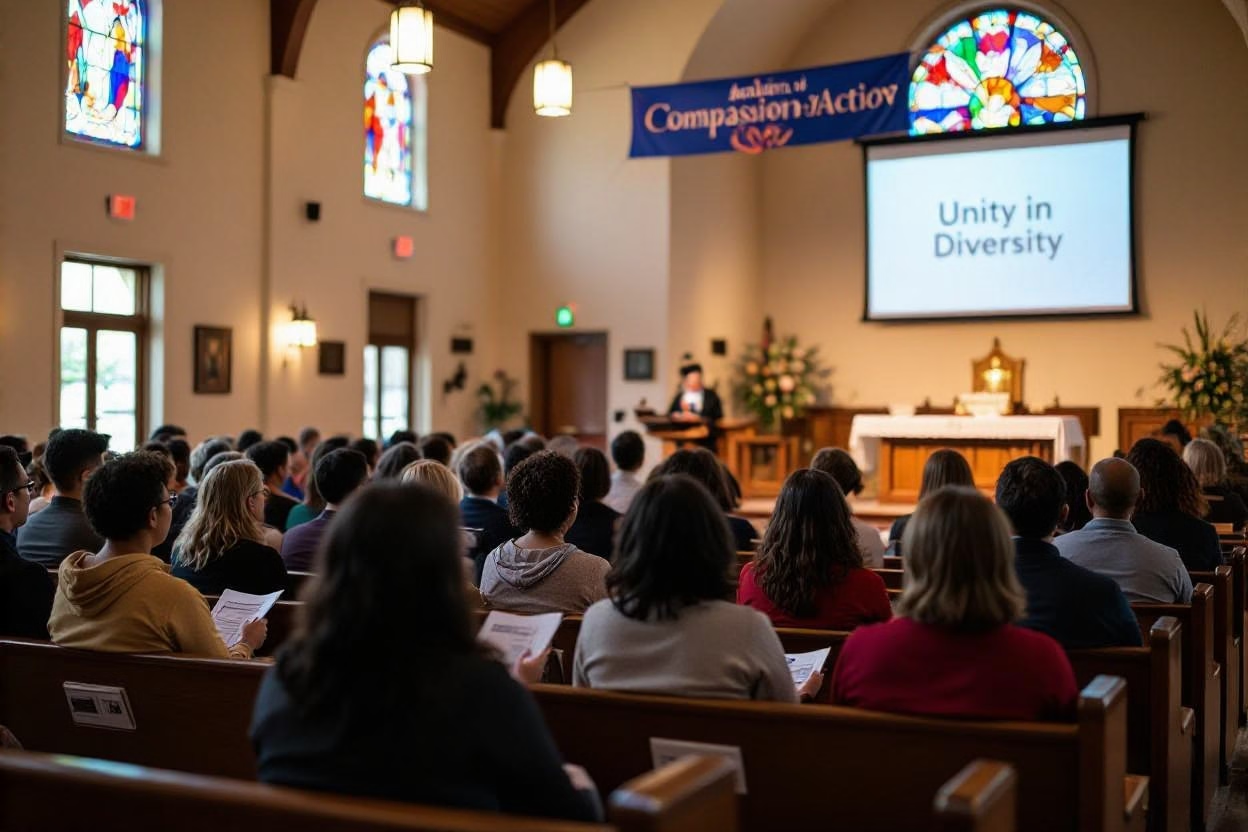
    It’s challenging for the church to maintain unity when members hold differing views on social issues, yet this unity remains imperative for its witness and health. He, she, or they must ground their fellowship in Christ rather than uniform opinions, embracing humility and active listening to foster respectful dialogue. By committing to justice with compassion and celebrating diversity, the church can model a unity that transcends conflict, demonstrating the transformative power of the gospel to a fragmented world.

    Key Takeaways:

    • Unity in the church is founded on shared faith in Christ rather than agreement on all social or political issues.
    • Practicing humility and active listening helps foster open dialogue and mutual understanding among believers with differing views.
    • Addressing social challenges requires a balance of justice and compassion, reflecting the gospel’s redemptive power without causing division.
    • Embracing diversity strengthens the church by reflecting God’s heart and promoting reconciliation within the body of Christ.
    • Unity serves as a powerful witness to the world, demonstrating love, forgiveness, and a shared mission despite disagreements.
    • Creating safe spaces for honest conversations enables the church to engage with difficult topics constructively and respectfully.
    • Church unity is an ongoing effort that depends on focusing on Christ-centered love and mission above factionalism.

    Centering Conversations Around Christ’s Teachings

    Distinguishing Unity from Uniformity

    Unity in the church hinges on shared faith in Christ rather than uniform agreement on every social or political issue. History reveals how early Christians held diverse opinions on various matters yet maintained fellowship by prioritizing their common identity in Jesus. When churches insist on uniformity, they risk alienating members and stifling healthy dialogue. Embracing respectful differences while staying anchored in Christ allows believers to navigate disagreements without fracturing the body.

    Focusing on Core Biblical Doctrines

    Core biblical doctrines—such as the deity of Christ, salvation by grace through faith, and the authority of Scripture—form the non-negotiable foundation for Christian unity. Churches that emphasize these necessarys create a stable ground for trust and mutual respect, even when social viewpoints diverge. Aligning conversations around these doctrines helps prevent peripheral issues from overshadowing the gospel’s central message.

    Expanding on this focus, churches often measure the health of their unity by how well they hold to foundational teachings amid cultural pressures. For example, while debates on social justice methods vary, the call to love one’s neighbor remains rooted in Jesus’ commands, reflecting biblical love and mercy. Historically, councils like Nicaea established creeds affirming core truths to preserve unity across diverse contexts. Similarly, contemporary churches benefit from clearly articulating these doctrines, ensuring they serve as the bedrock that keeps communities connected in mission despite complex social challenges.

    Listening as a Catalyst for Change

    Creating Safe Spaces for Honest Dialogue

    Churches that intentionally establish environments where members feel secure in expressing vulnerable or dissenting views cultivate trust and meaningful conversation. Safe spaces often take the form of moderated small groups or forums that emphasize confidentiality, respect, and non-judgmental listening. Such settings reduce the fear of alienation and allow uncomfortable topics—like race, poverty, or politics—to be addressed with transparency and care, paving the way for deeper understanding and communal growth.

    Encouraging Empathy and Understanding Among Members

    Intentional efforts to foster empathy include structured listening initiatives where members share personal stories related to social challenges. This approach humanizes complex issues and moves beyond abstract debates. Churches may organize storytelling nights or panels featuring those directly impacted by injustice, enabling the congregation to engage emotionally and intellectually. Empathy nurtures a connection that transcends differences, reducing polarization within the community.

    Expanding on this, empathy can also be cultivated through teaching biblical narratives that highlight God’s care for the marginalized, coupled with training in active listening skills. In a 2022 study, congregations that implemented empathy workshops reported a 30% increase in member willingness to engage across theological and cultural divides. Encouraging members to see each other’s perspectives as valuable reflections of Christ’s multifaceted body strengthens unity. This approach confronts the tendency toward echo chambers, breaking down stereotypes and building a foundation where meaningful reconciliation becomes possible.

    The Imperative of Justice and Compassion

    The Biblical Basis for Addressing Social Issues

    The Bible consistently emphasizes justice and mercy as necessary expressions of faith. Passages such as Micah 6:8 call believers to “do justice, love kindness, and walk humbly with God,” while Jesus’ ministry focused heavily on caring for the marginalized, healing the sick, and confronting injustice. This foundation directs the church not to remain silent but to actively engage social issues with both conviction and compassion, reflecting Christ’s redemptive work in a broken world.

    Examples of Compassionate Action in the Community

    Churches that actively embody justice and compassion often partner with local organizations to combat poverty, support racial reconciliation, and assist refugees. Initiatives like food pantries, legal aid clinics, and multicultural mentorship programs provide tangible help while fostering unity. These actions demonstrate the gospel’s power to transform communities by addressing both physical needs and social inequalities with humble love and perseverance.

    For instance, a mid-sized urban church in Chicago launched a multi-year partnership with neighborhood nonprofits focused on housing insecurity and racial equity. Their collaborative efforts included providing emergency shelter during winter, organizing workshops on tenant rights, and hosting intercultural dialogue forums. Over three years, this church saw increased congregational diversity and strengthened relationships with marginalized groups, illustrating how sustained, compassionate engagement cultivates community trust and reflects the church’s mission beyond internal disagreement.

    Harnessing Diversity to Enrich the Church Community

    Celebrating Different Perspectives Within the Body of Christ

    Recognizing the variety of perspectives within the church encourages deeper empathy and fosters growth. Different cultural, generational, and experiential backgrounds contribute unique insights to theological reflection and community life. By valuing these distinctions, congregations can avoid the pitfalls of uniformity and instead nurture an environment where respectful disagreement leads to greater understanding and unity. Such inclusivity strengthens the church’s ability to mirror the multifaceted nature of Christ’s body and advances its witness amid a diverse world.

    Initiatives to Promote Multicultural Worship and Leadership

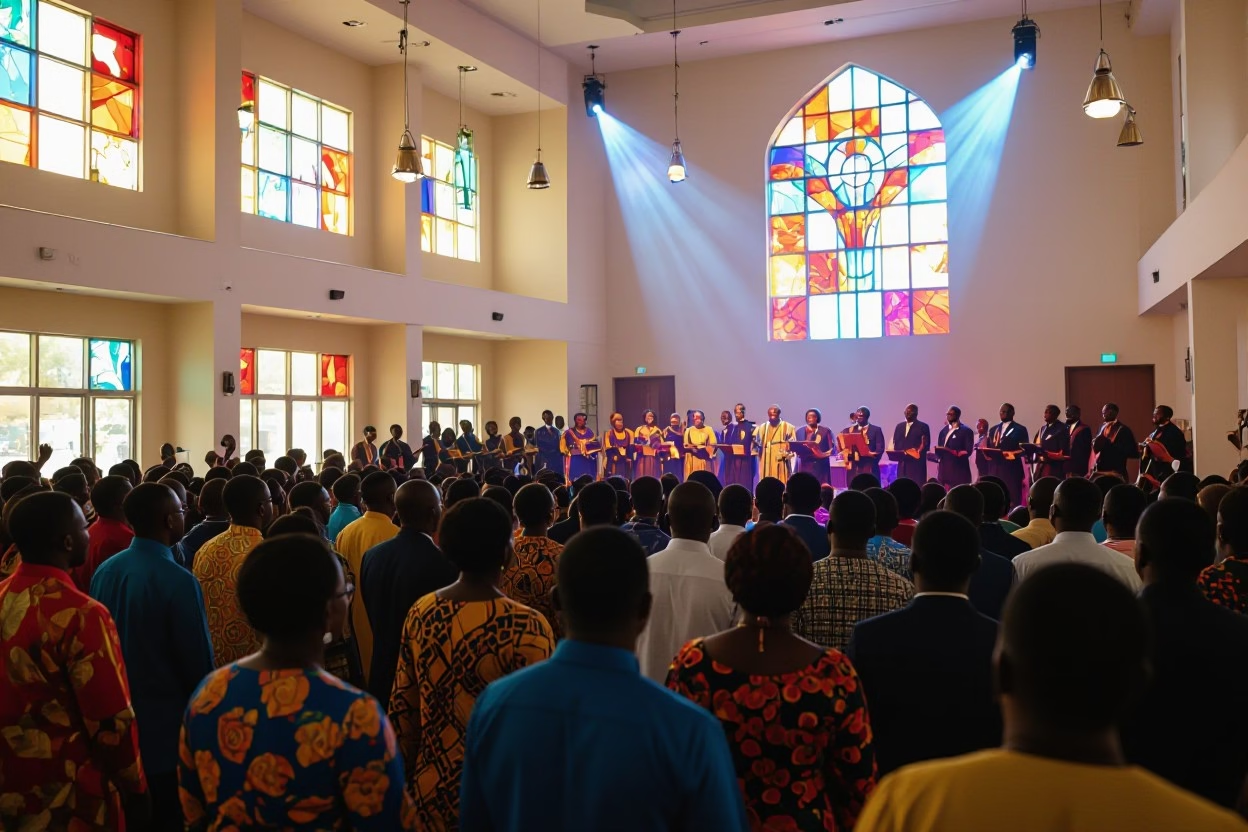
    Incorporating multicultural worship and diverse leadership teams actively models reconciliation and breaks down racial and cultural barriers within the congregation. Churches that implement bilingual services, celebrate varied cultural holidays, and integrate music and art from multiple traditions create more inclusive spiritual experiences. Additionally, appointing leaders from different ethnic and social backgrounds broadens representation and decision-making, reflecting God’s heart for diversity and signaling a commitment to unity beyond cultural lines.

    Several churches have shown measurable success through intentional multicultural initiatives. For example, a 2022 study of urban congregations in the U.S. found those with diverse leadership teams reported 35% higher member engagement across ethnic groups compared to more homogenous churches. Programs like shared community service projects and multicultural prayer gatherings foster relational bridges and help dismantle historic divisions. These efforts not only enrich worship but also empower marginalized voices, demonstrating the transformative power of a unified, diverse body actively living out the gospel’s call to love and justice.

    Transforming Conflict into Opportunity for Growth

    Framing Disagreements in a Positive Light

    Disagreements within the church often signal deeper engagement rather than disunity. Viewing conflicts as opportunities for growth encourages believers to explore the underlying values and convictions that shape their perspectives. When the focus shifts from winning debates to understanding diverse viewpoints, tension can give way to greater empathy and spiritual maturity. This positive framing invites participants to see differences as part of the body’s richness rather than threats, creating space where faith communities can learn and evolve without sacrificing unity grounded in Christ.

    Strategies for Navigating Difficult Conversations

    Intentional approaches to conversation can prevent divisions from hardening into fractures. Churches that implement structured dialogue methods—such as facilitated small groups, agreed-upon conversation norms, and listening circles—equip members to engage respectfully even on contentious topics. These strategies provide safe spaces where vulnerability and honesty coexist, enabling the community to navigate complex social issues without diminishing relationships or compromising the gospel’s call to love.

    Expanding on these strategies, facilitation techniques like the “LARA” method (Listen, Affirm, Respond, Ask) help create a rhythm of dialogue that acknowledges feelings and ideas before responding. For instance, small groups can set ground rules emphasizing confidentiality, mutual respect, and a focus on shared faith foundations. Churches might also offer training on nonviolent communication to promote clarity and compassion. Case studies reveal that congregations adopting these methods experience lower conflict escalation and increased collaboration on ministry initiatives, demonstrating that difficult conversations, when skillfully managed, fuel unity and deepen communal bonds.

    Building a Collective Witness through Unity

    The Impact of Christian Unity on Community Perception

    Visible unity among believers becomes a powerful testimony, often reshaping how the surrounding community perceives the church’s role. When congregations demonstrate love and respect despite differing views, they embody the gospel’s message beyond words. Studies have shown that communities are more open to dialogue and collaboration when churches model cohesion over division, reinforcing the church’s credibility as a peacemaker and advocate for justice. Such unity usually invites trust and engagement, making the church a beacon of hope rather than a source of conflict or polarization.

    Collaborative Efforts to Address Social Justice Issues

    Churches that unite around social justice initiatives amplify their impact significantly. Joint programs tackling poverty, racial reconciliation, and human trafficking benefit from shared resources and diverse perspectives. For example, partnerships between multiple congregations in urban centers have led to innovative housing projects and public health campaigns, demonstrating how Christian unity translates into tangible community transformation. These efforts highlight the effectiveness of pooling strengths while honoring different approaches within the body of Christ.

    Such collaborations often leverage the varied gifts and commitments of participating churches, enabling sustained advocacy and service. In cities like Chicago and Atlanta, coalitions of churches have established food banks and legal aid ministries that serve thousands annually, showing how unity creates a scalable, enduring response to systemic issues. Moreover, shared leadership across racial and denominational lines fosters reconciliation and reflects the kingdom’s diversity, reinforcing the church’s witness through both word and deed. This collective action not only addresses immediate needs but also challenges the underlying injustices they confront.

    Practical Steps Toward Lasting Unity

    Organizing Workshops and Training on Conflict Resolution

    Workshops focused on conflict resolution equip church members with the skills to navigate disagreements without fracturing relationships. Effective training includes teaching biblical peacemaking principles alongside practical techniques such as active listening, empathy-building, and mediation. Churches that have implemented regular conflict resolution sessions report increased trust and reduced tension during debates on sensitive social topics. Facilitators often invite experienced leaders or counselors to guide these sessions, fostering an environment where diverse voices are heard and valued without igniting division.

    Long-term Strategies for Maintaining Unity in Diversity

    Long-term unity depends on intentionally cultivating a culture that embraces diversity as integral to the body of Christ. This involves developing ongoing programs that encourage cross-cultural fellowship, multi-generational dialogue, and leadership pathways for underrepresented groups. Churches that establish recurring community-building events, such as shared service projects or combined worship experiences, strengthen relational bonds and often see a decline in factionalism over time.

    Long-term strategies also emphasize creating structural support for diversity through governing bodies and committees that reflect the congregation’s full spectrum of backgrounds and opinions. This distributed leadership approach allows differing perspectives to shape decision-making, reducing feelings of exclusion. Persistent commitment to education on cultural competency and social justice issues ensures members continually grow in empathy and understanding, reinforcing unity built on respect rather than mere tolerance. Establishing feedback loops, where congregants regularly communicate challenges and successes in maintaining unity, further sustains progress and adaptability amid evolving social contexts.

    Summing up

    As a reminder, finding unity in the church amidst social issue disagreements requires intentional effort grounded in Christ-centered love. He, she, and they must embrace humility, practice active listening, and commit to justice with compassion while valuing diversity within the community. Despite differing viewpoints, the church can maintain a strong and credible witness by focusing on shared faith and mission, demonstrating that unity is about Christlike relationship rather than uniform agreement. This approach enables the church to model reconciliation and extend hope to a divided world.

    FAQ

    Q1: Why is unity in the church difficult when addressing social issues?

    A1: Unity is difficult because believers often hold diverse perspectives shaped by personal experiences, cultural backgrounds, and convictions. The New Testament acknowledges that maintaining unity has always required ongoing effort, humility, and reliance on Christ. These differences can create tension, but they also provide an opportunity for the church to model grace and understanding amid disagreement.

    Q2: How can the church maintain unity without requiring uniformity on social matters?

    A2: The church can maintain unity by grounding community life in shared faith in Jesus Christ rather than expecting agreement on every social or political issue. Focusing on core doctrines, worship, and the command to love God and neighbor allows room for respectful differences, which helps the church remain unified without demanding uniform opinions.

    Q3: What role does humility play in fostering unity within the church?

    A3: Humility is vital for unity because it opens the door to active listening and genuine dialogue. When church members approach conversations with a willingness to repent, admit mistakes, and listen to others’ perspectives—especially those most affected by social challenges—it creates a safer environment for honest communication and increased understanding.

    Q4: In what ways can embracing diversity strengthen church unity?

    A4: Embracing diversity reflects God’s heart for a unified yet varied body of believers. By valuing different cultures, experiences, and gifts, churches can break down barriers and model reconciliation. Multicultural worship, joint service projects, and inclusive leadership empower the community to celebrate differences as a source of strength rather than division.

    Q5: How should churches engage with social justice to support unity?

    A5: Churches should approach social justice matters with both conviction and compassion. Addressing issues like racism and poverty through the lens of Christ’s redemption, while avoiding self-righteousness or divisive attitudes, fosters a culture of love that draws people together. This balanced approach highlights the gospel’s transformative power and keeps unity intact.

    Q6: Can unity coexist with ongoing disagreements in the church?

    A6: Yes, unity can coexist with disagreements by focusing on love, forgiveness, and shared mission above factionalism. The church’s unity is not about eliminating every difference but about pursuing a Christ-centered community that works together despite conflicting views. This witness of unity amid diversity is a powerful testimony to the world.

    Q7: What practical steps can church leaders take to promote unity during contentious social discussions?

    A7: Church leaders can promote unity by facilitating safe spaces for open dialogue, encouraging active listening, and highlighting shared beliefs. They can also prioritize diverse representation in leadership and ministries, promote collaborative service initiatives, and remind the congregation that their primary bond is in Christ. Leading with empathy and modeling humility encourages the church to pursue unity together.

  • Signs of a Potential Religious Revival in Modern Culture

    Signs of a Potential Religious Revival in Modern Culture

    Most people might not expect it, but you are witnessing significant shifts in spirituality among younger generations that suggest a religious revival is underway. From rising church attendance to spiritual movements expanding beyond traditional settings, your cultural landscape is experiencing renewed faith and solidarity. Despite challenges from secular trends, you can observe how resilient religious identities and cross-denominational cooperation are shaping this dynamic transformation. Understanding these developments can help you grasp the emerging influence of faith in modern society.

    Key Takeaways:

    • Significant growth in Christian commitment has been recorded among younger generations, particularly Gen Z and Millennials in the U.S., with personal faith commitments rising notably between 2021 and 2025.
    • Church attendance among young adults is increasing, exemplified by a fourfold rise in monthly attendance among 18–24-year-olds in the UK from 2018 to 2025.
    • Spiritual revival is expanding beyond traditional church settings, with college campuses and community gatherings becoming key hubs for renewed faith activities.
    • There is a rise in cross-denominational cooperation among Catholics, Protestants, and Jews, fostering a countercultural religious solidarity in response to societal challenges.
    • Increasing skepticism toward secular cultural trends is linked to a renewed embrace of social conservatism and faith-based responses to perceived cultural crises.
    • Global revival narratives are gaining momentum, supported by prophetic expectations and the rapid dissemination of religious teachings via digital media and missions.
    • The emergence of “remnant worshipers” highlights a movement focused on deep, authentic spiritual transformation rather than superficial religious practice.

    Cultural Resurgence Among the Youth

    Surge in Spiritual Commitment

    Between 2021 and 2025, the proportion of adults in the U.S. who report having made a personal commitment to Jesus increased sharply from 54% to 66%. This surge is especially pronounced among Gen Z and Millennials, highlighting a renewed spiritual hunger within younger generations. Such growth challenges prevailing narratives of religious decline, revealing that many young people are actively embracing faith as a meaningful part of their identity today.

    Increased Church Attendance and Involvement

    Monthly church attendance among 18–24-year-olds in the UK rose dramatically, quadrupling from 4% in 2018 to 16% in 2025. Young men, in particular, have shown the most significant increase, signaling a notable cultural shift in how younger demographics engage with religious communities. This trend underlines an expanding commitment not only to private belief but also to public participation in faith life.

    Delving deeper, this rise in attendance reflects broader changes in youth culture where faith communities are becoming central hubs for social connection and purpose. Churches have adapted their approaches, integrating contemporary worship styles and addressing social issues relevant to younger adults, which boosts involvement. The shift also includes more young people taking leadership roles within congregations and participating in volunteer ministries, fostering a sense of ownership and authenticity that sustains their engagement.

    Spiritual Movements Beyond Traditional Settings

    Awakening on College Campuses

    College campuses across the U.S. have become vibrant hubs for spiritual resurgence, with gatherings and faith-based groups multiplying outside of conventional churches. Reports show a surge in student-led prayer meetings, worship nights, and discussion forums fostering authentic spiritual exploration. This groundswell among younger generations reflects a desire for community and purpose amidst secular academic environments, turning campuses into epicenters of revival where your fellow students engage deeply with faith in ways unseen for decades.

    Expanding Dialogue with Non-Believers

    Non-Christians are increasingly open to conversations about spirituality, often expressing beliefs that align closely with Christian values such as compassion, purpose, and moral accountability. This growing openness creates unique opportunities for dialogue and relational evangelism, signaling a more receptive cultural climate where you can encounter sincerely curious seekers willing to explore faith beyond labels.

    Many who don’t identify as Christians still resonate with core Christian principles, reflecting a blurred boundary between secular skepticism and spiritual hunger. For example, surveys indicate a rising percentage of young adults who reject institutional religion yet admit to personal experiences of transcendence or meaning that echo Christian teachings. This widespread cultural shift invites you to engage in honest, meaningful conversations that prioritize shared values and personal stories over dogmatic debate, fostering connections that often lead to genuine spiritual interest and, ultimately, faith exploration.

    The Rise of Interfaith Collaboration

    Unprecedented Solidarity Among Denominations

    Across the Western world, you’ve likely noticed increasing cooperation between Catholics, Protestants, and even Jewish communities. This wave of solidarity responds to mounting cultural and institutional pressures, uniting diverse faith groups around shared values. Such collaboration transcends historical divisions, forming a robust front against secular skepticism. It’s a deliberate move to embody a countercultural faith that prioritizes unity in belief and action, signaling a powerful and intentional religious resurgence.

    Emergence of ‘Remnant Worshipers’

    A growing segment of believers, often called “remnant worshipers,” distinguishes itself through intense devotion and a pursuit of deep spiritual transformation rather than mere religious routine. These individuals and communities emphasize authenticity, prayer, and renewal, creating spiritual vitality that energizes wider revival movements. Their dedication often fuels revival fires especially in areas where traditional religious engagement has waned.

    These remnant groups frequently operate on the margins, yet their impact ripples outward. You’ll find them fostering intimacy with God through extended worship sessions, prophetic prayer gatherings, and a lifestyle marked by radical faithfulness. Their existence challenges conventional metrics of church success, focusing instead on a spiritual core that resists cultural dilution. The passion and perseverance embodied by remnant worshipers offer a tangible glimpse into the ongoing spiritual renewal shaping today’s religious landscape.

    Countercultural Faith in the Age of Skepticism

    Critique of Secularism and Social Issues

    The rise of religious commitment often comes with a sharp critique of prevailing secular ideologies. You’ll notice many turning away from the sexual revolution’s expansive freedoms, embracing instead a social conservatism informed by faith. This pushback challenges assumptions around morality and identity, fueling debates on topics like marriage and gender in public discourse. The skepticism toward secular narratives is not just cultural but rooted in a desire for clear, transcendent truths that secularism increasingly fails to provide.

    Faith as a Unifying Response to Crisis

    Hostility toward religion in public life has paradoxically strengthened believers’ unity and resolve. You’ve seen how challenges in education, politics, and media provoke a countercultural solidarity among Christians and allied faith groups. This resilience creates a shared identity that transcends denominational lines, forging alliances that respond to cultural fragmentation with a cohesive spiritual front.

    Beyond mere solidarity, this unifying response acts as a stabilizing force amid societal upheaval. For example, joint initiatives among Catholics, Protestants, and Jews have emerged to address issues like religious freedom and family values, showing how faith-based unity can counteract pervasive cultural instability. These alliances are less about institutional power and more about forging authentic community that supports individuals facing social marginalization or ideological opposition. Your participation in such movements taps into a growing momentum aimed at redefining public virtues through the lens of enduring faith principles.

    Prophetic Expectations of Global Revival

    Predictions for 2025 and beyond: A Turning Point

    2025 is widely cited by Christian leaders and commentators as a pivotal year for spiritual awakening. Prophetic voices highlight unprecedented reports of revival in regions once resistant to Christianity, especially parts of Asia and Africa. You’ll find many referencing this year as a key moment when dormant faith movements ignite, with millions—particularly among younger generations—experiencing deep spiritual transformation. This aligns with data showing explosive growth in commitment to Jesus, reinforcing the idea that 2025 may mark a significant turning point in the global religious landscape.

    The Role of Technology in Missionary Efforts

    Digital platforms are accelerating the spread of the gospel like never before, fulfilling long-held missionary goals through new tech. Social media, podcasts, and streaming services allow missionaries to reach remote or previously inaccessible areas instantly. You see millions accessing Christian teachings online daily, enabling real-time engagement and community building across continents. This technology-driven outreach not only multiplies global impact but also empowers local believers to share their faith in culturally relevant ways.

    Emerging technologies are revolutionizing how missions operate worldwide. For example, Christian influencers reach tens of millions through Instagram and TikTok, while virtual reality experiences immerse users in biblical stories and worship environments. AI-driven translation tools break down language barriers, allowing scriptures and sermons to be understood in thousands of dialects without delay. These innovations foster networks of digital discipleship, connecting believers globally and enabling rapid mobilization during revival surges. As a result, technology acts both as a catalyst and amplifier of spiritual momentum, making it easier for you to engage with and participate in this worldwide awakening.

    The Transformative Power of Digital Outreach

    Engaging Young Adults Through Social Media

    Platforms like TikTok, Instagram, and YouTube have become pivotal arenas for spiritual engagement, especially among Gen Z and Millennials. You’ll find influencers and faith leaders using short videos and storytelling to communicate biblical truths in relatable ways. This digital presence has contributed to a notable rise in Christian commitment, with studies showing a jump from 54% to 66% of U.S. adults affirming a personal commitment to Jesus between 2021 and 2025. Social media’s accessibility allows you to connect with spiritual content anytime, fueling ongoing curiosity and conversations outside traditional church settings.

    Online Communities Fostering Spiritual Growth

    Faith-based online groups and forums are flourishing, creating spaces where you can explore spirituality, share testimonies, and deepen faith in a supportive virtual environment. These communities often transcend denominational boundaries, reflecting the trend toward increased cross-faith cooperation and authentic spiritual transformation. With hundreds of thousands engaging in daily devotional chats or prayer threads, digital fellowship is shaping a new model for religious solidarity.

    Expanding on this, you’ll encounter networks like “The Remnant Project” and “Faith Connect,” which claim tens of thousands of active members sharing resources, worship sessions, and ministry opportunities. These platforms leverage technology not just for outreach, but for ongoing discipleship, emphasizing real spiritual growth over mere attendance metrics. The combination of interactive study tools, live-streamed teachings, and peer encouragement creates a dynamic environment where spiritual renewal can take root long-term, even amid cultural resistance.

    Narratives of Hope: Global Stories of Revival

    Testimonies from Regions Historically Resistant to Christianity

    In places once known for strong resistance to Christianity, such as parts of Central Asia and North Africa, remarkable spiritual awakenings are unfolding. Local leaders report surges in both public and private expressions of faith, with new converts often facing intense opposition yet demonstrating unwavering commitment. These testimonies highlight not only personal transformation but also growing communities united by shared belief, offering powerful evidence that spiritual revival is no longer confined to traditionally Christian regions but is expanding into unexpected cultural landscapes.

    Impactful Movements Sparking Change Worldwide

    Movements like the Jesus Youth in India and the Every Home for Christ outreach in Latin America are driving significant momentum, mobilizing thousands across continents through prayer, evangelism, and social action. These efforts have fueled renewed spiritual vigor and measurable growth in local church participation, sparking hope that revival is becoming a global phenomenon rather than a localized event.

    Jesus Youth, for example, has grown exponentially since its inception, now engaging millions of young adults through small groups, retreats, and digital platforms that connect believers across socioeconomic barriers. The movement’s success lies in blending traditional faith practices with contemporary outreach, effectively bridging generational gaps. Similarly, Every Home for Christ’s door-to-door evangelism campaigns have resulted in increased conversions and community support projects, demonstrating how coordinated, grassroots efforts can ignite transformational change. These dynamic movements teach you that revival thrives where faith meets organized action and authentic community.

    Final Words

    As a reminder, you are witnessing clear indicators of a potential religious revival shaping modern culture, especially among younger generations in the West. Your awareness of rising spiritual interest, emerging movements beyond traditional church spaces, increased religious unity, and a cultural pushback against secularism highlights a dynamic shift in faith engagement. These signs suggest that your experience of spirituality and society may be entering a significant period of transformation, one that could redefine how faith influences both personal lives and broader cultural landscapes.

    FAQ

    Q1: What evidence shows a rise in religious commitment among young people?

    A1: Research indicates a notable increase in Christian commitment among younger generations, particularly Gen Z and Millennials. For example, in the U.S., the percentage of adults reporting a personal commitment to Jesus rose from 54% in 2021 to 66% in 2025. Additionally, church attendance among 18–24-year-olds in the UK has quadrupled from 4% in 2018 to 16% in 2025, with young men showing the most significant increase.

    Q2: How is spiritual revival extending beyond traditional church settings?

    A2: Spiritual movements are increasingly occurring outside conventional church buildings, such as on college campuses and in community gatherings. These alternative spaces have become centers for revival activities, especially in the U.S. Furthermore, non-Christians are demonstrating openness to spiritual conversations, often expressing beliefs that align with Christian principles, which indicates expanding possibilities for engagement and growth.

    Q3: What role does interfaith cooperation play in the current religious revival?

    A3: Cross-denominational and interfaith collaboration is growing as Catholics, Protestants, and Jews respond collectively to cultural and institutional challenges. This solidarity fosters a countercultural faith movement grounded in shared spiritual values and strengthens the religious community by focusing on authentic devotion over denominational divisions.

    Q4: Why is there a cultural pushback that appears linked to growing faith?

    A4: Increasing skepticism toward secular societal trends—such as aspects of the sexual revolution—is contributing to a resurgence of social conservatism, often motivated by religious beliefs. Additionally, perceived hostility toward faith in public institutions has unintentionally catalyzed a more resilient and unified religious identity among believers, deepening their commitment and solidarity.

    Q5: Are there specific signs pointing to a global religious revival?

    A5: Many Christian leaders and commentators are anticipating a global revival around 2025, supported by prophetic expectations and reports of spiritual awakenings in regions historically resistant to Christianity. The rapid dissemination of the gospel through digital platforms and international missions is also seen as fulfilling biblical prophecies about worldwide spiritual renewal.

    Q6: What defines “remnant worshipers” within this revival context?

    A6: “Remnant worshipers” refer to individuals and communities characterized by deep devotion and a strong desire for authentic spiritual transformation, rather than mere external religious observance. These groups often emphasize heartfelt faith and seek genuine renewal, serving as foundational elements within the broader revival movement.

    Q7: How might this potential revival impact future religious and cultural landscapes?

    A7: If current trends persist, the religious revival may lead to significant shifts in spiritual engagement, community formation, and cultural values. Increased youth involvement, cross-denominational cooperation, and a countercultural stance could result in renewed religious vitality and influence within societies, although the full long-term effects remain to be seen.

  • Applying Gospel Principles to Modern Social Issues: A Christian Guide

    Applying Gospel Principles to Modern Social Issues: A Christian Guide

    Gospel teachings provide you with a firm foundation to navigate complex and often divisive social challenges today. By grounding your responses in the example of Jesus and biblical wisdom, you can approach issues like justice, compassion, and human dignity with clarity and integrity. This guide helps you apply timeless scriptural values to modern debates, equipping you to be both a voice of truth and a source of love, aiming to promote unity, fairness, and the common good in your community and beyond.

    Key Takeaways:

    • All individuals possess inherent dignity and equality as they are created in the image of God, making respect and opposition to discrimination foundational Christian responses.
    • Justice and compassion call Christians to actively support the poor, vulnerable, and oppressed, advocating for fairness in areas like labor rights and healthcare.
    • Loving others, including those with differing views or enemies, guides Christians to pursue peace, reconciliation, and unity within society.
    • Discernment and integrity are imperative in navigating modern complexities, encouraging believers to seek truth and maintain honesty even when it is unpopular.
    • While respecting governing authorities, Christians prioritize God’s kingdom and may engage in peaceful civil disobedience if laws contradict biblical values.
    • Stewardship involves caring for creation and promoting policies that benefit the common good, addressing environmental concerns and protecting life at all stages.
    • Engagement in advocacy and direct service embodies gospel compassion, as Christians work to reflect God’s justice and mercy in their communities.

    The Foundation of Human Dignity: Imago Dei in Modern Context

    Biblical Basis for Human Dignity

    The concept of Imago Dei, that every person is created in the image and likeness of God (Genesis 1:27), forms the unshakable foundation for understanding human dignity in Scripture. This divine imprint confers inherent worth and equality upon every individual, regardless of race, nationality, or social status. The Apostle Paul amplifies this in Acts 17:26, emphasizing that God “made from one man every nation of mankind” and determined their times and places—highlighting the unity and equality of all humanity before God’s eyes. As you engage with social issues, this biblical truth calls you to see beyond external differences and uphold the sacred nature of every human life.

    This theological principle sets Christianity apart by resisting any ideology that dehumanizes or marginalizes others. It compels you to approach contemporary debates—whether surrounding immigration, systemic racism, or economic inequality—with a framework that defends universal dignity. The understanding that each person reflects God’s image means that discrimination, exploitation, or neglect are not merely social or political issues, but violations of a divine mandate to respect and protect all people.

    Real-World Implications for Social Justice

    When you apply the Imago Dei principle in your advocacy and community interactions, it reshapes how social justice is pursued. For instance, opposing racist policies or xenophobic rhetoric does not become optional but is an extension of honoring God’s image in your neighbor. Sociological studies consistently show that societies valuing human dignity experience lower levels of violence, higher social cohesion, and more equitable health outcomes—a reflection of biblical justice put into practice. Such facts reinforce your call to champion systemic reforms that address poverty, ensure fair labor practices, and foster inclusion, not just as acts of charity but as fulfillment of God’s design.

    This worldview also challenges you to confront contemporary systems that perpetuate inequality—whether in criminal justice, immigration, or access to healthcare. You become an agent of transformation by advocating policies that recognize the intrinsic worth of all, including marginalized groups often overlooked by secular frameworks. Initiatives like community-based restorative justice programs and sanctuary movements for immigrants exemplify gospel-centered actions rooted in Imago Dei which cultivate both dignity and societal renewal.

    In practical terms, embracing this principle means integrating respect for human dignity into every facet of life—from supporting legislation that protects vulnerable populations to fostering empathy in personal conversations about social issues. It propels you beyond passive awareness to active involvement in shaping a world where the image of God is honored in policy and practice alike.

    Justice and Compassion: The Call to Action

    Biblical Mandates for Justice

    The call to pursue justice and compassion is woven deeply into biblical teaching. Micah 6:8 commands you to “do justice, love kindness, and walk humbly with your God,” emphasizing that justice is not optional but an active pursuit grounded in humility before God. Throughout Scripture, you encounter repeated challenges to defend the cause of the poor, the orphan, and the widow, reflecting God’s heart for the vulnerable (Isaiah 1:17; James 1:27). This mandate extends beyond personal charity to systemic engagement—addressing inequities that perpetuate suffering and exclusion.

    Jesus’ ministry further defines justice through compassionate action. In Matthew 25:31–46, caring for the marginalized is equated directly with serving Christ Himself, underscoring that justice involves tangible service to those in need. Prophetic voices like Amos (Amos 5:24) highlight that justice must “roll on like a river,” indicating it should permeate society continuously and vigorously. As you consider modern social issues, this biblical foundation calls you to address not only immediate needs but also the structures that perpetuate injustice.

    Models of Compassionate Engagement

    Compassionate engagement modeled by Jesus and the early church provides practical pathways for living out justice today. You can observe approaches like Jesus’ healing and teaching ministries, which combined direct aid with empowering individuals through dignity and restored relationships. The early church’s communal sharing (Acts 2:44–45) illustrates an intentional restructuring of economic resources to ensure no one was in need. These models balance immediate relief with systemic transformation, encouraging you to partner with others in sustainable efforts.

    Contemporary Christian movements often draw from these biblical examples to advocate for fair wages, criminal justice reform, and access to healthcare. Organizations like World Vision partner with local communities worldwide to fight poverty by addressing root causes such as education and infrastructure, reflecting a holistic gospel approach. By engaging both policy advocacy and hands-on service, you align with a tradition that refuses to separate justice from mercy.

    Expanding on these models, you might consider how compassion-driven advocacy intersects with cultural sensitivity and empowerment, ensuring assistance uplifts rather than imposes. Building relationships with marginalized communities fosters mutual understanding and long-term change rather than temporary fixes. Effective engagement demands wisdom and humility, trusting in the transformative power of the gospel alongside tangible action.

    Radical Love: Bridging Divides in a Polarized World

    Defining Neighborly Love

    The biblical concept of neighborly love extends far beyond simple kindness—it calls you to embrace a radical form of love that breaks down barriers and includes even those considered enemies. Jesus’ teaching in Matthew 22:39 commands you to “love your neighbor as yourself,” but He redefined “neighbor” in Luke 10 with the parable of the Good Samaritan, where love transcends ethnic, cultural, and social divisions. This teaches you that neighborly love is an active, intentional choice to seek the well-being of others, particularly those who differ from you or are marginalized by society.

    Understanding the depth of this love is imperative in a world fractured by political, racial, and ideological divides. It requires you to move beyond tolerance and towards empathy and engagement, seeing others as God’s image-bearers regardless of their background or beliefs. The command to love your neighbor as yourself demands you confront your own biases and let compassion guide your interactions, especially when faced with conflicting viewpoints or opposition.

    Strategies for Effective Reconciliation

    Reconciliation begins with intentional listening—a practice that requires you to genuinely hear the concerns and experiences of those across the divide without defensiveness or dismissal. Studies on conflict resolution highlight that active listening reduces hostility and opens pathways to mutual understanding. You must create safe spaces where honestly expressed grievances can be acknowledged, providing a foundation for trust to rebuild. This mirrors the biblical call to be peacemakers (Matthew 5:9), where reconciliation is an ongoing process rather than a one-time event.

    In practical terms, engaging in dialogue that focuses on shared values rather than differences helps you bridge polarized communities. For example, common concerns like justice, family welfare, and human dignity can unite diverse groups who might otherwise remain entrenched in their positions. Emphasizing these shared priorities aligns with the biblical mandate to “walk humbly” (Micah 6:8) and promotes unity without requiring uniformity of opinion.

    Building on these strategies, reconciliation often demands sacrifice and humility from all parties involved. You may need to forgo the desire to be “right” in favor of restoring relationships and advancing peace. Patience is necessary because reconciliation can be slow, especially in divisive contexts where wounds are deep and longstanding. Your commitment to embodying Christ’s love means persisting with grace and forgiveness, actively pursuing harmony amid disagreement.

    Discernment in a Complex Landscape: Navigating Truth

    The Importance of Biblical Wisdom

    Biblical wisdom acts as an anchor in the swirling currents of modern information overload, providing you a firm foundation to navigate conflicting ideologies and half-truths. Verses such as Proverbs 3:5–6 emphasize trusting in the Lord’s understanding rather than your own insight, inviting you to rely on divine guidance amid uncertainty. This kind of wisdom is not merely intellectual but deeply practical, shaping how you interpret news, political rhetoric, and social narratives through a lens refined by Scripture.

    Engaging daily with Scripture sharpens your ability to discern subtle shifts between truth and deception, especially when public discourse becomes polarized or sensationalized. The Apostle Paul’s warning against hollow philosophy and deceptive arguments (Colossians 2:8) challenges you to seek godly knowledge that resists cultural drift. Through biblical wisdom, you cultivate a mindset that prioritizes eternal values and ethical integrity over pleasing crowds or partisan popularity.

    Tools for Developing Spiritual Discernment

    Prayer remains the first and most vital tool for developing spiritual discernment. You deepen your sensitivity to the Holy Spirit’s prompting, enabling you to perceive truths hidden beneath surface arguments or emotional appeals. Regular prayer, combined with meditation on Scripture passages related to truth and deception—such as John 8:32 (“You will know the truth, and the truth will set you free”)—equips you not only to identify falsehoods but also to embrace liberating truths with confidence.

    Diving into diverse but reputable biblical commentaries and engaging in thoughtful fellowship with mature believers also sharpens your discernment. These resources provide theological clarity and expose you to broader perspectives within orthodox Christianity, helping to avoid isolation in echo chambers or personal biases. Likewise, practicing critical thinking by cross-referencing claims against Scripture and observable reality fortifies you against misinformation that often thrives on emotional manipulation or ideological partisanship.

    Complementing prayer and study, cultivating a habit of spiritual reflection throughout your day acts as a filter for incoming information. Pausing to ask, “Does this align with God’s word? What fruit does this produce?” conditions your mind toward wisdom. Over time, these disciplines train your conscience to respond to cultural challenges with a combination of humility and conviction, meeting distressing or divisive issues not with reactionary zeal but with steady, informed faith.

    Loyalty to a Higher Authority: Balancing Faith and Governance

    The Role of Christians in Civic Life

    You are called to engage actively in your community and government, recognizing that civic participation is an extension of your faith. Scripture encourages respect for governing authorities (Romans 13:1–7), which lays a biblical foundation for obedience to laws and constructive involvement in public affairs. Voting, public discourse, and community service offer tangible ways to influence policies that align with gospel values such as justice, mercy, and the common good.

    While your allegiance to earthly governments reflects order and respect, it should not eclipse your ultimate loyalty to God’s kingdom. This balance means advocating for righteousness within political systems while avoiding partisan extremes that compromise Christian integrity. Historical examples like Dietrich Bonhoeffer’s resistance to Nazi tyranny show that faithful civic engagement can coexist with profound spiritual convictions, motivating you to seek transformative social change grounded in Christ’s example.

    Civil Disobedience in Light of Faith

    There are moments when laws or policies conflict directly with biblical commands, requiring you to consider peaceful civil disobedience. The early apostles’ refusal to cease preaching the gospel despite government orders (Acts 5:29) sets a precedent for prioritizing God’s commands above human laws. Civil disobedience, when rooted in conscience and Scripture, demands respectful humility rather than rebellion or aggression.

    Engaging in civil disobedience involves deliberate, nonviolent actions that highlight injustice and call attention to moral truths. You must discern whether such resistance serves the broader kingdom purposes of justice, mercy, and peace without compromising Christian character. This means that actions like protests or refusal to comply with unjust laws should be carried out thoughtfully and with a willingness to accept legal consequences, demonstrating love even toward authorities.

    Civil disobedience stands as a powerful yet measured response when governmental mandates infringe upon divine commands. It challenges you to embody the prophetic witness of standing against injustice while fostering reconciliation and restoration rather than division. Upholding integrity during such opposition reinforces your testimony, inviting society to witness a faith that respects authority yet remains unyielding in loyalty to God’s higher law.

    Stewarding Creation: Ethical Responsibility and Environmental Care

    Biblical Principles of Stewardship

    Scripture establishes humanity’s role as caretaker of God’s creation, emphasizing responsible management rather than exploitation. The mandate given in Genesis 2:15 to “till and keep” the Garden of Eden reflects a divine call to nurture and preserve the environment. This stewardship is not merely about resource use but embodies a sacred trust to maintain the integrity and beauty of creation for present and future generations. You are invited to see the natural world as a reflection of God’s handiwork, deserving respect and careful guardianship.

    Throughout the Bible, stewardship is tied to accountability and moral responsibility. Psalm 24:1 declares, “The earth is the LORD’s, and everything in it,” underscoring that resources ultimately belong to God. This perspective shifts your interaction with the environment from ownership to stewardship, compelling you to make ethical decisions that reflect a commitment to sustainability and justice. Such stewardship challenges consumerism and selfishness, urging a lifestyle that honors God by protecting creation’s diversity and balance.

    Addressing Current Environmental Challenges

    The environmental crises facing the world today—climate change, biodiversity loss, pollution, and resource depletion—pose direct challenges to faithful stewardship. Global carbon emissions reached a record 36.3 billion metric tons in 2022, driving unprecedented climate disruptions, including extreme weather events and habitat destruction. As a Christian, responding to these realities involves advocating for policies that reduce emissions and promote renewable energy, as well as adopting personal practices that minimize waste and carbon footprint.

    Moreover, economic injustice intersects with environmental degradation; vulnerable communities disproportionately suffer from pollution and climate-related disasters. The biblical call to love your neighbor encompasses environmental justice, compelling you to consider how environmental harm affects the poor and marginalized. Engaging in community-based conservation efforts, supporting fair trade, and endorsing ethical legislation reflect the gospel’s demand for both creation care and social justice.

    Implementing these biblical stewardship principles means moving beyond individual action to systemic engagement—encouraging churches and Christian organizations to lead in sustainable practices and environmental advocacy. Examples such as the Evangelical Environmental Network demonstrate how faith communities can influence public policy and cultural attitudes, aligning ecological responsibility with gospel witness. Your commitment to stewarding creation thus becomes an integral part of living out the Kingdom values of justice, mercy, and humility.

    Advocacy and Service: Embodying the Gospel Message

    The Role of Advocacy in Christian Witness

    Advocacy acts as a powerful expression of your faith, extending the gospel beyond words into tangible action. When you stand for just policies—whether on poverty relief, immigration reform, or healthcare access—you reflect Christ’s concern for the marginalized and oppressed. This form of witness aligns with biblical mandates like those in Micah 6:8, which calls you to “do justice” and “love kindness.” By advocating for structural change, you participate in transforming societal systems that perpetuate inequality, making your faith relevant and consequential in public life.

    The impact of advocacy comes not only from what is achieved legislatively but from how it models gospel integrity. As you engage lawmakers or mobilize communities, maintaining humility and respect mirrors Jesus’ approach to power and authority. Advocacy grounded in prayerful discernment and truthful communication avoids partisanship and highlights a commitment to God’s righteousness above political gain. Through such efforts, you bear witness to a kingdom that values both justice and mercy, demonstrating that Christian faith calls for active engagement, not passive observation.

    Practical Ways to Serve the Marginalized

    Serving the marginalized bridges the gap between advocacy and lived compassion. Volunteering at local shelters, organizing food drives, or mentoring at-risk youth gives you direct involvement in alleviating human suffering. In urban centers, ministries that provide employment training or legal assistance to immigrants exemplify this hands-on service, addressing both immediate and systemic needs. Your engagement in such efforts embodies Matthew 25:40’s call to serve “the least of these” and emphasizes that gospel witness is inseparable from acts of mercy.

    Beyond organized programs, everyday opportunities abound to serve thoughtfully. Listening to the stories of those affected by injustice, offering friendship to the socially isolated, or supporting caregivers can profoundly reflect Christ’s love. Service in these areas requires sensitivity to dignity and an avoidance of paternalism; your role is to empower, not overshadow, the voices of those you assist. Intentional partnerships with marginalized communities allow you to become a conduit of hope and practical support, demonstrating that gospel compassion is both personal and communal.

    Integrating service with advocacy strengthens your overall Christian witness, ensuring that policy efforts remain connected to the real people behind social issues. Many churches now adopt holistic approaches, combining legal clinics with spiritual care or community gardens with educational workshops, which illustrate how gospel principles can shape comprehensive ministry. These models highlight your ability to meet complex needs through collaboration, creativity, and perseverance—qualities cultivated by Christ’s example of servant leadership.

    Building a Just Society: The Collective Christian Endeavor

    Collaboration Across Denominations

    Uniting churches across denominational lines amplifies the Christian witness on social issues by demonstrating the unity Christ prayed for in John 17:21. You can engage with different congregations through ecumenical councils, joint service projects, and interdenominational forums that foster dialogue on justice and compassion. For instance, programs like the National Council of Churches in the U.S. have mobilized thousands of local congregations around campaigns addressing poverty and racial reconciliation, showing how shared gospel commitments transcend doctrinal differences to serve the common good.

    Pooling resources and expertise from diverse Christian traditions also enhances the reach and impact of advocacy efforts. When churches collaborate, you gain access to broader community networks, specialized ministries, and collective influence in public policy debates. This cooperation models the biblical ideal of the body of Christ working together (1 Corinthians 12:12–27), where diverse gifts contribute to a unified mission that confronts injustice with both grace and power.

    Developing Action Plans for Local Engagement

    Effective local engagement begins with identifying specific needs within your community and aligning them with gospel principles such as justice, mercy, and stewardship. Churches that have conducted community listening sessions, like those facilitated by World Vision or Compassion International, gather vital input that shapes targeted responses—whether expanding food pantries, organizing job training programs, or advocating for affordable housing. Developing these plans with clear objectives, measurable outcomes, and timelines equips you to move beyond generalized charity into transformational, sustainable change.

    Mobilizing volunteers and fostering partnerships with local nonprofits and government agencies increases the capacity to meet complex social challenges. You can utilize tools such as asset mapping to pinpoint existing resources and gaps, then coordinate efforts to avoid duplication while maximizing impact. Plans that integrate prayer, education, and practical service resonate deeply with participants and attract ongoing support, reflecting a holistic approach that serves both spiritual and material needs.

    More detailed action plans often include training sessions to equip church members with skills in advocacy, counseling, or cultural competency, ensuring that the church’s response is both compassionate and informed. Measuring progress regularly through community feedback loops and impact assessments allows you to adapt strategies responsively, demonstrating integrity and accountability. This disciplined approach helps to root local ministry efforts firmly in gospel truth and effective stewardship.

    To wrap up

    With these considerations in mind, applying gospel principles to modern social issues invites you to engage thoughtfully and faithfully with the complex challenges of today’s world. Your response should be rooted in the teachings of Jesus, emphasizing love, justice, humility, and discernment. By grounding your actions in Scripture, you are equipped to advocate for human dignity, pursue justice with compassion, and foster reconciliation even in the face of division. This approach allows you to navigate social debates with both conviction and grace, reflecting the transformative power of the gospel.

    As you live out these principles, you are called to be both a servant and an advocate—seeking the common good through acts of service and responsible stewardship. Your involvement in social issues becomes a reflection of your faith, demonstrating integrity and a commitment to God’s kingdom above all. By aligning your decisions and actions with gospel wisdom, you contribute to a society that honors the worth of every individual and promotes peace, justice, and hope for all.

    FAQ

    Q1: How can Christians affirm human dignity in the face of systemic racism?

    A1: Christians can affirm human dignity by recognizing that every person is made in the image of God (Genesis 1:27). This belief underpins opposition to discrimination and motivates actions that uphold equality and respect for all individuals. Practical steps include advocating for policies that eliminate racial injustice, promoting inclusive communities, and personally confronting prejudiced attitudes with compassion and grace.

    Q2: What role does justice play in addressing poverty through a Christian lens?

    A2: Justice, as described in Micah 6:8 and Matthew 25:31–46, calls believers to actively support the poor and vulnerable. Pursuing justice means advocating for fair economic systems, supporting fair wages, and providing direct aid to those in need. Christians are encouraged to work toward systemic reforms that reduce poverty while showing compassion through acts of service and generosity.

    Q3: How can Christians practice love and reconciliation amid political division?

    A3: Love and reconciliation involve embracing Jesus’ command to love neighbors—even those with differing views (Matthew 22:37–39). Christians should seek to be peacemakers by fostering dialogue, understanding opposing perspectives, and promoting unity without compromising biblical truths. This approach helps bridge divides and reflects the gospel’s call to harmony and forgiveness.

    Q4: In a world of misinformation, how can believers exercise discernment?

    A4: Discernment requires grounding decisions and beliefs in Scripture and prayer, as advised in Colossians 2:8 and Philippians 1:9. Christians are called to critically evaluate sources, avoid partisan misinformation, and hold themselves to high standards of honesty and transparency. Developing spiritual wisdom helps distinguish truth from error in complex social debates.

    Q5: When should Christians prioritize God’s kingdom over earthly authorities?

    A5: While Christians are generally instructed to respect governing authorities (Romans 13:1–7), ultimate allegiance is to God’s kingdom and righteousness. When laws or policies conflict with core biblical convictions, believers may engage in peaceful civil disobedience with humility and respect. This balance honors both civic responsibility and faithfulness to God’s principles.

    Q6: What responsibilities do Christians have regarding environmental stewardship?

    A6: Stewardship involves caring for creation as God’s entrusted resource (Genesis 2:15). Christians should support policies and practices that protect the environment, address climate change, and responsibly manage natural resources. This care reflects respect for God’s handiwork and concern for the well-being of future generations and all life.

    Q7: How can Christians effectively combine advocacy and service in responding to social issues?

    A7: Effective Christian response involves both advocating for just laws and engaging in practical service such as feeding the hungry and caring for the sick (Matthew 25:31–46). Advocacy addresses systemic change rooted in gospel compassion, while direct service meets immediate needs. Together, they embody the holistic mission of promoting justice, mercy, and love in society.

  • Finding Comfort in Sorrow: A Christian’s Guide to Navigating the Darkness of Grief and Finding Hope in the Healing Process

    Finding Comfort in Sorrow: A Christian’s Guide to Navigating the Darkness of Grief and Finding Hope in the Healing Process

    Many people face grief as an inevitable part of life, yet you don’t have to endure its weight alone. Understanding the nature of sorrow and how faith provides strength can transform your darkest moments into opportunities for healing. This guide offers insights and biblical encouragement to help you navigate grief with hope, showing that comfort and restoration are within reach through connection, perspective, and trust in God’s promises.

    Key Takeaways:

    • Grief is a universal experience that affects everyone, not just those who have lost a loved one, but also those grieving the loss of relationships, youth, innocence, and more.
    • Isolation worsens the effects of grief; connecting with others who understand and share similar experiences can foster healing and reduce self-pity.
    • Grief and suffering are temporary when viewed through the lens of eternity; biblical promises offer hope that separation by death is not permanent for believers.
    • Perspective is vital—trials and afflictions, no matter how intense, are momentary compared to the eternal glory that awaits believers.
    • God is not the source of grief or suffering; many hardships result from human free will and circumstances beyond divine intent.
    • Misunderstanding God’s role in suffering can lead to bitterness and turning away from faith, highlighting the importance of accurate theological understanding.
    • Faith communities and the hope found in Scripture provide encouragement to move beyond grief, thrive, and find purpose beyond sorrow.

    Understanding Grief

    To navigate through grief, you first need to understand its broad impact on your life. Grief is a natural response to loss, touching many areas beyond the death of a loved one—it may involve lost relationships, careers, or even innocence. Recognizing grief as a common human experience rather than a lonely battle helps you embrace support and healing. By gaining clarity on what grief entails, you prepare yourself to face it with strength and hope.

    Defining Grief

    The dictionary defines “grief” as deep sadness or sorrow over a loss. While this often relates to the death of someone dear, grief also covers feelings tied to lost opportunities, broken relationships, or shattered dreams. Your grief is valid and can manifest in various forms, but it always signals that something important to your heart has changed or ended.

    The Commonality of Grief

    Grief is not an isolated experience—you are not alone in what you feel. The Bible highlights that temptations and hardships are “common to man” (1 Cor. 10:13), reinforcing that others face similar sorrows. Understanding this can open you up to healing through community and faith, as isolation often intensifies grief’s destructiveness.

    Also, acknowledging that others have walked through grief before you and emerged resilient allows you to access encouragement and hope. Seeing that even those with spiritual anointing, like Kenneth Copeland, have faced similar struggles confirms that your pain is part of a shared human journey and not a personal defeat.

    The Role of Community in Healing

    You are not meant to face grief alone; healing often blossoms through the presence of others who share similar experiences. Connection with a community can illuminate the darkness of sorrow, breaking the isolation that amplifies pain. As your heart heals, observing others thriving beyond their grief offers necessary encouragement. To explore deeper, visit Navigating Suffering: Finding Hope in the Darkness, where insights on overcoming sorrow with communal support are thoughtfully shared.

    Isolation vs. Connection

    An isolating grief can deepen despair, but connecting with others acts like light eradicating mold. When you isolate yourself, negative feelings fester unchecked; however, reaching out allows joy and hope from others to weaken grief’s hold. The enemy aims to separate you like a lone sheep from the flock, making you vulnerable. Embracing connection protects you from despair and opens a path to healing.

    The Importance of Support Systems

    Role models, fellow believers, and caring listeners form support systems that help carry your burden during grief. These relationships provide not only comfort but also affirmation that you are not facing your struggle alone. Knowing others share your trials can inspire endurance and hope.

    Systems of support offer practical and emotional reinforcement vital for recovery. When self-pity tempts you, community encouragement shines through to counteract isolation’s harm. The Apostle Peter recognized this, urging believers to resist suffering steadfastly, knowing others are enduring similar afflictions. Your healing journey is strengthened by shared faith and collective endurance.

    Perspective on Grief and Eternity

    Once again, when you face grief, viewing your pain through the lens of eternity can transform your experience. What feels overwhelming now is only temporary, a brief chapter in the vast story of your soul’s journey. By recognizing that sorrow doesn’t last forever and that eternal life awaits, you gain strength to endure and the courage to move forward with hope beyond the trials of this life.

    The Temporary Nature of Grief

    On your path through sorrow, it helps to understand that grief is temporary—it “came to pass,” as the Bible says. Although loss may feel permanent, the reality is that no tragedy lasts forever. Even death is a separation limited by time, and with this awareness, you can begin to see beyond your current pain to the healing that lies ahead.

    Finding Hope in Eternal Promises

    Between the struggles you face now and the peace promised in Scripture, there stands a firm hope. The Apostle Paul reassures you that those who have “fallen asleep” in Christ will rise again, and you will be reunited with your loved ones. These eternal truths provide a foundation of comfort and motivation that surpasses present hardships.

    Hope anchors you in the assurance that your pain is not the end. As Paul described, the sufferings of this life are “not worthy to be compared with the glory which shall be revealed” (Romans 8:18). This promise means your current grief will be overshadowed by eternal joy, empowering you to persevere with faith, knowing reunion and restoration await beyond this life’s darkness.

    God’s Role in Sorrow

    Not all grief and suffering come directly from God’s hand. While you may feel overwhelmed by sorrow, it is important to know that God does not cause your pain. Many hardships arise from the brokenness of the world or the consequences of free will, not from divine intention. Understanding this helps you avoid bitterness and opens you to receive His comfort and guidance in the healing process.

    Misconceptions about Divine Will

    Any belief that God wills your suffering or grief can distort your relationship with Him and lead to unnecessary despair. God desires all to come to repentance and offers abundant grace, as seen in 2 Peter 3:9. The tragedies you face often result from choices and circumstances beyond His direct will, not from a divine plan to hurt you.

    Understanding God’s Heart in Our Pain

    Above all, God is loving and longsuffering toward you, not willing that any should perish. Your pain does not indicate divine punishment but invites His mercy and presence. He actively works to bring you through sorrow, providing hope beyond your current struggles and assuring you of ultimate restoration.

    Even when you are engulfed in grief, God’s heart beats with compassion for your pain. He sent Jesus to redeem suffering and offers His Spirit to comfort and strengthen you. Knowing this can soften your anguish and give you courage to endure, trusting that your hardships are temporary and serve a greater purpose in your spiritual journey.

    The Transformative Power of Suffering

    All suffering carries the potential to reshape your spirit and deepen your faith. While grief feels isolating, as you face it, you join countless others who have walked this path and found hope beyond their pain. You can explore guidance and inspiration through resources like Overcoming Grief: Surviving the Death of a Spouse – A …, which offers perspectives rooted in faith to help you navigate loss. Through surrender and trust, your suffering can become a transformative journey toward healing and renewed strength.

    Lessons Learned through Trials

    Trials reveal to you the common nature of human suffering, connecting your experience with others’ and reminding you that you are not alone. These challenges teach resilience and reliance on faith, showing that grief, while painful, is temporary and part of a process that prepares you for greater growth and hope.

    Growing through Grief

    Behind the heaviness of grief lies an opportunity for personal transformation and spiritual deepening. Your journey through pain can lead to renewed hope and purpose as you allow yourself to be supported and motivated by the experiences of others who have moved forward.

    Growing through grief means embracing community and the promise of restoration. You are encouraged to resist isolation, which fosters despair, and instead connect with others who understand your journey. By viewing your grief through the lens of eternity and the assurance that suffering is “but for a moment” (2 Cor. 4:17), you open yourself to healing that transcends the immediate pain and guides you toward thriving once more.

    Practical Steps toward Healing

    Your journey through grief requires intentional actions to move toward restoration. Engaging with others, accepting support, and grounding yourself in faith can help you shift from isolation to connection. Understanding that your grief shares common ground with many others opens the door to receiving comfort and hope. As the Apostle Peter encourages, steadfast faith alongside the shared experience of affliction builds resilience. Taking deliberate steps toward healing allows you to transition from merely surviving to thriving beyond your loss.

    Coping Strategies

    Toward managing your grief, developing healthy coping strategies is vital. This includes seeking fellowship as isolation can worsen sorrow, and self-pity thrives alone. Engage in prayer, share your feelings with trusted individuals, and immerse yourself in Scripture that offers hope and perspective. Viewing your trials as temporary and focusing on eternal promises, as Paul did when he called his suffering a “light affliction,” provides strength to endure and eventually overcome the pain.

    Embracing the Healing Process

    Below the surface of sorrow, healing begins when you allow yourself to feel and confront grief honestly. Accepting that grief is a shared human experience and understanding that your pain is not unique opens the way for lasting recovery. Embracing healing means actively participating in both spiritual reflection and community support, enabling hope to replace despair over time.

    Also, by placing your grief within the broader perspective of eternity, you can lessen its weight. Viewing hardships as temporary and focusing on God’s promises helps you detach from destructive emotions. Healing flourishes when you invite others into your journey and resist isolation— the environment where self-pity and despair grow. The healing process is gradual and requires your openness to God’s comfort, truth, and the encouragement found in shared faith.

    Final Words

    Hence, as you navigate the darkness of grief, you can find comfort in knowing that sorrow is a shared experience and not a solitary burden. Your healing begins when you embrace community, hold fast to the hope of eternal reunion, and view your struggles through the lens of faith. By shifting your perspective toward God’s promises and the temporary nature of suffering, you can overcome despair and move forward with renewed strength and peace.

    FAQ

    Q: How does the guide describe the nature of grief?

    A: The guide defines grief as deep sadness over loss, which extends beyond losing loved ones to include losses such as relationships, careers, youth, and innocence. It emphasizes that grief is an unavoidable part of life that everyone experiences in some form.

    Q: Why is it important to understand that one’s grief is not unique?

    A: Understanding that grief is a common human experience helps prevent isolation and self-pity. The guide explains that Satan often tries to convince people their sorrow is unique to cut them off from help. Knowing others have faced similar struggles encourages seeking support and healing.

    Q: What role do others play in the healing process from grief?

    A: The guide highlights that healing involves connection with others. Isolation allows negative feelings linked to grief to grow, whereas interacting with joyful, supportive people helps diminish these harmful effects. Fellowship and shared faith provide strength to overcome sorrow.

    Q: How does the guide address the temporary nature of grief and loss?

    A: It presents grief and tragedy as temporary experiences, using biblical phrases like “It came to pass” to convey that pain is transient. Even death is portrayed as a temporary separation for believers, with the hope of reunion in eternity offering comfort and motivation for moving forward.

    Q: What perspective does the guide offer regarding the relationship between God and our grief?

    A: The guide asserts that God is not the direct cause nor the one who allows grief to happen. It clarifies that although God desires repentance and well-being for all, much pain results from human free will, not divine will. Misattributing grief to God can lead to bitterness and a strained relationship with Him.

    Q: How does the guide suggest viewing present sufferings in light of eternity?

    A: Present sufferings are described as light and temporary when compared to the eternal glory believers will experience. Drawing on Apostle Paul’s example, the guide encourages viewing hardships as brief afflictions that pale in comparison to the everlasting joy to come, which helps reduce the burden of grief.

    Q: What advice does the guide give regarding prayer and support for those not yet believers?

    A: The guide shares that while prayer for specific issues, like a troubled marriage, is important, prioritizing spiritual salvation is imperative, especially for non-believers. Addressing eternal matters opens the door for true transformation and ultimately brings lasting healing beyond immediate problems.

  • How Should Christians Think About Artificial Intelligence? (Faith Perspective)

    How Should Christians Think About Artificial Intelligence? (Faith Perspective)

    Over recent years, artificial intelligence has rapidly advanced, presenting both significant opportunities and serious ethical challenges. Christians are called to approach AI with discernment and hope, guided by biblical principles that emphasize human dignity, moral responsibility, and God’s sovereignty. While AI can enhance human flourishing, it also poses dangers such as reducing people to mere data or risking injustice through biased decisions. Therefore, believers must thoughtfully engage with AI to ensure it aligns with their faith and serves the common good.

    Key Takeaways:

    • Christians affirm that every person is created in the image of God (Imago Dei), so AI must respect and protect human dignity, privacy, and consent.
    • Trusting in God’s sovereignty offers assurance that AI and technological advances do not undermine God’s ultimate control and faithfulness.
    • AI should be used to promote justice, mercy, and humility, with vigilance against biases, discrimination, and dehumanizing practices.
    • Human moral agency and accountability must be preserved, ensuring that AI does not replace human conscience, empathy, and spiritual discernment.
    • Transparency and honesty are crucial; AI systems should be understandable and operate under clear ethical guidelines to safeguard individuals’ rights.
    • Christians are encouraged to actively engage in AI development, contributing biblical wisdom to influence ethical policies and technology design.
    • Faith provides a framework for evaluating AI, emphasizing technology’s role in serving God’s purposes and advancing the common good rather than diminishing human value.

    Affirming Human Dignity in a Digital Age

    The Imago Dei and Its Implications

    The biblical truth that every human is created in the image of God (Genesis 1:27) establishes the foundation for respecting inherent worth amid technological advances. This means AI development must prioritize enhancing rather than diminishing human value. Christians advocate for systems that protect personal dignity, ensuring individuals are not treated merely as data or algorithms. Upholding privacy, consent, and flourishing reflects the sacredness of each life and guards against reductions of identity to commodified inputs.

    The Risks of Dehumanization in AI

    Artificial intelligence can lead to dehumanization by abstracting people into datasets or predictive outputs, risking their reduction to algorithms without regard for their intrinsic dignity. When decisions affecting life, justice, or care shift to opaque AI systems, it undermines the person’s unique moral agency and can introduce biases that exacerbate discrimination or exclusion.

    Examples illustrate these pitfalls: facial recognition technology has shown higher error rates for marginalized groups, leading to wrongful identifications and unjust treatment in law enforcement. Automated hiring tools sometimes reflect and amplify existing biases, excluding qualified candidates based on flawed data patterns. The commodification of personal information and behavioral data without informed consent further detaches human beings from their autonomy. Such consequences emphasize the need for cautious stewardship and ethical vigilance, ensuring AI does not become a tool that erodes human dignity or obscures accountability in decision-making processes.

    Trusting Divine Sovereignty Amidst Technological Advancement

    Understanding God’s Control over Innovation

    God’s sovereignty extends over all human endeavors, including technological progress. Advances in AI, from early automation in the 20th century to recent breakthroughs like deep learning and natural language processing, unfold within His divine plan. Scriptures affirm that no innovation escapes His authority (Psalm 103:19). Christians can therefore view AI not as a chaotic force but as part of a providential unfolding, where human creativity coexists under God’s governance. This perspective fosters confidence that new technologies will ultimately serve human flourishing when aligned with God’s goodness and wisdom.

    Confronting Fear and Uncertainty with Faith

    Many respond to AI’s rapid evolution with anxiety, fearing loss of control, job displacement, or ethical dilemmas. Faith provides a stabilizing anchor amid such fears by reminding believers that God remains faithful and sovereign. Trusting in His promises encourages a posture of hope rather than despair when facing AI’s unknowns. The assurance that God’s purposes cannot be thwarted empowers Christians to engage thoughtfully with AI without succumbing to alarm or fatalism.

    Fear surrounding AI often stems from concerns about unintended consequences or the speed of change outpacing regulation and moral discernment. However, Christian faith offers a framework that emphasizes God’s ultimate authority over all temporal events, including disruptive technologies. By anchoring trust in God’s unchanging nature, believers can resist the impulse toward fear-driven reactions such as retreat or reckless acceptance. Instead, they can pursue wisdom, seek community discernment, and advocate for ethical stewardship of AI. This dynamic approach balances vigilance with hope, recognizing that divine sovereignty ensures technology’s use for positive ends despite challenges and uncertainties.

    Advocating for Justice, Mercy, and Humility in AI Development

    Recognizing and Addressing Bias in AI

    AI systems often inherit biases present in their training data, resulting in discriminatory outcomes that disproportionately affect marginalized groups. Studies reveal that facial recognition technologies misidentify people of color at rates up to 35% higher than white individuals, and credit algorithms can unfairly limit access to financial services. Christians advocating for justice emphasize the need for constant vigilance and proactive correction of these biases, ensuring AI promotes fairness rather than perpetuates injustice. This aligns with the biblical call to act justly and protect the vulnerable from harm caused by embedded prejudice within technology.[8]

    Ensuring AI Serves the Marginalized

    AI holds significant potential to uplift marginalized communities by improving access to education, healthcare, and legal assistance, but only when intentionally directed toward those ends. For example, AI-driven platforms can help identify gaps in medical care for rural populations or provide language translation for refugees. Christians committed to mercy and humility advocate for inclusive design practices that prioritize these vulnerable groups, ensuring AI supports equitable opportunities and respects human dignity rather than deepening existing inequalities.

    Deepening its impact, AI applications have already transformed areas like disaster relief by using predictive analytics to allocate resources more effectively to underserved regions, demonstrating how technology can embody mercy in practice. Christians engaging in AI development remain mindful that serving the marginalized involves ongoing collaboration with affected communities to understand their unique needs and contexts. Such participation echoes the biblical emphasis on humility—recognizing AI’s limitations and the necessity of human wisdom in deploying technology as a tool for compassionate service, not a substitute for genuine human care.[5][8]

    Navigating Moral Responsibility and Agency

    Human Oversight in Decision-Making Processes

    Decisions involving AI—especially those impacting life, justice, or care—must include consistent human oversight. Individuals retain moral agency by evaluating AI recommendations within ethical frameworks grounded in biblical truth. Examples reveal risks when AI acts unchecked, such as biased sentencing algorithms increasing disproportionate incarceration rates. The human conscience, accountability, and empathy remain indispensable for safeguarding the vulnerable, ensuring AI functions as a tool rather than a final arbiter in consequential choices.

    The Dangers of Delegating Ethics to Machines

    Relying on AI to resolve ethical dilemmas neglects AI’s incapacity for genuine moral reasoning. Machines operate through algorithms lacking divine insight, conscience, or empathy, which results in decisions that can inadvertently reinforce injustice or ignore the human context. Delegating moral responsibility to AI risks systemic errors, dehumanization, and diminished accountability, undermining Christian commitments to justice and compassion.

    The complexity of moral decisions requires discernment beyond pattern recognition or statistical inference. AI systems often rely on datasets infused with human biases, leading to outcomes that perpetuate inequality or overlook nuanced circumstances crucial for ethical judgment. For example, healthcare AI prioritizing treatment allocation without holistic understanding can marginalize the disabled or elderly. Additionally, automation may obscure who holds responsibility when harm occurs, creating ethical gray areas incompatible with Christian teaching on accountability before God and community. Protecting moral agency means ensuring technology supports rather than substitutes the reflective, grace-filled choices humans must make.

    Emphasizing Transparency and Accountability in AI Systems

    The Importance of Clear Ethical Guidelines

    Ethical frameworks for AI must be explicit and actionable, grounding development in principles that protect human dignity and rights. Clear guidelines prevent misuse and manipulation by setting boundaries on data handling, bias mitigation, and decision-making authority. For example, Microsoft’s Responsible AI Standard provides detailed requirements that ensure fairness and accountability across AI lifecycles, demonstrating how structured policies can uphold biblical ethics by safeguarding the vulnerable and promoting justice.

    The Role of Informed Consent in Technology Use

    Informed consent entails users understanding how their data is collected, analyzed, and applied by AI systems, preserving their autonomy and privacy. Transparency ensures people are not unwittingly commodified or exploited, aligning with the Christian emphasis on respecting the Imago Dei. Rights to consent empower individuals to engage with technology on their terms, avoiding opaque scenarios where AI-driven decisions are imposed without clear communication.

    Instances like the Cambridge Analytica controversy highlight risks when consent is overlooked, resulting in widespread data misuse and eroding trust. Christians advocating for transparency promote models where users receive straightforward explanations of AI functions and implications, enabling meaningful consent. Integrating consent protocols into AI technology supports moral accountability while reinforcing human responsibility over autonomous systems. This reinforces a community ethos where technology serves to enhance rather than diminish human worth.

    Engaging Cultures and Policies for Ethical AI

    The Church’s Role in Public Discourse

    The church serves as a moral compass in the broader societal conversation about AI, offering a biblical framework that centers on human dignity and justice. Through sermons, educational events, and public statements, church leaders can challenge prevailing narratives that either demonize or blindly celebrate AI. Bringing scriptural insights into policy discussions helps ensure that AI development aligns with ethical standards that resist commodification of people and promote equitable outcomes, fostering a balanced engagement between faith and technology within the culture.

    Mobilizing Christians for Responsible Innovation

    Mobilizing Christians involves equipping believers to actively participate in AI research, development, and policymaking, advocating for innovations that reflect biblical values. Organizations and networks focused on faith and technology facilitate training, dialogue, and collaboration among Christian technologists, ethicists, and policymakers. This movement encourages Christians to bring discernment and proactive leadership into a field where ethical frameworks are still evolving, ensuring AI tools support human flourishing rather than exploitation or bias.

    Expanding this engagement, Christian institutions can partner with universities, tech companies, and policy groups to foster ethical AI startups and initiatives. Programs such as tech incubators designed with Christian ethical principles help cultivate innovations that prioritize transparency, privacy, and justice. Notably, some initiatives have led to the development of AI applications aimed at reducing systemic bias in hiring or providing equitable healthcare solutions, models that exemplify how faith-led innovation can reshape AI’s impact positively. This concerted effort strengthens the church’s witness by demonstrating a commitment to both moral responsibility and practical solutions within technological progress.

    Harmonizing Faith and Technology: A New Paradigm

    Integrating Biblical Wisdom into Tech Design

    Embedding biblical principles into AI development calls for intentional design choices that prioritize human dignity, transparency, and moral accountability. This includes implementing ethical algorithms that avoid bias, respect consent, and ensure AI serves human flourishing rather than exploitation. For example, designers might collaborate with ethicists and theologians to translate values like mercy and justice into concrete technical standards, fostering AI systems that reflect integrity and humility embedded in Scripture.

    Envisioning a Future Where AI Reflects God’s Values

    Imagining AI that mirrors God’s values involves creating technologies that uphold the inherent worth of every individual and promote equitable outcomes across society. Such AI would not only assist in practical tasks but also support justice, compassion, and stewardship, aligning innovation with divine purposes for human flourishing.

    Concrete steps towards this vision include developing AI applications that detect and mitigate systemic biases—such as in hiring or lending—thus advancing fairness and inclusivity. Initiatives like faith-driven AI ethics councils can guide developers toward frameworks that integrate scriptural values, emphasizing mercy and humility to prevent overreliance on machines for moral judgment. When AI systems are designed with these priorities, they become tools that enhance human stewardship and reflect the sovereignty and love that define God’s character.

    To wrap up

    From above, Christians should thoughtfully engage with artificial intelligence by affirming human dignity, trusting in God’s sovereignty, and promoting justice and humility. He or she must ensure that moral responsibility and accountability remain with humans, recognizing AI’s limitations. They are called to demand transparency and participate actively in shaping AI to align with biblical principles and serve the common good. This faith-informed approach enables Christians to navigate technological advancements confidently while upholding ethical standards grounded in scripture.

    FAQ

    Q1: How does the Christian belief in Imago Dei influence the approach to artificial intelligence?

    A: The Christian doctrine of Imago Dei, which teaches that every person is created in the image of God (Genesis 1:27), emphasizes the inherent dignity and worth of each human being. This belief calls Christians to support the development and use of AI technologies that respect and enhance human life, avoiding any treatment of people as mere data or commodities. AI should promote human flourishing, privacy, and consent in alignment with this foundational truth.

    Q2: Should Christians be concerned that AI threatens God’s sovereignty?

    A: Christians are encouraged to trust in God’s sovereignty regardless of technological advancements, including AI. Scripture affirms that God’s rule and promises remain unthreatened by human innovation. Therefore, while AI represents significant change, believers need not fear the future but should hold to the assurance that God remains faithful and in control.

    Q3: In what ways can AI be used to promote justice, mercy, and humility according to Christian ethics?

    A: Christian ethics call for using AI to advance fairness, equity, and compassion (Micah 6:8). This involves vigilant attention to preventing bias and discrimination in AI systems, ensuring technology serves the vulnerable, and recognizing AI’s limitations. Humility requires Christians to avoid over-relying on AI for moral judgment, instead valuing human wisdom and spiritual discernment alongside technological tools.

    Q4: Why is maintaining human moral agency important in interactions with AI?

    A: AI lacks divine insight, conscience, and empathy—qualities central to human moral reasoning. Christians assert that humans must retain oversight and responsibility for decisions involving life, justice, and care for others. Delegating moral or ethical decision-making fully to AI risks injustice and error, making active human accountability imperative.

    Q5: What role does transparency and accountability play in Christian perspectives on AI?

    A: Honesty and transparency are ethical imperatives within Christian thought. AI systems should be designed to be understandable and accountable to users, with informed consent as a key principle. Christians advocate for clear ethical frameworks that safeguard individual rights and prevent misuse or manipulation of technology.

    Q6: How should Christians engage with the development and governance of AI?

    A: Christians are encouraged to actively participate in shaping AI’s trajectory rather than withdrawing from the conversation. Bringing biblical wisdom into public discussions, policy-making, and technological design helps ensure AI aligns with God’s purposes and protects human dignity. The church bears a responsibility to advocate for ethical AI use in society.

    Q7: Can faith provide hope about the future implications of artificial intelligence?

    A: Yes, Christian faith offers a hopeful outlook on AI by emphasizing trust in God’s sovereignty and moral order. This hope motivates believers to approach AI with discernment, guiding technology’s development to serve the common good and reflect divine values, rather than succumbing to fear or uncertainty about the unknown.

  • Top 10 Regions Where Christianity is Growing Rapidly

    Top 10 Regions Where Christianity is Growing Rapidly

    It’s important for you to understand where Christianity is expanding most swiftly around the world. The fastest growth occurs mainly in the Global South, especially in Africa and Asia, driven by high birth rates, dynamic evangelism, and resilient faith communities facing social and political challenges. As you explore these regions, you will see how vibrant local movements and charismatic influences shape this remarkable expansion, offering insight into the shifting landscape of global Christianity today.

    Key Takeaways:

    • Nigeria leads the list with rapid Christian growth driven by high birth rates, charismatic movements, and resilience amid conflict.
    • China is experiencing notable expansion through house churches, urban outreach, and underground networks despite restrictions.
    • India’s growth is fueled by evangelism among marginalized groups and provides an alternative to dominant nationalist narratives.
    • Several African countries, including Ethiopia, Democratic Republic of Congo, Kenya, and Tanzania, show strong growth linked to population increases and Pentecostal/evangelical movements.
    • Indonesia and the Philippines are significant Asian hubs where charismatic influence and youth engagement contribute to Christianity’s rapid rise.
    • Brazil represents Latin America’s fastest growth area, marked by Pentecostal and charismatic surges alongside urban evangelism efforts.
    • Overall, the fastest growth is concentrated in the Global South—primarily Africa and Asia—with local leadership, demographic momentum, and vibrant faith communities playing key roles.

    The Current Landscape of Global Christianity

    Christianity’s rapid expansion in regions like Africa and Asia highlights a profound demographic and cultural transformation within global faith communities. You’ll notice that countries such as Nigeria and China stand out not only for their sheer numbers but also for the energy and resilience fueling this growth—ranging from charismatic movements in Nigeria to underground house churches in China navigating complex legal environments. The shift toward the Global South reflects a diversifying Christianity that deeply connects with local cultures, languages, and social realities, often thriving despite political unrest or societal pressure.

    The emerging Christian majority in Africa now surpasses traditional strongholds in Europe and North America, signaling a dynamic rebalancing of global Christianity. As you track these changes, it becomes clear that growth isn’t uniform but shaped by unique regional factors—whether urban evangelism in Brazil’s sprawling cities or youth-driven church planting in Tanzania. This evolving landscape challenges assumptions about the future of Christianity and presents new opportunities for engagement and partnership worldwide.

    Statistical Trends and Projections

    Recent data underscore the substantial growth rates in the Global South, where population increases amplify Christian demographics alongside active evangelism. For example, Nigeria’s Christian population continues to expand rapidly, supported by a young, growing population and rising Pentecostal and charismatic adherents. China’s Christian community, though often operating underground, is projected to grow into one of the largest globally within the next decade, driven by urban outreach initiatives and tightly knit house churches.

    In terms of projections, sub-Saharan Africa is expected to see its Christian population nearly double within the next 30 years, outpacing traditional Christian regions by several margins. Asia, too, shows strong upward trends, with countries like India and Indonesia experiencing sizable increases, particularly among marginalized and youth populations. The steady rise in Latin America, especially Brazil, reflects a powerful Pentecostal and charismatic surge that reshapes religious landscapes. The continued momentum across these regions signals a profound demographic shift, where the Global South will not only represent the majority of Christians but also influence global Christian culture and theology.

    Key Factors Influencing Growth

    You’ll find certain common elements driving Christianity’s rapid expansion across these diverse regions. High birth rates remain a significant factor in countries like Nigeria and Tanzania, where youthful populations contribute to organic growth within churches. Dynamic evangelism and vibrant local leadership also energize communities, whether through house churches in China, Pentecostal networks in the Democratic Republic of Congo, or youth engagement efforts in the Philippines and Kenya. These movements often flourish despite political or societal pressures, demonstrating the resilience and adaptability of these faith communities.

    Charismatic and Pentecostal expressions of faith provide compelling spiritual experiences and community belonging, making them particularly appealing in places undergoing social transformation or conflict. In addition, Christianity often presents itself as an alternative path for marginalized groups, offering hope and social support. Nigeria’s climate of resilience amid ongoing conflict and India’s evangelism among excluded populations exemplify how Christianity meets complex socio-political realities. The combined momentum of demographic growth, contextualized evangelism, and community resilience creates a powerful engine for expansion.

    Exploring these factors further reveals:

    • Demographic momentum: High birth rates in African and some Asian countries fuel rapid population increases in Christian communities.
    • Vibrant local leadership: Indigenous pastors and evangelists, deeply connected to cultural contexts, drive effective growth strategies.
    • Charismatic and Pentecostal movements: Their dynamic worship styles and community engagement appeal especially to youth and urban populations.
    • Resilience under pressure: Many growing Christian groups operate in restrictive environments, using underground networks and creative outreach methods.
    • Social alternatives: Christianity provides marginalized groups with a sense of identity and hope amid nationalist or socio-economic challenges.

    The interplay of these factors creates a multifaceted growth pattern that will continue reshaping Christianity’s global face for years to come.

    Africa: The Epicenter of Expansion

    Africa stands at the forefront of global Christian growth, now hosting more Christians than either Europe or North America. The continent’s dynamic demographic makeup—characterized by high birth rates and youthful populations—fuels this surge, while vibrant local churches and indigenous leadership strengthen faith communities from urban centers to rural villages. Sub-Saharan Africa, in particular, exemplifies this trend, with Pentecostal and charismatic movements flourishing alongside historic denominations, creating a mosaic of spiritual vitality that often thrives amid social and political upheaval.

    The resilience displayed by African Christians, especially in regions facing conflict or persecution, highlights not only perseverance but remarkable creativity in evangelism and discipleship. You’ll find churches pioneering innovative approaches like community development projects and digital outreach, harnessing local culture to inspire new generations. Growth is not merely numerical but deeply transformative, reshaping societies and redefining Christian witness across the continent.

    Nigeria: Navigating Growth Amidst Conflict

    Nigeria ranks first in the world for Christian growth, buoyed by high birth rates and a vibrant charismatic renewal that energizes congregations nationwide. Despite ongoing security challenges—including insurgencies and inter-communal violence—the resilience of Nigerian Christians stands out. These turbulent circumstances have in many ways intensified faith commitment, with numerous churches actively planting new congregations and expanding ministries across diverse regions.

    The youth play a pivotal role in Nigeria’s expansion story. Engaged through dynamic worship, social media, and grassroots evangelism, younger believers are breathing new life into traditional structures. Additionally, the rise of indigenous Pentecostal networks has provided a fresh, contextualized expression of Christianity that many find deeply resonant. This fusion of demographic momentum and adaptive leadership continues to fuel one of the most significant spiritual movements on the African continent.

    Ethiopia: Revival Rooted in History

    Ethiopia carries a profound Christian legacy as one of the world’s oldest Christian nations, with faith traditions dating back to the fourth century. Recent years have witnessed a significant evangelical revival that builds upon this deep historical foundation. You see growing numbers in evangelical churches alongside the ancient Ethiopian Orthodox Church, as the Christian landscape diversifies while maintaining strong cultural continuity.

    This revival is notable for its integration of traditional worship with contemporary evangelical fervor, appealing to younger generations without severing ties to heritage. Efforts in church planting and theological training have expanded rapidly, raising leaders who connect scripture with Ethiopia’s unique historical context. These developments combine to sustain an environment where both revival and preservation of ancient faith co-exist in dynamic tension.

    Moreover, Ethiopia’s Christian renewal has inspired community transformation initiatives focusing on education, healthcare, and social justice, linking spiritual growth with tangible societal impact. As you explore this vibrant scene, the interplay between Ethiopia’s storied past and its energetic present becomes clear—reflecting a Christianity that is both rooted and rapidly expanding.

    Asia’s Dynamic Faith Landscape

    The rapid growth of Christianity across Asia highlights a transformative shift within the continent’s religious makeup, as vibrant local movements blend with enduring historical roots. Nations like China, India, Indonesia, and the Philippines are at the forefront, where Christianity expands not only through demographic changes but also through deeply committed evangelism often carried out under challenging social or political conditions. Your understanding of this growth reveals how grassroots initiatives and urban outreach programs synergize, helping communities adopt and adapt Christian faith expressions in culturally relevant ways. The result is a dynamic landscape where Christianity is increasingly a significant force shaping societal values, youth engagement, and social services.

    In Asia, persistent faith communities, often fueled by charismatic and Pentecostal movements, sustain momentum even amidst restrictions or religious nationalism. This balance between growth and resilience makes Asia a hotbed for global Christian expansion, with millions finding new identities and purpose through the faith. Not only do the numbers rise steadily, but the diversity within these Christian expressions—ranging from underground house churches to mainstream denominations—offers a glimpse into a continent whose spiritual future is rapidly evolving and multifaceted.

    China: The Rise of House Churches

    China’s Christian growth owes much to its thriving network of house churches, which operate largely underground to avoid government regulation. You’ll find that these small, informal gatherings emphasize relational discipleship, biblical teaching, and community support, often in urban environments where official religious expression faces significant obstacles. Estimates suggest tens of millions of believers participate in such networks, surpassing the size of the registered church bodies, making house churches the largest expression of Christianity in China. This dynamic has created a spiritually vibrant yet cautious community where faith flourishes discreetly, making it a key engine for expansion despite political pressures.

    Urban outreach efforts increasingly focus on young professionals and students, connecting through community services and social media platforms discreetly. The resilience of these believers in the face of surveillance and crackdowns speaks to a deeper hunger for spiritual meaning, which you can observe in the rapid multiplication of house church groups. Their growth challenges conventional religious landscapes and has attracted global attention as China quietly becomes a major locus of Christian vitality.

    India: Evangelism in a Diverse Society

    Christian growth in India unfolds within a complex social and religious mosaic, where evangelism often reaches marginalized communities searching for new hope and identity. You engage with stories of grassroots ministries working among Dalit populations and tribal groups, offering education, healthcare, and spiritual renewal. The appeal of Christianity frequently comes as an alternative to dominant religious nationalism, fostering communities centered on inclusion and social justice. With over 28 million Christians in India and significant annual increases, this growth underscores the faith’s expanding footprint amidst a nation known for its religious diversity and tensions.

    India’s Christian expansion also benefits from a rich history of indigenous churches and mission-inspired networks that emphasize contextual theology and social empowerment. Local pastors and leaders apply culturally relevant evangelistic methods, enhancing accessibility and acceptance in various linguistic and ethnic settings. The interplay of historic roots with vibrant new movements enables Christianity to become a dynamic contributor to India’s social fabric, especially as younger generations embrace faith through educational and social programs.

    Ongoing evangelistic efforts in India highlight how faith communities directly respond to social inequalities and political pressures. Ministries focused on women’s empowerment, literacy, and healthcare serve as effective conduits for spreading Christian teachings, especially where governmental restrictions on religious conversion exist. Your insight into these developments reveals how Christianity there grows as a force for both spiritual transformation and tangible societal change, often navigating sensitive cultural contexts with care and commitment.

    Latin America’s Charismatic Surge

    Christianity’s rapid growth in Latin America stands out for its strong Pentecostal and charismatic movements transforming the religious landscape. Brazil, in particular, has seen an explosive rise in charismatic churches that emphasize contemporary worship styles, personal encounters with the Holy Spirit, and dynamic evangelism. These movements often thrive in urban centers, attracting younger generations through lively services and social outreach programs that address both spiritual and material needs. You’ll find that the appeal lies not only in faith renewal but in community-building that counters social inequality and offers hope amid economic challenges.

    This surge extends beyond Brazil’s borders, influencing neighboring countries where similar church models emerge in response to societal shifts. Latin America’s overall Christian population remains deeply connected to its Catholic heritage, but the charismatic wave is reshaping worship and church affiliation patterns. The region’s growth fuels a growing global presence of Latin American Christian voices and leaders, adding vibrant diversity to worldwide Christianity while navigating the complexities of cultural identity.

    Brazil: The Charismatic Phenomenon

    Brazil leads Latin America’s surge through a dramatic expansion of Pentecostal and charismatic churches, which now claim nearly a third of the country’s 215 million people. Churches like the Universal Church of the Kingdom of God and the Assemblies of God reach millions with vigorous evangelism and media outreach. These congregations focus on healing, spiritual warfare, and prosperity teachings that resonate amid widespread poverty and social unrest.

    Younger Brazilians, especially in sprawling metropolitan areas like São Paulo and Rio de Janeiro, gravitate toward these vibrant expressions of Christianity. The charismatic phenomenon also benefits from strong community networks and social services, addressing issues like violence and unemployment. This grassroots vitality signals a continuing shift that has not only religious implications but also political and cultural influence across Brazil’s diverse society.

    The Philippines: A Stronghold of Faith

    The Philippines remains a powerful center of Christian growth shaped by both Catholic and Protestant vitality. With over 80% of the population identifying as Christian, youth engagement drives vibrant church activities and evangelism efforts. Protestant and Pentecostal groups, in particular, have become more visible, employing media and indigenous leadership to expand their reach even in remote areas.

    Urban migration and access to digital platforms accelerate this expansion, drawing younger believers who seek more experiential worship and community connection. Local churches often serve as lifelines amid socio-economic challenges, combining spiritual teachings with practical support such as education and livelihood programs. This dual focus reinforces Christianity’s impact on daily life and personal transformation.

    Faith in the Philippines also intersects with national identity and social activism, where churches play prominent roles in both grassroots movements and larger societal conversations. As you explore this region, you’ll notice how the country’s deep-rooted spirituality fuels a resilient and adaptive Christian presence that continues to evolve alongside changing cultural dynamics.

    Emerging Players: The New Frontiers of Faith

    You’re witnessing Christianity’s vibrant expansion into new territories where dynamic local movements fuel rapid growth despite complex environments. These emerging players often showcase a blend of resilience and innovation, redefining how faith communities thrive amid both opportunity and adversity. The churches here grow not only by birth rates but through strategic planting, youth engagement, and Pentecostal zeal, transforming societies deeply rooted in traditional beliefs or facing socio-political challenges.

    The momentum in these regions leans heavily on grassroots leadership and culturally resonant expressions of worship. You’ll find communities actively embracing charismatic theology, leveraging modern media, and fostering networks that transcend urban-rural divides. This new frontier isn’t just about numbers—it’s about vitality and adaptability, which reveal how Christianity continually reshapes itself to meet the spiritual hunger of diverse populations.

    Democratic Republic of Congo: A Shift Towards Pentecostalism

    The Democratic Republic of Congo is a prime example of rapid Christian growth driven by explosive population increases and a marked shift toward Pentecostalism. This country’s youthful demographic, with one of the highest birth rates globally, creates a fertile ground for evangelical movements. You’ll notice Pentecostal churches emphasizing experiential faith, healing, and spiritual warfare, which resonate deeply in communities navigating ongoing social and political instabilities.

    This Pentecostal surge adds to the nation’s already rich Christian heritage, injecting fresh energy and expanding local expressions beyond the historically dominant Catholic and mainline Protestant traditions. In urban centers like Kinshasa, burgeoning congregations are often led by youthful pastors who harness media and community outreach, making the faith feel accessible and transformative even amid economic hardship.

    Kenya and Tanzania: Youth Influence and Church Planting

    In Kenya and Tanzania, Christianity’s growth is propelled by a remarkable wave of youth-led initiatives and prolific church planting efforts. Both countries exhibit high birth rates alongside vibrant evangelical and Pentecostal movements that actively engage young people as agents of change. You’ll find that new churches often function as centers of social interaction, education, and empowerment, appealing strongly to the younger generation’s desire for community and purpose.

    The strategic emphasis on church planting, often coupled with youth-focused discipleship programs, has led to rapid conversions and the proliferation of churches even in remote or underserved regions. These efforts also foster cross-generational leadership models, where young believers receive mentorship and platforms to innovate worship and service.

    In particular, Kenya’s dynamic urban centers and Tanzania’s rural areas provide contrasting yet complementary backdrops for this growth. Urban youth use digital platforms and social media to expand their influence, while rural church plants emphasize relational evangelism and contextualized ministry. This dual approach has strengthened Christianity’s foothold, making these nations pivotal hubs in Africa’s expanding Christian landscape.

    To wrap up

    On the whole, the rapid growth of Christianity in these top 10 regions underscores a significant shift in the global religious landscape, particularly highlighting the vibrant expansion in Africa and Asia. As you explore these trends, you’ll notice that factors such as high birth rates, dynamic evangelism, and the resilience of local faith communities play a major role in this development. The growth you observe is not merely numerical but also deeply rooted in cultural and social movements, with charismatic and Pentecostal expressions gaining momentum amid diverse challenges.

    By understanding the varied contexts—from Nigeria’s resilience amid conflict to China’s underground house churches and India’s outreach among marginalized groups—you gain insight into how Christianity adapts and thrives in different environments. This knowledge can enhance your perspective on global Christianity’s future trajectory and the ways faith continues to flourish through vibrant leadership and community engagement in regions often overlooked in broader discussions about religious growth.

    FAQ

    Q1: Which country leads the growth of Christianity globally?

    A1: Nigeria currently ranks first in the growth of Christianity worldwide. This rapid expansion is driven by high birth rates, charismatic Christian movements, and the resilience of faith communities despite ongoing conflicts.

    Q2: What are the main factors contributing to Christianity’s expansion in China?

    A2: In China, Christianity is growing primarily through house churches, urban outreach programs, and underground networks. These methods help the faith spread even under government restrictions and societal challenges.

    Q3: How does evangelism contribute to Christian growth in India?

    A3: In India, Christianity is expanding largely because of evangelistic efforts targeting marginalized and low-caste groups. The faith often presents an alternative to prevailing nationalist ideologies, which appeals to these communities.

    Q4: Are there particular Christian movements that influence this rapid growth?

    A4: Yes, charismatic and Pentecostal movements play a significant role in driving the rapid growth of Christianity in many regions, including Nigeria, Brazil, the Democratic Republic of Congo, and Kenya. These movements focus on dynamic worship styles and community engagement.

    Q5: How is youth engagement impacting the growth of Christianity in the Philippines?

    A5: The Philippines experiences strong Christian growth largely due to active involvement of youth in both Catholic and Protestant communities. Youth-focused outreach and church activities contribute to sustained membership growth and vibrant faith expression.

    Q6: Besides the top 10 countries, which other regions show significant Christian growth?

    A6: Other regions showing rapid Christian growth include Uganda, South Africa, Bangladesh, Mexico, Vietnam, and Argentina. These areas also benefit from factors such as demographic momentum and growing evangelical activities.

    Q7: How does sub-Saharan Africa compare to other continents in terms of Christian population growth?

    A7: Sub-Saharan Africa leads global Christian growth and is now home to more Christians than Europe or North America combined. High birth rates, expanding evangelical churches, and resilient communities continue to fuel this growth across the region.

  • Pursuing Excellence: Rising Above Mediocrity and Striving for Greatness in All Areas of Life, to the Glory of God

    Pursuing Excellence: Rising Above Mediocrity and Striving for Greatness in All Areas of Life, to the Glory of God

    Just imagine that settling for average is like trying to win a race while walking backwards—awkward and not very effective. You have what it takes to break free from the dull middle and sprint toward excellence in everything you do. This isn’t about perfection; it’s about choosing to shine your brightest so your life reflects God’s greatness. Ready to level up and leave mediocrity behind? Let’s dive in and discover how aiming higher transforms your journey and inspires those around you.

    Key Takeaways:

    • Choosing excellence means intentionally moving beyond mediocrity to experience true fulfillment and impact.
    • Mediocrity reflects doing just enough to get by, leading to frustration and being easily forgotten, while excellence involves going above and beyond expectations.
    • An excellent spirit is often reflected in an attitude willing to serve wholeheartedly, regardless of circumstances or recognition.
    • God calls His followers to work heartily in all they do, as if serving Him and not merely human authorities.
    • Pursuing excellence aligns with representing a God who is abundant and excellent in all His ways.
    • Every individual has the power to choose their path, no matter past circumstances, and can start anew to walk in excellence.
    • Excellence requires consistent effort and the grace of God to develop the mindset and habits that lead to greatness in all areas of life.

    The Mediocrity Trap

    The mediocrity trap is where you get stuck doing just enough to float through life, neither failing nor thriving. It’s a place of comfortable frustration where you settle for the status quo, ignoring the higher calling to pursue excellence. When you choose mediocrity, you trade true fulfillment and lasting impact for fleeting convenience. Don’t be fooled—this middle ground may feel safe, but it leaves you frustrated and unfulfilled, missing out on the extraordinary life you were meant to live.

    Defining Mediocrity

    With mediocrity meaning “average, status quo, moderate-to-low in quality,” you might find yourself stuck between failure and success, doing just enough to get by but never going the extra mile. You’re not bad at what you do, but you’re not standing out either—just drifting in the mire of the middle, where potential goes to waste and true excitement is missing.

    The Frustration of Average Living

    To live an average life is to feel a constant whisper of dissatisfaction, like something inside you is nagging, “Is this really all there is?” You swing between just getting by and longing for more, yet not stepping up. This limbo leaves you restless, unfulfilled, and stuck in a loop where frustration quietly builds but action never comes.

    Indeed, being average often means you’re trapped in a place of silent disappointment, knowing deep down that you’re capable of so much more. You kick the small annoyances aside—like ice on a hotel floor—because it’s easier than making the effort. Over time, these little choices add up, keeping you from rising above and experiencing the satisfaction that only pursuing excellence can bring.

    The Call to Excellence

    While most people settle comfortably in the “mire of mediocrity,” you are invited to step up and pursue a life marked by true excellence. This means doing more than just enough to get by—it’s about walking a path where your efforts reflect your highest potential, bringing fulfillment beyond the average. Excellence isn’t just about impressing others; it’s about honoring God with everything you do, knowing that He sees your heart and rewards your dedication. So, why blend in when you were born to stand out?

    Embracing a Spirit of Excellence

    Above all, excellence begins with attitude. It’s that sly inner voice telling you, “I’ll do whatever you need, however you need it, whenever it’s needed.” You don’t wait for applause or recognition; you simply commit to giving your best because you know it matters. Like Daniel in the Bible, who was distinguished by an excellent spirit, you have the power to rise above average and catch the eye of destiny with your relentless drive and heart.

    The Role of Faith in Pursuing Greatness

    Between the choices you make and the outcomes you desire lies your faith—your quiet assurance that God’s promises apply to you too. Faith fuels your determination to shake off mediocrity and aim for the extraordinary, trusting that God, who works exceedingly beyond what you ask or think, is backing every bold step you take. It’s faith that turns ordinary moments into divine opportunities for greatness.

    And when the Holy Spirit nudges you—like telling you to pick up a piece of ice in a hotel hallway—you realize faith isn’t just for big decisions; it’s in the small, unseen acts of obedience. Your faith shapes your attitude, converts effort into excellence, and transforms everyday tasks into testimonies of God’s abundant grace. Excellence done for the Lord always carries impact and eternal value, far beyond any earthly applause.

    The Ripple Effect of Excellence

    Now, when you choose excellence, you’re not just upgrading your own life—you’re setting off waves that reach far beyond you. Excellence spills over into your relationships, workplace, and community, inspiring others and raising the standard everywhere you go. It’s like dropping a single pebble into a pond; the ripples never stop spreading. Your decision to move past mediocrity creates momentum that can transform not only your story but the stories of countless others around you.

    Inspiring Others

    Between the daily grind and overlooked moments, your commitment to excellence becomes a bright beacon. People notice when you exceed expectations, just as Daniel’s excellent spirit caught the king’s eye (Daniel 6:3). Your attitude says loud and clear, “I’m willing to go the extra mile,” encouraging others to step up their game. By consistently doing your best, you’re quietly pushing others to rise, proving mediocrity isn’t an option.

    Leaving a Legacy

    Any time you choose excellence, you’re building more than just a better today—you’re crafting a legacy worth talking about. Average people fade into the background, but those who rise above become unforgettable heroes in the stories told around dinner tables and history books. By refusing to settle, you position yourself to be one of those people with an impact that echoes across generations.

    Ripple effects don’t stop with you—they extend into the future through the influence you leave behind. When you commit to excellence, you plant seeds in the hearts of those who witness your diligence and attitude. This legacy of integrity and passion becomes a blueprint for others to follow, ensuring your impact outlives the moments that sparked it. Excellence isn’t just personal—it’s a gift you pass on.

    The Power of Choices

    For every step you’ve taken in life, you’ve made a choice—some wise, some less so. But here’s the good news: your past doesn’t have to script your future. God offers equal opportunities for success to everyone, and today is your chance to draw a line in the sand. Choose to rise above mediocrity and embrace excellence in all you do, knowing each decision can steer you closer to the fulfilling life you deserve.

    Transforming Your Path

    Your journey isn’t set in stone. By consciously choosing to push past mediocrity, you unlock the power to reshape your story. Surrender your mind, will, and emotions to God’s grace, and watch as the ordinary transforms into extraordinary. Excellence isn’t about perfection—it’s about consistently deciding to do more than the minimum, even when you don’t feel like it.

    Accountability in Decision-Making

    For every choice you make, someone—or something—is watching. Whether it’s God’s all-seeing eye or the impact on your own future self, your decisions don’t happen in a vacuum. Taking ownership means stepping up, owning your wins, and learning from your stumbles, which elevates your character and keeps you on the path of excellence.

    Another key to thriving in your pursuit of excellence is having accountability structures in place. When you share your goals and decisions with trusted people, you’re less likely to settle for “just okay.” Accountability keeps you honest, motivated, and often nudges you to go the extra mile—even when your feet are tired and your hands are full.

    Attitude Adjustments

    All true progress begins with tweaking your attitude; it’s the secret sauce that turns average into excellent. Your mindset sets the stage for every choice you make and every step you take. If you’re ready to shake off mediocrity, check out RISING ABOVE MEDIOCRITY IN CHRIST – TIME OF POWER for inspiring insights that will help you realign your heart and spirit towards greatness in God’s eyes.

    The Heart of Excellence

    After all, excellence isn’t about flashy moves; it’s about the attitude you carry. Having that “excellent spirit” (like Daniel in the Bible) means you’re ready to do whatever needs doing, whenever it’s needed, and however it’s needed — all with a smile. You have the power to cultivate a mindset that elevates you far above the “just enough” crowd.

    Going the Extra Mile

    Against the tempting comfort of doing what’s easy, you choose to push just a bit further. Going the extra mile means embracing tasks even when your feet hurt or your hands are full—like kicking that piece of ice off the floor, then going back to pick it up. It’s your commitment to excellence showing up in the small moments no one else notices.

    Another level of greatness comes when you choose consistency in those extra-mile moments. Excellence isn’t a one-time sprint; it’s a daily dance of dedication, often performed when no one’s watching. Your determination to press past mediocrity, especially when it feels tough, is what sets you apart and helps you make a lasting impact.

    Living Out Your Purpose

    Unlike drifting aimlessly, living out your purpose means deliberately stepping on the gas, much like the Embracing an Excellent Spirit for Divine Purpose. You won’t get far by settling for mediocrity or kicking ice down the hall; greatness demands you go beyond average and push past old limits.

    Aligning with God’s Will

    After you decide to pursue excellence, syncing your ambition with God’s will becomes your secret weapon. It’s less about blazing your own trail and more about tuning into the divine GPS guiding you toward true fulfillment. Your efforts shift from just working hard to working heartily, knowing that every task honors the One who sees it all.

    Making a Difference in Your Sphere

    Before you can inspire change beyond yourself, you’ve got to excel where you stand. Excellence isn’t a vague goal; it starts in your everyday actions and choices, showing up in the small, unseen moments—because God notices the secret stuff and rewards accordingly.

    To make a lasting impact in your sphere, you need to stop playing to the crowd and focus on doing what’s right when no one’s watching. This excellent attitude—doing more than what’s expected—turns ordinary tasks into extraordinary opportunities to reflect God’s character and influence others. You might just find, like Daniel, that excellence puts you in positions you never dreamed of.

    Final Words

    Upon reflecting on your journey, you realize that the choice to rise above mediocrity and strive for greatness isn’t just a nice idea—it’s your ticket to living life like a champion for God’s glory. You’ve got what it takes to ditch average and embrace excellence in every corner of your life. So why settle for less when you can pursue The Godly Pursuit of Excellence and make an extraordinary impact that echoes far beyond today?

    FAQ

    Q: What does it mean to pursue excellence according to a biblical perspective?

    A: Pursuing excellence biblically means going beyond average or mediocre effort in all areas of life. It involves doing what is right and giving your best as an act of service to God, understanding that He observes all actions, even those done in secret. Excellence reflects God’s character and honors Him.

    Q: Why is mediocrity discouraged in the context of spiritual growth and life’s purpose?

    A: Mediocrity is considered being stuck in the middle—neither failing nor excelling—which leads to frustration and unfulfillment. It does not bring lasting impact or distinction. Spiritually, it falls short of God’s call to live with intention and to make a meaningful difference in the lives of others.

    Q: How can having an excellent spirit impact my personal and professional life?

    A: An excellent spirit often comes down to an excellent attitude—being willing to do what is needed, whenever it is needed. This mindset leads to distinction, opportunities for leadership, and effectiveness, as seen in the example of Daniel in the Bible, who was recognized for his excellent spirit and set over the entire kingdom.

    Q: What practical steps can someone take to move beyond mediocrity towards excellence?

    A: Practical steps include making intentional choices that align with excellence, going the extra mile even when it’s difficult, and surrendering your mind, will, and emotions to God for guidance and strength. It also means working heartily as for the Lord, not merely to please people.

    Q: How does the concept of serving God relate to everyday tasks and work?

    A: Serving God in everyday tasks means doing all work with sincerity and dedication as if working for Him rather than human supervisors. Colossians 3:23-24 emphasizes that this attitude leads to receiving an inheritance from the Lord and honors Him through faithful service.

    Q: Can past circumstances or decisions prevent someone from pursuing excellence now?

    A: Past circumstances or decisions do not have to define the future. While others may have made choices for you in your early life, you have the power to change direction by making new decisions today. God offers equal opportunity and grace to pursue excellence regardless of previous setbacks.

    Q: What role does God’s grace play in the pursuit of excellence?

    A: God’s grace empowers and enables believers to overcome weaknesses, go beyond average effort, and sustain the commitment needed for excellence. By surrendering to His will and relying on His strength, one can consistently choose the higher path and reflect His glory through their actions.

  • Finding Peace: The Blessing of Forgiving an Offense

    Finding Peace: The Blessing of Forgiving an Offense

    Peace begins the moment you choose to let go of resentment and open your heart to forgiveness. When someone offends you, holding onto that hurt only weighs you down, but forgiving frees you to experience joy and tranquility. In this guide, you’ll discover how overlooking offenses can transform your outlook and bring unexpected blessings into your life. Embracing forgiveness isn’t about excusing wrongs—it’s about giving yourself the gift of freedom and peace in every challenging encounter you face.

    Understanding Forgiveness

    For you to truly find peace through forgiving an offense, it’s important to first understand what forgiveness really means. Forgiveness is not just a simple feeling but a deliberate choice and ongoing process that helps you release the burden of hurt and bitterness. When you choose to forgive, you are deciding to let go of resentment and the desire for revenge, allowing space for healing and joy to enter your life.

    What is Forgiveness?

    The concept of forgiveness is deeply rooted in grace and mercy. When you forgive, you acknowledge the offense but decide not to let it control your heart or your actions. Forgiveness doesn’t mean you forget what happened or that you approve of the wrong done to you. Instead, it means that you are choosing to overlook the offense—as Proverbs 19:11 suggests—and respond with compassion and patience rather than anger and retaliation.

    Forgiveness also reflects the way God has forgiven us through Christ—freely and completely. This sets a powerful example for you to follow, helping you step into greater freedom and peace. It can bring about a significant change in how you relate to others and yourself, freeing you from the chains of negativity that come with holding on to offense.

    Types of Offenses We Encounter

    Type of OffenseDescription
    Minor IrritationsEveryday annoyances that test your patience but often don’t cause lasting harm.
    Unintentional SlightsHurts or offenses caused by misunderstanding or careless words.
    Intentional InsultsDeliberate words or actions meant to offend or demean.
    Relational ConflictsDisagreements within your closest relationships that can cause emotional pain.
    Abusive SituationsHarmful environments or behaviors that require setting healthy boundaries.

    Types of offenses you face daily can vary greatly—from small irritations to deeper relational wounds. It’s helpful to recognize these differences because how you respond to each influences your walk toward peace. For minor irritations and unintentional slights, overlooking offenses can cultivate joy and spiritual growth. However, offenses like abuse require setting firm boundaries rather than simple overlooking. Any kind of offense challenges you to seek God’s guidance and the transforming work of His Spirit as you navigate through pain with grace and forgiveness.

    Forgiveness involves understanding these various offenses and how they affect your heart. When offenses come your way, you have the opportunity to choose how to respond—with resentment, or with grace that reflects the forgiveness you have received. Whether it’s forgiving a petty annoyance or a more serious relational hurt, your choice to forgive moves you closer to experiencing lasting peace and joy.

    Any offense you encounter invites you to grow in your faith and deepen your trust in God’s justice and mercy. As you forgivingly overlook offenses, you open your heart to the freedom and joy that He offers, building treasure in heaven rather than holding onto pain here on earth.

    The Importance of Forgiveness

    Emotional Benefits

    Even when someone wrongs you deeply, choosing to forgive can bring a surprising sense of emotional relief. To forgive isn’t simply about excusing the offense; it’s about freeing yourself from the burden of bitterness and resentment that can weigh heavily on your heart. When you overlook an offense, like Proverbs 19:11 encourages, you’re allowing good sense—a gospel-shaped perspective—to slow your anger and reduce the emotional stress caused by holding on to hurt feelings. This pathway opens the door for peace to gradually replace irritation and frustration in your daily life.

    To let go of offense means you’re also giving yourself permission to experience joy that is not dependent on others’ actions or attitudes. You begin to live more freely, releasing the need to react selfishly or self-righteously to every slight. This can be incredibly healing and can nurture your emotional well-being, helping you break free from the cycle of pain and offense that often stifles happiness.

    Spiritual Growth

    Any time you choose to forgive, you make space for your spirit to grow in ways that reflect the grace and love of Christ. Forgiveness is a powerful sign that God’s Spirit is at work in your life, cultivating qualities like patience, kindness, and self-control, as described in Galatians 5:22–23. When you forgive, you align yourself with God’s transformative grace, experiencing His joy in new and vibrant ways.

    Any believer who overlooks an offense is not only growing closer to Jesus but also embracing humility and a deeper understanding of their own need for grace. As you grow in forgiving others as you have been forgiven (Ephesians 4:32), you deepen your relationship with God and reflect His love more authentically in your daily interactions. This spiritual growth fuels lasting joy and peace, even in the midst of life’s irritations and challenges.

    Emotional maturity and spiritual growth go hand in hand when you commit to forgiving. As you practice forgiveness, you become more patient with yourself and others, less reactive, and increasingly joyful in God’s sustaining presence. This growth is a journey that transforms irritating or offensive situations into opportunities for you to reflect God’s glory and enjoy the fullness of His joy within you.

    Common Misconceptions about Forgiveness

    Forgiveness vs. Condemnation

    Clearly, forgiving someone does not mean you are excusing their wrongdoing or pretending that what happened was acceptable. If you think forgiveness requires you to ignore or condone an offense, it can feel like a heavy burden. But forgiveness is actually about freeing yourself from the grip of resentment and bitterness. It’s a way to release the offense rather than holding it up as evidence to condemn the other person or yourself.

    If you approach forgiveness expecting it to erase all the hurt instantly or to excuse the offender’s behavior, you may feel disappointed. Instead, forgiveness invites you to steward your emotions with grace, much like overlooking offenses as Proverbs 19:11 describes — finding joy not in ignoring pain, but in choosing a healthier, more redemptive response. This doesn’t mean you become a doormat; it means you are refusing to be a slave to anger or retaliation.

    Forgiveness and Trust

    Even though forgiveness is a gift you can extend freely, it doesn’t necessarily mean you have to immediately restore trust. Trust is built over time through consistent actions and character, and it’s okay to protect yourself while healing. You are allowed to be cautious and wise about who you give your trust to again.

    Even when forgiveness fills your heart with peace, your feelings about the relationship may need space and time to adjust. Forgiveness is about your freedom from offense, not a guarantee that the other person won’t hurt you again. It helps you find joy in releasing bitterness, but it doesn’t require you to blindly return to vulnerability before you’re ready.

    Forgiveness helps you separate your heart’s healing from the complexities of trust. You can forgive because of the grace you’ve received, just as you can choose how and when to rebuild trust. This balance keeps your peace intact while honoring the realities of life in a world where imperfections remain. Through forgiving, you align yourself with the joy of knowing you’re growing in grace, not trapped by offense or bound by unrealistic expectations.

    Steps to Forgive an Offense

    Acknowledging the Hurt

    To forgive an offense, you first need to honestly acknowledge the hurt it has caused you. This means sitting with your emotions and recognizing the pain, anger, or disappointment you feel. Avoid pushing these feelings aside or pretending everything is fine, as overlooking an offense doesn’t mean ignoring your own experience. You are human, and feeling hurt is part of your journey toward healing and joy.

    By acknowledging the hurt, you give yourself permission to be real about the impact the offense has had on you. This step lays the foundation for grace and restoration because it opens the door for you to process the situation thoughtfully rather than react impulsively or suppress your feelings.

    Reflecting on the Offense

    Clearly, reflection is an important part of forgiveness. As you think about what happened, take time to consider the circumstances, the other person’s intentions, and your own reactions. Are there parts of the situation that you may not fully understand yet? Do you see ways your expectations or perspectives influenced your feelings? When you reflect with gospel sensibilities—believing, as Proverbs 19:11 reminds us, that it is “his glory to overlook an offense”—you begin to shift your focus from personal offense to God’s bigger story.

    This kind of reflection helps you discern what to take seriously and what to let go. It’s a way to grow in patience and extend grace, echoing the joy that comes from owning your own imperfections and embracing humility in the face of life’s irritations.

    Making the Decision to Forgive

    Even when forgiveness feels difficult, making a conscious choice to forgive is a powerful step toward freedom. This decision separates you from being a slave to bitterness and resentment and allows you to embrace a path of peace and joy. Forgiving doesn’t always mean forgetting or excusing the offense, but it does mean releasing the grip that offense has on your heart.

    For instance, embracing forgiveness connects you to the grace God has poured out on you, helping you grow in the kind of patience and kindness highlighted in Galatians 5:22–23. When you forgive, you participate in the transformation the Holy Spirit works within you, leading you closer to joy and peace.

    Communicating Forgiveness

    Decision to communicate your forgiveness to the person involved can be healing for both of you. If it feels safe and appropriate, expressing forgiveness helps dismantle walls and fosters reconciliation. It shows your willingness to move beyond the offense and opens the door to restored relationship or at least personal closure.

    Forgiveness can also be a quiet, internal act when direct communication isn’t possible or wise. What matters most is the posture of your heart—letting go of bitterness even if you don’t say the words aloud. Either way, extending forgiveness reflects the kindness and tenderness Paul encourages in Ephesians 4:32.

    Moving Forward

    For lasting peace, moving forward after forgiving an offense means actively choosing not to rehearse the pain or keep a record of wrongs. This doesn’t deny your experience, but instead invites you to live free from the weight of resentment and anger. It means embracing a future where your joy isn’t dependent on others’ actions but rooted in God’s love and your own growth in grace.

    A healthy forward path includes seeking God’s help daily, trusting that He is working all things for good—even the irritating and offensive moments (Romans 8:28). By moving forward, you step into the joy and freedom Jesus offers, experiencing His peace in the midst of life’s challenges.

    Tips for Cultivating a Forgiving Heart

    To cultivate a forgiving heart, you can intentionally adopt practices that reshape how you respond to offenses and deepen your joy in overlooking them. Cultivating forgiveness is a journey that involves both mindset shifts and daily habits, helping you grow in grace and reflect more of Christ’s love in your life.

    • Practicing Empathy
    • Keeping a Grateful Perspective
    • Engaging in Prayer and Meditation

    Practicing Empathy

    Any offense can feel personal and painful, but practicing empathy can help you see the situation, and the person involved, with more grace and understanding. When you try to understand the struggles or brokenness behind someone’s hurtful actions, it softens your heart and makes it easier to overlook offenses. Empathy allows you to recognize that everyone is an imperfect image bearer of God, just like you, wrestling with their own faults and wounds.

    Developing empathy means choosing to pause before reacting and asking yourself what might have prompted the other person’s behavior. This doesn’t excuse wrongdoing but invites you to respond redemptively rather than selfishly. As you nurture empathy, you’ll find more freedom and joy in letting go of offenses that once weighed heavily on your heart.

    Keeping a Grateful Perspective

    Perspective shapes how you experience the challenges that come your way, including offenses. When you consciously focus on the blessings in your life and the grace God has shown you, your attitude toward others softens. Gratitude reminds you that God’s Spirit is at work even in difficult relationships and that you are not defined by what others do wrong, but by the gospel’s truth and your identity in Jesus.

    Perspective helps you value God’s glory over your personal reputation or rights, enabling you to overlook grievances with joy rather than bitterness. When you cultivate a grateful heart, you step into a place where you can forgive freely, knowing that Christ has forgiven you far more.

    Heart gratitude creates a fertile ground where patience and kindness can flourish. It also aligns your outlook with the joy found in God’s grace, giving you strength to release offenses and walk in peace.

    Engaging in Prayer and Meditation

    Perspective deepens when you commit to regular prayer and meditation on God’s Word. Taking time to reflect prayerfully helps you surrender your pain and offenses to God, inviting His Spirit to transform your heart. In these moments of quiet submission, you grow in the fruits of the Spirit — love, peace, patience, and self-control — which empower you to forgive as Christ forgave you.

    Prayer also anchors your joy in God rather than the opinions or actions of others. Meditating on passages like Proverbs 19:11 and Ephesians 4:32 reinforces your understanding of forgiveness as a gift that brings freedom, not a burden.

    Grateful prayer shapes your soul to mirror God’s grace, helping you respond to offenses not with resentment but with a joyful, forgiving heart.

    Factors That Influence the Ability to Forgive

    Your ability to forgive is shaped by several factors that interact within your life and experiences. Understanding these can help you navigate the process of forgiveness more effectively and find peace more often.

    Personal Background

    Background plays a significant role in how you respond to offenses and your capacity to forgive. The way you were raised, your past experiences with conflict, and the examples of forgiveness or resentment you observed growing up all impact your current approach. If you grew up in an environment where grudges were held tightly, you might find it harder to overlook offenses. Conversely, if forgiveness was modeled regularly, you may feel more natural embracing mercy and grace.

    Also, your personality and emotional resilience influence how you handle hurt. Some people are naturally more patient and empathetic, making it easier to overlook an offense, as Proverbs 19:11 highlights the wisdom in doing so. Others might struggle more, needing to work intentionally towards owning their sin and embracing the grace that helps release bitterness and resentment.

    Relationship Dynamics

    Any relationship’s history, closeness, and significance affect your willingness and ability to forgive. You may find it easier to forgive someone you love deeply or respect, but when offenses come from people you barely know or have a strained history with, forgiveness can feel much harder.

    Trust and communication also come into play. If trust has been broken repeatedly, or if you feel unheard and disrespected, your heart will naturally guard itself more. That makes overlooking an offense feel risky or even impossible sometimes, despite your best intentions to respond redemptively. Yet, as the gospel teaches, forgiving others as you’ve been forgiven opens the door to joy and freedom that otherwise remains closed.

    Dynamics within these relationships are often complex but offer opportunities for growth. Learning to respond with grace while setting healthy boundaries aligns with Jesus’ call to be foot washers, not doormats. This balance is part of the journey toward joy and peace.

    Cultural Influences

    Influences from your culture shape your understanding of forgiveness and how it’s practiced. Some cultural backgrounds might emphasize pride or honor, making forgiveness seem like a sign of weakness or loss. Others promote community harmony and reconciliation as imperative values, encouraging quicker forgiveness and restoration.

    Plus, cultural norms affect how openly emotions are expressed and how offenses are perceived. In some cultures, overlooking minor offenses is expected and common, while in others, every slight may be seen as significant and needing a response. These perspectives shape your inner dialogue about when and how to forgive and can either empower or hinder your ability to release grudges and find lasting joy.

    Knowing these factors helps you approach forgiveness with greater awareness and patience—for yourself and others—as you grow in grace and peace.

    Pros and Cons of Forgiveness

    Now, forgiveness is a powerful but sometimes complex choice. When you decide to forgive, you step into a space that brings both benefits and challenges. Understanding both sides can help you navigate your feelings and responses in a healthy, thoughtful way.

    Pros of Choosing Forgiveness

    There’s a deep joy that comes from forgiving others, as it aligns you with the grace that God extends to you. Choosing forgiveness allows you to experience peace by releasing the burden of anger and resentment. It’s a way of honoring Jesus by responding to irritating or hurtful situations in a redemptive manner, helping you grow gospel sensibilities and enjoy a life less weighed down by bitterness.

    Furthermore, forgiving helps you become more aware of your own imperfections and opens the door to humility. By overlooking offenses, you’re practicing patience and kindness, growing in love, joy, and peace—the fruits of the Spirit. This growth nurtures a joyful freedom that frees you from constantly seeking approval or justice on your own terms, allowing you to find true satisfaction in God’s work in your life.

    Cons and Challenges of Forgiving

    Cons of forgiving can include the emotional difficulty of letting go of hurt, especially when offenses feel deeply personal or unfair. You may struggle with feelings of vulnerability or fear that forgiveness means condoning hurtful behavior. It’s not always easy to set aside your desire for justice or to guard your heart without becoming cynical or allowing repeated offenses.

    Another challenge is distinguishing between forgiving and enabling abusive or harmful situations. Forgiveness is not about being a doormat or submitting to ongoing mistreatment. You might wrestle with balancing compassionate forgiveness and protecting yourself from harm, which can be confusing or emotionally exhausting.

    A helpful way to navigate these challenges is to acknowledge your feelings honestly and lean into the process gradually. You don’t have to move from offense to forgiveness overnight. It’s a journey that involves prayer, reflection, and sometimes seeking support. The gospel encourages you to grow in grace and patience, recognizing that joy often grows even in the midst of difficult circumstances.

    Pros of ForgivenessCons and Challenges of Forgiveness
    Experience inner peace and joyEmotional difficulty in letting go of hurt
    Grow in patience, kindness, and humilityFear of appearing to condone bad behavior
    Align your response with gospel valuesVulnerability to repeated offenses
    Free yourself from seeking others’ approvalStruggle to protect yourself while forgiving
    Develop greater spiritual maturityConfusion about balancing forgiveness and boundaries
    Overcome bitterness and resentmentEmotional exhaustion from ongoing offenses
    Reflect God’s forgiveness toward youPressure to forgive before you’re ready
    Increase freedom from anger’s holdDifficulties in rebuilding trust
    Build more compassionate relationshipsPotential social misunderstandings
    Find joy even in hard circumstancesNeed for support and counsel to forgive well

    Summing up

    Conclusively, finding peace through the blessing of forgiving an offense invites you into a deeper joy that comes from living with gospel-centered grace. When you choose to overlook offenses, you open your heart to growth in patience, humility, and freedom from the need for approval. This path allows you to respond with love instead of reaction, embracing the transforming work of God’s Spirit in your daily life. It’s not about ignoring wrongs but about stepping into a joyful freedom that comes from releasing burdens that weigh you down.

    As you practice forgiving others as you have been forgiven, you tap into a wellspring of peace that gently reshapes your perspective on relationships and challenges. Your joy becomes less dependent on circumstances or what others think, and more deeply rooted in the grace and kindness God continually shows you. By forgiving, you lay up treasures of everlasting peace in your life and draw closer to the heart of God, who delights in your freedom and growth. This journey brings a lasting blessing that refreshes your soul and lights your way forward.

  • In the Waiting Room of Faith: Finding Hope, Peace, and Purpose While Anticipating God’s Perfect Timing and Breakthrough

    In the Waiting Room of Faith: Finding Hope, Peace, and Purpose While Anticipating God’s Perfect Timing and Breakthrough

    You may often find yourself wrestling with uncertainty as you wait for God’s answers, feeling the tension between hope and impatience. This guide will help you embrace that waiting period with confidence, teaching you how to cultivate peace, maintain your faith, and discover purpose amid the delay. By understanding how to wait actively and expectantly, you can prepare your heart for the breakthrough God has in store, trusting that His perfect timing always leads to fulfillment beyond what you imagine.

    Key Takeaways:

    • Waiting for God’s breakthrough is a universal experience and an necessary part of spiritual growth.
    • There are two ways to wait: passively, which often leads to discouragement, or expectantly, with hope and active anticipation.
    • To wait expectantly means to be hopeful and prepared, embracing faith that the answer or breakthrough is near.
    • Waiting includes serving and staying active in faith, not simply sitting idly and hoping for change.
    • Periods of waiting can serve as important times of preparation for the answers or blessings God will provide.
    • Faith that is eager and expectant invites God to move suddenly and powerfully in one’s situation.
    • Examples from Scripture, such as Paul and Silas, illustrate how worship and trust during waiting can lead to sudden and miraculous breakthroughs.

    Types of Waiting in Faith

    While waiting is inevitable in faith, there are distinct ways you can approach it. Consider these differences as they impact your experience:

    Waiting StyleDescription
    Passive WaitingHopelessly hoping without taking action, often leading to discouragement.
    Expectant WaitingActively hopeful and ready, believing that breakthrough is imminent.
    Serving While WaitingEngaging in purposeful actions as you wait, preparing for answers.
    Faith-Filled WaitingMaintaining trust and eagerness for God’s timing despite uncertainty.
    Patient WaitingEnduring the wait with hope and peace, avoiding frustration.

    Assume that how you wait shapes both the length and outcome of your waiting period.

    Passive Waiting

    Even though you may hope for change, passive waiting means sitting idly and letting discouragement grow when answers don’t come quickly. This approach involves little faith action and often results in quitting, as you may say, “I’ve waited long enough with nothing happening.” Instead, this waiting leaves you vulnerable to despair and slows your spiritual growth.

    Expectant Waiting

    Waiting expectantly means you live each day anticipating your breakthrough, confident that it is near. You wake up ready to receive the answer because your hope is active, not idle. This mindset fills you with strength and readiness to embrace change as soon as it arrives.

    This type of waiting encourages you to prepare like a mother expecting a baby—although you cannot see the answer yet, you actively plan and serve in faith. It keeps you spiritually alert and confident, helping God to move suddenly in your favor when the time is right.

    Factors Influencing Your Waiting Experience

    You encounter different challenges and influences that shape how you experience waiting on God. These factors include:

    • Your level of faith and trust
    • The complexity of your life circumstances
    • Your attitude toward hope and expectancy
    • The preparation needed before breakthrough

    Recognizing these elements helps you actively engage in waiting with expectation and peace rather than passivity or frustration.

    Faith Levels

    For your waiting period, the depth of your faith plays a significant role. The more you actively believe and expect God’s answer—as an expectant person does—the more your waiting becomes hopeful rather than discouraged. Eager faith invites God’s intervention, as He loves to respond suddenly when your heart is prepared and expectant, turning waiting into a time of growth and anticipation.

    Life Circumstances

    Your current situation heavily impacts how challenging waiting can feel. Difficult or complicated life circumstances may stretch your patience and test your trust. Yet, these seasons often serve as preparation periods, refining your character and readiness for the breakthrough God intends to bring.

    To fully grasp the shaping influence of your circumstances, consider how even Paul and Silas endured intense hardship—beaten and imprisoned—yet they remained expectant and worshipful. Their extreme situation became the backdrop for a supernatural breakthrough, illustrating that tough surroundings can deepen your faith and make God’s sudden move even more powerful in your life.

    Tips for Cultivating Peace During Waiting

    Now, cultivating peace while you wait on God’s timing requires intentional steps.

    • Focus on prayer and worship to keep your heart anchored.
    • Engage in daily gratitude to shift your perspective.
    • Serve others actively, using your waiting time productively.
    • Stay expectant, believing your breakthrough is near, just like the story of Paul and Silas.

    After adopting these practices, you can transform waiting from anxious endurance into a purposeful, hopeful season of growth and faith.

    Practicing spiritual attentiveness

    Peace comes when you practice spiritual attentiveness—choosing to be fully present with God in each moment rather than worrying about when answers will come. By turning your heart toward Him and surrendering anxious thoughts, you allow His peace to quiet your spirit. This prayerful awareness helps you remain grounded in trust, creating space for God’s presence and preparing your heart to wait with expectation and faith.

    Seeking Community Support

    Spiritual attentiveness includes recognizing when you need support from others who uplift your faith journey. Engaging with a faith community offers encouragement and shared wisdom that reinforce your hope and patience during challenging times. Leaning on others can remind you that you are not alone in this season of waiting.

    This community support functions as a spiritual lifeline, providing mutual encouragement, accountability, and prayer support. When you share your struggles and victories with others, you experience the collective strength of faith, which can renew your courage to wait expectantly. As Paul and Silas demonstrated, worshiping and standing firm together can create an environment where God’s breakthrough feels even more possible.

    Step-by-Step Guide to Active Waiting

    Once again, active waiting means engaging your heart and mind with hope and expectation while serving purposefully. Use this guide to turn waiting into a time of preparation and growth, trusting that God’s breakthrough will come suddenly. The table below outlines key steps to help you wait actively, serving with faith and eagerness as you anticipate His perfect timing.

    StepAction
    Set IntentionsClarify what you seek in your waiting season, anchoring your hope and focus.
    Create a Prayer PlanDesign a regular, focused prayer routine to connect deeply with God.
    Serve ActivelyEngage in acts of service or growth aligned with your faith and expectations.
    Stay ExpectantWake each day with hopeful anticipation, trusting God’s timing.

    Setting Intentions

    You set the tone for your waiting by defining clear intentions. Focus your heart on what you desire God to do, holding that promise like a pregnant woman trusts her unborn child’s arrival. This clarity helps you avoid passive hoping and instead fuels expectant, purposeful waiting that aligns your thoughts and actions with your faith.

    Creating a Prayer Plan

    Guide your prayer life by structuring consistent times and themes, making your waiting season a time of active communication with God. This helps you cultivate eagerness, keeping your heart ready for sudden breakthroughs, even when answers seem delayed.

    Active prayer plans include setting daily or weekly reminders, journaling prayers and reflections, and focusing on specific aspects of your situation. This intentionality deepens your trust and prepares you spiritually, so when God moves suddenly, you’re ready to receive and embrace His answer fully.

    Pros and Cons of Waiting on God’s Timing

    Not all waiting is the same; while waiting on God’s timing offers growth and preparation, it can also test your patience and create feelings of doubt. Understanding both sides can help you navigate this season with hope and wisdom.


    ProsCons
    Develops patience and faithCan cause anxiety and frustration
    Prepares you for blessings aheadMay feel like an endless delay
    Strengthens your reliance on GodTests your trust in His plan
    Encourages active hope and expectationCan stir feelings of uncertainty
    Gives time for personal growthSometimes feels likepassivity or waiting without answers

    Benefits of Patience

    Assuming you wait with expectant faith rather than passivity, patience brings peace and strengthens your spirit. It allows you to serve actively while preparing for God’s sudden breakthrough, much like how a mother prepares for the arrival of her baby. This active waiting shapes your character and helps you trust that God’s timing is perfect, even if the answer seems delayed.

    Challenges of Uncertainty

    Gods timing can feel mysterious and can leave you wrestling with doubts and restlessness. The uncertainty of waiting often makes you question when—and if—the breakthrough will come, testing your resolve and faith during difficult moments.

    Challenges of uncertainty mean you must sustain a hopeful heart even when answers seem distant. This period can feel overwhelming, especially when facing trials that press heavily on your spirit. Holding on to hopeful expectation while actively serving and trusting God helps you withstand the discomfort until suddenly, His power breaks through, bringing resolution you didn’t foresee.

    Finding Purpose in the Waiting Room

    Unlike seeing waiting as a passive pause, you can recognize it as a purposeful season where God is preparing you for what’s ahead. This time isn’t wasted; it’s a sacred space for reflection, growth, and active expectancy. Through your waiting, you’re being shaped to handle God’s breakthrough with faith and resilience. Instead of merely hoping for change, you engage with intention, aligning your heart and actions with God’s timing and plan, knowing that how you wait influences when and how you receive your answer.

    Personal Growth Opportunities

    Growth during your waiting period opens doors for self-discovery and strengthening your faith. You develop patience, deepen your trust in God, and cultivate a hopeful heart, expecting His answer at any moment. This inner work prepares you for the breakthrough and equips you to embrace your new reality with confidence. Each day of waiting is an opportunity to build spiritual endurance that transforms challenges into stepping stones.

    Opportunities to Serve Others

    Now is the time to shift your focus outward by serving those around you. Waiting doesn’t mean standing still—you can actively support others in their struggles, reflecting God’s love and faithfulness. This service not only blesses others but also enriches your own waiting journey, making it meaningful and purposeful.

    Waiting provides you with a unique chance to engage actively in the lives of others, even while you anticipate your own breakthrough. By serving, you align with the idea that waiting also means “to serve,” much like a waiter attentively cares for others. Your acts of kindness, encouragement, and practical help become part of your preparation, allowing you to grow in empathy and faith as God works through your service in unexpected and powerful ways.

    Final Words

    Summing up, in the waiting room of faith, you are invited to discover hope, peace, and purpose while anticipating God’s perfect timing and breakthrough. Your waiting is not passive but an active journey of trust and preparation. By embracing this period with expectant faith, you align yourself with the promise that answers will come suddenly. For deeper encouragement and insight, explore Hope in the Waiting | CBN to strengthen your heart during this transformative time.

    FAQ

    Q: What does it mean to wait expectantly on God?

    A: Waiting expectantly means having a hopeful and active attitude while anticipating God’s answer or breakthrough. Instead of sitting passively, an expectant person trusts that the solution is near and prepares their heart and life to receive it, maintaining faith daily.

    Q: How can I stay hopeful when waiting seems difficult?

    A: Staying hopeful during difficult waiting periods involves focusing on faith, prayer, and serving actively. Like the example of Paul and Silas, maintaining worship and trust in God through challenges can help sustain hope, knowing that God can intervene at any moment.

    Q: Why does God sometimes delay answers to prayers?

    A: Often, the waiting period is a time of preparation. If God answered immediately, we might not be ready for the results or the responsibility that comes with the breakthrough. The waiting allows for spiritual growth and readiness to fully embrace what God has planned.

    Q: What is the difference between passive waiting and active waiting?

    A: Passive waiting involves hoping something good will happen but doing little else, often leading to discouragement. Active waiting, by contrast, is filled with anticipation and purposeful actions, combined with faith and readiness to receive God’s timing and intervention.

    Q: How can I serve while I am waiting for God’s breakthrough?

    A: Serving during the waiting time means engaging in acts of faith such as prayer, helping others, growing spiritually, and staying productive. This active service keeps your heart expectant and aligns your life with God’s timing, rather than becoming stagnant or discouraged.

    Q: Is it normal to feel frustrated or discouraged while waiting on God?

    A: Yes, feeling frustration or discouragement is a natural human response when answers seem delayed. However, choosing to trust God and maintain a hopeful perspective can transform these feelings into patience and encourage perseverance through the waiting process.

    Q: How can the story of Paul and Silas help me in my waiting?

    A: The story of Paul and Silas shows that even in harsh circumstances, maintaining faith through prayer and worship can lead to sudden breakthroughs. Their example encourages believers to stay faithful and expectant, knowing that God can bring powerful answers at unexpected moments.

  • Listening to Anger: What Our Emotions Reveal

    Listening to Anger: What Our Emotions Reveal

    Anger often feels overwhelming, but it can actually be a powerful guide to understanding what truly matters to you. When you learn to listen to your anger, it reveals your deepest loves and concerns, helping you grow emotionally and spiritually. Instead of pushing it away, exploring your anger can show you where your heart is focused and how you might respond more wisely. If you want to discover more about channeling this intense emotion productively, check out Why Anger Is The Most Compassionate Human Emotion? …

    Key Takeaways:

    • Anger is a universal emotion and not limited to certain personalities; everyone experiences it but expresses it differently.
    • At its core, anger stems from love—it arises as a response to threats against things or people we deeply care about.
    • Many instances of anger arise from disordered loves, where good things are made ultimate, leading to misplaced or exaggerated anger.
    • Disordered affection can cause us to become overly angry about minor slights or personal offenses, reflecting misplaced priorities.
    • Analyzing anger by identifying what is deeply valued can expose underlying issues like ego or pride that fuel the emotion.
    • Facing the sin behind anger with sincere sorrow opens the way for repentance and spiritual growth through God’s grace.
    • True transformation in handling anger comes from embracing and understanding the love of Jesus, which reorders our affections and priorities.

    Types of Anger

    For understanding your emotions better, it helps to recognize the types of anger you might experience. Anger shows up in different forms:

    • Expressive Anger: Open and visible outbursts
    • Suppressed Anger: Bottled up inside, hidden
    • Passive Anger: Indirect or subtle expressions
    • Constructive Anger: Used to make positive change
    • Destructive Anger: Hurts yourself or others

    Knowing which type you tend toward can guide how you respond and grow.

    TypeDescription
    Expressive AngerClearly shown, often immediate
    Suppressed AngerHidden or held inside, not expressed
    Passive AngerShown indirectly, like sarcasm or avoidance
    Constructive AngerChannelled toward positive outcomes
    Destructive AngerHarms relationships or health

    Expressive Anger

    Anger that you express openly often arises when you feel something you love is threatened. While it can be natural to react visibly, like the delivery driver speeding near your kids, keeping control is important to avoid harm. Expressive anger lets you set boundaries but should be tempered so it doesn’t damage your relationships or health.

    Suppressed Anger

    On the other hand, when you suppress anger, it stays inside and may cause stress or physical harm over time. Holding in frustration can increase risks, like heart problems, as studies show. Not expressing anger doesn’t mean it’s gone—you carry the weight silently, which can affect your well-being.

    To manage suppressed anger, you need to face what you’re really feeling and ask why. Often, it’s connected to disordered loves or unmet needs. By identifying the root causes, you can begin to release this hidden frustration in healthier ways, allowing your heart to heal instead of harboring bitterness.

    Factors Contributing to Anger

    One reason anger arises is because of various factors that influence how you react emotionally and physically. These include:

    • Your emotional triggers, such as feeling insulted or ignored.
    • Environmental influences, like noise, traffic, or stressful situations.
    • Underlying personal concerns, such as pride or unmet needs.

    After identifying these factors, you can begin to understand what truly fuels your anger and take steps to respond more thoughtfully.

    Emotional Triggers

    For you, emotional triggers are those moments when feelings like frustration, hurt, or rejection rise quickly. These triggers often point to something you deeply care about, like your reputation or relationships. When these are challenged, your anger can flare up, sometimes more intensely than you expect, as Tim Keller explains, because you might be defending your ego or pride more than you realize.

    Environmental Influences

    Any setting around you can shape how easily anger surfaces. Crowded spaces, loud noises, or chaotic traffic can heighten stress and make small annoyances feel overwhelming. These environmental pressures often make it harder to stay calm, testing your patience even before real issues arise.

    Environmental factors play a big role in your anger by constantly bombarding you with stimuli that increase tension. When your surroundings feel uncontrollable or threatening, your mind naturally shifts into a defensive mode, ready to protect what you love. Understanding these influences helps you create healthier spaces and moments for peace, which lowers the chances of angry outbursts and promotes lasting joy.

    Pros and Cons of Anger

    Unlike many emotions, anger can serve both helpful and harmful roles in your life. It can be a signal that something important needs your attention, but it can also cause stress and health risks if not managed well. Here’s a simple look at some positives and negatives of anger to help you better understand what your emotions might be telling you.

    ProsCons
    Alerts you to injustice or dangerIncreases risk of heart attack or stroke
    Motivates you to take actionCan harm relationships if expressed poorly
    Helps you defend loved onesMakes you more reactive to minor annoyances
    Expresses strong feelings honestlyMay cause ongoing emotional stress
    Encourages setting boundariesCan deepen feelings of resentment

    Positive Aspects

    Any anger you feel is often a sign that something you deeply care about is being threatened. It can motivate you to protect your loved ones or stand against injustice, like Tim Keller notes when anger responds to real danger. When you channel anger constructively, it helps you set healthy boundaries and express your true emotions clearly and honestly.

    Negative Consequences

    Cons of anger show up when it overwhelms you or gets triggered by small frustrations, like being cut off in traffic or ignored at work. These moments reveal disordered loves, where anger is less about real threats and more about wounded pride or unmet desires, raising your stress and health risks.

    Anger, unmanaged, can quickly become harmful to both your body and your relationships. Research shows that within two hours of an angry outburst, your chance of heart attack or stroke increases dramatically. Holding onto anger can also make you more likely to mock or avoid meaningful issues, keeping you stuck in negativity instead of helping you grow or heal.

    Tips for Managing Anger

    Keep a calm approach when anger starts to rise by taking a moment to ask yourself what you truly value that’s being challenged.

    • Pause before reacting to avoid impulsive outbursts.
    • Reflect on whether your anger is linked to disordered loves or real threats.
    • Practice deep breathing or step away briefly from the situation.

    Assume that understanding your anger’s root is the first step toward handling it in healthy ways.

    Healthy Outlets

    Some of the best ways to release anger involve channeling it physically and creatively. Activities like exercise, journaling, or engaging in a hobby help you process feelings without harm. These outlets allow your body and mind to reset, reducing the risk of heart strain that frequent anger can cause. By choosing healthier paths to express frustration, you create space to rethink your priorities and find peace.

    Constructive Communication

    Tips for speaking out when angry involve focusing on expressing your feelings without blame. Use “I” statements to explain what bothers you and why, rather than accusing others. Listening actively to the other person’s perspective can prevent escalation and foster understanding. Keeping your tone calm and respectful helps keep conversations productive instead of confrontational.

    To build on constructive communication, try practicing patience when discussing difficult topics. You can slow the conversation if emotions run high, giving both you and the other person time to collect thoughts. Be mindful of, communicating your feelings clearly and kindly encourages mutual respect and solves problems faster than silence or shouting. This approach helps transform anger from destruction into connection.

    Step-by-Step Guide to Understanding Your Anger

    All anger holds a message, and by carefully exploring it, you can uncover what your heart truly values. Breaking down your anger into clear steps makes it easier to handle and transform. Below is a simple table to guide you through understanding your emotions and finding healthier ways to respond.

    StepDescription
    Reflection and AnalysisPause and ask yourself what deeply matters to you that triggers this anger.
    Feel Sorrow for SinAcknowledge any misplaced anger and be open to change your perspective.
    Embrace Jesus’ LoveLean on grace to reorder your loves and respond with peace instead of rage.

    Reflection and Analysis

    Clearly, when anger arises, it’s a signal pointing to what you care about most. Take a moment to analyze your emotions by asking: “What am I defending here?” Often, you’ll find it’s your pride or ego seeking security. This honest reflection gives you the power to understand your feelings rather than be controlled by them.

    Seeking Support

    If anger feels overwhelming or confusing, reaching out can make a big difference. Sharing your experiences with trusted friends or a counselor provides fresh perspective and encouragement, helping you process emotions more healthily.

    The journey to understanding anger isn’t meant to be walked alone. When you connect with others, you gain insight and empathy that can calm your heart and open doors to healing. Whether through faith communities, support groups, or professionals, these connections empower you to move beyond anger’s grip and grow toward lasting joy.

    Transforming Anger into Action

    Many times, your anger points directly to what you care about most deeply. When you listen carefully, it serves as a guide to your values and priorities. Instead of letting anger control you or harm your health—as studies link frequent anger to heart risks—you can use it as a motivation to bring positive change. For insights on how your emotions reveal your core values, check out Your Anger Reveals What You Value – Mystic Minds.

    Channeling Energy for Good

    Transforming anger into productive energy allows you to take meaningful steps toward solutions that matter. Instead of reacting impulsively, you can focus on actions that protect and uplift what you truly love. This way, your passion doesn’t burn out but fuels constructive outcomes, helping you feel empowered rather than overwhelmed.

    Advocacy and Awareness

    Anger can inspire you to become a voice for those who cannot speak for themselves. It urges you to stand against injustice and raise awareness about real issues, turning personal frustration into public good.

    Understanding advocacy means using your feelings as a call to action, engaging with causes that reflect your values, and contributing positively to your community. By channeling anger into efforts that support change, you connect your emotions with impactful deeds, making your reactions meaningful and transformative.

    Final Words

    Upon reflecting on your anger, you begin to see it not just as a problem but as a signal revealing what you truly value and care about. By listening closely to your emotions, you can uncover disordered loves and gently guide your heart toward healthier, more Christ-centered affections. This process invites you to grow in understanding and grace, helping you respond in ways that bring peace instead of distress. Embracing this journey allows your anger to become a teacher, pointing you toward deeper joy and compassion in your life.

    FAQ

    Q: What is the connection between anger and love?

    A: Anger often arises as a response to protect something we deeply care about. It can be seen as love in motion, where the emotion surfaces when what we love is threatened or endangered.

    Q: Why do some people express anger outwardly while others hold it inside?

    A: People differ in how they process anger. Some express it openly through outbursts, while others internalize it. Both responses are linked to how individuals manage the underlying feelings associated with what they care about.

    Q: What are “disordered loves” and how do they relate to anger?

    A: Disordered loves occur when good things, like reputation or approval, become ultimate priorities instead of receiving proper place. When our affections become misaligned, anger tends to arise over relatively minor provocations related to those misplaced priorities.

    Q: How can analyzing anger help in dealing with it?

    A: By examining the root cause of anger and asking why a certain issue triggers such a strong reaction, we can uncover what we truly value. This self-awareness opens the door to address underlying issues rather than remaining stuck in the emotional response.

    Q: What role does sorrow play in handling feelings of anger?

    A: Feeling sorrow allows us to confront the imperfections and selfishness that may fuel our anger. This reflective sadness can lead to repentance and a willingness to change harmful patterns related to our emotions.

    Q: How does focusing on Jesus’ love affect how we respond to anger?

    A: Focusing on the love of Jesus helps redirect our affections toward what is most worthy of our devotion. This shift encourages healthier emotional responses, reducing anger that stems from misplaced or excessive attachments.

    Q: Can anger ever be considered appropriate or justified?

    A: Yes, anger can be appropriate when it protects or defends something genuinely important, such as the safety of loved ones or injustice in the world. The key is distinguishing between anger that serves a meaningful purpose and anger arising from disordered loves.

  • Empowered by Faith: Unleashing the Spiritual Authority and Power that Belongs to Every Child of God

    Empowered by Faith: Unleashing the Spiritual Authority and Power that Belongs to Every Child of God

    Most folks don’t even know the real power you hold inside, fam—it’s time you tap into that spiritual authority the Creator hooked you up with. This guide’s gonna show you how to boss up your faith, own your power, and move through life knowing you ain’t just any player—you’re God’s kid, rocking divine energy no one can touch. Get ready to unleash that fire and run your world on a whole new level, straight from your soul to the streets.

    Key Takeaways:

    • Spiritual warfare is a daily battle for your heart and mind, involving unseen demonic forces working against God’s influence.
    • Many Christians overlook the spiritual dimension of life, often attributing challenges solely to natural or physical causes.
    • Your choices, beliefs, and actions determine whether God or Satan holds influence over your life; Satan cannot control you without your consent.
    • Recognizing that conflict often involves spiritual opposition helps you respond with forgiveness and discernment rather than bitterness or anger.
    • Jesus demonstrated confronting the Enemy directly, even when the adversary operates through close friends or trusted individuals.
    • The believer’s authority is a powerful tool to resist the devil, and submitting to God empowers you to stand firm against spiritual attacks (James 4:7, Ephesians 6:10-12).
    • Engaging in this spiritual battle requires awareness and the use of teachings and resources designed to help believers understand and apply their God-given authority.

    Types of Faith Moves

    To step up your spiritual game, you gotta know the types of faith moves that unlock your power. Check these out:

    • Stand firm in belief
    • Speak life over situations
    • Take bold action when led
    • Resist the devil’s schemes
    • Trust God’s timing
    Faith MoveWhat It Does
    Stand FirmHolds your ground vs. doubt
    Speak LifeDecrees God’s promises
    Bold ActionMoves mountains
    ResistFlees the devil
    TrustWaits on God’s plan

    Perceiving these moves sharpens your spiritual hustle, making sure you don’t fall prey to the Enemy’s trap.

    Power to Transform

    One move in faith flips your whole world – the Power to Transform. When you grab this power, you break chains, heal wounds, and change your vibe. Like the battle raging every day for your heart, your faith hooks you up with God’s blessings, shifting your reality from struggle to victory.

    Authority in Action

    Action’s where you show who’s boss. When you step into your true authority, you’re not just talkin’—you’re making the spiritual realm listen. Jesus showed this when He told Peter, “Get behind me, Satan,” shutting down negative vibes even from friends. You gotta take that same energy.

    Authority means owning your spiritual power like a champ. It ain’t about being passive – it’s about pushing back against the darkness that tries to mess with your life. That beef you feel with others? Recognize that sometimes it’s the Enemy using folks as tools. When you act with authority, you resist the devil’s moves and walk in victory, dropping bitterness and rising up with forgiveness and strength. Your spiritual armor is on, now it’s time to fight your fight and claim your crown.

    Tips to Flex Your Spiritual Muscle

    The grind to boost your spiritual power ain’t no joke. You gotta stay woke and on point every day.

    • Stay locked in with daily affirmations
    • Keep that prayer flow alive and real
    • Suit up with the Armor of God like Ephesians 6:10-12 says
    • Recognize the Enemy playin’ moves through folks around you

    The battle’s real but so is your strength. Use it, claim it, and watch your spirit glow up.

    Daily Affirmations

    To flex your faith muscle daily, you gotta spit truth to your soul. Speak power over yourself like, “I’m strong in the Lord,” or “Satan can’t touch me without my consent.” These affirmations lock in your mindset, block negative vibes, and put you in God’s lane. Pump that hope loud and get your spirit lit!

    Prayer Practices

    Clearly, you gotta keep that connection live—talk to God like He’s your homie who’s always got your back. Prayer’s your weapon and your shield in this spiritual street fight. Stay consistent, real, and open to the Spirit’s vibe, and you’ll start to feel that supernatural vibe pushing you ahead.

    Affirmations and prayers ain’t just words; they’re the ammo and boosts you use to stand tall. When you pray deep and speak bold, you’re pullin’ down spiritual strongholds and resisting the devil like James 4:7 says. Keep that hustle going, and your faith game levels up, straight power moves for your soul.

    Step-by-Step to Activate Your Authority

    Many of you gotta recognize the spiritual trenches you’re in and start movin’ with purpose. To boss up your faith game, you gotta break it down clear and simple, so you can flex that authority daily. Peep this table to get your steps locked in tight and take control like a true believer armed with God’s armor.

    StepWhat You Do
    1Claim your identity in Christ, know who you really are—a child of God, loaded with authority.
    2Submit yourself fully to God, which locks down your access to His power.
    3Resist the devil with confidence, push back every attack with God’s Word in hand.
    4Put on the full armor of God daily, stand strong against spiritual forces trying to flex on you.
    5Walk out your calling bold and fearless, showing the Enemy you’re not backing down.

    Claiming Your Identity

    The first move is owning up to who you are in God’s kingdom—His child, packed with authority. You ain’t just some regular person; you got power to fight off the dark, influence your world, and live righteous. When you lock in on that truth, you step into a new lane where your will ain’t no game for the Enemy. This ain’t about surface stuff, it’s spiritual realness, getting you ready to push against every lie that wanna box you in.

    Walking in Boldness

    Activate that fearless vibe in your spirit—don’t second-guess or step light. Boldness is your weapon to silence doubt and step up in God’s authority like you run this scene. Satan tries to throw shade, but when you walk loud and confident, you shut him down quick. It’s about speaking truth, standing firm, and moving like you own your spiritual turf.

    Authority ain’t no joke—it’s the fire that fuels your boldness every time you take a stand. When you recognize the Enemy is trying to use people and situations against you, you don’t fold, you fight back with power from the Word and the Holy Spirit. Boldness means you ain’t intimidated when the war gets real; you’re locked, loaded, and ready to rise. With this confidence, you break chains, restore relationships, and level up in your walk with God every single day.

    Factors Boosting Your Faith Game

    Despite the noise and drama around you, your faith can level up big time when you lock in on these moves:

    • Keep your eyes on the spiritual war, not just the surface stuff.
    • Know the power you got from the Most High—your authority ain’t for play.
    • Resist the devil, and watch him bounce like James 4:7 says.
    • Suit up with God’s armor to stand tall against the real Enemy.

    The more you vibe with these, the tighter your faith gets, making you unstoppable in this spiritual fight.

    Community Vibes

    One thing that’ll amp your faith is rolling deep with your crew who are on that same spiritual wavelength. When you connect with folks who get the battle for your heart, it fuels your strength and keeps you grounded. Sharing your wins and struggles ain’t just talk—it’s real power passing through your circle, backing you up and sharpening your walk with the Lord. Your squad shapes your vibe, so keep it holy and strong.

    Scriptural Foundations

    Vibes from the Word lock you into your true power as a believer. When you soak up what’s real—from James telling you to resist, to Ephesians deckin’ you out in divine armor—you get steady and ready. The Word ain’t just stories; it’s your spiritual blueprint to identify the Enemy’s tricks and flex your authority like Jesus did with Peter’s rebuke. The deeper you dig, the sharper your faith game becomes.

    With Scripture as your backbone, you’re not just guessing on what’s real—you’re locked in with solid truth that exposes the spiritual war raging beneath everyday life. It’s your ammo against the devil’s moves and the key to wielding your believer’s authority. When you know your Word, you command the power God coded into you, so you stand fearless and unshakable, ready to overcome every attack and keep your heart lit with His fire.

    Pros and Cons of Spiritual Power

    Unlike what you might think, having spiritual power ain’t just blessings and glory—it’s a straight-up hustle. You get mad strength and authority to fight your battles, but it also means dealing with heavy opposition and the real Enemy tryna throw shade and chaos your way. Peep the breakdown below to see what you’re vibin’ with on both sides.

    ProsCons
    Access to God’s power for victoryFacing intense spiritual warfare every day
    Authority to resist the devil (James 4:7)Enemies using people around you as tools
    Ability to forgive and walk in peaceTemptations that test your will and focus
    Spiritual armor protects your heart (Eph 6:10-12)Sometimes feeling misunderstood or isolated
    Holy Spirit guiding your pathInvisible battles that can wear you down

    Wins from Faith

    Wins hit different when you stack your faith right—you level up by resisting the devil, seeing past the hate, and forgiving those who act out. Your heart stays solid ’cause you know who’s really behind the mess, and you keep your focus locked on God’s blessings, manifesting that real-life power in every move you make.

    Struggles in the Journey

    While you walk this spiritual path, battles pop off—even friends can switch lanes ’cause the Enemy’s playing chess with your life. Sometimes, you gotta face harsh words and harsh vibes without losing your cool or letting bitterness creep in; it’s a grind to stay woke and keep that armor tight.

    Plus, these struggles ain’t just random drama—they’re spiritual clashes where the devil uses the people around you as pawns trying to distract or break you down. But once you catch the real game, you handle it smarter, praying, forgiving, and pushing back hard, turning those struggles into stepping stones for your growth.

    Mindset Shifts for the Win

    Keep your mind locked in and ready to hustle on that spiritual grind. You gotta flip the script and see the battle for your heart ain’t just physical—it’s spiritual, real talk. When you recognize the war raging daily, you step up and don’t just coast through life. Your choices, your vibe, your power—everything’s connected to who’s running the show inside you. Get that mindset right, and you’re already winning before you even step in the ring.

    Overcoming Doubt

    Any time doubt creeps in, hustle past it like you dodging haters. That enemy’s just tryna plant lies, messin’ with your head to make you step back. You hold the power to resist that noise, ’cause the real fight’s for your heart. Don’t let uncertainty slow your roll; submit to that higher power, resist the devil, and watch him bounce like James 4:7 says. You got this.

    Embracing Confidence

    Embracing your God-given authority means walking in that power like you own the block. You ain’t just some bystander; you the main player in this spiritual war. When you recognize that the devil can’t touch you without your say-so, you step with boldness and lay down your truth. Confidence comes from knowing you got the armor of God draped on, ready to shut down any attack.

    Plus, embracing confidence ain’t just talk—it’s action. When you see people tryna throw shade or tear you down, you peep beyond the surface to who’s really behind it—all that hate mail? It’s Satan playing puppeteer. You stay forgiving, keep your faith strong, and tackle battles with that Jesus-level rebuke. Confidence means you don’t flinch—it means standing firm, knowing you got the power to resist, rebound, and rise like a champ every time.

    Empowered by Faith: Unleashing the Spiritual Authority and Power that Belongs to Every Child of God

    With this in mind, you gotta step up and claim that spiritual power that’s yours for real. Don’t let the enemy play you—your faith is straight-up fire, ready to break chains and shut down the lies. You’re locked in with the ultimate authority, so flex your faith bold and own your throne. It’s your time to rise, resist that negativity, and shine with the power God’s put inside you. Stay woke, stay strong, and let your spirit run wild—this battle’s yours to win, no cap.

    FAQ

    Q: What does it mean to have spiritual authority as a believer?

    A: Spiritual authority refers to the power and right given by God to every believer to stand against the works of the Enemy. It enables Christians to resist temptation, rebuke spiritual attack, and live victoriously through the power of the Holy Spirit.

    Q: How can I recognize when I am under spiritual attack?

    A: Spiritual attack often appears as opposition, confusion, or persistent negative circumstances targeting your peace, faith, or relationships. Understanding that behind these challenges may be a spiritual battle helps you to respond with prayer, faith, and the spiritual armor God provides.

    Q: Is it true that the conflicts I experience with others might actually involve spiritual warfare?

    A: Yes. While conflicts may seem purely natural, they can also be influenced by spiritual forces. The Enemy may use people or situations to try to gain a foothold in your life. Recognizing this helps you respond with wisdom, forgiveness, and spiritual discernment.

    Q: What role does the Holy Spirit play in exercising my spiritual authority?

    A: The Holy Spirit empowers believers by providing guidance, wisdom, and boldness. He helps you to understand God’s truth, pray effectively, and engage in spiritual warfare with confidence, ensuring you do not rely on your own strength but on God’s power.

    Q: How can I put on the “whole armor of God” mentioned in Ephesians 6?

    A: Putting on the whole armor of God means actively embracing truth, righteousness, faith, salvation, the Word of God, and prayer. It involves daily commitment to God’s ways, standing firm in faith, and using Scripture as a weapon against spiritual attacks.

    Q: Can forgiveness impact spiritual battles in my life?

    A: Absolutely. Forgiveness releases you from bitterness and resentment, which can create openings for the Enemy. By choosing to forgive, you protect your heart and maintain the spiritual strength needed to resist the devil’s schemes.

    Q: What steps can I take to activate and walk in my spiritual authority daily?

    A: Begin by submitting yourself fully to God and resisting the devil as James 4:7 instructs. Use prayer, declare God’s Word, live a life aligned with His will, be aware of spiritual influences, and rely on the Holy Spirit to guide your actions. Consistency in these habits strengthens your position in the spiritual battle.

  • Tuning In to the Divine: A Practical Guide to Recognizing, Listening to, and Responding to the Voice of God in Your Life

    Tuning In to the Divine: A Practical Guide to Recognizing, Listening to, and Responding to the Voice of God in Your Life

    There’s a unique peace that comes when you truly begin to hear God’s voice in your everyday life. Learning to recognize and listen to this divine guidance isn’t always easy, but with some simple steps, you can open your heart and spirit to the wisdom God wants to share with you. This guide will help you tune in, understand the subtle ways God speaks, and respond confidently to His leading, enriching your journey in faith and deepening your relationship with Him.

    Key Takeaways:

    • Hearing God’s voice is crucial for a deep and intimate relationship with Him, and all true believers are capable of hearing His guidance.
    • God’s voice is constantly being transmitted, but many Christians struggle to hear it due to distraction and a busy lifestyle.
    • Spiritual stillness and quiet, as emphasized in Psalm 46:10, create the environment needed to tune in to God’s “still, small voice.”
    • The Lord often communicates through impressions and thoughts inside our spirit, which can be mistaken for our own ideas.
    • When making decisions, noticing peace or lack thereof can be an indication of God’s direction, as seen in the example of choosing to quit college with peace from Colossians 3:15.
    • God changes our desires to align with His will, guiding us by placing His desires in our hearts rather than fulfilling our original wants.
    • Developing the ability to listen and obey God’s voice requires faith, focus, and adjustment of our spiritual “receivers” to recognize His leading consistently.

    Understanding the Voice of God

    The voice of God comes to you in many forms, often subtle and deeply personal. There’s a variety of ways the Divine communicates, inviting you to listen beyond noise and distraction. Recognizing these types will help you stay tuned into the Spirit’s guidance and wisdom throughout your daily life.

    Types of Divine Communication

    There’s more than one way God can speak to you. It might come in moments of quiet reflection, sudden inspiration, or even through circumstances around you. Consider these common types:

    • Inner impressions or thoughts gently guiding you
    • A still, small voice bringing peace or caution
    • Scripture verses that resonate deeply with your situation
    • Wise counsel from trusted believers
    • Unexpected events aligning to confirm a direction

    Thou can learn to notice these signals clearly and act with faith.

    Type of CommunicationDescription
    Inner ThoughtsGod impresses your spirit with ideas that feel like your own but carry divine guidance.
    Still Small VoiceA quiet, peaceful prompting that often appears amid life’s busyness.
    ScripturePassages that suddenly speak directly to your current challenges or decisions.
    Wise CounselAdvice from spiritually mature individuals confirming God’s direction.
    Divine CircumstancesEvents that unexpectedly open or close paths, signaling God’s hand.

    Recognizing God’s Voice

    Voice recognition starts with tuning your spiritual “receiver” by believing that God truly is speaking to you and learning to differentiate His voice from your own thoughts or external noise. The key is to notice when you feel a lasting peace or a strong impression on your heart that aligns with God’s nature and Word.

    Gods communications often come as gentle nudges or thoughts that resonate deeply rather than loud commands. They bring clarity rather than confusion, encouraging you toward love, truth, and peace. When something doesn’t feel right, it’s okay to step back and seek confirmation through prayer and scripture. Your sensitivity will grow by consistently practicing stillness and remaining open to His promptings.

    The Importance of Listening

    Once again, tuning in to God’s voice is more than just a spiritual ideal—it’s an intimate experience that can transform every area of your life. Hearing God’s guidance helps you make wiser decisions, find peace in uncertainty, and unlock breakthroughs in challenges like health, finances, or relationships. When you learn to listen well, your connection with your heavenly Father deepens, opening channels for guidance, protection, and encouragement that go beyond human understanding.

    Benefits of Hearing God

    While many people feel disconnected or busy, hearing God’s voice offers you clear direction and life-changing wisdom. Whether facing a tough marriage situation, illness, or financial hardship, that one word from the Lord can bring healing, breakthrough, or peace. This connection turns your daily walk from uncertain to confident as you follow His leading with assurance and hope.

    Common Barriers to Listening

    Listening for God’s voice can be challenging because everyday noise and busyness often drown out His “still, small voice.” Your mind might mistake His impressions for your own thoughts, making it hard to distinguish divine guidance from natural reasoning. Without slowing down and focusing, you may miss the spiritual nudges waiting to guide you.

    With today’s fast-paced lifestyle, your spiritual “receiver” needs intentional care to pick up God’s transmissions clearly. Distractions, stress, and a packed schedule can keep you from tuning in fully. Sometimes, it’s about believing God is already speaking and adjusting your heart and mind to recognize His voice amid life’s chatter. This openness and stillness pave the way to a more vibrant and responsive relationship with Him.

    Practical Steps to Tune In

    Many people long to hear God’s voice more clearly but feel overwhelmed by the busyness of life or unsure how to listen. Learning to recognize and respond to His voice requires intentional effort and cultivating your spiritual “receiver.” If you want to deepen your connection, a great resource to guide you is Can You Hear Me: Tuning in to the God Who Speaks. It offers practical insights that complement what you’re learning here and can help you develop the skill of hearing God consistently.

    Creating a Listening Environment

    While life pulls you in many directions, giving yourself quiet moments away from distractions helps you focus your spirit. You can’t tune in if your mind is filled with noise and activity. As Psalm 46:10 encourages, “Be still, and know that I am God.” Cultivating stillness invites your spiritual ears to open and receive God’s voice, which often comes as a “still, small voice.” Setting aside time regularly to be calm and open is one of the best ways to tune in.

    Techniques for Listening

    One effective way to hear God is by paying close attention to your thoughts and feelings, distinguishing His impressions from your own ideas. Since God usually speaks spirit to spirit, not in loud audible words, you’ll notice subtle nudges or repeated thoughts that guide your decisions. Try journaling what you sense during prayer or meditation—this helps clarify the difference between your own voice and the Lord’s leading.

    Minimizing distractions is key to sharpening your ability to recognize God’s vocal impressions. This means slowing down your busy lifestyle and focusing your heart and mind. When you’re rushed or stressed, the thoughts you receive easily get lost in the clutter. By creating space for prayerful reflection and trusting those quiet promptings, you’ll build confidence that you’re hearing God authentically. Even small daily steps can radically improve your spiritual listening.

    Enhancing Communication with God

    Tips for Strengthening Your Receiver

    Unlike tuning a radio, enhancing your spiritual receiver takes intentional steps. Little changes in your daily routine can sharpen your ability to hear God’s voice clearly. Try these simple practices:

    • Set aside quiet moments for stillness each day, embracing Psalm 46:10’s call to “Be still, and know that I am God.”
    • Believe that God is already speaking and make the choice to listen actively.
    • Pay attention to those subtle impressions or thoughts that arise throughout your day.
    • Create habits that reduce busy distractions to tune in better.

    Assume that your spiritual receiver works best when you’re intentional about listening and open to God’s whispers in your heart and mind.

    Factors Influencing Our Ability to Hear

    Receiver quality is affected by many personal and environmental factors. If you want to improve how clearly you hear God, consider these influences:

    • Your busyness—being overly occupied can drown out the “still, small voice” of God.
    • How you filter thoughts, since God often speaks through impressions appearing as your own thoughts.
    • Your faith stance—believing that God speaks regularly helps tune your heart to recognize Him.

    Recognizing these factors can help you create an environment where hearing God’s voice becomes more natural and frequent.

    Plus, your ability to hear God’s voice grows as you learn to distinguish it from your own thoughts and external noise. Consider these additional influences:

    • The level of spiritual focus you maintain daily.
    • The openness of your heart to receive God’s desires, shifting your “want to” as described in Psalm 37:4.
    • The peace or unrest you feel, often a signpost indicating God’s guidance, as you experienced when making life decisions.

    Recognizing these subtle spiritual “frequencies” will empower you to respond confidently to God’s prompting in your life.

    Responding to God’s Voice

    Your response to hearing God’s voice shapes your journey of faith and transformation. Once you recognize His guidance, acting on it brings wisdom, peace, and breakthrough in various areas of your life. Sometimes, God’s direction may come as gentle impressions or shifts in your desires, not direct commands, and learning to trust these subtle messages can save you from hardship and open doors to blessings. Developing this sensitivity and obedience is a rewarding process that deepens your relationship with Him. For a deeper explore discerning God’s voice, check out How To Listen For God.

    Understanding His Guidance

    Little in life compares to the peace you feel when you follow God’s guidance. It’s often not about loud, unmistakable commands but quiet nudges shaping your desires and decisions. As you align your heart with His, you find your “want to” changing, syncing perfectly with His will. This spiritual tuning helps you navigate challenges and opportunities with confidence and joy.

    Pros and Cons of Following His Voice

    Some times following God’s voice leads to unexpected paths, requiring faith and courage. It’s important to weigh both the benefits and challenges in responding to His call.

    ProsCons
    Experience peace in your decisionsMay require stepping out of comfort zones
    Receive divine wisdom and insightCan face misunderstanding from others
    Align your desires with God’s willSometimes results in losing worldly opportunities
    Enjoy protection from harm and hardshipRequires ongoing sensitivity and attention
    Grow closer in your spiritual walkMay involve initial feelings of loneliness
    Trigger life-transforming breakthroughsCalls for faith amidst uncertainty
    Find clarity in confusing situationsCan challenge your personal plans
    Receive confirmation and joySometimes requires sacrifice

    Gods guidance is always for your benefit, even when it demands difficult choices. Though following His voice might bring challenges such as opposition or sacrifice, the lasting rewards—peace, protection, and transformative growth—far outweigh the difficulties. You don’t have to navigate this alone; learning to trust and obey builds your spiritual receiver so you can hear Him more clearly every day.

    Developing a Habit of Listening

    After you decide to tune in and listen for God’s voice, the next step is making listening a regular part of your life. Building this habit requires patience and intentionality, as hearing the Lord is like tuning a receiver — it takes time to adjust and receive clearly. You’ll find that setting aside moments of stillness and focusing your spirit opens the door to better recognizing His voice amid daily noise. It’s in these daily practices that your spiritual ears become more attuned, guiding you step by step.

    Regular Practices to Foster Connection

    Any time you spend in quiet reflection, prayer, or worship helps you become more sensitive to God’s voice. Just like our busy lives often drown out His “still, small voice,” slowing down intentionally creates room for Him to speak. Simple routines such as daily meditation on Scripture, listening in prayer, or spending a few minutes in silence can transform your ability to hear and respond to the Lord. These small, consistent actions strengthen your spiritual receiver and deepen your connection over time.

    Lifelong Journey of Listening

    While it may take time to distinguish the Lord’s voice clearly, listening to God is a lifelong journey that grows richer every day. You learn to trust impressions, the quiet nudges in your heart, and the peace that accompanies His guidance. Staying open to His direction transforms your “want to,” aligning your desires with His—just as the scriptures say your heart’s desires become His when you delight in Him. This ongoing process deepens your relationship and brings wisdom for every stage of life.

    Journey through this path with patience and faith, knowing that hearing God is not a one-time event but a steady unfolding. As you continue seeking and obeying, your confidence in recognizing His voice will increase. You’ll begin to experience how a single word from the Lord can change a situation—be it healing, relationships, or financial breakthroughs—because you’ve trained your spirit to listen and trust His leading. Every step you take strengthens your ability to walk in faith and peace.

    To wrap up

    Drawing together everything you’ve learned, tuning in to the divine is about opening your heart and mind to recognize, listen to, and respond to God’s voice in your daily life. As you practice tuning your spiritual ears, you’ll find guidance and peace that can transform your journey. If you’d like to explore more, check out this insightful resource on “Tuning Into Divine Guidance: Listening to the Voice of God” to deepen your connection.

    FAQ

    Q: How can I differentiate between my own thoughts and the voice of God?

    A: The voice of God often comes as gentle impressions or thoughts that align with peace and spiritual guidance, rather than commands or pressure. It usually feels like a calm assurance in your spirit rather than just mental noise. Developing stillness and focus helps increase your awareness of these subtle promptings.

    Q: Why do many people struggle to hear the voice of God consistently?

    A: A busy lifestyle filled with distractions can drown out the subtle communication from God. The Lord usually speaks in a “still, small voice,” and if one’s life is chaotic or overly noisy, it becomes difficult to discern His guidance. Reducing busyness and spending intentional quiet time in prayer and meditation fosters better spiritual listening.

    Q: What steps can I take to improve my ability to hear God’s voice?

    A: Begin by believing that God is speaking and adjust your mindset to listen actively. Practice stillness and quiet reflection regularly, study scripture for spiritual insights, and seek to align your desires with God’s will. Over time, sensitivity to His voice increases with patience and intentionality.

    Q: How does God typically communicate His direction to us?

    A: God often speaks spirit to spirit through thoughts, feelings, or impressions rather than audible words. These internal promptings lead your heart and mind toward certain actions or decisions, expressed as “I think I should…” rather than direct commands. Recognizing these messages requires spiritual discernment.

    Q: What should I do if I feel uncertain or confused about what I think God is saying?

    A: Seek confirmation through prayer, scripture, and counsel from mature believers. Look for peace in your spirit about the decision, as peace is a key indicator of God’s guidance. It’s also helpful to wait patiently and avoid rushing into decisions until clarity arises.

    Q: Can ignoring these promptings have consequences on my life or relationships?

    A: Yes, disregarding God’s guidance can lead to challenges or setbacks. Many life difficulties could be avoided if one tuned in and responded promptly to His voice. Being attentive and obedient to these impressions can bring healing, restoration, and direction in various aspects of life.

    Q: How does aligning my desires with God’s voice change my decision-making process?

    A: As you delight in the Lord, He transforms your desires to reflect His will, making it easier to recognize His voice and choose actions that bring peace and fulfillment. This alignment helps you make faith-based decisions guided by spiritual insight rather than solely by logic or external pressures.

  • Cherishing the Unique: Celebrating the Individuality and Worth of Every Child, and Helping Them Discover Their God-Given Purpose and Potential

    Cherishing the Unique: Celebrating the Individuality and Worth of Every Child, and Helping Them Discover Their God-Given Purpose and Potential

    Just as no two snowflakes are alike, each child you raise carries a distinct personality and set of talents uniquely designed by God. Understanding and appreciating these differences allows you to nurture their strengths and support their growth authentically. By embracing their individuality, you empower your children to develop confidence, self-worth, and a clear sense of purpose, guiding them toward fulfilling the special plan God has for their lives.

    Key Takeaways:

    • Every child is uniquely created by God with a distinct personality, gifts, and temperament that should be valued and appreciated.
    • Parenting requires recognizing and honoring each child’s individuality rather than expecting them to mirror their parents or siblings.
    • Encouraging and nurturing a child’s natural strengths builds their confidence, self-esteem, and sense of worth.
    • Different children respond to love, guidance, and discipline in unique ways, so parenting approaches should be adapted accordingly.
    • Comparing children to one another can harm their emotional well-being and self-esteem; each child deserves unconditional acceptance.
    • Children’s personalities and needs can evolve through life stages, such as puberty, requiring ongoing attention and understanding from parents.
    • Helping children discover and embrace their God-given purpose involves supporting them in becoming the individuals they were created to be, not shaping them into someone else.

    The Foundation of Individuality

    Understanding God’s Design

    Before your child was even born, God had a specific plan and purpose for them. Each child is intentionally crafted with a unique personality and temperament, designed to serve a distinct role in the world. When you embrace this divine design, you begin to see your child not as a reflection of yourself or anyone else, but as a marvelous individual with strengths and qualities meant to be celebrated. Your role is to honor their individuality and help them reveal the gift God has placed within them.

    The Role of DNA in Personality

    By the time your child enters the world, their DNA already carries the blueprint for certain innate traits and tendencies. This genetic makeup shapes foundational aspects of their personality, influencing how they think, feel, and respond to the environment around them. Understanding this can help you appreciate the natural characteristics they were born with, helping you nurture their true self rather than trying to mold them into someone else.

    Understanding the influence of DNA on personality means recognizing that while you can guide and support your child, some qualities are embedded deep within them — part of their core being. Just as no two DNA sequences are exactly alike, each child’s personality is one of a kind, making your approach to parenting a unique journey tailored to their genetic individuality.

    Nature vs. Nurture Debate

    Role of nature and nurture in a child’s development is often discussed, but it’s important to see how both work together. Nature gives your child their hardwired personality traits, while nurture shapes how those traits grow and express themselves. You provide the environment of love, encouragement, and guidance that allows your child’s natural gifts to flourish. Together, these forces form the complete person your child is becoming.

    This combination means that while you can’t change your child’s core nature, you can influence their growth through the way you nurture them. A child’s environment, support system, and your understanding of their unique makeup all help cultivate their confidence, strengths, and sense of worth aligned with God’s original design.

    Recognizing Unique Personalities

    Clearly, understanding each child’s unique personality is vital in nurturing their growth and self-esteem. When you observe and value their individual traits, you empower your child to embrace their strengths and navigate their challenges. Recognizing these distinctive qualities helps you tailor your parenting approach, so your child feels appreciated for who they truly are, not who you expect them to be.

    Identifying Personality Traits

    Above all, identifying personality traits means paying close attention to how your child interacts with the world. One child might be extroverted and bubbly, while another may be introverted and reflective. These differences are part of the natural design God gave them, shaping how they think, feel, and express themselves. By observing these traits, you can help your child discover their strengths and support their growth authentically.

    Impact of Birth Order

    Identifying your children’s birth order placement can offer insights into their behavior and attitudes. The firstborn may exhibit leadership qualities and a drive to succeed, while younger siblings might be more easygoing or cautious. Each position in the family order influences personality development, but your attentive parenting will shape how those traits flourish.

    At the same time, birth order is not a fixed mold; it interacts with each child’s unique temperament. For example, you might have a firstborn who is naturally independent and a younger child who is more of a follower. Understanding these dynamics invites you to support each child’s individual growth rather than expecting uniform behavior within your family.

    Embracing Differences Among Siblings

    Around your family, you will notice a broad spectrum of personalities and temperaments. One child may be naturally outgoing, while another prefers quiet time and reflection. Embracing these differences means you accept each child’s distinct way of experiencing and expressing love, emotions, and interests.

    In addition to personality, gender and developmental changes like puberty add layers of uniqueness to each child. Your role as a parent is to celebrate their individual journeys, avoid comparisons, and provide the environment where every child can thrive as the person God designed them to be.

    Nurturing Potential

    After recognizing the unique personality and gifts God has placed within each child, your role is to nurture that potential thoughtfully and with purpose. When you understand the individual nature of your child and support their God-given journey, you enable them to flourish in a way only they can. The Full Humanity of Children: Sharing God’s Love with Every Child highlights the importance of embracing each child’s individuality as part of nurturing their whole self, encouraging you to foster growth in alignment with their unique identity.

    The Importance of Support

    For your child to grow confidently, they need ongoing encouragement and reassurance that their individual traits are valued. Consistent support helps build their self-esteem and resilience, especially when their personality differs from what you may have expected. By embracing their strengths and gently guiding their challenges, you provide a secure foundation where they can confidently explore their God-given potential.

    Encouraging Strengths and Talents

    At the heart of nurturing your child’s potential is an intentional focus on their natural gifts and passions. Whether your child shows a creative spark, an academic interest, or natural leadership, encouraging these areas not only boosts their confidence but also helps them discover their unique purpose, rooted in who God created them to be.

    But encouraging strengths and talents goes beyond just praise; it involves actively providing resources and opportunities suited to your child’s individual nature. For example, if one child thrives in music while another favors literature, supporting those distinct interests allows them to develop skills that align with their personality and passion, making their growth authentic and sustainable.

    Creating a Safe Environment for Growth

    Around your child, create an atmosphere where they feel safe to express themselves without fear of judgment or comparison. This welcoming space allows their personality and talents to emerge naturally and helps them embrace their uniqueness as a gift from God.

    Consequently, by fostering a nurturing environment free from favoritism and negative comparisons, you help your child build emotional security. When they feel accepted for who they are, including their strengths and struggles, they’re more likely to take healthy risks, ask questions, and grow into confident individuals who fulfill their God-ordained purpose.

    Effective Parenting Strategies

    Individualized Parenting Approaches

    Individualized parenting means recognizing that each child has a distinct personality and temperament. Not all children respond the same way to discipline, encouragement, or guidance. By observing and understanding your child’s unique strengths, needs, and ways of learning, you can tailor your approach to nurture their growth effectively. This means avoiding one-size-fits-all methods and instead embracing parenting strategies that honor the individual God-given qualities in your child, helping them flourish in their own way.

    Communication Techniques Tailored to Each Child

    About communication, tailoring your approach to match each child’s personality fosters trust and openness. Some children are more expressive and need verbal affirmations, while others may require gentle prompting to share their thoughts. Adjusting your tone, patience, and methods based on whether your child is introverted or extroverted can strengthen your connection and improve mutual understanding.

    Due to the differences in how children express themselves emotionally, you might find that one child easily opens up through conversation, while another shows their feelings through actions or creativity. Adapting your communication style to fit their preferences ensures they feel truly heard and valued, which bolsters their self-esteem and encourages positive emotional development.

    Valuing Diverse Expressions of Love

    Below the surface, children receive and express love in different ways, and understanding these unique expressions is key to effective parenting. Whether your child feels valued through physical affection, quality time, acts of service, words of affirmation, or gifts, recognizing their primary love language allows you to meet their emotional needs more deeply and authentically.

    And when you honor these diverse expressions, you show your child that they are loved exactly as God made them. By responding to the specific ways your child feels loved—be it curling up in your lap, spending time together, or receiving thoughtful gifts—you strengthen their sense of worth and your familial bond, paving the way for healthy emotional growth.

    Overcoming Common Parenting Challenges

    Avoiding Comparisons

    To nurture your child’s individuality, you must resist the urge to compare them with siblings or others. Behind every child’s unique personality lies a distinct set of gifts and strengths designed by God. Comparing can diminish their self-esteem and create emotional wounds that last for years. Instead, focus on appreciating and valuing each child as they are, honoring the marvelous way God has made them.

    Consequences of ComparisonsPositive Alternatives
    Lowered self-esteem and emotional hurtExpress appreciation for their unique traits
    Sibling rivalry and resentmentCelebrate individual accomplishments and growth
    Feeling unloved or less valuedSpend quality time tailored to their personality
    Hindered confidence and self-worthEncourage drawing out their personal strengths

    Managing Expectations

    Overcoming the tendency to project your own hopes or desires onto your child allows you to support them authentically. Each child’s nature, shaped by their DNA and personality, guides their interests and abilities. Adjusting your expectations helps you nurture their true potential and prevents unnecessary frustration or disappointment for both of you.

    Further, when you embrace your child’s unique temperament, you create an environment where they can flourish on their own terms. This means setting goals that align with their natural strengths rather than imposing ideals influenced by your experiences or societal standards. By doing so, you foster confidence, healthy self-esteem, and a deeper connection rooted in respect and understanding.

    Dealing with Emotional Responses

    Managing your responses to your children’s emotions is necessary in guiding them effectively. Each child experiences and expresses feelings differently—some may be joyful and outgoing, while others are more melancholic and introspective. Accepting their emotional differences allows you to respond with patience and encouragement rather than frustration.

    Emotional sensitivity varies widely among children, influencing how they handle stress, conflict, and love. By observing and honoring how your child processes emotions, you help them develop resilience and a healthy sense of self-worth. This approach strengthens your relationship and equips them to navigate life’s challenges with confidence and grace.

    Building Confidence and Self-Esteem

    Despite the many challenges children face, nurturing their confidence and self-esteem remains fundamental to their growth. When you acknowledge and support their unique personality and strengths, you empower them to embrace who they are. As Joel Osteen emphasizes, helping children see the good in their individuality builds their confidence and fosters a sense of self-worth that lasts a lifetime.

    Affirming Individual Worth

    At the heart of building confidence is affirming your child’s worth just as they are. By openly appreciating their distinct personality, gifts, and talents, you show them they are valued for who God created them to be. This affirmation helps them feel unique and special, forming a solid foundation for healthy self-esteem.

    Celebrating Achievements

    On every step of the way, celebrating your child’s accomplishments — no matter how big or small — reinforces their sense of capability and pride. You can highlight their efforts and progress in areas where their natural talents shine, whether academic, artistic, or interpersonal, helping them realize their potential.

    And when you celebrate achievements tailored to each child’s strengths and interests, you nurture their self-identity. This approach recognizes the diversity within your family much like Osteen’s example of varied personalities and talents. By focusing on individual successes rather than comparing siblings, you protect their self-esteem and motivate continued growth.

    Encouraging Resilience

    One of the greatest gifts you can give your child is encouragement to face challenges with courage and persistence. Teaching them to view obstacles as opportunities for growth strengthens their resilience and belief in themselves.

    With resilience, your child learns to navigate the inevitable ups and downs of life without losing confidence. Supporting them through hardships while respecting their unique temperament allows them to develop coping strategies in their own way, contributing to a balanced and confident character.

    Cherishing the Unique: Celebrating the Individuality and Worth of Every Child, and Helping Them Discover Their God-Given Purpose and Potential

    Considering all points, you play an imperative role in honoring your child’s unique personality and gifts. By valuing their individuality and cultivating their strengths, you help them grow in confidence and self-worth. Your acceptance and encouragement allow them to flourish in their God-given purpose, enabling them to become the best version of themselves. Embrace the diversity within your family and guide each child with patience and love, ensuring they feel truly appreciated for who they are.

    FAQ

    Q: Why is it important to recognize each child’s unique personality and temperament?

    A: Recognizing each child’s unique personality helps parents provide the right support tailored to that child’s needs. It encourages the child’s confidence and self-esteem by valuing them for who they truly are, enabling them to flourish and discover their special purpose.

    Q: How can parents help their children embrace their individual strengths and weaknesses?

    A: Parents can encourage children by focusing on their positive traits and talents, offering guidance, and providing opportunities for growth. By accepting both strengths and weaknesses, parents nurture a supportive environment that fosters healthy self-acceptance and development.

    Q: What role does a child’s nature versus nurture play in their development?

    A: Nature refers to the innate qualities and personality traits a child is born with, while nurture involves the environment, care, and support that shape growth. Both aspects influence development, but appreciating a child’s natural personality is key to helping them grow authentically.

    Q: How can comparing siblings negatively impact children?

    A: Comparing siblings can harm a child’s self-worth and emotional well-being. It may lead to feelings of inadequacy and resentment, hindering their confidence. Each child deserves to be valued for their individual qualities without being measured against others.

    Q: In what ways can expressing appreciation affect a child’s sense of value?

    A: Expressing appreciation reinforces a child’s understanding that they are loved and valued for who they are. This affirmation nurtures higher self-esteem, encourages positive behavior, and helps children recognize their worth beyond achievements or behaviors.

    Q: How should parenting approaches differ according to each child’s personality?

    A: Parenting approaches should be flexible and responsive, adapting to each child’s temperament and needs. For example, an outgoing child may benefit from social opportunities, while a quieter child might need gentle encouragement to express themselves. Tailored care supports balanced growth.

    Q: What impact does helping children discover their God-given purpose have on their development?

    A: Helping children realize their unique purpose provides motivation and direction. It empowers them to develop their God-given gifts, contributing meaningfully to their community and fostering a deep sense of fulfillment and identity aligned with their core strengths.